Seattle & the Eastside · Best Places to Retire · 2026
Best Places to Retire in Seattle & the Eastside, Washington — Every City Ranked
Cities ranked on a weighted blend of healthcare access, walkability, affordability, climate, and overall quality of life — so you can find the right fit, not just the most famous name.
By Todd Davidson, Relocation Writer & Housing Market Analyst, Updated September 2026
Home ›
Blog ›
Best Places to Retire in Seattle & the Eastside, Washington — Every City Ranked
If you're comparing retirement destinations across Seattle's Eastside and the communities that ring Lake Washington and the Cascades foothills, you already know the region's central tension: the outdoor access, the medical infrastructure, and the lifestyle are genuinely exceptional, but the price of entry is among the steepest anywhere in the Pacific Northwest. Every city on this list sits inside King County, which means you're within reach of world-class hospital systems, an international airport, and a trail network most retirees would have to travel to visit. What varies — and what matters enormously when you're on a fixed income or trying to stretch retirement savings — is how much you pay for that access, whether you can walk to what you need, and how much grey sky you're willing to accept.
The spread across these cities is real. A handful of larger cities with genuine walkable downtowns offer the kind of daily life where a car is optional for many errands, but those same cities tend to carry the region's steepest home prices. Smaller foothill towns trade walkability for quiet and trails at the doorstep, with a pace that feels genuinely rural even by Eastside standards. A few mid-sized cities thread the needle with in-town hospital access and genuine neighborhood walkability. The sections below work through each city's honest retirement case — who it actually suits, what you give up, and where the trade-offs are sharpest.
Each city is scored 1-10 on every dimension below against a fixed statewide scale — never against the other cities in this region — then combined into one weighted Composite score out of 10.
Healthcare — 25%Weighted contribution to the composite score, graded 1-10 against a fixed statewide scale.
Walkability — 20%Weighted contribution to the composite score, graded 1-10 against a fixed statewide scale.
Affordability — 20%Weighted contribution to the composite score, graded 1-10 against a fixed statewide scale.
Climate — 15%Weighted contribution to the composite score, graded 1-10 against a fixed statewide scale.
Quality of Life — 20%Weighted contribution to the composite score, graded 1-10 against a fixed statewide scale.
Top 15 Cities: Best Places to Retire Snapshot
Ranked by overall composite score. Click any city to jump to the full breakdown.
Best Places to Retire in Bellevue, Washington (2026)
Best for retirees who want urban amenities and can absorb premium prices
Healthcare
8/10
out of 10
Walkability
10/10
out of 10
Affordability
1/10
out of 10
Climate
7/10
out of 10
Quality of Life
9.2/10
out of 10
Median Price
$1,451,887
2026 market price
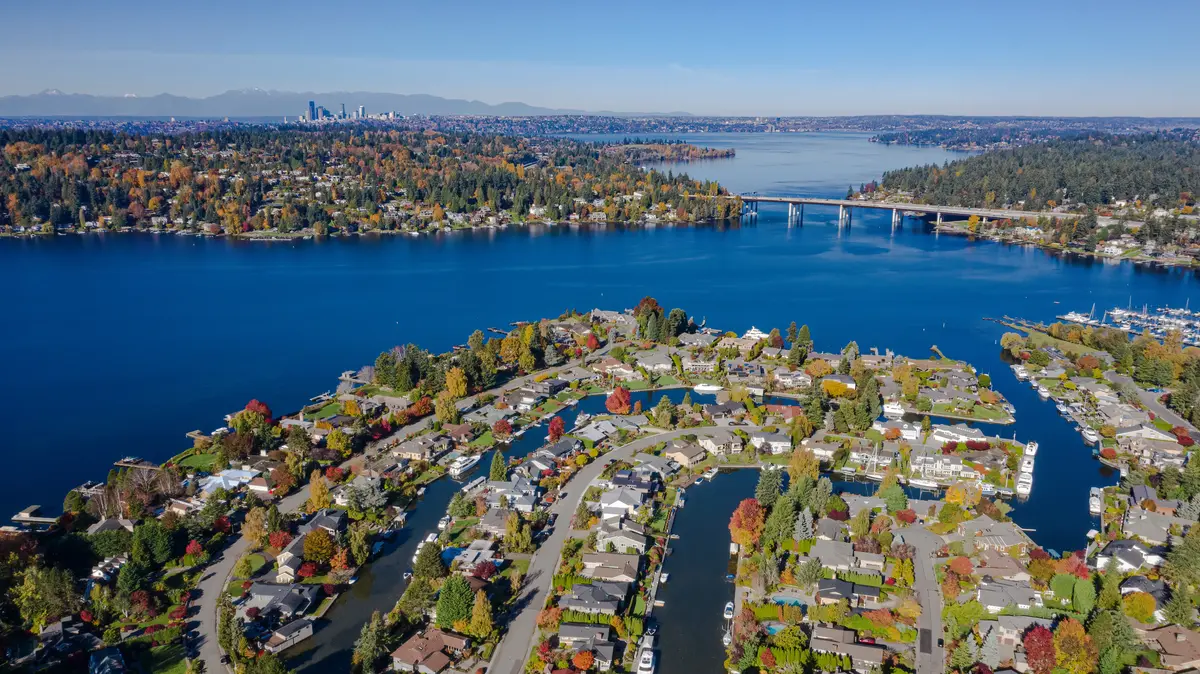
Bellevue makes the retirement case on lifestyle depth — a walkable downtown core with genuine on-foot access to dining, transit, and services, full-service hospital care in town, and roughly the same sunny-day count as the sunnier suburbs further north. The catch is one of the steepest price tags in Washington state: a $1,451,887 typical home price that puts most of the city's housing stock well beyond what retirement savings alone can cover. Retirees here are largely equity-rich transplants from expensive markets or longtime residents cashing in on decades of appreciation.
Bellevue suits buyers who want big-city amenity — walkable streets, a real transit network, and a hospital down the road — and have the assets to absorb the cost without financial strain. It is a noticeably more urban, faster-paced environment than quieter foothill towns like Duvall or North Bend, and that energy suits some retirees and exhausts others.
Best Places to Retire in Kirkland, Washington (2026)
Best for walkable waterfront living with in-town hospital access
Healthcare
8/10
out of 10
Walkability
10/10
out of 10
Affordability
1/10
out of 10
Climate
5.9/10
out of 10
Quality of Life
8.8/10
out of 10
Median Price
$1,212,741
2026 market price
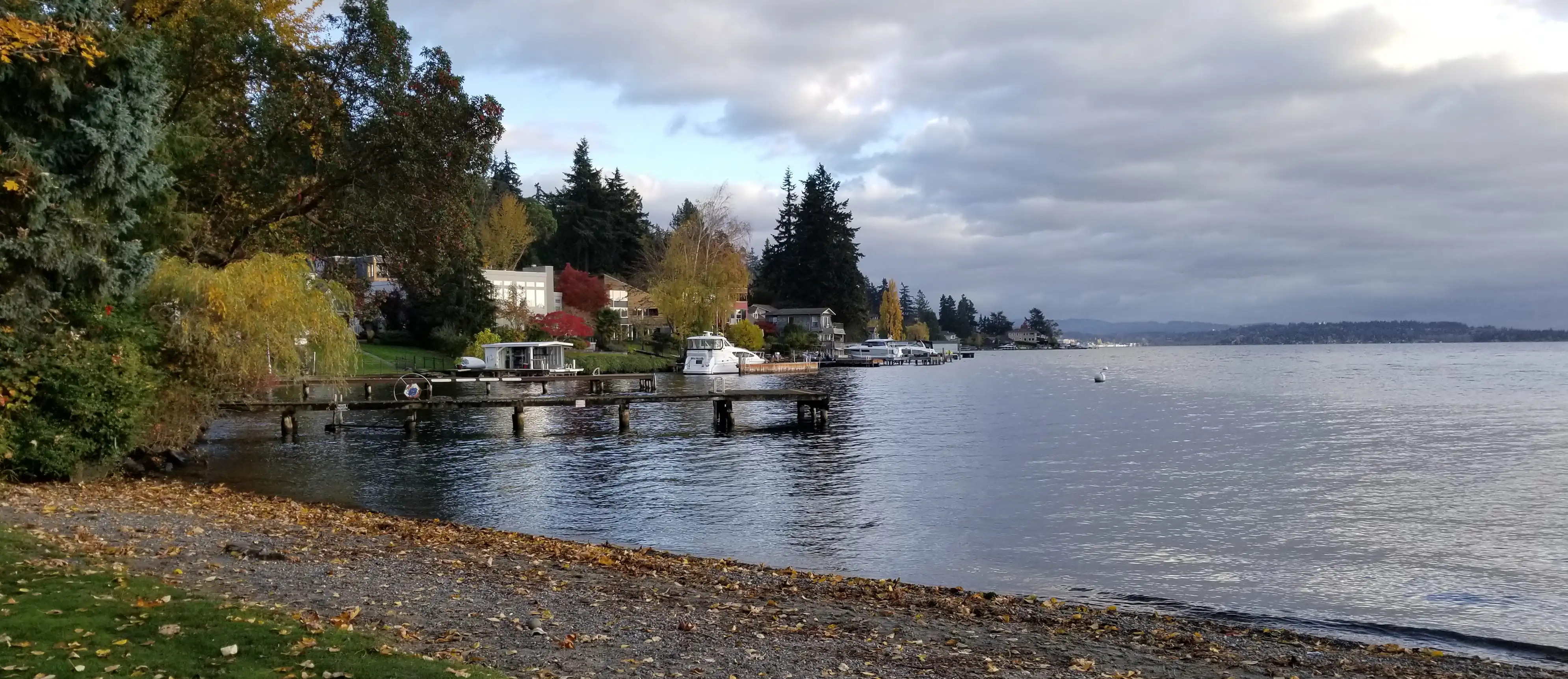
Kirkland's downtown waterfront gives it something genuinely rare in this region: a walkable core with real character, anchored by lake views and a genuine neighborhood feel that doesn't require a car for daily life. A full-service hospital is in town, which matters when healthcare proximity becomes a priority. The price — a $1,212,741 typical home — is steep, though it reflects what buyers consistently pay for a waterfront-adjacent lifestyle with this level of walkability.
Kirkland tends to suit retirees who want the feel of a real town rather than a tech-corridor suburb, with enough critical mass to find an independent café, a waterfront walk, or a doctor's visit on foot. It draws a different buyer than Bellevue — one who values neighborhood texture over corporate-campus polish.
Looking to buy in Seattle & the Eastside? Estimate your payment.
Enter your numbers to see an estimated monthly mortgage payment.
Loan amount—
Principal & interest—
Est. property taxes (~0.83% annual rate)—
Est. homeowner's insurance—
Est. total monthly—
Estimate only. Excludes HOA fees and mortgage insurance. The interest rate above is a starting point, not a quoted rate — replace it with your own to see real numbers. Insurance is a flat placeholder, not a Seattle & the Eastside quote.
Want to talk through your numbers for Seattle & the Eastside?Tell us what you need and we’ll connect you with a vetted local professional.
Beyond the Monthly Mortgage Payment — What to Factor In
Total cost of ownership — Your monthly mortgage payment is just the baseline. Depending on the specific city, county, and service district, homeownership costs also include local utility fees, municipal surcharges, and special assessments (such as water, sewer, storm drainage, or local energy taxes) that vary by location.
Independent due diligence — Because these recurring local costs and municipal fees change depending on the exact property address, buyers must research them independently during their transaction process.
Tax laws, local municipal fees, and utility costs change frequently and individual situations vary. This page is general information, not tax or legal advice — always consult a qualified tax professional, CPA, or local municipal offices for personalized guidance.
#3 Top Healthcare · King County
Best Places to Retire in Issaquah, Washington (2026)
Best for active retirees who want trails, a hospital, and a 55+ option
Healthcare
8/10
out of 10
Walkability
8/10
out of 10
Affordability
1.8/10
out of 10
Climate
6/10
out of 10
Quality of Life
9.2/10
out of 10
Median Price
$1,137,397
2026 market price
Issaquah threads a needle that few cities in this region manage: a hospital right in town, a genuinely walkable historic downtown in Olde Town, and trail access to the Issaquah Alps that most retirees would consider a serious quality-of-life asset. The 55+ community of Providence Point gives the city one of the only purpose-built retirement options anywhere on this list. That combination drives the price — a $1,137,397 typical home — and explains why retiring buyers keep ending up here even when they started looking elsewhere.
Issaquah is a strong fit for active retirees who want in-town medical care, real walkability, and outdoor access without living in the thick of a major city. The trade-off compared with Kirkland or Bellevue is a quieter, more contained downtown — which is exactly what draws many buyers here.
Best Places to Retire in Redmond, Washington (2026)
Best for trail-focused retirees who want light rail and downtown walkability
Healthcare
6/10
out of 10
Walkability
10/10
out of 10
Affordability
1/10
out of 10
Climate
6.4/10
out of 10
Quality of Life
8.8/10
out of 10
Median Price
$1,352,192
2026 market price
Redmond's retirement case is built on a walkable downtown that has matured alongside the city's tech economy, trail infrastructure that rivals anything in the region, and a light rail connection that gives car-free access real credibility. There is no hospital in town, but a regional medical center in nearby Kirkland keeps healthcare access well within a practical range. The price — a $1,352,192 typical home — reflects a city whose demand is still largely driven by tech employment, which can make the neighborhood feel younger and faster-paced than some retirees prefer.
Redmond suits retirees who want a walkable, trail-rich environment and don't mind a city whose energy skews toward working-age tech professionals. Buyers who want a quieter, more residential pace often find Issaquah or Bothell a better match.
Best Places to Retire in Shoreline, Washington (2026)
Best for budget-conscious retirees who want King County with transit access
Healthcare
6/10
out of 10
Walkability
6/10
out of 10
Affordability
4.3/10
out of 10
Climate
7/10
out of 10
Quality of Life
8.4/10
out of 10
Median Price
$803,451
2026 market price
Shoreline is the city on this list where the math starts to work differently. Its $803,451 typical home price reflects a working-neighborhood character rather than the resort-town or tech-corridor demand that inflates prices elsewhere in King County, and light rail gives it a transit connection that genuinely reduces car dependence for daily life. There is no local hospital, but a major regional medical center sits within a short drive. The tradeoff is a city without a defined historic downtown — it is more neighborhood than town center, which suits some retirees and frustrates others.
Shoreline fits buyers who want to stay in King County without paying Eastside prices, and who value transit access over a walkable downtown core. It is a more pragmatic choice than a lifestyle-forward one, but for retirees on a tighter budget, that pragmatism has real value.
Best Places to Retire in Bothell, Washington (2026)
Best for retirees who want a revitalized downtown at a more accessible price
Healthcare
6/10
out of 10
Walkability
8/10
out of 10
Affordability
2.5/10
out of 10
Climate
6.1/10
out of 10
Quality of Life
7.5/10
out of 10
Median Price
$1,015,871
2026 market price
Bothell has spent the last decade building a revitalized downtown that gives it something genuine: walkable dining, a riverfront, and a neighborhood feel that didn't exist a generation ago. No hospital sits in town, but a regional medical center is a manageable drive away. At a $1,015,871 typical home, Bothell costs more than it once did — the downtown revival attracted buyers who pushed prices into seven-figure territory — and it offers a walkable downtown driven by its position further from the lake and the tech corridor's core. Woodcrest Estates gives the city a 55+ option for buyers who want a purpose-built community.
Bothell suits retirees who want a real downtown without the intensity of Bellevue or Kirkland's prices, and who are drawn to a city that still feels like it's finding its identity rather than one that has already arrived. It draws a different buyer than Kenmore or Lake Forest Park — one who wants to walk to dinner, not just drive past the restaurant.
Best Places to Retire in Kenmore, Washington (2026)
Best for retirees drawn to lake access, trails, and a quieter pace
Healthcare
6/10
out of 10
Walkability
6/10
out of 10
Affordability
1.8/10
out of 10
Climate
5.8/10
out of 10
Quality of Life
9.2/10
out of 10
Median Price
$1,008,245
2026 market price
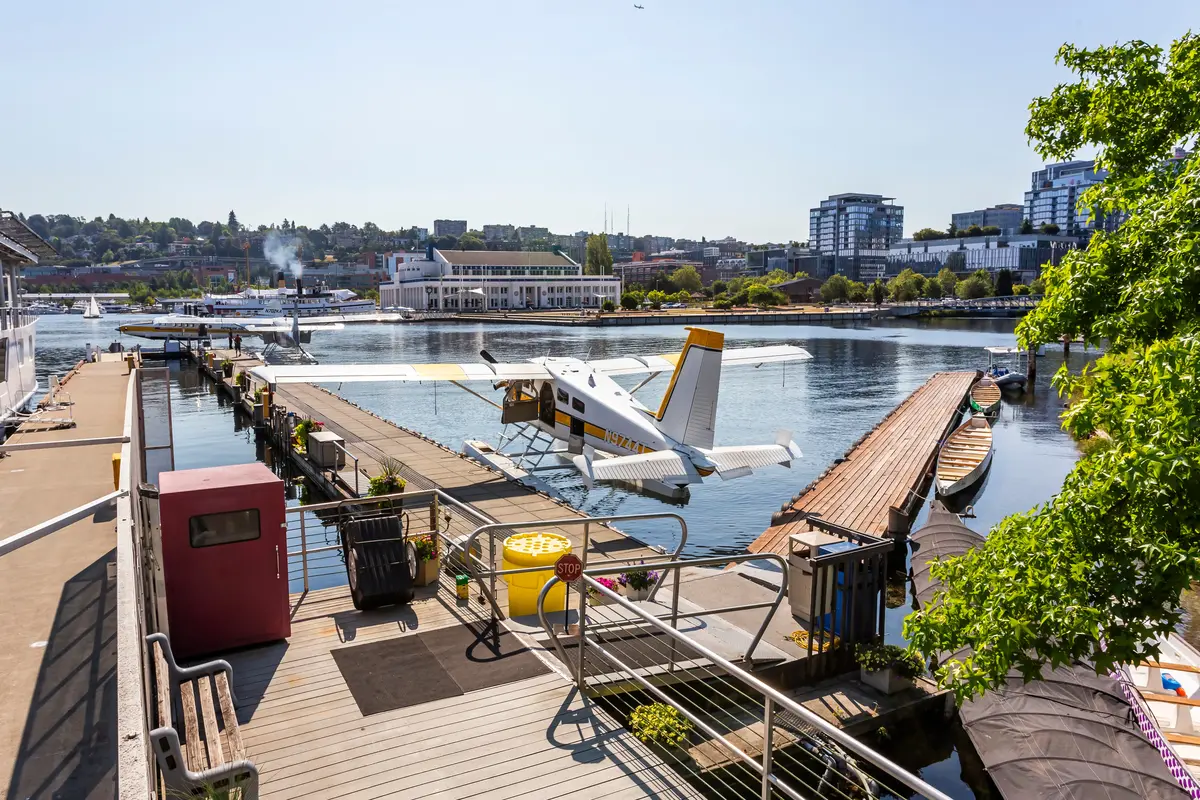
Kenmore sits at the north end of Lake Washington with a seaplane harbor that gives it genuine local character and trail access via the Burke-Gilman that stretches toward both Kirkland and Seattle. A downtown core is developing, but the city's car-dependent bones are still visible — most errands involve a drive. No hospital is in town, though regional medical access is reasonably close. The $1,008,245 typical home price is high relative to what the city currently offers in walkability and services, which makes the retirement math harder to justify for buyers who could get more on-foot access elsewhere for a similar price.
Kenmore tends to suit retirees drawn to water, trails, and a quieter pace who don't need a walkable downtown to feel settled. Buyers who want to walk to daily essentials will find Kirkland or Bothell a stronger match.
Best Places to Retire in Mercer Island, Washington (2026)
Best for equity-rich retirees who want island privacy near the city
Healthcare
6/10
out of 10
Walkability
6/10
out of 10
Affordability
1/10
out of 10
Climate
5.8/10
out of 10
Quality of Life
8.4/10
out of 10
Median Price
$2,295,406
2026 market price
Mercer Island's retirement appeal is real — a Town Center with genuine walkability, waterfront parks, lake views from nearly every neighborhood, and a short bridge ride to Seattle or Bellevue — but it comes attached to the steepest price on this list: a $2,295,406 typical home. That figure is not an anomaly or an outlier; it reflects sustained, intense demand from buyers who want an island setting without leaving King County. There is no local hospital, though a major medical center is a short drive across the bridge.
Mercer Island suits retirees who have significant equity to deploy and for whom the island's privacy, lake access, and contained community feel outweigh the cost. It is a smaller, quieter environment than Bellevue, which is the reason many buyers choose it — but the price makes it the most financially restrictive option on this list.
Best Places to Retire in Duvall, Washington (2026)
Best for retirees choosing quiet rural character over urban convenience
Healthcare
6/10
out of 10
Walkability
4/10
out of 10
Affordability
2.3/10
out of 10
Climate
5.8/10
out of 10
Quality of Life
8.8/10
out of 10
Median Price
$950,294
2026 market price
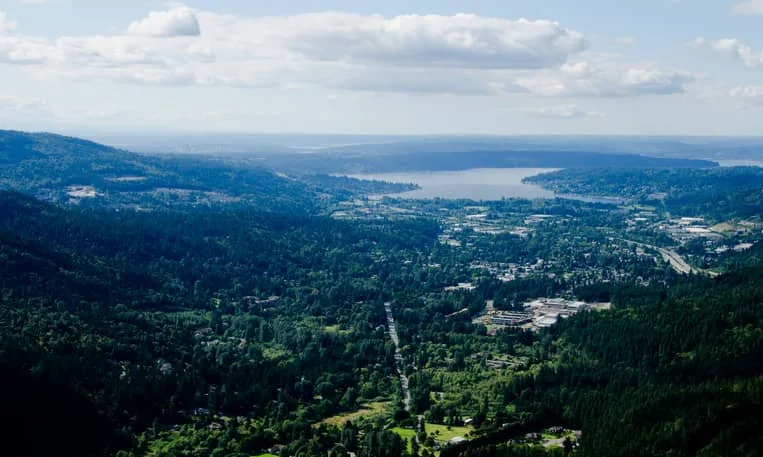
Duvall is a small agricultural town in the Snoqualmie Valley with a genuine historic downtown and a pace that feels genuinely rural even by Eastside standards. The outdoor access is real — the valley is ringed by trails, rivers, and farmland — but most daily errands require a car, and the nearest hospital is a drive away. A $950,294 typical home price reflects the valley's broader price pressure and the appeal of a low-density setting, not a town that has stayed insulated from regional demand.
Duvall suits retirees who are consciously choosing quiet over convenience and want to feel outside the metro rather than merely on its edge. Buyers who need walkable services or frequent medical visits will find cities like Issaquah or Bothell a significantly more practical fit.
Best Places to Retire in Snoqualmie, Washington (2026)
Best for outdoor-focused retirees who want in-town hospital care
Healthcare
8/10
out of 10
Walkability
4/10
out of 10
Affordability
1/10
out of 10
Climate
5.8/10
out of 10
Quality of Life
7/10
out of 10
Median Price
$1,086,676
2026 market price
Snoqualmie's retirement case hinges on one genuine advantage: a full-service hospital right in town means routine medical care doesn't require a drive. The iconic falls, Mt. Si, and the Snoqualmie Valley Trail give the city an outdoor profile that draws buyers specifically for that access. The downtown is small and most errands involve a car. At a $1,086,676 typical home, prices reflect the combined pull of Cascade foothills scenery and a newer master-planned community aesthetic — not a town that has kept prices low.
Snoqualmie suits retirees who prioritize trail access and outdoor living above walkable services, and who want in-town healthcare without living in a major city. It is a more nature-forward choice than Bothell or Shoreline, with a corresponding trade-off in urban convenience.
Best Places to Retire in Woodinville, Washington (2026)
Best for retirees who want a wine country lifestyle above all else
Healthcare
6/10
out of 10
Walkability
4/10
out of 10
Affordability
1/10
out of 10
Climate
6.4/10
out of 10
Quality of Life
8.4/10
out of 10
Median Price
$1,351,599
2026 market price
Woodinville's identity is built around wine country — a concentration of tasting rooms and vineyard-adjacent dining that gives it a leisure-oriented lifestyle few cities in the region can replicate. But the walkability picture is honest: most daily errands require a car, there is no local hospital, and the price — a $1,351,599 typical home — reflects demand that was built on weekend tourism as much as residential quality of life. Retirees who move here are often buying the lifestyle rather than the practical infrastructure.
Woodinville suits retirees for whom the wine country character is the actual draw, and who are comfortable with a car-dependent daily life in exchange for a distinctive leisure environment. Buyers who need walkable services or in-town medical care will find cities like Issaquah or Bothell a more grounded choice.
Best Places to Retire in North Bend, Washington (2026)
Best for retirees who want Cascade foothills living at a small-town pace
Healthcare
6/10
out of 10
Walkability
4/10
out of 10
Affordability
1/10
out of 10
Climate
5.8/10
out of 10
Quality of Life
8.8/10
out of 10
Median Price
$1,005,168
2026 market price
North Bend sits at the gateway to the Cascades with Mt. Si, the Snoqualmie Valley Trail, and some of the most dramatic mountain scenery in Western Washington as its daily backdrop. The historic downtown has real character, but with a small population, most daily errands still require a drive, and there is no hospital in town — though a regional medical center sits a short distance west. A $1,005,168 typical home price reflects the pull of that mountain setting and the region's broader price pressure, not a town that has stayed affordable.
North Bend suits retirees who are specifically choosing proximity to the Cascades and a small-town feel over urban services or walkable streets. Buyers who need frequent medical access or on-foot convenience will find cities further west on this list a more practical fit.
Best Places to Retire in Lake Forest Park, Washington (2026)
Best for retirees who want wooded quiet and trail access near the lake
Healthcare
6/10
out of 10
Walkability
4/10
out of 10
Affordability
2/10
out of 10
Climate
6/10
out of 10
Quality of Life
7/10
out of 10
Median Price
$1,024,649
2026 market price
Lake Forest Park is a quiet residential city on the north shore of Lake Washington with the Burke-Gilman Trail running through it and an independent bookstore at its civic heart. The neighborhood feel is genuine — this is a place where people settle in, not pass through — but the city's layout is car-dependent for most daily errands, and there is no hospital in town. At a $1,024,649 typical home, the price is driven by Lake Washington proximity and the appeal of a low-density, tree-covered setting close to Seattle.
Lake Forest Park suits retirees who want a quiet, wooded residential setting with easy trail access and don't need a walkable downtown as part of daily life. Buyers who want more on-foot access or in-town healthcare will find Shoreline or Bothell a more practical match at a comparable price point.
Best Places to Retire in Sammamish, Washington (2026)
Best for longtime residents and families staying in the community
Healthcare
6/10
out of 10
Walkability
2/10
out of 10
Affordability
1/10
out of 10
Climate
6.1/10
out of 10
Quality of Life
9.2/10
out of 10
Median Price
$1,557,390
2026 market price
Sammamish delivers a high quality of life on paper — parks, trails, diverse dining, and a family-oriented community that keeps earning praise — but it is one of the most car-dependent cities on this list, and its own city profile acknowledges it. There is no hospital in town, no historic walkable core, and a $1,557,390 typical home price driven by intense demand from families and tech workers who have made it one of the fastest-growing cities in Washington. That demographic gives many neighborhoods a younger, more suburban energy than many retirees are looking for.
Sammamish tends to suit retirees who are longtime residents or who have strong family ties to the city and want to stay in a well-maintained, resource-rich community. Buyers specifically looking for walkability or in-town medical access will find the trade-offs here harder to absorb than in cities like Issaquah or Kirkland.
Best Places to Retire in Newcastle, Washington (2026)
Best for retirees who want forested privacy close to Bellevue services
Healthcare
6/10
out of 10
Walkability
4/10
out of 10
Affordability
1/10
out of 10
Climate
5.8/10
out of 10
Quality of Life
7/10
out of 10
Median Price
$1,378,115
2026 market price
Newcastle is a small, quiet city on a forested ridge between Bellevue and Renton, with golf, trails, and a genuinely low-density character that draws buyers who want separation from the Eastside's intensity. A major regional medical center sits just a few miles away, which provides better-than-expected healthcare proximity for a city of this size. There is no walkable town center, and most daily life runs on a car. A $1,378,115 typical home reflects the premium buyers pay for that combination of quietude and Bellevue adjacency.
Newcastle suits retirees who want privacy, a forested setting, and proximity to Bellevue's services without living inside that city. Buyers who want to walk to daily errands or a lively downtown will find the experience here fundamentally different from what Kirkland or Bothell offers.
In this region, healthcare access and walkability are the two factors retirees most often underestimate until they're living here — and the cities that score well on both tend to carry the prices to match. Buyers who know which trade-off they can live with will find a much clearer answer in this list than buyers chasing a single ranking number.
Want to see what's for sale in these neighborhoods?Sign up for listing alerts — get notified when homes hit the market.
Which cities on this list have a hospital right in town?
Bellevue, Kirkland, Issaquah, and Snoqualmie each have a full-service hospital within city limits — a meaningful advantage for retirees who want to minimize drive time for routine or urgent care. Every other city on this list relies on a nearby facility in an adjacent community, which in most cases is still a short drive but is worth factoring into your decision if medical proximity is a top priority.
Are there any 55+ communities in these cities?
Issaquah has Providence Point, which is one of the only purpose-built 55+ communities found anywhere on this list. Bothell has Woodcrest Estates. No 55+ communities were found in the remaining cities — which doesn't mean none exist, but it does mean buyers in cities like Bellevue, Kirkland, or Shoreline are largely looking at standard single-family or condo options rather than age-restricted communities.
Which cities are genuinely walkable for daily retirement life?
Bellevue, Kirkland, and Redmond have the most fully realized walkable downtowns, where a retiree can realistically handle a good portion of daily errands on foot. Issaquah and Bothell offer real walkable cores with character, even if their scale is smaller. Cities like Sammamish, Lake Forest Park, Duvall, and North Bend are car-dependent by nature — the trade-off for quiet and outdoor access is that a vehicle is necessary for almost every errand.
How does climate vary across these cities, and does it matter for retirement?
Every city on this list has a Pacific Northwest climate — grey winters are a given, and the question is really about degree. Bellevue and Shoreline tend to get slightly more sunny days than the Seattle core, while Kenmore, Mercer Island, and the foothill towns like Duvall and Snoqualmie sit at the cloudier end of the local range. If seasonal affective disorder or sun exposure is a health concern, it's worth spending a full winter in the region before committing — the grey stretches from November through March are longer and more persistent than most newcomers expect.
Is it realistic to retire in this region on a typical retirement income?
Honestly, it depends heavily on what equity you're bringing in. Most cities on this list carry seven-figure home prices, and even Shoreline — where prices reflect a working-neighborhood character rather than tech-corridor or resort-town demand — requires a significant financial foothold. Retirees who built equity in the region over decades often find the math works when they downsize. Those moving in from less expensive markets face genuine sticker shock, and Duvall, Shoreline, and Bothell tend to be where buyers land when they want King County access without the sharpest Eastside prices. Remote-income retirees and those with strong investment portfolios are the buyers who navigate this region most comfortably.
Tell us what you need help with and we'll connect you with local resources.
Todd Davidson
About the Author
Todd Davidson is the founder of The Move Genie, a premier digital resource offering in-depth city guides, neighborhood profiles, and localized market insights for communities nationwide. Drawing on an extensive background in home financing and real estate, he established the platform to streamline the relocation process, helping families make confident, data-driven decisions when comparing new areas.