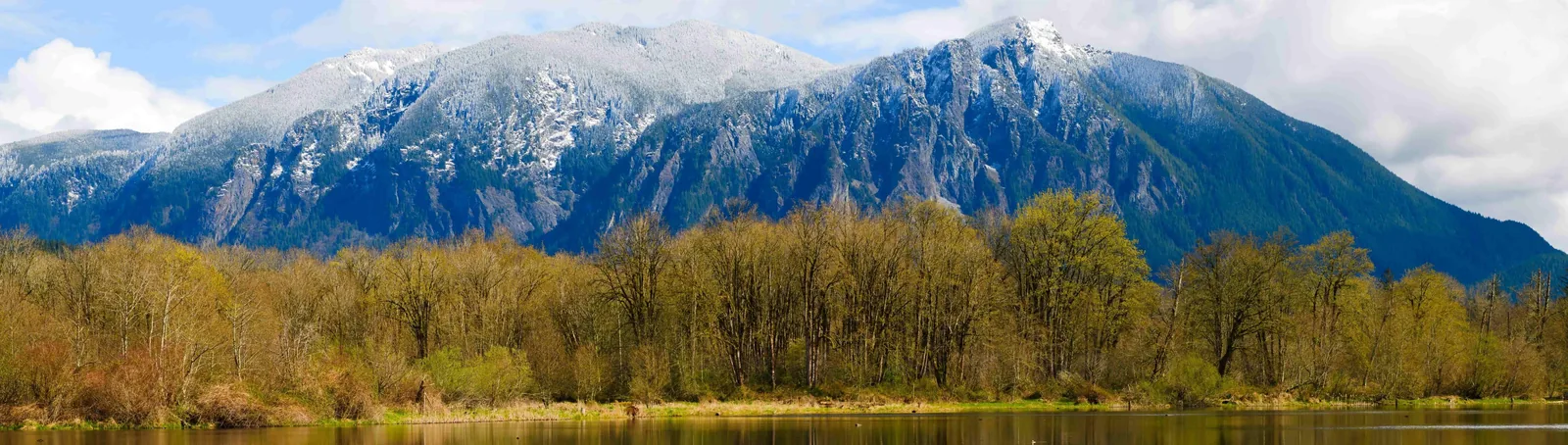
What Is Living in Snoqualmie, Washington Like?
You've probably seen the waterfall. Snoqualmie Falls — a 268-foot drop over granite cliffs into the Snoqualmie River — is the second most visited natural landmark in Washington State, drawing more than 1.5 million people a year. Most of them spend an afternoon and leave. A growing number look around and start asking what it would cost to stay. That's the central pull of this city: it sits at the eastern edge of the Seattle metro, just off SR-18 where it meets I-90, close enough to Bellevue's tech corridor (roughly 35 minutes on a good day) to make the commute work, but far enough into the Cascade foothills that the skyline is ridgelines, not office towers. The trade-off between that mountain setting and the Seattle-area job market is what drives almost every housing decision here.
The economic picture is straightforward once you understand who lives here. The median household income of $214,107 — among the highest in King County — reflects a population dominated by dual-income households tied to Boeing's aerospace operations, Microsoft's Redmond and Bellevue campuses, and the broader tech corridor stretching west along I-90. Locally, the Snoqualmie Casino (operated by the Snoqualmie Indian Tribe, with a major expansion adding a ten-story hotel and convention center) and Salish Lodge & Spa provide significant hospitality employment, anchoring a tourism economy that runs year-round. The Snoqualmie Valley School District earns a Grade A from Niche and ranks #15 in Washington State — a fact that shows up in nearly every conversation about why families with school-age children specifically target this address over neighboring communities.
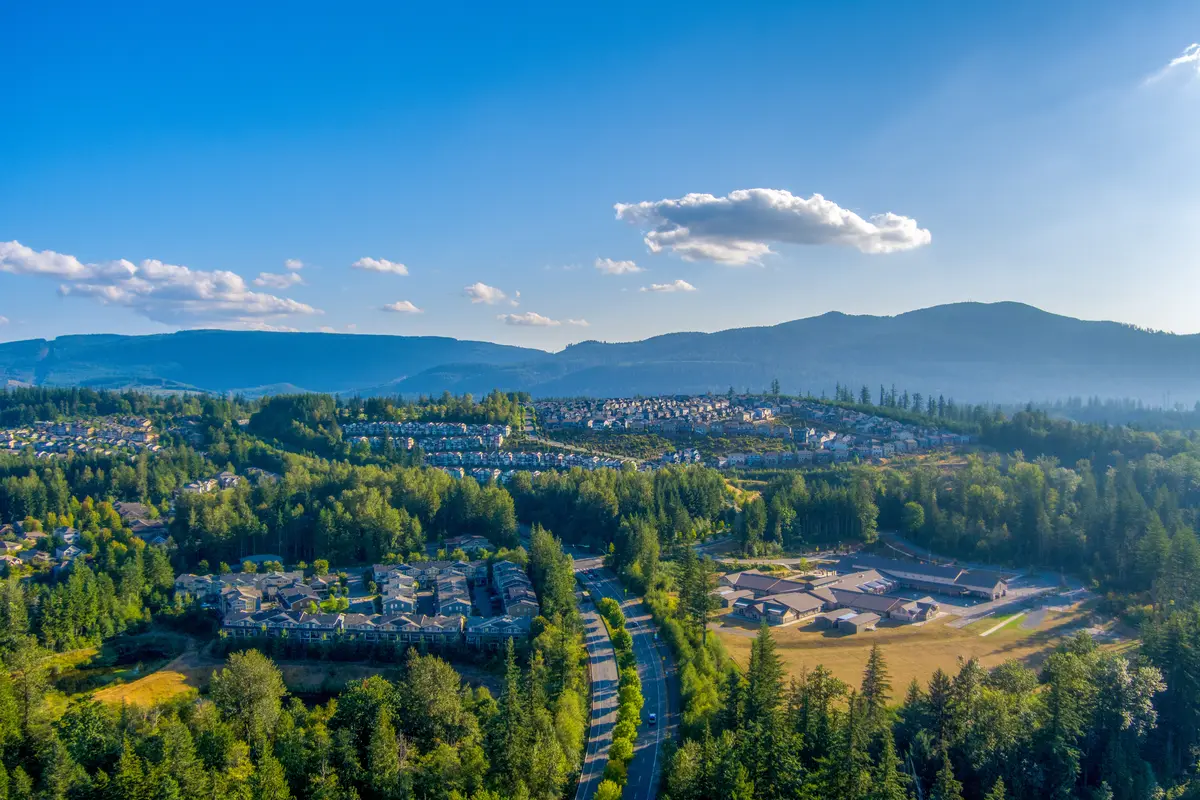
The cost of entry is real. The Zillow Home Value Index for Snoqualmie stood at $1,129,059 as of April 2026 — a price point that feels steep until you compare it to Bellevue or Kirkland, where you'd pay noticeably more for a smaller lot and no mountain backdrop. Day-to-day life here revolves around outdoor access: the Snoqualmie Valley Trail runs right through town, the falls and surrounding park are a ten-minute walk from downtown, and the Cascade Range puts legitimate hiking within half an hour in any season. Snoqualmie Ridge, the large master-planned community on the plateau above downtown, has its own trail network, parks, and The Club at Snoqualmie Ridge, which functions as a social hub for much of the newer resident population.
Whether you're considering a move or just researching the area, the sections below break down Snoqualmie's major employers and job access, what daily life actually feels like on the ground, the current housing market, the commute realities, and what locals do on weekends.
Snoqualmie at a Glance
Looking to buy in Snoqualmie? Estimate your payment.
Enter your numbers to see an estimated monthly mortgage payment.
Estimate only. Excludes HOA fees and mortgage insurance. The interest rate above is a starting point, not a quoted rate — replace it with your own to see real numbers. Insurance is a flat placeholder, not a Snoqualmie quote.
Why Are People Moving to Snoqualmie?
The short answer is: priced-out tech workers who don't want to give up the mountains. Migration data shows the top outside metros searching into Snoqualmie include San Francisco, Chicago, and Washington D.C. — people who are accustomed to high costs but are choosing to maximize lifestyle instead of proximity to a downtown core. The pitch writes itself: A-rated schools, mountain adjacency, and a city small enough (under 14,000 residents) that your neighbors actually know each other, priced noticeably below what comparable square footage costs in Bellevue or Redmond.
The Employer Reality
Most Snoqualmie residents don't work in Snoqualmie. Boeing's facilities in Renton and Everett, Microsoft's Redmond campus, and the broader cluster of tech and aerospace firms along the I-90 and SR-520 corridors are where the paychecks originate. The city's own major employers — the Snoqualmie Casino and Salish Lodge & Spa — are significant for hospitality workers and part of what makes the local economy more layered than a pure bedroom suburb, but the overwhelming majority of residents commute west.
That calculus works specifically because of I-90. Bellevue is roughly 35 minutes from Snoqualmie under normal conditions — a drive that feels manageable until a Tuesday morning accident near a busy interchange turns it into an hour and fifteen. Remote and hybrid schedules have made the distance easier to absorb, and most buyers here understand the commute before they commit.
Who Actually Moves Here
| Buyer Type | What Draws Them | Best Fit |
|---|---|---|
| Tech & aerospace households | School district quality, mountain access, space for the price | Families Commuter |
| Remote workers relocating from major metros | Lower cost vs. San Francisco or New York, outdoor lifestyle, still in the Seattle orbit | Nature Views |
| Move-up buyers from Issaquah or Sammamish | More land, newer construction on the Ridge, quieter pace | Families Quiet |
| Hospitality & casino employees | Local employment, shorter commute, community feel | Value Commuter |
| Outdoor-lifestyle seekers | Trail access, falls, proximity to Cascade Range ski areas | Nature Privacy |
| Parents with school-age children | Snoqualmie Valley SD's A rating and #15 statewide rank | School Families |
What surprises people after six months isn't the commute or the price — it's how self-contained the community feels. The Ridge has its own restaurants, parks, and social infrastructure, and downtown Snoqualmie has a character that most planned suburbs don't: a working historic depot, an actual falls, and a scale that makes running into neighbors inevitable.
The honest downside: if your job goes fully back to five-days-in-office in Seattle proper, the daily grind on I-90 will wear on you faster than you expect. Snoqualmie rewards the hybrid schedule far more than the daily commuter.
What Daily Life Feels Like in Snoqualmie
Living here is quieter than most people expect from a Seattle suburb, and more social than they expect from a mountain-edge town. The city splits into two distinct worlds: Snoqualmie Ridge up on the plateau, where the master-planned streets curve through parks and the neighborhood association calendar stays full, and historic downtown along the river, where the railway museum anchors a more low-key, older-Cascades-town atmosphere.
The Ridge vs. Downtown Divide
Snoqualmie Ridge is where the bulk of the newer population lives — large Craftsman and contemporary homes, a network of paved trails connecting cul-de-sacs to open space, and The Club at Snoqualmie Ridge as a social anchor. It functions almost like its own small city. Downtown is different: the Historic Snoqualmie Depot on SE King Street (built 1890, the longest continuously operating train depot in Washington State) and the surrounding blocks carry a genuine sense of place that newer construction rarely achieves.
Families with kids find a steady rhythm here. The Snoqualmie Valley School District's above-average performance means school nights are taken seriously, and the trail network means weekends don't require a car to feel active. The poverty rate sits at just 0.82% and the median age is 38.9 — this is firmly a community of working households in their prime earning years, not a retirement enclave or a college town.
The Seasonal Reality
Summer weekends bring a volume of tourist traffic around Snoqualmie Falls that longtime residents either accommodate or route around. The free parking lot across the road from the falls fills early; locals know that the paid lot on the main side clears faster after 10 AM when the first wave leaves. From November through March, the falls run at their most dramatic — lower visitor counts, mist rising off the river, the Salish Lodge lit above the gorge — and this is genuinely when residents enjoy the landmark most.
Winter also means SR-18 carries chains-required traffic headed to Snoqualmie Pass, and I-90 can slow significantly during snow events. A cold snap that barely registers in Bellevue can mean ice on the plateau roads of the Ridge.
Where Locals Actually Gather
Buckshot Honey on SE River St — a barbecue restaurant and bar in the historic downtown — is a consistent local anchor, the kind of place where you'll run into your neighbor and a Snoqualmie Casino employee at adjacent tables. The Northwest Railway Museum runs heritage train excursions on weekends from April through September, and locals treat them as a recurring community event rather than a tourist attraction. The downtown Rivertrail project broke ground in October 2025, promising a more connected pedestrian corridor along the river once complete.
For the day-to-day, most residents drive to North Bend or Issaquah for larger grocery runs and the kind of retail that a small city doesn't sustain. That's a genuine friction point — Snoqualmie proper doesn't have a major grocery anchor, and the nearest Trader Joe's is back toward Issaquah. Building your weekly routine around that 10-to-15-minute drive west is something newcomers adapt to quickly, but it's worth factoring in before you commit to a home on the far east end of the Ridge.
The Snoqualmie Housing Market Right Now
The Zillow Home Value Index for Snoqualmie stood at $1,129,059 as of April 2026 — down modestly (about 2.4%) from the prior year, but with market pace that tells a more competitive story than that figure alone suggests. For a deeper breakdown of costs including rent, taxes, and day-to-day expenses, see the Snoqualmie cost of living page.
How Competitive Is It?
Redfin scores the market at 86 out of 100 on its Compete Score — categorized as "very competitive" — with typical homes going pending in about 7 days and many attracting multiple offers. Some buyers are waiving contingencies to win. That pace is not uniform across the city: conditions vary noticeably between the Ridge and other parts of town, with the Ridge moving significantly faster. Understanding which market you're entering matters more here than in most cities this size.
Inventory has improved statewide — Washington active listings were up roughly 28% year-over-year heading into 2026 — but Snoqualmie has absorbed that supply faster than most communities because demand for its combination of school district quality and outdoor access remains durable. Price softness shows up at the margins; core properties in good condition close at or near ask.
What the Price Point Actually Gets You
At the city-wide median, you're typically buying a four-bedroom home with a two-car garage, somewhere between 2,200 and 3,000 square feet, on a lot that may back to open space or a trail depending on the neighborhood. The effective property tax rate of approximately 0.84% means annual tax costs stay proportional to the purchase price rather than compounding the sticker shock. That rate is competitive for King County and is one reason the monthly carrying cost feels more manageable than the headline price implies.
Entry-level options — older construction downtown, smaller townhomes on the fringes — come in noticeably below the city median, though "entry-level" in this market means something different than it does in most of Washington. For the full neighborhood-level character breakdown, the Snoqualmie neighborhoods page goes deeper on where different price points land geographically.
One thing worth knowing: homes in Snoqualmie that are priced correctly and in good condition don't sit. If you find something that's been on market for three or four weeks without a price cut, it's worth asking why — the competitive market here means extended days on market is usually signal, not coincidence.
Snoqualmie Neighborhoods
Snoqualmie has several distinct areas — each with its own character and appeal. Here’s a breakdown to help you narrow down where to focus your home search.
🏡 Snoqualmie Ridge
The city's dominant master-planned community sits on a plateau above downtown, with large Craftsman and contemporary homes, an extensive paved trail network, and The Club at Snoqualmie Ridge as a social hub. It suits families and households that want a self-contained neighborhood with modern construction and community amenities.
🏠 Downtown Snoqualmie Historic District
Anchored by the 1890 Snoqualmie Depot on SE King Street and Buckshot Honey on SE River St, the historic downtown has genuine Cascade-town character that newer construction can't replicate. It suits buyers who want proximity to the falls, the railway museum, and a more established, smaller-scale neighborhood feel.
🌳 The Reserve at Snoqualmie Ridge
A newer enclave within the broader Ridge community, The Reserve features some of Snoqualmie's most elevated construction with larger lots and more privacy than the standard Ridge streetscape. It suits buyers seeking a quieter position within the Ridge without sacrificing the neighborhood's trail and amenity access.
🏘 Silver Fir
Silver Fir sits on the eastern edges of the city's growth area, where the Cascade foothills begin in earnest and lot sizes tend to run larger. It suits households that prioritize green space and a more rural buffer while staying within Snoqualmie's school district boundaries.
🏔 Jacobia
An established residential area in the valley corridor with a mix of older and newer homes, Jacobia sits closer to the river and the historic core than the Ridge neighborhoods. It suits buyers looking for more attainable price points within Snoqualmie proper, with a quieter residential character.
🌆 Riverbend
As the name suggests, Riverbend sits along the Snoqualmie River corridor, offering some of the closest residential access to the valley trail system and the natural landscape that defines the city's identity. It suits buyers who want the outdoors genuinely adjacent to daily life rather than a drive away.
Pros & Cons of Living in Snoqualmie
The Pros
- Iconic natural scenery centered on Snoqualmie Falls
- consistently top-ranked Snoqualmie Valley schools
- family-oriented planned community at Snoqualmie Ridge with parks
- trails
- and a golf course
- lower crime than many comparably sized cities
The Cons
- Among the priciest housing markets in the state
- long
- traffic-dependent commute into Seattle or Bellevue
- limited in-town retail
- dining
Getting Around & Commuting in Snoqualmie
Snoqualmie is a car-dependent city. Full stop. If you are arriving from a city where you walked to work or relied on light rail, the adjustment is real and worth planning around before you choose a specific address here.
The I-90 Reality
The primary artery in and out of town is I-90, and it is both Snoqualmie's greatest asset and its most reliable frustration. On a clear Tuesday morning, the drive to Bellevue takes about 35 minutes — manageable for a hybrid schedule. On a rainy Monday when there's a fender-bender near a busy interchange, the same drive can stretch past 75 minutes. The approach to the floating bridge into Seattle and the interchange with I-405 are the consistent pinch points; anyone commuting into Seattle proper adds another 10 to 20 minutes beyond Bellevue on a normal day.
SR-18 is the secondary route, connecting south toward Auburn and Renton — useful for Boeing employees headed to the Renton facility, and generally less congested than I-90's westbound peak. The corridor toward Issaquah moves freely for most of the day, which is relevant for anyone making grocery and retail runs or working in that area.
Transit Options
King County Metro runs limited service into the Snoqualmie Valley, with connections toward Issaquah and the I-90 express corridor. It's workable for commuters with flexible schedules who can time their trips around peak express runs, but the frequency and coverage don't support car-free living for most residents. Park-and-ride lots at the Issaquah Transit Center — about 15 minutes west — are heavily used by Snoqualmie residents who drive to transit and then ride into the city.
| Destination | Typical Drive Time | Route | Notes |
|---|---|---|---|
| Bellevue Downtown | ~35 min | I-90 W | Can exceed 60+ min during peak incidents |
| Seattle Downtown | ~50 min | I-90 W + I-5 or SR-519 | The floating bridge is the consistent chokepoint |
| Redmond (Microsoft) | ~40 min | I-90 W + SR-520 or NE 8th | SR-520 toll applies eastbound AM |
| Renton (Boeing) | ~35 min | SR-18 S + SR-167 | Cleaner routing than I-90 for Renton |
| Issaquah | ~15 min | I-90 W | Park-and-ride access here for Metro |
| North Bend | ~10 min | I-90 E or SE North Bend Way | Main grocery and retail hub |
| Sea-Tac Airport | ~50 min | I-90 W + I-405 S or SR-18 S | Add time for construction variability |
Most residents who work in Bellevue or Redmond on a hybrid schedule find the commute genuinely workable. Those going fully in-office five days a week to Seattle proper find it tiring by month six.
Within Snoqualmie
Inside the city, the Ridge and downtown are connected but not seamlessly walkable between each other — the elevation change and road layout mean most residents drive between the two areas even for short trips. The Snoqualmie Valley Trail runs through the valley floor and is excellent for recreational cycling and walking, but it doesn't function as practical transportation infrastructure for getting to the falls, a restaurant, or the depot without a longer time investment than most daily errands allow.
Schools in Snoqualmie
Families relocating to Snoqualmie have public, private, and higher-education options nearby. Here’s a quick overview.
🎓 School District
Snoqualmie Valley School District serves K–12 students across Snoqualmie and the surrounding area. Rated A (source: Niche.com / GreatSchools).
🏆 Graduation Rate
The 4-year high-school graduation rate here is approximately 93.6%.
📚 Higher Education
Washington’s public universities — the University of Washington, Washington State University, and Western Washington University — offer four-year degrees statewide, with a network of 34 community and technical colleges (SBCTC) providing two-year and workforce programs.
🌐 Online Learning
University of Washington Continuum College and Washington State University Online offer fully accredited online degrees for remote learners across the state.
Safety in Snoqualmie
A quick look at how Snoqualmie compares on the numbers that matter most when weighing a neighborhood or a move.
🛡 Violent Crime
Approximately 0.07 per 1,000 residents.
🔒 Property Crime
Approximately 24.1 per 1,000 residents.
Compared to the FBI’s most recent national data (2024), Snoqualmie’s violent crime is below the national average (about 3.6 per 1,000), and property crime is above the national average (about 17.6 per 1,000).
Against Washington as a whole, Snoqualmie’s violent crime is a small fraction of the state average, and property crime is about the same as the state average (Bureau of Justice Statistics, Crime Known to Law Enforcement, 2024 (tables 2 and 3)).
Crime rates can vary a lot within a single city, so the citywide numbers above are only a starting point. Some neighborhoods in Snoqualmie run well below these averages, while others run higher — the kind of block-by-block detail that matters most when you’re actually choosing where to live. The full guide below breaks it down neighborhood by neighborhood.
Working in Snoqualmie
Snoqualmie’s largest employers span several industries — here are some of the anchors of the local job market.
💼 Boeing
Aerospace
💻 Microsoft
Technology
🏥 Snoqualmie Casino
Gaming & hospitality
🏥 Salish Lodge & Spa
Hospitality
Parks & Recreation in Snoqualmie
Some of the outdoor spaces that shape everyday life in Snoqualmie.
🌱 Snoqualmie Falls
Snoqualmie residents don’t have to go far for green space — spots like Snoqualmie Falls are part of everyday life here, whether that’s a morning walk, a weekend hike, or just somewhere to unwind outside. The full guide below covers more of what Snoqualmie has to offer for parks and outdoor recreation.
Retiring in Snoqualmie
Snoqualmie draws retirees for its balance of amenities, outdoor access, and cost. Here’s what to weigh.
🌤 Climate
Snoqualmie sits in a Cascade foothill location that gets noticeably more precipitation than Bellevue or Issaquah — expect grey and wet from October through April, with genuine snow on the Ridge during cold snaps that barely register lower in the valley. Summers are mild and clear, with low humidity and evenings cool enough to sleep without air conditioning.
🍴 Lifestyle
The outdoors are the primary draw at any age — the Snoqualmie Valley Trail, the falls, and Cascade Range access put active retirees in their element year-round. Downtown along SE River Street has a growing dining presence, and Salish Lodge & Spa offers a high-end local option for a special occasion without driving west.
🏚 55+ Communities
Snoqualmie's growth has been primarily family-oriented, so purpose-built 55+ or active-adult communities within the city are limited. Nearby communities in the Issaquah and Sammamish corridors offer more dedicated senior-living options for those who want that structure. For healthcare facility access and options, see the <a href="/washington/snoqualmie/retiring">Snoqualmie retiring page</a>.
✈ Getting Around
Driving is essentially required for daily life — most errands involve heading west toward Issaquah or North Bend for retail and services. Sea-Tac Airport is approximately 50 minutes without traffic. For retirees with mobility considerations, the terrain on Snoqualmie Ridge is relatively flat, but the elevation change between the Ridge and downtown involves roads rather than walkable paths.
🏛 Washington Taxes for Retirees — What to Know
- No state income tax — Washington does not tax personal income, so Social Security, pensions, and 401(k)/IRA withdrawals are all untaxed at the state level. There is no state return to file and no retirement exclusion to claim — the rate is simply zero.
- Military and public pensions — Because there is no income tax, military retirement pay and public-employee pensions are untaxed at the state level along with everything else.
- Sales tax is the tradeoff — The state sales tax is 6.5%, and local add-ons bring the combined rate in Snoqualmie to 9.3% (Washington State Department of Revenue, Q3 2026 local sales & use tax rate table, July 2026). Groceries and prescription drugs are exempt.
- Property taxes, with senior relief — The effective property tax rate is roughly 0.9%. Homeowners 61+ (or unable to work due to disability, or a qualifying disabled veteran) who own and occupy their home may qualify for a reduction. Income limits are set against each county’s median household income, so the threshold differs by county — check with your county assessor. A separate deferral program is available for those who don’t qualify for the exemption.
- Capital gains tax — but not on retirement income — Washington taxes 7% on long-term capital gains above a $278,000 standard deduction for 2025, rising to 9.9% on gains above $1,000,000. Retirement accounts and real estate sales are both exempt. It therefore does not reach ordinary retirement income or the sale of a home.
- Estate tax — the one to plan for — Unlike most no-income-tax states, Washington has its own estate tax. For deaths on or after July 1, 2026, the exemption is $3 million with graduated rates topping out at 20%. Retirement accounts count toward the taxable estate, so long-time homeowners with sizable balances can cross the line without expecting to.
- No inheritance tax — Washington has no inheritance tax, and no gift tax.
- WA Cares payroll premium — Working Washingtonians pay 0.58% of gross wages into the WA Cares Fund, the state long-term care program, with no income cap. It applies to W-2 wages, so retirees who have stopped working do not pay it — but anyone relocating while still employed will see it. The private-insurance opt-out closed at the end of 2022 and is not available to new applicants; the remaining exemptions are narrow (living outside Washington, military spouses, certain visa holders, and veterans with a 70%+ service-connected rating).
- The Oregon border effect — Oregon has no sales tax, so Washington residents near the river — Vancouver, Camas, Washougal, Longview — often cross over for large purchases. Washington use tax technically applies to goods brought back for use in-state, though it is rarely enforced on ordinary personal purchases.
Tax laws change frequently and individual situations vary. This is general information, not tax advice — always consult a qualified Washington tax professional or CPA for personalized retirement tax planning.
Weekends & Local Favorites in Snoqualmie
The falls are the obvious starting point, and even longtime residents haven't tired of them. Snoqualmie Falls drops 268 feet — taller than Niagara — and admission is free; the main parking lot charges $7 for the first two hours, but the free lot across the road (connected by an overhead pedestrian bridge) works just as well on a weekday morning when the tourist buses haven't arrived yet. The viewing platform at the top is dramatic; the lower trail to the base of the falls is the locals' preference.
History That Isn't Just a Backdrop
The Northwest Railway Museum is a genuine asset, not just a rainy-day backup plan. The Historic Snoqualmie Depot at 38625 SE King St has operated continuously since 1890 — the depot itself is free and open daily — and the heritage train excursions running on weekends from April through September are the kind of thing residents bring visiting family to three or four times before it stops feeling novel. The Railway History Campus out on Stone Quarry Road houses the full collection if you want the deeper experience.
Salish Lodge & Spa sits directly above the falls and operates at a different price point than most of the city's daily life — it's a destination dinner or anniversary stay rather than a casual neighborhood spot. The Snoqualmie Casino, now with expanded hotel and convention space following the Snoqualmie Indian Tribe's multi-year development project, draws its own crowd from across the region and is a notable local employer as much as it is a weekend destination.
Food and Gathering Spots
Downtown Snoqualmie along SE River Street has the character that the Ridge's newer construction lacks. Buckshot Honey on SE River St anchors the scene as a barbecue restaurant and bar with a local following that runs from casino shift workers to Ridge families on a Friday night. The restaurant and dining options have expanded significantly as the city's population has grown, with the Ridge supporting its own collection of spots within the neighborhood.
For outdoor weekends, the Cascade Range is genuinely close. The dominant ridgeline visible from almost every neighborhood has trailheads within a 30-minute drive and is one of the most-hiked areas in Washington. Snoqualmie Pass is under an hour east for skiing and snowshoeing. The Middle Fork Snoqualmie River corridor opens up beyond North Bend for fishing, kayaking, and backcountry access that feels remote while being entirely within the metro footprint.
What You Won't Find Here
Snoqualmie doesn't have a dense walkable commercial district in the way Issaquah or downtown Bellevue does. There's no independent movie theater, no large performing arts venue, and the restaurant variety you'd expect from a city with this income level is still catching up to the population growth on the Ridge. Residents who want a broader dining or nightlife range drive west. That's the honest shape of it: exceptional natural amenities, a tight-knit community feel, and a 20-minute drive to almost everything else.
Top Things Locals Say About Snoqualmie
The best intel about a city comes from the people who actually live there. Here’s what Snoqualmie residents say when newcomers ask the questions everyone’s thinking.
“I knew the commute would be longer, but I didn't realize how quickly the falls and the trails would become just... Tuesday. After six months you stop thinking of this as a place you drove to for a weekend — it's just where you live, and that's a better feeling than I expected.”
— Recent Snoqualmie home buyer
“What's the most surprising thing about living in Snoqualmie?”
How self-contained the Ridge feels. You can go weeks without needing to drive to Issaquah or North Bend if you plan your grocery runs, because the Ridge has its own restaurants, parks, and community events. What catches people off guard is that downtown Snoqualmie — down by the river near the depot — feels completely different from up on the plateau. A lot of newcomers don't explore that divide until they've been here a few months.
“What do locals love most about Snoqualmie?”
The falls in winter, without question. Summer weekends there are busy with tourists and parking is a project. But November through February, when the water volume peaks and the mist fills the gorge, you can walk there from downtown and have the lower trail nearly to yourself. It's one of those things that sounds like a real estate pitch until you actually live here and do it on a gray Wednesday.
“What should newcomers to Snoqualmie know?”
Leave earlier on I-90 than you think you need to. The drive to Bellevue looks fine on Google Maps at 7:30 AM and turns into a genuine problem by 8:00. A lot of Ridge residents have quietly shifted their start times earlier or later to avoid the worst of it. Also: the free parking lot across from the falls is connected by an overhead bridge and is ADA accessible — use it on summer weekends instead of fighting for the main lot.
“Can you live in Snoqualmie without a car?”
Practically speaking, no. King County Metro has limited service into the Valley, and while the Snoqualmie Valley Trail is excellent for recreation, it doesn't substitute for a car when you need groceries, medical appointments, or anything beyond the immediate neighborhood. Residents who want transit access typically drive to the Issaquah Transit Center and ride from there. If you're car-free by choice, Snoqualmie will require a significant lifestyle adjustment.
Cities Near Snoqualmie
Other communities near Snoqualmie worth a look — each with its own character and price point.
| City | Distance | Best For | Vibe | Median Rent | Median Buy |
|---|---|---|---|---|---|
| North Bend | 5 mi | Outdoor enthusiasts & trail access | Casual, outdoorsy, mountain-town feel | $2,100 | $907,409 |
| Fall City | 6 mi | Rural feel with metro proximity | Low-density, semi-rural, quiet | $2,300 | $1,097,362 |
| Carnation | 10 mi | Space & agricultural character | Farmland edges, very small-town | $2,100 | $931,350 |
More Helpful Guides for Snoqualmie
Going deeper on Snoqualmie? Our blog series covers everything from first-time buying to retiring here — explore the guides below.
Local Expert Takeaway: Snoqualmie is the right move if your household is willing to trade a longer commute for a genuinely different daily environment — one where Snoqualmie Falls is a 10-minute walk, the school district consistently outperforms the state average, and the Cascade Range ridgeline is visible from your front porch. The math works best on a hybrid schedule with at least two days working from home; full-time I-90 commuters into Seattle often reconsider by year two. If you're choosing between here and Issaquah, the honest distinction is this: Issaquah offers more walkable retail and a slightly shorter drive; Snoqualmie offers more mountain and more space for the price.
Quick Takeaways & FAQs
✅ The Snoqualmie Valley School District ranks #15 in Washington State with math proficiency rates nearly double the statewide average — a core reason families specifically target this address.
⚠️ A full-time, five-days-in-office commute to Seattle adds up: the approach to the floating bridge and the interchange with I-405 are the consistent pressure points, and residents on hybrid schedules report a meaningfully different quality of life than those going in daily.
📍 Snoqualmie Falls is sacred to the Snoqualmie Tribe and listed on the National Register of Historic Places — the free lot across the road from the main entrance, reached by the overhead pedestrian bridge, is the local move for avoiding parking fees on a busy weekend.
Is Snoqualmie a good place to live for families?
How far is Snoqualmie from Seattle and Bellevue?
What is the typical home price in Snoqualmie, WA?
What are the major employers near Snoqualmie?
What is there to do in Snoqualmie on weekends?
Helpful Links for Moving to Snoqualmie
Moving to Washington?
Tell us what you need help with and we'll connect you with local resources.
