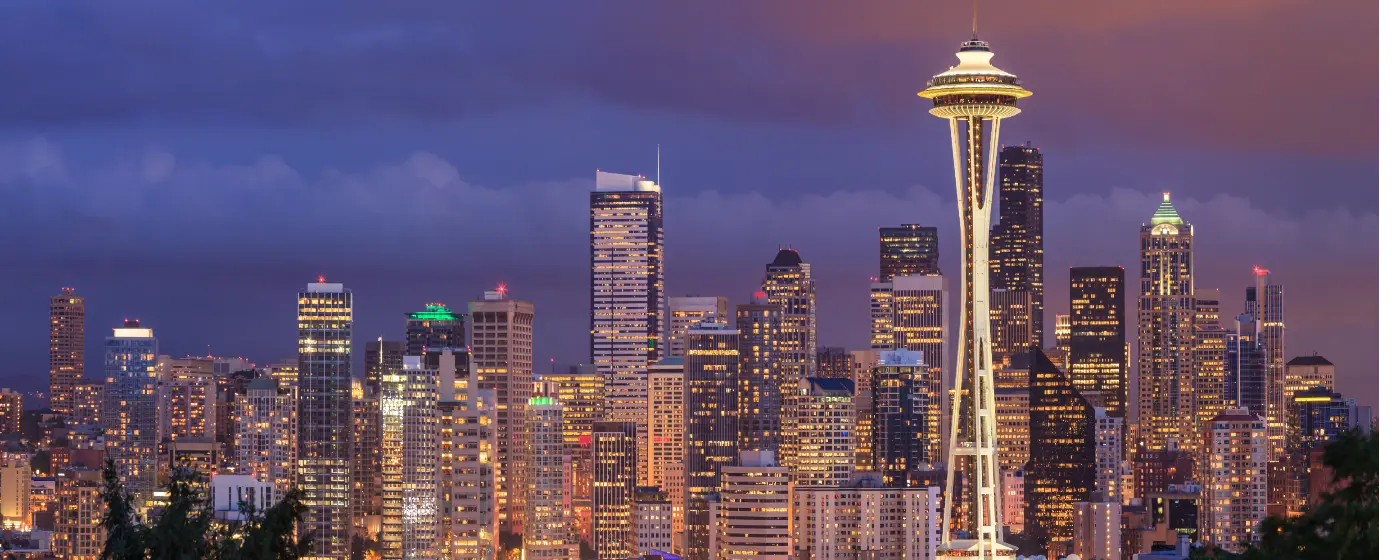
What Is Living in Seattle, Washington Like?
You've done the spreadsheet. Seattle scores well on paper — strong median household income at $123,860, one of the most powerful tech job markets in the country, and Seattle Public Schools holds an A- rating, according to Niche. But the spreadsheet doesn't tell you that the city is really a collection of distinct hillside villages separated by water, that your commute from West Seattle to South Lake Union is almost entirely psychological until the bridge situation sorts itself out, or that the gray from November through March isn't just clouds — it's a specific flat, low-ceiling light that newcomers either learn to live with or can't. Seattle sits at the center of Central Puget Sound, framed by the bay to the west and Lake Washington to the east, with the Cascade and Olympic mountain ranges on either horizon on a clear day. I-5 bisects the city north-to-south, SR-99 (now the Alaskan Way Viaduct's tunnel replacement) runs parallel along the waterfront, and I-90 connects the Eastside — geography and infrastructure shape daily life here in ways that no zip-code search will ever surface.
Amazon's campus in South Lake Union is the most visible economic engine, occupying a neighborhood it effectively rebuilt from scratch over the past decade. The University of Washington anchors the northeast corner of the city as both a major employer and research institution. Starbucks' headquarters sits near the waterfront. Microsoft is technically in Redmond, but its gravitational pull on Seattle's housing, commute patterns, and coffee shop populations is enormous. The district serves the city with strong overall performance, though boundary lines and magnet program admissions create real variation between neighborhoods that matters a lot once you have school-age kids. The median household income here reflects a city where tech salaries pull the average up significantly; service workers, educators, and nonprofit employees face a cost-of-living reality that's considerably harder.
Seattle's overall cost of living runs approximately 45% above the national average, with housing as the dominant driver — see the full breakdown on the cost of living page. What partly offsets that is Washington's long-standing absence of a state personal income tax (though high earners should note 2026 legislative changes that introduced a 9.9% excise tax on capital gains and high wage income). The sales tax is 10.25%, which you notice immediately. The payoff for the cost is access: Alki Beach and Lincoln Park in West Seattle, the Burke-Gilman Trail running from Ballard through the U-District, mountain trails an hour east via I-90, and Mt. Rainier visible on the clearest days from Kerry Park in Queen Anne. This is a city where weekends can mean kayaking on Lake Union on Saturday and hiking to a ridge above the snowline on Sunday.
Whether you're being relocated by a tech employer, escaping a higher-cost market, or simply trying to understand what day-to-day life in Seattle actually looks like before you sign a lease or make an offer, the sections below break down Seattle's job market and economy, what daily life feels like on the ground, the current housing market, how getting around actually works, and where locals spend their weekends.
Seattle at a Glance
Looking to buy in Seattle? Estimate your payment.
Enter your numbers to see an estimated monthly mortgage payment.
Estimate only. Excludes HOA fees and mortgage insurance. The interest rate above is a starting point, not a quoted rate — replace it with your own to see real numbers. Insurance is a flat placeholder, not a Seattle quote.
Why Are People Moving to Seattle?
The honest answer is: mostly for the jobs. Amazon alone has reshaped entire city blocks, and its South Lake Union campus continues to draw engineers, product managers, and operations professionals from across the country. Microsoft pulls a parallel stream toward the Eastside — technically Redmond, but the housing market doesn't distinguish.
The University of Washington is the city's other anchor, combining tens of thousands of students with a major research and medical enterprise that employs physicians, researchers, administrators, and tradespeople at scale. Starbucks' global headquarters near the waterfront employs several thousand in corporate roles. A major regional health system rounds out the employer picture with one of the city's largest workforces.
It's worth being honest about 2026's tech headwinds. Amazon, Microsoft, and several other Puget Sound tech employers have trimmed local headcount, reflecting AI-driven restructuring across the sector. The city's tech economy remains massive — but people moving here specifically for a job they haven't secured yet are taking a meaningfully different risk than they would have three years ago.
Who Actually Moves to Seattle
| Buyer / Mover Type | What Draws Them | Best Fit |
|---|---|---|
| Tech professionals | Amazon, Microsoft, and a dense ecosystem of startups and mid-stage companies | Tech |
| Families with school-age children | Strong public school district, neighborhood cohesion, access to outdoors | Families School |
| University-affiliated researchers and staff | UW campus in the U-District, proximity to major medical centers | Transit |
| Remote workers pricing out of San Francisco | No state income tax historically, Pacific timezone alignment, lower (relative) cost | Value |
| Outdoor-lifestyle seekers | Mountains, water, trails all within an hour of the city | Nature Views |
| Renters building savings | Citywide rent trends softening slightly, dense transit access, walkable core neighborhoods | Renter Walkable |
The case against moving here is shorter but real: the cost of ownership is steep, the weather demands psychological adjustment, and the tech job market in 2026 is more competitive than the city's reputation suggests.
The No-Income-Tax Reality
Washington's constitutional ban on personal income tax has long been a draw, especially for high earners leaving California or Oregon. In 2026, the Legislature passed a 9.9% excise tax on high earners' capital gains and wages — the legal framing differs from a traditional income tax, but the practical impact on high-income tech workers is real. If this affects your situation, talk to a CPA familiar with Washington tax law before making a relocation decision around the tax advantage alone.
What Daily Life Feels Like in Seattle
Newcomers from flat, grid-planned cities are often unprepared for how physically fragmented Seattle is. The city is built on a series of hills and water bodies — Lake Union, Lake Washington, the lake canal system — that mean a two-mile straight-line distance can require a twenty-minute drive. Ballard and Capitol Hill are both identifiably Seattle, but they feel like different cities.
The Gray Season — What Nobody Warns You About
People moving from the Midwest or the South expect rain. What they don't expect is the persistent low cloud cover from late October through March that means you can go literal weeks without seeing direct sunlight. It's not dramatic — no thunderstorms, rarely heavy rain — just relentless gray. Longtime residents often buy full-spectrum light therapy lamps within their first two winters.
The payoff is real: summers in Seattle are legitimately among the best in the country. July and August bring consistent 70s, low humidity, and long evenings with light until 9 p.m. The mountains are an hour away. The mood lifts noticeably citywide in late April when the clouds start to break.
Where Locals Actually Gather
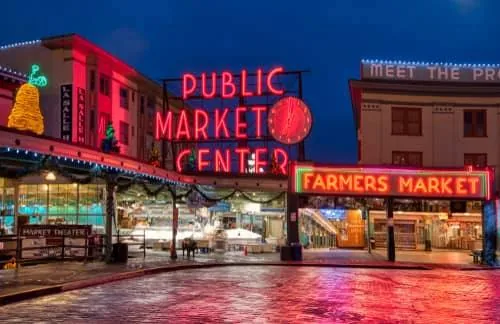
Pike Place Market is for tourists on Saturday morning — locals know to go early on a weekday for actual produce shopping. The real gathering spots are neighborhood-specific: the Green Lake path on weekend mornings draws a cross-section of joggers, dog walkers, and stroller-pushers that feels like a village square. Victrola Coffee Roasters on E Pike St in Capitol Hill remains a neighborhood anchor — the kind of place where regulars have the same corner table every Saturday.
Capitol Hill's food-and-drink scene added 35 new bars, cafés, and restaurants in 2025 alone, which tells you something about the neighborhood's energy. Stoup Brewing on the Pike/Pine corridor and Reuben's Brews on 14th Ave NW in Ballard both function as community living rooms as much as taprooms — weekend afternoons there are as much about running into people you know as the beer.
The Six-Month Surprise
Most newcomers say the same thing around month six: they didn't realize how neighborhood-dependent life would become. Seattle's geography means you tend to settle into a three-square-mile radius and rarely leave it. The city doesn't feel big once you're in it — it feels like a collection of small towns that happen to share a mayor. That can be wonderful or isolating depending entirely on how quickly you plug into your immediate neighborhood.
Parks and trails are covered in depth on the parks and recreation page, and school details live on the schools page. For the full safety picture, see the safety page.
The Seattle Housing Market Right Now
Seattle's Zillow Home Value Index stood at $865,273 as of May 2026 — down 2.5% from the prior year, which sounds like relief until you see that homes were still going to pending in around 9 days. A slight price dip in a market that moves this fast is not the same as a buyer's market.
Redfin's competitiveness index scores Seattle at 84 out of 100, and the city's median sale price runs approximately 118% above the national average. Those figures tell the same story: Seattle is among the more competitive housing markets in the country, and the modest year-over-year softening hasn't changed the fundamental dynamic.
What the Numbers Mean in Practice
Entry-level ownership — older single-family homes requiring updates, or smaller condos in less central locations — starts in the low-to-mid $500,000s. Turnkey single-family homes in popular neighborhoods are a different conversation entirely, with prices well above the citywide median. Some areas of the city cost considerably more than others; the best neighborhoods page breaks down what to expect by area.
The rental market has softened slightly. The citywide median rent across all unit sizes runs in the range of $2,083–$2,238 per month depending on the data source (Apartment List and RentCafe both track the market, with modest differences in methodology). Both show rents down modestly year-over-year — good news for renters, though still well above national benchmarks. For the full rent and cost-of-living breakdown, see the cost of living page.
Inventory remains tight enough that well-priced homes in sought-after neighborhoods generate real competition. The pace — roughly nine days to pending — means you have very little time to deliberate once a property comes to market. That's the defining reality of buying here, regardless of where prices are in any given month.
Seattle Neighborhoods
Seattle has several distinct areas — each with its own character and appeal. Here’s a breakdown to help you narrow down where to focus your home search.
🏡 Capitol Hill
Seattle's densest and most walkable neighborhood, with the Pike/Pine corridor running through a mix of independent cafés, bars, and a housing stock ranging from older apartment buildings to craftsman homes. It draws younger professionals and longtime LGBTQ+ community members in roughly equal measure, and added 35 new food and drink spots in 2025 alone.
🏠 Ballard
A former Scandinavian fishing community that has evolved into one of Seattle's most family-friendly and independently-spirited neighborhoods, centered on the Sunday farmers market on Ballard Avenue NW and a brewery culture anchored by Reuben's Brews on 14th Ave NW. It's geographically isolated enough to feel self-contained — which residents tend to love.
🌳 Fremont
Self-styled as the 'Center of the Universe,' Fremont sits north of Lake Union on the lake canal system and mixes tech-worker density with an older bohemian identity — public art, the Sunday market, a neighborhood brewery on N 34th St, and a genuinely walkable core. It suits people who want urban texture without Capitol Hill's density.
🏘 Queen Anne
Upper Queen Anne sits atop a steep hill with Kerry Park's famous views of the Space Needle and the waterfront, and a quiet, tree-lined residential character that draws families and established professionals. Lower Queen Anne, near Seattle Center, is denser and more transit-oriented — a different neighborhood in feel despite sharing a name.
🏔 West Seattle
Separated from the rest of the city by the West Seattle Bridge and the Duwamish River, this peninsular neighborhood has a 'town within a city' identity centered on the Alaska Junction commercial district and Alki Beach along the waterfront. The Link light rail extension projected for 2032 is the infrastructure event residents are watching most closely.
🌆 Wallingford
A quiet, grid-planned residential neighborhood between Green Lake and the lake canal system that consistently ranks among Seattle's most livable — good school options, walkable neighborhood commercial streets along N 45th St, and a demographic mix that skews toward families with young children and longtime homeowners. It's less flashy than Capitol Hill but more rooted.
Pros & Cons of Living in Seattle
The Pros
- World-class tech job market with some of the highest salaries in the country
- Surrounded by mountains
- Puget Sound
- and easy access to outdoor recreation
- No state income tax
- Strong food
The Cons
- Among the most expensive housing markets in the U.S.
- Notoriously gray
- rainy winters with limited sunlight
- Traffic congestion and a competitive
- tight rental/housing market
Getting Around & Commuting in Seattle
Seattle's geography is the single biggest variable in your commute. The city is bisected by I-5, squeezed between two lakes, and accessed from the Eastside via I-90 and SR-520 — two floating bridges that become parking lots during peak hours. Where you live relative to where you work is not a minor consideration. It's often the decision.
The Central Spine: Downtown and South Lake Union
From most central Seattle neighborhoods to Downtown or South Lake Union, the commute reference is around 20 minutes by car — in conditions that don't exist during rush hour. The same trip on the Link light rail system is often faster and more predictable, which is why transit investment matters here more than in most American cities.
A Sound Transit monthly pass runs approximately $108, with single rides at around $3. For Amazon and other South Lake Union employers, the train is a genuine alternative — not the aspirational kind, but the kind where it actually saves you time and parking costs.
The 2026 Transit Expansion That Changes Things
Sound Transit's 2 Line Crosslake Connection opened March 28, 2026, linking Downtown Seattle to Bellevue and Redmond via the new Judkins Park Station on I-90. For the first time, you can ride from Capitol Hill to Microsoft's Redmond campus without a transfer. That's a meaningful shift for the thousands of people who work on the Eastside and have historically faced a car-dependent cross-lake commute.
The West Seattle Link Extension — connecting Alaska Junction, Delridge, and SODO stations via a Duwamish River bridge — is projected to open by 2032, pending Sound Transit Board approval that advanced the project in May 2026. The Ballard Link Extension, with nine new stations and a second downtown transit tunnel, is further out at a projected 2039 completion. Both projects are actively funded and progressing, but "2032" and "2039" are not the same as today — West Seattle and Ballard residents are still driving or taking buses for now.
The Honest Traffic Picture
| Corridor | Direction | Peak Condition | Best Alternative |
|---|---|---|---|
| I-5 through downtown | North–South | Severely congested 7–9 AM and 4–7 PM | Link light rail (frequent, reliable) |
| SR-520 floating bridge | Seattle ↔ Eastside | Bottleneck at both ends during peak hours | 2 Line light rail via I-90 (since March 2026) |
| I-90 floating bridge | Seattle ↔ Bellevue/Renton | Heavy AM eastbound, PM westbound | 2 Line light rail (direct) |
| West Seattle Bridge / Fauntleroy corridor | West Seattle to downtown | Chronically congested; bridge restrictions in recent years have created lasting bottleneck habits | Water taxi (peak hours), future Link Extension by 2032 |
| SR-99 (tunnel) through downtown | North–South, waterfront | Better flow than I-5 mid-day; still peaks heavily | Surface streets for short hops |
| Mercer Street / South Lake Union grid | East–West, central | Dense Amazon campus traffic, pedestrian-heavy | Bike lanes and scooters viable for local trips |
The Burke-Gilman Trail gives cyclists a nearly unbroken off-road route from Ballard through the U-District and beyond — if your commute aligns with it, bike commuting is genuinely practical here in a way it isn't in most cities of Seattle's size.
Living on the Eastside vs. Living in Seattle
If you work at Microsoft or one of the Eastside tech campuses, living in Seattle proper means crossing a bridge every day. Many people make that trade deliberately — they want the city's walkable neighborhood life and accept the commute. Others decide the math doesn't work and rent or buy in Bellevue or Kirkland instead. Neither is wrong; they're genuinely different lifestyles, and the 2 Line expansion makes the Seattle-side choice more defensible now than it was 18 months ago.
Schools in Seattle
Families relocating to Seattle have public, private, and higher-education options nearby. Here’s a quick overview.
🎓 School District
Seattle Public Schools serves K–12 students across Seattle and the surrounding area. Rated A- (source: Niche.com).
🏆 Graduation Rate
The 4-year high-school graduation rate here is approximately 86.1%.
📚 Higher Education
Washington’s public universities — the University of Washington, Washington State University, and Western Washington University — offer four-year degrees statewide, with a network of 34 community and technical colleges (SBCTC) providing two-year and workforce programs.
🌐 Online Learning
University of Washington Continuum College and Washington State University Online offer fully accredited online degrees for remote learners across the state.
Safety in Seattle
A quick look at how Seattle compares on the numbers that matter most when weighing a neighborhood or a move.
🛡 Violent Crime
Approximately 7.75 per 1,000 residents.
🔒 Property Crime
Approximately 50.1 per 1,000 residents.
Compared to the FBI’s most recent national data (2024), Seattle’s violent crime is above the national average (about 3.6 per 1,000), and property crime is above the national average (about 17.6 per 1,000).
Against Washington as a whole, Seattle’s violent crime is about three times the state average, and property crime is about double the state average (Bureau of Justice Statistics, Crime Known to Law Enforcement, 2024 (tables 2 and 3)).
Crime rates can vary a lot within a single city, so the citywide numbers above are only a starting point. Some neighborhoods in Seattle run well below these averages, while others run higher — the kind of block-by-block detail that matters most when you’re actually choosing where to live. The full guide below breaks it down neighborhood by neighborhood.
Working in Seattle
Seattle’s largest employers span several industries — here are some of the anchors of the local job market.
💼 Amazon
E-commerce/cloud computing
💻 Microsoft
Technology
🎓 University of Washington
Education/research
🏥 Providence Swedish
Healthcare
🛒 Starbucks
Food & beverage, HQ
Parks & Recreation in Seattle
Some of the outdoor spaces that shape everyday life in Seattle.
🌱 Chihuly Garden and Glass
🌱 Kerry Park
Seattle residents don’t have to go far for green space — spots like Chihuly Garden and Glass and Kerry Park are part of everyday life here, whether that’s a morning walk, a weekend hike, or just somewhere to unwind outside. The full guide below covers more of what Seattle has to offer for parks and outdoor recreation.
Retiring in Seattle
Seattle draws retirees for its balance of amenities, outdoor access, and cost. Here’s what to weigh.
🌤 Climate
Seattle's mild marine climate means rarely extreme heat or cold — temperatures stay largely between 40°F and 80°F year-round. The trade-off is the November-through-March overcast season, with limited direct sunlight that many retirees find challenging. Those who thrive here tend to embrace indoor community life in winter and spend summers outdoors aggressively.
🍴 Lifestyle
The city offers Pike Place Market within walking distance of several central neighborhoods, a strong independent restaurant and coffee culture, and world-class museum access at Seattle Center. For day-trip variety, the Washington State Ferry system and easy mountain access give retirees meaningful outdoor options well into their later years.
🏚 55+ Communities
Seattle and its immediate suburbs have a range of independent-living and active-adult communities, particularly in Shoreline and south King County. The city itself skews younger and denser, so retirees seeking purpose-built 55+ settings often look slightly outside the city limits while maintaining Seattle access. The retiring page covers healthcare and senior-living options in detail.
✈ Getting Around
Seattle-Tacoma International Airport is roughly 30 minutes south of downtown by car or Link light rail's 1 Line — one of the better airport connections of any major U.S. city. Within the city, driving requires navigating real hills and bridge-dependent corridors; the Link system is a reliable alternative for central neighborhoods. Walkability varies sharply by neighborhood.
🏛 Washington Taxes for Retirees — What to Know
- No state income tax — Washington does not tax personal income, so Social Security, pensions, and 401(k)/IRA withdrawals are all untaxed at the state level. There is no state return to file and no retirement exclusion to claim — the rate is simply zero.
- Military and public pensions — Because there is no income tax, military retirement pay and public-employee pensions are untaxed at the state level along with everything else.
- Sales tax is the tradeoff — The state sales tax is 6.5%, and local add-ons bring the combined rate in Seattle to 10.55% (Washington State Department of Revenue, Q3 2026 local sales & use tax rate table, July 2026). Groceries and prescription drugs are exempt.
- Property taxes, with senior relief — The effective property tax rate is roughly 0.9%. Homeowners 61+ (or unable to work due to disability, or a qualifying disabled veteran) who own and occupy their home may qualify for a reduction. Income limits are set against each county’s median household income, so the threshold differs by county — check with your county assessor. A separate deferral program is available for those who don’t qualify for the exemption.
- Capital gains tax — but not on retirement income — Washington taxes 7% on long-term capital gains above a $278,000 standard deduction for 2025, rising to 9.9% on gains above $1,000,000. Retirement accounts and real estate sales are both exempt. It therefore does not reach ordinary retirement income or the sale of a home.
- Estate tax — the one to plan for — Unlike most no-income-tax states, Washington has its own estate tax. For deaths on or after July 1, 2026, the exemption is $3 million with graduated rates topping out at 20%. Retirement accounts count toward the taxable estate, so long-time homeowners with sizable balances can cross the line without expecting to.
- No inheritance tax — Washington has no inheritance tax, and no gift tax.
- WA Cares payroll premium — Working Washingtonians pay 0.58% of gross wages into the WA Cares Fund, the state long-term care program, with no income cap. It applies to W-2 wages, so retirees who have stopped working do not pay it — but anyone relocating while still employed will see it. The private-insurance opt-out closed at the end of 2022 and is not available to new applicants; the remaining exemptions are narrow (living outside Washington, military spouses, certain visa holders, and veterans with a 70%+ service-connected rating).
- The Oregon border effect — Oregon has no sales tax, so Washington residents near the river — Vancouver, Camas, Washougal, Longview — often cross over for large purchases. Washington use tax technically applies to goods brought back for use in-state, though it is rarely enforced on ordinary personal purchases.
Tax laws change frequently and individual situations vary. This is general information, not tax advice — always consult a qualified Washington tax professional or CPA for personalized retirement tax planning.
Weekends & Local Favorites in Seattle
Seattle rewards the curious and punishes the car-dependent on weekends. The city's best experiences — the Pike Place Market on a Tuesday, a trail run in the Cascade foothills, a ferry ride across Puget Sound with Rainier in the background — are available in ways that almost no other American city can match. The catch is that many of them require knowing where to look.
The Water and the Mountains
The waterfront is walkable from most of downtown and several neighborhoods, and the Washington State Ferry system from Colman Dock in Pioneer Square is genuinely one of the more spectacular commuter experiences in the country — the crossing to a nearby island for a weekend afternoon is the whole point. The Olympic Mountains frame the western horizon on clear days in a way that stops newcomers mid-sentence.
East of the city, I-90 and SR-2 open up the Cascade Range within 45 to 75 minutes. Snoqualmie Pass has ski areas operating through late spring. The foothills along I-90 hold some of Washington's most-hiked trails — short enough for a day trip, rewarding enough to become a weekend habit.
Neighborhood Weekend Culture
Fremont on a Saturday morning has a specific character: a well-known neighborhood brewery on N 34th St has outdoor seating that fills up by noon regardless of the weather. The Fremont Sunday Market runs year-round and skews local in a way that the bigger weekend markets don't. Ballard's weekend farmers market on Ballard Avenue NW draws a genuine neighborhood crowd — not just visitors.
Green Lake Park is Seattle's most democratic public space. On a clear Saturday morning, the 2.8-mile loop around the lake has every demographic the city contains — elderly power walkers, families with dogs, teenagers on rental paddleboards, serious runners. It's where you go to understand what the city actually looks like when it's off the clock.
Food, Coffee, and the Independent Scene
Seattle has a coffee culture that long predates the chains that exported it nationally. Victrola Coffee Roasters on E Pike St in Capitol Hill is the kind of neighborhood roaster where the staff remembers your order and the espresso is taken seriously without the pretension. Capitol Hill added 35 new independent food and drink spots in 2025 alone — the neighborhood has the density and the foot traffic to support genuine culinary experimentation.
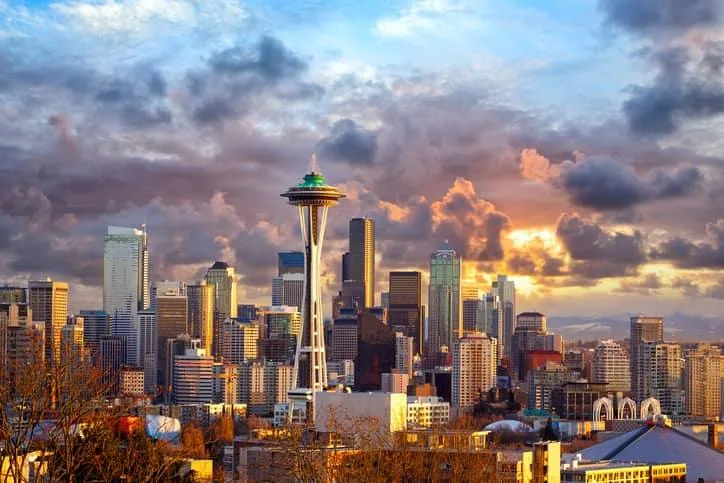
Pioneer Square has the city's oldest bones — the underground tour, the totem poles, the iron pergola — but it's also evolved into a gallery district. The Space Needle and Chihuly Garden and Glass at Seattle Center are genuinely worth the visit even if you've lived here for years; the Chihuly glass work is something you come back to. Kerry Park on the south slope of Queen Anne Hill gives you the defining Seattle photograph — Space Needle, the waterfront, and Rainier on a clear day — and it costs nothing.
The Waterfront Transformation
The Seattle Great Wheel on Pier 57 is visible from much of the central waterfront and has become a legitimate local landmark, not just a tourist photo opportunity. The rebuilt waterfront along Alaskan Way — now freed from the elevated viaduct that blocked the view for decades — is still being completed in phases, but the transformation of Seattle's connection to the water is one of the more significant urban improvements the city has made in a generation.
Top Things Locals Say About Seattle
The best intel about a city comes from the people who actually live there. Here’s what Seattle residents say when newcomers ask the questions everyone’s thinking.
“I knew the commute from West Seattle would be longer than Google Maps said, but I didn't realize the bridge situation would make me feel psychologically cut off from the rest of the city for my first year. Once I figured out the water taxi, everything changed — it's actually a better commute than most of my friends in Capitol Hill have by car.”
— Recent Seattle home buyer
“What's the most surprising thing about living in Seattle?”
How neighborhood-contained life becomes. You think you're moving to a big city, and you are, but within a few months your world compresses to about a three-mile radius around wherever you land. People in Ballard rarely go to Columbia City. People in West Seattle have a whole separate city-within-a-city mentality. It's not a bad thing — the neighborhoods are genuinely good — but it's not what most people expect from a city of 784,000.
“What do locals love most about Seattle?”
The summers, without hesitation. July and August here are the best weather of any major city in the country — consistent 70s, no humidity, light until past 9 p.m. Combine that with the mountains being an hour away and the sound being right there, and it's hard to argue with. Kerry Park on a clear August evening with Rainier glowing in the background is not something you stop appreciating.
“What should newcomers to Seattle know?”
Don't underestimate the gray. Buy a full-spectrum light lamp before November, not after. Also: I-5 through downtown is genuinely one of the worst urban freeway stretches in the country during peak hours — if you can build your life around the Link light rail instead, do it. And the Burke-Gilman Trail is underused by people who drive to work when they could bike; it's one of the city's best quality-of-life assets.
“Can you live in Seattle without a car?”
Yes, if you're in the right neighborhood and the right job situation. Capitol Hill, the U-District, and downtown are genuinely walkable, with frequent Link and bus service. If you work in South Lake Union or on the Eastside via the 2 Line, you can make car-free work. If you have kids in multiple activities across different neighborhoods, or you live in Ballard or West Seattle, life without a car gets complicated fast — the transit network isn't yet dense enough in those areas.
Cities Near Seattle
Other communities near Seattle worth a look — each with its own character and price point.
| City | Distance | Best For | Vibe | Median Rent | Median Buy |
|---|---|---|---|---|---|
| Bellevue | 10 mi | Tech workers, upscale buyers, families | Polished, dense downtown, quieter suburbs | $2,792 | $1,296,767 |
| Redmond | 15 mi | Microsoft employees, families, trails | Suburban, wooded, tech-campus adjacent | $2,400 | $1,364,438 |
| Kirkland | 11 mi | Waterfront lifestyle, young families | Lakefront, walkable downtown, laid-back Eastside | $2,300 | $1,150,000 |
More Helpful Guides for Seattle
Going deeper on Seattle? Our blog series covers everything from first-time buying to retiring here — explore the guides below.
Local Expert Takeaway: Seattle is genuinely great at making big-city amenities feel neighborhood-scaled — your life here will likely compress into a tight geographic radius around wherever you land, which is a feature if you pick the right neighborhood and a frustration if you don't. The 2 Line's March 2026 opening to Bellevue and Redmond changes the Eastside commute math for the first time in a meaningful way. Spend a weekend in the specific neighborhood you're considering — not just downtown — before you commit. Green Lake, Ballard Avenue, and the Burke-Gilman Trail will tell you more about whether this city fits you than any statistic will.
Quick Takeaways & FAQs
✅ Amazon, the University of Washington, and Starbucks' global headquarters give Seattle one of the deepest employer bases of any West Coast city, making it unusually resistant to single-company downturns.
⚠️ The gray season runs November through March with minimal direct sunlight — not dramatic rain, but a flat, persistent overcast that affects mood in ways newcomers consistently underestimate until they've lived through their first winter.
📍 Sound Transit's 2 Line Crosslake Connection opened in March 2026, making one-seat light rail trips between Capitol Hill and Redmond a reality for the first time — a meaningful shift for anyone considering living in Seattle while working on the Eastside.
Is Seattle still a good place to find a tech job in 2026?
What's the typical home price in Seattle right now?
Does Seattle have good public transit, or do you need a car?
What do people who leave Seattle actually miss most — and why do they leave?
Which Seattle neighborhoods are best for families?
Helpful Links for Moving to Seattle
Moving to Washington?
Tell us what you need help with and we'll connect you with local resources.
