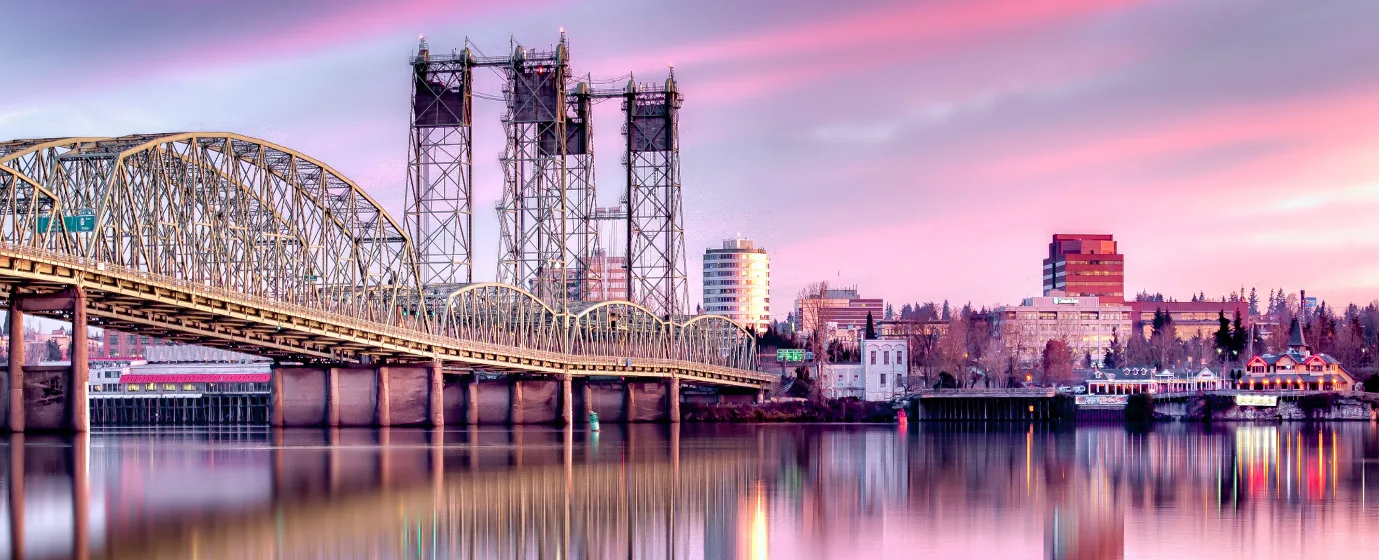
What Is Living in Vancouver, Washington Like?
If you're choosing between Vancouver and staying in Portland, the decision usually comes down to one number: zero. Washington state has no personal income tax, and that single fact drives thousands of Portland-area workers across the Columbia River every year. But calling Vancouver merely a tax haven for Portland commuters undersells what it's become. With nearly 200,000 residents, it's now the fourth-largest city in Washington, growing at roughly 0.92% annually, and city planners say they need 38,000 more homes and 43,000 more jobs to keep up — a scale of ambition that belongs to a city writing its own story, not playing a supporting role to the one across the river.
The economic backbone here runs deeper than the Portland commute. Healthcare and social assistance is the city's single largest employment sector, anchored by major employers including PeaceHealth and The Vancouver Clinic, alongside Vancouver Public Schools, which employs thousands across the district. HP Inc. and photonics manufacturer nLight represent a technology and advanced manufacturing thread that gives the local economy a dimension beyond service industries. The median household income of $81,338 sits modestly above the national median, and the poverty rate of 10.2% — below the national figure — reflects a workforce that is broadly stable, even if not uniformly prosperous.
On the cost side, Vancouver's housing market is noticeably more accessible than Seattle's and competitive with, though increasingly close to, Portland's. The $1.5 billion Waterfront redevelopment is reshaping 35 acres along the Columbia River with thousands of new residential units, a million square feet of office space, and a growing row of restaurants and shops — all within walking distance of Fort Vancouver National Historic Site and Esther Short Park. For outdoor access, the Columbia River Gorge is minutes away. For everyday errands, the city is predominantly car-dependent outside of downtown, but the tradeoffs — space, lower prices, no state income tax — keep drawing people who've done the math.
Whether you're being transferred here, priced out of Portland, or simply researching the area from scratch, the sections below break down Vancouver's job market and commute reality, what the housing market looks like right now, what daily life and weekends actually feel like, and the neighborhood-by-neighborhood character of a city that is very much in the middle of becoming something new.
Vancouver at a Glance
Looking to buy in Vancouver? Estimate your payment.
Enter your numbers to see an estimated monthly mortgage payment.
Estimate only. Excludes HOA fees and mortgage insurance. The interest rate above is a starting point, not a quoted rate — replace it with your own to see real numbers. Insurance is a flat placeholder, not a Vancouver quote.
Why Are People Moving to Vancouver?
The Tax Math Is Real — But It's Not the Whole Story
Washington's lack of a personal income tax is the headline reason Portland-area workers cross the river. For someone earning $90,000 in Oregon, that's a meaningful difference every April. But the financial case for Vancouver has grown well beyond a single line on a tax return.
Vancouver is now recognized as its own employment center, not just a bedroom community for Portland. Healthcare and social assistance alone accounts for over 16,000 workers across more than 1,000 businesses. PeaceHealth operates here as a major regional health system. The Vancouver Clinic is one of the largest physician-owned medical groups in the Pacific Northwest. HP Inc. and nLight — a photonics company manufacturing precision laser systems — anchor a technology and manufacturing sector that provides well-paying jobs without requiring a Portland commute at all.
A City Adding Jobs and Housing at Scale
The numbers reveal how serious the growth pressure is. Vancouver's population has added roughly 9,000 people since the 2020 Census, and city leaders have publicly stated a need for 38,000 more homes and 43,000 more jobs over the long term. That's not aspirational language — it's a planning target backed by infrastructure investment.
The most visible evidence is along the Columbia River waterfront. The $1.5 billion Waterfront redevelopment project is adding up to 3,300 residential units, approximately 1 million square feet of office space, and a street-level retail and dining scene that didn't exist a decade ago. A six-story, 95-unit affordable housing project is under construction as part of Waterfront Gateway, with the City Council in early 2026 requiring that at least 20% of new residential units be priced for households at or below 80% of area median income.
Who Actually Makes the Move
| Buyer / Mover Type | The Draw | Best Fit For |
|---|---|---|
| Portland commuters | No Oregon income tax; lower home prices on the WA side | Commuter Value |
| Healthcare & tech workers | Local jobs at PeaceHealth, HP Inc., nLight; no need to cross the bridge | Tech |
| Families with school-age children | Space, yards, suburban school options, and lower density than Portland | Families School |
| First-time buyers | Entry-level inventory and prices noticeably below Seattle and close to Portland | First-Time Value |
| Renters testing the market | Average rents around $1,854/month with access to a major metro job market | Renter |
| Outdoor-focused buyers | Columbia River Gorge access, miles of waterfront trails, Mt. Hood within reach | Nature Views |
The one buyer profile Vancouver consistently disappoints: people who want a walkable urban core with the density and transit network of a large city. That experience is available in Portland — Vancouver's downtown is improving but not there yet.
What Daily Life Feels Like in Vancouver
The Geographic Reality
Vancouver is a sprawling city by Pacific Northwest standards. Downtown and the older west-side neighborhoods around Uptown Village and Arnada feel historic and walkable — bungalows, mature trees, and a main-street feel along Main Street itself. But most of the city is mid-century suburban and newer: wide arterials, strip-mall corridors along Fourth Plain Boulevard, and the kind of suburban grid where a car is simply assumed.
That divide matters before you buy. Neighborhoods close to downtown and Officers Row have a completely different rhythm than, say, Cascade Park or Hazel Dell, which function more like conventional suburbs. Neither is wrong — they suit different lives. But buyers who tour the waterfront and assume the whole city feels that way tend to be surprised once they're living three miles inland.
What Locals Know
The craft beer scene has quietly become one of Vancouver's most consistent local amenities. Loowit Brewing on W 6th Street downtown, Fortside Brewing Company on NE Andresen Road, Ghost Runners Brewery and Kitchen, and the newly opened Loyal Legion Beer Hall — which opened in May 2026 in a prominent downtown location — give the city a weekend taproom culture that doesn't require crossing into Portland.
Esther Short Park anchors downtown social life in a way that surprises newcomers. Farmers markets, community events, and informal gatherings happen there regularly across spring and summer, giving the neighborhood a focal point that suburban Vancouver generally lacks. Fort Vancouver National Historic Site and Pearson Air Museum are a short walk away — both are genuinely used by locals, not just tourists.
The Seasonal Surprise
Newcomers from sunnier climates underestimate the gray. Vancouver gets roughly the same overcast, drizzly winters as Portland — consecutive weeks without meaningful sun are common from November through February. Many people who move here from California in the summer months hit month four or five and realize they were not prepared for the cumulative weight of low cloud cover. The flip side: summers along the Columbia River are legitimately spectacular, and the city's outdoor amenities earn their reputation from June through September.
Schools in Vancouver Public Schools carry a B- district rating — solid but not exceptional. The full school breakdown covers individual campuses and attendance boundaries worth understanding before choosing a neighborhood.
The Vancouver Housing Market Right Now
Where Prices Stand
The typical home value in Vancouver is $510,224 (Zillow Home Value Index, May 2026) — a figure that has held remarkably stable, down just 0.6% year-over-year. For a market that SmartAsset ranked seventh among the healthiest real estate markets in the United States, that kind of stability is the point: not explosive appreciation, not a crash, but a market moving in line with income growth and demand fundamentals.
Homes are moving fast. Listings go to pending in around 12 days on average. As of July 2026, Vancouver had 77 active listings against 45 pending sales — a ratio that keeps pressure on buyers without tipping into the kind of frenzied bidding that defined the 2021–2022 cycle. Average rent across the city runs approximately $1,854 per month, which matters for buyers weighing whether to rent first or buy immediately. For more context on both renting and buying costs, see the Vancouver cost-of-living breakdown.
What the Waterfront Development Changes
The $1.5 billion Columbia River waterfront project is the single biggest factor reshaping Vancouver's housing profile over the next decade. Up to 3,300 new residential units are planned across 35 acres reconnected to downtown — a combination of market-rate and income-restricted units that will add meaningful supply to a market that currently has very little of either. The January 2026 council requirement that at least 20% of Waterfront Gateway units be affordable at 80% of area median income signals that city leadership is at least trying to ensure this growth doesn't only serve one income bracket.
Some areas carry values noticeably below the city-wide figure, particularly in older west-side ZIP codes near downtown. Others — newer construction on the east side and in the Felida area — run higher. The best neighborhoods guide covers the character and price range of each area in detail.
Market Pace: What It Means Practically
A 12-day median time to pending means well-priced homes don't sit. Buyers who want to take their time touring multiple weekends and deliberating are consistently outpaced by those who have done their research in advance and can move decisively. This is less about competition and more about preparation — knowing the neighborhoods, understanding what you're seeing when you walk through a home, and being clear on your priorities before you start looking.
Vancouver Neighborhoods
Vancouver has several distinct areas — each with its own character and appeal. Here’s a breakdown to help you narrow down where to focus your home search.
🏡 Uptown Village
Uptown Village is Vancouver's most walkable neighborhood, centered on a stretch of Main Street lined with independent businesses, coffee shops, and restaurants within blocks of Esther Short Park. It suits buyers who want an urban feel, older bungalow-style homes with character, and the ability to walk to weekend plans.
🏠 Fruit Valley
Fruit Valley sits on the northwestern edge of the city near the Columbia River, offering more affordable entry points and a quietly residential character that appeals to buyers who want proximity to the waterfront without paying downtown prices. The neighborhood is unpretentious and practical, with a tight-knit feel that longtime residents value.
🌳 Arnada
Arnada is an older, tree-canopied neighborhood just east of downtown with a mix of craftsman homes and a walkability that rivals Uptown Village without the commercial activity of Main Street. It's a strong choice for buyers who want neighborhood quiet with easy access to downtown Vancouver.
🏘 Carter Park
Carter Park is a compact, established neighborhood anchored by the park that gives it its name — a neighborhood green space that serves as the informal gathering point for residents. It sits close enough to downtown to benefit from urban amenities while retaining the feel of a mid-century residential enclave.
🏔 Hazel Dell
Hazel Dell runs along the Hazel Dell Avenue corridor north of central Vancouver, offering conventional suburban homes at a range of price points and easy access to the area's commercial strip. It's a practical choice for buyers prioritizing space and freeway access over walkability.
🌆 Cascade Park
Cascade Park anchors the east side of Vancouver near I-205 and the Glenn Jackson Bridge, making it one of the most popular neighborhoods for Portland east-side commuters. The area features established suburban homes, proximity to shopping, and a commuter-friendly location that trades urban energy for efficient access.
Pros & Cons of Living in Vancouver
The Pros
- No Washington state income tax while remaining minutes from Portland jobs
- easy access to Columbia River Gorge and Cascades outdoor recreation
- historic core with a revitalized waterfront and growing dining scene
- relatively affordable compared to Seattle-area housing
The Cons
- Property crime rates run above national and state averages
- long
- gray
- rainy winters typical of the Pacific Northwest
- bridge traffic into Portland can make peak-hour commutes unpredictable
Getting Around & Commuting in Vancouver
The Bridge Situation
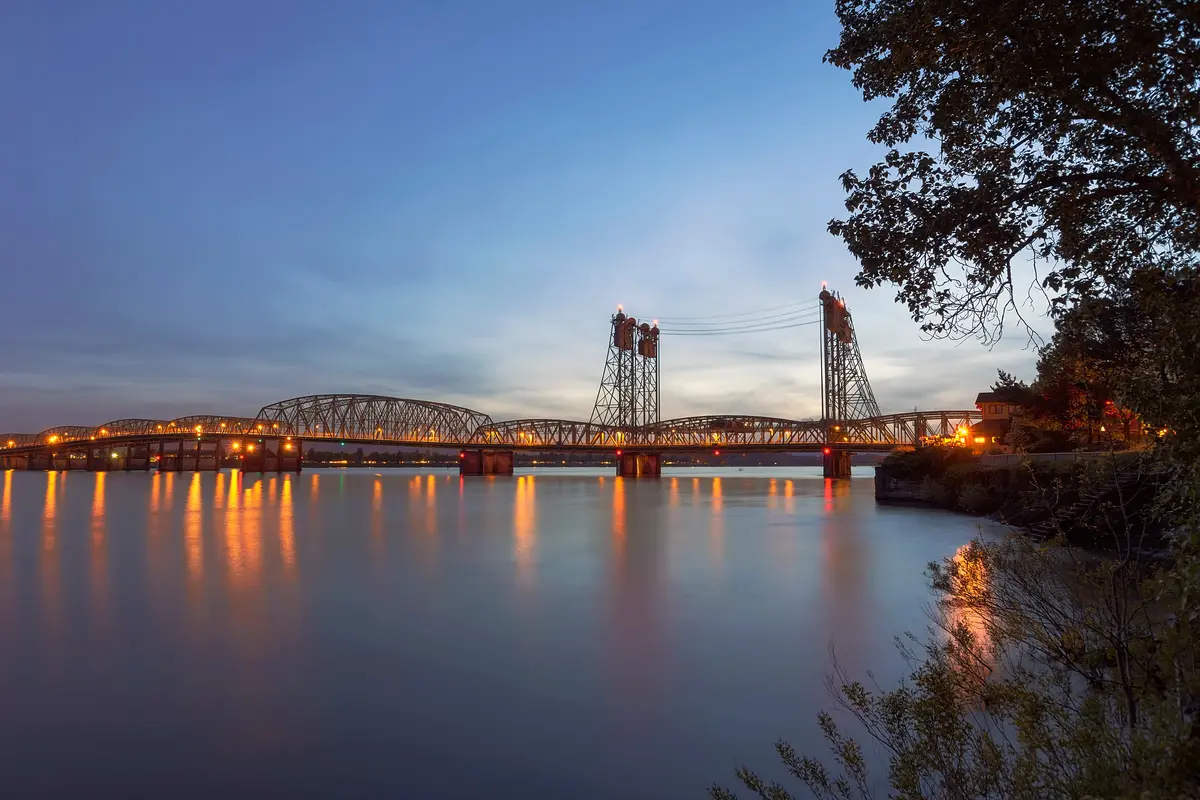
There is no more important fact about Vancouver commuting than this: two aging Interstate bridges connect the city to Portland, and both carry I-5 traffic across the Columbia River. The I-5 bridge is a century-old lift bridge. The I-205 bridge, further east, provides an alternative but adds miles for most downtown Portland commuters. Under normal conditions, Portland runs about 25 minutes from central Vancouver. During rush hour — particularly southbound in the morning and northbound in the evening — that number can double or triple when incidents occur.
The bridge chokepoint is the defining physical constraint on Vancouver life. It is why neighborhoods close to I-205 (Fisher's Landing, Cascade Park) appeal to workers commuting to the east side of Portland, while downtown Vancouver neighborhoods matter most to those who can work in Vancouver itself or use surface streets. Anyone who commutes to Portland and does not factor bridge timing into their neighborhood search is making a significant mistake.
By the Numbers: Commute Options
| Route / Mode | Typical Off-Peak Time | Rush-Hour Reality | Best For |
|---|---|---|---|
| I-5 to downtown Portland | ~20 min | 40–60+ min | Workers with flexible hours or reverse commute |
| I-205 to east Portland / Gresham | ~25 min | 35–50 min | Cascade Park, Fisher's Landing residents |
| C-TRAN express bus to Portland | ~40 min | Similar — avoids bridge stress | Commuters who want to skip the drive |
| TriMet light rail (MAX) | Not available — no light rail crosses to Vancouver | N/A | N/A — Portland MAX stops at the river |
| Bicycle / pedestrian bridge | I-205 has a dedicated bike/ped path | Weather-dependent | Cyclists commuting to east Portland |
| Work locally in Vancouver | No bridge required; most Vancouver commutes under 20 min | Standard city traffic | Employees of PeaceHealth, HP Inc., nLight, VPS |
The absence of light rail between Vancouver and Portland is a recurring political topic — the Columbia River Crossing project has been studied, debated, and stalled for years. There is no funded, approved rail connection as of 2026; residents should plan their commute around current infrastructure, not anticipated future transit.
Getting Around Within Vancouver
Inside the city, C-TRAN runs local bus service across the major corridors — Fourth Plain Boulevard, Mill Plain Boulevard, and the downtown transit center. It's adequate for basic errands along those routes, but the city's suburban layout means most residents use a car for daily life. Downtown Vancouver and Uptown Village are genuine exceptions: walkable streets, neighborhood businesses within reach, and enough density to make car-free days realistic for residents in those specific areas.
Portland International Airport (PDX) is the region's primary airport, roughly 20–30 minutes from most Vancouver neighborhoods via I-205 — one of the practical upsides of sitting directly across the river from a major metro.
Schools in Vancouver
Families relocating to Vancouver have public, private, and higher-education options nearby. Here’s a quick overview.
🎓 School District
Vancouver Public Schools serves K–12 students across Vancouver and the surrounding area. Rated B- (source: Niche.com / PublicSchoolReview).
🏆 Graduation Rate
The 4-year high-school graduation rate here is approximately 83%.
📚 Higher Education
Washington’s public universities — the University of Washington, Washington State University, and Western Washington University — offer four-year degrees statewide, with a network of 34 community and technical colleges (SBCTC) providing two-year and workforce programs.
🌐 Online Learning
University of Washington Continuum College and Washington State University Online offer fully accredited online degrees for remote learners across the state.
Safety in Vancouver
A quick look at how Vancouver compares on the numbers that matter most when weighing a neighborhood or a move.
🛡 Violent Crime
Approximately 5.8 per 1,000 residents.
🔒 Property Crime
Approximately 34.5 per 1,000 residents.
Compared to the FBI’s most recent national data (2024), Vancouver’s violent crime is above the national average (about 3.6 per 1,000), and property crime is above the national average (about 17.6 per 1,000).
Against Washington as a whole, Vancouver’s violent crime is about double the state average, and property crime is somewhat above the state average (Bureau of Justice Statistics, Crime Known to Law Enforcement, 2024 (tables 2 and 3)).
Crime rates can vary a lot within a single city, so the citywide numbers above are only a starting point. Some neighborhoods in Vancouver run well below these averages, while others run higher — the kind of block-by-block detail that matters most when you’re actually choosing where to live. The full guide below breaks it down neighborhood by neighborhood.
Working in Vancouver
Vancouver’s largest employers span several industries — here are some of the anchors of the local job market.
🏥 PeaceHealth
Healthcare
🎓 Vancouver Public Schools
Education
🏥 The Vancouver Clinic
Healthcare
💻 HP Inc.
Technology/manufacturing
🏭 nLight
Photonics manufacturing
Parks & Recreation in Vancouver
Some of the outdoor spaces that shape everyday life in Vancouver.
🌱 Vancouver Waterfront Park
🌱 Esther Short Park
Vancouver residents don’t have to go far for green space — spots like Vancouver Waterfront Park and Esther Short Park are part of everyday life here, whether that’s a morning walk, a weekend hike, or just somewhere to unwind outside. The full guide below covers more of what Vancouver has to offer for parks and outdoor recreation.
Retiring in Vancouver
Vancouver draws retirees for its balance of amenities, outdoor access, and cost. Here’s what to weigh.
🌤 Climate
Vancouver shares the Pacific Northwest's mild but overcast climate — warm, dry summers from June through September and long gray stretches from November through March. Snowfall is rare and typically light when it occurs. Retirees who struggle with extended cloud cover and low winter light find it an adjustment; those who prefer mild temperatures over sunny winters tend to settle in comfortably.
🍴 Lifestyle
The Columbia River Waterfront and Esther Short Park give retirees a walkable daily outdoor routine within reach of restaurants, farmers markets, and community events. Fort Vancouver National Historic Site and Pearson Air Museum offer low-cost cultural programming year-round. Portland's full urban amenities — theater, museums, an international airport — are 20–25 minutes away when the bridges cooperate.
🏚 55+ Communities
Vancouver has a range of active-adult and senior-living options across the city, from independent-living communities near the east side to continuing-care options serving the broader Clark County area. The city's healthcare sector is deep enough that access to medical services is among the stronger points of retiring here compared to smaller communities in the region. The retiring guide covers healthcare access and senior living in full detail.
✈ Getting Around
Most retirees in Vancouver drive — the suburban layout makes it the practical choice outside of the downtown core. Portland International Airport is roughly 20–30 minutes via I-205, a genuine convenience for retirees who travel frequently. C-TRAN offers paratransit service for those who need it, and the Waterfront area is fully walkable for residents who choose neighborhoods there.
🏛 Washington Taxes for Retirees — What to Know
- No state income tax — Washington does not tax personal income, so Social Security, pensions, and 401(k)/IRA withdrawals are all untaxed at the state level. There is no state return to file and no retirement exclusion to claim — the rate is simply zero.
- Military and public pensions — Because there is no income tax, military retirement pay and public-employee pensions are untaxed at the state level along with everything else.
- Sales tax is the tradeoff — The state sales tax is 6.5%, and local add-ons bring the combined rate in Vancouver to 8.9% (Washington State Department of Revenue, Q3 2026 local sales & use tax rate table, July 2026). Groceries and prescription drugs are exempt.
- Property taxes, with senior relief — The effective property tax rate is roughly 0.9%. Homeowners 61+ (or unable to work due to disability, or a qualifying disabled veteran) who own and occupy their home may qualify for a reduction. Income limits are set against each county’s median household income, so the threshold differs by county — check with your county assessor. A separate deferral program is available for those who don’t qualify for the exemption.
- Capital gains tax — but not on retirement income — Washington taxes 7% on long-term capital gains above a $278,000 standard deduction for 2025, rising to 9.9% on gains above $1,000,000. Retirement accounts and real estate sales are both exempt. It therefore does not reach ordinary retirement income or the sale of a home.
- Estate tax — the one to plan for — Unlike most no-income-tax states, Washington has its own estate tax. For deaths on or after July 1, 2026, the exemption is $3 million with graduated rates topping out at 20%. Retirement accounts count toward the taxable estate, so long-time homeowners with sizable balances can cross the line without expecting to.
- No inheritance tax — Washington has no inheritance tax, and no gift tax.
- WA Cares payroll premium — Working Washingtonians pay 0.58% of gross wages into the WA Cares Fund, the state long-term care program, with no income cap. It applies to W-2 wages, so retirees who have stopped working do not pay it — but anyone relocating while still employed will see it. The private-insurance opt-out closed at the end of 2022 and is not available to new applicants; the remaining exemptions are narrow (living outside Washington, military spouses, certain visa holders, and veterans with a 70%+ service-connected rating).
- The Oregon border effect — Oregon has no sales tax, so Washington residents near the river — Vancouver, Camas, Washougal, Longview — often cross over for large purchases. Washington use tax technically applies to goods brought back for use in-state, though it is rarely enforced on ordinary personal purchases.
Tax laws change frequently and individual situations vary. This is general information, not tax advice — always consult a qualified Washington tax professional or CPA for personalized retirement tax planning.
Weekends & Local Favorites in Vancouver
The Waterfront and the Historic Core
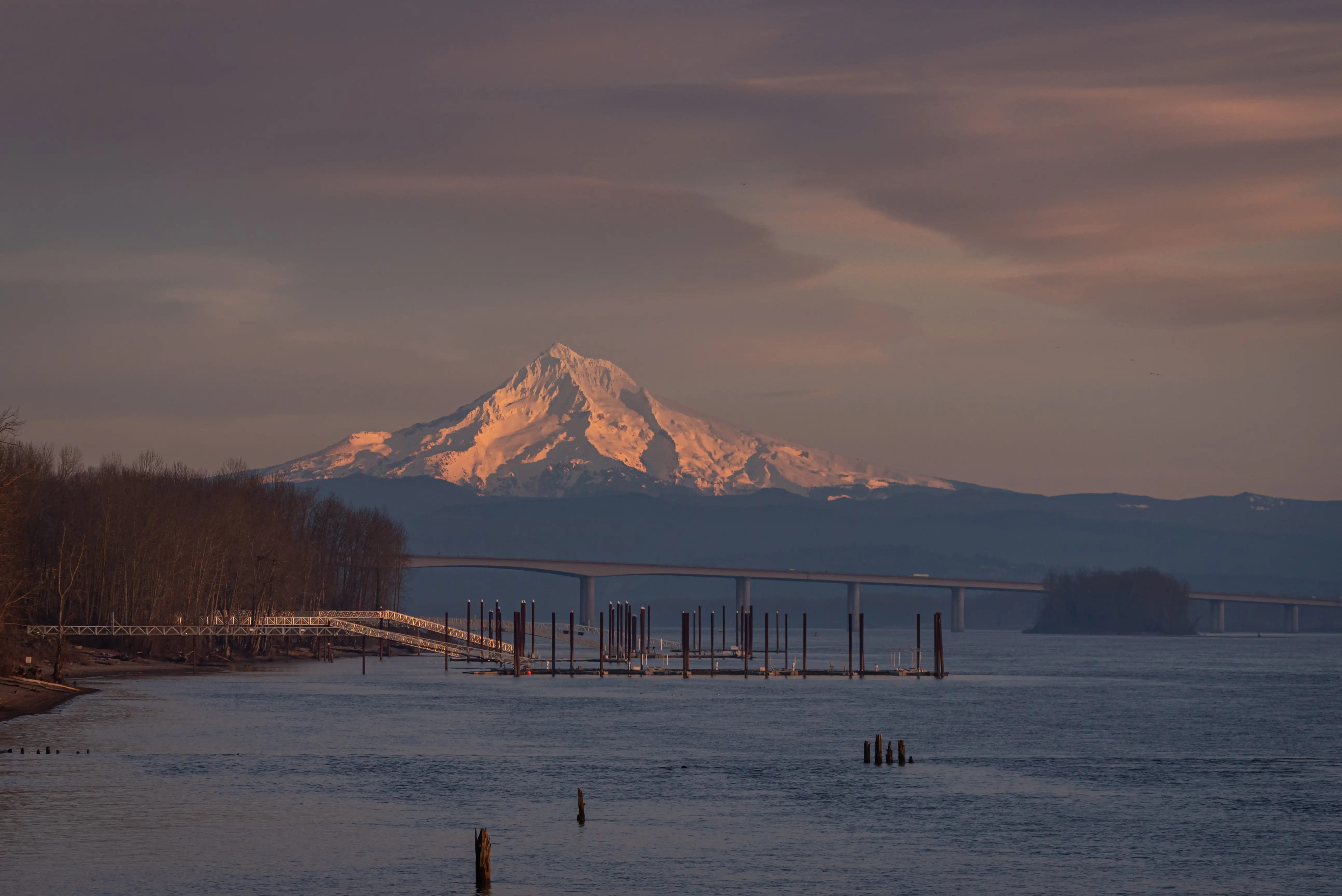
Vancouver Waterfront Park has changed weekend life in downtown Vancouver more than any other single investment in recent memory. The esplanade running along the Columbia River gives residents a place to walk, bike, and sit with a view of the river and Mt. Hood on clear days — which, from roughly June through September, is most days. The combination of the waterfront trail, Officers Row (a preserved stretch of 19th-century Victorian homes adjacent to Fort Vancouver), and Esther Short Park gives downtown Vancouver a connected green core that residents from the suburban east side regularly make the drive for.
Fort Vancouver National Historic Site is genuinely one of the more underused assets in the region. The reconstructed fur-trading fort, the grounds, and the adjacent Pearson Air Museum — one of the oldest operating airfields in the United States — are all free or low-cost and take most of a morning to explore properly. Longtime residents treat them as backyard amenities; newcomers tend to visit once and then forget they're there.
The Brewery Scene
Vancouver has developed a legitimate independent brewery culture. Loowit Brewing on W 6th Street in downtown is a neighborhood anchor. Fortside Brewing Company on NE Andresen Road draws the northeast side of the city. Ghost Runners Brewery and Kitchen adds a full food program to the mix. And Loyal Legion Beer Hall — opened in May 2026 in a prominent downtown location — brought a large-format beer hall with dozens of taps to a building that couldn't be better positioned for it.
None of this requires crossing into Portland, which is the quiet shift in how Vancouver residents talk about their weekends: fewer of them default to "going to Portland" for a good night out than was true five years ago.
Day Trips and Outdoor Access
The Columbia River Gorge is the defining outdoor asset for Vancouver residents — closer here than from anywhere in Portland, because Vancouver sits at the western mouth of it. The gorge trailheads and viewpoints above the river, and the coast along Highway 30 toward Astoria, are both within a roughly two-hour drive. Mt. Hood and its ski areas are roughly 90 minutes.
Closer in, the Burnt Bridge Creek Greenway is a multi-use trail system winding through residential Vancouver that connects several neighborhoods without requiring a car. It's the kind of amenity that shows up in relocation research but feels even more useful once you live near it. For a full picture of parks, trails, and outdoor options, the parks and recreation guide covers it in detail.
Top Things Locals Say About Vancouver
The best intel about a city comes from the people who actually live there. Here’s what Vancouver residents say when newcomers ask the questions everyone’s thinking.
“I expected to feel like I was living in Portland's shadow, but after six months I barely cross the bridge anymore. Everything I actually need day-to-day is here — and on weekends, the waterfront trail beats anything I had in my old neighborhood.”
— Recent Vancouver home buyer
“What's the most surprising thing about living in Vancouver?”
How quickly you stop thinking of it as 'near Portland' and start thinking of it as just where you live. Once you figure out that the I-5 bridge is a real bottleneck and plan around it — or get a job in Vancouver itself — the city stands on its own. The waterfront trail along the Columbia River is the thing nobody warned me about in a good way. On a clear summer evening it's genuinely spectacular.
“What do locals love most about Vancouver?”
The outdoor access without the outdoor-town price premium. The Columbia River Gorge is right there — closer to Vancouver than to most Portland neighborhoods, honestly. And the craft brewery scene has grown to the point where a Saturday in Uptown Village or downtown, hitting Loowit Brewing or Loyal Legion, doesn't require any planning or driving to Portland. The city has developed its own social gravity.
“What should newcomers to Vancouver know?”
Learn the bridge pattern before you buy a house. The I-5 crossing backs up badly on weekday mornings southbound and evenings northbound. If you're commuting to Portland, where you live in Vancouver matters a lot — people near I-205 have a meaningfully different commute experience than people near downtown. Also: Fourth Plain Boulevard is the city's main east-west arterial and is not the first impression you'd want visitors to get, but the neighborhoods behind it are often much better than the corridor suggests.
“Can you live in Vancouver without a car?”
In downtown Vancouver and Uptown Village, you can manage most daily needs on foot — groceries, restaurants, the waterfront, Esther Short Park. C-TRAN bus service covers the main corridors. But honestly, for most of the city — Hazel Dell, Cascade Park, Fisher's Landing — a car is a practical necessity. This is a suburban city that is improving its walkable core but hasn't cracked car-free living for most residents.
Cities Near Vancouver
Other communities near Vancouver worth a look — each with its own character and price point.
| City | Distance | Best For | Vibe | Median Rent | Median Buy |
|---|---|---|---|---|---|
| Camas | 12 mi | Families prioritizing top-rated schools | Quiet, established, small-town core | $1,900 | $620,000 |
| Battle Ground | 17 mi | More space and rural feel near Vancouver | Small-town, lower density, newer growth | $1,700 | $480,000 |
| Ridgefield | 14 mi | New construction buyers wanting quiet | Fast-growing, suburban, family-oriented | $1,800 | $540,000 |
More Helpful Guides for Vancouver
Going deeper on Vancouver? Our blog series covers everything from first-time buying to retiring here — explore the guides below.
Local Expert Takeaway: Vancouver's best-kept practical secret is working locally: PeaceHealth, HP Inc., nLight, and Vancouver Public Schools together employ tens of thousands of people, and residents who land jobs with any of them skip the I-5 bridge entirely. Pair a local job with a home in Uptown Village or Arnada — where you can walk to Loowit Brewing, Esther Short Park, and the Officers Row trail on a Friday evening — and you get the lifestyle Portland offers at a price point Portland no longer does, without a single bridge crossing in your weekly routine.
Quick Takeaways & FAQs
✅ Washington's zero personal income tax gives Portland-area workers a meaningful financial advantage just by living on the Vancouver side of the Columbia River.
⚠️ The I-5 and I-205 bridges are a real constraint — rush-hour commutes to Portland can stretch well beyond the off-peak 25-minute baseline, and there is no light rail connection as of 2026.
📍 The $1.5 billion Columbia River Waterfront redevelopment is actively under construction, reshaping downtown Vancouver with housing, office space, and a waterfront esplanade that already rivals anything in the region.
Is Vancouver, WA a good place to live if I work in Portland?
What is the typical home price in Vancouver, WA right now?
How are the schools in Vancouver, WA?
What are the best neighborhoods in Vancouver, WA for families?
Does Vancouver, WA have its own job market, or do most residents commute to Portland?
Helpful Links for Moving to Vancouver
Moving to Washington?
Tell us what you need help with and we'll connect you with local resources.
