
Most people asking whether Vancouver is safe are really asking a more specific question: safe compared to what, and safe in which part of town? The city's violent crime rate of 5.8 per 1,000 residents is above the Washington state average — but Vancouver's overall crime rate also dropped 16.2% in 2024, matching a broader Clark County trend. Both things are true at once. The city is improving measurably, and it still sits above benchmarks that matter to families choosing a neighborhood.
What makes this harder to parse is geography. I-5 is not just a freeway — it's the dividing line between Vancouver's higher-crime western corridors and the calmer, more residential east side anchored by Fisher's Landing and Cascade Park. Buyers and renters who treat the city as a single unit miss the most important variable. A household settling into Fisher's Landing is making a fundamentally different safety calculation than one moving into Fruit Valley, even though both addresses carry a Vancouver ZIP code.
Property crime is the real day-to-day concern here, not violent crime. Vehicle break-ins and larceny drive most of the city's numbers, and that distinction matters when you're deciding where to park your car at night or whether to leave a package on a porch. The neighborhoods with the most foot traffic — particularly around the waterfront near Esther Short Park and along the older corridors west of I-5 — also tend to carry the highest property crime concentrations.
This guide breaks down Vancouver's crime data by neighborhood, contextualizes the figures against state and national averages, explains the east-west divide that locals already know, and looks at what the Vancouver Police Department and its community partners are doing to move the numbers further. If you're deciding which part of Vancouver to plant roots in, the sections below give you the honest picture.
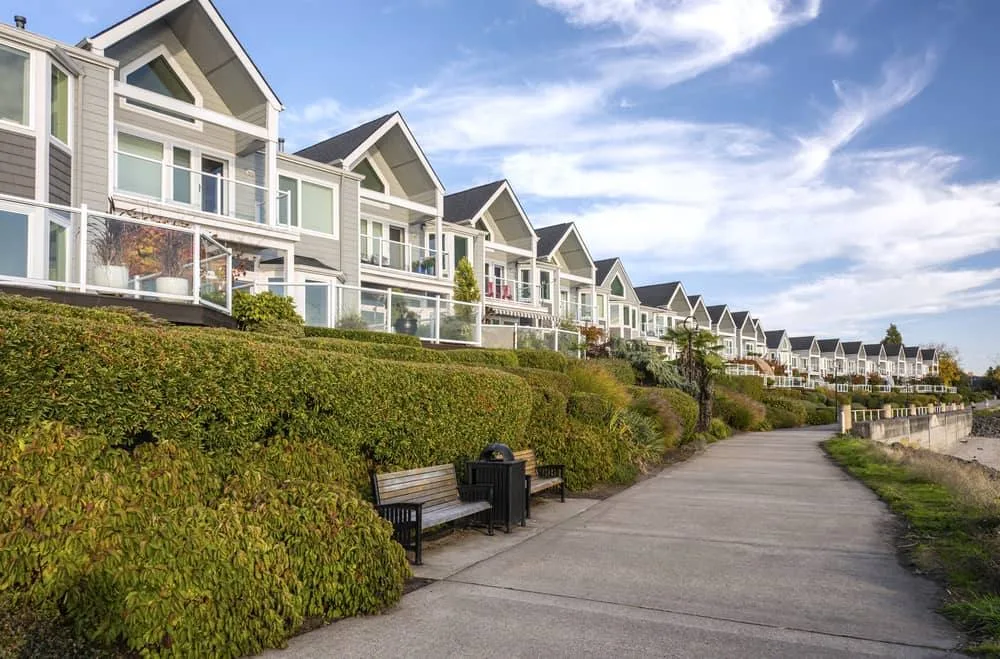
Vancouver's Crime Numbers in Context
Vancouver's citywide violent crime rate is 5.8 per 1,000 residents, and its property crime rate is 34.5 per 1,000 — both drawn from FBI NIBRS data. Those are the figures to anchor to; other aggregators using broader crime definitions produce much higher totals, but those aren't apples-to-apples comparisons and shouldn't drive your neighborhood research.
The direction of travel is genuinely encouraging. Vancouver's overall crime rate fell 16.2% in 2024 compared to 2023, mirroring a Clark County-wide decline. Washington state as a whole saw violent crime drop 9.2% and overall crime fall 14.1% over the same period, so Vancouver is tracking with — and in some categories outpacing — a statewide improvement.
The context cuts both ways, though. Vancouver's daily violent crime rate runs approximately 1.79 times the Washington state average and about 1.62 times the national daily average. For property crime, the gap is wider: roughly 1.94 times the national daily rate. Declining numbers are good news; being above average is still above average.
| Metric | Vancouver, WA | vs. WA State Avg | vs. National Avg |
|---|---|---|---|
| Violent crime (per 1,000) | 5.8 | ~1.79× state daily avg | ~1.62× national daily avg |
| Property crime (per 1,000) | 34.5 | ~1.38× state daily avg | ~1.94× national daily avg |
| Overall crime change, 2023–2024 | −16.2% | WA fell −14.1% | Broadly declining |
| Primary crime type | Property crime | Larceny & auto break-ins | — |
| Unincorporated Clark County rate | 24 per 1,000 | Below Vancouver city | — |
| Washington officer staffing | 1.38 per 1,000 | Last in nation | Structural constraint statewide |
One structural issue worth knowing: Washington ranks last in the nation for police staffing at 1.38 officers per 1,000 residents. That's a statewide constraint, not a Vancouver-specific failure, but it affects response times and patrol coverage across the city.
The East-West Divide: What Locals Know
I-5 running through the center of Vancouver does more than divide traffic — it creates a measurable safety gradient. The east side of the city, anchored by Fisher's Landing and Cascade Park, consistently registers the lowest crime concentrations. The west side — including older corridors near Fruit Valley and areas immediately adjacent to downtown — carries higher property crime rates.
This isn't a secret among people who've lived here for any length of time. It shapes where families with school-age children tend to look first, and it explains why two Vancouver addresses that are five miles apart can feel like different cities entirely.
East Side: Fisher's Landing and Cascade Park
Fisher's Landing is repeatedly cited as one of Vancouver's safest neighborhoods — low crime rates, active community involvement, and an organized, suburban character that keeps foot traffic predictable. Cascade Park, just west of Fisher's Landing along Highway 14, has a similar profile: family-oriented, quiet, and well-regarded by residents who prioritize low-incident daily life.
West Side and Downtown-Adjacent Areas
Uptown Village and Arnada, both on the west side of I-5, have stronger walkability and older housing stock that many buyers find appealing. The trade-off is that these neighborhoods carry higher property crime exposure — largely vehicle break-ins and theft from unlocked cars. Carter Park, a compact neighborhood adjacent to downtown, has similar characteristics: genuinely livable, but not a place to leave valuables visible in a parked car.
Hazel Dell: The Unincorporated Advantage
Hazel Dell sits in unincorporated Clark County rather than within Vancouver's city limits, and the numbers reflect that distinction. Unincorporated Clark County's overall crime rate dropped 19.9% in 2024 to 24 crimes per 1,000 people — noticeably below Vancouver's city rate. Residents of Hazel Dell often get the Vancouver metro's amenities with a lower crime baseline, though that comes with its own questions about municipal services and annexation over time.
For a fuller look at how these neighborhoods compare on character, price, and feel, see the best neighborhoods in Vancouver guide.
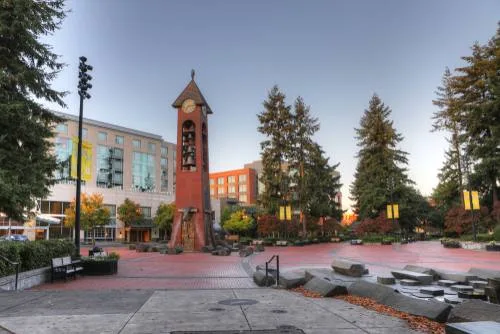
Neighborhood Safety Snapshot
No public dataset breaks out per-1,000 figures neighborhood by neighborhood in Vancouver — that granularity isn't released. What exists is a consistent pattern in crime-mapping tools, resident reports, and analyst summaries. The table below reflects that pattern honestly, using relative risk tiers rather than fabricated precision.
| Neighborhood | Safety Tier | Primary Concern | Best For |
|---|---|---|---|
| Fisher's Landing | Lowest crime in city | Minimal | Families Quiet |
| Cascade Park | Low | Occasional property incidents | Families Schools |
| Felida | Low–Moderate | Low overall; semi-rural feel | Privacy Nature |
| Hazel Dell (unincorp.) | Low–Moderate | Below city average overall | Value Commuter |
| Arnada | Moderate | Property crime, vehicle break-ins | Walkable First-Time |
| Uptown Village | Moderate | Property crime near commercial strips | Walkable Renter |
| Carter Park | Moderate–Elevated | Property crime, foot-traffic theft | Walkable |
| Fruit Valley | Elevated | Higher violent and property crime | Buyers with realistic expectations |
Fruit Valley's elevated tier reflects its location west of I-5 near industrial corridors — it's not a neighborhood most safety-focused buyers will prioritize, and that's worth stating plainly rather than softening it.
Looking to buy in Vancouver? Estimate your payment.
Enter your numbers to see an estimated monthly mortgage payment.
Estimate only. Excludes HOA fees and mortgage insurance. The interest rate above is a starting point, not a quoted rate — replace it with your own to see real numbers. Insurance is a flat placeholder, not a Vancouver quote.
What Property Crime Actually Means Day to Day
Property crime at 34.5 per 1,000 sounds abstract until you translate it: at that rate, roughly one in 29 households experiences a property crime event in a given year. Most of those incidents are larceny — theft from vehicles, packages taken from porches, and opportunistic break-ins rather than home burglaries.
The practical implication isn't "don't move here." It's that certain habits matter more in Vancouver than they would in, say, Camas or Battle Ground. Locking vehicles consistently, not leaving bags visible on seats, and using a porch lockbox for deliveries are the kinds of adjustments locals talk about after their first incident.
Where It Concentrates
Property crime in Vancouver isn't evenly distributed. It clusters around high-traffic corridors — Fourth Plain Boulevard, the stretch of downtown near Esther Short Park, and commercial strips along Highway 99. Residential streets in Fisher's Landing or Cascade Park, three or four blocks off the main arteries, see significantly fewer incidents.
The Surprise After Six Months
People who move to Vancouver from lower-crime suburban markets — particularly those coming from east Clark County cities like Camas or Washougal — are frequently surprised by vehicle break-ins. Not by violent crime, which tends to match or beat their expectations, but by the steady drumbeat of property incidents that feels jarring if your reference point is a quieter suburb. Nobody warns them, and it's worth knowing before you decide on a neighborhood.
If you're looking at the older walkable neighborhoods west of I-5 specifically because of their character and access to Esther Short Park or the waterfront, go in understanding the property crime context. The lifestyle is real; so is the trade-off.
Community Safety Programs and the Road Ahead
The Vancouver Police Department and its community partners have been unusually active on the structural side of public safety, which matters for anyone thinking about long-term trajectory rather than just current numbers.
Neighbors On Watch
VPD runs a civilian volunteer program called Neighbors On Watch (NOW) — a year-round initiative with training academies held multiple times per year. Applicants go through a full background screening before participating. It's not a neighborhood watch in the informal sense; it's an organized, trained civilian layer with real structure behind it.
Vancouver Police Foundation Funding
In 2025, the Vancouver Police Foundation committed more than $5.6 million to fund over 118 officer-led community programs — a record level of funding. That covers community outreach, personal safety programming, and specialized equipment. It's a meaningful investment in a city with a population approaching 200,000.
Police Community Advisory Committee
The city's Police Community Advisory Committee met six times in 2024, identified specific safety gaps, and brought findings to City Council in July 2024. Three additional follow-up meetings occurred in 2025. This kind of structured civilian oversight is a positive signal for accountability and transparency in how the department operates.
The Staffing Constraint
None of that programming fully resolves the underlying structural issue: Washington state ranks last in the nation for police staffing at 1.38 officers per 1,000 residents. That ceiling limits how quickly Vancouver — or any Washington city — can expand patrol coverage. Crime is declining, community investment is real, and the staffing gap is also real. All three are true simultaneously, and a clear-eyed safety assessment holds all of them.
For residents who want to be actively involved, the NOW program is the most direct entry point. For those simply doing neighborhood research, the 16.2% drop in overall crime from 2023 to 2024 is the most honest signal that the city's trajectory is moving in the right direction — even if it hasn't yet closed the gap with state and national averages.

Local Expert Takeaway: Vancouver's safety picture is genuinely improving — a 16.2% crime drop in one year is meaningful — but the city's east-west divide is the real variable most relocation guides skip over. Fisher's Landing and Cascade Park on the east side are among the calmest residential environments in Clark County. Fruit Valley and parts of downtown west of I-5 carry property crime rates that will feel elevated to anyone moving from Camas or Battle Ground. Property crime, not violent crime, is what actually affects daily life here: locked cars, porch lockboxes, and not leaving anything visible on a seat are habits locals adopt quickly. The declining trendline and the Vancouver Police Foundation's record $5.6 million in community program funding in 2025 both point toward continued improvement — but choose your specific neighborhood with eyes open, not just your ZIP code.
Quick Takeaways & FAQs
✅ Vancouver's overall crime rate dropped 16.2% in 2024, and the east side neighborhoods of Fisher's Landing and Cascade Park consistently rank among the safest in Clark County.
⚠️ Property crime — primarily vehicle break-ins and larceny — runs nearly twice the national daily average, and concentrates along high-traffic corridors like Fourth Plain Boulevard and downtown streets near Esther Short Park.
📍 I-5 is more than a freeway here: neighborhoods east of it are meaningfully calmer than those to the west, a distinction that shapes where most safety-conscious families ultimately land.
Is Vancouver, WA a safe place to live?
Which neighborhoods in Vancouver, WA have the lowest crime rates?
How does Vancouver, WA's crime rate compare to Portland, OR?
What is the most dangerous area of Vancouver, WA?
Is Vancouver, WA getting safer?
Moving to Washington?
Tell us what you need help with and we'll connect you with local resources.
