
You've probably heard the pitch: buy in Vancouver, work in Portland, skip Oregon's income tax. That framing is real, and it does drive a meaningful share of the buyers here — but it flattens a more interesting cost story. Vancouver sits in Clark County along the Columbia River, about 25 minutes from downtown Portland via I-5 or I-205, and its price tag is shaped by two forces pulling in opposite directions: proximity to one of the West Coast's most expensive metros, and a position as one of Washington's more affordable large cities. The result is a market that feels like a deal from a Portland perspective but registers as above-average the moment you compare it to national benchmarks.
The economic backbone here is a mix of public-sector and healthcare employment — Vancouver Public Schools, a regional health system, and The Vancouver Clinic employ a large share of residents — alongside technology and photonics manufacturing anchored by HP Inc. and nLight. That employer mix generates steady household incomes (the median runs $81,338) without the speculative volatility of a pure tech town. Families with school-age children and working professionals commuting south into Oregon make up a large share of who moves here, drawn as much by Washington's no-income-tax structure as by the price gap with Portland proper.
On the ground, Vancouver's overall cost of living sits roughly 6% above the national average but noticeably below the Washington state average — mostly because Seattle-area prices pull that statewide figure up sharply. Utilities are a genuine bright spot: Clark Public Utilities' nonprofit structure keeps electricity at roughly 11 cents per kilowatt-hour, well below the national average, and average monthly utility bills run around $216.90. Groceries cost a bit more than the U.S. norm, and transportation runs higher than average due to Washington's elevated gas excise tax. The absence of a state income tax is the single biggest financial lever in the household budget for most working residents.
Whether you're running the numbers on a first home, comparing a rental to a purchase, or trying to understand how Vancouver's tax structure stacks up against Portland, the sections below break down housing, everyday costs, a side-by-side comparison with nearby cities, and what the tax picture actually means for your take-home pay.
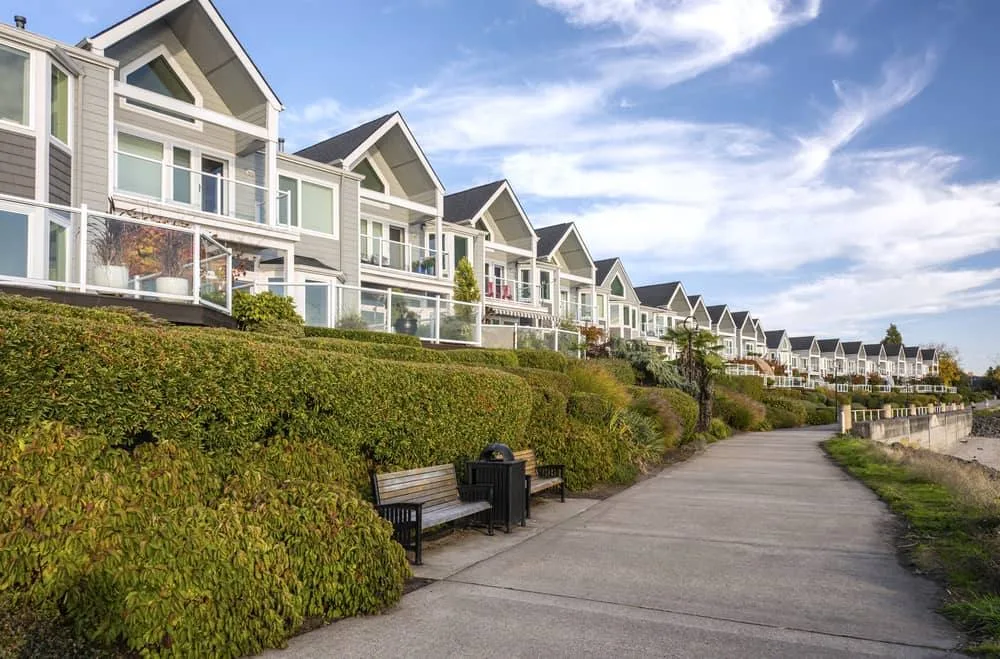
What It Really Costs to Live in Vancouver
The headline number: the typical home value in Vancouver is $510,224, per the Zillow Home Value Index (May 2026). That figure puts Vancouver well above the national median but noticeably below what buyers face across the river in Portland's inner eastside or in the closer-in Oregon suburbs. Against the Washington state average, Vancouver actually reads as one of the more accessible large cities — Seattle and its surrounding Eastside communities pull the statewide benchmark up sharply, making Clark County look like a relative value to anyone arriving from King County.
What drives Vancouver's number isn't a single neighborhood or amenity — it's the Portland commute math. Buyers who need to be in Portland regularly are willing to pay for the I-5 or I-205 corridor access, and that demand has a floor under prices here that a truly isolated mid-size city wouldn't have. The tax structure compounds it: Washington's lack of a state income tax creates real after-tax savings for Oregon-employed residents who establish Washington residency, and that calculus brings buyers who might otherwise stretch into closer Portland suburbs.
Overall, Vancouver's cost of living runs roughly 6% above the national average, with housing and transportation doing most of the lifting. Groceries and utilities, as covered below, actually sit in a more favorable position. The honest posture: Vancouver is not a cheap city, but it is a significantly cheaper alternative to the metro core, and for many households the income-tax savings alone cover a meaningful portion of the housing premium over Oregon options.
Housing: Rent vs Buy in Vancouver
At a city-wide typical home value of $510,224 (Zillow Home Value Index, May 2026), the entry point for buyers in Vancouver generally starts in the low-to-mid $300,000s for older or smaller construction — the most affordable inventory tends to cluster toward the city's northern and eastern edges, and the Best Neighborhoods guide covers where those pockets are without attaching specific price tags to named areas. The median reflects a wide spread: well-kept mid-century ranches in established areas, newer construction farther out, and renovated craftsman homes in the walkable core all trade at very different levels within that overall figure.
The effective property tax rate in Vancouver is approximately 0.99% — close to the Washington state average and noticeably lower than what Oregon buyers often expect. For budgeting purposes, that rate is what matters; the interactive mortgage calculator below this section will translate it into a monthly figure alongside your specific purchase price and down payment.
When Renting Makes More Sense
Renters in Vancouver typically pay $1,600–$1,950 per month for a two-bedroom apartment depending on location and building age. Renting makes sense if you expect to stay fewer than three to four years — transaction costs here are high enough that short holds rarely pencil out. It also makes sense if you're still learning the city's geography: the difference between a quiet west-side street and a busier arterial corridor isn't obvious from a listing, and a rental year spent actually living here is rarely wasted money before a purchase.
When Buying Makes More Sense
For buyers planning to stay five-plus years, owning locks in housing cost predictability that renting increasingly can't offer in a market where rents have trended upward. The no-income-tax advantage compounds over time for Oregon-employed households — that's a recurring annual benefit that a mortgage payment captures once and keeps. Use the calculator below to model your specific scenario with current rates.

Everyday Costs Beyond Housing in Vancouver
Utilities are the most pleasant surprise for newcomers. Clark Public Utilities, a nonprofit municipal provider, keeps electricity at roughly 11 cents per kilowatt-hour — dramatically below the national average. Combine that with water, sewer, and trash, and the average household's monthly utility bill lands around $216.90. The regional natural gas provider handles gas service for most households; most pay $50–$100 per month depending on season and whether gas heats the home or just the water.
Groceries cost roughly 5–6% more than the national average — a couple cooking mostly at home typically spends $450–$550 per month at the supermarket. The useful detail: unprepared grocery staples are exempt from Washington's sales tax, so your regular market cart doesn't carry the 8.9% retail rate. Restaurant meals and prepared food do carry that rate, which adds up if eating out is a frequent habit. Transportation costs run about 16% above the national average, primarily because Washington's gas excise tax — 59.04 cents per gallon, one of the highest in the country — adds meaningfully to every fill-up for car-dependent residents.
| Category | Typical Monthly Cost | Notes |
|---|---|---|
| Housing (2BR rent) | $1,600–$1,950 | Owners: use the mortgage calculator above for a purchase estimate |
| Utilities (electric, water, sewer, trash) | ~$217 | Clark Public Utilities' nonprofit rates keep electricity well below state average |
| Natural Gas | $50–$100 | Regional gas provider; higher in winter if gas heat |
| Groceries | $450–$550 | Per couple; unprepared foods exempt from 8.9% sales tax |
| Transportation & Gas | $300–$500 | Car-dependent; WA gas excise tax is 59.04¢/gal. C-TRAN monthly pass $62 local / $115 express to Portland |
| Phone & Internet | $120–$200 | Multiple providers; fiber available in most of the city |
| Misc / Discretionary | $300–$600 | Dining out, entertainment, clothing — restaurant meals taxed at full 8.9% |
These are estimates for a two-adult household; individual costs vary by neighborhood, commute pattern, and lifestyle. The biggest variable most newcomers underestimate is transportation: if you're commuting to Portland daily by car, fuel and bridge-toll costs can push that line item toward the top of the range quickly.
Looking to buy in Vancouver? Estimate your payment.
Enter your numbers to see an estimated monthly mortgage payment.
Estimate only. Excludes HOA fees and mortgage insurance. The interest rate above is a starting point, not a quoted rate — replace it with your own to see real numbers. Insurance is a flat placeholder, not a Vancouver quote.
Vancouver vs Nearby Cities: Cost Comparison
| City | Median Home Price | Typical 2BR Rent | Cost vs Vancouver |
|---|---|---|---|
| Vancouver, WA | $510,224 | $1,600–$1,950 | Baseline |
| Camas, WA | ~$650,000–$700,000 | $1,800–$2,100 | Noticeably higher |
| Ridgefield, WA | ~$550,000–$600,000 | $1,700–$2,000 | Modestly higher |
| Battle Ground, WA | ~$450,000–$490,000 | $1,450–$1,750 | Somewhat cheaper |
| Washougal, WA | ~$460,000–$510,000 | $1,500–$1,800 | About the same to slightly cheaper |
| Portland, OR | ~$490,000–$530,000 | $1,650–$2,050 | Similar home prices; Oregon income tax adds to total cost |
* Home-price figures for neighboring cities are approximate ranges based on mid-2026 market data; Vancouver's figure is $510,224 per the Zillow Home Value Index (ZHVI), May 2026.
The Portland comparison deserves a closer read: the sticker price on homes is roughly comparable, but Oregon levies a state income tax while Washington does not — for a household earning $81,000, that difference alone can represent several thousand dollars annually in take-home pay, which effectively makes Vancouver the better value even when the home prices look similar on a listing sheet.
Taxes & the Bottom Line for Vancouver
No State Income Tax — and What That Actually Means
Washington levies no individual income tax on wages or salaries. For a household earning around the local median, that's a straightforward and recurring annual savings compared to living across the river in Oregon. This is the single most consequential line item in Vancouver's cost story for working residents, and it's one reason the city draws buyers who could afford Portland-side options but choose not to pay Oregon's income tax on a Washington-resident basis.
Sales Tax: The Trade-Off
The offset is a combined retail sales tax of 8.9% as of August 2026 — 6.5% state plus a 2.4% local rate that ticked up 0.1 point in April 2026. That rate applies to most retail purchases, restaurant meals, and services. The meaningful exception: unprepared groceries for home consumption are exempt, which softens the daily impact for households that cook at home regularly. A car purchase, a furniture haul, or a string of restaurant dinners all carry the full rate, so it adds up in ways that income-tax savings don't always completely offset for lower-income households.
Property Tax
The effective property tax rate in Vancouver is approximately 0.99% — close to the Washington state average and not unusually high by Pacific Northwest standards. At that rate, owners of a home at the typical price point described earlier pay roughly $5,000 annually in property taxes. Use the calculator in the housing section above for a dollar figure tied to your specific purchase price.
Who This Budget Fits
Vancouver works best financially for households earning $70,000 or more who plan to stay at least four to five years and who commute to Portland or work locally in sectors like healthcare, education, or tech manufacturing. The no-income-tax advantage compounds every year of residency. Renters or buyers on tighter margins may find that sales tax, transportation costs, and a housing market still anchored to Portland demand leave less room than the city's "affordable by Washington standards" reputation implies. Battle Ground or Washougal offer somewhat lower price points for buyers willing to trade a longer commute for more breathing room in the monthly budget.

Local Expert Takeaway: The utility bill is the number that surprises Vancouver newcomers most. Clark Public Utilities' nonprofit rates mean an average monthly electricity, water, sewer, and trash bill of around $217 — well below what most Washington cities charge. That savings doesn't make up for a six-figure housing premium, but for renters especially, it meaningfully softens the monthly bottom line. Pair that with Washington's zero income tax and grocery staples exempt from the 8.9% sales rate, and the everyday cost picture is more manageable than the headline home price suggests. The real budget squeeze is transportation: Washington's gas excise tax is among the nation's highest, and if you're commuting south to Portland by car, that cost compounds fast.
Quick Takeaways & FAQs
✅ Washington's no-income-tax structure can mean several thousand dollars more in annual take-home pay compared to living across the river in Oregon — a recurring advantage that compounds every year you stay.
⚠️ Transportation costs run about 16% above the national average, driven largely by Washington's 59.04-cents-per-gallon gas excise tax — a real budget item for anyone commuting to Portland by car daily.
📍 Clark Public Utilities' nonprofit electric rates keep Vancouver's average monthly utility bill around $217, well below the Washington city average — one of the most underappreciated cost advantages in the metro area.
Is Vancouver, WA cheaper than Portland, OR?
What is the sales tax rate in Vancouver, WA?
How much do utilities cost in Vancouver, WA?
What is a realistic monthly budget for living in Vancouver, WA?
How does Vancouver's property tax rate compare to Oregon?
Moving to Washington?
Tell us what you need help with and we'll connect you with local resources.
