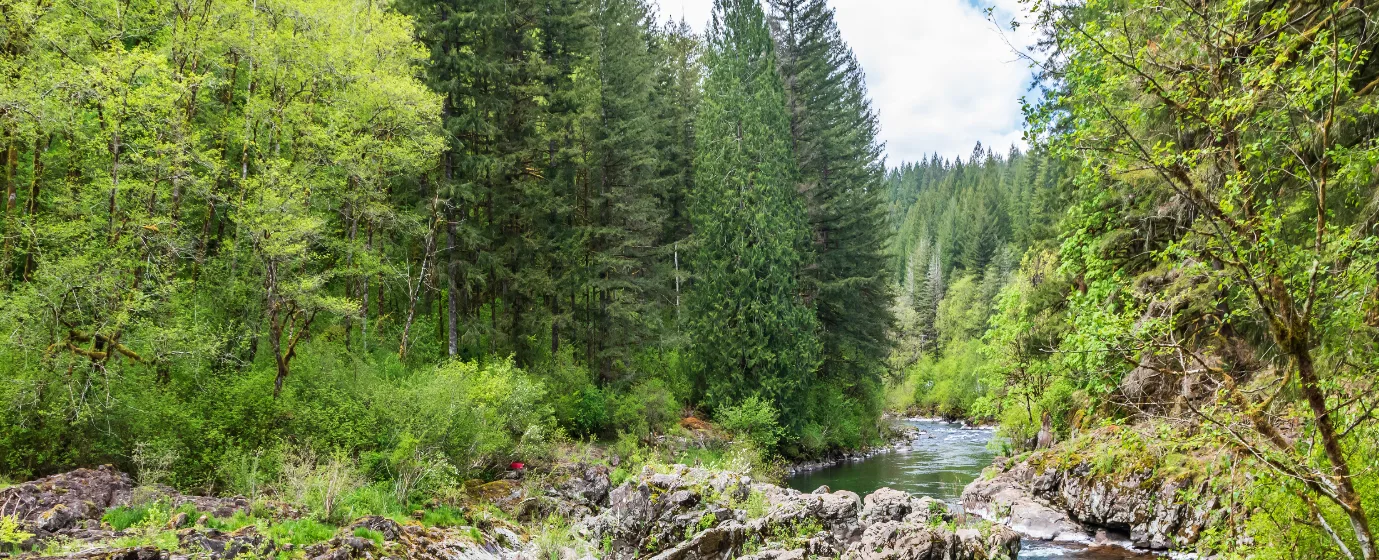
What Is Living in Battle Ground, Washington Like?
Maybe you've been priced out of Camas or Ridgefield and someone mentioned Battle Ground. Maybe your spreadsheet showed a lower home price and a manageable Portland commute, and now you're trying to figure out what that actually means for daily life. Here's what the numbers don't tell you: Battle Ground is a city of 22,959 people growing faster than most of Clark County — approximately 2.17% annually — and it has a genuinely small-town rhythm that surprises people who expect another generic suburb. It sits 11 miles north-northeast of Vancouver on SR-502 and SR-503, about 35 minutes from downtown Portland under normal conditions, in a pocket of Southwest Washington where large lots, newer construction, and green space still exist at prices that feel out of reach almost everywhere else in the metro.
The economic backbone here is a mix of public-sector stability and regional commerce. Battle Ground Public Schools is the city's largest employer and shapes community life well beyond the classroom — though the district is navigating a difficult stretch after voters rejected its Educational Programs and Operations levy in 2025, resulting in roughly $14 million in budget cuts for the 2025–2026 school year. A major regional health system, Fred Meyer, Walmart, and Tapani Inc. (one of the Pacific Northwest's larger construction contractors) round out the major employment base. The median household income sits at $107,239, the median resident age is just 33.9 years, and 71.3% of housing units are owner-occupied — this is, emphatically, a homeowner city built around families with kids and people planting roots.
The cost picture is one of Battle Ground's clearest selling points relative to other Clark County options. You get more square footage, larger lots, and more recent construction per dollar than in Ridgefield or Camas — the catch being a longer commute and a school district dealing with real fiscal pressure. Day-to-day life revolves around Battle Ground Lake State Park, the East Fork Lewis River corridor, Kiwanis Park near downtown, and a Main Street that the city is actively investing in through its Old Town Revitalization Plan. There's no light rail, no Trader Joe's, and no city-center density — but there are craft breweries, independent cafés, and a community calendar that punches above its size.
Whether you're seriously considering a move or just starting to research the area, the sections below break down Battle Ground's job market and commute reality, what daily life actually feels like, the current housing market, where to spend your weekends, and who this city genuinely suits.
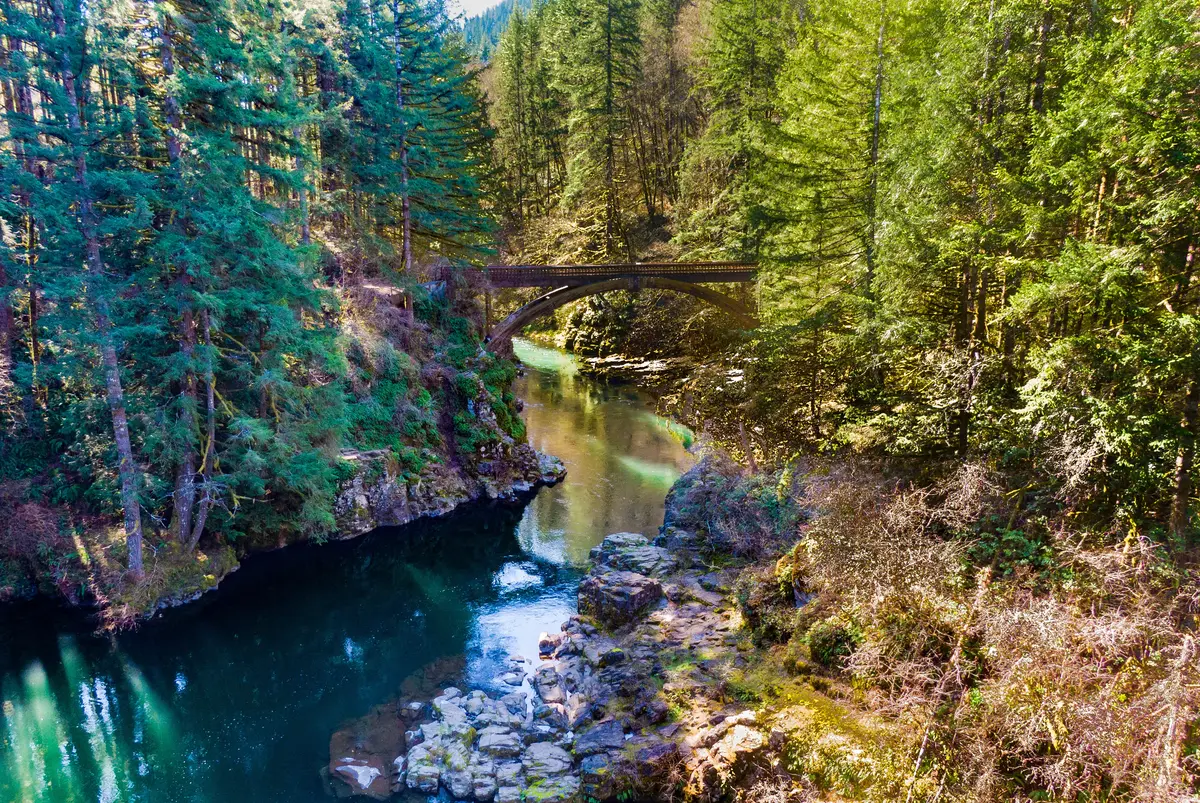
Battle Ground at a Glance
Looking to buy in Battle Ground? Estimate your payment.
Enter your numbers to see an estimated monthly mortgage payment.
Estimate only. Excludes HOA fees and mortgage insurance. The interest rate above is a starting point, not a quoted rate — replace it with your own to see real numbers. Insurance is a flat placeholder, not a Battle Ground quote.
Why Are People Moving to Battle Ground?
The honest answer is space and price — but people stay for reasons that don't show up on a listing sheet. Battle Ground offers something increasingly rare in the Portland-Vancouver metro: room to breathe at a price that doesn't require two incomes stretched to their limit.
The Value Equation vs. Nearby Markets
Compared to Ridgefield or Camas, buyers in Battle Ground typically land more square footage, a larger lot, and newer construction for the same money. What you give up is proximity — to downtown Portland, to the I-5 corridor, and to higher-ranked school districts. For families who've done the math and decided space matters more than a shorter commute, Battle Ground keeps winning that argument.
The city's owner-occupied rate of 71.3% isn't an accident. This is where people come to own, not to rent temporarily while they figure out the next move.
Who Actually Moves Here
| Buyer Type | What Draws Them | What to Know First | Best For |
|---|---|---|---|
| Portland commuters | Price gap vs. closer suburbs, SR-502 access | The 35-minute estimate assumes off-peak travel; morning rush adds time | Commuter |
| Families with young kids | Large lots, newer homes, park investment | BGPS levy failure means district budget is under real strain | Families |
| First-time buyers | Entry-level price point vs. Vancouver or Camas | Market has softened — more negotiating room than two years ago | First-Time |
| Remote workers | Home office space, outdoor access, quiet streets | No downtown co-working scene; you'll need your own setup | Quiet Nature |
| Trades and construction workers | Tapani Inc. and regional construction industry base | Job market here is tied to broader Pacific Northwest build cycle | Value |
| Downsizers from larger metros | Price, pace, and proximity to Portland without living in it | Limited walkable amenities; a car remains essential | Quiet |
The Growth Reality
Battle Ground has grown more than 15% since the 2020 Census, and the city is investing to keep pace — funding Remy Park's Phase 1 improvement, adding equipment at Florence Robison Park, and launching the Old Town Revitalization Plan with a $50,000 small-business investment program in its 2026 budget. This is a city actively trying to build the amenities that new residents eventually expect.
The downside of rapid growth: traffic on SR-503 and Main Street corridors has thickened noticeably in recent years, and some longtime residents feel the small-town scale is eroding faster than the infrastructure can absorb it.
The School District Situation
Battle Ground Public Schools holds a B- rating, according to Niche, and the recent levy failure is the most important context any family should understand before choosing this city over a neighboring district. The roughly $14 million in cuts for 2025–2026 affected programs, staffing, and services — and as of early 2026, BGPS remained the only district in southwest Washington without an EP&O levy. For more on school options and current district standing, see the full breakdown at Battle Ground schools.
What Daily Life Feels Like in Battle Ground
The first thing newcomers notice isn't the commute or the home size. It's how quickly this city operates on a first-name basis. Main Street is genuinely the center of community gravity — not a metaphor for "downtown-ish area," but the actual street where people run into their neighbors on a Saturday morning.
The Rhythm of the Week
Weekday mornings mean school drop-offs on streets that get legitimately congested near Battle Ground High School and Chief Umtuch Middle School between 7:30 and 8:15 a.m. — something newcomers from quieter suburbs don't always anticipate. Afternoons settle down quickly. By evening, Main Street's independent restaurants and Barrel Mountain Brewing on E Main St become the natural gathering point for a city that doesn't have a mall or a multiplex cinema to compete for attention.
Weekend mornings at Rabbit Hole Eatery and Coffee on SW Scotton Way have become a ritual for a lot of residents — the kind of café that fills up early and stays that way. It's the clearest sign that Battle Ground has the bones of a real local food culture, even if the overall restaurant scene is still maturing.
Outdoors as Infrastructure
Battle Ground Lake State Park isn't just a weekend destination — for many residents, it's the reason they picked this city over a comparable price point somewhere else. The park's swimming area, fishing dock, and trail network sit less than two miles from the city center. The East Fork Lewis River corridor extends that outdoor access further north and east, making Battle Ground a genuinely functional base for hikers, anglers, and mountain bikers who don't want to drive an hour to reach trailheads.
The city's ongoing parks investment — new playground equipment at Kiwanis, McConnell, Cresap, and Dublin Meadows parks in 2025 — reflects how seriously the city takes green space as a quality-of-life anchor. Kiwanis Park and its Veterans Memorial near downtown also serves as the community's de facto civic square, hosting events that draw residents from across the city.
What Six Months In Reveals
The thing that surprises most newcomers after they've settled in: how much they come to appreciate the Fairgrounds Park Skate and Bike Park as a barometer of the city's character. It's genuinely well-used, consistently maintained, and draws kids from across Clark County — a small detail that says something larger about how Battle Ground prioritizes public space.
What tends to frustrate people instead: the absence of a Trader Joe's or Whole Foods. The nearest options are in Vancouver, which feels fine until you're doing it twice a week. Fred Meyer and Walmart cover the essentials, but anyone accustomed to a dense grocery-store ecosystem will feel the gap. For a fuller look at how parks and recreation shape life here, see Battle Ground parks and recreation.
The Battle Ground Housing Market Right Now
Battle Ground's housing market spent 2022 and 2023 moving at a pace that left buyers exhausted — multiple offers, short timelines, no room to negotiate. That market has meaningfully shifted. As of late 2025, homes were averaging around 55 days on market, compared to 22 days the year prior, and the median sold price had pulled back from its peak.
Where Prices Stand
The Zillow Home Value Index for Battle Ground — the typical mid-tier home value — stood at $523,756 as of 2026. That figure represents a city that remains noticeably more affordable than Clark County's premium markets without being a distressed or declining one. Buyers are getting real negotiating leverage they simply didn't have 18 months ago.
Some parts of the city command more per square foot than others, particularly areas with newer construction and larger lots. For a full breakdown of what different neighborhoods cost and what drives those differences, the Best Neighborhoods page covers that in detail.
What the Market Rewards Right Now
The softening in pace means contingencies — inspection, financing — are back on the table in most transactions. Sellers who were dictating terms in 2022 are now pricing more carefully and accepting more requests. This is the best window for thoughtful buyers that Battle Ground has seen in years.
The city's 71.3% owner-occupancy rate creates a relatively stable inventory dynamic. This isn't a heavily investor-driven market; most of what comes up for sale is people moving up, moving out, or moving on — which tends to produce homes that are genuinely lived-in and well-maintained rather than flipped for margin. For a complete picture of costs beyond the purchase price — property taxes, utilities, and ongoing expenses — see the cost of living in Battle Ground.
Battle Ground Neighborhoods
Battle Ground has several distinct areas — each with its own character and appeal. Here’s a breakdown to help you narrow down where to focus your home search.
🏡 Quail Hollow
Quail Hollow is a newer residential area on the west side of Battle Ground with curving streets, larger lot sizes, and homes built primarily in the 2000s and 2010s — the kind of neighborhood that attracts families with school-age children who want space without sacrificing proximity to Main Street.
🏠 Parkview Trails
Parkview Trails is a planned subdivision with a connected trail system threading between homes, making it one of the more walkable pockets in a city that isn't particularly pedestrian-friendly overall — popular with younger families and first-time buyers who prioritize outdoor access from the front door.
🌳 Downtown Battle Ground
The downtown core along Main Street is where Battle Ground's food and social scene is concentrated — Barrel Mountain Brewing, Pita House, and Kiwanis Park are all within a few blocks — and the Old Town Revitalization Plan is actively adding investment; a good fit for buyers who want walkable access to community life.
🏘 Hillhurst
Hillhurst sits on elevated ground northeast of the city center with views toward the Cascades on clear days, offering a mix of established older homes and some newer infill — quieter than the downtown core and popular with buyers who prioritize a settled, residential feel.
🏔 Meadow Glade
Meadow Glade is a semi-rural area northeast of Battle Ground's incorporated limits with larger parcels, hobby farms, and a noticeably slower pace — residents here are typically willing to trade urban convenience for genuine privacy and acreage.
🌆 Brush Prairie
Brush Prairie straddles the line between Battle Ground and unincorporated Clark County, offering some of the most spacious lots in the area and a rural character that larger lots in the city proper can't quite replicate — a draw for buyers who want Battle Ground's commute corridor without the density of a subdivided neighborhood.
Pros & Cons of Living in Battle Ground
The Pros
- Small-town Main Street feel with a fast-growing local economy
- direct access to <cite index="66-1
- 66-2">a spring-fed volcanic lake considered a smaller version of Crater Lake in Oregon</cite>
- no state income tax combined with relatively affordable housing versus nearby Portland
- strong sense of community with local events like Harvest Days
The Cons
- Property crime runs somewhat higher than the national average even though violent crime is low
- commutes to Portland-area jobs add up over a rainy Pacific Northwest year
- school district finances have been strained after voters rejected a recent operations levy
Getting Around & Commuting in Battle Ground
Battle Ground is a car city, full stop. There is no meaningful transit option for reaching Portland, Vancouver, or most employment centers, and the city's street layout — built for suburban sprawl rather than walkability — reflects decades of planning that prioritized lot size over pedestrian access.
The Portland Commute: What the Numbers Don't Say
The 35-minute Portland commute figure is real — under normal conditions, heading south on SR-503 to SR-502 to I-205 or I-5. But "normal conditions" means leaving before 7:00 a.m. or after 9:00 a.m. The morning window between 7:30 and 8:30 a.m. consistently adds 15 to 25 minutes, and a surface-street incident on SR-502 near the Lewisville Highway intersection can extend that further with no meaningful alternate route.
People who make this commute work tend to either shift their schedules early — out the door by 6:45 — or leverage remote and hybrid arrangements to reduce the number of days they make the full drive. Those who commute five days a week to downtown Portland describe it as manageable in year one and genuinely tiring by year three.
Getting Around Clark County
| Destination | Typical Drive Time | Key Route | Notes |
|---|---|---|---|
| Vancouver, WA (city center) | 20–25 min | SR-503 south to SR-502 | Extends significantly during peak hours |
| Portland, OR (downtown) | 35–50 min | SR-503 → I-205 or I-5 south | Off-peak estimate; 50+ min during morning rush |
| Portland Airport (PDX) | 40–50 min | SR-503 → I-205 north | Most reliable route; allow extra time for holidays |
| Ridgefield | 15–20 min | SR-503 south | Light traffic except near I-5 interchange |
| Yacolt / East Fork Lewis River trailheads | 15–20 min | SR-503 north | Seasonal recreation traffic on summer weekends |
| La Center | 20–25 min | NW La Center Rd / SR-503 | Rural roads; slower pace |
Transit and Walkability
C-TRAN operates limited bus service connecting Battle Ground to Vancouver, but routes are designed for basic connectivity rather than commuter speed — most trips to Vancouver involve a transfer and take well over an hour. Cycling infrastructure is improving but uneven; the downtown core has some on-street accommodation, but arterials like Main Street and Grace Avenue are not comfortable for everyday cycling.
Walkability within a half-mile of downtown is genuine — you can reach a café, a hardware store, a pharmacy, and Kiwanis Park on foot. Beyond that radius, a car is essentially non-optional. Anyone considering life here without a vehicle will find it workable only if they live within a few blocks of Main Street and rarely need to leave the city center.
The Employer Landscape and Where People Work
A meaningful share of Battle Ground residents work within the city itself — in the schools, in retail along the SR-503 corridor, in construction trades, and in healthcare. Tapani Inc., one of the larger regional contractors in the Pacific Northwest, is based here and employs hundreds. The school district remains the single largest institutional employer despite its current budget pressures. For residents who work locally, Battle Ground's commute problem simply doesn't exist — and that's a bigger share of the population than outsiders tend to assume.
Schools in Battle Ground
Families relocating to Battle Ground have public, private, and higher-education options nearby. Here’s a quick overview.
🎓 School District
Battle Ground Public Schools serves K–12 students across Battle Ground and the surrounding area. Rated B- (source: Niche.com).
🏆 Graduation Rate
The 4-year high-school graduation rate here is approximately 80.6%.
📚 Higher Education
Washington’s public universities — the University of Washington, Washington State University, and Western Washington University — offer four-year degrees statewide, with a network of 34 community and technical colleges (SBCTC) providing two-year and workforce programs.
🌐 Online Learning
University of Washington Continuum College and Washington State University Online offer fully accredited online degrees for remote learners across the state.
Safety in Battle Ground
A quick look at how Battle Ground compares on the numbers that matter most when weighing a neighborhood or a move.
🛡 Violent Crime
Approximately 1 per 1,000 residents.
🔒 Property Crime
Approximately 10 per 1,000 residents.
Compared to the FBI’s most recent national data (2024), Battle Ground’s violent crime is below the national average (about 3.6 per 1,000), and property crime is below the national average (about 17.6 per 1,000).
Against Washington as a whole, Battle Ground’s violent crime is roughly a third of the state average, and property crime is roughly a third of the state average (Bureau of Justice Statistics, Crime Known to Law Enforcement, 2024 (tables 2 and 3)).
Crime rates can vary a lot within a single city, so the citywide numbers above are only a starting point. Some neighborhoods in Battle Ground run well below these averages, while others run higher — the kind of block-by-block detail that matters most when you’re actually choosing where to live. The full guide below breaks it down neighborhood by neighborhood.
Working in Battle Ground
Battle Ground’s largest employers span several industries — here are some of the anchors of the local job market.
🎓 Battle Ground Public Schools
Education
🏥 PeaceHealth
Healthcare
🛒 Fred Meyer
Retail
💼 Tapani Inc.
Construction
🛒 Walmart
Retail
Parks & Recreation in Battle Ground
Some of the outdoor spaces that shape everyday life in Battle Ground.
🌱 Battle Ground Lake State Park
🌱 Kiwanis Park & Veterans Memorial
🌱 Fairgrounds Park Skate & Bike Park
Battle Ground residents don’t have to go far for green space — spots like Battle Ground Lake State Park and Kiwanis Park & Veterans Memorial are part of everyday life here, whether that’s a morning walk, a weekend hike, or just somewhere to unwind outside. The full guide below covers more of what Battle Ground has to offer for parks and outdoor recreation.

Retiring in Battle Ground
Battle Ground draws retirees for its balance of amenities, outdoor access, and cost. Here’s what to weigh.
🌤 Climate
Battle Ground sits at 285 feet in Southwest Washington's marine-influenced climate zone — mild, wet winters and dry, warm summers. Expect consistent rainfall from November through March and genuinely beautiful conditions from June through September. Snow is rare but SR-503 can ice over in hard freeze events, which typically happen only a few times per winter.
🍴 Lifestyle
Daily life here centers on outdoor access and a small Main Street corridor with independent restaurants and a brewpub. Battle Ground Lake State Park and the East Fork Lewis River provide year-round recreation within minutes of the city. The pace is quiet and unhurried — well-suited to retirees who want proximity to Portland without living in it.
🏚 55+ Communities
Battle Ground has limited purpose-built active-adult or 55+ communities compared to larger Clark County cities like Vancouver. Most retirees here buy into standard single-family neighborhoods — particularly Meadow Glade and Brush Prairie — where lots are larger and traffic is lighter. For a broader look at retirement living options, see the full retirement guide.
✈ Getting Around
A personal vehicle is essential for daily life in Battle Ground. The city's walkable core is limited to a few blocks around Main Street, and C-TRAN bus service to Vancouver is available but slow. Portland International Airport (PDX) is typically 40 to 50 minutes by car, making occasional travel straightforward even without direct transit access.
🏛 Washington Taxes for Retirees — What to Know
- No state income tax — Washington does not tax personal income, so Social Security, pensions, and 401(k)/IRA withdrawals are all untaxed at the state level. There is no state return to file and no retirement exclusion to claim — the rate is simply zero.
- Military and public pensions — Because there is no income tax, military retirement pay and public-employee pensions are untaxed at the state level along with everything else.
- Sales tax is the tradeoff — The state sales tax is 6.5%, and local add-ons bring the combined rate in Battle Ground to 8.9% (Washington State Department of Revenue, Q3 2026 local sales & use tax rate table, July 2026). Groceries and prescription drugs are exempt.
- Property taxes, with senior relief — The effective property tax rate is roughly 0.9%. Homeowners 61+ (or unable to work due to disability, or a qualifying disabled veteran) who own and occupy their home may qualify for a reduction. Income limits are set against each county’s median household income, so the threshold differs by county — check with your county assessor. A separate deferral program is available for those who don’t qualify for the exemption.
- Capital gains tax — but not on retirement income — Washington taxes 7% on long-term capital gains above a $278,000 standard deduction for 2025, rising to 9.9% on gains above $1,000,000. Retirement accounts and real estate sales are both exempt. It therefore does not reach ordinary retirement income or the sale of a home.
- Estate tax — the one to plan for — Unlike most no-income-tax states, Washington has its own estate tax. For deaths on or after July 1, 2026, the exemption is $3 million with graduated rates topping out at 20%. Retirement accounts count toward the taxable estate, so long-time homeowners with sizable balances can cross the line without expecting to.
- No inheritance tax — Washington has no inheritance tax, and no gift tax.
- WA Cares payroll premium — Working Washingtonians pay 0.58% of gross wages into the WA Cares Fund, the state long-term care program, with no income cap. It applies to W-2 wages, so retirees who have stopped working do not pay it — but anyone relocating while still employed will see it. The private-insurance opt-out closed at the end of 2022 and is not available to new applicants; the remaining exemptions are narrow (living outside Washington, military spouses, certain visa holders, and veterans with a 70%+ service-connected rating).
- The Oregon border effect — Oregon has no sales tax, so Washington residents near the river — Vancouver, Camas, Washougal, Longview — often cross over for large purchases. Washington use tax technically applies to goods brought back for use in-state, though it is rarely enforced on ordinary personal purchases.
Tax laws change frequently and individual situations vary. This is general information, not tax advice — always consult a qualified Washington tax professional or CPA for personalized retirement tax planning.
Weekends & Local Favorites in Battle Ground
Battle Ground's weekend scene is smaller than Vancouver's and quieter than Portland's — and for most people who chose this city deliberately, that's exactly the point. The outdoor access is immediate, the restaurant options are independent and locally owned, and the pace is genuinely unhurried.
Where the Town Gathers
Barrel Mountain Brewing on E Main St is the anchor of Battle Ground's social life in a way that's hard to overstate for a city this size. It's a brewpub with a scratch kitchen, and on a Friday evening it operates less like a bar and more like a community room — families at the big tables, groups of tradespeople after a job, couples on dates, people who've been coming since it opened. It's one of those places where you run into everyone.
Pita House on W Main St fills a different role — a sit-down Mediterranean restaurant that draws people from Ridgefield and La Center who don't have anything comparable nearby. In a city where the dining scene is still building out, places like this anchor the argument that Battle Ground's food culture is real and not just national chains off the freeway.
Outdoor Weekends
Battle Ground Lake State Park is the Saturday-morning destination for a substantial portion of the city's families from May through September. The lake's swimming area gets genuinely crowded on sunny July weekends — one of those seasonal quirks newcomers don't fully account for until they show up at 11 a.m. and can't find parking. Arriving before 9:30 a.m. is a habit worth building early.
The Fairgrounds Park Skate and Bike Park draws a consistent crowd of kids and teens and has become a reliable weekend gathering spot for parents who want somewhere their kids can go independently. It's well-maintained and genuinely well-used — a park that earns its budget rather than sitting underused.
A City Still Building Its Weekend
Honest assessment: Battle Ground's downtown is in transition. The Old Town Revitalization Plan and the city's new small-business investment program signal real intent, but as of 2026 the gap between what the city wants to be and what it currently offers on a Saturday afternoon is still noticeable. There's no independent bookstore, no Saturday farmers market running year-round, and the retail options thin out quickly beyond the Main Street corridor.
Rabbit Hole Eatery and Coffee on SW Scotton Way has become the morning ritual for a lot of residents — a café-bakery that earns genuinely long lines on weekend mornings. For longer day trips, Mount St. Helens is about 60 miles northeast, and the Columbia River Gorge is accessible within 45 minutes via the south. Battle Ground positions itself well as a base for the Pacific Northwest outdoors even if the in-city entertainment options are still catching up to the population. For everything the parks system offers locally, see Battle Ground parks and recreation.
Top Things Locals Say About Battle Ground
The best intel about a city comes from the people who actually live there. Here’s what Battle Ground residents say when newcomers ask the questions everyone’s thinking.
“I knew the commute would be longer, but I didn't expect how quickly I'd stop thinking about it. Once you're home on your half-acre and you can hear the kids actually playing outside, the drive feels like a reasonable price. What I didn't expect was how much SR-502 would vary — some mornings it's 30 minutes flat, and some mornings I'm sitting in Brush Prairie watching my arrival time tick up.”
— Recent Battle Ground home buyer
“What's the most surprising thing about living in Battle Ground?”
How genuine the small-town feel is, even as the city grows. You start recognizing faces at Kiwanis Park and at Barrel Mountain Brewing pretty quickly. The surprise for most people from larger metros is that it's not performative — it's just how the city actually operates. The other surprise is SR-502 during morning rush. Nobody warns you about how much that one road controls your schedule.
“What do locals love most about Battle Ground?”
Battle Ground Lake State Park, reliably. People who moved here for the price end up staying because of the lake. Being able to swim, fish, and hike within two miles of downtown on a Tuesday evening is something you don't fully appreciate until you have it. The ongoing parks investment — new equipment showing up at Kiwanis and the other neighborhood parks in 2025 — signals that the city is genuinely committed to that quality of life.
“What should newcomers to Battle Ground know?”
Get your grocery situation figured out before you move. Fred Meyer and Walmart handle the essentials, but the nearest Trader Joe's or comparable option is in Vancouver. That 20-minute drive feels trivial until you're doing it mid-week on top of a Portland commute. Also: SR-503 through the heart of the city gets genuinely slow around school pickup times near Battle Ground High School — plan your mid-afternoon errands around that window.
“Can you live in Battle Ground without a car?”
Technically possible only if you live within a few blocks of downtown Main Street and work locally. C-TRAN bus service connects Battle Ground to Vancouver, but trips are slow and involve transfers — not a practical commuter option for most people. There's no rail, no ride-share saturation, and the arterials outside downtown are not designed for cycling. For the vast majority of residents, a car isn't optional.
Cities Near Battle Ground
Other communities near Battle Ground worth a look — each with its own character and price point.
| City | Distance | Best For | Vibe | Median Rent | Median Buy |
|---|---|---|---|---|---|
| Vancouver | 11 mi | Urban amenities, transit access, jobs | Larger, denser, more connected | $1,550 | $492,162 |
| Ridgefield | 9 mi | Top-rated schools, new construction | Quiet, planned, family-oriented | $1,800 | $651,498 |
| La Center | 10 mi | Rural feel, very small town | Remote, agricultural, ultra-quiet | $1,700 | $633,036 |
More Helpful Guides for Battle Ground
Going deeper on Battle Ground? Our blog series covers everything from first-time buying to retiring here — explore the guides below.
Local Expert Takeaway: Battle Ground is the choice you make when you've priced the closer suburbs and decided that square footage and a yard matter more than a 20-minute commute. It rewards people who build their lives around outdoor access, community events at Kiwanis Park, and a Main Street that's genuinely growing — and it tends to frustrate people who underestimate how much the school district situation and the drive to Portland will shape their daily experience. Go in with eyes open on both fronts and it's one of Clark County's most livable cities at its price point.
Quick Takeaways & FAQs
✅ Battle Ground's Zillow Home Value Index of $523,756 (2026) puts it noticeably below comparable Clark County markets like Ridgefield and Camas, with larger lots and newer construction at that price.
⚠️ Battle Ground Public Schools is the only district in southwest Washington without an EP&O levy as of early 2026, meaning budget cuts are real and families should research current program offerings before assuming district quality matches the price premium.
📍 The 35-minute Portland commute is accurate off-peak — but SR-502 and SR-503 have no meaningful alternate routes when traffic stacks, so schedule flexibility matters more here than in suburbs closer to I-5.
Is Battle Ground, WA a good place to raise a family?
What is the commute from Battle Ground to Portland like?
How does Battle Ground compare to Ridgefield or Camas for home buyers?
Is Battle Ground safe?
What is there to do in Battle Ground on weekends?
Helpful Links for Moving to Battle Ground
Moving to Washington?
Tell us what you need help with and we'll connect you with local resources.
