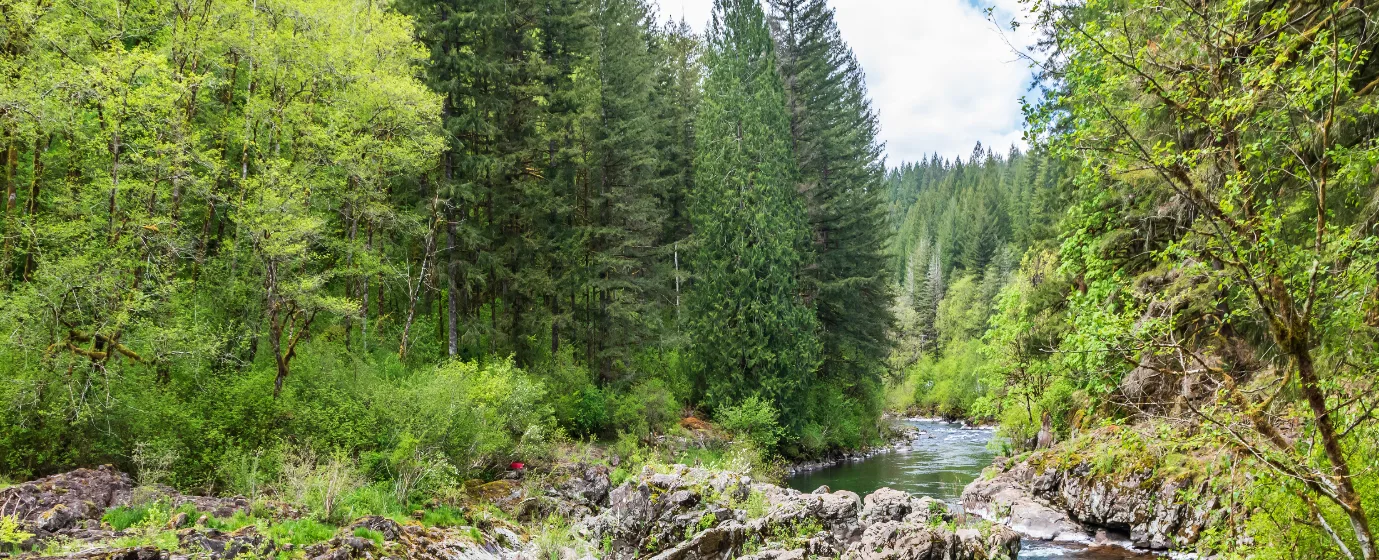
You've done the math and something doesn't add up — in the best possible way. Your California home equity, parked into a Battle Ground purchase, could eliminate a mortgage entirely or slash it to something that feels almost embarrassing compared to what you left behind. Battle Ground sits 11 miles north-northeast of Vancouver, WA, and about 35 minutes from downtown Portland along SR-502 and I-5. It's a city of roughly 23,000 people in the fast-growing northern corridor of Clark County — genuinely small-town in feel, genuinely suburban in function, and genuinely different from anything you'd find at this price point anywhere on the California coast.
The economic backdrop matters here. Battle Ground Public Schools is the city's largest employer and shapes the community's identity as a family-oriented place. The median household income sits at $107,239, and most of the people moving in from California arrive with equity-fueled purchasing power that makes them immediately comfortable in the local market. The city is growing fast — a 20-year comprehensive plan projects roughly 37,217 residents by 2045, up from today's 23,000 — which means new retail, new infrastructure, and a downtown that is actively evolving. A mixed-use development near Main Street was under active construction as of mid-2026, with first retail spaces anticipated by year's end.
Cost of living is the headline, but it runs deeper than the home price. Salary.com's 2025 index puts Battle Ground's overall cost of living approximately 52% below San Francisco's — a number that covers housing, utilities, and everyday expenses. Washington levies no personal state income tax, your property tax rate runs at an effective 0.82%, and groceries are largely exempt from the state's 8.9% combined sales tax. Routine care costs generally run noticeably below California rates, though you will drive farther for specialist appointments. The full cost-of-living breakdown covers utilities, groceries, and transportation in detail.
Whether you're fleeing Bay Area prices, escaping Southern California traffic, or simply done with California's income tax bill, this guide covers what the move actually looks like — the home price reality, the tax math, the cultural adjustment, and the honest trade-offs Californians most often miss before signing.
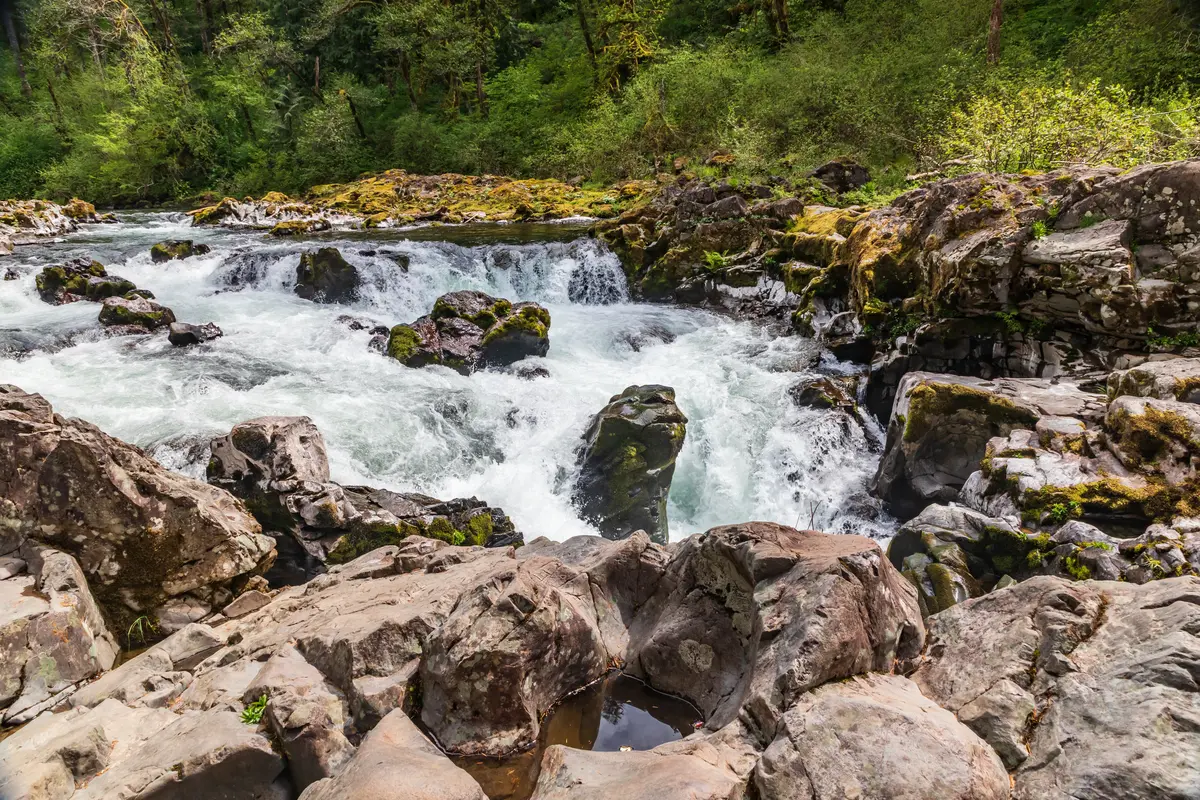
The Home Price Reality: What Your California Equity Actually Buys
The Zillow Home Value Index puts the typical Battle Ground home at $523,756 (2026). California's statewide median, tracked by the California Association of Realtors, has consistently run above $800,000 — and that's the statewide figure, not the Bay Area or coastal Southern California numbers that many relocating buyers are actually leaving behind.
The practical implication: a seller walking away from a mid-range home in the Bay Area, Pasadena, or San Diego often arrives in Battle Ground with enough equity to buy outright or make a down payment large enough to produce a monthly payment that would have seemed impossible in California. That's not a sales pitch — it's the arithmetic of two very different markets colliding.
What that budget buys here is concrete. Entry-level homes in Battle Ground — older construction, smaller lots, occasionally needing updates — typically start noticeably below the city-wide median. Mid-range purchases in the $500,000–$650,000 range generally produce four-bedroom homes on genuine lots, often with mountain views toward the Cascade Range on clear days. Buyers coming from California markets where $800,000 purchased a townhome or a small condo with an HOA report a genuine culture shock — in the best direction. For a neighborhood-by-neighborhood breakdown of what each area offers, the Best Neighborhoods guide covers the character and trade-offs across Quail Hollow, Parkview Trails, Hillhurst, and the rest in detail.
One thing to recalibrate: Battle Ground is not a buyer's market in the distressed sense. Inventory is limited, and the city's growth trajectory keeps demand steady. Coming in with a California-sized budget does not mean you set the terms. Competitive offers, inspection decisions, and timeline pressure are real here — they just happen at a price point that still feels manageable relative to where you came from.
| Market | Typical Home Price | Effective Property Tax Rate | State Income Tax | Mello-Roos / Special Assessments |
|---|---|---|---|---|
| Battle Ground, WA | $523,756 (Zillow ZHVI, 2026) | ~0.82% | None (WA) | None typical |
| California (statewide) | Above $800,000 (CAR median) | ~1.1% base | 1%–13.3% progressive | Common in new construction |
| Bay Area (CA) | Well above CA statewide median | ~1.1% + assessments | 1%–13.3% progressive | Frequent in newer communities |
| Greater Los Angeles (CA) | Noticeably above CA statewide median | ~1.1% + assessments | 1%–13.3% progressive | Common in master-planned areas |
| Vancouver, WA (nearby) | Modestly above Battle Ground | ~0.9%–1.0% | None (WA) | None typical |
| Ridgefield, WA (nearby) | Comparable to Battle Ground, varies by area | ~0.85%–0.95% | None (WA) | None typical |
* ZHVI = Zillow Home Value Index.
The property tax comparison deserves a closer look. California's base rate of roughly 1.1% sounds close to Battle Ground's 0.82% — but California's figure excludes Mello-Roos bonds and special assessments that frequently add hundreds of dollars per month in newer subdivisions. Battle Ground's 0.82% is the all-in effective rate across all jurisdictions: city, county, school district, state, library, and cemetery levies combined.
The Tax Math: What No State Income Tax Means for Your Paycheck
Washington levies no personal state income tax. That single fact restructures the financial case for this move more than any other line item, and it hits differently depending on what you were earning in California.
California's progressive income tax runs from 1% on the first dollar of taxable income to a top marginal rate of 13.3% — the highest state rate in the country. A household earning $107,000 a year in California (roughly Battle Ground's median household income level) typically loses somewhere between $6,000 and $9,000 annually to state income tax alone, depending on filing status and deductions. In Washington, that bill is zero.
There is one important nuance for remote workers and commuters. Washington residents who physically work in Oregon owe Oregon's state income tax on those Oregon-source wages — the no-income-tax benefit applies to income earned on the Washington side of the border. Fully remote workers employed by California or out-of-state companies, working from a Battle Ground home, keep the full advantage. This distinction matters more than most relocating buyers realize until they're halfway through onboarding at a Portland employer.
The Sales Tax Trade-Off
Washington funds state government largely through its sales tax, and Battle Ground's combined rate is 8.9% (the 6.5% Washington state base plus local Clark County and city portions). California's base rate is 7.25%, with local additions that push many cities into the 8.5%–10.25% range — so the gap is narrower than headlines suggest.
Washington also exempts most groceries from sales tax, which meaningfully offsets the headline rate for everyday household spending. The City Council approved a new 0.1% public safety sales tax in November 2025 (effective April 1, 2026) dedicated to police staffing — that increment is already reflected in the 8.9% current rate.
Property Tax: The New Construction Trap to Avoid
One adjustment Californians consistently underestimate: in California, Proposition 13 kept long-term owners' assessed values artificially suppressed. In Washington, assessed value tracks market value more regularly. If you buy at $523,000, your property tax bill is calculated on something close to that figure — not a decades-old base. The effective rate of approximately 0.82% is genuinely lower than California's baseline, but the assessed value resets to purchase price. Budget accordingly rather than assuming your tax bill will resemble what you paid on a California home you'd owned for 15 years.
| Tax Category | Battle Ground, WA | California | Practical Impact for Transplants |
|---|---|---|---|
| State income tax | None | 1%–13.3% progressive | Thousands saved annually on most incomes |
| Effective property tax rate | ~0.82% all-in | ~1.1% base + special assessments | Lower in WA, but assessed at market value |
| Sales tax (combined rate) | 8.9% | 7.25%–10.25% depending on city | Comparable; groceries exempt in WA |
| Grocery sales tax | Exempt (most items) | Exempt (most items) | Roughly equal for food budgets |
| Capital gains tax (WA) | 7% on long-term capital gains above a $278,000 standard deduction for 2025, rising to 9.9% on gains above $1,000,000 | Taxed as ordinary income (up to 13.3%) | WA still favorable for most sellers |
| Estate / inheritance tax | WA estate tax applies above threshold | No state estate tax | Relevant for high-net-worth planning |
Washington taxes 7% on long-term capital gains above a $278,000 standard deduction for 2025, rising to 9.9% on gains above $1,000,000 — worth knowing before you sell California investment assets after establishing Washington residency. For most home-equity-driven moves it is not a factor, but it matters if you're liquidating a brokerage account or business interest alongside the relocation.
For the full picture on property tax, sales tax, and utility costs in Battle Ground, the cost-of-living page has the detailed breakdown.
What California Transplants Actually Notice in Month Three
The financial case for Battle Ground is easy to make on a spreadsheet. The cultural adjustment takes a few months longer to process.
The Rain Is Real — and Different From What You're Imagining
Southwest Washington does not get the dramatic, television-style gray drizzle that people picture. What it gets is persistent low cloud cover from November through March, with light rain appearing and disappearing throughout the day. It rarely freezes hard, it rarely snows more than a dusting, and it rarely produces the kind of downpour that California gets during a true storm. What it does is maintain a steady, soft gray that Californians from San Diego or the Inland Empire often find genuinely difficult in year one. By year two, most have adapted. Some never do, and move back — that's the honest answer.
The Pace Is Not Suburban California Pace
Battle Ground's E Main Street on a Friday evening looks nothing like a California downtown of comparable size. Al & Ernie's Bakery Cafe on E Main St draws a genuine morning crowd, and Barrel Mountain Brewing on E Main St is a real gathering point for local residents rather than a transient dining destination. But the restaurant density, the late-night options, and the sheer volume of things-to-do-within-five-miles that Californians from major metros take for granted simply isn't here at the same scale. Portland, 35 minutes south, fills that gap — but it requires intentional planning rather than spontaneous proximity.
Where Families Actually Land
Newcomer families tend to orbit two places in the first six months: Battle Ground Lake State Park for weekend mornings, and the Kiwanis Park and Veterans Memorial area for after-school hours. The skate and bike park at Fairgrounds Park draws older kids reliably. These aren't curated Instagram spots — they're where you'll actually meet your neighbors and get a feel for the community. The parks and recreation page covers the outdoor inventory in full.
The One Thing Nobody Warns You About
Power outages. Western Washington's ice storms and wind events knock out electricity with a frequency that genuinely surprises transplants from California, where outages are occasional and drought-related rather than weather-routine. A generator or at least a good battery backup is not paranoid here — it's practical, especially in the first winter before you understand how the local grid behaves.
Looking to buy in Battle Ground? Estimate your payment.
Enter your numbers to see an estimated monthly mortgage payment.
Estimate only. Excludes HOA fees and mortgage insurance. The interest rate above is a starting point, not a quoted rate — replace it with your own to see real numbers. Insurance is a flat placeholder, not a Battle Ground quote.
Why Californians Choose Battle Ground Over the Alternatives
If you're looking at Southwest Washington, you're almost certainly also looking at Vancouver. The comparison comes down to one honest trade-off: Vancouver offers more urban density, more dining and retail options, and shorter Portland commute times. Battle Ground offers meaningfully more space, a slower pace, better entry-level availability, and a small-town culture that some California transplants describe as the version of California they thought they were living in twenty years ago.
Ridgefield, just south of Battle Ground on I-5, is the third option in this corridor and sits between the two on density. Its school district has drawn significant attention from families — the schools page covers Battle Ground Public Schools' performance and how it compares to neighboring districts.
| Factor | Battle Ground | Vancouver, WA | Ridgefield, WA |
|---|---|---|---|
| City character | Small town, growing | Suburban city, urban core | Planned suburban |
| Portland commute | ~35 min (SR-502 to I-5) | ~20–25 min | ~25–30 min |
| State income tax | None | None | None |
| Downtown feel | Old Town main street, evolving | Established urban core | Limited, newer retail |
| Growth trajectory | Rapid — 62% projected by 2045 | Steady, more built-out | Rapid, newer development |
| Best for | Families Value | Walkable Commuter | School Quiet |
The honest case against Battle Ground: if you relied heavily on California's specialist care network, the Pacific Northwest requires adjustment. Routine care costs generally run below California rates, but you are farther from the concentrated specialist infrastructure of a major metro — Portland addresses much of that gap, and it's 35 minutes away, but it is a drive rather than a neighborhood appointment.
The city is also still building out its commercial core. The Old Town Revitalization Plan and the $50,000 small-business fund the city introduced in 2026 signal forward momentum, but if you're moving from a place where three independent coffee roasters, a wine bar, and a taco truck were all within walking distance, Battle Ground's current state will feel like a work in progress. A new mixed-use development near Main Street will add retail and restaurant options with first spaces expected by end of 2026 — but "expected by end of 2026" is a construction timeline, not a guarantee.
Making the Move Work: Practical Steps for California Buyers
California sellers typically have one structural advantage in this market: clean, equity-heavy offers. If your California sale closes before you need to close in Battle Ground, an all-cash or very-low-leverage offer gives you meaningful leverage in a market where inventory is tight. That advantage evaporates if you're trying to buy contingent on selling — Battle Ground sellers generally receive multiple offers on desirable properties and will not wait on a California escrow.
Establish Washington Residency Properly
The income tax savings are real, but they require actually living in Washington. California's state tax authority is aggressive about residency audits for high earners who leave, particularly when they retain California real estate, business income, or California-based employer relationships. Get a Washington driver's license, register vehicles in state, change voter registration, and document the move — this is standard relocation guidance but California enforces it more actively than most states.
Understand the Oregon Commute Tax Situation Before You Accept a Job
If you take a job with a Portland-based employer and physically commute to an Oregon office, you owe Oregon income tax on those wages. Oregon's top rate reaches 9.9%. The no-income-tax benefit applies to your Washington-source income — so a remote role with an Oregon or California employer, worked from your Battle Ground home, generally preserves the full advantage. This is worth clarifying with a CPA before accepting an offer, not after your first Oregon W-2 arrives. The Living in Battle Ground hub covers the employer and commute landscape in more detail.
Don't Skip the Home Inspection
Pacific Northwest construction has its own moisture and drainage considerations that California buyers are not always primed to notice. Crawl space moisture, roof condition in a high-rainfall climate, and proper grading around the foundation matter differently here than they do in a dry California climate. Budget for a thorough inspection and take the report seriously — deferred moisture issues in western Washington compound faster than equivalent issues in a drier region. The home-buying process page covers the full purchase sequence for buyers new to the Washington market.
Give the Adjustment a Full Year
The Californians who struggle most in Battle Ground are the ones who try to recreate California life here. The ones who stay and genuinely love it are the ones who lean into the pace: morning coffee along E Main Street, weekend afternoons at Battle Ground Lake State Park, occasional Portland evenings when the city calls. It's a different rhythm — not a worse one, but a different one. Give yourself twelve months before deciding whether it's yours.
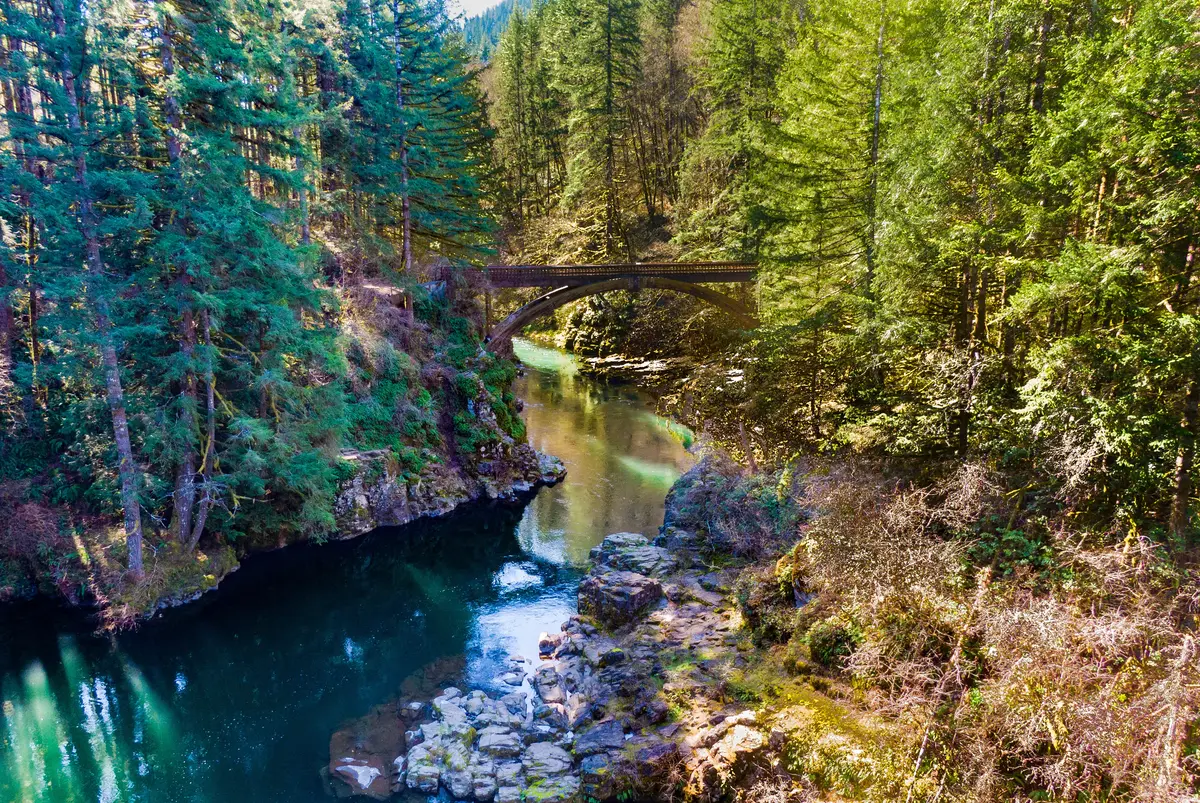
Local Expert Takeaway: Battle Ground is not a discount California suburb — it's a different kind of place that happens to come with dramatically lower home prices ($523,756 typical, versus California's $800,000-plus statewide median), no state income tax, and a genuine small-town main street where Al & Ernie's Bakery Cafe and Barrel Mountain Brewing on E Main St are actual neighborhood anchors. The math is compelling, but the move works best for people who want the pace to slow down, not just the mortgage payment.
Quick Takeaways & FAQs
✅ Washington's zero personal state income tax saves most California transplants thousands of dollars annually the moment they establish residency.
⚠️ Battle Ground's commercial core is still maturing — if walkable dining and nightlife variety are non-negotiable, you'll be driving to Portland more than you expect.
📍 Battle Ground Lake State Park and the Kiwanis Park area near Veterans Memorial are where newcomer families actually meet their neighbors and get plugged into the community.
Do I really save money on taxes by moving from California to Battle Ground, WA?
What does a typical home in Battle Ground actually look like for $523,000?
If I work remotely for a California company from Battle Ground, do I still owe California income tax?
Is Battle Ground a good fit if I'm moving from the Bay Area or Los Angeles?
How fast is Battle Ground growing, and does that affect buying now?
Moving to Washington?
Tell us what you need help with and we'll connect you with local resources.
