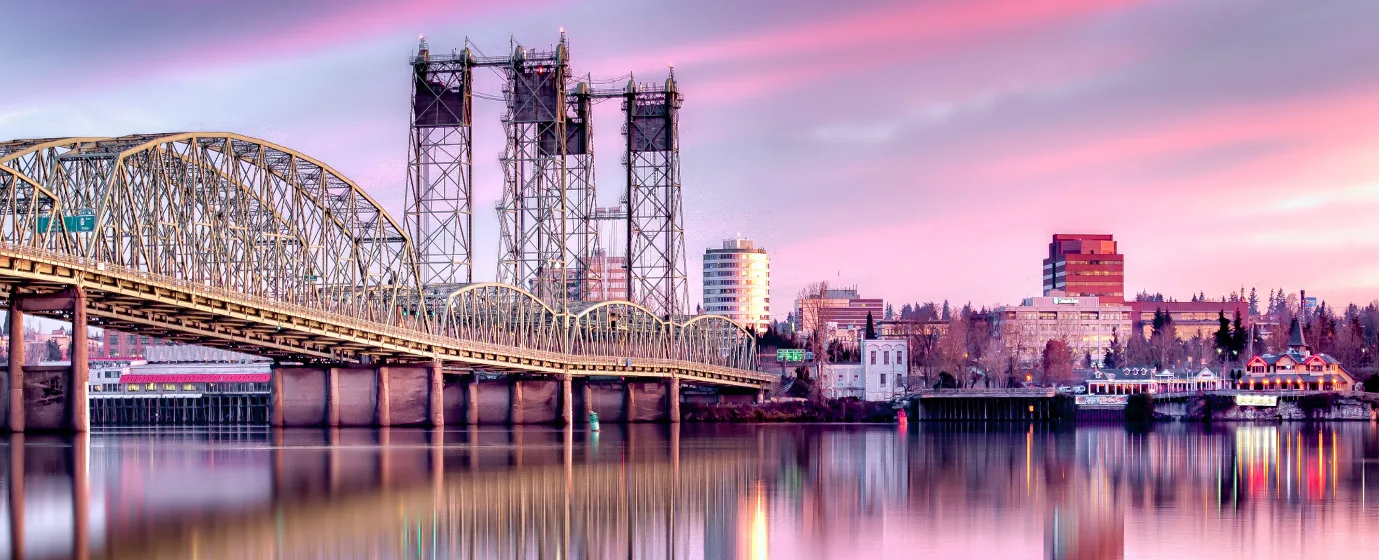
Vancouver, WA is one of those cities that rewards people who do their homework and punishes those who assume all of it looks the same. Drive from Fruit Valley near the lake on the southwest edge to Felida in the northwest hills, and you'd be forgiven for thinking you crossed a county line — the housing stock, the price points, and the daily rhythms feel completely different. What ties the whole city together is its position just across the Columbia River from Portland: you get Pacific Northwest city access without Oregon's state income tax, and that combination drives a constant influx of buyers who need to understand exactly which Vancouver neighborhood fits their actual life.
The city's typical home price sits at $510,224 (Zillow Home Value Index, May 2026), but that number smooths over a range that runs from entry-level bungalows in Fruit Valley to six-figure premiums in Felida. Vancouver Public Schools serves most of the city, and school attendance boundaries matter here — a street or two can determine whether your kids land in a higher-rated elementary or a more crowded one. Fort Vancouver National Historic Site and Officers Row sit near the city's historic center, and Vancouver Waterfront Park along the Columbia has changed the feel of the south end dramatically in recent years, pulling activity and investment toward the riverfront.
Day-to-day life in Vancouver is shaped less by a single downtown core and more by a string of distinct corridors: the walkable Main Street strip in Uptown Village, the SR-14 and I-205 interchange that defines commute patterns in the eastern neighborhoods, and the quieter, nature-edged streets of the northwest. Outdoor access ranges from Vancouver Lake on the west side to the Salmon Creek Greenway trails in the north, giving the city a range of recreational backdrops that most suburbs its size can't match.
Whether you're comparing Cascade Park to Fisher's Landing on square footage, trying to decide if Felida's price premium is worth it, or looking for the most walkable block in the city, the sections below break down all eight of Vancouver's most sought-after neighborhoods — with real price ranges, honest trade-offs, and the buyer-type breakdowns that matter most.
The Vancouver Reality
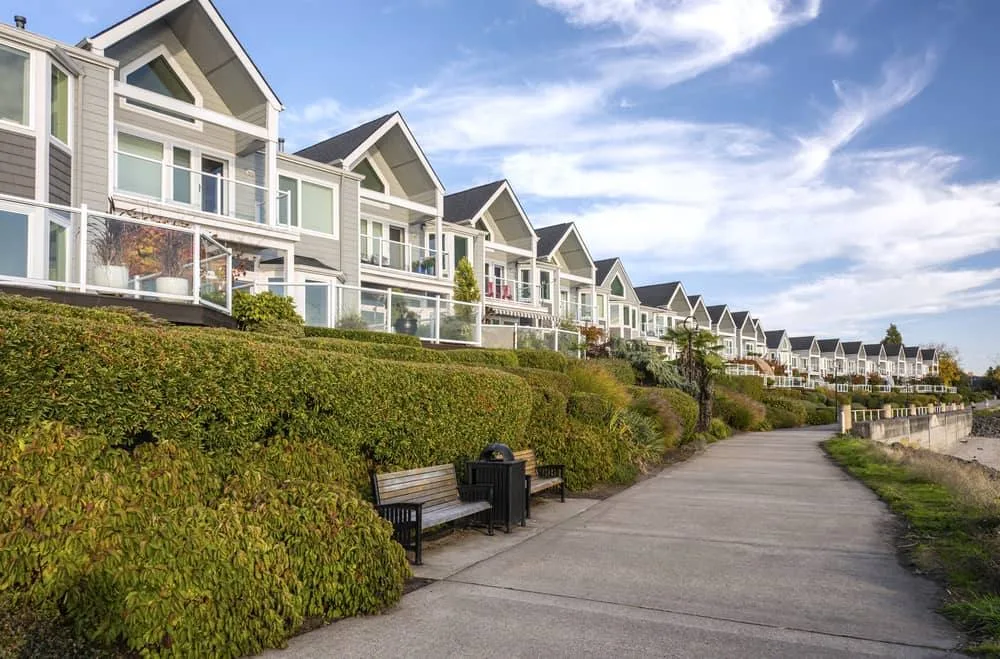
The single divide that experienced Vancouver agents talk about most is I-205 — not as a commute route, but as a psychological and practical boundary within the city itself. Neighborhoods west of the interstate, closer to downtown and the Columbia River, tend to be older, denser, and more walkable. Neighborhoods east of I-205, from Cascade Park through Fisher's Landing, are newer, more suburban in character, and built around the assumption that you will drive everywhere, every day.
School boundary lines within Vancouver Public Schools add a second layer of complexity that relocating buyers frequently underestimate. Two houses on the same street can feed into different elementary schools depending on which side of an arterial they sit. Before you fall in love with a specific block in Hazel Dell or Carter Park, confirm the exact attendance boundary for your address — the district's online lookup tool is the only reliable source, and agents who don't mention this step are leaving you exposed.
The third reality is directional: northwest Vancouver (Felida) and east Vancouver (Fisher's Landing, Cascade Park) are not interchangeable even though both sit outside the urban core. Felida trades proximity to Portland for larger lots and a quieter, semi-rural feel. Fisher's Landing trades that quiet for faster freeway access to the bridge. Understanding which trade-off matters more to your household is the real first decision in any Vancouver home search.
Neighborhoods at a Glance
| Neighborhood | Best For | Price Range | Vibe |
|---|---|---|---|
| Uptown Village | Walkable First-Time | $420,000–$560,000 | Historic bungalows, indie businesses, Main Street energy |
| Fruit Valley | Value Renter | $360,000–$460,000 | Affordable, lake-adjacent, working-class roots |
| Arnada | Walkable Quiet | $400,000–$530,000 | Vintage homes, mature trees, established bike routes |
| Carter Park | Families First-Time | $420,000–$540,000 | Craftsman bungalows, walkable to Uptown Village Main St |
| Hazel Dell | Commuter Value | $380,000–$510,000 | Dense suburb, parade-town community, Highway 99 corridor |
| Cascade Park | Families Commuter | $500,000–$620,000 | Established east-side suburb, 1970s–1990s ranch homes |
| Fisher's Landing | Families School | $520,000–$650,000 | Newer subdivisions, top-end schools, I-205 commuter access |
| Felida | Luxury Privacy | $650,000–$800,000+ | Northwest enclave, large lots, wetland trails, premium pricing |
Best Neighborhood by Buyer Type
| Buyer Type | Best Neighborhood | Why |
|---|---|---|
| First-Time Buyer | Uptown Village | Entry-level bungalows in the $420,000s give you a foothold with built-in walkability and resale demand driven by the Main Street corridor's energy. |
| Luxury Buyer | Felida | Zillow estimates Felida homes at approximately $712,000, with large lots, wetland trail access, and a northwest enclave feel that the rest of Vancouver can't replicate. |
| Walkability Seeker | Arnada | Dedicated bike lanes on McLoughlin and F Street connect you to downtown and Uptown Village without touching your car. |
| Families with Kids | Fisher's Landing | Newer construction, newer school buildings, and quick I-205 access make this the most consistently requested neighborhood among parents with school-age children relocating from out of state. |
| Commuters | Cascade Park | The I-205 and SR-14 interchange puts you on the bridge to Portland in minutes and keeps the reverse commute manageable on most mornings. |
| Large-Lot Buyers | Felida | Nearly four miles of paved wetland trail starts practically at the doorstep, and lot sizes here dwarf anything available closer to downtown. |
| Renters | Hazel Dell | The Highway 99 corridor keeps rental supply higher than most of Vancouver, meaning more choices and more negotiating room at lease renewal. |
Looking to buy in Vancouver? Estimate your payment.
Enter your numbers to see an estimated monthly mortgage payment.
Estimate only. Excludes HOA fees and mortgage insurance. The interest rate above is a starting point, not a quoted rate — replace it with your own to see real numbers. Insurance is a flat placeholder, not a Vancouver quote.
Most Popular Neighborhoods in Vancouver
1. Uptown Village
Uptown Village is the neighborhood Portland transplants point to when they say they didn't have to give anything up. The Main Street corridor — running from 15th Street north toward Fourth Plain Boulevard — is lined with independent shops, coffee houses, wineries, and Trap Door Brewing at 2315 Main St, a craft taproom that has earned back-to-back Great American Beer Festival gold medals. The catch: Craftsman bungalows and Victorian-era homes in the $420,000–$560,000 range come with smaller lots, older mechanicals, and street parking that gets tight on weekend evenings when the whole neighborhood animates. Best for: First-time buyers, renters-turned-owners, and anyone who wants to walk to dinner without planning it.
2. Fruit Valley
Fruit Valley is Vancouver's most affordable entry point, sitting southwest of downtown within reach of Vancouver Lake — one of those details that doesn't show up in the listing photos but absolutely shapes daily life in summer. Homes here in the $360,000–$460,000 range attract buyers who've been priced out of every other neighborhood in Clark County and need to close fast. The honest downside: Fruit Valley sits near industrial land uses that keep values lower, and on-foot access to retail is limited compared to the walkable neighborhoods to the east. Best for: Budget-constrained buyers, investors, and households comfortable driving for most daily errands.
3. Arnada
Arnada is one of Vancouver's oldest and most architecturally varied neighborhoods — you'll see Arts and Crafts bungalows next to Four-Squares next to mid-century ranches on the same block of mature-tree-lined streets. Bicycle routes along McLoughlin and F Street make it one of the few places in Vancouver where you can genuinely commute by bike to both downtown and Uptown Village, and homes in the $400,000–$530,000 range sit below the city median for what you get in terms of lot and character. The trade-off is that the oldest housing stock means deferred-maintenance surprises are common, and buyers skipping a thorough inspection here tend to regret it. Best for: Cyclists, urban gardeners, and buyers who want pre-war character without Uptown Village's weekend crowd.
4. Carter Park
Carter Park sits immediately adjacent to Uptown Village and shares its DNA — Craftsman bungalows, tree-canopied streets, and a short walk to Main Street's restaurants and Trap Door Brewing — without quite the same name recognition, which historically kept prices a step lower. In the $420,000–$540,000 range, it's the neighborhood families buy into when Uptown Village inventory runs dry, and many buyers find they prefer the slightly quieter residential blocks once they settle in. The downside is the same as its neighbor: small lots, older systems, and a competitive market whenever a well-maintained home hits the MLS. Best for: Families who want walkable neighborhood character at a modest discount to Uptown Village proper.
5. Hazel Dell
Hazel Dell is the most dense, most community-minded suburb on this list, anchored by the Hazel Dell Parade of Bands — the largest parade in Southwest Washington, running for nearly 60 years, with 24 high school bands and more than 120 entries at the 2025 event alone. The Highway 99 corridor through the neighborhood keeps retail accessible and apartment supply higher than most of Vancouver, which is a genuine asset for renters but can make traffic on 99 itself a daily irritant for anyone crossing it. Homes in the $380,000–$510,000 range are among the best values in Clark County for buyers who don't need to be within walking distance of a coffee shop. Best for: Value-focused buyers, community-oriented households, and commuters running north toward Battle Ground rather than south toward Portland.
6. Cascade Park
Cascade Park is the reliable east-side workhorse neighborhood: housing stock from the 1970s through the 1990s, a nine-hole public golf course at Fairway Village open year-round, a shaded playground at the namesake three-acre park, and I-205 close enough that the bridge to Portland rarely adds more than a few minutes to a south commute. The Movoto-reported median list price of approximately $576,000 (May 2026) reflects established demand from Portland commuters who want more square footage than inner-city Portland can offer at that price. The honest friction: many of the ranch homes here are overdue for kitchen and bath updates, and buyers who assume move-in ready should budget for cosmetic work. Best for: Portland commuters, families who prioritize space over walkability, and buyers who want a proven neighborhood over an emerging one.
7. Fisher's Landing
Fisher's Landing is what buyers get when they push slightly east of Cascade Park along the SR-14 corridor: newer subdivisions, newer school buildings, and a more planned suburban grid that feels less like old Vancouver and more like a Pacific Northwest version of what you'd find outside any mid-sized city. Prices in the $520,000–$650,000 range are justified by the school reputation and the newness of construction, and families relocating from out of state tend to feel immediately at home here. What you give up is character — the streets are younger, the trees shorter, and the weekend energy depends entirely on what your neighbors decide to do. Best for: Families prioritizing school buildings and newer construction, and buyers moving from newer-suburb environments who don't want a project.
8. Felida
Felida is the neighborhood Vancouver buyers discover after six months and wonder why nobody mentioned it sooner. About eight miles northwest of downtown, it functions as a premium enclave where Zillow estimates homes at approximately $712,000 — noticeably above the city-wide Zillow Home Value Index of $510,224 — and where nearly four miles of paved wetland trail, proximity to Vancouver Lake, Lake River, and Salmon Creek give the neighborhood a nature-edge that no other area on this list can match. The practical reality: you are eight miles from downtown and noticeably farther from the Portland bridge, so if your household runs two Portland commuters, the daily drive starts to accumulate in ways the price-per-square-foot math doesn't capture. Best for: Buyers trading proximity for privacy, large-lot seekers, and remote-working households who want Pacific Northwest nature access without leaving city limits.
Common Mistakes Buyers Make in Vancouver
Assuming the City Is Uniform
Buyers who tour one neighborhood and form a city-wide opinion consistently overpay or end up in the wrong area. Fruit Valley and Felida are both technically Vancouver — and they are separated by roughly $250,000 in typical home values and completely different daily experiences. Make a point of driving Fourth Plain Boulevard from west to east before you make any offers; the shift in neighborhood character along that single corridor tells you more than an afternoon of Zillow browsing.
Ignoring the School Boundary Before Making an Offer
Vancouver Public Schools attendance boundaries do not follow neighborhood names or arterial streets in any intuitive way. Buyers who target Hazel Dell or Carter Park based on a neighbor's school recommendation, then discover at closing that their specific address feeds into a different school, are not rare. The district's address lookup is the only reliable check — not a listing agent's verbal confirmation, not a neighborhood Facebook group post.
Underestimating I-205 Bridge Timing
The commute from Fisher's Landing or Cascade Park to downtown Portland runs approximately 25 minutes in normal conditions, but the I-205 bridge backs up sharply in the southbound direction between 7:30 and 9:00 a.m. Buyers who test-drive the commute on a Saturday afternoon and declare it manageable are setting themselves up for a rude awakening by day three of the actual workweek. If your job starts at 8:00 a.m. in the Pearl District, live close to the bridge or build in an extra 20 minutes every single morning.
Chasing Square Footage Over School Boundary
The jump from a $1,800-square-foot home in Fisher's Landing to a 2,200-square-foot home one zip code east in Washougal or Camas might look like a deal on paper. But that boundary crosses into a different school district entirely — and buyers with elementary-school-age children who discover this difference after moving out sometimes find themselves driving back into Vancouver for school choice transfers that aren't guaranteed. Square footage is replaceable; school district is not.
Best Areas to Rent in Vancouver
| Area | Ideal For | Typical Rent Range | Trade-off |
|---|---|---|---|
| Uptown Village / Carter Park | Young professionals, Portland commuters wanting walkability | $1,500–$2,000/mo (1BR); $1,900–$2,600/mo (2BR) | Older buildings, limited parking, high competition for quality units |
| Hazel Dell | Budget-conscious renters, families needing space | $1,300–$1,700/mo (1BR); $1,600–$2,200/mo (2BR) | Car-dependent; Highway 99 traffic is a daily reality |
| Cascade Park | Portland commuters, families wanting newer units | $1,600–$2,100/mo (1BR); $2,000–$2,700/mo (2BR) | Limited walkability; most errands require driving SR-14 or I-205 |
| Fisher's Landing | Families, remote workers, newer-construction seekers | $1,800–$2,300/mo (1BR); $2,200–$2,900/mo (2BR) | Premium rents for newer builds; few standalone rental apartments — mostly single-family rentals |
| Arnada | Cyclists, downtown-adjacent renters on a moderate budget | $1,400–$1,900/mo (1BR); $1,800–$2,400/mo (2BR) | Older housing stock; basement units common and vary widely in quality |
Hazel Dell's Highway 99 corridor consistently offers the highest rental inventory of any area in Vancouver, which gives tenants slightly more leverage at renewal than they'd have in Fisher's Landing or Uptown Village. If you're renting first to test a neighborhood before buying, Cascade Park offers the most direct comparison to a purchase experience — the unit types, the schools, and the commute you'd live with as an owner are essentially identical to what you rent.
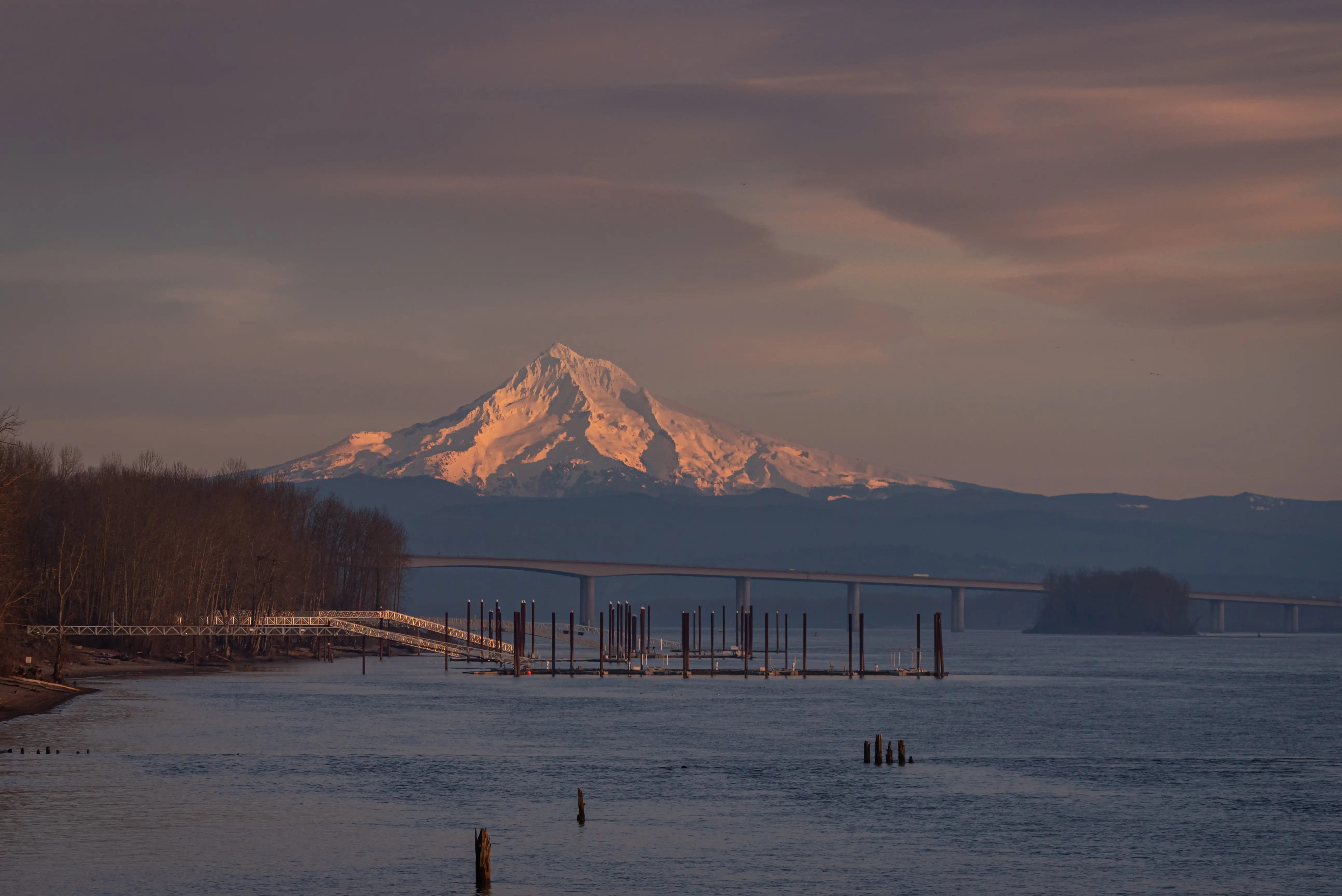
Local Expert Takeaway: If you're relocating to Vancouver and have two weeks to decide, drive the stretch of Main Street in Uptown Village on a Friday evening — Trap Door Brewing at 2315 Main St, the independent wine bars, the bungalow blocks running off the corridor — and then drive out to Felida the next morning along the wetland trail near Vancouver Lake. Those two drives will tell you more about what Vancouver actually is than any data point. The city's real appeal is that both of those experiences are possible within the same city limits, at price points that would be impossible across the river. The catch is that most households end up choosing between walkable character west of I-205 and newer suburban space to the east, and being honest about that trade-off early saves a lot of time.
Quick Takeaways & FAQs
✅ Felida offers nearly four miles of paved wetland trail and larger lots than any other Vancouver neighborhood, at a price point still noticeably below comparable Portland-area enclaves.
⚠️ School attendance boundaries in Vancouver Public Schools don't follow neighborhood names — two houses on the same Hazel Dell block can feed into different elementary schools, and verbal confirmation from an agent isn't a substitute for checking the district's address lookup tool.
📍 Trap Door Brewing on Main Street in Uptown Village — a back-to-back Great American Beer Festival gold medalist — anchors one of the most walkable residential blocks in all of Clark County.
What is the most affordable neighborhood in Vancouver, WA?
Which Vancouver, WA neighborhood is best for families with school-age children?
Is Felida worth the price premium over other Vancouver neighborhoods?
What is the most walkable neighborhood in Vancouver, WA?
How do Vancouver, WA neighborhoods compare for Portland commuters?
Moving to Washington?
Tell us what you need help with and we'll connect you with local resources.
