
Maybe you've been renting in Portland and someone mentioned you could cross the river, keep most of the same commute, and suddenly be in a market where a real house — not a condo, not a townhouse — is within reach. That's Vancouver's pitch to a lot of first-time buyers. But the pitch skips a few things: the Zillow Home Value Index (ZHVI) put the typical home price at $510,224 as of May 2026, inventory sits near historic lows, and homes go to pending in roughly 12 days on average. The opportunity is real. So is the competition.
Vancouver sits along the north bank of the Columbia River in Clark County, directly across from Portland, OR. I-5 and I-205 bracket the city, and most of the employment base — HP Inc. and nLight on the manufacturing and technology side, Vancouver Public Schools and a regional healthcare system on the institutional side — is spread across the metro rather than concentrated in a single downtown core. That footprint matters when you're deciding which neighborhood to anchor yourself in. Washington's lack of a state income tax is a genuine financial advantage over living in Portland, a fact that shows up in purchasing power calculations once you're budgeting in earnest.
The Vancouver market is noticeably more accessible than Portland's west-side market, but it still requires real cash at the table and a clean pre-approval before you set foot in an open house. The good news: sales volume picked up in May 2026 — 526 homes closed that month versus 457 the prior year — which means deals are getting done. The catch is that hot listings still sell above asking, sometimes within days.
Whether you're considering a first purchase or just trying to understand whether Vancouver is the right market for your budget, the sections below break down what your money actually buys here, the step-by-step process as it plays out locally, a concrete budget snapshot, and the mistakes that cost first-timers the most.
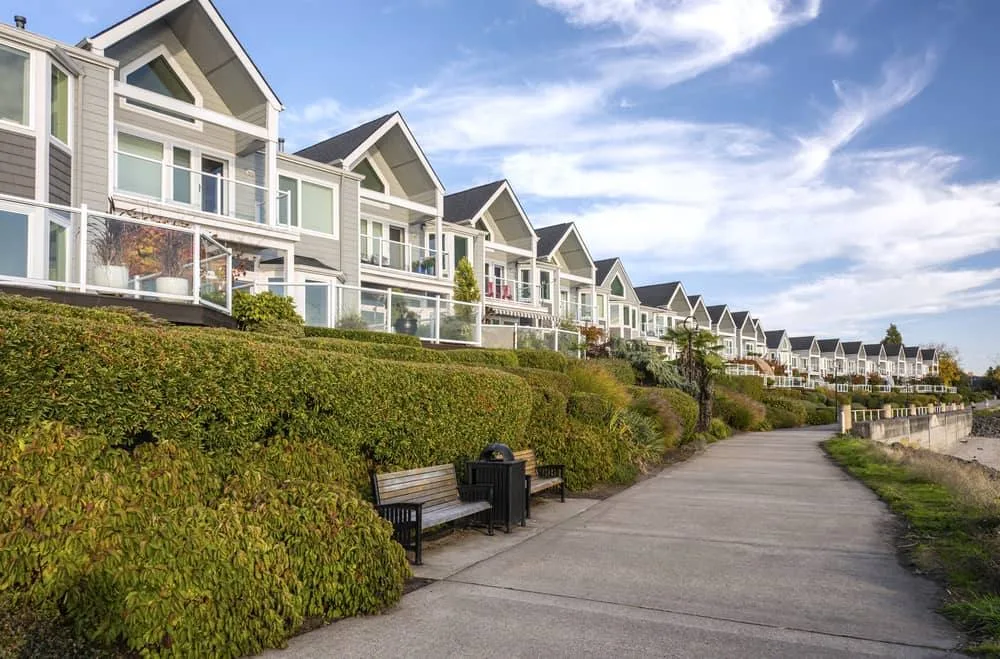
The Vancouver First-Time Buyer Reality
The Zillow Home Value Index pegged Vancouver's typical home price at $510,224 in May 2026 — down a modest 0.6% year-over-year, but that small dip hasn't meaningfully loosened competition. With only about 2.4 months of supply on the market, sellers still hold most of the cards, and the sale-to-list price ratio sat at 100.07% as recently as March 2026. That means you are not, on average, buying at a discount to asking price.
The speed of this market catches first-timers off guard more than the price does. Hot listings — the kind with updated kitchens and a usable yard — can go pending in around five days and close at roughly 3% above list. That's not a reason to panic, but it is a reason to have your pre-approval letter, your earnest money ready, and your wish list ranked before you ever schedule a showing.
Buyers who treat the first few weeks as a scouting expedition often find themselves emotionally attached to a home they were never in a position to make an offer on. See the cost of living page for a full breakdown of how Vancouver's prices compare to the broader metro.
The Homebuying Process in Vancouver, Step by Step
Step 1 — Get a Real Pre-Approval (Not a Pre-Qualification)
A pre-qualification is a lender's rough estimate based on what you tell them over the phone. A pre-approval involves a full credit pull, income documentation, and asset verification — and it's the only document a Vancouver listing agent will take seriously in a competitive offer situation. Get the pre-approval before you tour a single home. In a market where homes go pending in 12 days, submitting an offer a day after you started the mortgage process is not a winning strategy.
Step 2 — Define Your Search Before You Start Touring
Vancouver's neighborhoods feel different from each other in ways that matter for daily life. Decide in advance whether walkability on streets like those near Uptown Village is a priority, or whether newer construction and larger lots further east better fit your needs. Touring without that filter wastes time and leads buyers to fall in love with homes they can't actually make work.
Step 3 — Making the Offer
In Vancouver's market, offers with an inspection contingency are still common and reasonable — but how you write the contingency matters. A blanket inspection contingency gives you a meaningful exit if the home has real defects; stripping it entirely to compete is a risk that has burned buyers here. Talk to your agent about an inspection contingency with a repair threshold rather than removing it outright.
Step 4 — Inspection and Appraisal
Washington requires your lender to provide a Loan Estimate within three business days of application. Lock in that estimate and compare it carefully to the Closing Disclosure you'll receive at least three business days before closing — these are your two legally required snapshots of what the deal actually costs. If numbers shifted, ask why before you get to the table.
Step 5 — Closing
Washington's Real Estate Excise Tax (REET) is generally a seller cost, which is a small but real advantage for buyers on the closing-cost side. Budget buyer closing costs at 2%–5% of the purchase price. That range is wide because it depends on your loan type, whether you buy down your rate with points, and what title and escrow fees look like in Clark County. The sections below put actual dollar estimates to these ranges.
The step first-timers most commonly mishandle: treating pre-approval as a formality rather than the starting gun, and waiting to start the mortgage process until after they've found a home they want. By then, a better-prepared buyer has already made an offer.
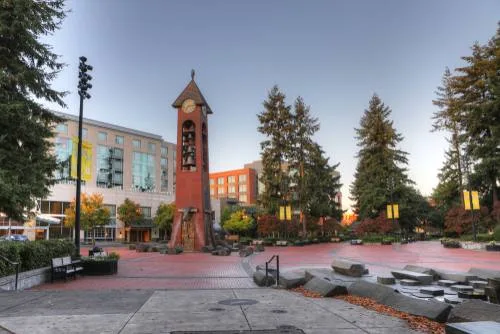
How Much Home Can You Afford in Vancouver
The table below shows estimated cash requirements at the closing table across several realistic Vancouver purchase scenarios. Closing cost estimates use the 2%–5% buyer range; figures are approximations intended to help you plan, not guarantees of what your specific transaction will cost. The interactive mortgage calculator below the table will help you model monthly payment scenarios.
| Scenario | Purchase Price | Down Payment | Est. Closing Costs (2–5%) | Est. Cash Needed at Table |
|---|---|---|---|---|
| FHA (3.5% down) — entry floor | $420,000 | $14,700 (3.5%) | $8,400–$21,000 | $23,100–$35,700 |
| Conventional (3% down) — entry floor | $420,000 | $12,600 (3%) | $8,400–$21,000 | $21,000–$33,600 |
| FHA (3.5% down) — near city median | $510,000 | $17,850 (3.5%) | $10,200–$25,500 | $28,050–$43,350 |
| Conventional (5% down) — near city median | $510,000 | $25,500 (5%) | $10,200–$25,500 | $35,700–$51,000 |
| Conventional (10% down) — mid-range | $580,000 | $58,000 (10%) | $11,600–$29,000 | $69,600–$87,000 |
| Conventional (20% down) — no PMI tier | $650,000 | $130,000 (20%) | $13,000–$32,500 | $143,000–$162,500 |
The 20% down scenario removes private mortgage insurance (PMI), which is meaningful on a $650,000 purchase. At lower down payments, factor PMI into your monthly payment calculation using the tool below.
One number first-timers underestimate: the upper end of the closing-cost range. A 5% closing cost on a $510,000 home is $25,500 — on top of your down payment. Plan for the higher end so you're not surprised at the table.
Washington's effective property tax rate runs approximately 0.99% — see the full cost of living breakdown for how that compares to the regional context.
Looking to buy in Vancouver? Estimate your payment.
Enter your numbers to see an estimated monthly mortgage payment.
Estimate only. Excludes HOA fees and mortgage insurance. The interest rate above is a starting point, not a quoted rate — replace it with your own to see real numbers. Insurance is a flat placeholder, not a Vancouver quote.
Common First-Time Buyer Mistakes in Vancouver
Touring Before You Have a Pre-Approval Letter
This is the single most common mistake in Vancouver's market, and it's expensive. You can fall in love with a home on a Friday, schedule a showing Saturday, and watch it go pending Sunday — all before a lender has even pulled your credit. Pre-approval takes a few days to a week for most buyers. Do it first, not in parallel with your search.
Waiving the Inspection Contingency Completely
Some buyers, spooked by competition, drop the inspection contingency entirely to make their offer stand out. In Vancouver's older housing stock — particularly in neighborhoods like Arnada and Carter Park where mid-century homes are common — that's a real risk. A waived inspection on a 1960s home with original electrical or an undetected foundation issue can turn a winning offer into a five-figure repair bill. A better move: offer a fast inspection window (five to seven days) with a defined repair threshold rather than no inspection at all.
Ignoring the School Boundary Reality
Vancouver Public Schools boundaries don't follow neighborhood lines cleanly. Two homes on the same street can feed into different schools depending on exactly where the boundary runs. If school assignment matters to your household, verify the specific address against the district's current boundary map — don't assume a neighborhood name tells you which school your child attends.
Underbudgeting the Cash You Actually Need
First-timers frequently plan for the down payment and forget to stress-test the closing cost estimate. At a $510,000 purchase price, even a 2% closing cost adds $10,200 on top of your down payment — and 5% adds $25,500. Then add the earnest money deposit (typically 1%–2% of the purchase price, due within days of an accepted offer), inspection fees, and any rate-lock extension costs if closing drags. Budget for the high end of each range, and keep a cash reserve beyond what you need at the table so you're not draining your account to zero on move-in day.
Underestimating How Quickly the Market Moves
Vancouver buyers who approach the market as they would a slower-paced region often spend weeks casually browsing before getting serious — and then find themselves in catch-up mode. Attending open houses without a pre-approval in hand, or waiting until the weekend to schedule a showing on a Thursday listing, are habits that cost buyers here. When you're ready to act, be fully ready: have your agent on speed dial, your financing in order, and your non-negotiables clearly defined so you're not deliberating when a good home appears.
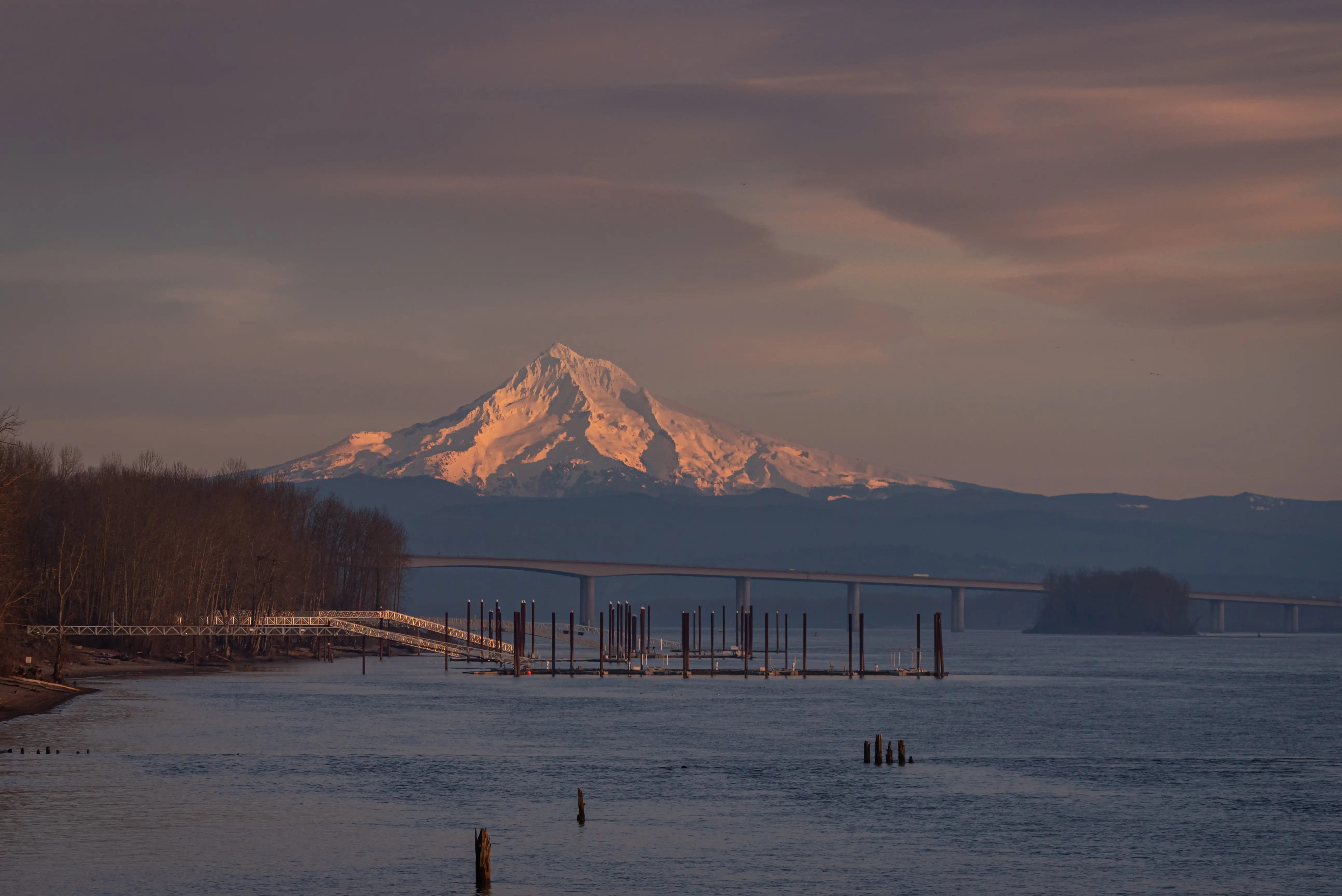
Local Expert Takeaway: Vancouver rewards first-time buyers who do the preparation work before they fall in love with a specific house. Get the pre-approval done, understand what the closing-cost range actually adds to your cash requirement, and build your plan around the high end of that range — not the low end. The market is competitive but not impossible: 526 homes closed in May 2026 alone, and buyers who came to the table ready to move won many of them.
Quick Takeaways & FAQs
✅ Washington's lack of a state income tax gives Vancouver buyers a meaningful long-term cost advantage over comparable Portland, OR purchases.
⚠️ With only about 2.4 months of supply and homes selling at or above asking price on average, Vancouver is a seller's market — first-timers who aren't pre-approved before touring routinely lose out to better-prepared buyers.
📍 Vancouver Public Schools boundaries don't follow neighborhood lines — always verify a specific address against the district boundary map before committing to a home based on school assignment assumptions.
What credit score do I need to buy a home in Vancouver, WA?
How long does it take to close on a home in Vancouver, WA?
Is an FHA loan a good option for buying in Vancouver's market?
What are typical buyer closing costs in Vancouver, WA?
Should I look at Camas or Battle Ground instead of Vancouver if my budget is tight?
Moving to Washington?
Tell us what you need help with and we'll connect you with local resources.
