
Maybe your financial advisor ran the numbers and kept circling back to Washington State. Maybe you've spent decades in Portland, paid Oregon income tax on every pension check, and finally decided enough is enough. Or maybe you landed on Vancouver by accident — drove through on a weekend trip, noticed the Columbia River waterfront and the relative quiet compared to Portland's pace, and started wondering if it could actually work. The honest answer: for a specific kind of retiree, Vancouver is one of the most structurally sound retirement decisions in the Pacific Northwest. For others, it's a compromise they'll feel within the first year.
What drives people here in retirement is almost always some combination of two things: the tax math and the proximity to Portland without paying Portland prices. Washington levies zero state income tax, which means your Social Security, pension, IRA withdrawals, and 401(k) distributions are entirely untouched at the state level — a structural advantage that compounds year after year on a fixed income. The city itself is anchored by PeaceHealth as a major employer and healthcare anchor, with a medical infrastructure that goes well beyond what most comparably sized cities offer. The Zillow Home Value Index put the typical home price at $510,224 as of May 2026 — meaningfully below what you'd pay across the river, and enough to make downsizing arithmetic work for people leaving larger family homes.
Day-to-day life in Vancouver runs at a pace most retirees describe as comfortable rather than exciting. The Vancouver Waterfront Park along the Columbia gives you a genuine walking destination, and Fort Vancouver National Historic Site sits right in the urban core. C-Tran public transit covers the city, and Portland International Airport is roughly 25 minutes away when you need it — which matters if you travel to see family or pursue serious medical care beyond what's available locally. The catch most newcomers don't expect: Vancouver is a car-dependent city in most of its suburban reaches, and the walkability reality varies enormously depending on which part of town you land in.
Whether you're seriously weighing a move or just stress-testing the idea, the sections below break down Vancouver's healthcare access, retirement tax picture, downsizing options, active-adult community life, and how the city stacks up against other retirement destinations in southwest Washington and across the river.
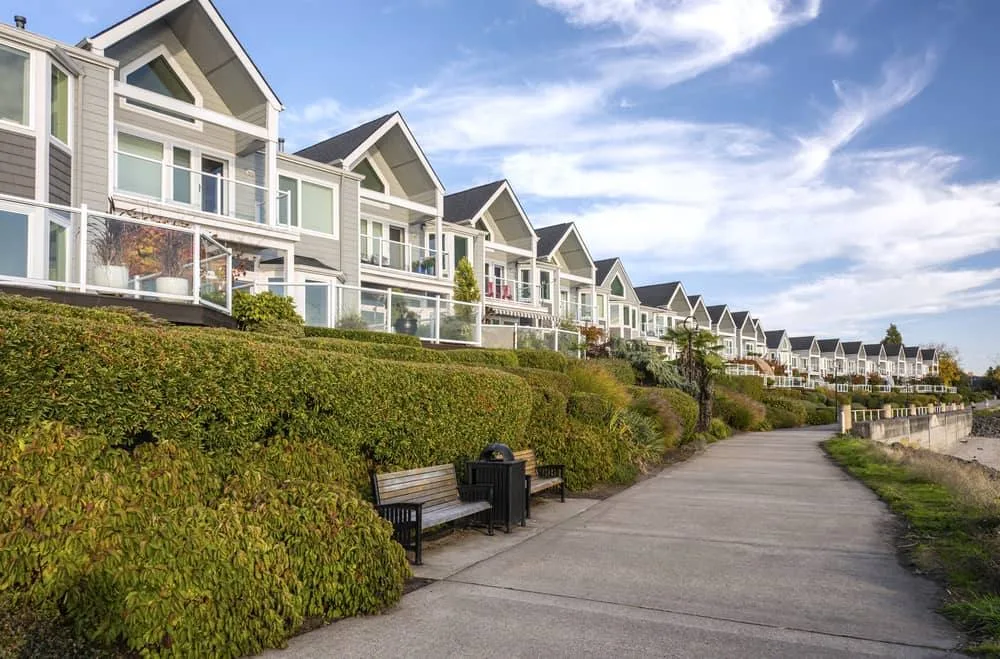
Why Retirees Are Choosing Vancouver
The retirees who do best in Vancouver tend to share a profile: they want urban-adjacent access without urban prices or urban noise, they have some connection to the Portland metro already — family, doctors, longtime friends — and they've done the tax math carefully enough to know that Washington's zero income tax isn't a talking point, it's real money on a fixed income.
The city genuinely fits people who are active but not looking to hike every weekend, who want a decent restaurant scene and a walkable waterfront without needing world-class arts infrastructure on their doorstep. The Vancouver Waterfront Park, Esther Short Park in the downtown core, and the trail network along the Columbia give you daily movement options. The proximity to Portland means a theater season, a world-class food scene, and Oregon Health & Science University's specialized medical care are 25 minutes away — not in your backyard, but not out of reach either. Crossing into Oregon for major purchases also means no sales tax on those transactions, which adds up over a retirement's worth of appliances, electronics, and furniture.
The honest pushback: if you're coming from a small town expecting tight-knit community and slow pace, parts of Vancouver will feel anonymous. The suburban corridors along Highway 99 and near Hazel Dell aren't walkable in any practical sense, and the city's rapid growth over the last decade means construction and congestion are background realities. Retirees who've moved here from California sometimes find the overcast winters longer than expected — Vancouver gets roughly 144 sunny days per year, and the November-through-February stretch is genuinely gray. And if your vision of retirement is deep mountain solitude or a truly small-town feel, Battle Ground or Ridgefield to the north will suit you better. For urban-adjacent, tax-efficient, medically well-covered retirement, though, Vancouver holds up. The cost-of-living page has the full breakdown on day-to-day expenses.
Healthcare & Medical Access in Vancouver
The Flagship: PeaceHealth Southwest Medical Center
PeaceHealth Southwest Medical Center at 400 NE Mother Joseph Place is the city's anchor hospital — a full-service community hospital with a Level II trauma center, a 4-star Medicare overall quality rating, and strong independent hospital safety ratings. That combination of trauma capability and quality recognition is not something every mid-sized city can claim, and it matters significantly when you're evaluating a place to age in.
PeaceHealth Southwest sees over 280,000 patients annually and covers the full range of services most retirees need: cardiac care, orthopedics, oncology, and emergency medicine are all represented on-site. For a community hospital, the depth here is substantial. It won't replace a major academic medical center for complex surgical cases or rare conditions, but for the bread-and-butter needs of retirement — joint replacements, cardiac monitoring, cancer screening and treatment — it handles the volume competently.
The Supporting Network
Legacy Salmon Creek Medical Center on the north side of the city adds a second full-service hospital, which means you're not dependent on a single facility. Kaiser Permanente operates in Vancouver for members within its integrated system. The Vancouver Clinic — one of the region's larger multispecialty group practices — covers primary care, cardiology, orthopedics, and more, with multiple locations across the city.
The honest distance-to-advanced-care reality: for highly specialized procedures — organ transplants, complex neurosurgery, cutting-edge cancer trials — Oregon Health & Science University (OHSU) in Portland is the regional academic medical center. It sits about 25 minutes from most of Vancouver. That drive is manageable for most retirees, but it's a drive — not a walk or a five-minute ride. For the vast majority of retirement healthcare needs, you won't need to leave Vancouver. For the highest-acuity situations, you'll be glad Portland is close.
What Surprises People at Six Months
New retirees often underestimate specialist wait times in Vancouver. PeaceHealth and Legacy both draw patients from all of southwest Washington, and demand for cardiology and orthopedic appointments has grown faster than capacity. Build in extra lead time when establishing care, and plan to set up your primary care relationship before you need it urgently — not after.
The Retiree Budget in Vancouver
The Tax Advantage Is Real
Washington is one of only nine U.S. states with no individual income tax. Every dollar of Social Security, pension income, IRA withdrawal, and 401(k) distribution you receive in retirement is entirely free of state income tax — Oregon, by contrast, taxes all of it. For a couple drawing $80,000 annually in retirement income, that difference is thousands of dollars per year, every year, for the rest of your retirement. This is the single largest financial argument for Vancouver over Portland.
Washington taxes 7% on long-term capital gains above a $278,000 standard deduction for 2025, rising to 9.9% on gains above $1,000,000. For retirees with large taxable investment portfolios making significant annual realizations, this is worth planning around with a tax advisor. For most retirees living primarily on Social Security and pension income, it won't apply.
Washington's estate tax applies only to estates exceeding $2.193 million (as of 2024), leaving the overwhelming majority of retirees' heirs unaffected. There is no inheritance tax at the state level.
Property Tax and the Deferral Program
The effective property tax rate in Vancouver runs approximately 0.99% — close to the national average and lower than many West Coast cities. More importantly for retirees on fixed incomes, Washington offers a property tax deferral program: seniors aged 60 or older with household income below $88,998 may defer property taxes until the home is sold or changes ownership. That's a meaningful cash-flow tool if you're in the early years of retirement and managing liquidity carefully.
Daily Cost of Living on a Fixed Income
Washington's 8.5% state sales tax applies to most purchases — this is the cost of living in a no-income-tax state, and it's a real line item on a fixed income. The Oregon border crossing removes sales tax on major purchases, which retirees in Vancouver learn to use strategically: appliances, electronics, large furniture. Groceries and prescription drugs are exempt from Washington sales tax, which softens the day-to-day impact. For the full breakdown of groceries, utilities, and transportation costs, see the cost-of-living page.
Looking to buy in Vancouver? Estimate your payment.
Enter your numbers to see an estimated monthly mortgage payment.
Estimate only. Excludes HOA fees and mortgage insurance. The interest rate above is a starting point, not a quoted rate — replace it with your own to see real numbers. Insurance is a flat placeholder, not a Vancouver quote.
Walkability, Community & Staying Active in Vancouver
The Walkability Reality
Downtown Vancouver and the Uptown Village neighborhood offer genuine on-foot access — errands, restaurants, the waterfront, and parks within walking distance of each other. The Arnada and Carter Park neighborhoods just north of downtown have a similar character: tree-lined streets, relative flatness, and enough density to make a car optional for daily needs. These are the pockets retirees who prioritize walkable streets should look at first.
East and north Vancouver — Cascade Park, Fisher's Landing, Hazel Dell — are a different story. These are auto-oriented suburban grids where most errands require driving, sidewalks are intermittent, and the nearest coffee shop may be in a strip mall half a mile away. Not a dealbreaker for active retirees who drive, but worth knowing before you commit to a specific address.
The terrain is gentle. Unlike Portland's West Hills or much of Seattle, Vancouver is mostly flat, which matters enormously for retirees who want to walk or bike without hills becoming a limitation.
Where People Actually Gather
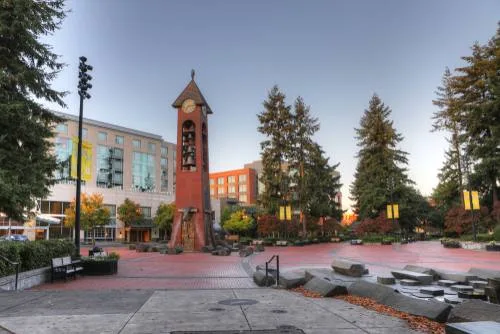
The Vancouver Waterfront Park along the Columbia is where you'll find retirees on weekday mornings — walking the promenade, watching the river traffic, sitting at outdoor tables near the water. It's the kind of destination that makes Vancouver feel more substantial than its suburban reputation suggests. Esther Short Park in the downtown core hosts the Saturday farmers market and regular outdoor events that give the city a genuine neighborhood pulse.
C-Tran public transit serves the city and connects to the Portland metro area, giving retirees who want to reduce car dependence a real option for local trips and cross-river excursions. It won't replace a car for suburban errands, but it makes a one-car household workable in the right part of town.
Senior Centers and Social Infrastructure
The city operates senior centers in multiple neighborhoods, offering fitness classes, social programming, and meal services. The parks and recreation department runs active-adult programming year-round. Volunteering infrastructure is strong — Fort Vancouver National Historic Site draws a significant volunteer community, and the connection to Portland's cultural institutions means the options for staying engaged intellectually don't thin out the way they might in a more isolated city.
Right-Sizing: Downsizing in Vancouver
The Market Timing Question
Vancouver's housing market showed balanced conditions in early 2026, with homes selling in approximately 20 days and median sale prices up year-over-year. For downsizing retirees, that pace matters: a family home here is likely to move reasonably quickly if priced correctly, giving you cleaner timing when coordinating a purchase of something smaller.
The city-wide Zillow Home Value Index came in at $510,224 as of May 2026 — a market where downsizing from a four-bedroom family home into a two-bedroom condo or patio home can free up real equity. That freed capital is what funds a lot of Vancouver retirements.
What the Single-Level Inventory Looks Like
Single-level homes are available throughout Vancouver but compete with a broad buyer pool that includes families with young children and older buyers alike. In the Felida area on the west side, newer single-level construction tends to come with larger lots and quieter streets. Fisher's Landing and Cascade Park on the east side have substantial ranch-style inventory from the 1990s and 2000s — practical layouts, attached garages, and price points that work for downsizers.
Patio home communities — low-maintenance, HOA-managed, single-story attached or detached homes — exist throughout the metro. These tend to cluster in the suburban corridors of north and east Vancouver, and they're particularly popular with retirees who want to eliminate yard work without moving into a full condo environment.
55+ and Active-Adult Communities
Vancouver has a growing inventory of dedicated 55+ communities, ranging from independent living apartments near the waterfront to active-adult subdivisions farther east. The distinction between independent living, assisted living, and memory care is important to map early — the city has all three levels, but not all are co-located, and planning your housing trajectory before you need the next level is the move most people wish they'd made earlier.
For retirees considering a rental transition first — to test the city before buying — Vancouver's rental stock includes senior-friendly apartment buildings near downtown and in the Hazel Dell corridor. See the cost-of-living page for current rent ranges. The inventory is tighter than it was two years ago, so lead times on preferred properties have stretched.
Vancouver vs Nearby Retirement Destinations
| City | Cost vs Vancouver | Primary Hospital | Walkability | Senior Living Depth | Overall Retirement Fit |
|---|---|---|---|---|---|
| Vancouver, WA | Anchor | PeaceHealth Southwest — Level II trauma center, 4-star Medicare quality rating | Good in downtown/Uptown Village; car-dependent in suburbs | Strong — independent, assisted, memory care all present | Transit Walkable Core Best for tax-motivated, medically active retirees |
| Portland, OR | Noticeably pricier | OHSU — major academic medical center with full subspecialty depth | Excellent in inner neighborhoods; varies widely | Very strong across all levels | Walkable Best for urbanites who want maximum services; Oregon income tax applies |
| Camas, WA | About the same or slightly pricier | Relies on PeaceHealth and Legacy Salmon Creek in Vancouver | Limited — small-town walkable core but mostly car-dependent | Moderate — growing but thinner than Vancouver | Quiet Views Best for retirees wanting small-town feel with Vancouver healthcare nearby |
| Battle Ground, WA | Noticeably cheaper | No major hospital on-site; drive to Vancouver facilities required | Low — suburban and rural grid, car essential | Limited — early-stage senior living inventory | Nature Value Best for active, younger retirees who prioritize space and price over services |
| Ridgefield, WA | Cheaper to about the same | No on-site hospital; 20-25 min to Vancouver facilities | Very low — rural and exurban | Thin — limited dedicated senior options | Privacy Nature Best for retirees wanting new construction and quiet; limited services |
| Washougal, WA | Noticeably cheaper | No major hospital; drives to Vancouver or Camas required | Low — small walkable downtown but limited overall | Limited — fewer dedicated senior facilities | Views Value Best for retirees drawn to the river gorge; accept the service trade-off |
Portland wins on healthcare depth and walkability, but Oregon's income tax on all retirement income changes the math significantly for anyone drawing a meaningful pension or taking regular IRA distributions.
Battle Ground and Ridgefield offer real price advantages and a quieter pace, but both require accepting a significant reduction in healthcare proximity and senior living inventory — a reasonable trade-off at 62, a harder one at 78.
Camas is the closest competitor to Vancouver in terms of quality of life, and some retirees find its smaller scale more appealing than Vancouver's suburban sprawl. The catch is that Camas's senior living infrastructure is still developing, and you're ultimately drawing on Vancouver's hospitals anyway.
Washougal makes the most sense for retirees who specifically want access to the Columbia River gorge and are willing to drive 20-plus minutes for most services. It's a lifestyle choice, not a practical-services choice.
Vancouver's combination of PeaceHealth's on-the-ground quality, Washington's zero income tax, and Portland's proximity without Portland's prices is genuinely difficult to replicate elsewhere in this region.
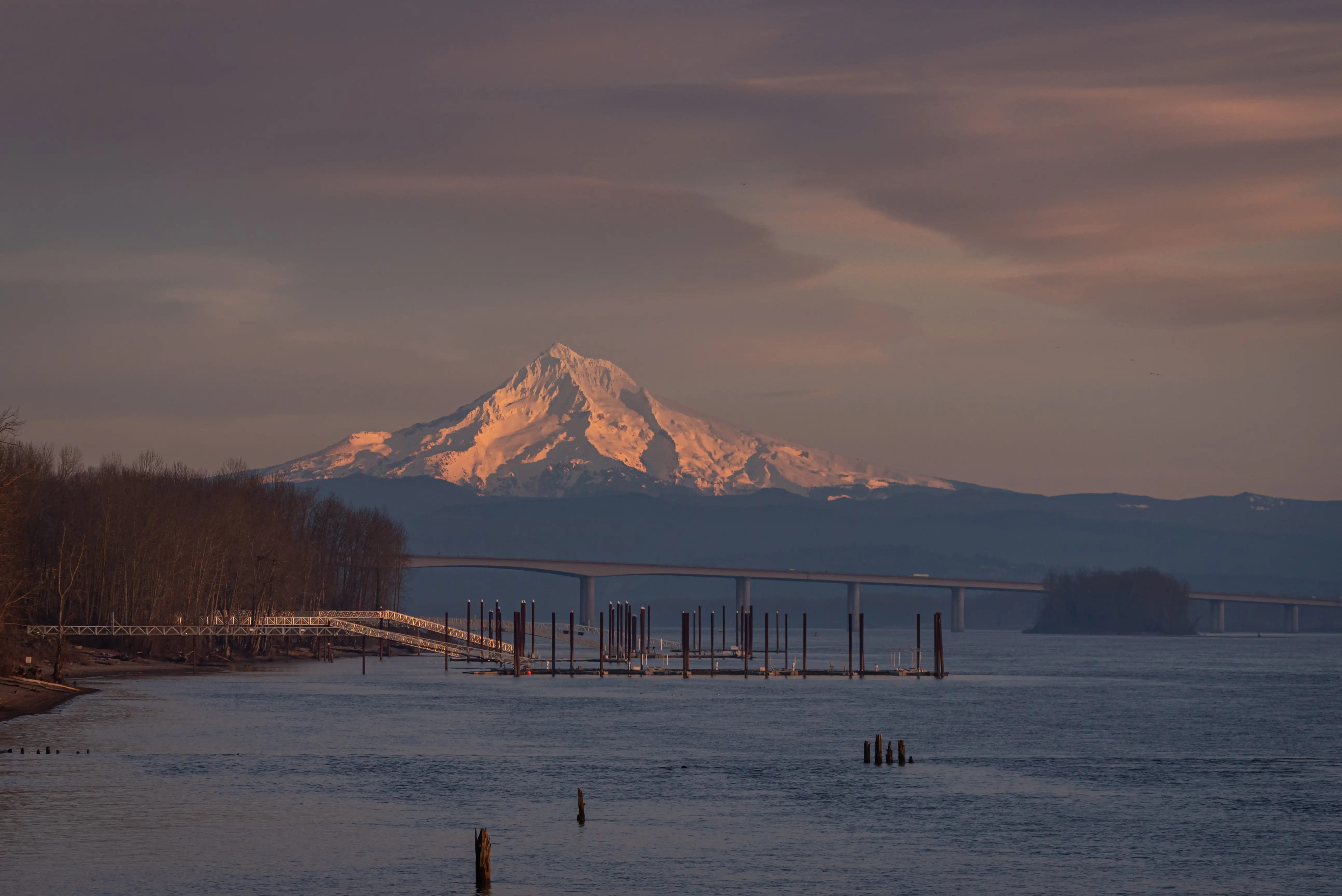
Local Expert Takeaway: Vancouver's retirement case rests on three pillars that are harder to find together than they look: PeaceHealth Southwest with its Level II trauma center and strong independent safety ratings sitting inside the city limits, Washington's zero state income tax applied to every dollar of retirement income, and Portland's OHSU and PDX airport within 25 minutes when you need something bigger. The walkable core around Uptown Village and the Vancouver Waterfront is genuinely livable on foot. The catch is that much of the city's suburban footprint — the Hazel Dell corridor, Fisher's Landing, eastern Cascade Park — requires a car for daily life, so where exactly you land in Vancouver shapes your retirement quality as much as the city-level advantages do. Get that address decision right and Vancouver earns its reputation as one of the Pacific Northwest's most structurally sound retirement choices.
Quick Takeaways & FAQs
✅ Washington's zero state income tax means Social Security, pension, and IRA withdrawals are entirely untaxed at the state level — a compounding advantage over Oregon-based alternatives.
⚠️ Much of Vancouver is car-dependent; retirees who prioritize walkable streets should focus specifically on downtown, Uptown Village, Arnada, and Carter Park rather than the broader suburban grid.
📍 Seniors aged 60 or older with income below $88,998 may qualify to defer Washington property taxes until the home is sold — a cash-flow tool worth knowing about before your first tax bill.
Is Vancouver, WA a good place to retire if I'm coming from California?
What hospital would I use in Vancouver, WA as a retiree?
Does Washington State tax Social Security or pension income?
Are there 55+ or active-adult communities in Vancouver, WA?
How does Vancouver, WA compare to Battle Ground or Camas for retirement?
Moving to Washington?
Tell us what you need help with and we'll connect you with local resources.
