
What Is Living in Shoreline, Washington Like?
You've probably driven through Shoreline on I-5 dozens of times without stopping — and that's the central irony of this city. It sits directly between Seattle and Edmonds, close enough to downtown that the Olympic Mountains are visible on clear days from the right hilltop, yet self-contained enough that many longtime residents rarely feel the pull to leave. What changed the calculus permanently was August 30, 2024, when Sound Transit's Lynnwood Link opened two stations entirely within city limits — Shoreline South/148th and Shoreline North/185th — turning a city that already had reasonable bus access into one of the best-connected transit suburbs on the entire Puget Sound corridor. That shift is reshaping what Shoreline is, who moves here, and what property around both stations is worth.
Shoreline's economy is quieter and more civic in character than the tech-saturated neighborhoods directly to its south. The largest employers include Crista Ministries, a nonprofit operating senior care, media, and education programs across a substantial campus; Shoreline Community College, which draws students regionally and anchors the north end of the city; Fred Meyer, which functions as a genuine community hub in a city without a traditional downtown core; and the City of Shoreline's own municipal workforce. Shoreline School District holds an A rating, according to Niche, which drives a meaningful share of inbound relocations from parents who want quality public schools without paying Seattle prices for a house. These aren't tech-campus commuters by majority; they're educators, healthcare workers, municipal employees, and small-business owners who chose this city deliberately.
Cost of living runs noticeably above the national average — the city's cost-of-living index was 122.8 as of late 2024 — but that figure lands well below what buyers face inside Seattle proper. The typical home value sits at $776,196 (Zillow Home Value Index, July 2026), which puts Shoreline in a middle tier for the metro: more accessible than most Seattle zip codes, but a real financial commitment. Day-to-day life orbits Richmond Beach Saltwater Park on the Puget Sound waterfront, the trails and open space of Shoreview Park, and a scattered network of neighborhood commercial strips rather than any single walkable main street. Kruckeberg Botanic Garden, tucked into a residential block in the northern part of the city, is the kind of place most newcomers don't discover until a neighbor mentions it.
Whether you're considering a move or researching Shoreline from afar, the sections below break down who moves here and why, what daily life actually looks like, the current housing market, how commuting works with and without the new light rail, and where locals spend their weekends.
Shoreline at a Glance
Looking to buy in Shoreline? Estimate your payment.
Enter your numbers to see an estimated monthly mortgage payment.
Estimate only. Excludes HOA fees and mortgage insurance. The interest rate above is a starting point, not a quoted rate — replace it with your own to see real numbers. Insurance is a flat placeholder, not a Shoreline quote.
Why Are People Moving to Shoreline?
The simplest version: people move to Shoreline because they got priced out of Seattle's north-end neighborhoods and realized they could cross the city line for meaningfully less money without giving up the school quality or the commute.
That pattern has been running for years, but the light rail changed the underlying math. Buyers who once worried that Shoreline felt car-dependent now have a different answer. Arriving at Shoreline South/148th or Shoreline North/185th, you're a single seat away from Westlake, the University District, and Sea-Tac Airport. That removes one of the city's biggest objections.
The School District Pull
The school district's strong reputation isn't an accident or a single-year blip. Parents with school-age children consistently cite it as the deciding factor — particularly families moving from out of state who want predictability in a public school system. For the full picture on rated schools and boundary details, see the Shoreline schools guide.
The Workforce Profile
Shoreline doesn't attract the same profile as Bellevue or Redmond. The people moving here are more likely to work in education, nonprofit management, healthcare administration, or city government than in software. Shoreline Community College generates a steady population of instructors and staff who want to live close to campus. Crista Ministries, with its interconnected nonprofit, media, and senior-care operations, employs a significant slice of the local workforce in roles that don't require a downtown commute at all.
Transit-Oriented Growth
The city is actively reshaping zoning around both light rail stations — denser mixed-use projects are already underway near 148th and 185th — which draws buyers who want to get in ahead of neighborhood change rather than chase it. Four parcels totaling 1.16 acres near Rotary Park at the 185th station have been acquired by the city since 2021 to expand open space as density increases nearby. That combination of transit access and deliberate park investment is rare in the metro.
| Buyer Type | Why Shoreline Works | Best Fit In City |
|---|---|---|
| Commuter | Light rail to Seattle in ~25 min, I-5 direct | Near 148th or 185th stations |
| Families | Highly rated school district, lower density than Seattle | Richmond Highlands, Ridgecrest |
| First-Time Buyers | Entry point below most Seattle neighborhoods | North City, Highland Terrace |
| Nature / Outdoors | Puget Sound beach, botanic garden, trail network | Richmond Beach |
| Transit-Dependent | Two light rail stations, Lime e-bikes for last mile | Within 1 mile of 148th or 185th |
| Quiet Residential | Low violent crime, established tree cover, minimal nightlife | Briarcrest, Echo Lake |
The catch that nobody mentions in the listing pitch: Shoreline has no traditional downtown. If you're used to a walkable main street with restaurants, a bookstore, and a farmers market all in one strip, you'll spend your first six months recalibrating what "local amenities" means here — it's distributed, not concentrated.
What Daily Life Feels Like in Shoreline
Shoreline is a city of neighborhoods that happen to share a zip code. There's no town square, no obvious "center of gravity" that everyone orbits. That's not a complaint — it's just reality, and it shapes everything from how you grocery shop to where your kids end up spending their Saturday mornings.
The Geographic Reality
I-5 cuts the city in half, and the two sides genuinely feel different. West of the freeway, the terrain rolls toward Puget Sound, housing lots run larger, and the vibe skews quieter and more established. The corridor along Aurora Avenue North (Highway 99) to the east gives Shoreline most of its retail and restaurant density. Buying without understanding which side of that divide you're on is one of the more common mistakes newcomers make.
What Locals Know
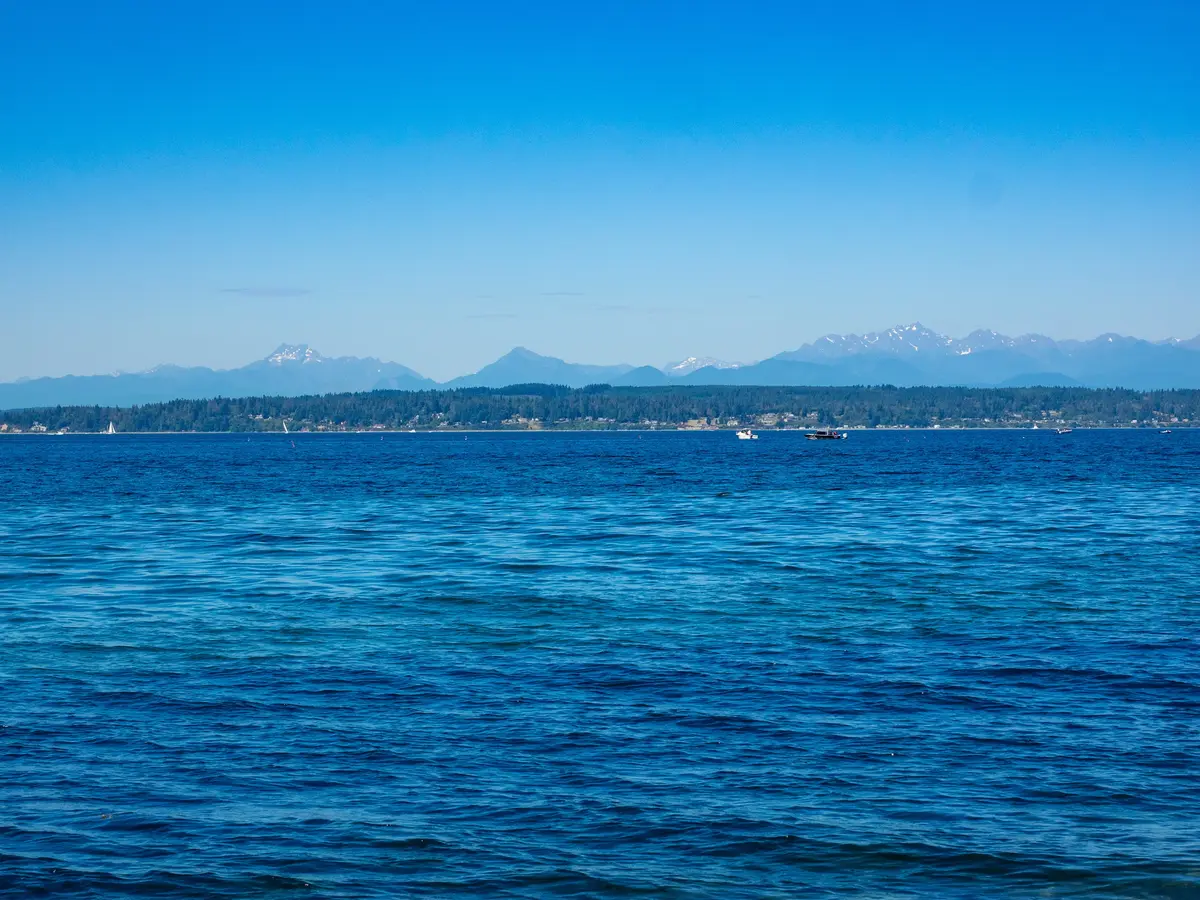
Richmond Beach Saltwater Park is the city's communal living room on weekends. The pedestrian bridge over the BNSF rail line — you hear the trains from the beach, which is either atmospheric or annoying depending on your disposition — leads down to a sandy stretch of Puget Sound with views west to the Olympic Mountains. On a clear July afternoon, it genuinely rivals any beach park in the metro.
Drumlin on NE 165th St functions as the neighborhood café-and-bar that the Ridgecrest area needed — the kind of place where the same faces show up on Tuesday night as on Friday. Triumph Valley Shoreline on Westminster Way N brought dim sum to a city that previously required a drive into Seattle's International District for the real thing. Ugly Burger on Ballinger Way NE has developed a following that extends well north of Shoreline's own borders.
The Seasonal Surprise
Newcomers from sunnier climates often underestimate the gray-season weight here. The Pacific Northwest low-cloud stretch — roughly October through March — is longer and flatter than most people expect. Shoreline doesn't have the urban energy that makes Seattle feel tolerable in February; it's quieter, more residential, and the darkness arrives early. Locals cope with trail access, the Spartan Recreation Center, and deliberate routines. But if you've never lived through a Northwest winter, come visit in January before you sign anything.
Kruckeberg Botanic Garden is the kind of place that surprises people who grew up here. Tucked behind a residential block in the northern part of the city, it's a mature woodland garden that most newcomers don't find for months. Once you do, it becomes a reference point for everything from evening walks to explaining the city to visiting relatives.
The Shoreline Housing Market Right Now
The city-wide typical home value is $776,196 (Zillow Home Value Index, July 2026). That figure puts Shoreline well below what comparable homes cost in Seattle's north end, while sitting noticeably above what buyers find in Lynnwood or Everett further north on I-5. For a fuller cost breakdown including rent figures and tax context, see the Shoreline cost-of-living page.
Some parts of the city price higher than that figure suggests — particularly blocks within easy walking distance of the two light rail stations, where transit-oriented development has intensified buyer competition. Other areas come in softer, especially older ranch-style housing stock along the Aurora corridor. The spread matters when you're budgeting.
Market Pace
Inventory moves quickly when priced correctly. Well-maintained homes near the light rail stations or in the school-district catchments buyers prioritize routinely attract multiple offers within the first weekend. The market is not the frenzied environment it was in 2021, but it's not slow — realistic buyers come in ready to move decisively.
The Development Story
The city's transit-oriented rezoning around the 148th and 185th stations is adding density that didn't exist two years ago. Apartment and mixed-use projects are under construction in both station areas. That's broadly positive for long-term value in adjacent single-family zones, but it also means construction noise and changing neighborhood character in specific blocks near both stations — worth a site visit at different times of day before committing.
Shoreline spans ZIP codes 98133, 98155, and 98177. The 98177 code, covering the Richmond Beach area, tends to reflect the city's western, more established residential character. The effective property tax rate runs approximately 0.82%, which is on the lower end for King County. For neighborhood-level character and geographic divides, the best neighborhoods guide goes deeper.
Shoreline Neighborhoods
Shoreline has several distinct areas — each with its own character and appeal. Here’s a breakdown to help you narrow down where to focus your home search.
🏡 Richmond Beach
The western edge of Shoreline where the city meets Puget Sound — Richmond Beach is defined by its saltwater park, bluff-top lots with Sound views, and a quieter, more established residential character that draws buyers specifically for the waterfront access.
🏠 Richmond Highlands
A solidly residential stretch in Shoreline's northwest, Richmond Highlands offers larger lots than the Aurora corridor side of the city and a suburban feel that suits families looking for space without the waterfront premium of Richmond Beach.
🌳 North City
One of Shoreline's more accessible neighborhoods in terms of price, North City has a mixed stock of mid-century ramblers and modest two-story homes along commercial corridors that connect northward toward Edmonds.
🏘 Ridgecrest
Ridgecrest sits in the central part of Shoreline and has become one of the city's more talked-about neighborhood pockets, anchored in part by Drumlin on NE 165th St — a neighborhood café and bar that's given the area a local gathering point it lacked a few years ago.
🏔 Briarcrest
A quiet, primarily residential neighborhood with established tree cover and a low-density feel, Briarcrest suits buyers who prioritize calm streets and proximity to Shoreline's parks over walkable commercial amenities.
🌆 Highland Terrace
Highland Terrace occupies the southern tier of Shoreline closest to the Seattle city line, making it one of the more commuter-practical locations in the city and a natural first stop for buyers stepping just outside Seattle's borders for the first time.
Pros & Cons of Living in Shoreline
The Pros
- Direct Link light rail access to downtown Seattle
- consistently top-ranked public schools
- abundant parks and Puget Sound shoreline access
- strong
- walkable neighborhood feel
The Cons
- Home prices remain high relative to national averages
- property crime runs above national average in some measures
- gray
- rainy winters with limited sunshine
Getting Around & Commuting in Shoreline
Before August 2024, the honest answer to "how do I get from Shoreline to Seattle without a car?" was "bus, and budget extra time." That answer is now different. The Lynnwood Link 1-Line extension put two full light rail stations inside city limits, and the ridership numbers in the first full year of service reflect genuine demand: Shoreline South/148th averaged 1,535 weekday boardings daily in 2025, and Shoreline North/185th averaged 1,311. These aren't novelty numbers — they reflect people actually changing how they commute.
Light Rail: The Practical Reality
The Shoreline South/148th station sits on the west side of I-5 with pedestrian connections into the surrounding neighborhoods. The Shoreline North/185th station — adjacent to Shoreline Stadium — has approximately 360 parking spaces, which matters for residents who live too far to walk or bike but want to park-and-ride rather than drive all the way downtown. From either station, you're connected directly to Westlake Center, the University District, and Sea-Tac Airport on a single train line.
Last-Mile Connections
The city launched a Lime e-scooter and bike-share pilot that runs between Shoreline and Seattle — devices are eligible to cross the city boundary, which is uncommon in regional bike-share programs. For blocks that are just far enough from a station to make walking feel marginal, a Lime ride closes the gap practically.
Driving and I-5
The 25-minute drive to downtown Seattle is accurate at 10 a.m. on a Tuesday. At 8 a.m. on a Wednesday, I-5 southbound from Shoreline is a different situation. Aurora Avenue North (Highway 99) offers a parallel surface-street route that some commuters prefer for avoiding the freeway ramp backup, though it has its own congestion patterns through Shoreline's commercial corridor. The real advantage of the light rail is that it completely sidesteps this calculation — it runs on its own schedule regardless of what's happening on I-5.
Regional Access
Sea-Tac Airport is reachable via light rail without a single transfer, which is a genuine quality-of-life upgrade for anyone who travels for work. Edmonds and Kenmore are short drives north and east respectively. Snohomish County employment centers are accessible via I-5 north without the downtown Seattle congestion pattern.
| Destination | Mode | Typical Travel Time | Notes |
|---|---|---|---|
| Downtown Seattle | Light rail (1-Line) | ~25–30 min | From 148th or 185th station |
| Downtown Seattle | Drive (I-5) | 25–50 min | Highly variable, peak hours add significantly |
| Sea-Tac Airport | Light rail (1-Line) | ~45–55 min | No transfer required |
| Bellevue | Drive (SR-520 or I-90) | 35–50 min | No direct transit option |
| Edmonds | Drive | ~15 min | Via I-5 N or Aurora/Highway 99 |
| University District (Seattle) | Light rail (1-Line) | ~15–20 min | Significant for SCC faculty/UW staff |
| Shoreline Community College | Drive or bike | 5–10 min from most of city | On-campus parking available |
The one commute pattern people underestimate: if your job is in Bellevue, Kirkland, or Redmond, Shoreline isn't as well-positioned as it looks on the map. There's no direct east-west transit, and the drive involves either the SR-520 bridge or I-90 — both of which add 20–30 minutes to the theoretical driving time, especially in the afternoon reverse commute.
Schools in Shoreline
Families relocating to Shoreline have public, private, and higher-education options nearby. Here’s a quick overview.
🎓 School District
Shoreline School District serves K–12 students across Shoreline and the surrounding area. Rated A (source: Niche.com).
🏆 Graduation Rate
The 4-year high-school graduation rate here is approximately 92.1%.
📚 Higher Education
Washington’s public universities — the University of Washington, Washington State University, and Western Washington University — offer four-year degrees statewide, with a network of 34 community and technical colleges (SBCTC) providing two-year and workforce programs.
🌐 Online Learning
University of Washington Continuum College and Washington State University Online offer fully accredited online degrees for remote learners across the state.
Safety in Shoreline
A quick look at how Shoreline compares on the numbers that matter most when weighing a neighborhood or a move.
🛡 Violent Crime
Approximately 2 per 1,000 residents.
🔒 Property Crime
Approximately 24 per 1,000 residents.
Compared to the FBI’s most recent national data (2024), Shoreline’s violent crime is below the national average (about 3.6 per 1,000), and property crime is above the national average (about 17.6 per 1,000).
Against Washington as a whole, Shoreline’s violent crime is roughly two-thirds of the state average, and property crime is about the same as the state average (Bureau of Justice Statistics, Crime Known to Law Enforcement, 2024 (tables 2 and 3)).
Crime rates can vary a lot within a single city, so the citywide numbers above are only a starting point. Some neighborhoods in Shoreline run well below these averages, while others run higher — the kind of block-by-block detail that matters most when you’re actually choosing where to live. The full guide below breaks it down neighborhood by neighborhood.
Working in Shoreline
Shoreline’s largest employers span several industries — here are some of the anchors of the local job market.
💼 Crista Ministries
Nonprofit/media/senior care
🎓 Shoreline Community College
Education
🛒 Fred Meyer
Retail
🏛 City of Shoreline
Government
Parks & Recreation in Shoreline
Some of the outdoor spaces that shape everyday life in Shoreline.
🌱 Richmond Beach Saltwater Park
🌱 Kruckeberg Botanic Garden
🌱 Shoreview Park
Shoreline residents don’t have to go far for green space — spots like Richmond Beach Saltwater Park and Kruckeberg Botanic Garden are part of everyday life here, whether that’s a morning walk, a weekend hike, or just somewhere to unwind outside. The full guide below covers more of what Shoreline has to offer for parks and outdoor recreation.
Retiring in Shoreline
Shoreline draws retirees for its balance of amenities, outdoor access, and cost. Here’s what to weigh.
🌤 Climate
Shoreline runs mild year-round — summer highs typically reach the upper 70s without the heat extremes that hit inland Washington. The trade-off is a long, overcast wet season from October through March that requires deliberate outdoor routines. Snow is rare and usually brief when it does arrive.
🍴 Lifestyle
Richmond Beach Saltwater Park, Kruckeberg Botanic Garden, and Shoreview Park anchor outdoor daily life. The city's restaurant scene has expanded meaningfully in recent years, and Seattle's cultural institutions — museums, theater, the symphony — are 25–30 minutes away by light rail without any parking stress.
🏚 55+ Communities
Crista Ministries operates one of the region's larger senior-care campuses within Shoreline, offering independent living, assisted living, and memory care on a single grounds. Additional senior-living options exist in neighboring Edmonds and Lake Forest Park for those with specific care requirements.
✈ Getting Around
Most retirees in Shoreline drive, and the city's residential streets are generally low-stress by metro standards. The two light rail stations provide a car-free option for Seattle trips. Sea-Tac Airport is reachable via the 1-Line in under an hour with no transfers — a real convenience for those who travel to visit family.
🏛 Washington Taxes for Retirees — What to Know
- No state income tax — Washington does not tax personal income, so Social Security, pensions, and 401(k)/IRA withdrawals are all untaxed at the state level. There is no state return to file and no retirement exclusion to claim — the rate is simply zero.
- Military and public pensions — Because there is no income tax, military retirement pay and public-employee pensions are untaxed at the state level along with everything else.
- Sales tax is the tradeoff — The state sales tax is 6.5%, and local add-ons bring the combined rate in Shoreline to 10.5% (Washington State Department of Revenue, Q3 2026 local sales & use tax rate table, July 2026). Groceries and prescription drugs are exempt.
- Property taxes, with senior relief — The effective property tax rate is roughly 0.9%. Homeowners 61+ (or unable to work due to disability, or a qualifying disabled veteran) who own and occupy their home may qualify for a reduction. Income limits are set against each county’s median household income, so the threshold differs by county — check with your county assessor. A separate deferral program is available for those who don’t qualify for the exemption.
- Capital gains tax — but not on retirement income — Washington taxes 7% on long-term capital gains above a $278,000 standard deduction for 2025, rising to 9.9% on gains above $1,000,000. Retirement accounts and real estate sales are both exempt. It therefore does not reach ordinary retirement income or the sale of a home.
- Estate tax — the one to plan for — Unlike most no-income-tax states, Washington has its own estate tax. For deaths on or after July 1, 2026, the exemption is $3 million with graduated rates topping out at 20%. Retirement accounts count toward the taxable estate, so long-time homeowners with sizable balances can cross the line without expecting to.
- No inheritance tax — Washington has no inheritance tax, and no gift tax.
- WA Cares payroll premium — Working Washingtonians pay 0.58% of gross wages into the WA Cares Fund, the state long-term care program, with no income cap. It applies to W-2 wages, so retirees who have stopped working do not pay it — but anyone relocating while still employed will see it. The private-insurance opt-out closed at the end of 2022 and is not available to new applicants; the remaining exemptions are narrow (living outside Washington, military spouses, certain visa holders, and veterans with a 70%+ service-connected rating).
- The Oregon border effect — Oregon has no sales tax, so Washington residents near the river — Vancouver, Camas, Washougal, Longview — often cross over for large purchases. Washington use tax technically applies to goods brought back for use in-state, though it is rarely enforced on ordinary personal purchases.
Tax laws change frequently and individual situations vary. This is general information, not tax advice — always consult a qualified Washington tax professional or CPA for personalized retirement tax planning.
Weekends & Local Favorites in Shoreline
The weekend pattern in Shoreline tends to be: start local, then decide whether Seattle is worth the trip. More often than people expected before they moved here, the answer turns out to be no.
The Beach Anchor
Richmond Beach Saltwater Park is where the city collectively exhales on weekends. The pedestrian bridge over the BNSF tracks is iconic enough that locals use it as a directional landmark — "past the train bridge" is a real set of instructions. The beach itself sits at the base of a wooded bluff, which means the walk down is part of the experience. Families with dogs, cyclists, teenagers, and retirees all coexist here without much friction, which says something about the park's scale and design.
Where People Actually Gather
Drumlin on NE 165th has become the Friday-night reference point for the Ridgecrest neighborhood — a café that shifts into bar mode in the evening, with a local-regulars feel that takes most new cities years to develop. Triumph Valley Shoreline on Westminster Way N is drawing weekend dim sum crowds that extend beyond the immediate neighborhood. The Spartan Recreation Center handles the fitness and indoor-sports needs that the Pacific Northwest winter makes especially relevant.
Green Space Beyond the Beach
Shoreview Park covers enough acreage to absorb a weekend afternoon, with sports fields and open lawn. Kruckeberg Botanic Garden rewards slower visits — it's not a manicured showplace but a working woodland collection, and it's at its best in spring when the native understory is active. King County's new Parks Levy, with collection beginning in 2026 and formally supported by Shoreline City Council, adds a funding layer that should sustain trail and open-space investment in the coming years.
Food and the City's Evolving Restaurant Scene
Shoreline's dining geography runs primarily along the Aurora Avenue North corridor and the Ballinger Way NE strip. Ugly Burger on Ballinger Way NE has become the kind of place people from neighboring cities drive to specifically. The city's restaurant scene is smaller than its population might suggest — the trade-off for lower density and tree coverage is fewer walkable options — but recent years have added genuine range, including a Vietnamese café on Ballinger Way that opened in early 2025 and quickly became a neighborhood staple.
For outdoor recreation beyond the city's own parks, including connections into the broader King County trail network, see the parks and recreation guide.
Top Things Locals Say About Shoreline
The best intel about a city comes from the people who actually live there. Here’s what Shoreline residents say when newcomers ask the questions everyone’s thinking.
“I knew the commute would be fine once the light rail opened, but what I didn't expect was how little I'd actually miss Seattle on weekends. Richmond Beach, the neighborhood spots, Kruckeberg — I genuinely stopped making the trip south unless I had a specific reason.”
— Recent Shoreline home buyer
“What's the most surprising thing about living in Shoreline?”
How little you need to leave. Before moving here, I assumed I'd be in Seattle every weekend. But between Richmond Beach Saltwater Park, Shoreview Park, and the food options that have opened up on Ballinger Way and along the Aurora corridor, most weekends I don't bother. The city is quieter than I expected, in a good way — and Kruckeberg Botanic Garden is this whole thing I didn't know about until a neighbor walked me over there.
“What do locals love most about Shoreline?”
The Richmond Beach waterfront is the easy answer, but honestly it's the combination of that and the school district. Parents with kids here are very aware they're getting strong public schools at a price point that would be impossible inside the Seattle city limits. And the light rail has made the Seattle commute genuinely easy for the first time — people who moved here five years ago and put up with the bus situation feel very validated right now.
“What should newcomers to Shoreline know?”
Understand which side of I-5 you're on before you buy — the west side toward Richmond Beach feels completely different from the Aurora Avenue North corridor on the other side. Aurora has more retail and restaurant density, but it also has more traffic and commercial noise. The west side is quieter and more residential. Also: the light rail parking at the 185th station fills up early on weekday mornings. If you're park-and-riding, leave before 7:30.
“Can you live in Shoreline without a car?”
It's more realistic than it used to be, but honest answer: most people here own a car. Groceries, errands, and school drop-offs are genuinely difficult without one given how spread out the commercial areas are. If you live within a half-mile of one of the light rail stations and work in downtown Seattle or along the 1-Line, you can reasonably minimize driving. The Lime e-bikes help with last-mile trips. But this is not a walk-everywhere city the way parts of Seattle are.
Cities Near Shoreline
Other communities near Shoreline worth a look — each with its own character and price point.
| City | Distance | Best For | Vibe | Median Rent | Median Buy |
|---|---|---|---|---|---|
| Seattle | 10 mi | Urban lifestyle, tech jobs, walkability | Dense, fast-moving, culturally rich | $2,200 | $850,000 |
| Lake Forest Park | 3 mi | Privacy, large lots, quiet living | Wooded, small, very residential | $1,900 | $750,000 |
| Edmonds | 8 mi | Waterfront access, retirees, slower pace | Coastal, charming, ferry-connected | $1,950 | $780,000 |
More Helpful Guides for Shoreline
Going deeper on Shoreline? Our blog series covers everything from first-time buying to retiring here — explore the guides below.
Local Expert Takeaway: Shoreline is a city mid-transformation. The two light rail stations that opened in 2024 changed the commute story permanently, and the rezoning around both station areas is actively adding density to what was purely a quiet residential city. Buyers who arrive now — especially within reasonable distance of the 148th or 185th stations — are buying into a neighborhood that is still repricing to reflect what the transit access is actually worth. The school district, the Richmond Beach waterfront, and the relative affordability compared to Seattle's north end were always the argument; the train just closed the last objection.
Quick Takeaways & FAQs
✅ Two Sound Transit 1-Line light rail stations opened inside Shoreline in 2024, connecting residents to downtown Seattle and Sea-Tac Airport without a transfer.
⚠️ Shoreline has no walkable downtown core — retail and restaurants are spread across commercial strips along Aurora Avenue North and Ballinger Way rather than concentrated in one place.
📍 Drumlin on NE 165th St and Triumph Valley Shoreline on Westminster Way N are two of the city's most talked-about local spots for an evening out without driving into Seattle.
Is Shoreline, WA a good place to live?
How far is Shoreline from downtown Seattle?
What is the average home price in Shoreline, WA?
How are the schools in Shoreline, WA?
Does Shoreline have light rail access?
Helpful Links for Moving to Shoreline
Moving to Washington?
Tell us what you need help with and we'll connect you with local resources.
