
Your California friends probably warned you that Washington would feel gray and expensive. They were half right. Shoreline, a city of about 66,000 sitting directly north of Seattle along the Interstate 5 corridor, doesn't look dramatic on a map — it's not a mountain town or a waterfront postcard. But the practical math of living here hits Californians differently than they expect: no state income tax, a home price meaningfully below what you left, and a direct light rail connection to downtown Seattle that opened in August 2024. The surprise isn't the weather. The surprise is how quickly the financial arithmetic starts to work in your favor.
Shoreline runs along the western edge of King County, bordered by Lake Forest Park to the east and Edmonds to the north. Highway 99 and Interstate 5 frame daily movement, and the two new Link light rail stations — Shoreline South/148th and Shoreline North/185th — have changed how residents think about the Seattle commute entirely. The economic backbone here is steadier than Seattle proper: Shoreline Community College, Crista Ministries, Fred Meyer, and the City of Shoreline itself anchor local employment, while the majority of working residents commute into Seattle's tech and healthcare corridors. The Shoreline School District holds an A rating, according to Niche, which draws families who've priced out of Seattle but refuse to compromise on schools.
Everyday costs in Shoreline run roughly 58% above the national average — that's real, and worth sitting with before you sign anything. But for buyers arriving from the Bay Area or Los Angeles, the comparison still reads as relief. The Zillow Home Value Index for Shoreline stood at $776,196 in July 2026, a figure that would buy a detached house with a yard here, not a two-bedroom condo in a secondary neighborhood. Groceries are largely exempt from Washington's sales tax, which softens some of the sticker shock on a combined state and local sales tax rate of 10.5%. Health insurance premiums tend to run noticeably below what you were paying in California, though you will drive farther for specialist care. The full cost-of-living breakdown goes deeper on utilities, transportation, and how individual spending categories stack up.
Whether you're relocating for a tech job in Seattle, following family, or simply done with California's cost structure, the sections below cover what the tax picture actually looks like, how the home-buying experience differs from California, what the daily commute and lifestyle feel like on the ground, and what longtime residents wish someone had told them before they moved.
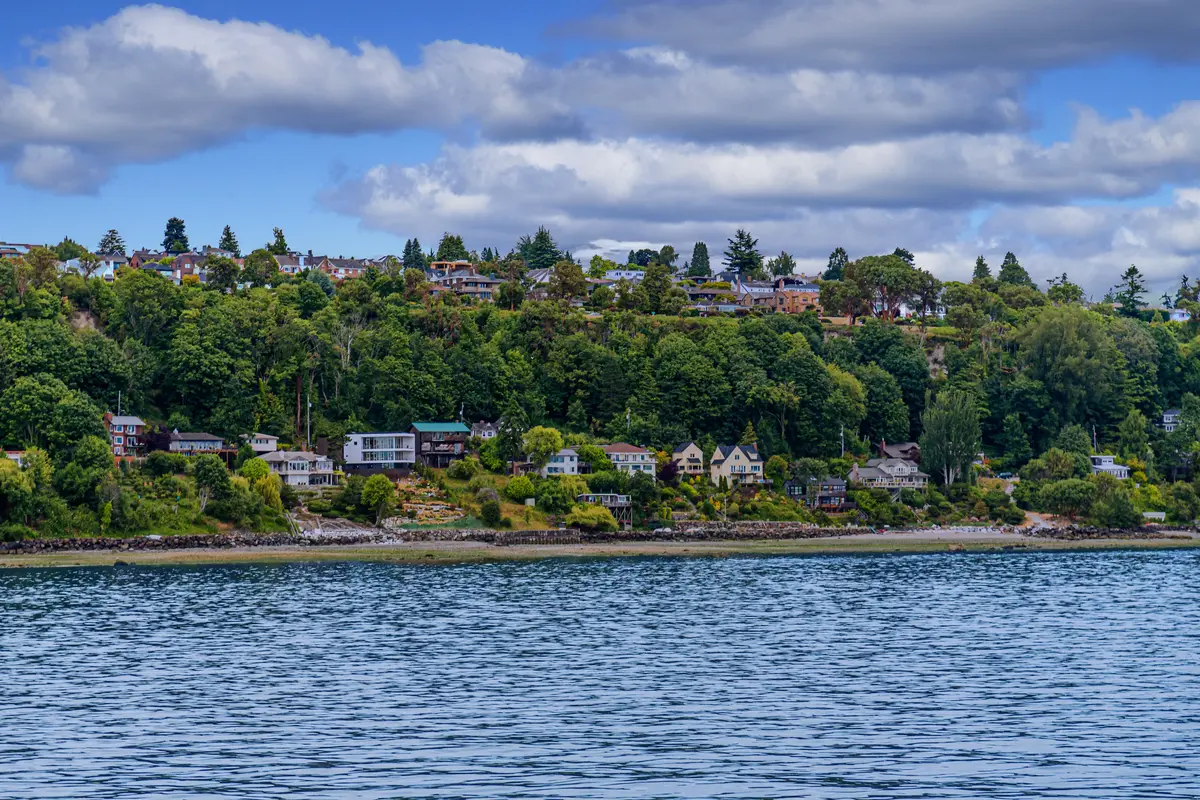
The Tax Picture: What Leaving California Actually Means
No state income tax is the first thing every California transplant mentions, and the numbers justify the excitement. California's top marginal rate reaches 13.3%, and even middle-income earners in the state typically pay 6%–9.3% on wages. In Washington, that line on your tax return simply disappears — Shoreline residents owe federal income tax and FICA, and nothing more on earned wages.
On a household income of $103,604 — Shoreline's median — a California resident would likely have owed somewhere in the $7,000–$9,000 range in state income tax annually, depending on deductions. In Shoreline, that money stays in your account. For higher earners relocating from the Bay Area, the annual savings can reach five figures. That's a real and recurring benefit, not a one-time moving discount.
The Washington Tax Trade-Off
Washington funds its state budget differently, and that cost shows up in two places: sales tax and property tax. Shoreline has a combined state and local sales tax rate of 10.5%, which is higher than California's 7.25% base rate. In practice, most grocery purchases are exempt, which limits the daily exposure for families — but electronics, clothing, home goods, and restaurant meals hit harder than you're used to.
Property tax in Shoreline runs at an effective rate of approximately 0.82%, below the national average of roughly 1.1%. On a median-priced home, that's a meaningful annual figure, but well below what you'd pay on comparable property in many high-value California counties, where effective rates combined with special assessments and parcel taxes can push the true burden considerably higher.
| Tax Category | California (typical) | Shoreline, WA | Net Impact for CA Transplants |
|---|---|---|---|
| State income tax | 6%–13.3% on wages | None | Annual savings of $7K–$20K+ depending on income |
| Effective property tax rate | ~1.0%–1.5% (with assessments) | ~0.82% | Lower annual bill on a comparable-value home |
| Combined sales tax | ~8.5%–10.25% (varies by county) | 10.5% | Roughly comparable; higher in Shoreline vs. lower-CA-rate areas |
| Groceries taxed? | Most exempt | Most exempt | No meaningful difference on food spending |
| Real estate excise tax (seller pays) | No equivalent (has transfer tax) | State graduated + 0.50% local REET | Cost to sellers; no impact on buyers directly |
| Capital gains on home sale | Taxed at CA income rate above federal exclusion | No state capital gains tax on primary residence beyond federal exclusion | Meaningful advantage for sellers with large equity gains |
One nuance worth knowing: Washington taxes 7% on long-term capital gains above a $278,000 standard deduction for 2025, rising to 9.9% on gains above $1,000,000 — but this applies to investment assets, not wages or primary-home sales, so most California transplants selling their prior home are unaffected.
What the Total Picture Looks Like
Most California households moving to Shoreline come out meaningfully ahead on state taxes overall, even accounting for the higher sales tax. The income tax elimination alone typically outweighs the sales tax increase for anyone earning above roughly $60,000. If you're selling a California home with substantial equity and buying in Shoreline, the combination of no state capital gains on the sale and lower property taxes going forward makes the financial case even stronger.
Home Prices: What $776,196 Buys Here vs. What You Left
Shoreline's typical home value sat at $776,196 in July 2026, per the Zillow Home Value Index. That figure buys you something genuinely different here than it does in most California metros — typically a detached single-family home with a yard, in a neighborhood with actual street trees and elbow room, within a 25-minute train or off-peak drive of downtown Seattle.
The California Contrast
In the San Francisco Bay Area, $776,196 lands you in competitive territory for a modest condo or a fixer in an outer suburb. In Los Angeles County, it represents the lower end of the market in desirable neighborhoods. San Diego's median has consistently run well above that figure in recent years. The point isn't that Shoreline is cheap — it isn't, by national standards — but that your purchasing power here is substantially greater than what you left behind.
California sellers arriving with equity have a structural advantage. If you sold a Bay Area property and cleared $400,000–$600,000 after your federal exclusion, you're entering Shoreline's market as a serious buyer, not a stretched one. That dynamic is exactly why so many California transplants end up in the city's more established western neighborhoods near Richmond Beach Saltwater Park rather than in the denser pockets along Highway 99.
What to Expect from the Buying Process
Washington real estate operates on a few mechanics that will feel different. The seller pays the real estate excise tax — buyers don't absorb that cost directly. Title insurance practices and escrow timelines differ slightly from California norms. And unlike California's Proposition 13 system, your property tax assessment in Washington can be reassessed more regularly, so the effective rate at purchase is closer to the ongoing rate you'll pay long-term — no dramatic jump when you buy, but also no legacy-owner discount protecting neighbors who've held for decades.
Multiple-offer situations are common in Shoreline, particularly for move-in-ready homes in the $700,000–$900,000 range. The market doesn't move as aggressively as Seattle proper, but don't confuse that with slow. The neighborhood breakdown covers which areas draw the most competitive offers and why. First-time buyers navigating the process will find the buying-process guide useful for Washington-specific steps.
Property Tax: The Ongoing Math
At an effective rate of approximately 0.82%, annual property taxes on a home near the city-wide median are meaningful but not punishing. California buyers from counties with high special assessments or parcel taxes layered onto base property tax often find the total bill here genuinely lower than what they were paying on a less-valuable California home. That's not universally true — it depends heavily on which California county you left — but it's a common reaction among transplants in their first year.
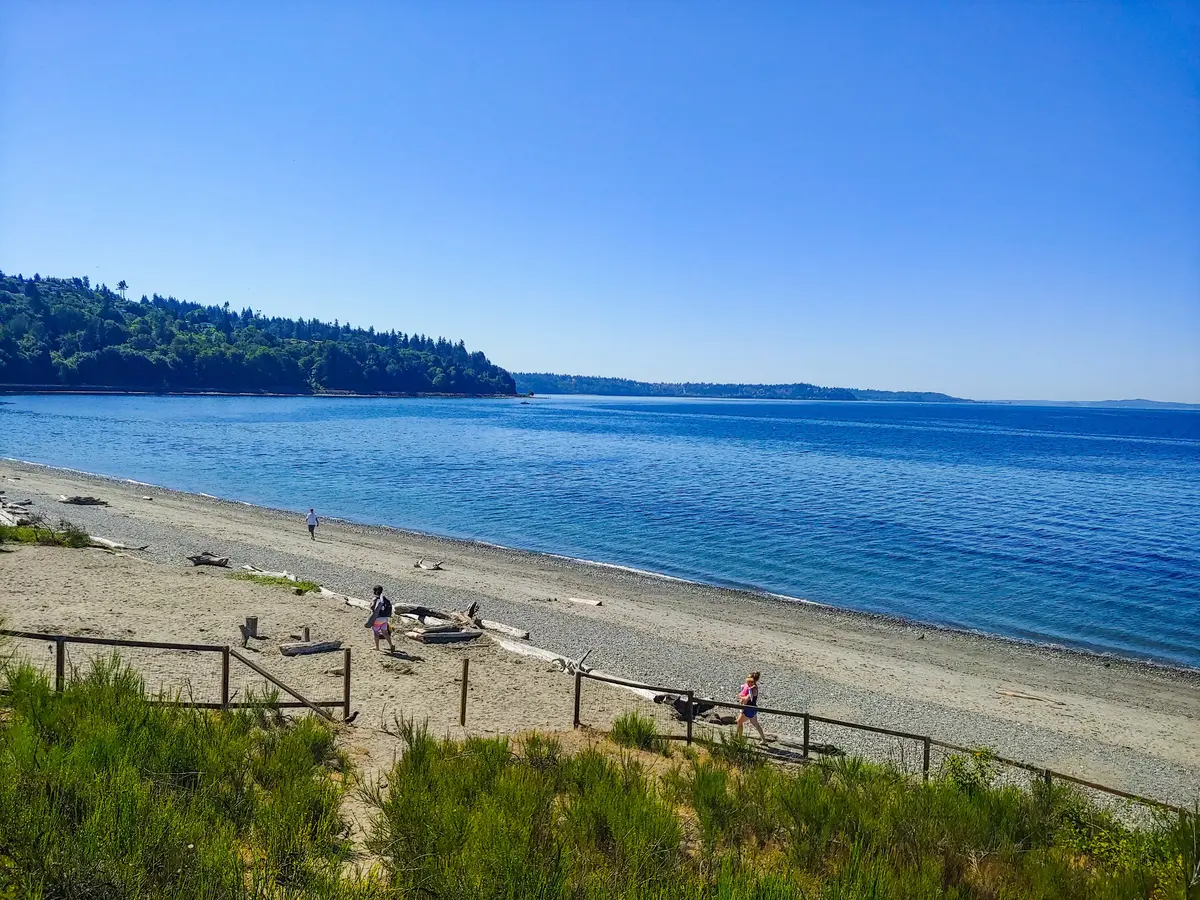
Daily Life and Cost of Living: The Honest Version
Shoreline's cost of living scores approximately 158 on a 100-point national-average index. Everyday expenses run about 58% above the U.S. norm. If you're arriving from central California or the Inland Empire, that's a real adjustment. If you're coming from San Francisco or the Peninsula, it will feel surprisingly manageable.
What Costs More, What Doesn't
Housing is the dominant driver of that index score. Once you've absorbed the home-price reality and fixed your mortgage payment, many other categories feel relatively normal. Groceries — exempt from sales tax — run close to California prices at comparable stores. Utilities can spike in winter due to heating, though the Pacific Northwest's mild winter temperatures moderate energy costs compared to more extreme climates. Gasoline fluctuates, but Washington's pump prices are typically in the same range as Northern California.
Shoreline has a combined state and local sales tax rate of 10.5%, and it shows up on every non-food purchase. New appliances, furniture for the new house, a car purchase — these cost more in sales tax than you budgeted if you're calculating from California's base rate. Budget for it specifically in your first year, especially if you're furnishing a larger home than you had before.
Where Californians Find Relief
Beyond the income tax elimination, the commute math surprises people. Two Sound Transit Link light rail stations — Shoreline South/148th and Shoreline North/185th, both opened August 30, 2024 — connect the city directly to downtown Seattle and Sea-Tac Airport. Both stations offer free Park-and-Ride parking. In 2025, the Shoreline South/148th station averaged 1,535 weekday boardings; Shoreline North/185th averaged 1,311. This is the kind of reliable, frequent transit that most California suburbs simply don't offer, and it changes the calculus on whether a household needs two cars.
The absence of Bay Area bridge tolls and express-lane fees is something California transplants mention unprompted after six months. The Seattle metro has tolled routes, but the daily toll friction of a Bay Area commute is notably reduced. That's a real quality-of-life shift, not just a financial one. See the living in Shoreline guide for a fuller look at commute patterns and employment corridors.
What the Food Scene Actually Looks Like
Shoreline is a working suburb, not a dining destination. There are independent restaurants along the Aurora Avenue North and 15th Avenue NE corridors, and neighborhood spots worth discovering. Gyro Sababa on N 205th St brought a Mediterranean counter to the north end in 2025. The dining scene rewards exploration rather than offering a curated strip — and independent Vietnamese, Thai, and Mexican options are scattered throughout the city. If you're used to Michelin proximity in San Francisco, you'll drive into Seattle proper for that fix.
Looking to buy in Shoreline? Estimate your payment.
Enter your numbers to see an estimated monthly mortgage payment.
Estimate only. Excludes HOA fees and mortgage insurance. The interest rate above is a starting point, not a quoted rate — replace it with your own to see real numbers. Insurance is a flat placeholder, not a Shoreline quote.
Culture Shock: What California Transplants Actually Encounter
The Pacific Northwest has a reputation for a specific kind of reserve — polite, outdoorsy, quietly opinionated about rain gear — and Shoreline fits that description more than it subverts it. People are friendly but don't perform friendliness the same way Southern California culture does. Neighbors introduce themselves, but the block party isn't a given. Most California transplants adjust within a year; some never quite feel the warmth they left behind.
The Weather Reality
Nobody moves here unaware that it rains, but the specific character of the rain surprises people. It's rarely heavy — Shoreline gets far less annual rainfall than Atlanta or Miami. It's persistent and gray from October through April. The clouds don't often produce dramatic storms; they produce a low-grade, relentless overcast that can feel oppressive to someone accustomed to 300 days of California sun. The first winter is the hardest. By the second, most transplants have developed routines around it: weekend hikes at Shoreview Park or Richmond Beach Saltwater Park, vitamin D habits, and a better rain jacket than they owned in California.
Summer, by contrast, is a genuine revelation. July and August in Shoreline are consistently mild and sunny, and residents treat those months with the intensity of people who've earned them. The light lasts until 9 or 10 p.m. Californians often call it their favorite discovery.
The Outdoor Access Shift
California transplants tend to leave behind beach access and gain something different: forest proximity, mountain weekends at Snoqualmie Pass, and the specific beauty of Puget Sound shoreline. Richmond Beach Saltwater Park is a proper beach — not a warm-water beach, but a Sound-view beach with a working train trestle overhead and actual tide pools. Kruckeberg Botanic Garden on Fremont Avenue North offers a completely different kind of Pacific Northwest green. People who moved here expecting to miss California's outdoors often find they've simply traded one outdoor identity for another. The parks and recreation guide covers what's available without leaving the city.
Why Some Californians Move Back
It's worth saying plainly: not everyone stays. The combination of gray winters and a social culture that takes longer to crack can wear on transplants who underestimated how much their California social life depended on weather and proximity to family. Some find that saving money on income taxes didn't compensate for being 1,000 miles from parents or longtime friends. If your California network is your primary support structure and you don't have a reason to be specifically here — a job, a partner, family already in the region — Shoreline's advantages are real but may not be sufficient on their own. That's an honest thing to weigh before signing a purchase agreement.
Practical Checklist: What to Sort Before You Move
The logistics of a California-to-Shoreline move have a few Washington-specific wrinkles that catch people off guard. Running through them before your moving truck arrives saves real time and money.
Vehicle and Driver's License
Washington requires new residents to obtain a Washington driver's license and register their vehicles within 30 days of establishing residency. California's smog-check requirements don't transfer — Washington has its own vehicle emissions testing in King County, and out-of-state vehicles need to pass before registration is finalized. Budget for that inspection and potential repairs in your first month.
Tax Filing in Year One
Your first tax year will be a split-state return: part-year California and part-year Washington. California taxes income earned while you were a California resident, even if you file after moving. California's state tax authority is aggressive about collecting tax from former residents who move mid-year, so track your move date carefully and keep documentation. In subsequent years, Washington's no-income-tax advantage is fully yours.
Homeowner's Insurance
Pacific Northwest homes carry different risk profiles than California properties. Wildfire risk is dramatically lower in Shoreline than in most California fire-prone areas, which typically means lower base premiums. Earthquake coverage is a separate question — the Pacific Northwest sits near active fault systems, and standard homeowner's policies exclude earthquake damage. Standalone earthquake coverage is worth pricing out before you close, not after.
Schools and Enrollment Timing
The Shoreline School District's strong academic standing is legitimate, and both Shorecrest and Shorewood high schools have established programs. Enrollment timelines matter: if you're moving mid-year or planning a summer move with a school-age child, contact the district well in advance. Boundary lines between elementary schools don't always follow neighborhood intuition. The schools guide covers boundary specifics and what the district's programs actually look like in practice.
Setting Realistic Expectations for Month One
The first month in Shoreline often involves more driving than expected while you learn which stores are where, which routes avoid the Aurora Avenue North signal timing, and how the light rail fits into your actual schedule rather than the theoretical one. Give yourself that learning curve. By month three, most California transplants have a functional daily routine. By month six, the ones who stay are usually glad they did.
| Task | Timeline | California vs. WA Difference |
|---|---|---|
| Driver's license transfer | Within 30 days of residency | WA requires in-person visit; no online-only option |
| Vehicle registration + emissions test | Within 30 days | King County has its own emissions program; CA smog cert doesn't transfer |
| Part-year state tax filing | April following move year | File part-year CA return; WA has no return to file |
| Earthquake insurance | Before closing if possible | Not standard in WA policies; must add separately |
| School enrollment | 60+ days before start if possible | District boundary lines don't always match neighborhood names |
| Light rail commute test | First week | Both Shoreline stations offer free Park-and-Ride; test it before committing to a parking lease in Seattle |
The Sound Transit light rail test run is worth doing early — many California transplants who planned to drive into Seattle daily discover the train changes the calculus within their first week.
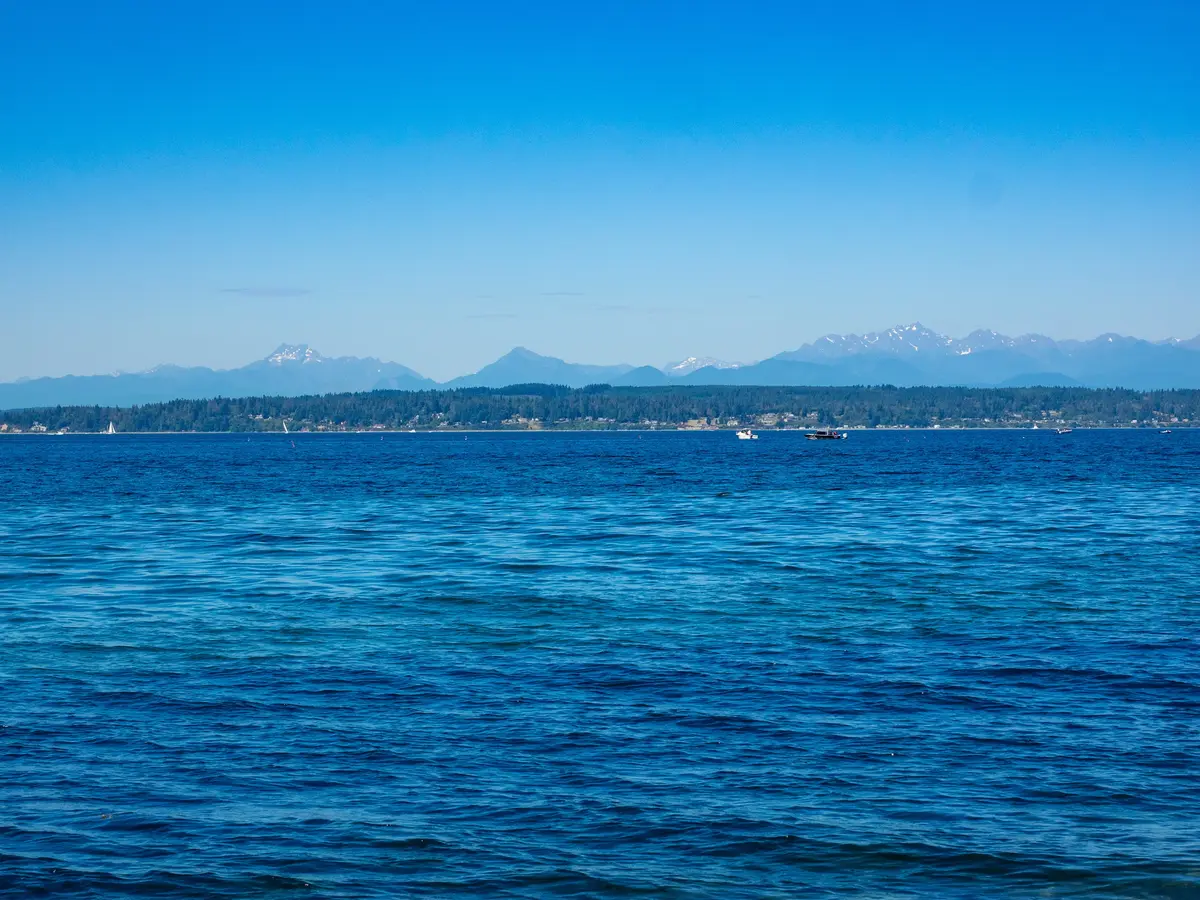
Local Expert Takeaway: Most California transplants spend their first six months recalibrating what they thought they knew about their budget. The income tax savings are real and immediate — they show up in the first paycheck after you establish Washington residency. The sales tax sting is also real, and tends to hit hardest in that same first six months when you're furnishing and equipping a new home. The net math still typically favors the move for households earning above $60,000. What the spreadsheet doesn't capture: the Link light rail commute to Seattle is genuinely easier than most Bay Area suburb-to-city rides, Richmond Beach on a July evening is the kind of place that makes people stop talking about moving back, and the gray winters are exactly as real as advertised. If you're coming from San Francisco pricing, the $776,196 median home will feel like a relative deal; if you're coming from the Inland Empire, it won't. Know which of those you are before you land.
Quick Takeaways & FAQs
✅ Washington's zero state income tax is the single largest financial benefit for California transplants — most households save $7,000 to $20,000 or more annually compared to what they owed California.
⚠️ Shoreline has a combined state and local sales tax rate of 10.5%, which is a real ongoing cost that shows up on every non-grocery purchase and will feel high to buyers accustomed to lower California local rates.
📍 The two Link light rail stations that opened in August 2024 — Shoreline South/148th and Shoreline North/185th, both with free Park-and-Ride — mean many California transplants can commute to downtown Seattle without owning two cars.
Do I have to pay California income tax after I move to Shoreline?
Is Shoreline's home price actually lower than what I'd pay in California?
How does Washington's sales tax affect my budget compared to California?
What's the commute like from Shoreline to Seattle compared to a Bay Area commute?
Is Shoreline safe compared to California cities?
Moving to Washington?
Tell us what you need help with and we'll connect you with local resources.
