
Shoreline sits directly north of Seattle along I-5, close enough to share a zip code boundary and a light rail line, but priced at a discount that still surprises people who've been shopping in Seattle proper. That discount is real — but it's narrowing. Between the August 2024 opening of two Sound Transit Link stations inside the city and years of Seattle spillover demand, Shoreline has moved from a budget alternative into a genuinely mid-tier Seattle-metro market. You're not getting a bargain anymore; you're getting a better deal than the city to the south, and that's a meaningful distinction.
The financial case for Shoreline rests on a few pillars: housing costs that run noticeably below Seattle and the Eastside, a median household income of $103,604 that puts most residents in a workable position relative to local prices, and Washington's complete absence of a personal state income tax. That last point matters more than people initially credit — the money that would go to Oregon's income tax or California's stays in your pocket here. The flip side is a combined state and local sales tax rate of 10.5% that you feel every time you fill a grocery cart or furnish a new place.
Beyond housing, the everyday cost picture is mixed. Electricity rates run below the national average, which helps offset Seattle's famously grey, cool winters. Natural gas runs above average. Groceries cost roughly 9% more than the national baseline, and transportation — including bus fares and fuel — runs about 17% higher. The two Sound Transit light rail stations now anchoring the city's transit options make a car-free or car-light lifestyle genuinely viable for people working along the corridor into downtown Seattle.
Whether you're deciding between Shoreline and Seattle, comparing it against Edmonds or a neighboring suburb, or just trying to build an honest monthly budget before signing a lease, the sections below cover housing, everyday expenses, a side-by-side city comparison, and the tax picture that ties it all together.

What It Really Costs to Live in Shoreline
The single biggest sticker shock for people relocating from outside the Pacific Northwest is that Shoreline — a city most people outside Washington have never heard of — carries a typical home value of $776,196 (Zillow Home Value Index, July 2026). That's the anchor number, and it shapes everything else about how expensive or affordable the city feels.
Relative to the broader Seattle metro, Shoreline lands in the middle tier. It's meaningfully cheaper than Seattle proper and significantly below the Eastside cities, but it has moved past the scrappy-suburb pricing it held a decade ago. Compared to state and national benchmarks, it reads as expensive — Washington's statewide median sits well below that figure, and the national median is lower still.
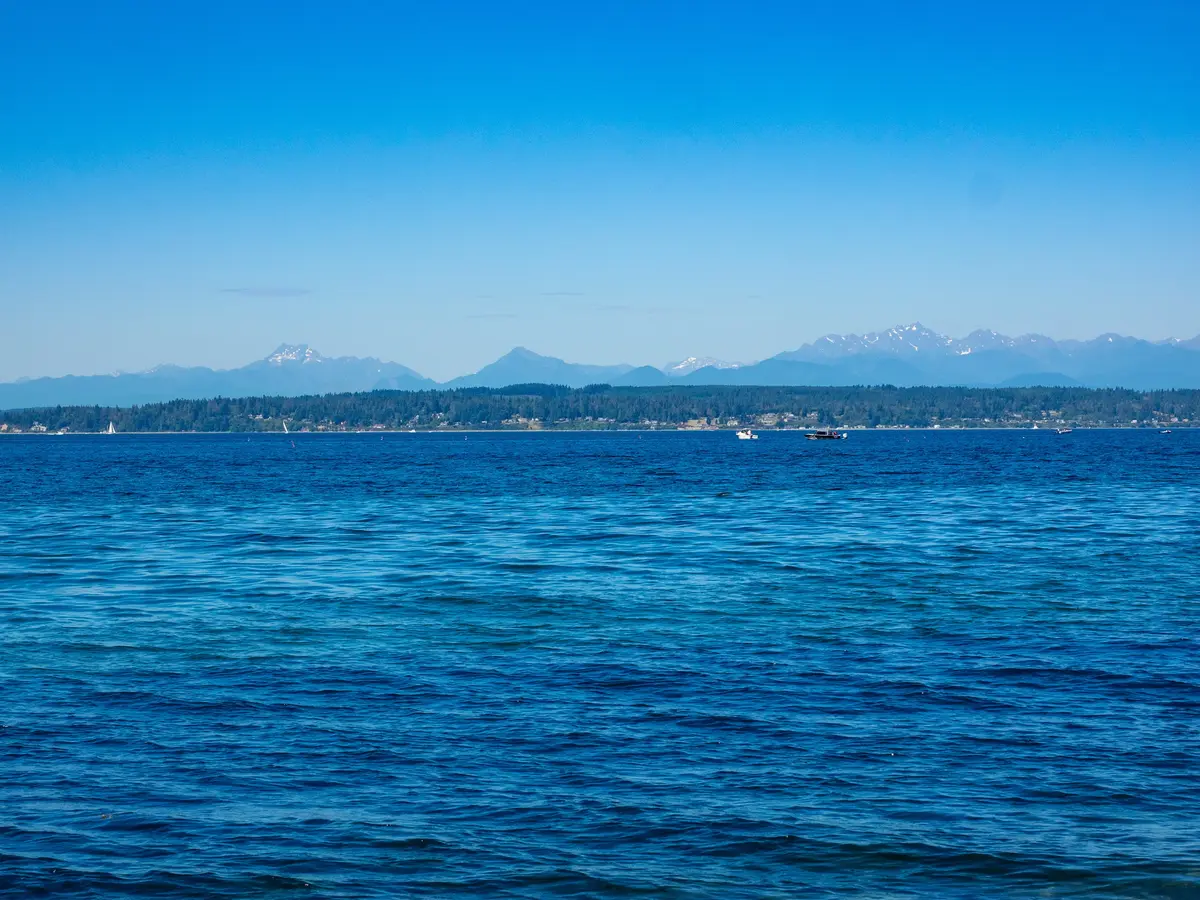
What drives the number here is simple geography: Shoreline is a 25-minute drive from downtown Seattle along a corridor that now has direct light rail service. Demand follows access. The neighborhoods closest to the two Sound Transit stations have felt that pressure most acutely, while the western end of the city — closer to Richmond Beach and the Puget Sound waterfront — commands its own premium for the views and the feel. The absence of a state income tax makes the gross-to-net math work better than it would in neighboring Oregon or California, but it doesn't make housing cheap.
Housing: Rent vs Buy in Shoreline
The Buy Side
Entry-level ownership in Shoreline typically starts in the low-to-mid $500,000s for older single-family construction or modest townhomes, with the city-wide median well above that at the Zillow Home Value Index figure of $776,196. Move-up homes — larger lots, more recent builds, anything with a water view — push into the $900,000s and beyond. For specifics on which parts of the city skew toward entry-level inventory, the Best Neighborhoods guide breaks that down by area without the confusion of city-wide averages.
The effective property tax rate in Shoreline is approximately 0.82% annually, collected by King County. That's relatively low for a Washington city of this profile — well below what buyers would face in many other King County communities. The engine's mortgage calculator below this section will give you a personalized monthly estimate based on your down payment and rate; avoid back-of-envelope math that ignores insurance, HOA dues (common on newer townhomes), and the water/sewer charges that Seattle Public Utilities bills to much of the city.
The Rent Side
A typical two-bedroom apartment in Shoreline rents for roughly $1,900–$2,300 per month, with the average sitting around $2,100. Three-bedroom houses run approximately $2,500–$3,500 monthly depending on condition and proximity to the light rail stations. Those figures track below comparable Seattle rents, which is the consistent reason renters who work in the city but don't want to pay Seattle prices end up here.
Renting makes the most sense in Shoreline if you're new to the area and unsure which part of the city suits you, if your timeline is under two years, or if current home prices put ownership out of reach without a significant down payment. Buying makes more sense if you're planning five or more years and want to build equity in a market that has historically tracked the broader Seattle metro's appreciation curve — though that curve also includes some flat and down years, particularly in rate-sensitive environments.

Everyday Costs Beyond Housing in Shoreline
Utilities in Shoreline run in two directions. Electricity averaged approximately 14.11 cents per kilowatt-hour in early 2026 — about 20% below the national average for that period, a genuine advantage in a city where electric heat and EV charging are increasingly common. Natural gas runs the other way: roughly $17.38 per thousand cubic feet in January 2026, about 25% above the national average. Budget accordingly if you're renting or buying a gas-heated home. Water service for much of the city runs through Seattle Public Utilities under rates that apply equally to Shoreline and neighboring Lake Forest Park through at least the end of 2026.
Groceries cost about 9% more than the national average here — a loaf of bread runs around $4.49, a gallon of milk around $5.20, a carton of eggs around $5.13. Those numbers reflect a Pacific Northwest market where independent and specialty grocers coexist with the major chains, and where there's no Trader Joe's inside the city (the nearest is in Seattle). Transportation costs — gas and transit fares combined — run about 17% above the national baseline. The Sound Transit light rail stations (at 148th and 185th, both opened August 2024) meaningfully reduce the transportation cost for commuters willing to use transit.
| Category | Typical Monthly Cost | Notes |
|---|---|---|
| Housing (2BR rent) | $1,900–$2,300 | Owners: use the mortgage calculator above for a purchase estimate |
| Utilities (electric, gas, water) | $150–$220 | Electric runs below national avg; gas runs above — mix varies by home type |
| Groceries | $500–$750 | ~9% above national average; no Trader Joe's in city limits |
| Transportation & Gas | $200–$400 | ~17% above national avg; Link light rail cuts costs for downtown commuters |
| Phone & Internet | $100–$180 | Standard Pacific Northwest carrier/ISP rates; fiber available in most of the city |
| Dining & Discretionary | $300–$600 | Ranges widely; independent restaurants along Aurora Ave and N 185th St corridor |
| Misc (subscriptions, personal care) | $100–$200 | Estimate only — adjust for your household |
These are estimates for a single adult or couple in a two-bedroom rental. A family with more space needs will see groceries and transportation climb faster than the other line items.
Looking to buy in Shoreline? Estimate your payment.
Enter your numbers to see an estimated monthly mortgage payment.
Estimate only. Excludes HOA fees and mortgage insurance. The interest rate above is a starting point, not a quoted rate — replace it with your own to see real numbers. Insurance is a flat placeholder, not a Shoreline quote.
Shoreline vs Nearby Cities: Cost Comparison
| City | Median Home Price | Typical 2BR Rent | Cost vs Shoreline |
|---|---|---|---|
| Shoreline | $776,196 | $1,900–$2,300/mo | — (baseline) |
| Seattle | ~$870,000–$920,000 | $2,300–$2,800/mo | Noticeably higher |
| Lake Forest Park | ~$800,000–$850,000 | $2,000–$2,400/mo | About the same to slightly higher |
| Edmonds | ~$750,000–$800,000 | $1,800–$2,200/mo | Roughly comparable |
| Kenmore | ~$700,000–$760,000 | $1,800–$2,100/mo | Moderately cheaper |
| A nearby suburb to the south | ~$650,000–$700,000 | $1,700–$2,000/mo | Noticeably cheaper |
The clearest price advantage over Shoreline among the immediate neighbors comes from the suburbs directly to the south, with the trade-off being slightly less walkable access to Seattle-facing transit. Edmonds is the closest comparable in price but adds Snohomish County's tax structure and a longer commute corridor into Seattle.
Taxes & the Bottom Line for Shoreline
No Income Tax — But Watch the Sales Tax
Washington has no personal state income tax. For someone moving from California, Oregon, or most Midwest and East Coast states, this is a genuine and recurring financial advantage — not a technicality. The money that would go to a state return stays in your paycheck every month, which helps offset the housing costs discussed above.
The catch is sales tax. Shoreline has a combined state and local sales tax rate of 10.5%, confirmed by the Washington State Department of Revenue for Q3 2026. That's among the higher combined rates in the region, and it adds up quickly on big purchases: furniture, appliances, a used car. Budget-conscious households learn fast to time large purchases carefully or use out-of-city options where the local add-on is lower.
Property Tax in Context
The effective property tax rate of approximately 0.82% annually is relatively low for a King County city at this price point. Applied to the home values discussed earlier, it produces an annual tax bill that many buyers from high-property-tax states find surprisingly manageable. King County collects the levy; the city doesn't layer on a separate municipal property tax above that.
Who Shoreline Fits — and Who Finds It a Stretch
At a median household income of $103,604, a two-income household earning near that figure can make ownership work at the entry level, but it requires a meaningful down payment and leaves limited cushion for the sales tax burden and above-average grocery and transportation costs. Single-income buyers at or below the median will find purchasing at that home-value figure genuinely difficult without family help or an unusually strong savings rate.
Shoreline fits renters who work along the light rail corridor and want more space than Seattle apartment stock provides at a lower price point. It fits buyers who have equity from a prior home sale, a household income above $130,000, or both. People who tend to find it a stretch are single buyers in the $80,000–$100,000 income range trying to buy without a co-borrower — the entry-level price point, the combined state and local sales tax rate of 10.5%, and the above-average transportation costs combine into a tight monthly picture even before utilities and groceries enter the budget.
Local Expert Takeaway: Shoreline's cost structure rewards people who do the full math rather than just comparing the sticker price to Seattle. The home values are real and the sales tax bites, but the 0.82% property tax rate is genuinely low for King County, there's no state income tax at all, and electricity costs run about 20% below the national average. The Sound Transit light rail stations at 148th and 185th mean a serious commuter can cut transportation spending significantly compared to driving into Seattle daily. The households that land here happily are usually the ones who ran the full monthly budget — rent or mortgage, utilities, groceries, transit — before they moved, not after.
Quick Takeaways & FAQs
✅ Washington's no-income-tax advantage is real: a dual-income household earning $103,604 combined keeps every dollar of state income tax that Oregon or California would take.
⚠️ Shoreline has a combined state and local sales tax rate of 10.5% — one of the highest in the region — meaning large purchases like appliances, furniture, or a vehicle will cost meaningfully more here than in lower-rate neighboring cities.
📍 Sound Transit's light rail stations inside the city (opened August 2024) have changed the transportation math: commuters using the line into downtown Seattle can meaningfully reduce the 17%-above-average transportation cost burden.
What is the typical home price in Shoreline, WA?
How much does it cost to rent a two-bedroom apartment in Shoreline?
Does Washington's no-income-tax policy really make a difference in Shoreline?
What is Shoreline's property tax rate?
Is Shoreline cheaper than Seattle to live in?
Moving to Washington?
Tell us what you need help with and we'll connect you with local resources.
