
You've probably done the math on Seattle — and walked away. The median home price puts full Seattle retirement out of reach for most people on a fixed income, yet the appeal of Puget Sound living, mild winters, and some of the best medical infrastructure in the Pacific Northwest remains real. Shoreline sits about 25 minutes north of downtown Seattle on I-5 and Aurora Avenue, close enough to access the city's world-class hospitals and cultural amenities, yet priced meaningfully below it. That proximity-without-penalty is the central argument for retiring here, and it holds up under scrutiny.
The institutional character of Shoreline matters for retirees: CRISTA Ministries operates a senior living campus directly within city limits, Shoreline Community College anchors the city's educational identity, and the city invests in parks, human services, and senior programming in ways that many comparable suburbs don't. The Shoreline–Lake Forest Park Senior Center is a genuine hub, not a dusty afterthought, and the Northwest Neighbors Network helps residents age in place through volunteer services and social connection.
Cost of living sits noticeably below Seattle proper, though Shoreline is far from inexpensive by national standards. The Zillow Home Value Index pegged the typical home at $776,196 as of July 2026 — a figure that will require most retirees to have equity to work with, either from a sale elsewhere or a long-held local property. Washington's zero income tax on Social Security, pensions, and retirement distributions softens the blow considerably, and the city's effective property tax rate of approximately 0.82% is well below the national average. For details on daily costs and rent, see the cost of living page.
Whether you're weighing Shoreline against staying in Seattle, relocating from out of state, or deciding between Shoreline and a quieter option like Edmonds, the sections below break down Shoreline's healthcare access, retirement tax posture, walkability, downsizing options, and how it stacks up against nearby alternatives.
Why Retirees Are Choosing Shoreline
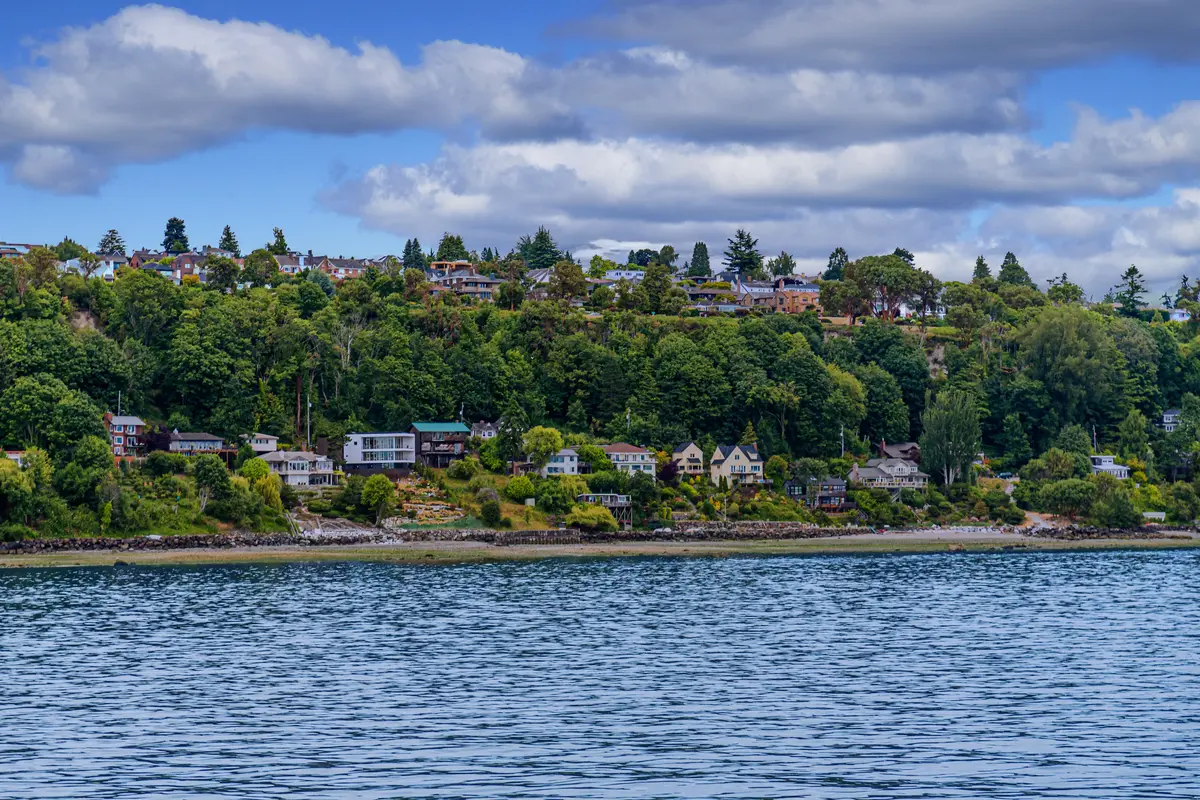
Shoreline tends to attract a specific kind of retiree: someone who wants proximity to a major city — its hospitals, its airports, its cultural institutions — without the noise, density, or price tag of living inside it. If you have family in the Seattle area, need regular access to the region's major hospital systems, or simply aren't ready to trade urban convenience for a quieter small-town pace, Shoreline positions itself in a genuinely useful middle ground.
The city also appeals to retirees who are downsizing from larger King County homes. Many longtime Eastside or North Seattle homeowners sell, take meaningful equity out of the transaction, and land in a Shoreline condo or single-level ranch with money left over. The typical home value of $776,196 (Zillow Home Value Index, July 2026) is the anchor figure here — entry-level condos and older ramblers start below that, which makes the city accessible even after a modest equity event.
Shoreline is a harder sell for retirees who want a walkable village center where they can leave the car at home. Most of the city requires a vehicle for daily errands, and the hills in areas like Richmond Beach make walking less practical as mobility changes with age. Retirees who prioritize a flat, strollable downtown with independent shops and a café culture will find Edmonds more satisfying. Shoreline earns its place when the equation is proximity, taxes, and healthcare access — not scenery or quaintness.
Healthcare & Medical Access in Shoreline
What's In-City
Shoreline Health & Rehabilitation Center, located at 2818 NE 145th St within city limits, provides skilled nursing, short-term rehab, physical and occupational therapy, and specialized Alzheimer's care. For retirees who want post-surgical recovery or longer-term care options close to home, having this facility inside Shoreline matters practically. CRISTA Senior Living, on the broader CRISTA Ministries campus in Shoreline, adds another layer of on-site senior care for residents connected to that community.
The Two Closest Hospitals
A full UW Medicine campus sits just over the city's southern border at 1550 N 115th St in Seattle — reachable in under 15 minutes on most days. It carries the credentialing and specialist depth of the UW system. For routine hospitalization, cardiology follow-ups, and outpatient procedures, this is the facility most Shoreline retirees will use first.
Swedish's Edmonds campus is the other anchor, sitting north of the city and offering Level IV Trauma emergency medicine, diagnostics, and surgical services. If you live in the northern sections of Shoreline near Echo Lake or Richmond Beach, that campus can actually be the closer drive. Neither facility is a tertiary research center, but both handle the range of care that most retirees need most of the time.
When You Need More
For complex oncology, advanced cardiac surgery, or specialized neurology, the UW Medicine flagship hospital on Montlake — recognized for gastrointestinal care excellence and consistently high patient experience scores — is the regional standard. It's roughly 20 to 30 minutes from Shoreline depending on traffic, which is the honest trade-off: excellent tertiary care is accessible, but it's not around the corner. Retirees managing serious chronic conditions should factor that commute into their planning, particularly if driving independently becomes a concern. Primary care options within the city include clinics affiliated with larger regional health systems, and International Community Health Services operates a Shoreline-area medical and dental clinic serving the broader community.
The Retiree Budget in Shoreline
Washington's Tax Advantage
Washington State levies no personal income tax — full stop. Social Security benefits, pension income, IRA and 401(k) distributions are all fully exempt from state taxation. For retirees moving from California, Oregon, or Minnesota, this is a genuine and immediate improvement to take-home income on a fixed budget. There's no complicated calculation, no partial exemption threshold, no age-based phase-in.
Washington taxes 7% on long-term capital gains above a $278,000 standard deduction for 2025, rising to 9.9% on gains above $1,000,000. This is worth understanding but rarely affects retirees directly, as it explicitly excludes retirement account distributions. The more relevant estate-planning note is Washington's estate tax, which kicks in at approximately $2.193 million — a lower exemption than the federal threshold. If your estate is in that range, a conversation with a Washington estate attorney before or shortly after moving here is worth the cost.
Property Taxes on a Fixed Income
The effective property tax rate in Shoreline is approximately 0.82%, which sits below the national average and is one of the more retiree-friendly rates in King County. Washington also offers additional property tax relief programs for qualifying seniors — income-based exemptions and deferrals administered through the state — that can meaningfully reduce the annual bill for those who qualify. The engine below can help you model the full monthly ownership picture once you have a purchase price in mind.
Day-to-Day on a Fixed Income
Groceries, gas, and dining in Shoreline run close to broader Seattle-area prices — this is not a budget suburb in the way that Mountlake Terrace or parts of Kenmore can be. Shoreline's Aurora Avenue corridor gives you access to a range of options without driving into Seattle, including a solid mix of independent restaurants, a Fred Meyer for one-stop shopping, and a variety of ethnic grocery options. Washington's absence of a state income tax does more for retirees' monthly cash flow than any single line item on the expense side — but it doesn't transform Shoreline into an inexpensive place to live.
Looking to buy in Shoreline? Estimate your payment.
Enter your numbers to see an estimated monthly mortgage payment.
Estimate only. Excludes HOA fees and mortgage insurance. The interest rate above is a starting point, not a quoted rate — replace it with your own to see real numbers. Insurance is a flat placeholder, not a Shoreline quote.
Walkability, Community & Staying Active in Shoreline
The Walkability Reality
Shoreline's citywide Walk Score is 50 — officially 'Somewhat Walkable,' which in practice means most errands still require a car. The geography varies considerably: the Aurora Avenue N corridor, particularly around the 98133 zip code, scores in the 70s, and retirees who plant themselves within a few blocks of that corridor can genuinely reduce car dependence for daily tasks. Away from Aurora, in areas like Richmond Beach, you'll be driving for groceries, medical appointments, and most social activities.
About 19 bus lines serve the city, and Metro's frequent service on Aurora means transit-oriented living is realistic for retirees willing to plan around bus schedules. A future light rail station planned for the NE 185th St area will significantly improve carless connectivity to Seattle — a long-term factor worth considering if you're buying now with the next decade in mind.
Where Community Happens
The Shoreline–Lake Forest Park Senior Center is the real anchor for active retirees in this city. It serves adults 50 and older with recreational programming, fitness classes, educational workshops, health screenings, and a nutrition program. It's not a drop-in café — it's a structured community with a regular membership, and the depth of programming is notably stronger than what you'd find in a similarly sized suburb. For retirees who moved here without an existing social network, this center is the fastest path to building one.
The Northwest Neighbors Network, listed on the City of Shoreline's community resources page, operates as a virtual village: volunteers run errands, provide rides, make wellness check calls, and organize social events specifically for older adults aging in place. It's the kind of infrastructure that lets retirees stay in their homes longer without becoming isolated — and it's genuinely unusual to find it at this level in a city of 66,000.
Getting Outside
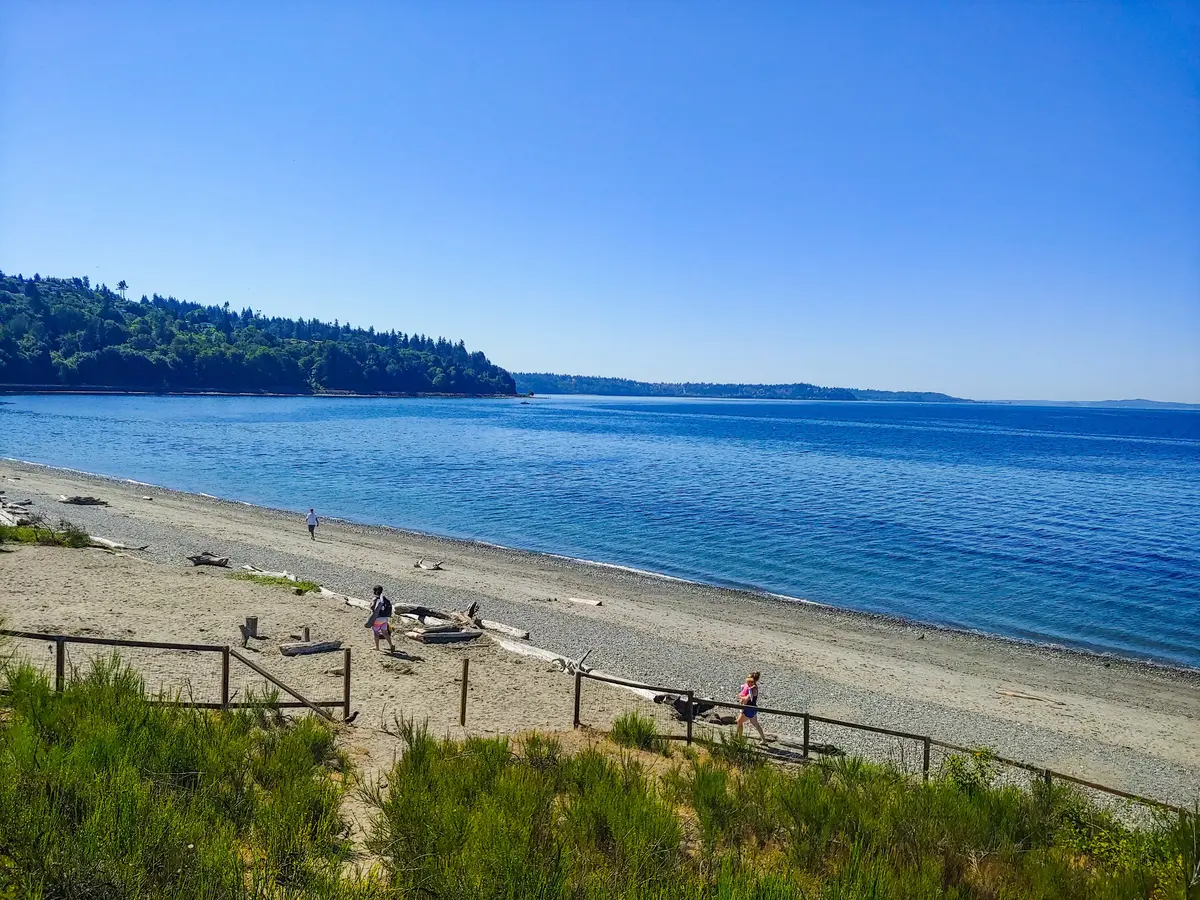
Richmond Beach Saltwater Park gives Shoreline something most suburbs can't claim: direct Puget Sound waterfront access, with a pebble beach, picnic areas, and sweeping water views. It's a 20-minute walk downhill from the Richmond Beach neighborhood — uphill on the return, which keeps it from being truly walk-accessible for everyone, but makes it one of the more rewarding outdoor destinations in the northern Seattle suburbs. Kruckeberg Botanic Garden and Shoreview Park round out the active-outdoor options, and the recreation center at Shoreline Community College offers pool access and fitness facilities that many community members use.
Right-Sizing: Downsizing in Shoreline
What the Inventory Looks Like
Shoreline's housing stock skews toward single-family homes built between the 1950s and 1980s — the classic Pacific Northwest rambler that happens to be exactly what many downsizing retirees want: single-level, manageable lot, no stairs. These homes exist in real numbers here, and they tend to price below the city's typical median, making them the most realistic entry point for buyers coming out of a larger home with equity to deploy.
The condo and townhome market is thinner. Shoreline has not built the dense, amenity-rich 55+ condo product that you'll find in parts of Bellevue or in newer developments in Mountlake Terrace. What exists tends to be smaller complexes without the on-site services that retirees seeking active-adult community living are looking for. If a true amenity-rich condo lifestyle is the goal, inventory will be the constraint — and patience or flexibility on timing will be required.
CRISTA Senior Living
The most notable purpose-built senior living option in Shoreline is CRISTA Senior Living, part of the CRISTA Ministries campus. It offers a continuum of care from independent living through assisted living, with the faith-based nonprofit mission that defines the broader CRISTA organization. For retirees aligned with that environment, it's a significant asset — a full-service campus within city limits, not a distant drive to a facility in another suburb.
The Honest Read on 55+ Communities
Shoreline does not have an inventory of large-scale, age-restricted active-adult communities comparable to what you'd find in parts of Snohomish County or the exurban Puget Sound region. If you're looking for a gated 55+ development with a clubhouse, pickleball courts, and a pool specifically for adults your age, you'll be looking in communities outside city limits — or reconsidering the broader region. What Shoreline offers instead is a solid stock of accessible single-family homes, one strong senior living campus, and the proximity to Seattle that no outlying retirement community can replicate.
Shoreline vs Nearby Retirement Destinations
| City | Cost vs Shoreline | Primary Hospital | Walkability | Senior Living Depth | Overall Retirement Fit |
|---|---|---|---|---|---|
| Shoreline | Anchor | UW Medicine campus (just south); Swedish Edmonds (north) | Moderate — Aurora corridor walkable; most of city car-dependent | CRISTA Senior Living campus; thin condo market | Strong for healthcare proximity and tax efficiency; weaker for walkable village lifestyle |
| Edmonds | About the same, trending pricier for waterfront | Swedish Edmonds Campus (in-city) | Strong — flat downtown, walkable to shops and ferry | Several independent senior living facilities; more condo options | Best overall for retirees who want a walkable village feel and waterfront access |
| Lake Forest Park | About the same | Relies on regional hospital campuses to the south or north | Low — car-dependent, hilly terrain | Very limited; primarily single-family residential | Best for privacy and wooded setting; not suited to car-free or care-intensive retirement |
| Mountlake Terrace | Noticeably cheaper | Swedish Edmonds (short drive north) | Moderate — improving with planned light rail | Limited but growing; more affordable senior apartment options | Good value play for budget-conscious retirees who don't need in-city amenities |
| Kenmore | About the same to slightly cheaper | Regional medical centers to the east or south | Low — spread-out, car-dependent | Limited; mostly residential with few senior-specific options | Better for retirees prioritizing waterfront Lake Washington access over urban proximity |
| Seattle (North End) | Pricier | Multiple major hospital campuses within the city | High — true urban walkability in neighborhoods like Northgate, Greenwood | Widest selection of senior living types in the region | Best for retirees who want to maximize walkability and cultural access and can absorb the cost |
Edmonds is the most common alternative retirees weigh seriously against Shoreline — it wins on walkability and in-city hospital access at Swedish Edmonds, but it prices similarly and offers fewer proximity benefits for the I-5 corridor and Seattle healthcare network. Mountlake Terrace is the value play: noticeably cheaper, with improving transit prospects, though the senior living infrastructure is thin. Lake Forest Park is for buyers who genuinely want quiet and trees over services — it's not a healthcare-proximity choice. For retirees whose priority is immediate access to the region's deepest medical resources, Shoreline's position just south of a major UW Medicine campus, with a clear route to the UW flagship hospital when needed, remains the strongest argument for choosing it over any of these alternatives.

Local Expert Takeaway: Shoreline makes the most sense for retirees who are leaving a larger home — in the Seattle area or elsewhere — with equity to work with, who need regular access to the region's major hospital systems, and who can live comfortably in a city where a car is still part of daily life for most people. The zero state income tax on Social Security and retirement distributions is genuinely meaningful on a fixed income, and the Shoreline–Lake Forest Park Senior Center and Northwest Neighbors Network give the city a social infrastructure that most suburbs this size don't have. If you want a walkable village, Edmonds will suit you better. If you want the region's best healthcare within 15 minutes and don't want to pay Seattle prices, Shoreline is worth a serious look.
Quick Takeaways & FAQs
✅ Washington's zero income tax on Social Security, pensions, and retirement distributions is a genuine and immediate financial advantage for retirees relocating from high-tax states.
⚠️ Shoreline's citywide walkability score of 50 means most retirees will still need a car for daily errands — only the Aurora Avenue corridor approaches true car-light living.
📍 The Shoreline–Lake Forest Park Senior Center serves adults 50+ with fitness, nutrition, and social programs, and is the fastest way for newcomers to build community here.
Is Washington State tax-friendly for retirees?
What hospitals are close to Shoreline for retirees?
Are there 55+ or active-adult communities in Shoreline?
Is Shoreline walkable enough for retirees who want to give up a car?
What is the property tax rate in Shoreline, and are there senior exemptions?
Moving to Washington?
Tell us what you need help with and we'll connect you with local resources.
