What Is Living in Edmonds, Washington Like?
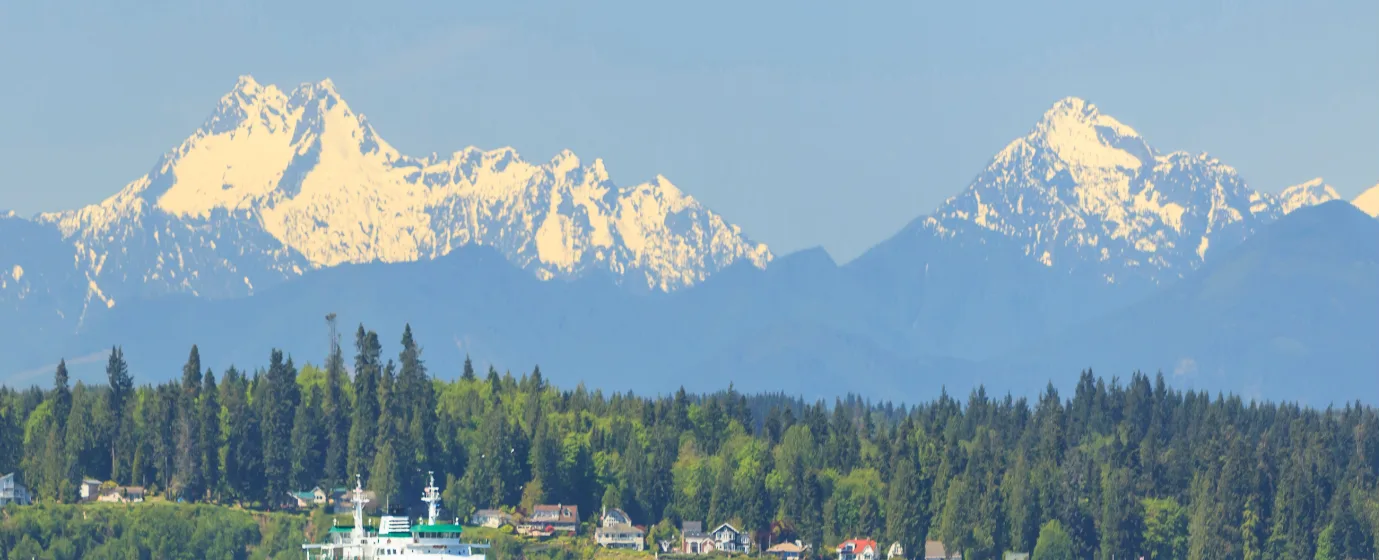
Maybe someone at your Seattle office mentioned Edmonds and you pictured another bedroom suburb — a strip mall, a commuter lot, a Safeway. Then you drove down to the waterfront and stood at the end of the fishing pier with the Olympics filling the horizon, and the mental image collapsed. Edmonds sits on the eastern shore of Puget Sound about 15 miles north of Seattle, pressed against the water to the west and flanked by Lynnwood, Mountlake Terrace, and Shoreline on every other side. It is fully built out, has almost no vacant land left to develop, and yet still draws a steady wave of buyers who discover that a walkable downtown next to a working ferry terminal and a scuba park established in 1970 is not a thing you stumble on everywhere in the Pacific Northwest.
The economic backbone here is more public-sector than people expect. The Edmonds School District is the city's largest employer, a district that shapes the character of most neighborhoods. A major regional health system anchors healthcare employment on the eastern edge of the city. The Port of Edmonds, Sound Transit's Sounder line, and Community Transit collectively support a layer of maritime and transit jobs. Downtown small businesses — independent restaurants, a craft beer taproom on Main Street, a bakery that's been on the same block for decades — fill out the retail and hospitality employment picture. The people who move here tend to fall into two overlapping groups: Seattle-area professionals who want the commute without sacrificing a real downtown, and downsizers who want a walkable, water-adjacent lifestyle without the price tag of Kirkland or ferry-accessible alternatives further up the Sound.
The Zillow Home Value Index for Edmonds stood at $855,381 at mid-2026, which puts it firmly above the regional average but noticeably below the Eastside's most expensive corridors. Roughly 32% of purchases in early 2026 were all-cash transactions, a figure that reflects how many buyers arrive here without a mortgage contingency — particularly downsizers liquidating equity elsewhere. Property taxes run at an effective rate of approximately 0.70%, low by Washington standards. Day-to-day life is shaped by Puget Sound in ways that go beyond the view: you time errands around ferry crossings, you walk to the Saturday farmers market, and you learn quickly that the stretch of Main Street between 3rd and 6th Avenues is where the city actually gathers.
Whether you're seriously considering a move or just starting to map out the options, the sections below cover why people choose Edmonds over its neighbors, what daily life actually looks like here, the current housing market, how the commute works in practice, and where locals spend their weekends.
Edmonds at a Glance
Looking to buy in Edmonds? Estimate your payment.
Enter your numbers to see an estimated monthly mortgage payment.
Estimate only. Excludes HOA fees and mortgage insurance. The interest rate above is a starting point, not a quoted rate — replace it with your own to see real numbers. Insurance is a flat placeholder, not a Edmonds quote.
Why Are People Moving to Edmonds?
The honest answer is that Edmonds wins the comparison against its neighbors on a combination of factors that rarely show up together: a walkable waterfront core, direct Puget Sound access, a commuter rail station, and a school district that outperforms most of Snohomish County. Individually, you can find each of those things elsewhere. Finding all of them in one fully built-out city of 42,000 people is the draw.
The Waterfront-Downtown Equation
Most Seattle-area commuter cities don't have a downtown you'd walk to on a Saturday morning by choice. Edmonds does. The stretch along Main Street — Edmonds Bakery at 418 Main, Salt & Iron's oyster bar, Maize & Barley's Caribbean-inflected taco-and-craft-beer setup at 525 Main, Leftcraft's taproom a few doors down — functions as a genuine neighborhood anchor, not a strip of nail salons and insurance offices. The Saturday farmers market runs steps from the beach. Epulo Bistro on Sunset Avenue puts you within sight of the ferry dock. This proximity matters to buyers in a way that's hard to quantify but easy to feel on the first visit.
Who Actually Moves Here
| Buyer Type | What Draws Them | Best For |
|---|---|---|
| Seattle-area professionals | Sounder rail to Seattle, walkable downtown, water access | Commuter |
| Downsizers / equity buyers | Walkability, cash-purchase market, no maintenance of a large lot | Luxury Walkable |
| Families with school-age children | Edmonds School District, quieter streets, parks | Families School |
| Remote workers from higher-cost markets | Lower price point than Eastside, Puget Sound lifestyle, ferry access to Kitsap | Value Views |
| Outdoor and water enthusiasts | Edmonds Underwater Park, marina, beach access, nearby trails | Nature |
| Arts and culture seekers | Edmonds Center for the Arts, Creative District, independent galleries | Walkable |
The downsizer cohort is more visible here than in most comparable cities — a structural consequence of the all-cash share sitting at 32% as of early 2026.
What People Don't Expect
After six months here, newcomers almost universally say the same thing: they underestimated how much the ferry terminal shapes the neighborhood's personality. The terminal at 199 Sunset Ave S isn't tucked away — it sits at the bottom of the Bowl, trains and ferries running parallel to the waterfront, and the rhythm of departures becomes part of daily life whether you use it or not. The train noise along Railroad Avenue is real, and buyers who don't account for it when touring homes near the waterfront sometimes wish someone had told them to listen carefully at 6 a.m.
The case for Edmonds is easy. The case against it is shorter: you will pay a premium for the waterfront proximity, inventory is tight, and if you need big-box retail within walking distance, you'll be driving to Lynnwood.
What Daily Life Feels Like in Edmonds
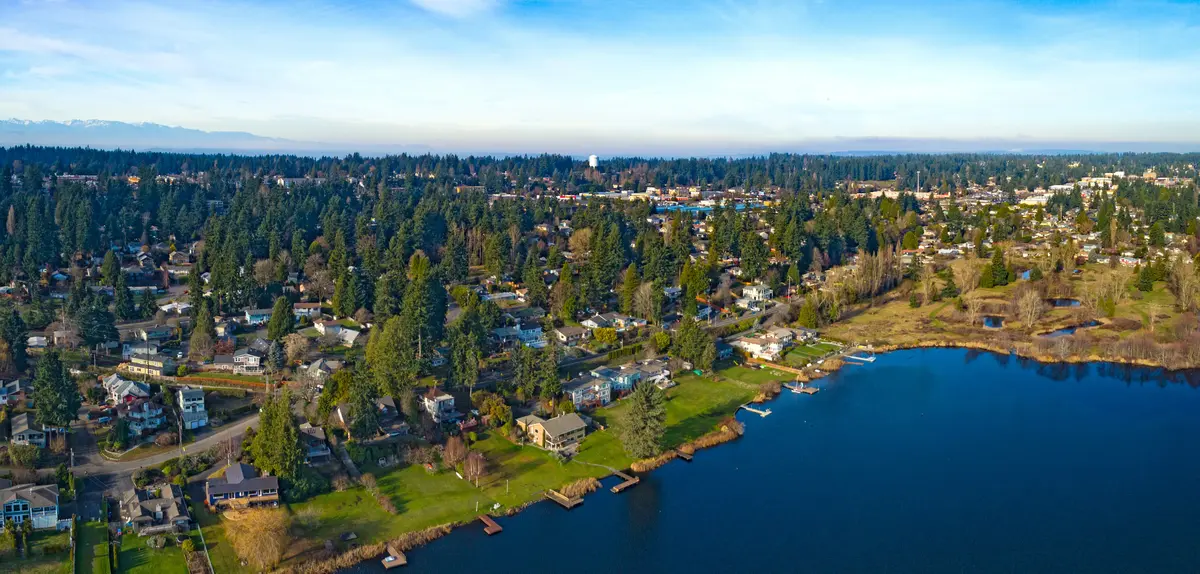
The geographic reality of Edmonds is that it splits into two distinct zones, and understanding that split is the most useful thing you can know before choosing a neighborhood. The Edmonds Bowl — the lower portion of the city that slopes down toward Puget Sound — is walkable, dense by Snohomish County standards, and priced accordingly. Everything above the Bowl, in the hillside neighborhoods to the north and east, is quieter, more suburban in character, and more accessible to I-5 and SR-99 without the waterfront premium.
The Weekday Rhythm
On a typical Tuesday, the Bowl moves on foot. You can walk from a Main Street café to the fishing pier to the Edmonds Center for the Arts and back without getting in a car. The Edmonds Bakery on Main sees its line out the door before 8 a.m. Parents drop kids and walk back via the waterfront. Dog walkers stake out the beach path. It reads more like a small coastal town than a Seattle suburb — deliberately so.
Hillside neighborhoods operate differently. Residents up in Seaview or North Edmonds drive to everything, use the Bowl as a destination rather than a starting point, and tend to value the quiet and the slightly lower price point over on-foot access.
Seasonal Rhythms Newcomers Miss
Summer weekend ferry wait times catch a lot of newcomers off guard. The Edmonds–Kingston crossing draws recreational passengers from late June through Labor Day, and the queue of cars at the terminal can back up onto Sunset Avenue on sunny Saturday afternoons. If you live in the Bowl and have no interest in the ferry, this is pure inconvenience — parking near the waterfront tightens, and Main Street fills with visitors who've come off the boat looking for lunch.
The flip side: Edmonds in January is one of the most genuinely pleasant off-season small cities in the region. Restaurants are half-empty, the pier is yours, and the Olympic Mountains visible across the Sound on clear winter days are, in the experience of longtime residents, as good as anything the summer crowds are chasing. The parks and outdoor recreation guide covers the seasonal access in more detail.
Schools in Daily Life
The Edmonds School District holds a B+ rating, according to Niche, and that standing is an active driver of buyer decisions, particularly for parents with kids entering middle school. For a closer look at individual schools and boundary quirks, the schools page has the full breakdown.
The Edmonds Housing Market Right Now
The Zillow Home Value Index for Edmonds stood at $855,381 at mid-2026, reflecting a modest pullback of 4.7% from the prior year even as the broader Puget Sound market softened. That number is the city-wide figure — but in practice, where your home sits relative to the Bowl, the waterfront, and the Olympic Mountain sightlines determines the actual price more than any citywide average can capture.
What's Driving the Market
Edmonds has a supply problem that won't resolve on its own. Puget Sound closes off the west, and every neighboring city — Lynnwood, Mountlake Terrace, Shoreline, Mukilteo — is fully developed. There is virtually no greenfield land left to build on. New inventory enters the market almost exclusively through teardown-and-rebuild or estate sales, which keeps the lot count tight regardless of broader interest rate conditions.
Homes here went to pending in around 6 days as of mid-2026 — a pace that rewards buyers who already know the neighborhoods and can move quickly. That speed is not uniform across the city: waterfront-adjacent and Bowl properties generate competitive interest faster than hillside homes further from the ferry corridor.
The Cash-Sale Reality
Roughly 32% of purchases in early 2026 were all-cash transactions. That figure reflects the downsizer demographic that arrives with equity from a previous home sale, often from higher-priced markets, and has no need to wait on financing. For buyers who do need a mortgage, that cash competition is real and changes how offers need to be structured — though the mechanics of competing in this market belong on the first-time homebuyer page rather than here.
For the broader cost picture — rents, property taxes, and how Edmonds prices compare to neighboring cities — the cost of living page has the full breakdown.
Edmonds Neighborhoods
Edmonds has several distinct areas — each with its own character and appeal. Here’s a breakdown to help you narrow down where to focus your home search.
🏡 Downtown Edmonds/Edmonds Bowl
The walkable core of the city, sloping down to Puget Sound — Main Street restaurants, the farmers market, the fishing pier, and the ferry terminal are all on foot from here. This is the address that commands the strongest demand and the most street-by-street price variation in Edmonds.
🏠 North Edmonds
A quieter, hillside residential area with more typical suburban character and somewhat easier access to I-5 and SR-99 than the Bowl. Buyers here trade waterfront walkability for slightly more space and a lower price point relative to the downtown core.
🌳 Perrinville
A neighborhood near the Edmonds-Lynnwood border with an established, low-key residential feel and proximity to the Interurban Trail corridor. It suits buyers who want Edmonds' school district without paying the full Bowl premium.
🏘 Seaview
A hillside neighborhood in the upper portion of the city where tree-lined streets and larger lots appeal to families who prioritize quiet over on-foot access. Residents drive to the Bowl for weekend errands and treat the waterfront as a destination rather than a daily starting point.
🏔 Lake Ballinger
Located near the southern edge of the city, this area surrounds a small lake popular with kayakers and anglers. It draws buyers who want a water-adjacent feel at a meaningful discount from waterfront addresses closer to the ferry terminal.
🌆 Meadowdale
A northwestern neighborhood with direct Puget Sound bluff access and Meadowdale Beach Park as its anchor — a secluded beach reached by a wooded trail. Homes here are sought after for privacy and views, and the area has a noticeably more tucked-away character than the Bowl.
Pros & Cons of Living in Edmonds
The Pros
- Walkable downtown with waterfront views and ferry access
- strong public schools with IB and college-prep programs
- low violent crime and strong sense of community
- easy train/ferry/bus commuting options to Seattle
The Cons
- High home prices relative to surrounding Snohomish County cities
- limited new housing supply due to built-out geography
- ferry lines and traffic congestion during peak commute times
Getting Around & Commuting in Edmonds
Edmonds has transit options that most of its Snohomish County neighbors would trade for in a moment — and real limitations that keep car ownership essential for most residents. Understanding both sides of that equation before you decide where to live in the city matters more than it might seem from a Google Maps commute estimate.
The Sounder and Amtrak Connection
Edmonds Station at 211 Railroad Avenue is one of the more versatile transit hubs in the Snohomish County corridor. Sound Transit's Sounder N Line connects Edmonds to Seattle on weekday peak hours — commuters board here and arrive in Seattle without touching I-5. The station recorded 18,110 Sounder boardings in fiscal year 2024. Amtrak's Cascades and Empire Builder routes also stop here, adding 28,150 Amtrak boardings in the same fiscal year — a combination of rail services that puts Edmonds well above neighboring Lynnwood or Mountlake Terrace for transit access. Sound Transit provides 259 parking spaces and bicycle lockers at the station. Community Transit buses feed the station for riders who can't walk from their neighborhoods.
The Sounder's limitation is real and worth naming: it runs weekday peak hours only. No evening return after 7 p.m., no weekend service. Residents who work standard 9-to-5 schedules in downtown Seattle find it excellent; anyone with non-standard hours drives.
Driving to Seattle
The I-5 corridor to downtown Seattle runs roughly 30 minutes in off-peak hours from Edmonds. During the morning rush — roughly 7 to 9 a.m. southbound — that figure stretches significantly, particularly at the merge points near Northgate and the Aurora Avenue interchange. SR-99 through Shoreline and Lynnwood is a legitimate alternate for riders heading to South Lake Union or the University District, but it's slower in its own right during peak hours. Residents who live above the Bowl near SR-99 often find that corridor more natural than going all the way to I-5.
The Ferry as a Commute Tool
The Edmonds–Kingston ferry is primarily a recreational and Kitsap Peninsula commuter route, not a Seattle-bound commute option. The crossing takes about 21 minutes; round-trip adult fares run $11.35 as of May 2026 for the Edmonds–Kingston route, and youth 18 and under ride free. The ferry terminal is cashless — ORCA cards work here and link seamlessly to Community Transit and Sounder, which means a single card can carry a commuter from a North Edmonds bus stop to the train to the waterfront without touching cash. If your employer is on the Kitsap Peninsula — Bremerton, Silverdale, Poulsbo — an Edmonds address with a Kingston ferry commute is genuinely competitive with any other commuter option in this part of the Sound.
Getting Around Without a Car
| Mode | Best Use Case | Limitation |
|---|---|---|
| Sounder N Line | Weekday peak commute to Seattle | Weekday peak hours only; no evenings or weekends |
| Community Transit bus | Connections to Sounder, Lynnwood, Mountlake Terrace | Frequency drops evenings and weekends |
| Edmonds–Kingston Ferry | Kitsap Peninsula commute; recreational crossings | Not a Seattle-bound route; summer weekend queues |
| Walking (Bowl only) | Main Street, pier, farmers market, beach | Hillside neighborhoods require a car for errands |
| Biking | Waterfront path; station connection from lower Bowl | Hillside terrain limits practical cycling range |
| Driving (I-5 / SR-99) | Any destination outside the Bowl; non-peak travel | Peak-hour congestion at I-5 merge points |
Living without a car is realistic only in the Edmonds Bowl, and only if your job is reachable by Sounder or ferry. Everywhere else in the city, a car is not optional.
Schools in Edmonds
Families relocating to Edmonds have public, private, and higher-education options nearby. Here’s a quick overview.
🎓 School District
Edmonds School District serves K–12 students across Edmonds and the surrounding area. Rated B+ (source: Niche.com).
🏆 Graduation Rate
The 4-year high-school graduation rate here is approximately 86%.
📚 Higher Education
Washington’s public universities — the University of Washington, Washington State University, and Western Washington University — offer four-year degrees statewide, with a network of 34 community and technical colleges (SBCTC) providing two-year and workforce programs.
🌐 Online Learning
University of Washington Continuum College and Washington State University Online offer fully accredited online degrees for remote learners across the state.
Safety in Edmonds
A quick look at how Edmonds compares on the numbers that matter most when weighing a neighborhood or a move.
🛡 Violent Crime
Approximately 3 per 1,000 residents.
🔒 Property Crime
Approximately 30 per 1,000 residents.
Compared to the FBI’s most recent national data (2024), Edmonds’s violent crime is below the national average (about 3.6 per 1,000), and property crime is above the national average (about 17.6 per 1,000).
Against Washington as a whole, Edmonds’s violent crime is about the same as the state average, and property crime is somewhat above the state average (Bureau of Justice Statistics, Crime Known to Law Enforcement, 2024 (tables 2 and 3)).
Crime rates can vary a lot within a single city, so the citywide numbers above are only a starting point. Some neighborhoods in Edmonds run well below these averages, while others run higher — the kind of block-by-block detail that matters most when you’re actually choosing where to live. The full guide below breaks it down neighborhood by neighborhood.
Working in Edmonds
Edmonds’s largest employers span several industries — here are some of the anchors of the local job market.
🎓 Edmonds School District
Education
🏥 Verdant Health Commission/Swedish Edmonds
Healthcare
💼 Port of Edmonds
Maritime
💼 Sound Transit/Community Transit
Transportation
🏥 local retail and downtown small businesses
Retail/hospitality
Parks & Recreation in Edmonds
Some of the outdoor spaces that shape everyday life in Edmonds.
🌱 Edmonds Underwater Park
Edmonds residents don’t have to go far for green space — spots like Edmonds Underwater Park are part of everyday life here, whether that’s a morning walk, a weekend hike, or just somewhere to unwind outside. The full guide below covers more of what Edmonds has to offer for parks and outdoor recreation.

Retiring in Edmonds
Edmonds draws retirees for its balance of amenities, outdoor access, and cost. Here’s what to weigh.
🌤 Climate
Edmonds sits at sea level on Puget Sound, which moderates temperatures year-round — summers are mild and rarely push above the mid-80s, winters are wet but seldom see hard freezes or significant snow. The marine layer keeps things green but also means roughly 150 cloudy or rainy days annually; retirees who need significant winter sun typically find that hard to offset even with the waterfront appeal.
🍴 Lifestyle
The walkable downtown on Main Street — independent restaurants, a Saturday farmers market, live music and theater at the Edmonds Center for the Arts, and a fishing pier steps from the ferry — supports an active, social retirement without requiring a car for daily life in the Bowl. The Creative District galleries and the Puget Sound waterfront give the city a cultural texture that punches above its population.
🏚 55+ Communities
Edmonds has a visible downsizer and active-adult population, reflected in the high share of all-cash purchases and the compact, maintenance-light condominiums that have filled in the Bowl over the last two decades. Dedicated 55+ communities exist in the broader Edmonds-Lynnwood corridor; a local real estate agent familiar with the area can identify current availability, as inventory in this category moves quickly.
✈ Getting Around
Retirees living in the Bowl can manage most daily needs on foot; Edmonds Station at 211 Railroad Avenue offers Amtrak service if travel to Seattle or Portland by rail is a priority. Seattle-Tacoma International Airport is roughly 40 minutes south by car in off-peak traffic, though peak-hour I-5 congestion can stretch that meaningfully.
🏛 Washington Taxes for Retirees — What to Know
- No state income tax — Washington does not tax personal income, so Social Security, pensions, and 401(k)/IRA withdrawals are all untaxed at the state level. There is no state return to file and no retirement exclusion to claim — the rate is simply zero.
- Military and public pensions — Because there is no income tax, military retirement pay and public-employee pensions are untaxed at the state level along with everything else.
- Sales tax is the tradeoff — The state sales tax is 6.5%, and local add-ons bring the combined rate in Edmonds to 10.7% (Washington State Department of Revenue, Q3 2026 local sales & use tax rate table, July 2026). Groceries and prescription drugs are exempt.
- Property taxes, with senior relief — The effective property tax rate is roughly 0.9%. Homeowners 61+ (or unable to work due to disability, or a qualifying disabled veteran) who own and occupy their home may qualify for a reduction. Income limits are set against each county’s median household income, so the threshold differs by county — check with your county assessor. A separate deferral program is available for those who don’t qualify for the exemption.
- Capital gains tax — but not on retirement income — Washington taxes 7% on long-term capital gains above a $278,000 standard deduction for 2025, rising to 9.9% on gains above $1,000,000. Retirement accounts and real estate sales are both exempt. It therefore does not reach ordinary retirement income or the sale of a home.
- Estate tax — the one to plan for — Unlike most no-income-tax states, Washington has its own estate tax. For deaths on or after July 1, 2026, the exemption is $3 million with graduated rates topping out at 20%. Retirement accounts count toward the taxable estate, so long-time homeowners with sizable balances can cross the line without expecting to.
- No inheritance tax — Washington has no inheritance tax, and no gift tax.
- WA Cares payroll premium — Working Washingtonians pay 0.58% of gross wages into the WA Cares Fund, the state long-term care program, with no income cap. It applies to W-2 wages, so retirees who have stopped working do not pay it — but anyone relocating while still employed will see it. The private-insurance opt-out closed at the end of 2022 and is not available to new applicants; the remaining exemptions are narrow (living outside Washington, military spouses, certain visa holders, and veterans with a 70%+ service-connected rating).
- The Oregon border effect — Oregon has no sales tax, so Washington residents near the river — Vancouver, Camas, Washougal, Longview — often cross over for large purchases. Washington use tax technically applies to goods brought back for use in-state, though it is rarely enforced on ordinary personal purchases.
Tax laws change frequently and individual situations vary. This is general information, not tax advice — always consult a qualified Washington tax professional or CPA for personalized retirement tax planning.
Weekends & Local Favorites in Edmonds
Edmonds doesn't have a weekend identity crisis. The Bowl activates on Saturday mornings and stays busy through Sunday evening, and the waterfront is the axis around which most of it organizes.
The Waterfront and Fishing Pier
The Edmonds Fishing Pier is one of the few places on Puget Sound where you can drop a line for free without a boat, and locals treat it as a daily habit rather than a tourist attraction. The stretch of beach between the pier and the ferry terminal is dog-friendly, accessible on foot from Main Street, and used year-round by residents who have made a quiet habit of the evening light on the Olympics.
Scuba Diving in the Backyard
The Edmonds Underwater Park — formally designated a Marine Preserve and Sanctuary in 1970 — covers more than 27 acres of tidelands north of the ferry landing. It draws approximately 25,000 scuba divers per year, making it the most visited of Washington State's 10 underwater parks. Lingcod, cabezon, and nudibranchs inhabit the artificial reef structures at a maximum depth of about 45 feet. It is open to divers of all experience levels, which means you'll find beginners in full rental gear alongside regulars who have logged hundreds of dives on the same reef. If you move to the Bowl and have any interest in scuba, this becomes your default Saturday plan within a month.
Downtown Main Street
The independent business culture on Main Street is more durable than in comparably sized Snohomish County towns. Salt & Iron on Main draws the oyster-and-cocktail crowd on weekend evenings. Maize & Barley at 525 Main does Caribbean-inflected tacos and rotating craft beers in a space that fills quickly on Fridays. Leftcraft at 519 Main is the low-key taproom option when you want to sit longer and talk more. Edmonds Bakery at 418 Main is the Saturday morning anchor — the line moves fast, and the pastry case is gone by 10 a.m. on market days. Epulo Bistro on Sunset Avenue has a water-facing orientation that puts the ferry dock in your sightline at dinner.
Arts and Culture
The Edmonds Center for the Arts books a calendar that punches well above a city of 42,000 — regional touring acts, chamber music, community theater, and film events cycle through its 700-seat main stage and smaller venue throughout the year. The Edmonds Creative District designation covers the blocks surrounding Main Street, and the resulting concentration of galleries, studios, and independent retail gives the downtown a texture that distinguishes it from the typical suburban arts-district label.
Where Families Actually Gather
The Edmonds waterfront park area near the marina and beach is the informal Saturday gathering point for parents with young kids — accessible, flat, and close enough to the bakery for a round-trip on foot. For trail access and formal parks, the hillside neighborhoods feed into Yost Memorial Park and the Interurban Trail, which give the city a recreational depth beyond the waterfront alone.
Top Things Locals Say About Edmonds
The best intel about a city comes from the people who actually live there. Here’s what Edmonds residents say when newcomers ask the questions everyone’s thinking.
“I expected a nice waterfront and a short commute. What I didn't expect was that after six months I'd stopped driving to Seattle on weekends at all — everything I actually wanted on a Saturday was already here, within about four blocks.”
— Recent Edmonds home buyer
“What's the most surprising thing about living in Edmonds?”
The ferry schedule becomes part of your mental calendar even if you never take it. You start timing errands and restaurant reservations around when the boat comes in and the terminal lot empties out. On summer weekends the line of cars backing up from the dock onto Sunset Avenue is real — if you live in the Bowl and need to park anywhere near the waterfront between noon and 4 p.m. on a sunny Saturday, you'll learn that lesson the first summer and plan around it every summer after.
“What do locals love most about Edmonds?”
The scale. Everything in the Bowl is 10 minutes on foot — the pier, the farmers market, the bakery, a dozen places for dinner. After years of driving everywhere in the suburbs, that compresses your day in a way that feels like a quality-of-life upgrade that doesn't show up on any spreadsheet. The Olympic Mountains across the Sound on a clear winter afternoon is also the kind of thing that doesn't get old.
“What should newcomers to Edmonds know?”
Don't underestimate the difference between a Bowl address and a hillside address. They're sometimes only a half-mile apart, but one puts you within walking distance of everything and one puts you in the car for every errand. Also: the Sounder parking lot at the station fills early on commute days — if you're planning to drive to the train, get there by 7 a.m. or you'll be circling. The ORCA card across Community Transit buses to the station is a smarter long-term habit.
“Can you live in Edmonds without a car?”
In the Edmonds Bowl, it's genuinely possible if your job is reachable by Sounder or ferry — Main Street, the farmers market, the beach, and most daily needs are on foot. Outside the Bowl, in neighborhoods like Seaview or North Edmonds, a car is not optional. Big-box retail, most grocery options beyond the downtown specialty shops, and any appointment outside the Bowl requires driving. The transit network is good by Snohomish County standards, but it's not dense enough to substitute for a car in the hillside neighborhoods.
Cities Near Edmonds
Other communities near Edmonds worth a look — each with its own character and price point.
| City | Distance | Best For | Vibe | Median Rent | Median Buy |
|---|---|---|---|---|---|
| Lynnwood | 5 mi | Budget-conscious buyers, light rail access | Suburban, retail-heavy, improving transit | $1,900 | $724,855 |
| Mountlake Terrace | 4 mi | Families wanting value near I-5 | Quiet, modest, light rail coming | $1,850 | $639,392 |
| Shoreline | 4 mi | Seattle commuters, newer construction | Urban-edge, transitioning, walkable pockets | $2,000 | $776,196 |
More Helpful Guides for Edmonds
Going deeper on Edmonds? Our blog series covers everything from first-time buying to retiring here — explore the guides below.
Local Expert Takeaway: Edmonds earns its price premium honestly — the waterfront is real, the downtown is genuinely walkable, and the Sounder connection to Seattle is the best in Snohomish County. But the city rewards buyers who do their homework street by street rather than neighborhood by neighborhood. A home on the upper edge of the Bowl can feel miles from the Main Street energy even though it's a 10-minute walk. And if you're expecting to replicate that waterfront lifestyle from a hillside address in North Edmonds, you'll be driving down to Edmonds Bakery on Saturday mornings rather than rolling out of bed and walking there — which is a different life than the one the photos suggest.
Quick Takeaways & FAQs
✅ Edmonds Station is one of the only Snohomish County stops where you can board the Sounder commuter train, catch an Amtrak, and connect to a Washington State Ferry from the same block — genuinely rare in this region.
⚠️ The cash-sale share of 32% in early 2026 means buyers who need financing are competing against a sizable pool of equity-funded downsizers on nearly every listing, particularly in the Edmonds Bowl.
📍 The Edmonds–Kingston ferry terminal is cashless and ORCA-card compatible — one card covers your bus to the station, your Sounder to Seattle, and your ferry to Kitsap, which matters if you're building a multi-modal commute.
How long is the commute from Edmonds to Seattle?
Is Edmonds a good place for families with kids?
What is the Edmonds Underwater Park?
How does the Edmonds–Kingston ferry work for daily commuters?
Is Edmonds expensive compared to neighboring cities?
Helpful Links for Moving to Edmonds
Moving to Washington?
Tell us what you need help with and we'll connect you with local resources.
