
You've probably heard the pitch: small-town feel, waterfront views, minutes from Seattle. What the pitch leaves out is that Edmonds sits on a bluff above Puget Sound, which means the walk from downtown to the ferry is flat and beautiful — but the walk back to your car from the hillside neighborhoods above the Bowl is a genuine cardiovascular workout. That physical geography shapes almost everything about retirement here. Where you land in this city determines whether you're walking to a Main Street restaurant for a glass of wine or driving down every time you want a cup of coffee.
The economic case for Edmonds is real. Washington has no state income tax, so your Social Security, pension, IRA distributions, and 401(k) withdrawals land in your pocket untouched at the state level. The city itself sits in Snohomish County with an effective property tax rate of approximately 0.70%, and qualifying homeowners 61 and older can apply for the state's senior exemption program to reduce that further. Providence Swedish Edmonds Hospital is literally in town — not a 45-minute drive away — which matters more than almost any other single factor when you're choosing a retirement city. For full details on cost-of-living figures, the dedicated page covers them comprehensively.
Daily life in the Edmonds Bowl is genuinely pleasant on a fixed income. The farmers market, the fishing pier, the Edmonds Center for the Arts, the Underwater Park for snorkeling — most of it is free or cheap. The restaurants, cafés, and bars along the Main Street corridor mean you rarely need to leave downtown to eat well. The catch is entry cost: the Zillow Home Value Index put the typical home value at $855,381 as of mid-2026, which means this is not a budget retirement destination. You're paying for quality of place, healthcare proximity, and one of the more walkable small cities on Puget Sound.
Whether you're seriously shopping for a retirement home or just building your comparison list, the sections below cover Edmonds' healthcare depth, the retiree tax picture, walkability and community life, downsizing options, and how the city stacks up against nearby alternatives like Shoreline, Mukilteo, and Bellingham.
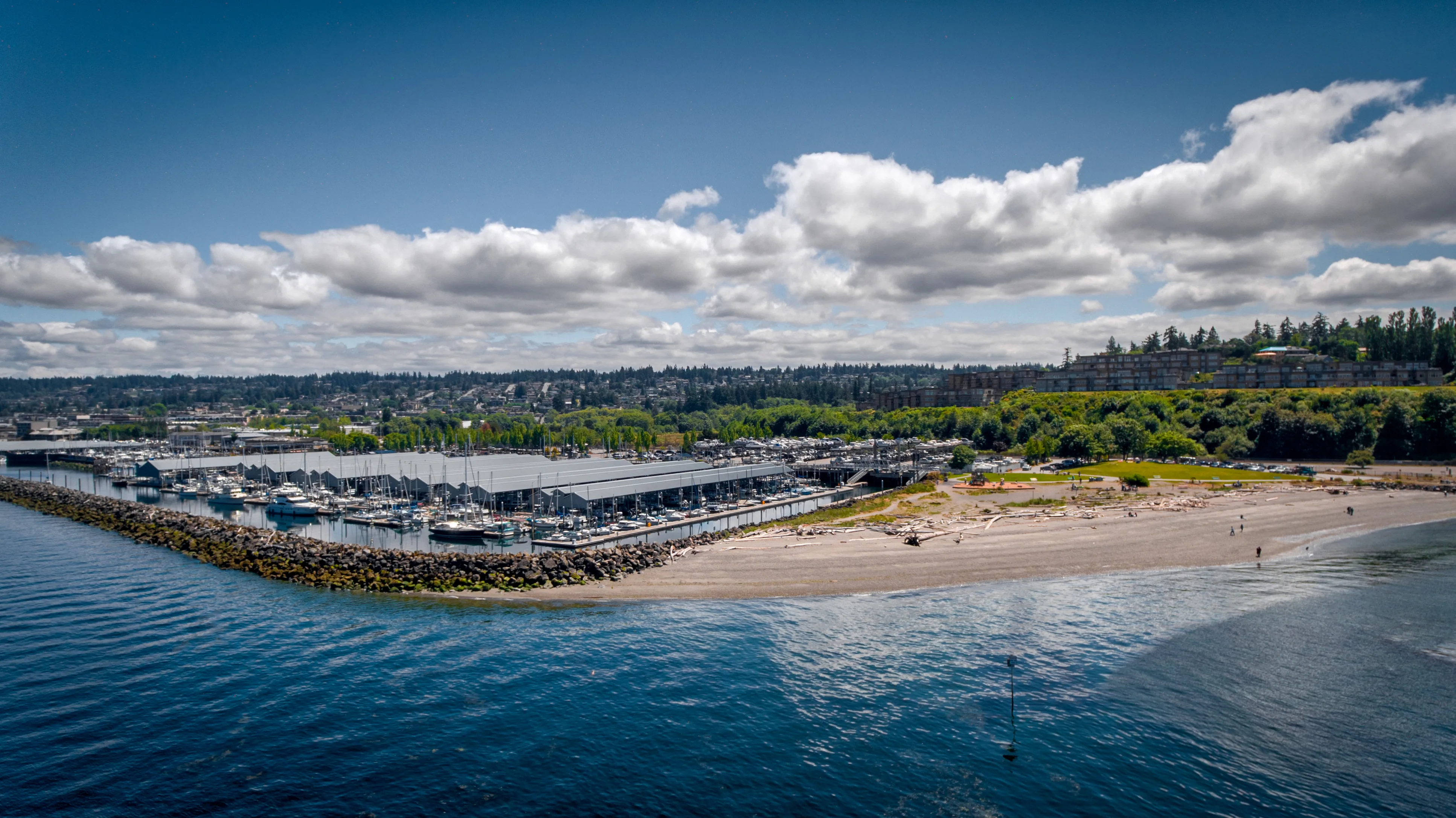
Why Retirees Are Choosing Edmonds
The retirees who land in Edmonds and stay tend to share a specific profile: they want a real town — somewhere with an arts scene, a main street with independent restaurants, and water they can actually see — and they're done commuting, so the Seattle access matters less than it would have at 45. The Edmonds Center for the Arts brings touring performers to a renovated historic theater two blocks from the waterfront. The ferry to Kingston makes a day trip spontaneous. The fishing pier is free. These are not small things in daily retirement life.
The city also fits people who genuinely want to age in place. Having Providence Swedish Edmonds Hospital within the city limits — not across a county line — is a different kind of reassurance than most Puget Sound suburbs can offer. For active retirees in their early 60s who are still hiking and kayaking, that proximity feels like insurance. For those managing a chronic condition in their 70s, it becomes routine.
Who should look elsewhere: if your retirement budget requires a mortgage on a home priced below $600,000, Edmonds will consistently frustrate you. The Zillow Home Value Index put the typical home at $855,381 (mid-2026), and entry-level single-level homes in the Bowl — the ones most useful in retirement — rarely surface below $700,000. Retirees who find the hillside neighborhoods outside the Bowl more affordable quickly discover that the walkability advantage disappears entirely once you're above the bluff. If on-foot access to daily life is the draw, only the Bowl delivers it — and Bowl homes carry Bowl prices.
Healthcare & Medical Access in Edmonds
The Hospital in Your Own Backyard
Providence Swedish Edmonds — located at 21601 76th Ave W — is a full-service acute care hospital operating directly inside the city. It is not an urgent care clinic or a satellite campus. Emergency services, cancer treatment, cardiac rehabilitation, diagnostic imaging, and surgical services are all on-site. U.S. News & World Report rated it High Performing in both Pneumonia and Stroke for the 2025–26 cycle — meaningful distinctions for retirees, since stroke outcomes are heavily time-dependent and having a rated stroke program within city limits is a genuine advantage over communities that rely on a distant regional center.
What's Here vs. What Requires a Drive
For most of what retirees need — cardiology follow-ups, orthopedic consultations, imaging, outpatient infusion — Swedish Edmonds covers it. The hospital operates under the Providence umbrella; for insurance purposes, verify your plan's network under that system directly.
Highly specialized procedures — complex cardiac surgery, certain cancer subspecialties, organ transplant — route to larger Providence Swedish campuses in Seattle, roughly 30 to 35 minutes south on a clear day. That drive is longer in peak traffic, which is the honest trade-off for any Snohomish County community. Compared to Mukilteo or Woodway, Edmonds's in-city hospital status is a meaningful edge.
Primary Care and Specialist Access
The corridor along 76th Avenue West near the hospital anchors a concentration of specialist offices, imaging centers, and primary care practices. Retirees who've moved here from more rural markets consistently note the difference: same-week appointments with specialists feel more routine here than in smaller Puget Sound towns. Community health programs in the city expand affordable care access for lower-income residents, which matters for fixed-income retirees who qualify.

The Retiree Budget in Edmonds
Washington's Income-Tax Advantage
Washington State levies no state income tax. That means your Social Security benefit, pension check, IRA withdrawals, and 401(k) distributions are all untaxed at the state level — a straightforward and significant advantage over retirement destinations in Oregon, California, or Montana. For a household drawing $80,000 to $120,000 annually in retirement income, the absence of state income tax is often the largest single tax saving in the budget.
Two wrinkles matter for higher-net-worth retirees. Washington taxes 7% on long-term capital gains above a $278,000 standard deduction for 2025, rising to 9.9% on gains above $1,000,000 — relevant if you're selling a large brokerage portfolio or investment real estate outside tax-advantaged accounts. The state also levies an estate tax with an exemption of approximately $2.193 million (2024 figure; confirm the current threshold with a Washington estate attorney), which is notably lower than the federal exemption. Neither affects most retirees, but both are worth flagging before you assume Washington is a clean tax haven.
Property Taxes and the Senior Exemption
Edmonds carries an effective property tax rate of approximately 0.70%. For homeowners 61 and older who meet income thresholds, Washington's senior exemption program (RCW 84.36.381) can freeze the home's assessed value for tax purposes and exempt certain levies — reducing the annual bill meaningfully. Snohomish County administers the program locally, and income thresholds are set by the county assessor annually; contact the Snohomish County Assessor's office directly for the current tier figures rather than relying on statewide summaries.
Washington also offers a property tax deferral program for qualifying seniors, allowing you to defer taxes with a lien on the property. This preserves monthly cash flow without forcing a home sale — a useful tool for retirees who are asset-rich but income-constrained. For a full breakdown of how these programs interact with Edmonds's overall cost of living, that page covers the figures in detail.
Day-to-Day Costs on a Fixed Income
Washington's combined sales tax runs 8.5% to 10.4% depending on jurisdiction. The relief: grocery food and prescription drugs are both exempt from sales tax — a genuine benefit for retirees who spend a high share of their budget in those two categories. Dining on Main Street runs mid-range to upscale; dinner for two at a waterfront restaurant is a treat, not an everyday meal. The waterfront, the pier, and the parks are free, which matters when you're filling 168 hours a week with something other than work.
Looking to buy in Edmonds? Estimate your payment.
Enter your numbers to see an estimated monthly mortgage payment.
Estimate only. Excludes HOA fees and mortgage insurance. The interest rate above is a starting point, not a quoted rate — replace it with your own to see real numbers. Insurance is a flat placeholder, not a Edmonds quote.
Walkability, Community & Staying Active in Edmonds
The Geographic Reality of Walking Here
Downtown Edmonds — the Bowl — scores approximately 89 out of 100 on Walk Score, rated Very Walkable. Most daily errands are accomplishable on foot: the farmers market, the pharmacy, the post office, a wide range of restaurants and cafés along the Main Street corridor, and Edmonds Station (Sounder commuter rail) nine minutes on foot from the waterfront. For retirees who either gave up a second car or want to — this is one of the few Snohomish County communities where that's genuinely feasible.
The city-wide Walk Score average is 48, and that gap is the most important number in this section. Hillside and inland areas — including much of North Edmonds, Seaview, and Meadowdale — are car-dependent in the way most suburbs are car-dependent. If you buy in those areas because the price is more approachable, be honest with yourself about whether you'll actually walk to anything. The answer, in most cases, is no.
Senior Centers and Social Infrastructure
The Edmonds Senior Center sits near the waterfront on 3rd Avenue North — a short, flat walk from downtown's Main Street. It operates fitness classes, lunch programs, day trips, and a full calendar of social events. The center draws a genuinely active membership, not a passive one; the tai chi and pickleball contingents are regulars.
Edmonds Center for the Arts is the other anchor of retiree social life here. Touring performances in a renovated historic theater, walking distance from the ferry terminal — it fills a cultural gap that most Snohomish County suburbs simply can't match. First Friday art walks, gallery openings along 5th Avenue, and the Edmonds Arts Festival each June create a rhythm of community events that most newcomers don't fully expect.
What Surprises People Six Months In
The ferry schedule becomes part of your week in a way you don't anticipate before you move here. Day trips to the Olympic Peninsula — Kingston, Poulsbo, and points west — become genuinely spontaneous once the terminal is a 10-minute walk from your front door. That's the upside. The downside that catches people off guard: summer weekends in downtown Edmonds are crowded in a way that can feel at odds with the small-town pace people moved here for. The Waterfront Festival and steady ferry traffic compress a downtown that was never designed for peak tourism. Locals learn the walking routes and stop worrying about it.
Right-Sizing: Downsizing in Edmonds
The Single-Level Problem
Single-level homes in the Edmonds Bowl are the most desirable and least available product in the retirement market here. When they appear, they move quickly and rarely come with price concessions. The retirees who have the most success downsizing in Edmonds tend to move early — before a health event makes stairs genuinely impractical — and target the Bowl specifically rather than assuming the hillside will work just as well. It often doesn't, for reasons that become obvious after one winter.
Condos and Lock-and-Leave Options
Point Edwards, a gated waterfront community in southwest Edmonds, is the clearest example of a purpose-built retiree condo product in the city. Condominium units with Puget Sound views, low-maintenance living, and proximity to the Edmonds–Kingston Ferry Terminal make it a natural fit for retirees trading a single-family home for a lock-and-leave lifestyle. It sits steps from the ferry terminal, which means the Olympic Peninsula day-trip lifestyle is built into the location.
Downtown condominium buildings along the 5th Avenue corridor offer a different version of the same trade: walkability over views. These units allow retirees to live within the Bowl's Walk Score 89 zone without maintaining a yard or a two-story staircase. Inventory in both categories is limited relative to demand, and buyers looking to downsize into this price range should expect competition and limited negotiating room on well-positioned units.
Senior Living Communities
Edmonds has roughly 50 senior living options across the full continuum — independent living, assisted living, memory care, and continuing care retirement communities (CCRCs). Named communities include Cogir of Edmonds, Sunrise of Edmonds, Edmonds Landing by Cogir, and Fairwinds – Brighton Court. The depth of that inventory is unusual for a city of 42,000 people and reflects the community's long-standing retiree demographic. For families considering a move that might eventually require care-level housing, having multiple CCRC options within the city itself reduces the eventual disruption of a second move.
The catch is honest: monthly fees at full-service CCRCs and assisted living communities in the Edmonds market are priced for a Pacific Northwest cost structure. This is not a budget senior living market. Retirees who need the care infrastructure but have limited assets may find that Lynnwood or Mountlake Terrace, both nearby, offer similar community types at a lower monthly cost basis — worth evaluating before committing to an Edmonds entry-fee CCRC.
Edmonds vs Nearby Retirement Destinations
| City | Cost vs Edmonds | Primary Hospital | Walkability | Senior Living Depth | Overall Retirement Fit |
|---|---|---|---|---|---|
| Edmonds | Anchor | Providence Swedish Edmonds (in-city, High Performing in Stroke & Pneumonia) | Very Walkable in the Bowl (89); car-dependent on hillside | ~50 options including CCRCs | Walkable Upscale |
| Shoreline | Noticeably cheaper | No in-city hospital; routes to Seattle medical centers | Moderate; improving with light rail access | Growing inventory; fewer CCRCs than Edmonds | Value Transit |
| Mukilteo | About the same | No in-city hospital; Providence Swedish Edmonds nearby | Low; car-dependent outside waterfront | Limited; smaller senior living market | Views Quiet |
| Mountlake Terrace | Noticeably cheaper | No in-city hospital; close to Lynnwood and Edmonds options | Moderate; light rail access improving it | Moderate; fewer CCRCs but solid assisted living options | Value Commuter |
| Lynnwood | Cheaper | No in-city hospital; regional outpatient center nearby | Moderate; auto-oriented but expanding | Good depth; several assisted living and memory care communities | Value Renter |
| Bellingham | Noticeably cheaper | Full-service regional medical center in-city | Good in Fairhaven and Downtown; car-dependent elsewhere | Good; growing retirement community with strong depth | Nature Value |
* Walk Score ratings and senior living counts are approximate and vary by specific address within each city.
Shoreline and Mountlake Terrace are the clearest value alternatives for retirees who want Puget Sound proximity and Seattle access without the Edmonds price floor — both are picking up light rail connectivity that makes car-light living more practical than it was five years ago. Mukilteo offers waterfront character at roughly comparable cost, but it has no in-city hospital and a much thinner senior living market, which matters at the later stages of retirement planning. Bellingham makes the most sense for retirees who genuinely want to slow down, own a smaller home at a lower cost, and trade Seattle proximity for a more independent small-city life with a full-service regional hospital. Edmonds wins on the specific combination of walkable downtown, in-city hospital, and senior living depth that no other nearby city fully replicates at this scale.
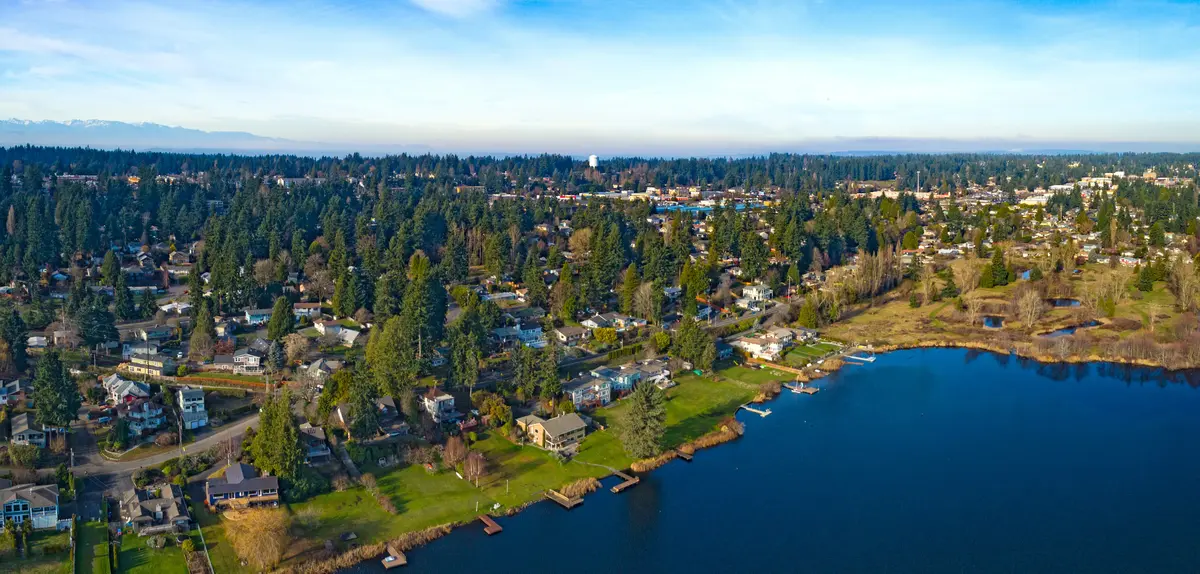
Local Expert Takeaway: Edmonds is one of the few Snohomish County cities where a retiree can genuinely walk to dinner on Main Street, attend a performance at the Edmonds Center for the Arts, and have a rated stroke-and-pneumonia hospital within city limits — all without getting in a car. The senior property tax exemption and Washington's zero income tax on retirement income make the budget more workable than the sticker price suggests. But the Bowl is where that lifestyle actually exists, and Bowl homes are priced accordingly. Buy on the hillside to save money, and you've bought yourself a car-dependent retirement in a city you chose for its walkability.
Quick Takeaways & FAQs
✅ Providence Swedish Edmonds Hospital sits inside city limits and holds U.S. News High Performing ratings for both Stroke and Pneumonia — unusually strong healthcare depth for a city of 42,000.
⚠️ The city's walkable Downtown Bowl carries a Walk Score of 89, but that number drops to a citywide average of 48 once the hillside neighborhoods are included — where you buy matters as much as the city you buy in.
📍 Washington's senior property tax exemption (RCW 84.36.381) allows homeowners 61+ to freeze their home's assessed value for tax purposes; Snohomish County administers the income thresholds, so contact the county assessor directly for current eligibility figures.
Is Edmonds, WA a good place to retire?
Does Washington State tax Social Security or pension income?
What hospital serves Edmonds retirees?
Are there 55+ or active-adult communities in Edmonds?
How does the senior property tax exemption work in Edmonds?
Moving to Washington?
Tell us what you need help with and we'll connect you with local resources.
