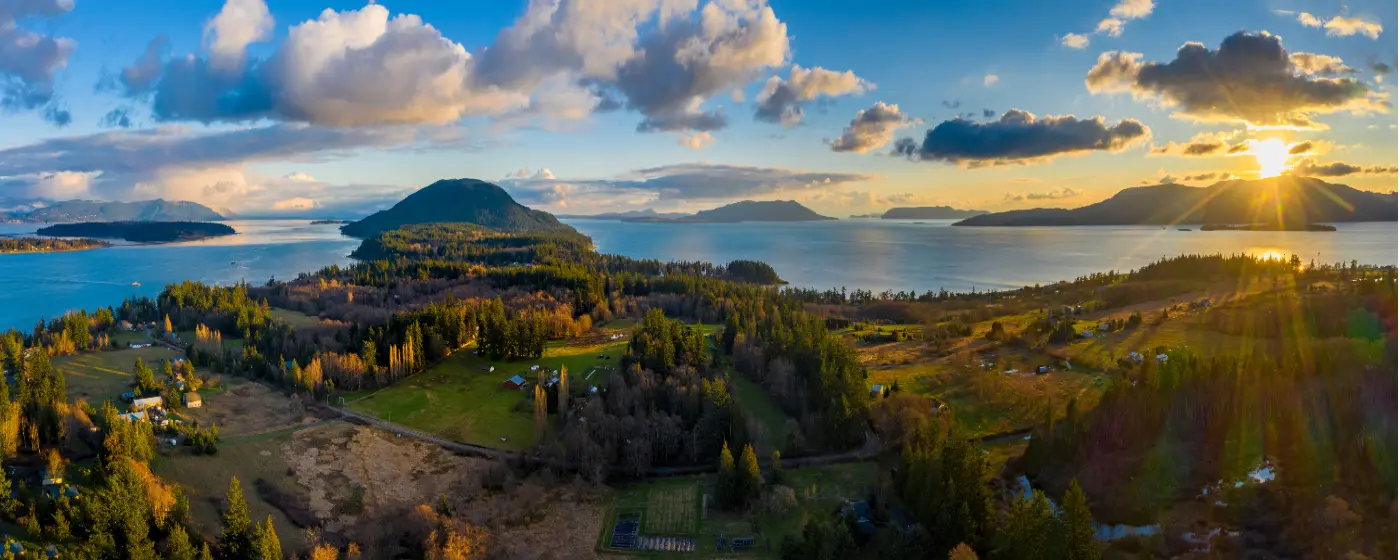
What Is Living in Bellingham, Washington Like?
Maybe you've been priced out of Seattle or Everett and someone mentioned Bellingham. Maybe you drove up I-5 for a weekend and the bay views and brick storefronts caught you off guard. Either way, the honest version of Bellingham requires a few corrections to what most people assume. This is not a sleepy college town that happens to have nice hiking — it's a city of nearly 99,030 people (as of April 2026, making it one of Washington's fastest-growing), anchored by a working port, a major refinery to the north, a flagship university on the hill, and a cross-border economy that no comparable city in the state can claim. Canadian shoppers drive down from the Fraser Valley on weekends. The border crossing at Blaine is 25 miles north, and that proximity shapes retail, restaurants, and housing demand in ways that genuinely distinguish Bellingham from Olympia or Wenatchee or any other mid-sized Washington city you might be comparing it to.
The economic backbone here is more diverse than it looks at first. A major regional health system, Western Washington University, BP's Cherry Point Refinery north of town, the Lummi Nation's government and enterprises, and the software company Faithlife together create a job base that doesn't hinge on a single industry. Western Washington University draws roughly 15,000 students each year, keeping the city younger and more culturally active than its size might suggest — the Mount Baker Theatre on Cornwall Avenue books national touring acts, and the Friday evening arts walk draws a steady crowd downtown. Bellingham Public Schools earns a B+ district rating, and the mix of longtime residents, university staff, outdoor-focused transplants, and remote workers from the Seattle metro gives the city a character that resists easy categorization.
On cost, Bellingham sits noticeably below Seattle-area prices but is no longer the bargain it was five years ago. The Zillow Home Value Index for the city stood at $633,071 in June 2026 — real money, but meaningfully more accessible than what buyers face in Kirkland or Redmond. Day-to-day life is shaped by the Whatcom Transportation Authority bus network, a trail system that connects neighborhoods to Whatcom Falls Park and Chuckanut Drive without requiring a car, and a genuine culture of independent businesses along Elk Street, Holly Street, and in the Fairhaven Historic District. The outdoor access — 4,000-plus acres of Chuckanut Mountain trails ten minutes from downtown, Larrabee State Park along the bay, kayak launches off Boulevard Park — is not incidental. It is why a large share of people choose this city over anywhere else at a similar price point.
Whether you're weighing a move here or still in the early research phase, the sections below break down Bellingham's neighborhoods, housing market, commute realities, major employers, local favorites, and what daily life actually looks like once you've unpacked.
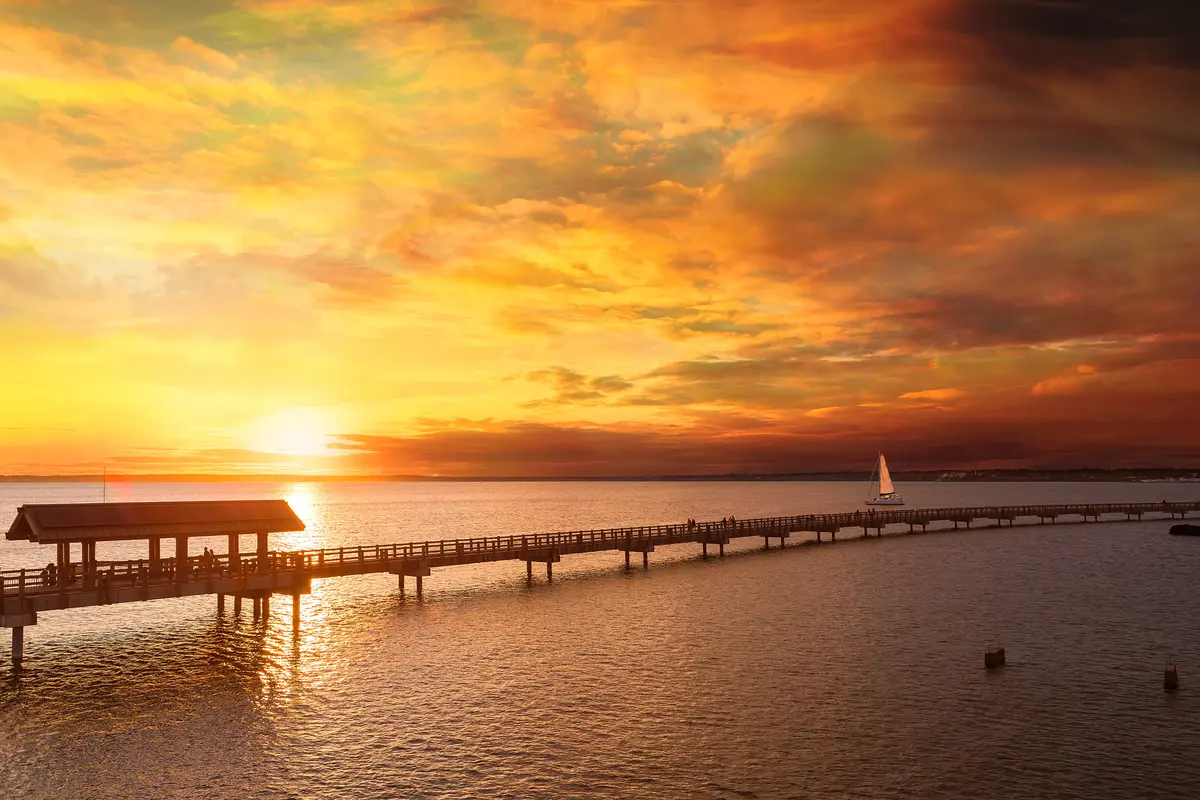
Bellingham at a Glance
Looking to buy in Bellingham? Estimate your payment.
Enter your numbers to see an estimated monthly mortgage payment.
Estimate only. Excludes HOA fees and mortgage insurance. The interest rate above is a starting point, not a quoted rate — replace it with your own to see real numbers. Insurance is a flat placeholder, not a Bellingham quote.
Why Are People Moving to Bellingham?
The case for Bellingham is straightforward once you look past the college-town shorthand. Three distinct groups drive most of the in-migration, and their reasons barely overlap.
The Seattle Exodus Buyer
The most visible group is buyers relocating from King or Snohomish County who have decided the commute math no longer works but don't want to leave Washington's Pacific Northwest character behind. Bellingham offers the water views, the independent food scene, the trail access — and home prices that, while not cheap, land noticeably below what those same buyers faced closer to Seattle. The trade-off is real: the Seattle commute from Bellingham runs roughly 100 minutes on a good day, which effectively ends hybrid arrangements that require more than one or two days in the city per week.
The Remote-Work Transplant
The second group has no commute obligation at all. Remote workers — particularly in tech, design, and consulting — have been arriving steadily since 2020, drawn by fiber internet availability, a walkable downtown, and a cost-of-living profile that lets a West Coast salary stretch further. Faithlife, the Bellingham-based software company behind Logos Bible Software, has reinforced the idea that real tech careers exist here without relocating to Seattle, and that signal matters to people evaluating whether the city has the professional ecosystem to support them long-term.
The University and Healthcare Anchor
Western Washington University and the major regional health system together employ a significant portion of the city's workforce and generate a steady pipeline of people who arrive for a job and stay because the lifestyle takes hold. Faculty, researchers, nurses, and administrators make up a substantial slice of the buyer pool in neighborhoods like Happy Valley and the areas surrounding the university. These are not transient residents — they are the people who coach Little League, join the co-op, and buy into the city's identity as something more than a waypoint between Vancouver and Seattle.
Why People Leave — The Honest Version
The reasons people move out are just as worth knowing. Winters here are gray in a way that surprises transplants from sunnier climates — not dramatically cold, but relentlessly overcast from November through March. The marine layer doesn't lift for days at a time, and people who underestimated that before moving tend to be the ones who leave within three years. The job market, outside of healthcare, education, and the refinery, is limited enough that anyone without a remote position or a pre-arranged local job should research carefully before committing. And while housing is more accessible than Seattle, it is not cheap — buyers expecting a significant discount relative to western Washington broadly may be disappointed.
What Daily Life Feels Like in Bellingham
Bellingham operates at a pace that feels genuinely different from the Seattle metro — not slower exactly, but less pressured. The city is compact enough that most residents develop a geography of three or four neighborhoods they actually use, and those neighborhoods become deeply familiar quickly.
The Downtown and Fairhaven Divide
Downtown Bellingham along Holly and Cornwall is where you find the Mount Baker Theatre, the Saturday Farmers Market on Railroad Avenue, and most of the city's concentrated restaurant and bar density. Fairhaven, about two miles south, is a separate gravitational center — a Victorian-era brick commercial district at the terminus of Chuckanut Drive, with independent bookshops, coffee, and ferry access to the San Juan Islands via the Bellingham Cruise Terminal. Longtime residents will tell you Fairhaven feels like a different city, and they're not wrong.
Where Families Actually Land
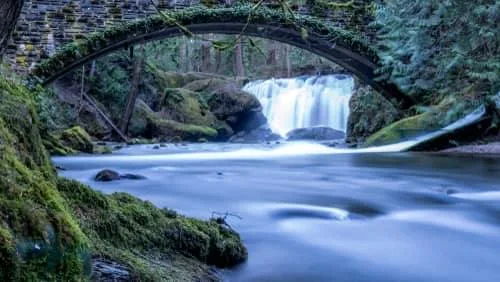
Parents with school-age children tend to cluster in the Barkley and Cordata areas to the north, where newer construction, flatter terrain, and proximity to big-box retail make logistics easier. The Whatcom Transportation Authority expanded bus service in June 2025 with four new routes, including Route 9 to the medical center every 30 minutes and Route 50 serving Lummi Nation and Cordata — a meaningful improvement for households managing a car-light lifestyle in those areas. Whatcom Falls Park, a 241-acre preserve with stone bridges and a waterfall a short drive from the Barkley corridor, is where you'll find parents with strollers and kids on weekend mornings.
The Seasonal Quirk Nobody Mentions
August and early September are legitimately spectacular — warm, dry, clear skies, the bay shimmering, Mount Baker visible to the east — and newcomers who arrive in summer sometimes overbuy on the lifestyle assumption. Then November arrives. The marine overcast that blankets the city from late fall through early spring is the single most common thing people say they weren't prepared for. Vitamin D supplements are not a joke here; they're a staple in nearly every medicine cabinet.
Canadian Influence on Daily Life
The cross-border dimension shows up in small but noticeable ways — Canadian license plates in the warehouse-store and shopping-mall parking lots on weekends, a handful of Canadian-facing businesses along Meridian Street, and a general awareness in the local restaurant and retail scene that part of the customer base is arriving from the Fraser Valley and measuring everything in Canadian dollars. For residents, it mostly means weekend traffic on I-5 north of town runs heavier than the population numbers alone would suggest.
For a full breakdown of parks, trails, and outdoor recreation, see the parks and recreation guide.
The Bellingham Housing Market Right Now
The Bellingham housing market in mid-2026 is cooling from a frenzied peak but hasn't softened into a buyer's market. The Zillow Home Value Index for the city stood at $633,071 in June 2026, down 6.7% year-over-year — a real correction, but one that has left prices well above where they were before the pandemic run-up.
The most telling number is days on market. Homes are still going pending in around seven days on average, which means well-priced listings in desirable areas don't sit. City-limit sales were up 3.3% year-over-year even as broader Whatcom County sales fell 4.7%, a divergence that suggests the city's core neighborhoods are holding demand better than the outer county.
Entry-level inventory — meaning older construction, smaller lots, or locations farther from the bay — starts in the low-to-mid $400,000s for condos and townhomes, though detached single-family homes below $500,000 are rare and move quickly when they appear. Some areas of the city command meaningfully more than the city-wide figure; a qualitative sense of that range is covered in the best neighborhoods guide.
One factor that sets Bellingham apart from comparably priced markets: the Canadian buyer effect. Second-home and investment demand from British Columbia adds a layer of competition — particularly in Fairhaven and waterfront-adjacent neighborhoods — that wouldn't exist in a landlocked city at the same price point. That demand doesn't dominate the market, but it does provide a floor that pure local-income fundamentals alone wouldn't support.
The effective property tax rate here is approximately 0.71%, which is meaningfully below Washington's statewide average and well below what buyers pay in most King County cities. For a full picture of taxes, rents, and cost-of-living comparisons, see the cost of living guide.
Bellingham Neighborhoods
Bellingham has several distinct areas — each with its own character and appeal. Here’s a breakdown to help you narrow down where to focus your home search.
🏡 Fairhaven
The Victorian brick commercial district at the south end of the city is Bellingham's most walkable neighborhood — independent bookshops, coffee, restaurants, and a ferry terminal all within a few blocks of each other. It suits buyers who prioritize on-foot access and outdoor proximity over square footage, with Chuckanut Drive and the Interurban Trail beginning right at the village edge.
🏠 Happy Valley
An established residential neighborhood between downtown and the university with a mix of craftsman bungalows and mid-century homes on tree-lined streets. It suits buyers who want a genuine neighborhood feel with easy access to both the Western Washington University campus and the Holly Street downtown corridor.
🌳 South Hill
Sitting above Bellingham Bay on the city's southwest side, South Hill offers elevated views, quiet residential streets, and proximity to Fairhaven without being in the commercial core. The housing stock ranges from mid-century ranches to newer infill, and the area tends to attract buyers who prioritize the bay-view lifestyle over urban on-foot access.
🏘 Columbia
A central Bellingham neighborhood with older housing stock and a mix of longtime residents and university-connected households. Columbia sits close enough to downtown to be convenient without the commercial noise, and Whatcom Creek runs through the area connecting residents to the broader trail system.
🏔 Cordata
The city's northwest quadrant is its most suburban — newer construction, wider lots, and direct access to the Meridian Street retail corridor with grocery stores and big-box options. The WTA expanded bus service to Cordata in 2025, but a car is still the practical baseline for most households here.
🌆 Barkley
A newer planned neighborhood in northeast Bellingham built around a village-style commercial center with a grocery store, restaurants, and services within walking distance of most homes. It suits families with kids and buyers who want newer construction with practical amenities, with Whatcom Falls Park a short drive away.
Pros & Cons of Living in Bellingham
The Pros
- Easy access to hiking
- kayaking
- and the San Juan Islands
- vibrant college-town culture around Western Washington University
- mild
- dry summers
The Cons
- Property crime runs well above the national average
- long
- cloudy
- rainy winters with limited sunshine
- home prices sit far above the national median for a mid-size city
Getting Around & Commuting in Bellingham
Bellingham's internal geography is shaped by three corridors: I-5 running north-south through the city's eastern edge, Meridian Street as the commercial spine through the north end, and the older surface-street grid connecting downtown to the university and Fairhaven to the south. Understanding which part of the city you live in relative to these corridors matters more than most listings will tell you.
The I-5 Divide
The freeway doesn't just carry traffic — it creates a psychological and practical divide. Neighborhoods west of I-5 (Fairhaven, South Hill, Boulevard Park) feel quieter, more walkable, and closer to the bay. Neighborhoods east of it (Cordata, parts of Barkley) are newer, more car-oriented, and more convenient to the big-box retail on Meridian. Buyers who fall in love with a home in Cordata because it's well-priced, then discover they wanted the walkable Fairhaven lifestyle, are one of the most common mismatches in this market.
The Seattle Commute Reality
The roughly 100-minute drive to Seattle on I-5 is manageable two days a week. It is not manageable five. The Bellingham-to-Seattle Amtrak Cascades service exists and is genuinely pleasant, but schedules are limited and delays are common enough that it's a supplement to, not a replacement for, driving flexibility. People who commit to Bellingham while holding a Seattle-area office job should have a firm remote arrangement in writing before they sign.
Getting Around Without a Car
Within the city, the Whatcom Transportation Authority expanded meaningfully in June 2025 — four new routes now connect the medical center, Bellingham Technical College, the Lummi Nation/Cordata corridor, and the King Mountain neighborhood. WTA is also studying two rapid transit routes and is targeting a fully zero-emission fleet by 2040, with updated fares taking effect September 2026. Car-free living is genuinely feasible in the downtown, university-area, and Fairhaven cores, where the density of destinations and trail connections is high enough to cover most daily errands on foot or by bike. In Cordata or outer Barkley, you will need a car.
Biking and the Trail Network
The Interurban Trail runs 6.5 miles from Bellingham to Larrabee State Park along Chuckanut Drive, connecting the city's south end to one of its most-used recreation corridors entirely off-road. The South Bay Trail links Fairhaven to downtown along the waterfront. These aren't scenic side routes — they're used daily by commuters, which tells you something real about how people here think about transportation.
Airport and Regional Access
Bellingham International Airport (BLI) offers direct service to a handful of destinations and is a legitimate alternative to Sea-Tac for residents on certain routes. Vancouver International Airport (YVR), about 60 miles north across the border, adds a second international option that Bellingham residents use more than outsiders expect — particularly for international travel and flights to Asia.
Schools in Bellingham
Families relocating to Bellingham have public, private, and higher-education options nearby. Here’s a quick overview.
🎓 School District
Bellingham Public Schools serves K–12 students across Bellingham and the surrounding area. Rated B+ (source: Niche.com district rankings, 2026).
🏆 Graduation Rate
The 4-year high-school graduation rate here is approximately 88.3%.
📚 Higher Education
Washington’s public universities — the University of Washington, Washington State University, and Western Washington University — offer four-year degrees statewide, with a network of 34 community and technical colleges (SBCTC) providing two-year and workforce programs.
🌐 Online Learning
University of Washington Continuum College and Washington State University Online offer fully accredited online degrees for remote learners across the state.
Safety in Bellingham
A quick look at how Bellingham compares on the numbers that matter most when weighing a neighborhood or a move.
🛡 Violent Crime
Approximately 3.5 per 1,000 residents.
🔒 Property Crime
Approximately 37.6 per 1,000 residents.
Compared to the FBI’s most recent national data (2024), Bellingham’s violent crime is about the same as the national average (about 3.6 per 1,000), and property crime is above the national average (about 17.6 per 1,000).
Against Washington as a whole, Bellingham’s violent crime is about the same as the state average, and property crime is about one and a half times the state average (Bureau of Justice Statistics, Crime Known to Law Enforcement, 2024 (tables 2 and 3)).
Crime rates can vary a lot within a single city, so the citywide numbers above are only a starting point. Some neighborhoods in Bellingham run well below these averages, while others run higher — the kind of block-by-block detail that matters most when you’re actually choosing where to live. The full guide below breaks it down neighborhood by neighborhood.
Working in Bellingham
Bellingham’s largest employers span several industries — here are some of the anchors of the local job market.
🏥 PeaceHealth St. Joseph Medical Center
Healthcare
🎓 Western Washington University
Higher education
💼 BP Cherry Point Refinery
Oil refining
🏛 Lummi Nation
Tribal government/gaming
💻 Faithlife
Software
Parks & Recreation in Bellingham
Some of the outdoor spaces that shape everyday life in Bellingham.
🌱 Whatcom Falls Park
🌱 Boulevard Park & Taylor Dock
Bellingham residents don’t have to go far for green space — spots like Whatcom Falls Park and Boulevard Park & Taylor Dock are part of everyday life here, whether that’s a morning walk, a weekend hike, or just somewhere to unwind outside. The full guide below covers more of what Bellingham has to offer for parks and outdoor recreation.
Retiring in Bellingham
Bellingham draws retirees for its balance of amenities, outdoor access, and cost. Here’s what to weigh.
🌤 Climate
Bellingham's marine climate means mild temperatures year-round — rarely below freezing in winter, rarely above the low 80s in summer. The compromise for retirees is the persistent overcast from November through March, which can feel isolating if you're not prepared for it. July and August are reliably gorgeous, with long daylight hours and clear views of the bay.
🍴 Lifestyle
The Fairhaven Historic District, the Saturday Farmers Market on Railroad Avenue, the Mount Baker Theatre, and an active independent restaurant and café scene give retirees genuine cultural infrastructure within a walkable footprint. Boulevard Park and Taylor Dock provide waterfront access for daily walks. The ferry connection to the San Juan Islands from Fairhaven makes weekend getaways easy without a long drive.
🏚 55+ Communities
Bellingham has a growing range of active-adult and continuing-care options concentrated primarily in the north end of the city near Cordata and along Meridian Street. The combination of Western Washington University's continuing education programs and a well-established arts and outdoor recreation community supports an engaged retirement lifestyle that goes beyond a single residential campus.
✈ Getting Around
Retirees living in Fairhaven or downtown can manage most daily needs on foot or by WTA bus, including the expanded Route 9 to the medical center. For trips beyond the city, Bellingham International Airport (BLI) offers direct service to select destinations, and Vancouver International Airport (YVR) is roughly 60 miles north for international flights. A car remains helpful for reaching outlying trailheads and county destinations.
🏛 Washington Taxes for Retirees — What to Know
- No state income tax — Washington does not tax personal income, so Social Security, pensions, and 401(k)/IRA withdrawals are all untaxed at the state level. There is no state return to file and no retirement exclusion to claim — the rate is simply zero.
- Military and public pensions — Because there is no income tax, military retirement pay and public-employee pensions are untaxed at the state level along with everything else.
- Sales tax is the tradeoff — The state sales tax is 6.5%, and local add-ons bring the combined rate in Bellingham to 9.2% (Washington State Department of Revenue, Q3 2026 local sales & use tax rate table, July 2026). Groceries and prescription drugs are exempt.
- Property taxes, with senior relief — The effective property tax rate is roughly 0.9%. Homeowners 61+ (or unable to work due to disability, or a qualifying disabled veteran) who own and occupy their home may qualify for a reduction. Income limits are set against each county’s median household income, so the threshold differs by county — check with your county assessor. A separate deferral program is available for those who don’t qualify for the exemption.
- Capital gains tax — but not on retirement income — Washington taxes 7% on long-term capital gains above a $278,000 standard deduction for 2025, rising to 9.9% on gains above $1,000,000. Retirement accounts and real estate sales are both exempt. It therefore does not reach ordinary retirement income or the sale of a home.
- Estate tax — the one to plan for — Unlike most no-income-tax states, Washington has its own estate tax. For deaths on or after July 1, 2026, the exemption is $3 million with graduated rates topping out at 20%. Retirement accounts count toward the taxable estate, so long-time homeowners with sizable balances can cross the line without expecting to.
- No inheritance tax — Washington has no inheritance tax, and no gift tax.
- WA Cares payroll premium — Working Washingtonians pay 0.58% of gross wages into the WA Cares Fund, the state long-term care program, with no income cap. It applies to W-2 wages, so retirees who have stopped working do not pay it — but anyone relocating while still employed will see it. The private-insurance opt-out closed at the end of 2022 and is not available to new applicants; the remaining exemptions are narrow (living outside Washington, military spouses, certain visa holders, and veterans with a 70%+ service-connected rating).
- The Oregon border effect — Oregon has no sales tax, so Washington residents near the river — Vancouver, Camas, Washougal, Longview — often cross over for large purchases. Washington use tax technically applies to goods brought back for use in-state, though it is rarely enforced on ordinary personal purchases.
Tax laws change frequently and individual situations vary. This is general information, not tax advice — always consult a qualified Washington tax professional or CPA for personalized retirement tax planning.
Weekends & Local Favorites in Bellingham
Bellingham's weekend character is defined by a combination of outdoor access, an active food and brewery scene, and a performing arts infrastructure that punches above what a city of 99,000 typically supports.
The Outdoor Baseline
The Chuckanut Mountains begin less than ten minutes from downtown Fairhaven — over 4,000 acres of jointly managed land covering Whatcom County Parks, Larrabee State Park, and City of Bellingham parcels. Oyster Dome, a 2,000-foot exposed rock summit on Blanchard Mountain with 180-degree views of the Salish Sea, is the most popular day hike and genuinely earns that status. Fragrance Lake, off Chuckanut Drive inside Larrabee State Park, draws the second-highest trailhead traffic. For mountain bikers, the Galbraith Mountain trail network — over 60 miles of maintained singletrack — is 15 minutes from downtown and considered one of the better wet-weather systems in the Northwest.
Breweries and the Beer Culture
Bellingham has a legitimate craft beer identity that goes well beyond a couple of taprooms. Kulshan Brewing Co. on James Street in the Sunnyland neighborhood is one of the anchors — a full production brewery with a taproom that draws a neighborhood crowd on weekday evenings and fills up on weekends. The broader local brewery scene runs to several producers operating within the city limits, and hopping between them on a Saturday afternoon is a common local ritual.
Performing Arts and Downtown Culture
The Mount Baker Theatre on Cornwall Avenue is a 1927 landmark that books national touring productions, comedy acts, and local symphony performances — the kind of venue that makes residents genuinely proud to have within walking distance of a downtown coffee shop. The Bellingham Farmers Market on Railroad Avenue runs Saturdays from April through December and is less a tourist attraction than a functional grocery run for a large share of downtown residents.
Water Access
Boulevard Park and Taylor Dock put you directly on Bellingham Bay with walking paths, a floating boardwalk over the water, and views across to the San Juan Islands on clear days. The Bellingham Cruise Terminal in Fairhaven connects to the San Juan Islands and Sidney, BC via the Washington State Ferries system — a weekend trip to Orcas Island or Lopez Island is genuinely doable without a car if you're already in the Fairhaven neighborhood. That ferry proximity is one of the things people who move here from inland cities consistently say they underestimated.
For the full trail and recreation breakdown, the parks and recreation guide covers all the major trailheads, parks, and water access points in detail.
Top Things Locals Say About Bellingham
The best intel about a city comes from the people who actually live there. Here’s what Bellingham residents say when newcomers ask the questions everyone’s thinking.
“I knew Fairhaven was supposed to be walkable, but I didn't realize how much of my life would end up happening within six blocks of the village square — the farmers market, the trail to Larrabee, the ferry dock. What I didn't expect was how dark November through February actually feels. I thought people were exaggerating about the overcast. They were not.”
— Recent Bellingham home buyer
“What's the most surprising thing about living in Bellingham?”
Honestly, the winters. Everyone tells you it's gray, but you don't absorb what that means until you've had 11 consecutive overcast days in January and you're driving home from the university side of town in the dark at 4:30 PM. The summers genuinely compensate — August here is among the best weather you'll find anywhere in the Northwest — but the fall-through-spring stretch is something you have to decide you're okay with before you move.
“What do locals love most about Bellingham?”
The combination of real outdoor access and an actual city. You can be on a trail at Galbraith Mountain or at the Oyster Dome summit and back downtown for dinner without it being a production. The Fairhaven Historic District and the Mount Baker Theatre give the city a cultural identity that most places this size just don't have. And the Chuckanut Drive corridor — from the Fairhaven terminal up through Larrabee State Park — is the kind of thing people in other cities drive an hour to experience. We live next to it.
“What should newcomers to Bellingham know?”
Get a feel for the city's geography before you buy. The city feels completely different on the west side versus the east side of the freeway, and the commute logic, the on-foot access, and the neighborhood character all shift. Also: the Meridian Street corridor north of downtown is convenient for errands but not where you end up spending time if you want the Bellingham experience people talk about. Give yourself a few months before you decide which part of the city actually fits your life.
“Can you live in Bellingham without a car?”
In Fairhaven, the area around Western Washington University, and the core of downtown — genuinely yes. The WTA bus network expanded in 2025 and covers more of the city than it used to, including a Route 9 to the medical center running every 30 minutes. The Interurban Trail and the South Bay Trail make biking between neighborhoods practical. In Cordata or outer Barkley, you really need a car — the distances and the commercial layout assume one. It depends almost entirely on which part of the city you're in.
Cities Near Bellingham
Other communities near Bellingham worth a look — each with its own character and price point.
| City | Distance | Best For | Vibe | Median Rent | Median Buy |
|---|---|---|---|---|---|
| Ferndale | 10 mi | Families seeking newer homes at lower prices | Suburban, growing, quiet residential | $1,899 | $610,000 |
| Lynden | 16 mi | Buyers wanting small-town feel near the border | Rural-adjacent, tight-knit, Dutch heritage | $1,700 | $560,000 |
| Blaine | 21 mi | Border commuters and waterfront seekers | Small, maritime, border-town character | $1,650 | $500,000 |
More Helpful Guides for Bellingham
Going deeper on Bellingham? Our blog series covers everything from first-time buying to retiring here — explore the guides below.
Local Expert Takeaway: Bellingham rewards buyers who do their geography homework before making an offer. The difference between a Fairhaven address with trail access to Chuckanut Drive and a Cordata address near Meridian Street shopping isn't just a lifestyle difference — it changes your transit options, your on-foot access, and how the city feels on a Tuesday night. The housing market is moving fast despite the year-over-year price correction, with a typical home going pending in about seven days. Show up knowing which neighborhoods match your actual habits, not just which ones photograph well in listings.
Quick Takeaways & FAQs
✅ Bellingham's outdoor access — Chuckanut Drive, Oyster Dome, Galbraith Mountain, and Boulevard Park waterfront — is genuinely exceptional for a city of its size and price point.
⚠️ The Seattle commute runs roughly 100 minutes each way, which makes Bellingham a realistic remote-work base but a difficult option for anyone required in a King County office more than twice a week.
📍 Canadian shoppers and second-home buyers from British Columbia add real demand pressure to the Bellingham market — especially in Fairhaven — that comparable inland Washington cities simply don't experience.
Is Bellingham expensive to live in?
How far is Bellingham from Seattle, and is the commute doable?
What are the best neighborhoods in Bellingham for families?
What are the major employers in Bellingham?
Does Bellingham get a lot of rain?
Helpful Links for Moving to Bellingham
Moving to Washington?
Tell us what you need help with and we'll connect you with local resources.
