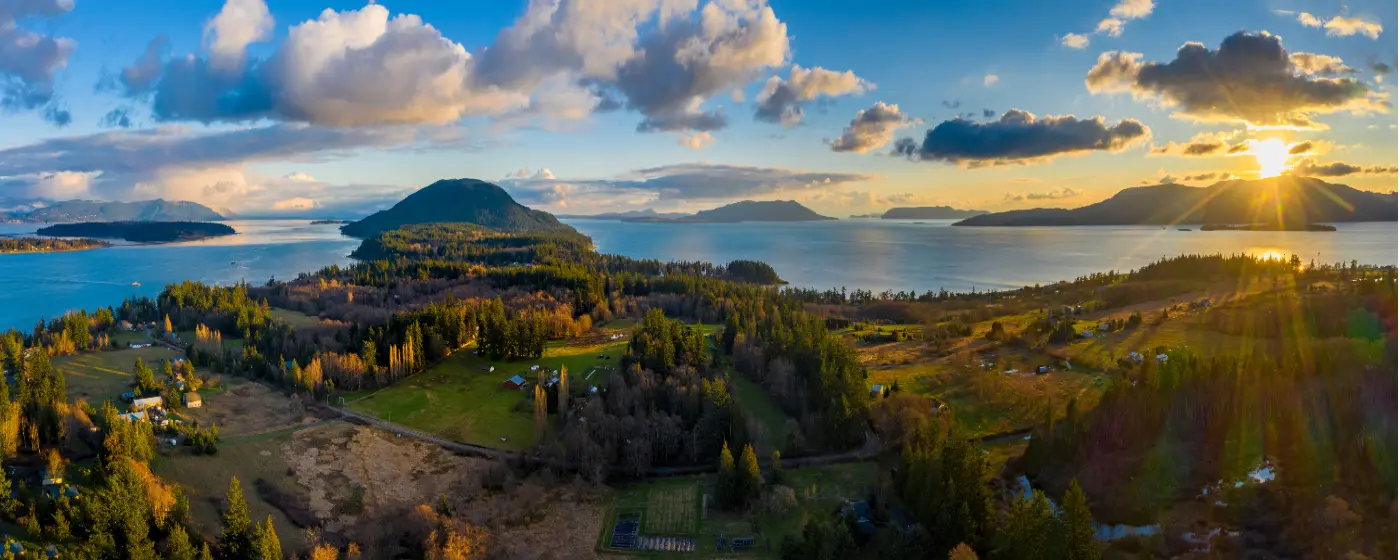
Most people who move to Bellingham in retirement come expecting a smaller, quieter version of Seattle. What they find instead is a working college town with a genuinely intact waterfront, a trail system that starts at the edge of residential streets, and a cultural calendar driven by Western Washington University — not by tourism. The surprise for many is how much city you get at a fraction of the cost of the Sound's southern metros. Bellingham sits at the northern end of Puget Sound on I-5, about 90 miles north of Seattle and 55 miles south of the Canadian border, with Bellingham Bay on the west and the Cascade foothills rising to the east.
What actually draws retirees here isn't just scenery — it's the combination of a highly rated regional hospital within the city limits, Washington's famously retirement-friendly tax structure, and a social ecosystem built around the university's public programming, a weekly farmers market, and more than 100 miles of in-city trails. The Zillow Home Value Index put Bellingham's typical home price at $633,071 as of June 2026 — well above Ferndale or Lynden but meaningfully below what a comparable Pacific Northwest lifestyle costs in Kirkland or Edmonds.
The honest case against Bellingham for retirement is terrain and weather. Parts of the city are genuinely steep, which matters more at 70 than at 40. The winters are gray and damp, running roughly October through April without much relief. Retirees who need 300 sunny days a year will find the climate wearing. And while the cost of living beats Seattle by a real margin, it no longer qualifies as cheap — a fixed-income retiree on Social Security alone would find it tight without meaningful savings or equity to deploy.
This guide covers what retirement in Bellingham actually looks like: the healthcare infrastructure, what your dollars buy on a fixed income, where to walk and connect socially, how downsizing works here, and how Bellingham stacks up against Ferndale, Lynden, Blaine, Everson, and Lummi Island for retirees weighing the whole region.
Why Retirees Are Choosing Bellingham
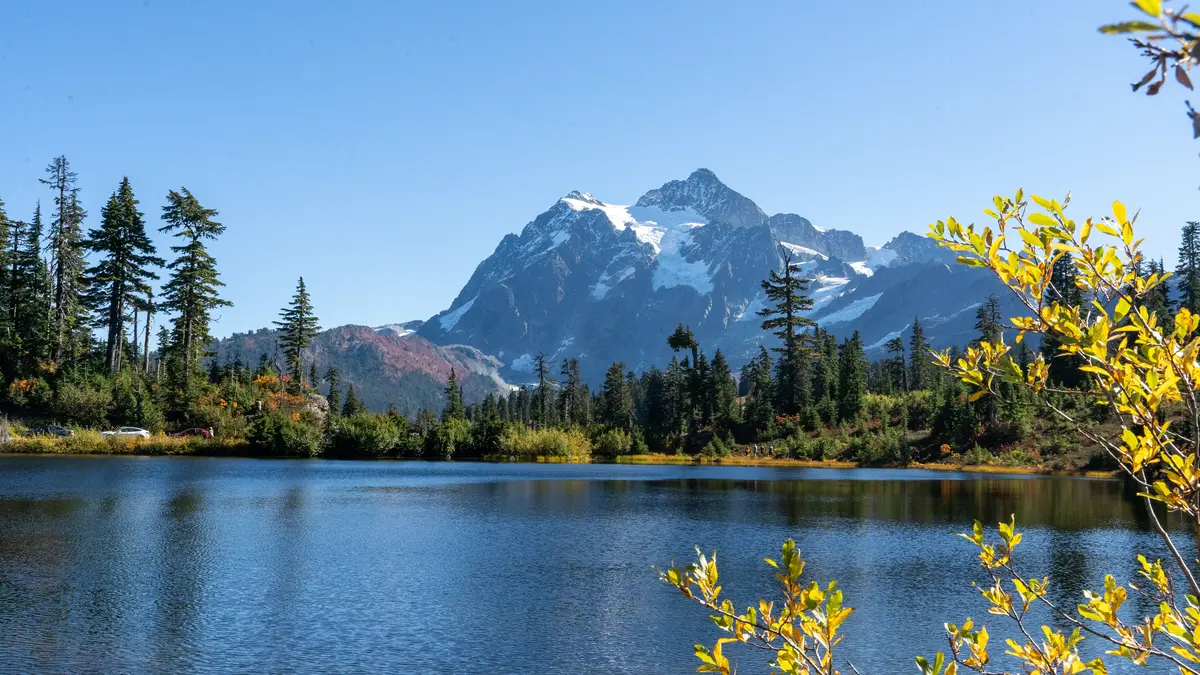
Bellingham fits a specific type of retiree well: someone who wants an intellectually active, outdoor-oriented life, doesn't need chain-restaurant convenience on every corner, and is comfortable with a Pacific Northwest climate that's mild but reliably overcast. Western Washington University drives a steady stream of public lectures, gallery openings, and community events that give the city the intellectual texture of a college town — without the relentless pace of a true metro.
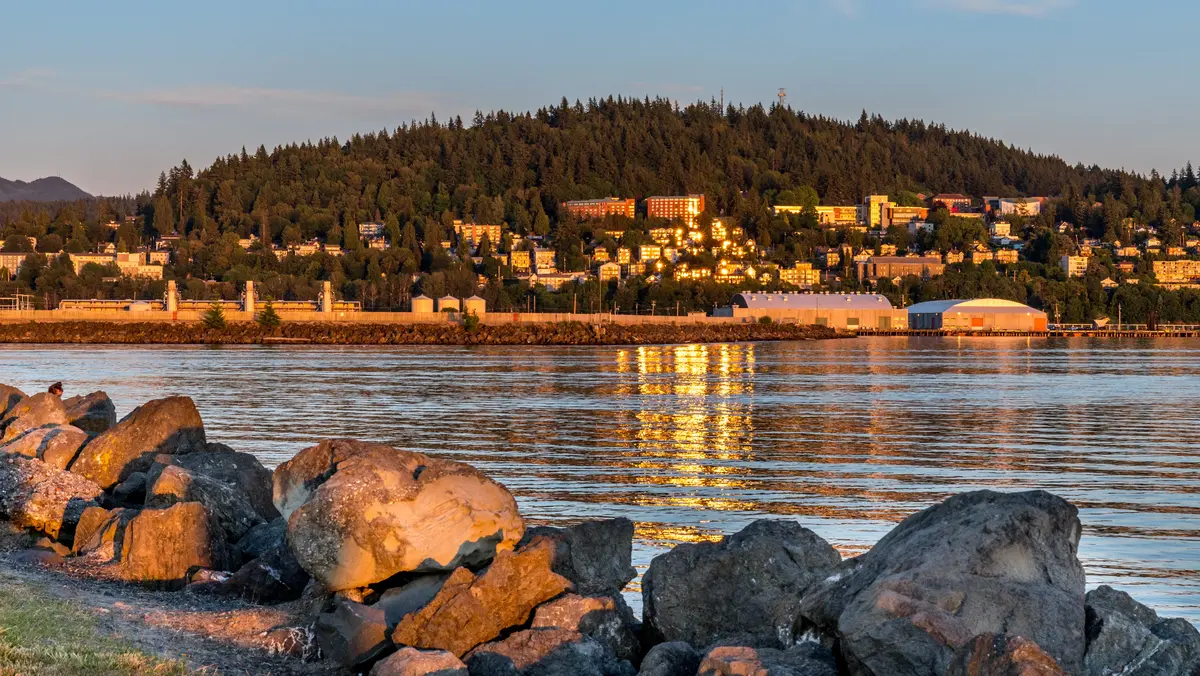
The geography rewards active retirees. Whatcom Falls Park is a legitimate urban wilderness accessible from Sunnyland and Happy Valley without getting in a car. Boulevard Park and the Taylor Dock put Bellingham Bay within walking distance for much of the south end. The Fairhaven Historic District offers brick-sidewalk walkability and an Amtrak stop that connects to Seattle and Vancouver — a genuine amenity for retirees who no longer want to drive long distances.
Bellingham is a harder fit for retirees on tight fixed incomes, those who need significant adult-child proximity to a major metro, or anyone expecting flat, sun-drenched terrain. The Zillow Home Value Index stood at $633,071 as of June 2026 — which is still a real number to absorb on a pension. Retirees who need to extract maximum equity from a sold home and land somewhere cheaper should look at Ferndale or Lynden before committing to Bellingham proper. But for those whose retirement finances can absorb a Pacific Northwest market, the quality-of-life return is substantial.
Healthcare & Medical Access in Bellingham
For most retirees, no single factor matters more than hospital proximity — and Bellingham's position here is genuinely strong. PeaceHealth St. Joseph Medical Center at 2901 Squalicum Pkwy is a 255-licensed-bed regional hospital operating a Level II trauma center, a dedicated cancer center, a cardiovascular center, joint-replacement services, inpatient behavioral health, and a palliative-care program. That is a depth of specialty coverage most cities of 100,000 cannot offer without sending you elsewhere.
Safety Ratings Worth Knowing
PeaceHealth St. Joseph has earned an 'A' Leapfrog Hospital Safety Grade for eleven consecutive years — a rare streak among community hospitals anywhere in the Pacific Northwest. It also holds a 4-star CMS overall quality rating for 2023–2025. These aren't marketing badges; they reflect measurable outcomes on infection rates, surgical safety, and patient communication that matter most when you're not choosing the visit voluntarily.
Where the Gaps Are
The honest limitation: for the most complex cardiac surgery, advanced neurological intervention, or specialized oncology clinical trials, the regional referral pathway runs south to Seattle's academic medical centers — roughly 90–100 minutes by car or direct Amtrak. Most retirees will never need that level of care, but it's worth knowing the distance before it becomes urgent. Vancouver, BC is actually closer at about 45 minutes, though crossing the border for care introduces insurance complexity.
For day-to-day access, the Cordata neighborhood in north Bellingham is worth specific attention. It sits flat, close to PeaceHealth's main outpatient clinic campus, and is surrounded by ancillary medical offices — making it the de facto medical hub of Whatcom County. Retirees who prioritize getting to appointments without navigating Bellingham's hillier terrain should look at Cordata first.
The Retiree Budget in Bellingham
Washington's tax posture toward retirees is one of the best in the country, and it's not close. The state levies no personal income tax, which means your Social Security benefits, pension distributions, IRA withdrawals, and 401(k) income all arrive state-tax-free. That's a real and recurring advantage over retirement destinations in Oregon, California, or Minnesota, where retirement income faces meaningful state-level taxation.
Capital Gains and the Fine Print
Washington's 7% capital-gains tax applies only to long-term gains above an approximately $278,000 annual standard deduction — and it explicitly exempts transactions inside retirement accounts (401(k)s, IRAs, Roth IRAs, defined-benefit plans) as well as real-estate sales. For the overwhelming majority of retirees, this tax is simply not a factor. The income tax situation is similarly clean: a new state income tax (ESSB 6346) applies only above a $1 million standard deduction threshold, leaving ordinary retirees entirely unaffected.
Property Taxes and Senior Relief
Whatcom County's effective property tax rate runs approximately 0.71% — well below the national average and comfortably below Oregon's or California's effective rates in comparable markets. On top of that, Whatcom County administers a Senior Citizen and Disability Property Tax Exemption program: qualifying homeowners aged 61 or older with a primary residence and household disposable income at or below $52,000 can receive a partial-to-full freeze on their assessed value for 2026 taxes. If you're coming from a high-tax state and downsizing into a paid-off or low-mortgage home, the actual property-tax exposure here can be surprisingly modest.
Day-to-day costs on a fixed income are genuine but not punishing. Groceries, dining, and services run close to regional norms for a mid-size Pacific Northwest city — see the full cost-of-living breakdown for current figures on rent and everyday expenses. The practical pressure point for fixed-income retirees is housing itself: at the current market price, carrying a significant mortgage into retirement demands careful planning. Retirees who arrive with substantial equity from a prior home sale — particularly from California or the Seattle suburbs — are the ones who find Bellingham's budget math most comfortable.
Looking to buy in Bellingham? Estimate your payment.
Enter your numbers to see an estimated monthly mortgage payment.
Estimate only. Excludes HOA fees and mortgage insurance. The interest rate above is a starting point, not a quoted rate — replace it with your own to see real numbers. Insurance is a flat placeholder, not a Bellingham quote.
Walkability, Community & Staying Active in Bellingham
Bellingham's walkability is real in patches and limited in others — the distinction matters enormously for retirees. The Fairhaven Historic District gives you a genuinely walkable village core: independent coffee shops, a wine bar, the Amtrak station, and the Alaska ferry terminal all within a few blocks of each other. The catch is that terrain rises steeply beyond the immediate village center, so retirees with knee or hip concerns should walk specific streets before buying, not just review a map.
The Flat Option
Cordata, in north Bellingham, is the answer for retirees who need flat ground and medical proximity together. It's not the most architecturally interesting part of the city, but you can reach PeaceHealth's clinic campus, a major grocery, and a pharmacy on foot or by a short drive without encountering Bellingham's signature hills. For retirees managing mobility limitations or post-surgical recovery, that practicality outweighs neighborhood charm.
Trails, Culture, and the College-Town Dividend
Active retirees find Bellingham's trail network one of its strongest assets. More than 100 miles of in-city trails connect Whatcom Falls Park, the Chuckanut foothills, and the Bellingham Bay waterfront — and many of these routes are accessible directly from residential streets in Columbia and Happy Valley without driving to a trailhead. Sea kayaking on Bellingham Bay, cycling the Interurban Trail, and casual birding at the bay's tidal flats are year-round activities in a climate that rarely produces extreme heat or cold.
The social infrastructure for retirees leans heavily on Western Washington University's public programming — lectures, gallery openings featuring the outdoor sculpture collection, film series, and a Saturday farmers market that runs spring through fall. A number of retirees who moved here describe the market as the weekly gathering point: the place where you see the same faces reliably, which matters more than most people expect in the first year after relocating. For those who want structured community, the Bellingham Senior Activity Center offers classes, fitness, and social programming, and the city's volunteer ecosystem is extensive — the Whatcom Museum, the Bellingham Public Library, and the trail-maintenance networks all run significantly on retiree volunteer hours.
One thing newcomers consistently underestimate: the gray season runs long. From October through April, overcast days outnumber sunny ones by a wide margin. Retirees who thrive here tend to be people who find the rain comfortable, who have indoor hobbies and social commitments that don't depend on sunshine, or who treat winter as the off-season for the outdoor life they love in summer. Retirees who moved here expecting mild Pacific Northwest weather and were surprised to find five-month stretches of low cloud and drizzle are the ones most likely to leave.
Right-Sizing: Downsizing in Bellingham
Bellingham's housing stock skews toward older single-family homes on sloped lots — which is exactly the wrong profile for a retiree who needs single-level living without stairs. Finding a genuine ranch-style or single-level home in established neighborhoods like Fairhaven or Happy Valley requires patience and often a willingness to renovate. The inventory of move-in-ready, single-level homes is consistently thin, and when they appear, they move quickly.
Condo and Townhome Options
The downtown and waterfront area has seen condo development that appeals to downsizers — walkable, lower-maintenance, and often newer construction with elevator access. These properties tend to carry higher price-per-square-foot costs compared to a comparable square footage in a detached home in Barkley or Silver Beach, but the trade is real: no yard maintenance, proximity to walkable amenities, and accessibility features built into newer buildings. The Barkley Village area offers a mix of patio homes and newer townhomes with flatter site access, making it worth a specific look for retirees who want a detached feel without a large lot to manage.
55+ and Active-Adult Communities
Purpose-built 55+ active-adult communities in Bellingham proper are limited. The city has manufactured-home communities that cater to retirees on tighter budgets — these can represent the most affordable path to homeownership in the city, particularly for retirees who are downsizing from a high-value out-of-state home and want to free up cash. For a larger selection of purpose-built active-adult housing and independent-living communities, Ferndale and Lynden both offer options within 15–30 minutes of PeaceHealth St. Joseph and Bellingham's cultural amenities. That proximity makes the satellite-community model genuinely workable — you don't have to live in Bellingham to use most of what Bellingham offers.
One friction point worth naming: Bellingham's rental market for seniors who want to right-size before buying is tight. Accessible, single-level rental units — the kind a retiree might use for a 6-to-12-month trial before committing to purchase — are not abundant. Retirees who want to test the city before buying often find themselves competing with WWU students and younger renters for the limited single-floor inventory. Planning that trial period well in advance, or staying short-term in a furnished unit, makes the transition smoother. See the cost-of-living page for current rental market context.
Bellingham vs Nearby Retirement Destinations
| City | Cost vs Bellingham | Primary Hospital | Walkability | Senior Living Depth | Overall Retirement Fit |
|---|---|---|---|---|---|
| Bellingham | Anchor | PeaceHealth St. Joseph — Level II trauma, cancer center, cardiovascular, 'A' Leapfrog safety | Strong in Fairhaven and Cordata; hilly elsewhere | Moderate — condos, patio homes, limited 55+ communities | Nature Walkable Best overall for active, culturally engaged retirees |
| Ferndale | Noticeably cheaper | 15–20 min drive to PeaceHealth St. Joseph | Car-dependent; flat terrain | Growing — newer subdivisions with accessible layouts | Value Quiet Strong budget alternative; trade walkability for affordability |
| Lynden | Noticeably cheaper | 20–25 min drive to PeaceHealth St. Joseph | Small downtown walkable core; mostly car-dependent | Moderate — established senior community options; some 55+ housing | Quiet Families Conservative community feel; strong faith community; fits retirees who prefer smaller-town pace |
| Blaine | Cheaper to about the same | 30+ min drive to PeaceHealth St. Joseph; border proximity adds complexity | Walkable waterfront village; limited services | Thin — very limited senior-specific housing inventory | Views Privacy Best for boaters and border crossers; too isolated for retirees needing frequent medical access |
| Everson | Meaningfully cheaper | 30–35 min drive to PeaceHealth St. Joseph | Minimal — small rural town | Very thin | Value Rural retirement on a tight budget; practical only with strong mobility and a car |
| Lummi Island | Variable — ferry access limits comparable supply | Ferry + 30–40 min drive to PeaceHealth St. Joseph | Minimal — island with no commercial walkable core | Essentially none | Privacy Nature For retirees who genuinely want island seclusion; ferry dependency becomes a real concern with age |
Ferndale and Lynden are the practical alternatives for retirees whose retirement finances are stretched by Bellingham's prices — both stay within a comfortable drive of PeaceHealth St. Joseph and reach Bellingham's farmers market, arts venues, and trail system in under 30 minutes. Lynden adds a compact downtown with a Dutch-heritage community feel that resonates with retirees who prefer a small-town pace over Bellingham's college-town energy.
Blaine's waterfront setting is genuinely appealing, but the 30-plus-minute drive to hospital care should give retirees pause — and the ferry schedule to Lummi Island makes that destination suitable only for retirees with a particular appetite for isolation and reliable transportation. Everson offers the lowest prices in the county but demands full car dependency and offers essentially no senior infrastructure.
For most retirees weighing the region, the decision comes down to this: if your budget can absorb Bellingham's prices, the combination of PeaceHealth St. Joseph, the trail network, and the university cultural calendar is hard to match anywhere within a two-hour radius at this scale. If cost is the binding constraint, Ferndale is the most practical fallback — close enough to share everything Bellingham has to offer without paying Bellingham prices to live there.

Local Expert Takeaway: Bellingham rewards retirees who show up knowing what they're choosing: a college town with a legitimately strong hospital, a trail system that starts at your back door, and winters that will test your patience for gray skies. The retirees who thrive here long-term tend to anchor their social lives to the farmers market, the Bellingham Senior Activity Center, and Western Washington University's public programming — those three things alone fill a calendar in ways that keep the gray months manageable. Cordata is the practical choice for mobility or healthcare-proximity concerns; Fairhaven is the aspirational choice for those who want walkable village life. If Bellingham's prices are a stretch, Ferndale is 15 minutes away and shares the same hospital.
Quick Takeaways & FAQs
✅ Washington levies no state income tax on Social Security, pensions, or retirement-account withdrawals — retirees here keep more of every distribution than in most western states.
⚠️ PeaceHealth St. Joseph's Level II trauma center and dedicated cancer and cardiovascular services are strong for a city of 100,000, but complex cases still route 90–100 minutes south to Seattle's academic medical centers.
📍 The Cordata neighborhood is Bellingham's flattest and most medically connected area — retirees with mobility concerns should walk its streets before settling on Fairhaven's steeper terrain.
Is Bellingham a good place to retire on Social Security alone?
What is the best neighborhood in Bellingham for retirees?
Does Washington State tax retirement income?
How good is healthcare in Bellingham for retirees?
Are there 55+ or active-adult communities in Bellingham?
Moving to Washington?
Tell us what you need help with and we'll connect you with local resources.
