
Most Californians who move to Bellingham say the same thing around month three: they didn't realize how much money they'd been handing to Sacramento. The zero-dollar state income tax line on their first Washington paycheck lands differently than any chart does. But this is not a story only about taxes — Bellingham sits at the top of Puget Sound, 90 miles north of Seattle and 55 miles south of Vancouver, BC, framed by saltwater to the west and the North Cascades to the east. That geography shapes everything: where people work, how they spend weekends, and why so many Bay Area and Southern California transplants who came for the price difference end up staying for the lifestyle.
The economic engine here is more diverse than a city of 99,000 might suggest. Western Washington University anchors a steady student and faculty population in the center of the city. BP Cherry Point Refinery — one of the largest on the West Coast — employs well-paying trades and engineering jobs north of town. The Lummi Nation provides significant regional employment. Faithlife, a software company, has drawn tech workers who find Bellingham a livable alternative to Seattle's cost and commute. Bellingham Public Schools carries a B+ district rating, which matters to California families used to researching school quality before signing anything. For a fuller breakdown of Bellingham's schools, that page goes deep on test scores and boundary quirks.
Home prices here are meaningfully below what you left behind in most California metros — Bellingham's typical home value is $633,071 (Zillow Home Value Index, June 2026), which reads like a bargain to anyone coming from the Bay Area or coastal Southern California. The outdoor infrastructure is legitimately exceptional: Whatcom Falls Park puts old-growth forest and a basalt waterfall inside city limits, Boulevard Park runs along Bellingham Bay with the Taylor Dock stretching over the water, and Mount Baker ski area is 56 miles east. Health insurance premiums run noticeably below what most California residents were paying, though you will travel farther for certain specialist care than you would in a large metro. For the full cost picture — groceries, utilities, and transportation — see the cost of living page.
Whether you're coming from San Diego, the Bay Area, or somewhere in the Inland Empire, the sections below break down how the California-to-Bellingham financial shift actually works: income tax, property tax, sales tax, and the lifestyle differences that don't show up on any spreadsheet.
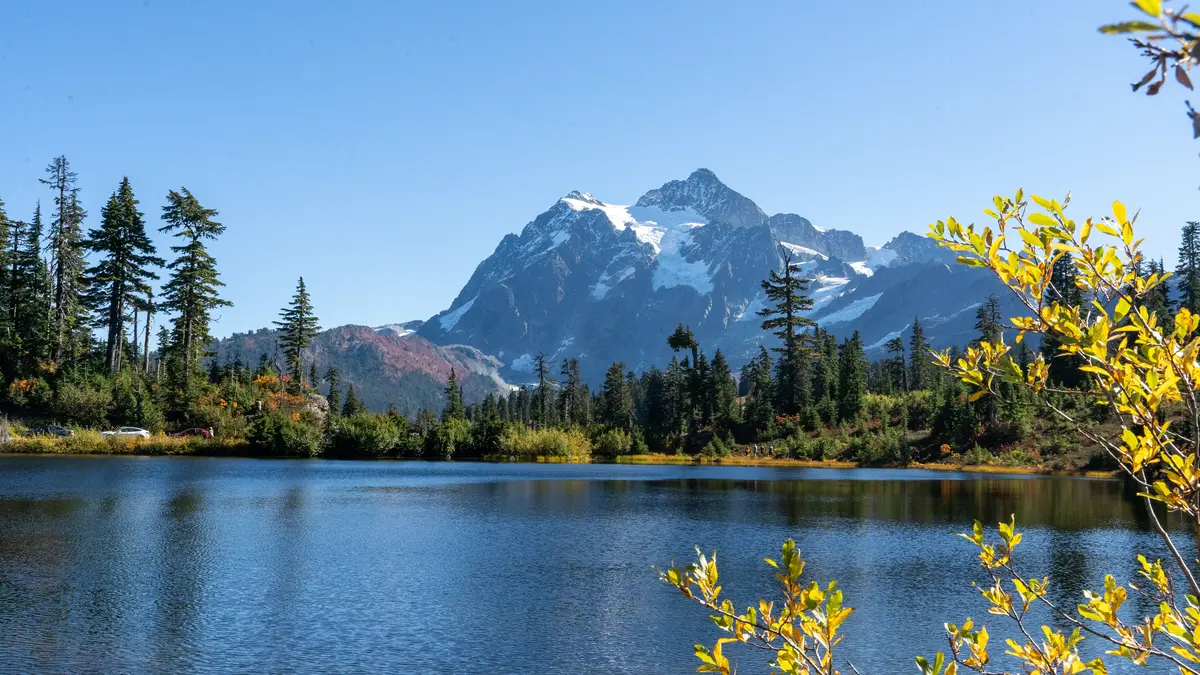
The Income Tax Shift: What Your First Washington Paycheck Feels Like
Washington state levies no income tax on wages or salaries. For most earners relocating from California, that line item simply disappears. California runs the highest top marginal state income tax rate in the country at 13.3% — a 12.3% base rate plus a 1% surcharge on income over $1 million.
The practical savings are significant well before you reach those brackets. A California household earning $100,000 can expect to save approximately $5,762 per year in state income tax by moving to Washington. At $150,000, that gap widens further. At $200,000, you're looking at a figure that covers a meaningful portion of annual housing costs.
One flag worth knowing: Washington passed a 9.9% tax on household income above $1 million, effective 2028. For most relocating buyers, this is irrelevant. For high-earning tech workers or business owners, it's worth building into long-term planning now.
Capital Gains and Estate Planning
California taxes capital gains as ordinary income, at rates up to 13.3%. Washington's capital gains excise tax largely exempts real estate gains — a meaningful difference if you're selling appreciated California property and redeploying the equity into a Bellingham purchase. Washington also has no estate or inheritance tax at the state level for most residents.
If you're bringing a significant net worth north with you, this state-level structure is different enough from California's that a one-hour conversation with a Washington CPA before closing will pay for itself many times over.
The Sales Tax Trade-Off Californians Don't See Coming
Here is the honest version of the Washington tax story: you save on income, you give a little back at the register. Bellingham's combined sales tax rate is 9.2% as of July 2026 — made up of the 6.5% Washington state rate plus 2.7% in local additions. California's average combined sales tax rate runs approximately 8.68%. That gap costs an estimated $700 more per year on $50,000 in taxable purchases.
Two things soften this meaningfully. First, groceries are fully exempt from Washington sales tax — so your weekly run to the grocery store doesn't carry the rate. Second, $700 annually is a rounding error next to a $5,000-plus annual income tax reduction. The net math still runs strongly in your favor.
The New Public Safety Sales Tax
Bellingham City Council unanimously approved a new 0.1% public safety sales tax effective January 1, 2026. It pushes the total rate from 9.1% to 9.2% and is projected to generate nearly $4 million annually for local law enforcement programs. Californians accustomed to layered local tax measures will recognize the mechanism — though the dollar impact here is marginal.
| Tax Type | California | Bellingham, WA | Practical Difference |
|---|---|---|---|
| State income tax (wages) | 1%–13.3% marginal | None (through 2027) | $5,762/yr savings at $100K income |
| Top marginal rate | 13.3% | 0% | Highest in US vs. zero |
| Capital gains (real estate) | Up to 13.3% | Largely exempt | Major benefit on home-sale proceeds |
| Combined sales tax | ~8.68% avg | 9.2% (July 2026) | ~$700/yr more on $50K taxable spend |
| Grocery sales tax | Varies by item | Exempt | Reduces effective sales tax burden |
| Estate / inheritance tax | None at state level | None at state level | Comparable |
| Effective property tax rate | ~0.76% avg | 0.71% | Slightly lower in Bellingham |
The overall tax picture tilts clearly toward Washington for most income levels — just don't expect to escape taxes entirely.
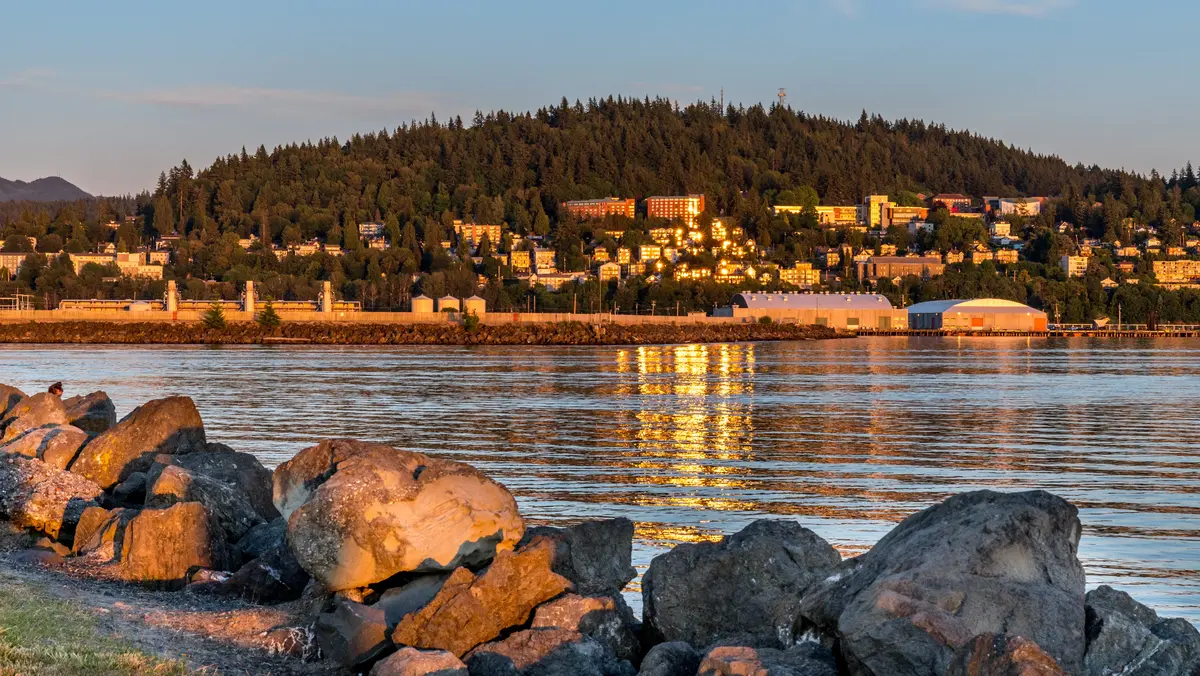
Home Prices: What California Equity Actually Buys Here
Bellingham's typical home value sits at $633,071 (Zillow Home Value Index, June 2026). That number sits noticeably below median figures in the Bay Area, San Diego, and coastal Los Angeles — in some cases it's less than half of what you'd pay in those markets. Coming from Sacramento or the Inland Empire, the gap is smaller but still real.
The property tax picture adds another layer of relief. Bellingham's effective rate is 0.71%, slightly below California's statewide average effective rate of approximately 0.76%. California's Proposition 13 protects long-term homeowners from reassessment, but buyers entering California today pay that full current-market rate from day one — so for anyone purchasing, the comparison is straightforward. For a deeper look at Bellingham's neighborhoods and how they differ from each other geographically and in character, that page covers the full breakdown.
What to Expect When You Start Touring
Entry-level inventory in Bellingham trends toward older Craftsman-style homes and 1970s–1990s construction on the city's hillside neighborhoods. The Fairhaven Historic District — at the city's south end — draws buyers who want walkable streets, independent shops, and a genuine neighborhood identity. South Hill sits above downtown with views toward the bay. Cordata in the north offers newer construction closer to big-box retail, which is where many families with school-age children land first.
One thing California buyers consistently underestimate: Bellingham's inventory is thin relative to the demand from in-state buyers AND the steady influx from the south. Homes in good condition in desirable areas still move quickly. Coming in pre-approved and knowing which neighborhoods fit your life — rather than touring everything — saves significant frustration. For guidance on the buying process itself, see the first-time homebuyer page.
If You're Renting First
Many California transplants rent for six to twelve months before buying — smart given that neighborhood character here takes time to read. Renting in Bellingham is a reasonable bridge, and the gap between what you were paying in most California coastal markets and what a comparable rental costs here is often striking enough to accelerate savings toward a down payment.
Looking to buy in Bellingham? Estimate your payment.
Enter your numbers to see an estimated monthly mortgage payment.
Estimate only. Excludes HOA fees and mortgage insurance. The interest rate above is a starting point, not a quoted rate — replace it with your own to see real numbers. Insurance is a flat placeholder, not a Bellingham quote.
The Lifestyle Differences No Spreadsheet Captures
Bellingham doesn't perform outdoors culture — it just practices it. The Lake Padden loop trail is a 2.6-mile path around a swimming and fishing lake inside city limits. Whatcom Falls Park drops into a basalt canyon within a ten-minute drive of downtown. On a clear day, the view from Boulevard Park across Bellingham Bay toward the islands to the west is the kind of thing that makes people put in offers faster than they planned. For a full guide to parks and trails, see the parks page.
The pace is genuinely different from California metros. Bellingham has about 99,000 people, one major north-south corridor in I-5, and a downtown core anchored by the Mount Baker Theatre, the Whatcom Museum, and a steady rotation of independent restaurants and bars. Kulshan Brewing Co. on James St. draws a regular after-work crowd — the kind of place where locals actually know each other. Lost Giants Cider Company on Meador Ave. runs a tasting room that skews toward the fruit-forward cider culture this region does well. These are not novelties; they're where people actually spend Friday nights.
What Surprises People After Six Months
Two things catch California transplants off guard reliably. First, the gray. Bellingham averages around 220 overcast days per year — more than Seattle in some measures. This is not the Bay Area's marine layer that burns off by noon. From November through March, the light is genuinely dim, and that affects people differently. Vitamin D supplements are not a wellness trend here; they're a practical necessity.
Second, the distance to Seattle. The 100-mile drive sounds manageable on a map. In practice, I-5 between Bellingham and Everett has some of the most unpredictable congestion on the West Coast, and the run can take two hours or more during afternoon or evening rush. People who plan to commute to Seattle even two or three days per week either burn out on it within a year or move closer. Bellingham works best as a destination, not a suburb. For how locals navigate this, see the living in Bellingham page.
Where Families Actually Land
Families with school-age children tend to settle into Barkley Village and Cordata in the north end, where the infrastructure — grocery stores, urgent-care-adjacent services, and community facilities — is densest. Fairhaven draws couples and remote workers who prioritize walkable streets and character over square footage. Silver Beach puts you on the water with a genuine neighborhood feel but requires a car for most errands. The city's community is smaller and more interconnected than most California transplants expect — you will run into your neighbors at the farmers market on Railroad Avenue on Saturday mornings.
The Honest Case for Leaving (and Staying)
The case for moving to Bellingham from California is financially straightforward: lower home prices, zero state income tax for most earners, slightly lower property tax rates, and no capital gains exposure on real estate at the state level. The lifestyle case is also real — access to genuine wilderness, a smaller city where community is actually possible, and a cost of daily life that doesn't require optimizing every spending decision.
The case against is worth reading before you make an offer. People leave Bellingham for a few consistent reasons. The gray winters are the most cited. Anyone who moved from the Bay Area expecting Seattle-caliber cultural programming — major league sports, arena concerts, a wide range of specialist services — will feel the limits of a 99,000-person city. Career paths in tech, finance, or specialized medicine are narrower here than in any major California metro. Remote work has changed this calculus significantly for many people, but it hasn't erased it.
What You Would Not Do Moving Here
You would not buy in Cordata expecting a walkable neighborhood — it's a functional suburban grid built around big-box retail, and it serves that purpose well, but on-foot access is minimal. You would not plan to freelance in Bellingham and assume the local professional network will replace your California one immediately; it takes a full year or two to build meaningful connections here, and the network is smaller by design.
You would not underestimate the Canadian border effect. Blaine is 30 miles north, and the border crossing backs up significantly on weekends and holidays. If you're a dual citizen or frequently cross for Vancouver's restaurant scene or skiing, this becomes a real planning variable in your week — not a dealbreaker, but a genuine time cost.
The Bottom Line for a California Buyer
Bellingham rewards people who come specifically for what it is — not as a proxy for something larger. The financial advantages over California are real and significant. The trade is a smaller stage, dimmer winters, and more intentional community-building. Most of the Californians who stay past year two say they wouldn't go back. Most of the ones who leave say they knew before they moved that it wasn't quite the right fit — and ignored the signal.

Local Expert Takeaway: The income tax savings are real and immediate — a $100K earner keeps roughly $5,762 more per year in Washington than in California. But the bigger surprise for most transplants is how quickly Bellingham's scale becomes a feature rather than a limitation. The farmers market on Railroad Avenue on Saturday mornings, an evening at Kulshan Brewing on James St., a weekend on the Whatcom Falls trails — these aren't consolation prizes for leaving California. They're the actual draw. The people who struggle here are the ones who expected a cheaper version of somewhere bigger.
Quick Takeaways & FAQs
✅ Washington's zero state income tax saves a $100K earner approximately $5,762 per year compared to California — and that number grows with income.
⚠️ Bellingham's 9.2% combined sales tax (as of July 2026) is higher than California's average, and the Seattle commute routinely runs two hours — two real costs that don't appear on the tax-savings calculator.
📍 Groceries are exempt from Washington sales tax, and Bellingham's effective property tax rate of 0.71% is slightly below California's statewide average — two line items worth factoring into your monthly budget comparison.
Do I really pay zero state income tax in Washington after moving from California?
Is Bellingham's sales tax higher than what I paid in California?
What does $633,000 actually buy in Bellingham?
How far is Bellingham from Seattle, and is the commute realistic?
What do California transplants find hardest about living in Bellingham?
Moving to Washington?
Tell us what you need help with and we'll connect you with local resources.
