What Is Living in Everett, Washington Like?
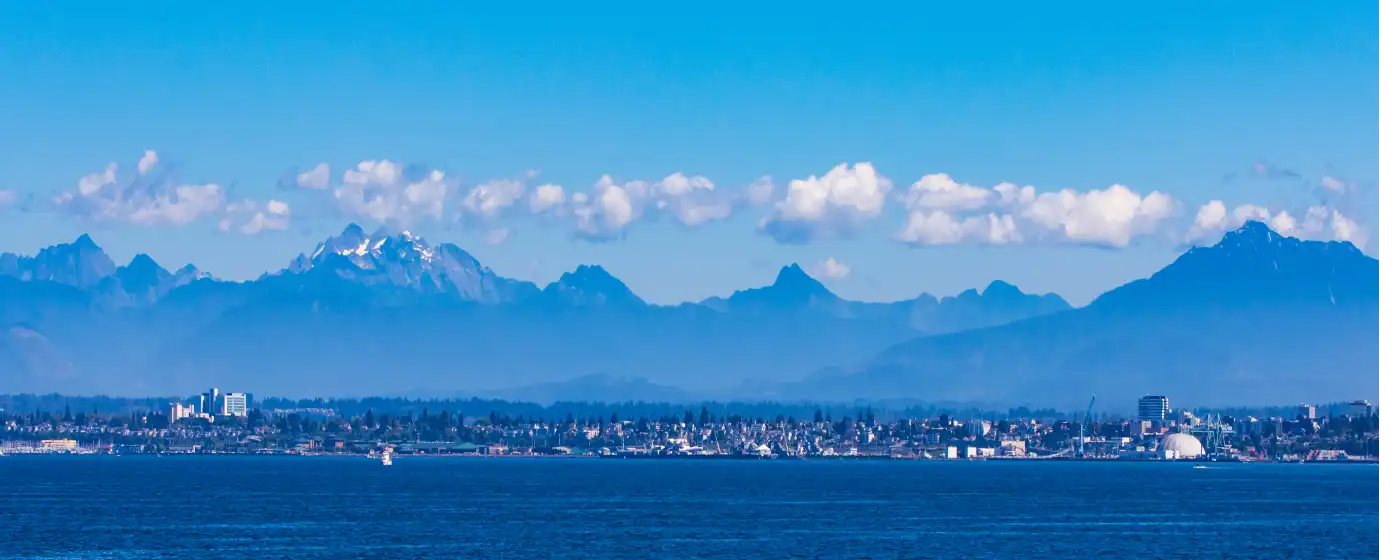
Maybe you've been priced out of Seattle or Kirkland and someone mentioned Everett. Maybe Boeing called, or the Navy. Maybe you just drove north on I-5 and noticed that the waterfront looked more interesting than you expected. Whatever brought you here, the first thing to understand about Everett is that it is genuinely two cities in one: a working-class port town with a century of aerospace and naval identity, and an increasingly ambitious waterfront city where new restaurant rows and mixed-use development are reshaping what "downtown Everett" means to the people who actually live there.
The economic backbone here is not subtle. The Boeing Company's Everett factory — the largest building by volume on earth — sits off Highway 526 and directly employs tens of thousands of people across Snohomish County. Naval Station Everett anchors the city's southern waterfront and brings a steady military community to neighborhoods throughout the area. Premera Blue Cross and The Everett Clinic round out a diverse employer mix that keeps the median household income at $83,512 and the median age at 37.2 — a relatively young, working population. Everett Public Schools serves the city, and the mix of military families, aerospace workers, and healthcare professionals means the district draws parents with very different expectations and priorities.
Compared to the Seattle core or the Eastside suburbs, Everett offers real breathing room on price — the Zillow Home Value Index stood at $619,916 as of June 2026 — while still sitting roughly 40 minutes from downtown Seattle by car (longer on bad traffic days). The waterfront at Port Gardner Bay gives residents access to the West Coast's largest public marina, Jetty Island in the summer, and a growing calendar of 90-plus annual events at Waterfront Place. Neighborhoods like Silver Firs to the east feel more like classic Pacific Northwest suburb; Port Gardner and Bayside are where you feel the city's waterfront ambitions most directly.
Whether you're considering a move or just researching the area, the sections below break down Everett's reasons to move here, daily life, the current housing market, commuting realities, and where locals actually spend their weekends.
Everett at a Glance
Looking to buy in Everett? Estimate your payment.
Enter your numbers to see an estimated monthly mortgage payment.
Estimate only. Excludes HOA fees and mortgage insurance. The interest rate above is a starting point, not a quoted rate — replace it with your own to see real numbers. Insurance is a flat placeholder, not a Everett quote.
Why Are People Moving to Everett?
The pitch is straightforward: real wages, real jobs, and a price point that still makes homeownership achievable in the Puget Sound region. But the reasons people actually show up — and stay — go deeper than a spreadsheet.
The Aerospace Anchor
The Boeing Company's presence in Everett is not background noise. The Everett factory, visible from I-5 and toured daily by thousands of visitors through the Future of Flight Aviation Center, is one of the largest single employers in the entire state. Aerospace suppliers, subcontractors, and engineering firms cluster around it, creating a job ecosystem that extends well beyond Boeing's own badge count. If your work touches aviation manufacturing, Snohomish County is where the work is.
Military and Healthcare Stability
Naval Station Everett brings a built-in community of active-duty personnel, veterans, and their families who cycle through on two- to four-year rotations. That community has its own gravity — it tends to shape which neighborhoods feel transient and which feel established. On the healthcare side, a major regional health system and The Everett Clinic together employ a significant portion of the local workforce, making the economy less dependent on a single industry than many comparably sized cities.
The Waterfront Moment
Waterfront Place, the Port of Everett's 65-acre mixed-use development on West Marine View Drive, drew 1.6 million site visits in 2024 — and it is still being built. The restaurant row along Fisherman's Harbor has been adding new dining and drinking options through late 2025 and into 2026, and over 300 additional waterfront apartment units are set to break ground in 2026. People moving here now are arriving ahead of the full build-out.
Who Moves Here
| Buyer / Renter Type | What Draws Them | Best Fit |
|---|---|---|
| Boeing & aerospace workers | Proximity to the factory campus off Hwy 526 | Commuter |
| Military families | Naval Station Everett; stable rental supply | Families Renter |
| Seattle-priced-out buyers | Lower entry point, I-5 and commuter rail access | First-Time Value |
| Waterfront lifestyle seekers | Marina, Jetty Island, Waterfront Place | Views Walkable |
| Healthcare professionals | Regional medical employers; no state income tax | Commuter Value |
| Nature-first households | Cascade foothills access, parks, Puget Sound | Nature Quiet |
Washington's lack of a state income tax matters especially to households relocating from high-tax states — it is one of the first things newcomers from California or Oregon notice in their first paycheck. For a deeper look at what you keep, see the cost-of-living breakdown.
What Daily Life Feels Like in Everett
Six months after moving here, people consistently say the same thing: the city is bigger than it looked on the map and more layered than it looked on Zillow. The eastern neighborhoods and the waterfront neighborhoods feel like they belong to different cities — and in some ways they do.
The Geographic Reality
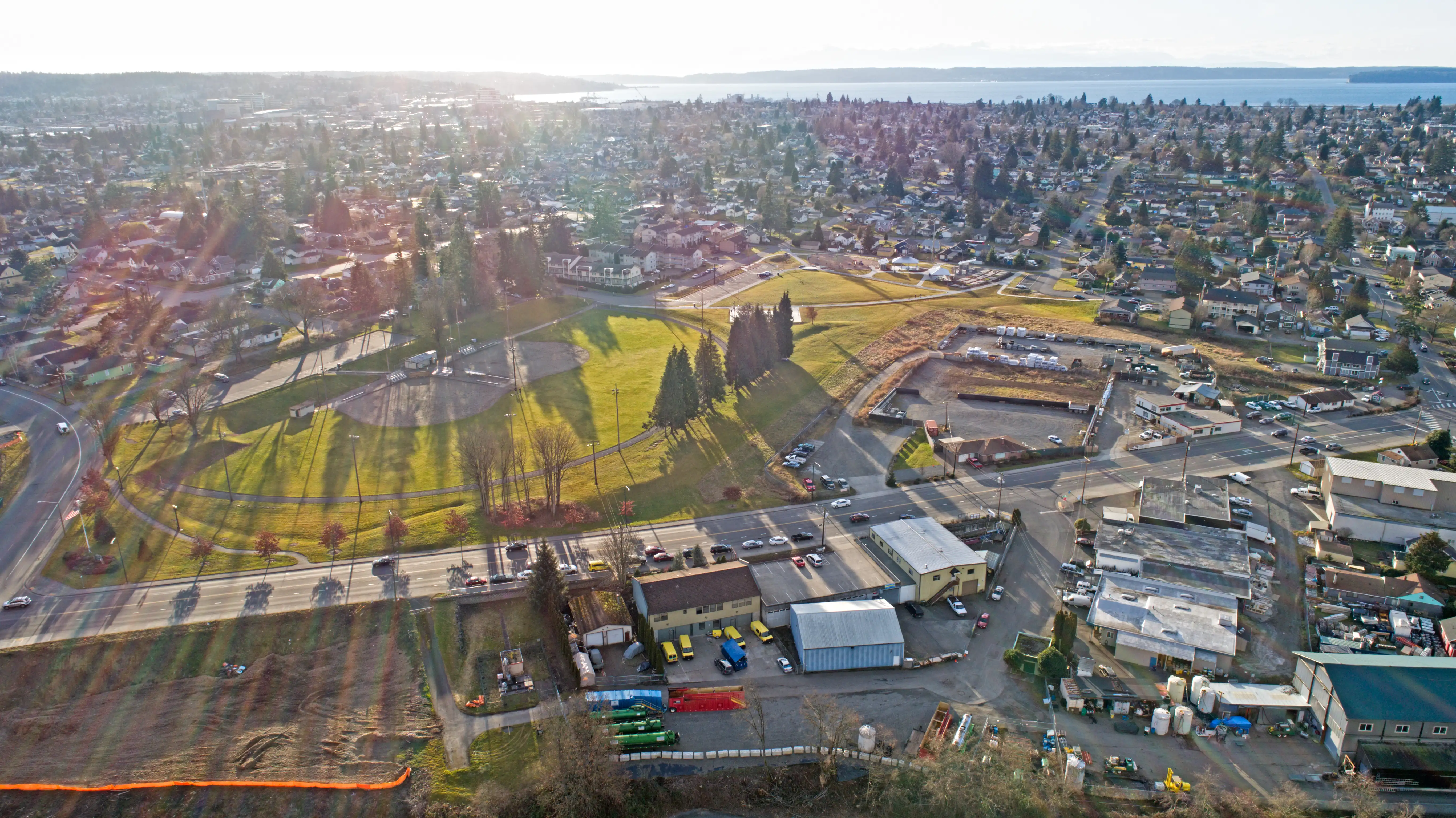
Everett runs roughly east-west from the Port of Everett waterfront to the foothills neighborhoods like Silver Firs and Glacier View. I-5 and Evergreen Way create the north-south spine. The neighborhoods closest to downtown and the water tend to have older housing stock and walkable streets around Broadway and Hewitt Avenue; the eastern areas off Airport Road and 128th Street SW feel more suburban, with newer construction and more distance between everything.
The Waterfront as Living Room
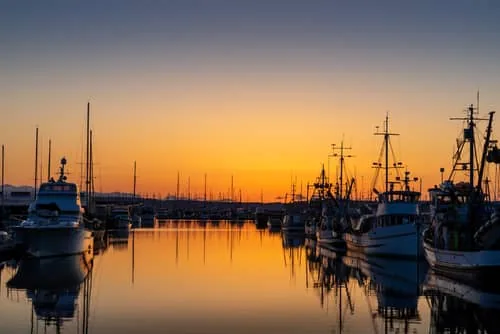
On summer evenings, the Port of Everett waterfront functions as the city's de facto gathering place. The marina — 2,300 permanent slips, the largest public marina on the West Coast — fills with recreational boaters, and the Waterfront Place promenade draws families who aren't on boats at all. South Fork Baking Company on Craftsman Way is a morning stop for pastries and coffee before a waterfront walk; Scuttlebutt Brewing, also on Craftsman Way, is the obvious late-afternoon answer. The weekly summer concert series at Waterfront Place is genuinely well-attended by locals, not just tourists.
What Surprises People After Six Months
New arrivals consistently underestimate how gray November through February actually feels here. This is not Seattle-gray-but-manageable; it is full Pacific Northwest overcast from Thanksgiving through Presidents' Day, and the low light affects people who haven't lived west of the Cascade Range before. Investing in a good rain shell and accepting that outdoor plans will happen in the rain — not around it — is the adjustment that separates happy Everett residents from the ones who move back east of the mountains.
The Friday Gathering Spot
Jetty Island in Puget Sound — accessible via a free summer ferry from the Port — is where families with kids spend summer weekends. The two-mile sand spit has warm-ish (for Puget Sound) shallow water and almost no commercial development, which is exactly the point. For a full picture of parks and outdoor life, the parks and recreation page has the detail.
Schools and Community
Everett Public Schools serves most of the city, with boundaries that matter more than people expect — a few blocks can mean a different school. For current ratings, boundary maps, and which campuses serve which neighborhoods, the schools guide is the right starting point.
The Everett Housing Market Right Now
The Everett housing market in mid-2026 is fast at one price point and selective at another — and understanding that split matters more than a single headline number.
The City-Wide Picture
The Zillow Home Value Index for Everett stood at $619,916 as of June 2026, down approximately 5.9% from the prior year. That dip has not translated into a slow market: homes are going to pending in around six days on average, which is a pace that catches relocating buyers off guard if they are used to markets where a week of deliberation is normal.
Where the Market Splits
Below $750,000, Everett behaves like a seller's market — multiple buyers, quick decisions, limited negotiating room. Above $950,000, the market is more patient and more selective, with sellers sometimes needing to adjust expectations. Most of the city's inventory sits in that lower band, which is part of why Snohomish County continues drawing buyers priced out of King County. Some areas carry noticeably higher price tags than others — waterfront proximity and eastern neighborhood character are the two biggest drivers of that variation. The neighborhoods guide breaks down the geographic divides in detail.
Rental Reality
Rental supply is tight enough that units in desirable locations near downtown and the waterfront move quickly. For current two-bedroom rent ranges and how costs compare across the metro, the cost-of-living page has the current figures.
Market Context
Snohomish County is one of the fastest-growing counties in Washington state, and Everett is its county seat — which means sustained buyer demand is structural, not cyclical. The Waterfront Place development has 300-plus new apartment units breaking ground in 2026, which will add rental supply downtown, but the for-sale side of the market remains driven by how many owners are willing to list.
At the current pace, sellers in the sub-$750K range should expect genuine competition. The market conditions are real — what you do about them strategically belongs on the first-time homebuyer page.
Everett Neighborhoods
Everett has several distinct areas — each with its own character and appeal. Here’s a breakdown to help you narrow down where to focus your home search.
🏡 Silver Firs
Silver Firs is east Everett's most family-oriented pocket — planned residential streets, relatively newer construction, and a short shot to the Boeing Everett campus via Airport Road. The housing skews toward 1990s and 2000s single-family homes with yards, and the Silver Firs Community Park anchors weekend life for households with kids.
🏠 Twin Creeks
Twin Creeks sits adjacent to Silver Firs in the eastern corridor, with a similar suburban character but a slightly quieter residential feel and natural creek drainage corridors that give the area more tree cover than you expect. It suits Boeing workers and parents who want suburban calm without the drive into the city's more congested western core.
🌳 Port Gardner
Port Gardner is the neighborhood most directly shaped by the waterfront revival — it sits between downtown Everett and the Port of Everett Marina, putting residents within walking distance of Waterfront Place, the marina promenade, and the growing restaurant row. Housing here is older and more varied, ranging from historic bungalows to newer infill, and the energy of the area is distinctly more urban than anywhere east of I-5.
🏘 Riverside
Riverside occupies the southern portion of Everett near the Snohomish River delta, with a working-neighborhood character, mixed housing types, and proximity to industrial employment corridors along the waterfront. It is a practical choice for households prioritizing price and commute convenience over urban polish.
🏔 Bayside
Bayside sits on the Port Gardner Bay side of the city and catches some of the same waterfront momentum as Port Gardner, with water views accessible from elevated lots and a shorter walk to the marina. The housing stock mixes mid-century ranches with newer construction, and the neighborhood draws buyers who want water proximity without paying a premium for the nearest incorporated waterfront community to the south.
🌆 Northwest Everett
Northwest Everett runs along the bay north of downtown and includes some of the city's oldest residential streets, with craftsman-era homes, mature tree cover, and a neighborhood feel that differs noticeably from the commercial energy of Broadway. It suits buyers who want walkable proximity to downtown amenities and don't mind the older housing that comes with it.
Pros & Cons of Living in Everett
The Pros
- Significantly more affordable housing than Seattle or Bellevue
- deep-water waterfront with marina
- beaches
- and Jetty Island access
- strong aerospace
- healthcare
The Cons
- Property crime rates run above national and state averages in parts of the city
- I-5 commute into Seattle/Bellevue can be slow during peak hours
- gray
- rainy winters with limited sunshine
Getting Around & Commuting in Everett
Everett's commute story is one of the most important things to understand before you choose a specific neighborhood here — because where you buy determines how you'll spend a meaningful chunk of your week.
The Seattle Commute Reality
The advertised number is 40 minutes to downtown Seattle. The lived number is more like 55 to 75 minutes southbound on I-5 during a normal Tuesday morning, and longer when an incident backs up the express lanes further south along the corridor. Northbound returns in the evening run similarly. People who do this drive daily tend to shift their hours — leaving by 6:00 a.m. or after 7:00 p.m. — rather than fighting the peak.
Commuter Rail: The Rail Alternative
Commuter rail runs between Everett Station on Smith Avenue and Seattle's King Street Station on weekdays, with a travel time that undercuts driving when the trains align with your schedule. The catch is frequency: the service runs a limited number of trips in each direction, and a missed train means a long wait or a rideshare. For workers whose Seattle hours are fixed and predictable, it is genuinely useful. For people with variable hours, it is a back-pocket option rather than a daily system.
Local Bus Service and Getting Around
County transit bus service operates throughout Snohomish County, including bus rapid transit lines that connect Everett to Lynnwood and the broader North Puget Sound corridor. Within Everett itself, daily errands by transit are realistic in the urban core near Broadway and Colby Avenue, and harder in the eastern neighborhoods where everything requires a car. A Sound Transit Link light rail extension to Everett is in long-range planning but not imminent — for now, driving is how most residents get around.
Internal Everett Navigation
The intersection of Evergreen Way and 41st Street is where most newcomers first encounter the city's traffic rhythms. Evergreen Way is the commercial spine connecting north Everett to the southern neighborhoods, and it concentrates congestion in ways that don't show up on mapping apps until you've lived it. Airport Road to the east moves better but adds distance. Learning the secondary routes through Mukilteo Boulevard or Pacific Avenue takes about two weeks of trial and error — after that, most residents have their own mental map.
Boeing-Specific Commutes
Workers at the Boeing Everett campus, off Highway 526 near the Everett-Mukilteo boundary, have their own commute micro-climate. Shift changes at the factory create timed surges on 128th Street SW and Casino Road that differ from standard rush hour. Living in the Silver Firs or Twin Creeks area and working at Boeing can mean a 10-minute drive — one of the shortest commute windows in the entire Puget Sound for an aerospace job of that scale.
| Origin in Everett | Destination | Typical Off-Peak | Typical Peak | Best Mode |
|---|---|---|---|---|
| Downtown / Port Gardner | Boeing Everett campus | 12–18 min | 20–30 min | Car |
| Silver Firs / Twin Creeks | Boeing Everett campus | 8–14 min | 15–25 min | Car |
| Everett Station | Seattle King Street Station | ~60 min | ~60 min (fixed) | Commuter rail |
| Anywhere in Everett | Downtown Seattle via I-5 | 35–45 min | 55–80 min | Car or rail |
| Downtown Everett | Lynnwood (transit hub) | 20–30 min | 30–45 min | Car or bus rapid transit |
| Everett core | Snohomish (county seat errands) | 15–20 min | 20–30 min | Car |
The honest takeaway on commuting: Everett works best for people whose jobs are local or Boeing-adjacent. The Seattle commute is doable, but it costs you in time and energy in ways that add up over months.
Schools in Everett
Families relocating to Everett have public, private, and higher-education options nearby. Here’s a quick overview.
🎓 School District
Everett Public Schools serves K–12 students across Everett and the surrounding area. Rated B (source: Niche.com).
🏆 Graduation Rate
The 4-year high-school graduation rate here is approximately 96.3%.
📚 Higher Education
Washington’s public universities — the University of Washington, Washington State University, and Western Washington University — offer four-year degrees statewide, with a network of 34 community and technical colleges (SBCTC) providing two-year and workforce programs.
🌐 Online Learning
University of Washington Continuum College and Washington State University Online offer fully accredited online degrees for remote learners across the state.
Safety in Everett
A quick look at how Everett compares on the numbers that matter most when weighing a neighborhood or a move.
🛡 Violent Crime
Approximately 2.65 per 1,000 residents.
🔒 Property Crime
Approximately 32.19 per 1,000 residents.
Compared to the FBI’s most recent national data (2024), Everett’s violent crime is below the national average (about 3.6 per 1,000), and property crime is above the national average (about 17.6 per 1,000).
Against Washington as a whole, Everett’s violent crime is somewhat below the state average, and property crime is somewhat above the state average (Bureau of Justice Statistics, Crime Known to Law Enforcement, 2024 (tables 2 and 3)).
Crime rates can vary a lot within a single city, so the citywide numbers above are only a starting point. Some neighborhoods in Everett run well below these averages, while others run higher — the kind of block-by-block detail that matters most when you’re actually choosing where to live. The full guide below breaks it down neighborhood by neighborhood.
Working in Everett
Everett’s largest employers span several industries — here are some of the anchors of the local job market.
🏭 The Boeing Company
Aerospace manufacturing
🏥 Providence Regional Medical Center
Healthcare
🏛 Naval Station Everett
Military
🏦 Premera Blue Cross
Insurance
🏥 The Everett Clinic
Healthcare
Retiring in Everett
Everett draws retirees for its balance of amenities, outdoor access, and cost. Here’s what to weigh.
🌤 Climate
Everett sits in the rain shadow of the Olympic Mountains — which helps, but not entirely. Expect mild, overcast winters with temperatures rarely dropping below the mid-30s and occasional snow that clears within a day or two. Summers run dry and warm from July through September, with long daylight hours that make the gray winters feel worth tolerating.
🍴 Lifestyle
The Waterfront Place development has brought a genuine dining and leisure corridor to West Marine View Drive, with seafood, brewpubs, and a growing events calendar within walking distance of the marina. The Historic Everett Theatre on Colby Avenue hosts live performances year-round, and the 90-plus annual waterfront events include concerts, festivals, and holiday programming that give the city a real seasonal rhythm.
🏚 55+ Communities
Everett and the surrounding Snohomish County area have a range of active-adult and senior-living options, from independent retirement communities near the Mukilteo corridor to assisted living facilities distributed throughout the city. The expanding healthcare infrastructure in the region means medical access is a relative strength compared to smaller North Puget Sound communities.
✈ Getting Around
Snohomish County Airport offers commercial service to select destinations, reducing the need to fight Seattle-Tacoma International Airport traffic for many trips. Within the city, driving is the practical norm, though county bus routes serve the core areas. The flat terrain near downtown is walkable for those living close to the waterfront.
🏛 Washington Taxes for Retirees — What to Know
- No state income tax — Washington does not tax personal income, so Social Security, pensions, and 401(k)/IRA withdrawals are all untaxed at the state level. There is no state return to file and no retirement exclusion to claim — the rate is simply zero.
- Military and public pensions — Because there is no income tax, military retirement pay and public-employee pensions are untaxed at the state level along with everything else.
- Sales tax is the tradeoff — The state sales tax is 6.5%, and local add-ons bring the combined rate in Everett to 9.9% (Washington State Department of Revenue, Q3 2026 local sales & use tax rate table, July 2026). Groceries and prescription drugs are exempt.
- Property taxes, with senior relief — The effective property tax rate is roughly 0.9%. Homeowners 61+ (or unable to work due to disability, or a qualifying disabled veteran) who own and occupy their home may qualify for a reduction. Income limits are set against each county’s median household income, so the threshold differs by county — check with your county assessor. A separate deferral program is available for those who don’t qualify for the exemption.
- Capital gains tax — but not on retirement income — Washington taxes 7% on long-term capital gains above a $278,000 standard deduction for 2025, rising to 9.9% on gains above $1,000,000. Retirement accounts and real estate sales are both exempt. It therefore does not reach ordinary retirement income or the sale of a home.
- Estate tax — the one to plan for — Unlike most no-income-tax states, Washington has its own estate tax. For deaths on or after July 1, 2026, the exemption is $3 million with graduated rates topping out at 20%. Retirement accounts count toward the taxable estate, so long-time homeowners with sizable balances can cross the line without expecting to.
- No inheritance tax — Washington has no inheritance tax, and no gift tax.
- WA Cares payroll premium — Working Washingtonians pay 0.58% of gross wages into the WA Cares Fund, the state long-term care program, with no income cap. It applies to W-2 wages, so retirees who have stopped working do not pay it — but anyone relocating while still employed will see it. The private-insurance opt-out closed at the end of 2022 and is not available to new applicants; the remaining exemptions are narrow (living outside Washington, military spouses, certain visa holders, and veterans with a 70%+ service-connected rating).
- The Oregon border effect — Oregon has no sales tax, so Washington residents near the river — Vancouver, Camas, Washougal, Longview — often cross over for large purchases. Washington use tax technically applies to goods brought back for use in-state, though it is rarely enforced on ordinary personal purchases.
Tax laws change frequently and individual situations vary. This is general information, not tax advice — always consult a qualified Washington tax professional or CPA for personalized retirement tax planning.
Weekends & Local Favorites in Everett
Everett has more going on than its reputation suggests — though the best of it clusters around the waterfront and the outdoor access that frames the city on every side.
The Waterfront as Weekend Anchor
Waterfront Place on West Marine View Drive is where most weekend energy goes. The Port hosts more than 90 events annually — summer concert series on Thursday and Friday evenings, holiday celebrations, food and drink festivals that draw from across Snohomish County. The restaurant row along Fisherman's Harbor has been adding new dining options through 2025 and into 2026, and on a clear evening looking west across Port Gardner Bay toward the Olympics, the waterfront delivers one of the better views in the county. South Fork Baking Company and Scuttlebutt Brewing on Craftsman Way anchor the food-and-drink corridor that runs adjacent to the marina promenade.
Coffee and Mornings
South Fork Baking Company on Craftsman Way is the right answer for a Saturday morning before a waterfront walk — the pastry case is serious, and it sits steps from Scuttlebutt Brewing, which takes over the afternoon and evening shift with its own taps and a brewpub menu. These two spots on Craftsman Way anchor an emerging food-and-drink corridor that feels like it's still being discovered by the rest of the region.
Jetty Island and the Water
Jetty Island is the outdoor experience that longtime Everett residents feel quietly proprietary about. The free summer ferry from the Port of Everett lands you on a two-mile sand spit in Puget Sound with warm shallow water on the bay side, driftwood beaches, and almost no development. It is genuinely one of the better urban-adjacent outdoor experiences in all of Western Washington — and because it requires a short ferry and a bit of planning, it never gets the crowds that comparable spots in the San Juans or along Hood Canal attract.
Arts, Sports, and Events
The Historic Everett Theatre on Colby Avenue hosts touring acts, comedy, and community productions in a restored 1920 venue that still has the original architectural bones. Angel of the Winds Arena draws minor-league hockey (the Everett Silvertips) and mid-size concerts — it is consistently one of the most-attended venues in the region for its size. In summer 2026, Everett will host an official Fan Zone for the FIFA World Cup, a designation that reflects how seriously the city is investing in large-scale civic events.
Day Trips That Make the Location Pay Off
The geography around Everett rewards a car. Stevens Pass ski area is roughly 75 miles east on US-2. The Snohomish Valley — just 15 miles to the east — has farm stands, antique districts along First Street, and river access that locals use for kayaking and tubing. The Mukilteo ferry crossing to the island chain to the west is a short trip that feels like more distance than it covers. For a full accounting of parks and trails closer to home, the parks and recreation guide covers the specifics.
Top Things Locals Say About Everett
The best intel about a city comes from the people who actually live there. Here’s what Everett residents say when newcomers ask the questions everyone’s thinking.
“I expected Everett to feel like a suburb I was settling for. What I didn't expect was that by month four, I'd stopped thinking about Seattle at all — the waterfront, the marina, the brewery on Craftsman Way on a Friday. It just becomes your city faster than you think it will.”
— Recent Everett home buyer
“What's the most surprising thing about living in Everett?”
How much the waterfront changes the feel of the city. If you've only seen Everett from I-5, you've seen the industrial side. Once you spend a summer evening on the Waterfront Place promenade with the marina in front of you and the Olympics in the distance, the city clicks into place differently. Jetty Island is the other one — people who've lived here for years still treat it like a semi-secret.
“What do locals love most about Everett?”
The access — to the water, to the mountains, to Seattle when you want it but not when you don't. Boeing workers in Silver Firs might have a 12-minute commute. People near Port Gardner can walk to a restaurant row that's still being built out and feels like it's on the way up rather than the way down. And the summer, when it finally arrives, is legitimately one of the best places to be in the Pacific Northwest.
“What should newcomers to Everett know?”
Evergreen Way looks like it connects everything efficiently on a map, and it does — until 4:30 p.m. on a weekday, at which point it's a slow crawl from north Everett down to the Mukilteo Boulevard interchange. Learn Pacific Avenue and Mukilteo Boulevard early. Also: the neighborhoods east of I-5 and the neighborhoods west of it feel genuinely different in character, pace, and housing type. Don't assume a commute or a Saturday errand will feel the same from both sides.
“Can you live in Everett without a car?”
In the urban core around Broadway, Colby Avenue, and the Waterfront Place area — it's plausible for basic errands, especially with county bus rapid transit lines serving the corridor. But most of Everett, including the eastern neighborhoods like Silver Firs, Twin Creeks, and Glacier View, is not realistically car-free. Commuter rail handles the Seattle run on a fixed schedule, but within the city itself, a car is the practical reality for most residents.
Cities Near Everett
Other communities near Everett worth a look — each with its own character and price point.
| City | Distance | Best For | Vibe | Median Rent | Median Buy |
|---|---|---|---|---|---|
| Mukilteo | 8 mi | Boeing commuters and waterfront access | Quiet, coastal, established | $2,200 | $800,000 |
| Marysville | 12 mi | Budget-conscious families seeking space | Suburban, growing, car-dependent | $1,900 | $550,000 |
| Lynnwood | 10 mi | Commuters wanting light rail access | Dense, transit-connected, commercial | $1,950 | $650,000 |
More Helpful Guides for Everett
Going deeper on Everett? Our blog series covers everything from first-time buying to retiring here — explore the guides below.
Local Expert Takeaway: The waterfront is the sleeper story of Everett right now. Waterfront Place drew 1.6 million visits in 2024 and the restaurant row is still filling in — South Fork Baking Company and Scuttlebutt Brewing on Craftsman Way anchor the corridor today, while 300-plus new apartments are set to break ground nearby. Buyers who get in before the full build-out tend to benefit from both the current price point and the upside of a neighborhood still taking shape. The eastern neighborhoods near Silver Firs are the move for Boeing commuters. The western side near Port Gardner and Bayside is where you feel the city's momentum most directly.
Quick Takeaways & FAQs
✅ Everett sits roughly 40 minutes from Seattle on a good day, but its own job market — Boeing, Naval Station Everett, and a large regional health system — means many residents never need to make that drive.
⚠️ Property crime rates run meaningfully above the national average, and the divide between safer neighborhoods and more challenging ones is real — understanding where you're buying matters more here than in many comparable cities.
📍 The Port of Everett is adding 300-plus waterfront apartments and a growing restaurant row at Waterfront Place in 2026, meaning the downtown waterfront you see today is notably different from what it will look like in three years.
Is Everett, WA a good place to live?
How much does a house cost in Everett, WA?
What is the commute from Everett to Seattle like?
What are the largest employers in Everett, WA?
What neighborhoods in Everett are best for families?
Helpful Links for Moving to Everett
Moving to Washington?
Tell us what you need help with and we'll connect you with local resources.
