
Maybe you've been priced out of Seattle and someone told you Everett is the move. Maybe your lease is ending and you've decided renting is over. Either way, you're looking at a market where the Zillow Home Value Index sat at $619,916 as of June 2026 — real money, but noticeably below what you'd spend for a comparable home in Bellevue or even Lynnwood. The catch: Everett moves fast. Homes here were going to pending in roughly six days as of that same June 2026 snapshot, and first-timers who show up without a pre-approval letter get burned — sometimes repeatedly — before they figure out the rhythm.
What makes Everett worth taking seriously as a first purchase isn't just the price point. The Boeing Everett Factory, Naval Station Everett, Premera Blue Cross, and a large regional healthcare presence collectively anchor an employment base that keeps local demand stable. That stability means you're not buying into a speculative market — but it also means you're competing with buyers who have been here longer and know exactly what they want. The sub-$650,000 segment is where most first-timers are fishing, and it's the most competitive slice of the market.
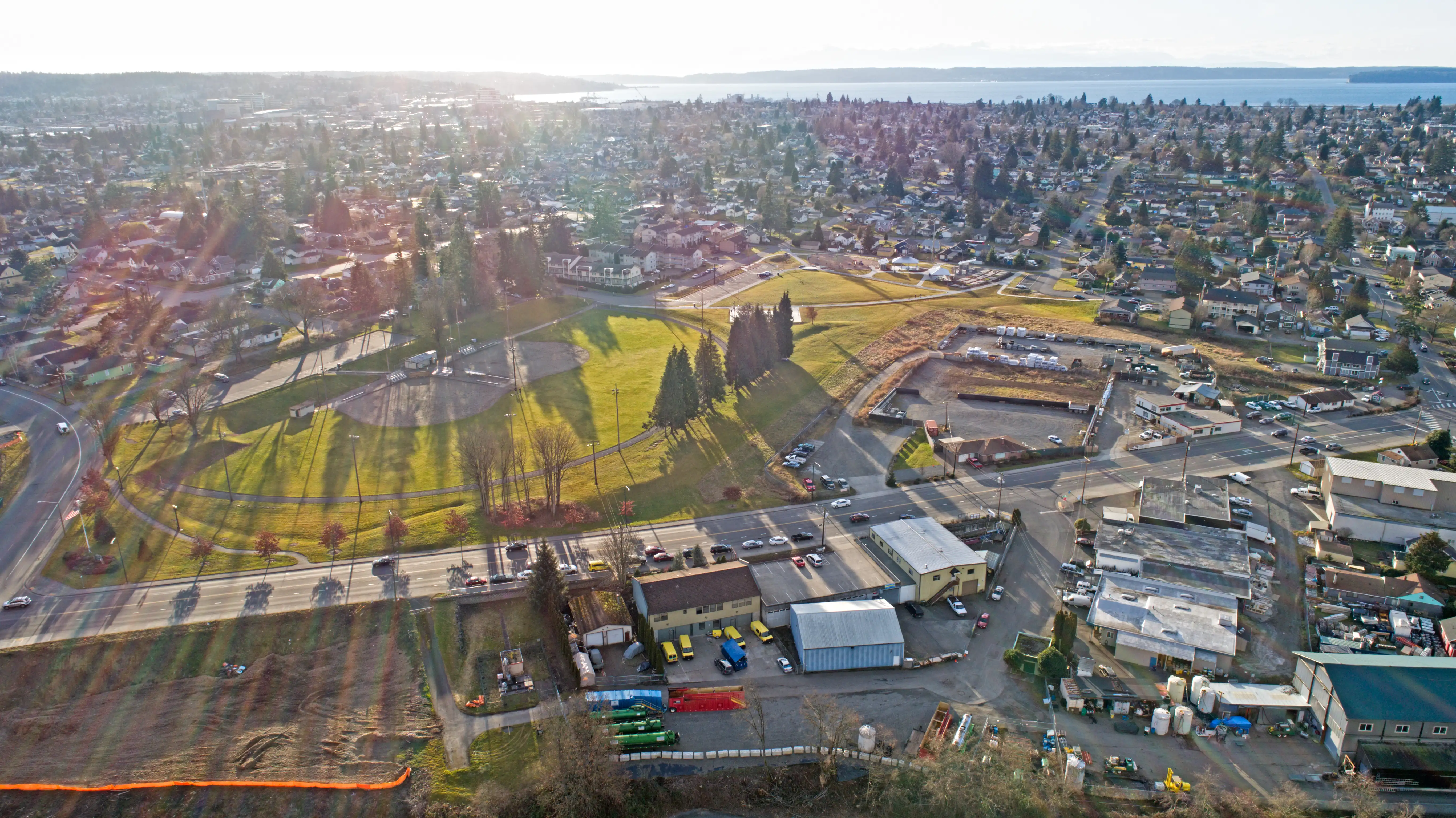
The lifestyle side holds up. The Port of Everett's Waterfront Place on Seiner Drive has matured into a genuine destination — The Net Shed seafood market and kitchen, Marina Azul Cocina & Cantina, and the rest of Restaurant Row represent a roughly $20 million port investment in the city's waterfront. The Sounder train offers a real commute alternative for those working in Seattle, and the overall quality-of-life infrastructure here justifies the price point for a first-time buyer stretched toward their limit.
Whether you're making your first offer or still trying to figure out how much house you can actually afford, the sections below walk through Everett's first-timer reality: what your budget buys, how the process works locally, a concrete budget snapshot table, and the specific mistakes that cost first-time buyers in this market.

The Everett First-Time Buyer Reality
The Zillow Home Value Index for Everett came in at $619,916 in June 2026 — and that number shapes every part of the first-time buyer calculation here. See the cost of living breakdown for how that price fits the broader Everett budget picture. What matters for first-timers is what that figure actually buys: at or below the city median, you're looking at older ranch-style homes, smaller craftsman bungalows, and condos. Turnkey, updated, and move-in-ready homes in that band rarely sit long enough to let you think.
Entry points exist below the median. Condos and townhomes move quickly and often require HOA budget scrutiny that single-family buyers skip — factor that in before you set your ceiling. Detached homes at the lower end of the market still appear, but expect deferred maintenance, dated kitchens, or trade-offs that require honest self-assessment before you make an offer.
The segment where competition intensifies fast is the $550,000–$750,000 range. In April 2026, local agents reported that homes under $750K were receiving offers with very little time to deliberate — and the $750K–$949K band flipped from slow to extremely competitive almost overnight. First-timers operating at the top of their budget in that range often find themselves outbid by buyers with equity from a previous home sale. Going in pre-approved, knowing your ceiling, and having your offer structure ready before you fall in love with a specific house is the only reliable counter to that pressure.
The Homebuying Process in Everett, Step by Step
Step 1: Get Pre-Approved Before You Tour Anything
In a market where homes go pending in roughly six days, pre-approval is not optional — it's the price of admission. A pre-qualification letter (which is a soft estimate) won't cut it with listing agents in this market. You need a full pre-approval: credit pulled, income documented, debt-to-income ratio confirmed. Lenders typically cap total monthly debt — including the new mortgage — at around 50% of gross income, though FHA and VA programs sometimes allow slightly higher ratios on a case-by-case basis.
Step 2: Understand Your Loan Type Before You Make One Offer
This is where most Everett first-timers leave money on the table. FHA loans let you buy with as little as 3.5% down and a credit score as low as 580 — but the mortgage insurance premium on an FHA loan with less than 10% down typically stays for the life of the loan. A conventional loan with 5% down and a credit score in the mid-700s often costs less month-to-month once you factor in that conventional private mortgage insurance drops off when you hit 20% equity. Run both scenarios with your lender before you decide which path to take.
Step 3: Shop With a Clear Price Ceiling, Not a Range
Tell your agent your ceiling, not your comfortable number. In Everett's sub-$750K segment, sellers price to attract multiple offers, and you will be tempted to stretch. Knowing in advance exactly where your debt-to-income ratio breaks — and writing that ceiling into your search filters — keeps you from making an emotionally driven offer you can't sustain.
Step 4: Offers, Escalation, and What to Protect
Escalation clauses are common in competitive Everett offers. What first-timers get wrong here is trading away the inspection contingency to compete — and then discovering the home needs $30,000 in work. The financing contingency protects you if the appraisal comes in low; waiving it means you cover the gap in cash. Know which contingencies are negotiating chips and which ones are financial safety nets before you're sitting across from a deadline.
Step 5: Inspection, Appraisal, and Closing
Washington State uses escrow-based closings — a neutral escrow company manages the transfer of funds and title. Closing typically takes 30–45 days from accepted offer. The inspection happens early in that window; use it to negotiate repairs or a price reduction, not just as a formality. The appraisal is ordered by your lender and is separate from the inspection — if it comes in below purchase price, you either renegotiate, cover the gap, or exit via your financing contingency.

How Much Home Can You Afford in Everett
The table below uses approximate figures for planning purposes only. Closing costs in Washington typically run 2–3% of the purchase price and include title insurance, escrow fees, prepaid property taxes and insurance, and lender fees. These are estimates — your actual figures will vary based on credit score, lender, and negotiated terms. The engine's mortgage calculator immediately below this section will let you model your specific numbers.
| Scenario | Purchase Price | Down Payment | Est. Closing Costs | Cash Needed at Closing |
|---|---|---|---|---|
| FHA 3.5% — condo/entry | ~$460,000 | ~$16,100 (3.5%) | ~$9,200–$13,800 | ~$25,300–$29,900 |
| FHA 3.5% — near median | ~$560,000 | ~$19,600 (3.5%) | ~$11,200–$16,800 | ~$30,800–$36,400 |
| Conventional 3% — entry detached | ~$520,000 | ~$15,600 (3%) | ~$10,400–$15,600 | ~$26,000–$31,200 |
| Conventional 5% — near median | ~$620,000 | ~$31,000 (5%) | ~$12,400–$18,600 | ~$43,400–$49,600 |
| Conventional 10% — move-in ready | ~$680,000 | ~$68,000 (10%) | ~$13,600–$20,400 | ~$81,600–$88,400 |
| Conventional 20% — avoid PMI | ~$620,000 | ~$124,000 (20%) | ~$12,400–$18,600 | ~$136,400–$142,600 |
The effective property tax rate in Everett runs approximately 0.77% annually — use that figure to estimate your annual tax cost, but let the calculator below handle the month-by-month math.
One planning note: buyers with strong credit who can manage 5% down on a conventional loan often come out ahead of FHA borrowers over a five-to-seven-year horizon, precisely because conventional private mortgage insurance disappears at 20% equity while FHA mortgage insurance on a low-down-payment loan typically doesn't. Run both side by side with your lender before committing to a program.
Looking to buy in Everett? Estimate your payment.
Enter your numbers to see an estimated monthly mortgage payment.
Estimate only. Excludes HOA fees and mortgage insurance. The interest rate above is a starting point, not a quoted rate — replace it with your own to see real numbers. Insurance is a flat placeholder, not a Everett quote.
Common First-Time Buyer Mistakes in Everett
Waiving the Inspection to Win a Bidding War
Everett's older housing stock — particularly craftsman and mid-century homes — can carry significant deferred maintenance that doesn't show on a walkthrough. Waiving your inspection contingency is a real competitive tactic here, but it's a costly one if the roof, crawl space, or electrical panel has issues. A middle path: an accelerated inspection (sometimes 24–48 hours after offer acceptance) lets you keep protection without slowing the transaction down for the seller.
Shopping Before Pre-Approval
This one sounds obvious until you're at an open house on a Sunday afternoon and you've already mentally decorated the living room. In a six-day-to-pending market, falling for a home before your financing is confirmed means you'll watch it go under contract while you scramble. The pre-approval conversation also surfaces surprises — a medical collection, a student loan that reads differently to a lender than it does to you — that are far better resolved before you're in a competitive offer situation.
Ignoring School Boundaries and Daily Logistics
Two streets apart in Everett can mean different school attendance boundaries within Everett Public Schools — a detail that matters enormously to families with school-age children and affects resale value. Separately, think honestly about how each part of the city fits your daily routines before you make an offer. The Sounder train is a genuine option for Seattle-bound commuters, but it doesn't serve every part of Everett equally — visit the Everett overview page for the full picture on getting around.
Underbudgeting the Cash Needed at Closing
First-timers consistently underestimate how much cash closing day requires. Down payment is the number everyone focuses on — but Washington's closing costs, prepaid homeowners insurance, property tax reserves, and potential repair credits all layer on top of it. Looking at the budget table above, a buyer putting 3.5% down on a $560,000 home needs somewhere in the $30,000–$36,000 range in total liquid cash, not just the $19,600 down payment figure. Running your cash reserves through a lender's closing cost estimate early in the process — before you're emotionally invested in a specific property — is what separates buyers who close cleanly from those who scramble at the finish line.
Local Expert Takeaway: Everett's first-time buyer market rewards preparation more than it rewards hustle. Homes under $650,000 move in days, not weeks — so the buyers who win are the ones who showed up with a lender letter, already ran the FHA-vs-conventional comparison, and knew their cash-to-close number before they walked into a single open house. The Port of Everett waterfront and a genuine Seattle commute alternative via Sounder give you quality-of-life infrastructure that justifies the price point. But the market won't wait for you to figure out your financing on the fly.
Quick Takeaways & FAQs
✅ Everett's Zillow Home Value Index sat at $619,916 in June 2026 — noticeably below comparable Seattle-area cities — making it one of the more accessible entry points in the North Puget Sound metro for first-time buyers.
⚠️ Homes in Everett were going to pending in roughly six days as of June 2026, meaning buyers who tour without a pre-approval letter in hand consistently lose out to faster, better-prepared competition.
📍 FHA mortgage insurance on a loan with less than 10% down typically stays for the life of the loan in Washington — compare it directly against a 5% conventional loan before committing to a program, because the long-term cost difference is real.
What credit score do I need to buy a home in Everett, WA?
How much cash do I actually need to close on a home in Everett?
Is Everett's housing market competitive for first-time buyers in 2026?
Should I use an FHA or conventional loan to buy in Everett?
What's the best time of year to buy a home in Everett?
Moving to Washington?
Tell us what you need help with and we'll connect you with local resources.
