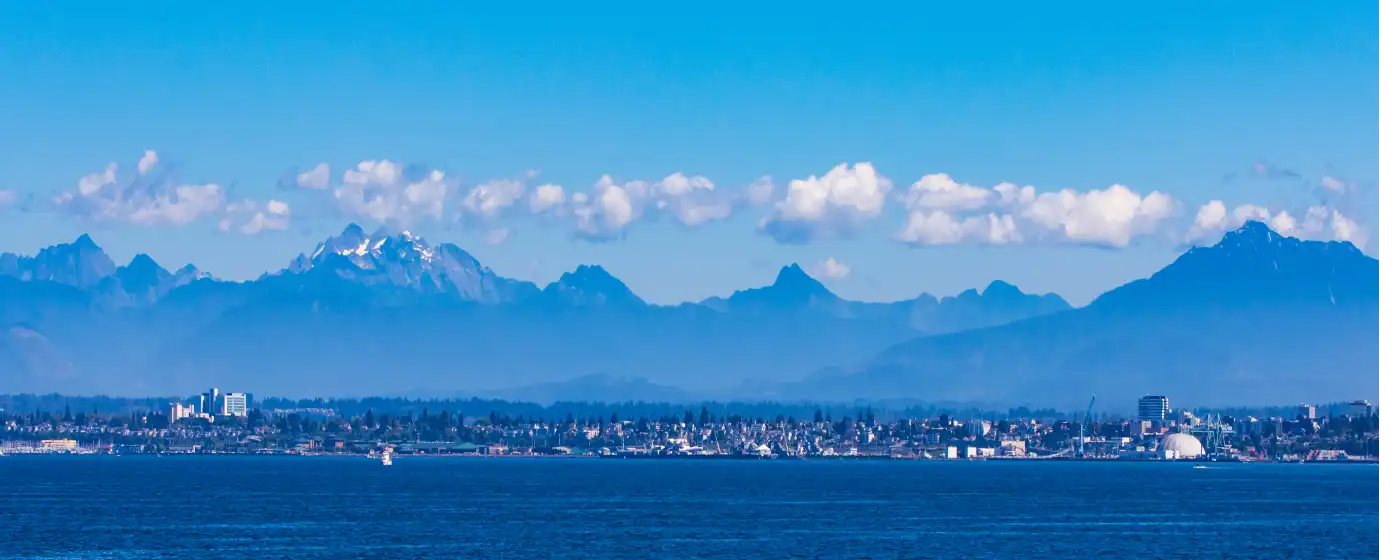
Maybe you did the math after your third Bay Area or coastal Los Angeles rent increase and Everett showed up on the spreadsheet. Maybe your Boeing offer came through and you gave yourself one weekend to visit before accepting. Either way, you're looking at a city that sits on Puget Sound with the Olympic Mountains visible on clear days and a downtown waterfront that is actively being rebuilt from scratch — and you're probably asking whether the lifestyle you're imagining actually exists here, or whether you're about to trade one set of problems for a different set you didn't plan for. The honest answer is: both, depending on what you're leaving behind and what you actually need.
Everett is the county seat of Snohomish County, about 40 minutes north of Seattle on I-5 when traffic cooperates. The Boeing Company operates the world's largest building by volume here — the Everett factory where wide-body jets are assembled — and that single fact has shaped the city's economic character for decades. Naval Station Everett adds a steady military presence, and Premera Blue Cross anchors a white-collar employment base that doesn't show up in the aerospace headlines. Everett Public Schools serves the city, and Snohomish County as a whole is among the fastest-growing counties in Washington state, which means the city around you is still changing as you read this.
The cost difference relative to coastal California is real and meaningful, though it shows up differently than most people expect. Everett's typical home value is $619,916 (Zillow Home Value Index, June 2026) — a figure that looks dramatic next to a Bay Area or coastal Los Angeles comp, less dramatic next to a Sacramento or Inland Empire one. What doesn't show up in the home-price headline is the income tax line: Washington levies no personal state income tax for residents earning below $1 million annually, compared with California's top marginal rate of 13.3%. Health insurance premiums tend to run noticeably below what you were paying in California, though you will drive farther for specialized care than you would in a major California metro. Day-to-day life here runs on craft breweries, Puget Sound ferry culture, gray winters that last longer than most Californians expect, and a waterfront district at the Port of Everett that now holds 14 cafes, breweries, and restaurants — with more arriving through 2026.
Whether you're negotiating a relocation package, listing your California home, or just trying to understand what you're actually getting into, the sections below break down the home price and tax comparison, what the move costs in practical terms, what Californians consistently underestimate about Everett, the lifestyle shift you should prepare for, and the administrative steps most people handle in the wrong order.

Home Prices and Property Taxes: The Real California Comparison
The number that tends to stop Californians mid-scroll is Everett's typical home value of $619,916 (Zillow Home Value Index, June 2026). If you're coming from the Bay Area or coastal Los Angeles, where a comparable detached home frequently clears $1.2 million or more, that figure represents a genuinely transformative shift in what your purchasing power buys. If you're coming from Sacramento's outer suburbs or the Inland Empire, the gap is real but narrower — and worth calibrating before you assume you're walking into a buyer's paradise.
What Everett's median buys in practice is typically a three-bedroom, single-family home with a garage in a neighborhood like Silver Firs or Twin Creeks — real yards, not postage stamps — rather than the compressed lot sizes that define so much of California's suburban development. Entry-level inventory starts meaningfully below that median for older construction or townhome product. For neighborhood-specific price bands, the Everett neighborhoods guide breaks those down in detail.
Property Tax: The Rate That Surprises People
California's Proposition 13 has kept effective property tax rates artificially low for long-term homeowners — often 0.7% or below on assessed value that hasn't been marked to market. Everett's effective property tax rate is 0.77%, which lands in a similar range on paper but applies to the full current market value of your home from the day you close. On a $619,916 purchase, that works out to approximately $4,773 per year — a figure the city fact sheet treats as authoritative for 2026.
If you're accustomed to a Prop 13-suppressed tax bill on a home you've owned for fifteen years, this reset will likely represent a meaningful increase. If you were renting in California, the comparison is less painful. Either way, the property tax math here is straightforward: no caps, no exceptions, and you start at market value from day one.
| Cost Factor | California (Coastal) | Everett, WA | What It Means |
|---|---|---|---|
| Typical Home Price (2026) | $1.2M+ (Bay Area / coastal LA) | $619,916 | Substantially lower; gap narrows vs. inland CA |
| Effective Property Tax Rate | ~0.70% (Prop 13 suppressed) | 0.77% | Similar rate, but applies to full purchase price immediately |
| State Income Tax | Up to 13.3% (top marginal) | 0% (under $1M income) | Largest ongoing savings for most earners |
| Capital Gains Treatment | Taxed as ordinary income (up to 13.3%) | 7% excise tax on gains above ~$278K; 9.9% above $1M | WA lower for most; CA higher for high earners |
| Sales Tax Rate (Everett 2026) | 7.25–10.25% (varies by county) | 9.9% (some ZIP codes 10.6%) | WA has no income tax; sales tax is how it's recouped |
| HOA Fees (typical) | $300–$600+/mo in many communities | $0–$250/mo; many neighborhoods HOA-free | Lower or absent; adds to monthly savings |
The sales tax line is where Californians often feel a sting they didn't expect. Everett's combined rate is 9.9% in most of the city, and some ZIP codes reach 10.6% — higher than most California counties. Washington funds its public services without a personal income tax, and the sales tax is a significant part of how it does that.
The Capital Gains Consideration for Departing Homeowners
If you're selling a California home with substantial appreciation before you move, the timing matters. California taxes capital gains as ordinary income at rates up to 13.3%. Washington levies a 7% excise tax on long-term capital gains above approximately $278,000, rising to 9.9% above $1 million — but only on gains realized as a Washington resident. Establishing genuine Washington domicile before you sell, rather than after, is a decision worth reviewing with a tax professional who knows both states.
The Income Tax Shift: What 'No State Income Tax' Actually Means for You
Washington's zero personal income tax is the headline, and it's real. For a household earning $120,000 a year in California — a figure that barely qualifies as comfortable in San Francisco — the state income tax bill can run $8,000 or more annually depending on deductions and filing status. That money stays in your pocket the moment you establish Washington residency. For most Californians moving to Everett, this is the single largest ongoing financial change the move produces.
The $1 Million Threshold Worth Knowing
Washington signed ESSB 6346 into law on March 30, 2026. Starting January 1, 2028, the state will impose a 9.9% income tax on household income above $1 million annually. If you're a high-earning tech executive, a Boeing engineer at the top of your band, or someone carrying significant investment income, this changes the calculus slightly — though it still represents a far lower rate than California's 13.3% top marginal on income at that level. For the vast majority of Everett residents, it is irrelevant: the zero-tax baseline holds for household income below that threshold.
The California Franchise Tax Board Will Not Simply Let You Leave
This is the part that surprises people. California's Franchise Tax Board is known to aggressively audit departing residents, and simply declaring yourself a Washington resident is not enough. A genuine change of domicile — selling or renting out your California home, establishing local ties in Washington, updating voter registration, changing your driver's license, and spending the majority of your time in Washington — is required before the state recognizes the move for tax purposes.
If you keep a California vacation home, travel back regularly for work, or maintain strong financial ties to the state, the FTB may attempt to assert California tax liability for income you believed was exempt. The savings are substantial enough that getting this step right — with documentation and, if warranted, professional advice — is worth the effort before you file your first Washington return.
| Income Level | CA State Income Tax (Est.) | WA State Income Tax (2026–2027) | Annual Savings Estimate |
|---|---|---|---|
| $75,000 | ~$4,200 | $0 | ~$4,200 |
| $120,000 | ~$8,000 | $0 | ~$8,000 |
| $200,000 | ~$17,000 | $0 | ~$17,000 |
| $400,000 | ~$40,000 | $0 | ~$40,000 |
| $1,000,000 | ~$118,000 | $0 (until 2028) | ~$118,000 |
| $1,500,000 | ~$180,000 | $49,500 (9.9% on $500K above threshold, starting 2028) | ~$130,500 (after 2028) |
Income tax estimates are illustrative approximations based on marginal rates; actual liability depends on deductions, filing status, and other income factors. Consult a tax professional for your specific situation.
The sales tax offset is real but rarely closes the gap. Even at Everett's 9.9% combined rate, the sales tax increase for a household spending $60,000 annually on taxable goods is roughly $1,500–$2,000 more than a mid-range California county. That math still leaves most households materially ahead after the income tax savings.
What Californians Consistently Underestimate About Everett
Six months in, Californians who moved to Everett tend to say one of two things: either "I had no idea how good this would feel" or "nobody told me about the gray." Sometimes the same person says both in the same conversation.
The Weather Is Not Seattle — It's Wetter Than Seattle
Everett sits north of Seattle and picks up measurably more precipitation than the city that gets all the rain jokes. The gray season runs from October through May. Not storms — gray. Overcast skies, drizzle that doesn't commit to being actual rain, and a light level that stays low even on days when it technically isn't raining. Californians who move here for the outdoors often discover that the outdoors here requires a different relationship with weather than hiking in the hills around San Diego or biking in the East Bay foothills: you go anyway, in the rain, or you stop going at all.
The people who adapt fastest are the ones who buy rain gear in the first two weeks and treat a misty morning on Jetty Island or along the Port Gardner waterfront as normal rather than a disappointment. The ones who struggle are still waiting for a clear weekend in February to go explore.
The Waterfront Is Real, But It's Still Becoming Itself
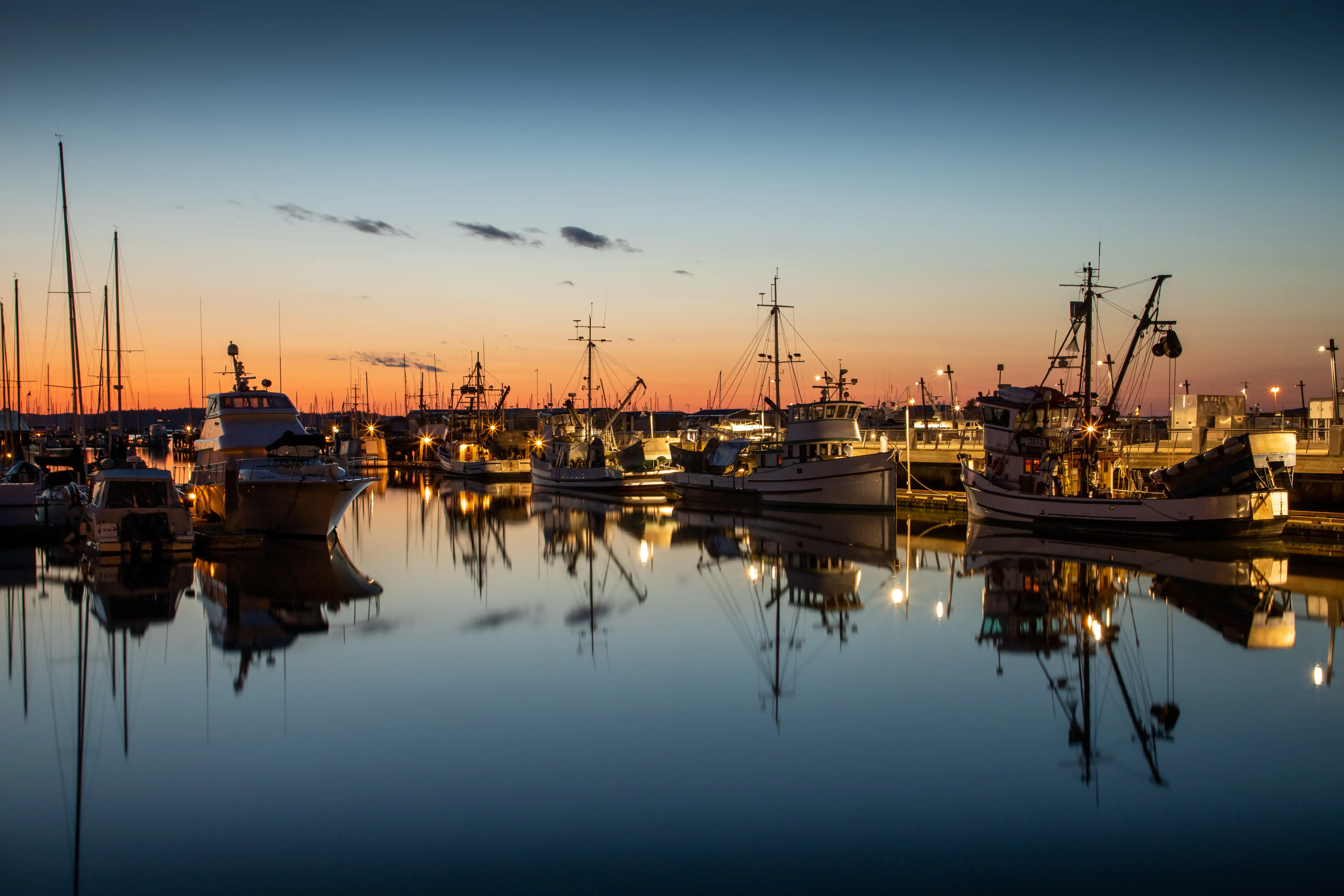
Port of Everett's Waterfront Place is a 65-acre mixed-use development with the largest public marina on the West Coast — 2,300 slips and 5,000 linear feet of guest moorage. As of late 2025, 14 cafes, breweries, and restaurants were operating along the waterfront dining district, with more arriving through 2026. Scuttlebutt Brewing on Craftsman Way anchors the established end of that strip, and the newer additions have been filling in steadily. Over 300 residential units were breaking ground in 2026.
What this means for a buyer: the waterfront is genuinely compelling, but it's still mid-construction in places. If you're buying near the port expecting a fully finished urban waterfront neighborhood, you're buying into a vision that's about 70% realized. That can be a feature or a bug depending on your appetite for noise, construction timelines, and the idea that your neighborhood's best years might be ahead of it rather than already established.
The Commute to Seattle Is Conditional
Forty minutes north of Seattle is accurate — at 10 p.m. on a Sunday. At 7:30 a.m. on a Tuesday, the I-5 corridor between Everett and Seattle is among the most congested stretches in Washington state. Californians used to Bay Area gridlock often adapt quickly; those coming from parts of Southern California with genuinely bad freeway culture sometimes find the I-5 north-south squeeze familiar. The Sounder commuter rail runs between Everett and Seattle and is worth understanding before you dismiss it. For a full look at commute options and timing, the living in Everett guide covers those patterns in detail.
Property Crime Is the Real Safety Conversation
Everett's violent crime rate of 2.65 per 1,000 residents is in a manageable range for a city of 112,000. The property crime figure — 32.19 per 1,000 — is higher and worth taking seriously. This is not uniformly distributed across the city: Riverside and parts of Northwest Everett run hotter than Silver Firs, Twin Creeks, or Glacier View. Californians moving from lower-crime suburban areas of San Diego or the East Bay foothills sometimes find the property crime rate a surprise; those coming from Oakland or parts of Los Angeles find it comparatively moderate. For the full breakdown by area, see the Everett safety guide.
Looking to buy in Everett? Estimate your payment.
Enter your numbers to see an estimated monthly mortgage payment.
Estimate only. Excludes HOA fees and mortgage insurance. The interest rate above is a starting point, not a quoted rate — replace it with your own to see real numbers. Insurance is a flat placeholder, not a Everett quote.
Lifestyle Shift: What Daily Life Actually Looks Like
The lifestyle pitch for Everett is real, but it's not the same pitch as Seattle. You're not getting the Pike Place crowds or Capitol Hill nightlife on a Tuesday. What you're getting is Puget Sound access without the price tag that attaches to Seattle waterfront, a Boeing community that creates a particular kind of working-class-meets-aerospace-engineer social fabric, and a city that is actively building its identity rather than defending an established one.
Outdoor Access That Competes With Anywhere
Jetty Island — a two-mile barrier island accessible by a free ferry from the marina — offers warm-water swimming (by Pacific Northwest standards) in summer and is the kind of place that becomes a weekly ritual once locals discover it. The Cascade foothills are genuinely close: Stevens Pass and the Mountain Loop Highway are under two hours, making spontaneous winter ski days realistic in a way that's difficult from most of coastal California. If outdoor recreation was part of why you were considering the Pacific Northwest, Everett's position delivers on that more efficiently than Seattle proper does.
The Food and Social Scene Is Honest About Its Size
Everett's restaurant and bar scene won't replace San Francisco's Mission District or the density of options along the Los Angeles coast. What it offers is a walkable waterfront corridor, a handful of independent spots scattered through downtown, and proximity to Snohomish, Mukilteo, and the broader North Puget Sound area for variety. The Boeing culture creates a strong craft beer and casual dining market — the kind of city where a good brewery on Craftsman Way becomes a genuine community anchor rather than one of three hundred options.
Californians who depended heavily on restaurant diversity as a quality-of-life metric tend to find the adjustment harder in year one and more manageable in year two, once they've found the specific places that become their regular spots and built the social context to go with them.
Schools: A System in Progress
Everett Public Schools is the district serving the city, and its performance varies more by school than by district-wide metric — which is true of most mid-sized urban districts. Families with school-age children researching specific school boundaries and performance should use the Everett schools guide rather than relying on district-level ratings that flatten that variation. The boundary quirk worth knowing upfront: school assignments in Everett can vary significantly between neighborhoods that look adjacent on a map, so verifying the specific school tied to a specific address before closing is not optional.
What People Move OUT For — And Why
Californians who leave Everett after one or two years most often cite two things: the winters — specifically the length and relentlessness of the gray rather than cold temperatures — and a sense that the city's social and cultural density didn't reach what they'd hoped after the waterfront newness wore off. The ones who stay long-term are almost always the ones who connected to the outdoor culture, found community through Boeing, the military presence, or a neighborhood school, and stopped comparing Everett to wherever they came from. That transition, not the weather, is the real adjustment.
The Practical Checklist: Getting the Move Right
The mechanics of moving from California to Everett are more consequential than most people plan for. The sequence in which you handle residency, tax documentation, and property purchase matters — and the most common mistakes are the ones that seem administrative until they cost you money.
Establish Washington Domicile Before You Need It to Count
Don't treat the residency change as paperwork to handle after you've settled in. California's Franchise Tax Board can and does assert tax liability for income earned in periods where your domicile is disputed. The practical minimum: sell or formally lease your California home, obtain a Washington driver's license, register to vote in Washington, and update your financial accounts to reflect your new address — all ideally before or immediately at the time you start working in Washington. The more documentation you have of the specific date your California ties were severed, the better your position if the FTB asks.
Understand What Washington's Tax Structure Means for Your Paycheck
No state income tax withholding means your net pay will look different immediately — no line on your Washington pay stub for state income tax. If you're also paying estimated taxes on investment income, self-employment income, or capital gains, you'll want to adjust those estimates to reflect the zero Washington rate. Remember that the 9.9% rate on income above $1 million takes effect January 1, 2028, not immediately — so the full zero-tax benefit runs through the end of 2027 for high earners, then shifts to a lower-but-not-zero calculation above that threshold.
Budget for the Actual Cost of Buying Here
Everett's typical home value of $619,916 (Zillow Home Value Index, June 2026) puts most purchases well above what a minimum-down-payment approach comfortably handles in a competitive market. Washington has a Real Estate Excise Tax (REET) paid by the seller at closing, but the buyer carries closing costs that run 2–3% of the purchase price on average. First-time buyers should review Washington-specific down payment assistance and loan programs before assuming a California-derived playbook applies here; the Everett first-time homebuyer guide covers those in detail.
Register Your Vehicles Promptly
Washington requires new residents to register vehicles within 30 days of establishing residency. The fees are not trivial — Washington's vehicle registration includes a weight-based fee plus various county and transit surcharges — but the cost is predictable and far lower than California's vehicle license fee structure for newer vehicles. Bring your California title and proof of insurance to a Snohomish County licensing office.
| Step | Timeline | Why It Matters |
|---|---|---|
| Update driver's license to WA | Within 30 days of move | Required by law; signals domicile change to CA FTB |
| Register vehicles in WA | Within 30 days of move | Required by law; late registration carries penalties |
| Update voter registration | Immediately | Key domicile documentation for CA tax purposes |
| Close or lease CA property | Before or at time of move | Holding CA real estate while claiming WA residency creates FTB exposure |
| Update financial accounts and insurance | Within 60 days | Paper trail supporting domicile change; homeowners coverage differs |
| File final CA state return | April 15 following move year | Mark as part-year resident; include only CA-sourced income for your CA period |
One thing most people don't plan for: California may send a residency audit questionnaire months or even years after you've moved. Keep the documentation — lease agreements, closing statements, utility bills, pay stubs — in a folder you can find easily. Most audits resolve quickly when the paper trail is clear.
Local Expert Takeaway: The Californians who land in Everett and don't look back are typically the ones who stopped treating the weather as an obstacle by month three, found their anchor — whether that's a boat at the Port of Everett marina, a regular spot at Scuttlebutt Brewing on Craftsman Way, or a weekend rhythm built around Stevens Pass — and ran the full tax math including sales tax before they moved rather than after. The income tax savings are real for virtually every earner below $1 million annually. The home price difference relative to coastal California is real. The gray winters are also real. All three of those things will be true on the same Tuesday in January, and the move works best for people who planned for all of them.
Quick Takeaways & FAQs
✅ Washington's zero personal state income tax is the most immediate financial benefit for Californians moving to Everett — saving most households thousands of dollars annually compared with California's rates.
⚠️ Everett's 9.9% combined sales tax rate (reaching 10.6% in some ZIP codes) is higher than many California counties and partially offsets the income tax savings on everyday spending.
📍 California's Franchise Tax Board actively audits departing residents — document your domicile change thoroughly from day one, including a Washington driver's license, voter registration update, and closure of California property ties.
How much cheaper are homes in Everett compared to California?
Does Washington state really have no income tax?
Will California still try to tax me after I move to Everett?
Is Everett's sales tax higher than California's?
What's the property tax situation in Everett compared to California?
Moving to Washington?
Tell us what you need help with and we'll connect you with local resources.
