What Is Living in Mukilteo, Washington Like?
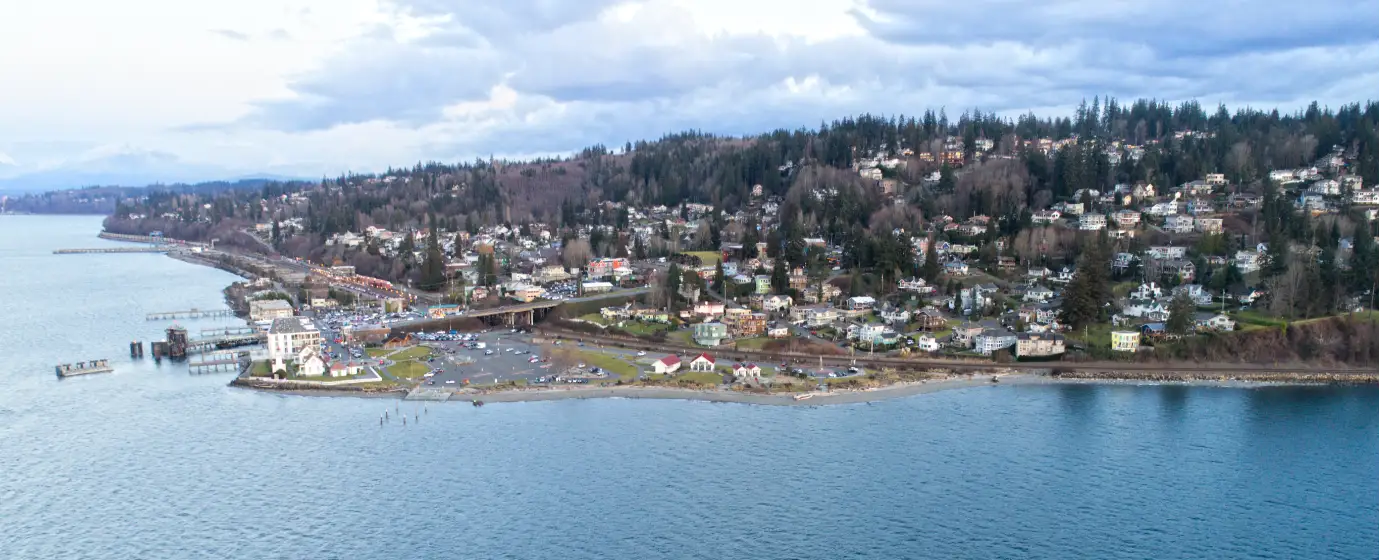
If you're choosing between Mukilteo and somewhere farther north like Everett or farther south like Edmonds, the decision usually comes down to one question: how much does proximity to Boeing's orbit matter to you? Mukilteo sits directly at that intersection — a small waterfront city of about 21,299 people hugging Puget Sound between Edmonds and Everett, roughly 25 miles north of Seattle via I-5 or SR-99. The Mukilteo–Clinton ferry terminal puts Whidbey Island fifteen minutes away by water. The Mukilteo Lighthouse anchors a downtown that still feels genuinely like a town, not a suburb. The tradeoff is that the same aerospace concentration that makes this place economically stable also means your social circle, your neighbors, and your commute patterns will all, in some way, orbit Paine Field.
The economic backbone here is unmistakable. Boeing's Everett assembly plant — just over the city line — is where the 777, 777X, and 787 Dreamliner are built, and a significant share of Mukilteo's working residents either work there directly or for the companies that supply it. Electroimpact, headquartered right in Mukilteo along the waterfront, has grown into what it describes as the world's largest integrator of aircraft assembly lines, counting Boeing, Airbus, Northrop Grumman, Embraer, and Blue Origin among its customers. Travis Industries, which manufactures wood, pellet, and gas stoves, rounds out the local employer base alongside the Mukilteo School District, which serves roughly 15,270 students across 24 schools and holds a B+ rating, according to Niche. The community this draws skews toward engineers, educators, and dual-income households — the median household income sits at $132,861, which tells you something about who has been able to buy here and stay.
That income level matters because home prices here are not small. The Zillow Home Value Index for Mukilteo sits at $863,937 (2026), and recent closed-sale data puts median transactions meaningfully above that figure. Washington has no state income tax, and Mukilteo's effective property tax rate of approximately 0.79% is modest relative to many comparable West Coast markets — so the tax picture is genuinely favorable even if the sticker price is not. Day-to-day life for residents centers on the waterfront, Lighthouse Park, and the trail network at Japanese Gulch. The city is actively investing in its shoreline: permits are in progress to daylight Japanese Gulch Creek, restore salmon habitat, and build a promenade connecting the park to the ferry terminal. This is a city that knows its greatest asset is the water, and it is spending accordingly.
Whether you're weighing a relocation for work, looking for a quieter alternative to Seattle's closer suburbs, or trying to understand whether Mukilteo's price tag is justified by what you get in return, the sections below break down the city's neighborhoods, housing market, commute realities, employers, local favorites, and what daily life here is actually like.

Mukilteo at a Glance
Looking to buy in Mukilteo? Estimate your payment.
Enter your numbers to see an estimated monthly mortgage payment.
Estimate only. Excludes HOA fees and mortgage insurance. The interest rate above is a starting point, not a quoted rate — replace it with your own to see real numbers. Insurance is a flat placeholder, not a Mukilteo quote.
Why Are People Moving to Mukilteo?
The short answer is aerospace. A significant share of people who move to Mukilteo do so because of a job offer at Boeing's Everett plant, at Electroimpact, or at one of the dozens of precision manufacturing and engineering firms that cluster around Paine Field. That's not a knock — it means this city has a durable economic core that has survived multiple aerospace downturns and continues to attract high-earning technical talent.
But the aerospace draw alone doesn't explain why people stay. What keeps residents here is the combination of a genuine waterfront downtown and a residential character that feels far smaller than the population might suggest. The Mukilteo Lighthouse has been standing since 1906, and the stretch of shoreline around it — Lighthouse Park, the ferry terminal, the informal beach gatherings on summer evenings — creates a community anchor you rarely find in a city this close to a major metro.
Who Actually Moves Here
Mukilteo pulls three distinct buyer profiles. First, Boeing and Electroimpact engineers who want to shorten a commute that, in either Everett or Lynnwood, can feel punishing on SR-526 or I-5. Second, Seattle-area households who have been pushed north by prices and are looking for a place with strong schools, low crime, and a reasonable drive to the city. Third, Whidbey Island commuters who work on the mainland and use the Mukilteo–Clinton ferry as their daily link — fifteen minutes on the water beats forty minutes on the highway for a specific kind of person.
The Aerospace Economy — More Than Just Boeing
| Employer | Sector | Role in Mukilteo | Best For |
|---|---|---|---|
| Boeing (Everett/Paine Field) | Aerospace manufacturing | Dominant employer in immediate area; 777, 777X, and 787 assembly | Commuter |
| Electroimpact | Aerospace tooling & automation | Headquartered in Mukilteo; global assembly-line integrator | Tech |
| Travis Industries | Hearth manufacturing | Local manufacturer; wood, pellet & gas stove production | Value |
| Mukilteo School District | Education | 24 schools, ~15,270 students; major local employer | School |
| Boeing Future of Flight | Aviation tourism | Daily tours at Paine Field; significant regional draw | Commuter |
The concentration of aerospace here creates a two-sided reality: the economy is resilient, but it is not diversified. If you work in tech, healthcare, or finance and are considering Mukilteo purely for lifestyle reasons, understand that your professional network will look different than it would in Bellevue or Redmond.
What Newcomers Don't Expect
After about six months here, a lot of people from out of state have the same realization: Mukilteo is quieter than it looks on a map. It sits between two busier cities, but the downtown — a few blocks of waterfront restaurants, Diamond Knot Brewery & Alehouse on Front Street, Ivar's Mukilteo Landing near the ferry — closes early by urban standards. If your previous city had a 10 p.m. restaurant culture, that shift takes adjustment.
The waterfront investment pipeline — the Japanese Gulch Creek estuary restoration, the planned promenade to the ferry terminal, the scuba diving area in the works — is real and funded. Buying now means buying into a city that is actively improving its best asset. That's a legitimate part of the value case here.
What Daily Life Feels Like in Mukilteo
Mukilteo operates on a rhythm that is genuinely different from the suburbs immediately south. There's no big commercial strip, no regional mall, no density of chain restaurants competing for every corner. What there is: a waterfront that anchors daily life in a way that's hard to replicate, a neighborhood fabric that parents with school-age children tend to find deeply functional, and a smallness that either feels grounding or limiting depending on what you're coming from.
The Waterfront Is the Town Center
Lighthouse Park is where Mukilteo's social life concentrates. On summer weekends, the park fills with families, the ferry-watching crowd, and people waiting for a table at one of the restaurants clustered near the terminal. Hook & Cleaver draws the date-night crowd. Mukilteo's Speedway Cafe handles the casual weekday breakfast. Diamond Knot Brewery & Alehouse on Front Street — founded in 1994 by two Boeing employees and the oldest microbrewery in Snohomish County — is the Friday gathering spot for the after-work set.
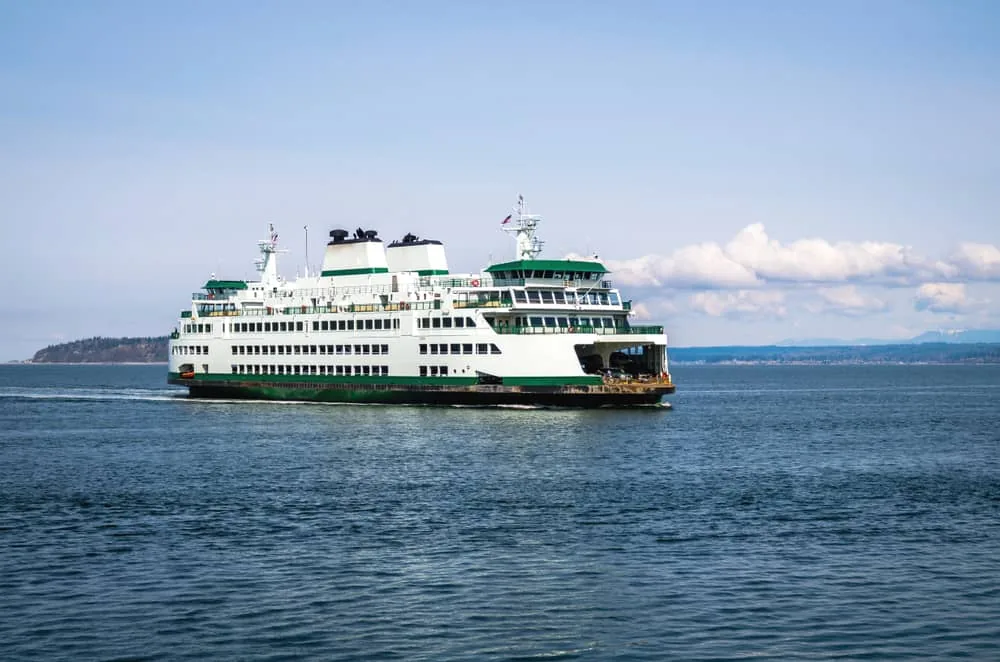
The ferry itself becomes part of the daily routine for many residents, not just commuters. Weekend trips to Whidbey Island's farms and beaches happen easily; the Clinton crossing takes about fifteen minutes and runs frequently enough that you stop thinking of Whidbey as a destination and start thinking of it as an extension of your backyard.
School Life and the Family Fabric
The Mukilteo School District's 24-school footprint and consistently strong district performance mean that parents with school-age children have genuine choices within the system. The student-teacher ratio runs at approximately 17 students per teacher districtwide — not exceptional, but competitive for a public system of this size and budget. For a deeper look at individual schools and boundary specifics, the Mukilteo schools page breaks it down by campus.
The most honest thing to say about family life here: the parks system and the school network work together in a way that makes the city feel larger than 21,000 people. Japanese Gulch's trail network, the beach at Lighthouse Park, and a calendar of community events around the ferry terminal give families with kids a structure to their weekends that doesn't require driving to a bigger city.
What Locals Quietly Complain About
Grocery options require a drive. There is no Trader Joe's in Mukilteo — the nearest is in Lynnwood, and most residents run their weekly shopping there or in Everett. The downtown restaurant scene, while genuinely good for a city this size, is small enough that regulars cycle through the same four or five spots quickly. People who move here from denser urban environments sometimes describe a social contraction in the first year — fewer spontaneous options, more intentional planning.
SR 525 is the city's main artery, and when anything disrupts it — including the paving project that began in late July 2026 with single-lane closures expected through the end of the year — the ripple effect reaches nearly every corner of the city. That is the physical reality of a waterfront town with limited road corridors. Safety statistics are among the city's genuine strengths; see the safety page for the full breakdown on what the city's 32% crime drop in 2025 actually looks like at the neighborhood level.
The Mukilteo Housing Market Right Now
Mukilteo is not an entry-level market. The Zillow Home Value Index sits at $863,937 (2026), and recent closed transactions in ZIP 98275 have run notably above that figure. These are prices that reflect what the market is actually clearing — not wish-list asking prices, but what buyers are paying to live here.
What moves quickly here moves very quickly. Zillow's data shows homes going to pending in around six days on average, which means that if you find something you want in Mukilteo, hesitation is the most expensive strategy. The inventory is thin relative to demand, and the buyers competing for it tend to be high-income, financially prepared households who know the market.
What You Get at This Price Point
Most of the housing stock is single-family homes built between the 1970s and the early 2000s, with a meaningful share of newer construction in areas like Harbour Pointe. The city's compact footprint and its Puget Sound position mean that lot sizes tend to be modest — you're generally not getting the acreage here that you might find farther north in Snohomish County. What you are getting is proximity: to the water, to Paine Field, and to a school district that performs at a level the price implies you should expect.
Some areas of the city command a premium over the citywide figure — particularly those with direct water views or on the bluffs above the Sound. Others come in noticeably below it, particularly neighborhoods farther from the waterfront. For a neighborhood-by-neighborhood breakdown of character and price positioning, see the best neighborhoods page. For cost of living context — including the property tax rate, rent ranges, and how Mukilteo compares to neighboring cities — the cost of living page covers it in full.
Washington's effective property tax rate in Mukilteo runs at approximately 0.79%, which is a real advantage relative to California or Oregon buyers who often arrive expecting higher annual tax bills. The absence of a state income tax compounds that favorably. The numbers work better than the sticker price suggests — but only if you go in clear-eyed about what the sticker price actually is.
Mukilteo Neighborhoods
Mukilteo has several distinct areas — each with its own character and appeal. Here’s a breakdown to help you narrow down where to focus your home search.
🏡 Harbour Pointe
Harbour Pointe is Mukilteo's largest planned community, occupying the elevated plateau above the Sound with a mix of established single-family homes and a community feel anchored by the Harbour Pointe Golf Club. It suits parents with school-age children who want newer construction, cul-de-sac streets, and easy access to the Mukilteo School District's campuses without being directly in the congestion of the lower waterfront.
🏠 Chennault Beach
Chennault Beach occupies the bluffs on the city's southern edge, where tree-lined streets give way to partial or direct water views and a quieter residential pace. Buyers here tend to be drawn by the natural setting and the sense of remove from the ferry-terminal activity, while still being close enough to reach Lighthouse Park in minutes.
🌳 Boulevard Bluffs
Boulevard Bluffs sits on the ridgeline above the Sound, offering some of the most dramatic Puget Sound and Olympic Mountain views in the city from elevated streets and larger lots. It attracts buyers who prioritize the view and the privacy that comes with a hillside setting over walkability to the waterfront.
🏘 Norma Beach
Norma Beach is one of Mukilteo's more established shoreline neighborhoods, with homes sitting close to the waterline and a residential character that feels distinct from the planned communities on the plateau above. The direct beach access and older housing stock make it popular with buyers who want a traditional waterfront feel rather than a newer subdivision aesthetic.
🏔 Wind & Tide
Wind & Tide is a quieter pocket neighborhood that takes its name from the Sound's presence along its edges, with a mix of mid-century and updated homes that appeal to buyers looking for a less trafficked setting while still being within the city's limits and school district. The neighborhood's low-key character suits those who want proximity to the waterfront without being directly in the busiest part of it.
🌆 Goat Trail
Goat Trail is one of the city's more character-filled historic areas, with steep slopes, irregular lot layouts, and homes that have evolved organically over decades rather than being built to a development plan. It attracts buyers who appreciate architectural variety and a sense of place, and who are comfortable with the trade-off of narrower roads and less predictable lot conditions.
Pros & Cons of Living in Mukilteo
The Pros
- Waterfront setting with Puget Sound
- Olympic
- and Cascade views
- Close proximity to Boeing/Paine Field aerospace jobs
- Easy ferry access to Whidbey Island
- Well-regarded parks like Lighthouse Park and Japanese Gulch trails
The Cons
- Home prices well above county and national medians
- Property crime rate somewhat above the national average
- Limited walkability (Walk Score around 25) and car-dependent layout
Getting Around & Commuting in Mukilteo
Mukilteo's commute story has two completely different versions depending on where you work. If your job is at Paine Field, Boeing's Everett plant, or Electroimpact — you may have one of the most enviable commutes in the greater Seattle area. If your job is in downtown Seattle, you have a commute that requires a real strategy.
The Boeing and Paine Field Commute
Residents who work in the Paine Field corridor can often be at their desk in under ten minutes. That proximity is a significant part of why aerospace engineers and technical staff choose Mukilteo over Lynnwood or Mill Creek — the time math works decisively in the city's favor. The catch is SR 525, which funnels traffic from the residential neighborhoods down to the waterfront and Paine Field. During the current paving project along that corridor (began July 2026, single-lane closures expected through year-end), even that short commute is adding ten to fifteen minutes for some drivers.
The Seattle Commute
Seattle is roughly 30 minutes from Mukilteo in ideal conditions — a figure that applies to perhaps 20% of rush-hour departures. On a normal weekday morning, I-5 southbound through Lynnwood and Shoreline runs 45 to 70 minutes. Residents who commute to Seattle regularly tend to gravitate toward one of three approaches: driving to Lynnwood City Center and catching Sound Transit's 1 Line light rail south; using Mukilteo Station at 920 First Street to connect via local bus to the rail network; or adjusting their work schedule around peak congestion windows.
| Destination | Mode | Typical Off-Peak | Typical Peak | Notes |
|---|---|---|---|---|
| Paine Field / Boeing Everett | Drive | 8–12 min | 12–20 min | SR 525 corridor; construction delays in effect 2026 |
| Downtown Everett | Drive | 10–15 min | 20–30 min | SR 526 or Mukilteo Speedway |
| Lynnwood City Center Station | Drive + Light Rail | 15 min drive | 20–25 min drive | Sound Transit 1 Line south to Seattle from there |
| Downtown Seattle | Drive | ~30 min | 50–75 min | I-5 S; highly variable — plan around it |
| Clinton / Whidbey Island | Ferry | ~15 min crossing | ~15 min crossing | Wait times vary; summer weekends can add 30–60 min in queue |
| Seattle (via transit) | Bus to Light Rail | 60–80 min | 70–90 min | Local bus from Mukilteo Station to Lynnwood, then 1 Line |
Mukilteo Station recorded fewer than 50 average daily weekday boardings in 2025, which tells you the real picture: this is a city where nearly everyone drives. The transit option exists and is useful for Seattle commuters who want to avoid parking costs, but the network is not dense enough to replace a car for daily errands or family logistics.
The Ferry as a Commute Option
A genuine subset of Mukilteo residents use the Mukilteo–Clinton ferry to commute from Whidbey Island to jobs in the Paine Field area. For that population, Mukilteo's proximity to the terminal — walkable from parts of the historic downtown — is the entire reason for living here. Summer weekend ferry queues can back up significantly on SR 525 as day-trippers stack up for the crossing, and that congestion affects everyone in the lower part of the city regardless of their destination.
If you work from home full or part-time, Mukilteo's commute limitations largely disappear and its lifestyle advantages become the whole story. A meaningful share of recent buyers have structured their lives around exactly that calculus.
Schools in Mukilteo
Families relocating to Mukilteo have public, private, and higher-education options nearby. Here’s a quick overview.
🎓 School District
Mukilteo School District serves K–12 students across Mukilteo and the surrounding area. Rated B+ (source: Niche.com).
🏆 Graduation Rate
The 4-year high-school graduation rate here is approximately 81.8%.
📚 Higher Education
Washington’s public universities — the University of Washington, Washington State University, and Western Washington University — offer four-year degrees statewide, with a network of 34 community and technical colleges (SBCTC) providing two-year and workforce programs.
🌐 Online Learning
University of Washington Continuum College and Washington State University Online offer fully accredited online degrees for remote learners across the state.
Safety in Mukilteo
A quick look at how Mukilteo compares on the numbers that matter most when weighing a neighborhood or a move.
🛡 Violent Crime
Approximately 1 per 1,000 residents.
🔒 Property Crime
Approximately 17 per 1,000 residents.
Compared to the FBI’s most recent national data (2024), Mukilteo’s violent crime is below the national average (about 3.6 per 1,000), and property crime is about the same as the national average (about 17.6 per 1,000).
Against Washington as a whole, Mukilteo’s violent crime is roughly a third of the state average, and property crime is roughly two-thirds of the state average (Bureau of Justice Statistics, Crime Known to Law Enforcement, 2024 (tables 2 and 3)).
Crime rates can vary a lot within a single city, so the citywide numbers above are only a starting point. Some neighborhoods in Mukilteo run well below these averages, while others run higher — the kind of block-by-block detail that matters most when you’re actually choosing where to live. The full guide below breaks it down neighborhood by neighborhood.
Working in Mukilteo
Mukilteo’s largest employers span several industries — here are some of the anchors of the local job market.
🏭 Boeing
Aerospace manufacturing, adjacent Everett/Paine Field plant
🏭 Travis Industries
Wood, pellet & gas stove manufacturing
💼 Electroimpact
Aerospace tooling
🎓 Mukilteo School District
Education
Parks & Recreation in Mukilteo
Some of the outdoor spaces that shape everyday life in Mukilteo.
🌱 Lighthouse Park
Mukilteo residents don’t have to go far for green space — spots like Lighthouse Park are part of everyday life here, whether that’s a morning walk, a weekend hike, or just somewhere to unwind outside. The full guide below covers more of what Mukilteo has to offer for parks and outdoor recreation.
Retiring in Mukilteo
Mukilteo draws retirees for its balance of amenities, outdoor access, and cost. Here’s what to weigh.
🌤 Climate
Mukilteo sits on Puget Sound and benefits from the moderate maritime climate that defines this stretch of the Washington coast — mild, wet winters that rarely freeze and dry, temperate summers that stay comfortable well into September. The waterfront location means afternoon westerly breezes in summer, which keeps the humidity manageable. Expect gray skies from November through March, but the dramatic views of the Olympics and Cascades make clear days feel earned.
🍴 Lifestyle
Daily life for retirees in Mukilteo centers on the waterfront — morning walks along Lighthouse Park, afternoon ferry-watching, and a small but quality dining scene anchored by spots like Ivar's Mukilteo Landing and Diamond Knot Brewery & Alehouse on Front Street. The Boeing Future of Flight at Paine Field is a genuinely interesting standing attraction for visitors. The trail network at Japanese Gulch suits active retirees who want accessible hiking close to home.
🏚 55+ Communities
Mukilteo's residential fabric is primarily single-family homes without large dedicated 55+ developments within city limits. Retirees who choose the city typically do so for the waterfront setting and the established neighborhood feel of areas like Harbour Pointe and Chennault Beach. Nearby Lynnwood and Everett offer a broader range of active-adult communities for those who want that structure.
✈ Getting Around
A car is essential for full independence in Mukilteo — the city's layout and limited transit frequency make that a practical reality. Seattle-Tacoma International Airport is approximately 40 minutes south via I-5, and Paine Field in adjacent Everett offers select commercial service for regional travel. The Mukilteo–Clinton ferry is a genuine quality-of-life bonus, turning Whidbey Island into an easy half-day option for retirees who want to explore without a long drive.
🏛 Washington Taxes for Retirees — What to Know
- No state income tax — Washington does not tax personal income, so Social Security, pensions, and 401(k)/IRA withdrawals are all untaxed at the state level. There is no state return to file and no retirement exclusion to claim — the rate is simply zero.
- Military and public pensions — Because there is no income tax, military retirement pay and public-employee pensions are untaxed at the state level along with everything else.
- Sales tax is the tradeoff — The state sales tax is 6.5%, and local add-ons bring the combined rate in Mukilteo to 10.6% (Washington State Department of Revenue, Q3 2026 local sales & use tax rate table, July 2026). Groceries and prescription drugs are exempt.
- Property taxes, with senior relief — The effective property tax rate is roughly 0.9%. Homeowners 61+ (or unable to work due to disability, or a qualifying disabled veteran) who own and occupy their home may qualify for a reduction. Income limits are set against each county’s median household income, so the threshold differs by county — check with your county assessor. A separate deferral program is available for those who don’t qualify for the exemption.
- Capital gains tax — but not on retirement income — Washington taxes 7% on long-term capital gains above a $278,000 standard deduction for 2025, rising to 9.9% on gains above $1,000,000. Retirement accounts and real estate sales are both exempt. It therefore does not reach ordinary retirement income or the sale of a home.
- Estate tax — the one to plan for — Unlike most no-income-tax states, Washington has its own estate tax. For deaths on or after July 1, 2026, the exemption is $3 million with graduated rates topping out at 20%. Retirement accounts count toward the taxable estate, so long-time homeowners with sizable balances can cross the line without expecting to.
- No inheritance tax — Washington has no inheritance tax, and no gift tax.
- WA Cares payroll premium — Working Washingtonians pay 0.58% of gross wages into the WA Cares Fund, the state long-term care program, with no income cap. It applies to W-2 wages, so retirees who have stopped working do not pay it — but anyone relocating while still employed will see it. The private-insurance opt-out closed at the end of 2022 and is not available to new applicants; the remaining exemptions are narrow (living outside Washington, military spouses, certain visa holders, and veterans with a 70%+ service-connected rating).
- The Oregon border effect — Oregon has no sales tax, so Washington residents near the river — Vancouver, Camas, Washougal, Longview — often cross over for large purchases. Washington use tax technically applies to goods brought back for use in-state, though it is rarely enforced on ordinary personal purchases.
Tax laws change frequently and individual situations vary. This is general information, not tax advice — always consult a qualified Washington tax professional or CPA for personalized retirement tax planning.
Weekends & Local Favorites in Mukilteo
Mukilteo's weekend culture is built around the water and the trail system — and increasingly, around a waterfront that is being actively upgraded. The combination of Lighthouse Park, the ferry terminal, Japanese Gulch, and a compact but quality dining scene gives the city a weekend rhythm that doesn't require leaving town.
The Waterfront Stretch
Lighthouse Park is the social center of the city on a sunny Saturday. The historic lighthouse itself (standing since 1906) draws visitors, but locals use the surrounding beach and lawn as a gathering space — kids in the water, adults on the grass, everyone watching the ferries run. Ivar's Mukilteo Landing captures the casual seafood crowd near the terminal. For dinner, Hook & Cleaver draws people from outside the city for its steakhouse and seafood menu. Diamond Knot Brewery & Alehouse on Front Street is where longtime residents tend to land on Friday evenings; as the oldest microbrewery in Snohomish County, it has a local credibility that newer spots simply haven't earned yet.
Japanese Gulch and the Trails
Japanese Gulch is a forested ravine trail system that cuts through the middle of the city — unexpected in scale given the surrounding neighborhoods and genuinely popular with mountain bikers and hikers who treat it as a daily workout rather than a weekend expedition. The planned restoration of Japanese Gulch Creek's estuary, with beach access and a promenade to the ferry terminal, will eventually make this one of the most interesting urban trail connections on the Puget Sound shoreline. For the full picture on parks and outdoor recreation, the parks and recreation page goes deep on both the existing network and the development pipeline.
The Boeing Future of Flight
If you move to Mukilteo and have family visiting from out of state, the Boeing Future of Flight at 8415 Paine Field Boulevard becomes your default answer to "what should we do tomorrow?" The 80-minute guided tour inside the world's largest manufacturing facility — where Boeing 777, 777X, and 787 Dreamliner aircraft are assembled — is legitimately impressive and sells out weeks ahead. Locals learn quickly to book in advance rather than assuming walk-up availability exists.
Day Trips and Seasonal Rhythms
The fifteen-minute ferry crossing to Clinton puts Whidbey Island's farms, beaches, and the town of Langley within easy reach for a half-day. Most Mukilteo residents who do this regularly say they stop thinking of Whidbey as a "trip" after the first six months — it becomes a regular weekend option rather than a planned excursion. Summer tourist traffic changes that calculus: ferry queue times on SR 525 can stretch to an hour on peak summer weekend afternoons, and that backup affects the whole lower city, not just the people heading to the boats. Planning departures before 9 a.m. or after 5 p.m. is the local habit worth adopting early.
Top Things Locals Say About Mukilteo
The best intel about a city comes from the people who actually live there. Here’s what Mukilteo residents say when newcomers ask the questions everyone’s thinking.
“I knew the commute to Paine Field would be short, but I didn't realize how much the ferry would just become part of my weekend routine. Six months in and we're on Whidbey almost every other Sunday without even planning it — you stop thinking of it as a trip.”
— Recent Mukilteo home buyer
“What's the most surprising thing about living in Mukilteo?”
How quiet the downtown gets after 8 p.m. The waterfront looks lively in photos and it is — during the day and early evening. But Mukilteo doesn't have a late-night scene to speak of. If you moved from somewhere with a 10 p.m. restaurant culture, you'll notice that shift pretty quickly. Most people adjust and end up finding it more relaxing than frustrating, but it takes a few months.
“What do locals love most about Mukilteo?”
The water, without hesitation. Lighthouse Park on a clear evening — watching the ferries cross against the Olympics in the background — is the thing people mention most when they talk about why they stay. Japanese Gulch gives the city a forest trail system that feels genuinely wild for something inside city limits. And the ferry access to Whidbey turns what could feel like a limitation into an asset.
“What should newcomers to Mukilteo know?”
SR 525 is the city's one real pressure point. When it backs up — and during the 2026 paving project with single-lane closures, it backs up more than usual — there isn't a clean alternate route through the lower part of the city. Budget extra time for any appointment below the bluffs during morning and afternoon peaks. Also: book the Boeing Future of Flight tour before your out-of-town guests arrive, not the day before — it sells out weeks ahead.
“Can you live in Mukilteo without a car?”
Realistically, no — not if you have a family or need to grocery shop regularly. Mukilteo Station provides transit connections, but the local bus frequency is low enough that car-free daily life is genuinely difficult. The waterfront downtown is walkable from a handful of neighborhoods, and some residents walk to Diamond Knot or Lighthouse Park without driving. But for everything else — groceries, the nearest Trader Joe's in Lynnwood, school pickup — you need a car.
Cities Near Mukilteo
Other communities near Mukilteo worth a look — each with its own character and price point.
| City | Distance | Best For | Vibe | Median Rent | Median Buy |
|---|---|---|---|---|---|
| Everett | 6 mi | Budget-conscious buyers, urban amenities | Working-class roots, growing arts scene | $1,900 | $563,725 |
| Edmonds | 10 mi | Retirees, ferry lifestyle, walkable downtown | Quieter, artsy, waterfront-anchored | $2,100 | $750,000 |
| Lynnwood | 9 mi | Transit access, new construction, value | Dense, commercial, rapidly evolving | $1,950 | $680,000 |
More Helpful Guides for Mukilteo
Going deeper on Mukilteo? Our blog series covers everything from first-time buying to retiring here — explore the guides below.
Local Expert Takeaway: Mukilteo is an aerospace city with a waterfront soul, and you need to go in understanding both halves. The price tag — a Zillow Home Value Index of $863,937 in 2026 — is real, but so is what you're buying: a school district that holds a B+ rating, according to Niche, among the lowest violent crime rates in Snohomish County, a ten-minute commute to Paine Field, and a front-row seat to a waterfront that the city is actively improving. Diamond Knot Brewery & Alehouse on Front Street is where you'll meet your neighbors; Lighthouse Park is where your kids will spend their summers; Japanese Gulch is where you'll go when you need thirty minutes of actual forest. The people who leave Mukilteo tend to leave because the housing costs outpaced their income growth or because they needed a denser social scene than a city of 21,000 can sustain. The people who stay rarely describe it as a compromise.
Quick Takeaways & FAQs
✅ Mukilteo's proximity to Paine Field makes it one of the rare Seattle-area cities where aerospace workers can genuinely commute in under 15 minutes.
⚠️ The housing market is unforgiving for buyers who hesitate — homes have been going to pending in around six days, and the price floor is well above the regional average.
📍 Diamond Knot Brewery & Alehouse on Front Street, founded by two Boeing employees in 1994, is the oldest microbrewery in Snohomish County and the unofficial gathering spot for Mukilteo regulars.
Is Mukilteo a good place to live if I work at Boeing's Everett plant?
How are the schools in Mukilteo?
What is the typical home price in Mukilteo right now?
Can I commute from Mukilteo to downtown Seattle without a car?
What is the Mukilteo ferry and who uses it?
Helpful Links for Moving to Mukilteo
Moving to Washington?
Tell us what you need help with and we'll connect you with local resources.
