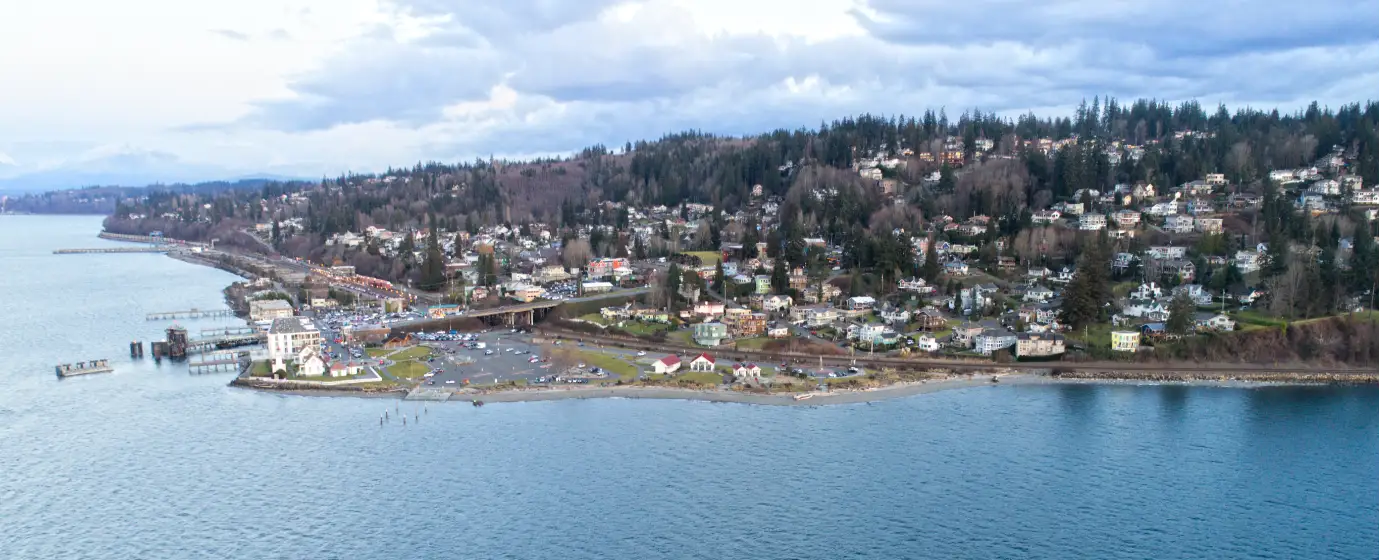
Most people moving to Mukilteo lead with the ferry view or the Boeing connection — but the detail that surprises them six months in is how much usable outdoor space a city of 21,000 actually has. You're looking at 502.54 acres of parks and open space inside city limits, a shoreline park that doubles as a dive site and a summer festival grounds, and a 147-acre forested conservation area with seven-plus miles of trail that mountain bikers largely built by hand. For a North Puget Sound city wedged between Everett and the waterfront bluffs, that ratio of green space to residents is genuinely unusual.
The outdoor access here isn't incidental — it's engineered into the city's geography. Lighthouse Park anchors the west end of Front Street with direct Puget Sound beach access, fire pits, and unobstructed views of Whidbey Island and the Olympic Mountains. Japanese Gulch Conservation Area, straddling the Everett–Mukilteo line near the 92nd Street SW trailhead, gives trail runners, mountain bikers, and leash-free dog owners a completely different experience: dense second-growth forest, ravine switchbacks, and enough elevation change that you'll feel like you drove an hour east. Both systems are mapped on the city's MukMaps portal and are within a short drive of any address in the city.
The Rosehill Community Center on Lincoln Ave rounds out the picture indoors — 29,000 square feet of classrooms, a dance room, an art room, and a multi-purpose hall, all with Possession Sound views — while the city's two fishing piers near the ferry terminal at Front Street give anglers ADA-accessible spots for crab and seasonal salmon without leaving town. The city's parks and recreation planning process, shaped by resident survey feedback, found fewer than 10% of Mukilteo residents felt their park and open-space needs were unmet. That number is low enough to be worth taking seriously.
Whether you're a trail runner eyeing Japanese Gulch, a family looking for beach fire pits on a summer Friday, or someone who just wants to know how far the nearest kayak launch is, the sections below break down Mukilteo's signature parks, trail systems, water recreation, and seasonal programming in specific, usable detail.
Lighthouse Park: Mukilteo's Waterfront Anchor
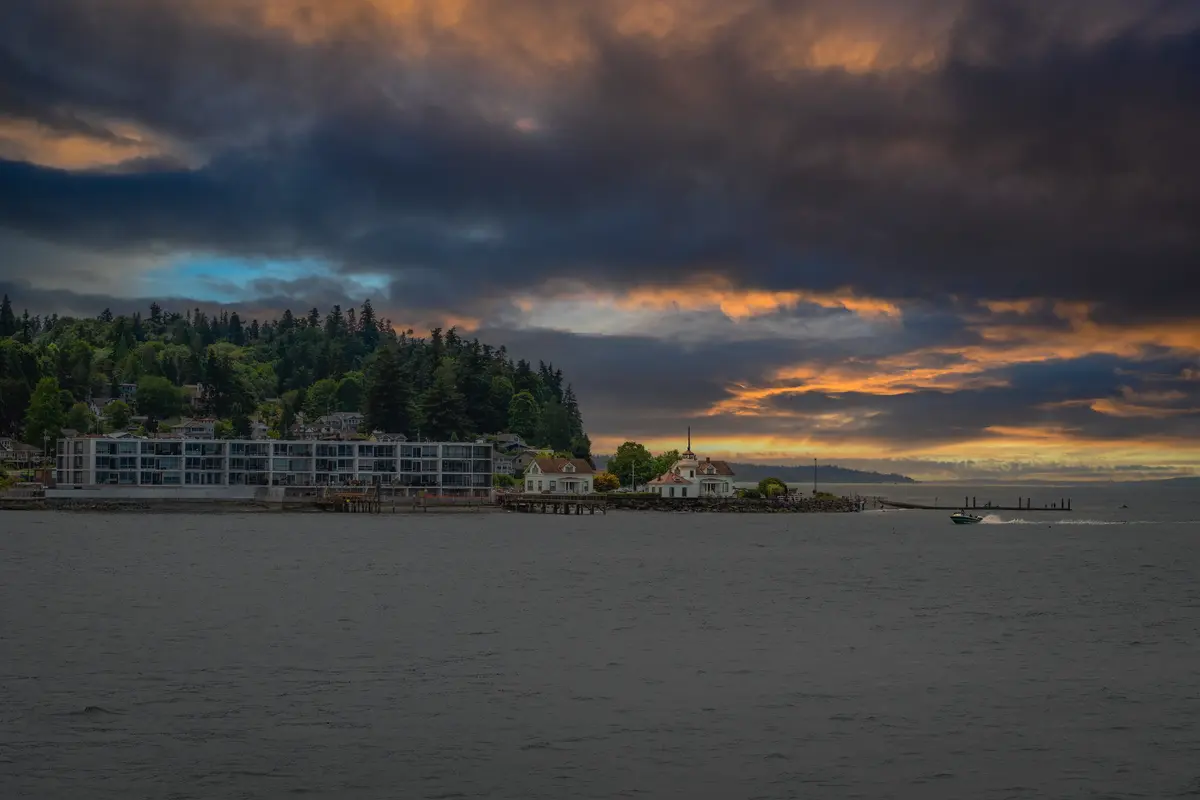
At 14.4 acres on the western edge of historic downtown, Lighthouse Park packs more usable recreation into a small footprint than any other spot in the city. The park sits on filled tideland originally constructed in the 1950s and was deeded by Washington State to the City of Mukilteo in 2003 — so the land itself has a complicated history, but what's here now is genuinely public and genuinely accessible.
What You Actually Get
The amenities list is longer than most people expect: a paved, wheelchair-accessible waterfront trail, direct beach access, a boat launch, sheltered picnic facilities, a playground, six first-come first-served beach fire pits, restrooms, a visitors center, and a designated saltwater dive site. The fire pits in particular are the park's most contested resource — arrive early on any warm weekend evening if you want one.
Standing on the shoreline promenade, you get a clear line of sight across Possession Sound to Whidbey Island, with the Olympic Mountains behind it on clear days. The Mukilteo–Clinton ferry crosses directly in front of you at regular intervals, which makes this one of the more unusual spots in Snohomish County for a shoreside walk.
The Lighthouse Itself
The 1906 Mukilteo Lightstation — one of the few remaining wooden lighthouses in the Pacific Northwest — sits within the park boundaries and runs volunteer-led tours on weekends and holidays, noon to 5 p.m., April through September. The city has also built a self-guided audio walking tour available through its Parks & Cultural Arts portal, which you can download before you arrive.
The Seasonal Caveat
The annual Mukilteo Lighthouse Festival takes over the park grounds each summer with a children's area, carnival rides, and a fireworks display. Crowds during festival weekend are large enough that the park's own resources flag weekday visits as the smarter option. If you're new to the city, pencil in a Tuesday morning visit before you form your baseline impression — the festival-weekend experience is a different park entirely.
Best for: Beach walks, fire pit evenings, weekend lighthouse tours, saltwater diving, boat launches, and family picnics with a ferry view.
Japanese Gulch and the City's Trail Systems
Japanese Gulch Conservation Area is the surprise in Mukilteo's outdoor portfolio. At 147 acres straddling the Everett–Mukilteo city line, it holds more than seven miles of trail through a forested ravine — and it exists largely because mountain bikers organized to convert former private land into a multi-use corridor before it could be developed.
What the Trail Network Looks Like
| Trail Type | Character | Best For |
|---|---|---|
| Blue-rated flow trails | Bermed, built-up lines with rollable features | Mountain biking |
| Technical switchbacks | Rooted, off-camber descents through ravine | Advanced MTB / trail running |
| Main hiking loop | Shared-use, moderate grade, forest canopy | Hikers, runners, wildlife watchers |
| Trails and Tails Dog Park | Off-leash agility equipment, north trailhead | Dogs (large and small) |
Black-tailed deer move through the ravine regularly enough that you'll likely spot them on a morning run. The trail network is accessible from the primary trailhead near 92nd Street SW and Mukilteo Lane.
Big Gulch and the Broader Network
Big Gulch Park at 9600 62nd Place W is the city's second featured trail system — quieter and less built-out than Japanese Gulch, but worth knowing about if you want a shorter forest loop without the mountain bike traffic. Both systems are mapped on the city's interactive MukMaps portal, which is the most current source for trailhead parking and access details.
What Locals Know
Japanese Gulch fills up on dry weekends between May and October. The north trailhead parking is small, and there's no overflow lot. If you're planning a mountain bike session on a Saturday, the practical move is arriving before 9 a.m. or shifting to a weekday. The trail conditions also change fast after rain — the flow trails drain reasonably well, but the technical lines through the ravine can get slick enough to warrant waiting a day after a heavy Puget Sound storm.
Best for: Mountain biking of all skill levels, trail running, leash-free dog play, wildlife observation, and anyone who wants genuine forest immersion without leaving city limits.
Water Recreation: Fishing, Diving, and Puget Sound Access
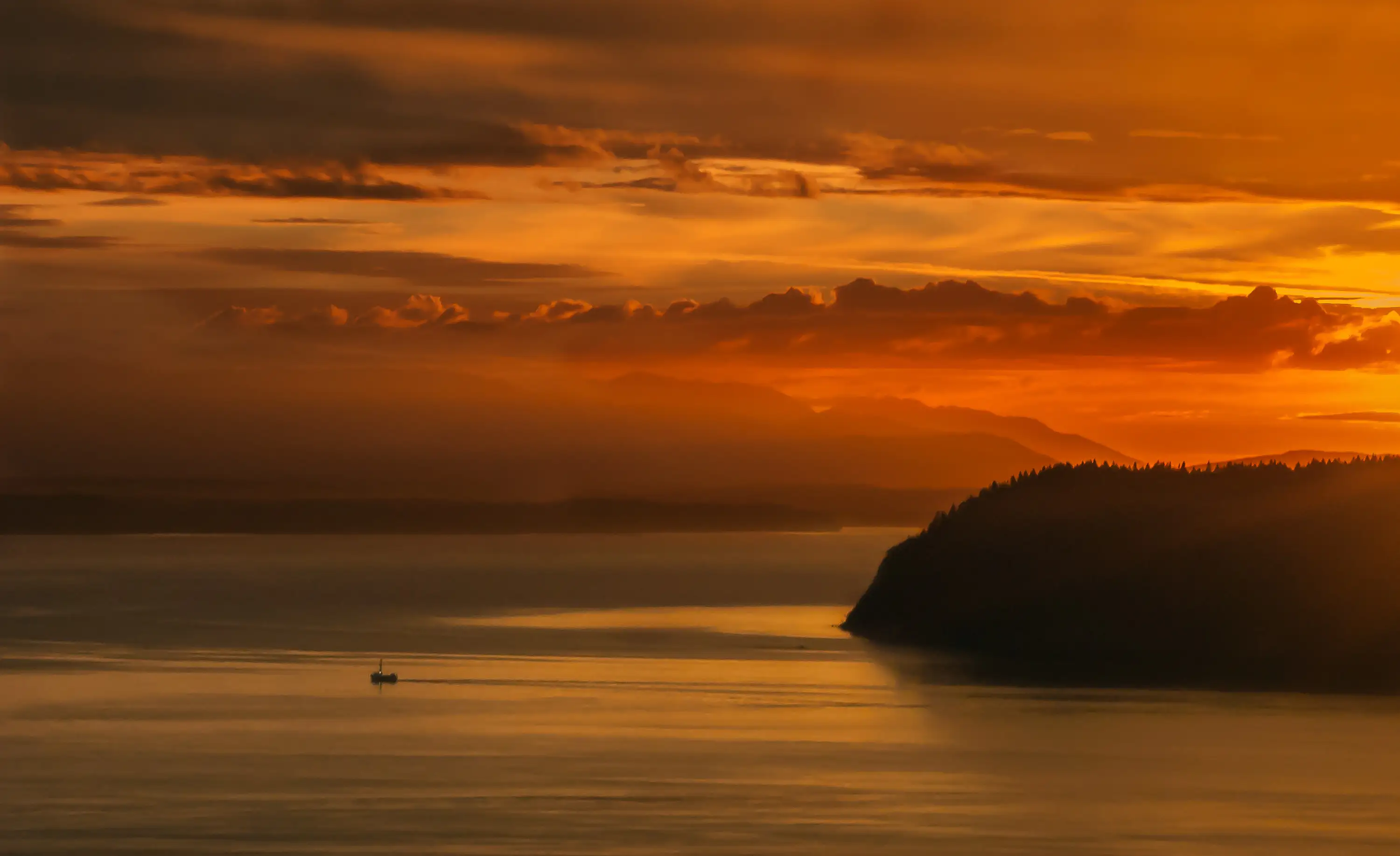
Mukilteo's position on Possession Sound isn't just scenic — it's fishable, diveable, and launchable. The city has two designated fishing piers near the ferry terminal on Front Street, managed by the Washington Department of Fish & Wildlife. The wider of the two piers has ADA-accessible features, making it one of the more inclusive saltwater fishing spots in Snohomish County.
Fishing Piers at a Glance
| Feature | Detail |
|---|---|
| Location | Near Mukilteo-Clinton Ferry Terminal, 700 Front St |
| Number of piers | Two (one wider, ADA-accessible) |
| Target species | Dungeness crab, seasonal salmon |
| Managing agency | Washington Department of Fish & Wildlife |
| Boat launch | Lighthouse Park, 609 Front St |
| Saltwater dive site | Lighthouse Park shoreline |
Crab and seasonal salmon are the draws here. Salmon seasons shift year to year based on WDFW emergency rules, so checking the current regulations before you show up with gear is non-negotiable — the seasons can open and close with short notice in Puget Sound fisheries.
Diving and Paddling
The saltwater dive site at Lighthouse Park attracts divers looking for an accessible Puget Sound entry point without a long boat ride. Visibility varies with tidal conditions and Possession Sound current patterns, and the ferry traffic nearby is a genuine navigation consideration — not something to treat as background noise. For kayakers and paddleboarders, the boat launch at Lighthouse Park is the primary access point, though Possession Sound's currents and ferry wakes mean this is better suited to experienced paddlers than first-timers.
After a Day on the Water
Diamond Knot Brewery & Alehouse on Front Street is within walking distance of both the fishing piers and Lighthouse Park — a waterfront brewery and alehouse that's been part of the Front Street scene long enough to count as a Mukilteo institution. If you're at the Chennault Beach end of the city, their production brewery and taproom on Chennault Beach Road is the closer option.
Best for: Crab and salmon fishing, saltwater diving, boat launches, and anyone who wants Puget Sound access without a marina membership.
Looking to buy in Mukilteo? Estimate your payment.
Enter your numbers to see an estimated monthly mortgage payment.
Estimate only. Excludes HOA fees and mortgage insurance. The interest rate above is a starting point, not a quoted rate — replace it with your own to see real numbers. Insurance is a flat placeholder, not a Mukilteo quote.
Rosehill Community Center and Year-Round Programming
Outdoor access is Mukilteo's headline, but the Rosehill Community Center on Lincoln Ave is where the city's recreation programming actually lives. At 29,000 square feet with views across Possession Sound, it's the operational hub for the city's Recreation and Cultural Services Department — and it covers a wider range of offerings than most community centers in cities this size.
What's Offered
| Program Category | Facilities Used | Who It Serves |
|---|---|---|
| Dance | Dedicated dance room | All ages |
| Visual arts | Art room | All ages |
| Music & enrichment | Classrooms | All ages |
| Fitness programs | Multi-purpose room | Adults, seniors |
| Youth activities | Classrooms, multi-purpose room | Kids, teens |
| Community events | Large multi-purpose room | All residents |
For families with kids, youth programming at Rosehill runs alongside activities available through the city's parks system; see the schools page for a full picture of organized youth sports and after-school programs in the area.
The Planning Context
The city's parks and recreation planning effort — built from resident survey data — sets the roadmap for future investment in parks, trails, and arts programming. The survey result that fewer than 10% of residents felt their park needs were unmet signals something real: this isn't a city where recreation is an afterthought squeezed into the budget at the end.
What Newcomers Don't Expect
Rosehill's programming calendar fills up faster than you'd anticipate for a city this size. Popular fitness and arts classes book in the first week of registration, and registration windows are easy to miss if you're not signed up for city notifications. Setting a calendar reminder for the season registration opening — usually aligned with the city's quarterly schedule — is the move newcomers figure out in year two, not year one.
Best for: Year-round indoor fitness, arts and enrichment programs, community event space, and families looking for structured programming within city limits.
Local Expert Takeaway: Mukilteo's outdoor life is more layered than the waterfront view suggests. Lighthouse Park is the obvious starting point — fire pits, beach access, ferry views, and that 1906 wooden lighthouse — but the real discovery for most residents is Japanese Gulch, where seven-plus miles of mountain bike flow trails and a forested ravine hiking loop are essentially in the middle of a suburb. Between the 502+ acres of park land, two WDFW fishing piers steps from the ferry terminal, and a full-service community center at Rosehill with Sound views, the outdoor-to-city-size ratio here is one of the better deals on the North Puget Sound.
Quick Takeaways & FAQs
✅ Mukilteo packs 502.54 acres of parks and open space into a city of roughly 21,000 — an unusually high ratio for a North Puget Sound suburb.
⚠️ Lighthouse Park's six beach fire pits are first-come first-served and go fast on any warm weekend evening, so early arrival is the only reliable strategy.
📍 Japanese Gulch Conservation Area, accessible from the trailhead near 92nd Street SW, straddles the Everett–Mukilteo city line — so on a trail map, it looks like it's barely in Mukilteo, but residents use it as their primary mountain biking and trail running destination.
Is Mukilteo Lighthouse Park good for swimming?
How difficult are the trails at Japanese Gulch?
Can I fish for salmon from the Mukilteo fishing piers?
What does the Rosehill Community Center offer, and do I need to be a resident to use it?
When is the Mukilteo Lighthouse Festival, and how does it affect parking at the park?
Moving to Washington?
Tell us what you need help with and we'll connect you with local resources.
