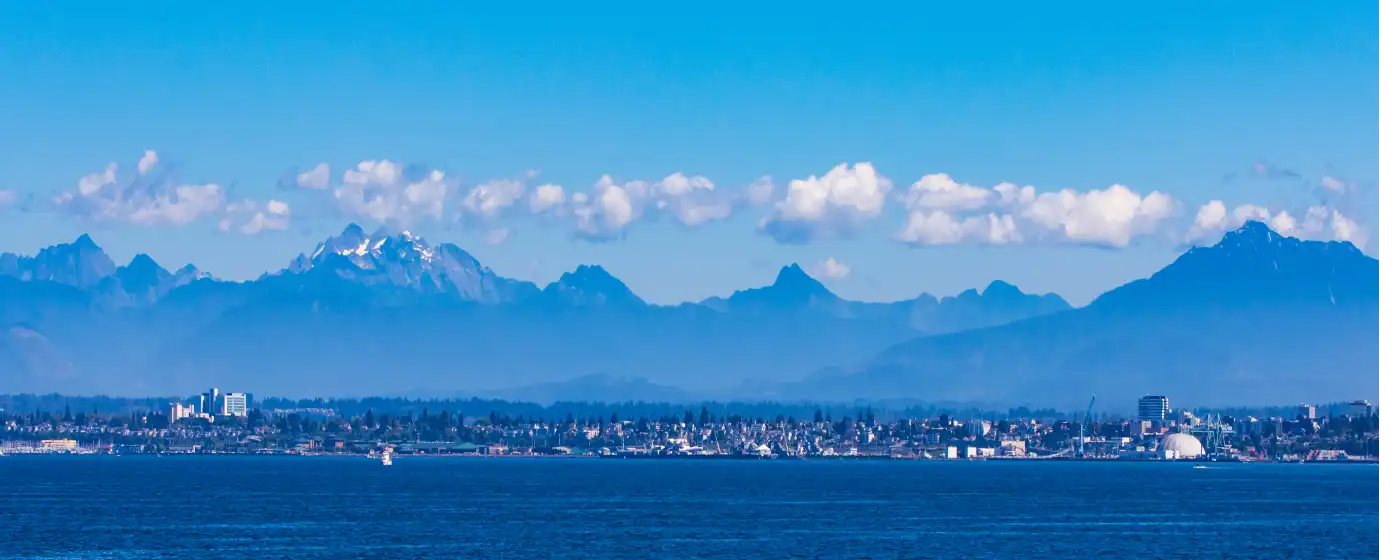
You might expect a city best known for the world's largest Boeing factory and a Naval station to feel industrial and transient. Many retirees assume the same — and then they visit the waterfront. Everett sits at the northern edge of the Puget Sound on a bluff above Port Gardner Bay, with views of the Cascade Range to the east and the Olympics to the west on clear days. The city is crossed by I-5 and US-2, with Seattle roughly 40 minutes south — close enough to access a world-class medical district, far enough that you're not paying Seattle prices for your retirement home. That geographic tension — urban proximity without urban cost — is what keeps drawing retirees here from California, Arizona, and the broader Pacific Northwest.
Providence Regional Medical Center Everett anchors the healthcare picture, and its recent jump to a four-star CMS quality rating gives retirees something concrete to hold onto. A major multispecialty clinic network and a growing roster of local specialists round out what is genuinely one of the more self-sufficient medical communities outside of Seattle. The city's population of roughly 112,000 is large enough to support specialty care locally but small enough that you're not navigating a maze to get an appointment.
On cost, Everett sits at a meaningful discount to Seattle and its closer-in suburbs, though it's no secret anymore. The Zillow Home Value Index pegged the typical Everett home at $619,916 as of June 2026 — well below comparable waterfront-adjacent markets. Washington's complete absence of a state income tax means your Social Security check, pension, and IRA withdrawals land with no state-level haircut, which retirees coming from Oregon, California, or Minnesota notice immediately. The trade-off is a sales tax that reaches into double digits locally, so your grocery and retail budget takes a hit that income doesn't.
Whether you're weighing a move from a pricier part of the Sound or relocating from out of state entirely, this guide covers Everett's healthcare access, retiree tax picture, what a fixed-income budget actually looks like here, where to find community and walkable daily life, downsizing options, and how Everett stacks up against the nearby retirement alternatives most people also have on their list.

Why Retirees Are Choosing Everett
Everett fits a specific kind of retiree well: someone who wants genuine urban amenity — a real hospital system, transit options, arts venues, restaurants — without the price tag of Seattle's close-in suburbs. If your retirement vision includes a waterfront walk, a community theater at the Historic Everett Theatre, a marina district with actual dining and life, and a hospital you trust less than 10 minutes from home, Everett delivers all of that.
The city also suits retirees who still want proximity to family or friends in Seattle without being on a Seattle budget. At a typical home value of $619,916 (Zillow Home Value Index, June 2026), your dollar stretches further than in Bellevue, Kirkland, or even Lynnwood. Retirees downsizing from larger homes in the Seattle corridor frequently find they can cash out equity, buy a smaller Everett home or condo outright, and bank the difference.
Who should look elsewhere: if your retirement picture requires a car-free lifestyle in a flat, dense walkable core, Everett's outer neighborhoods will frustrate you — the city's aggregate Walk Score of 49 reflects real car dependence in areas away from downtown. And if you're seeking the lowest possible cost of living in the Pacific Northwest, smaller Snohomish County towns like Marysville or Snohomish offer less expensive entry points. Everett earns its place when healthcare access, culture, and a recognizable city infrastructure matter more than rock-bottom prices or maximum walkability.
Healthcare & Medical Access in Everett
The Anchor: Providence Regional Medical Center Everett
Providence Regional Medical Center Everett — PRMCE — is the healthcare fact that most influences a retiree's decision to choose Everett over a smaller nearby town. It's a 595-licensed-bed, Level II trauma center operating across two campuses in downtown Everett. In 2026 it received a four-star Overall Hospital Quality Rating from the Centers for Medicare & Medicaid Services, jumping from two stars to four within a single year.
U.S. News & World Report named PRMCE a Best Regional Hospital in the Seattle Metro for 2025–26, with High Performing designations in heart attack care, pneumonia treatment, spinal fusion, and abdominal aortic aneurysm repair. Those last two matter specifically for older patients: spinal and vascular surgeries at this caliber rarely stay local in smaller Puget Sound communities. Everett residents get them at home.
Specialty Depth and What You Still Need Seattle For
PRMCE's reach extends across Snohomish, Skagit, Whatcom, Island, and San Juan counties — it's the dominant regional referral center, not just a community hospital. A large multispecialty clinic network adds a dense layer of primary care, specialist, and urgent care access on top of PRMCE. For cardiology, oncology, orthopedics, and neurology at the routine-to-moderate complexity level, most retirees will not need to leave the city.
The honest caveat: for highly specialized cancer centers, leading transplant programs, or complex neurological interventions, the University of Washington Medical Center and the Fred Hutchinson Cancer Center in Seattle remain the regional gold standard. The I-5 corridor makes that roughly a 40-minute drive — not terrible for occasional specialist visits, but something to factor in if you're managing a serious chronic condition and hate driving.
Day-to-Day Medical Life
Multiple urgent care clinics, several federally qualified health centers, dental networks, and optometry practices are distributed across the city. If you plan to age in place in Everett for a decade or more, the infrastructure for that is genuinely here — which separates it from smaller Puget Sound communities where a specialist appointment means an automatic trip south.

The Retiree Budget in Everett
Washington's Income-Tax Advantage
Washington levies no personal income tax — full stop. Your Social Security benefit, pension distributions, IRA withdrawals, and 401(k) income arrive without any state-level deduction. For retirees moving from Oregon (which taxes all retirement income), California, or high-income-tax states in the Midwest or Northeast, the annual savings on a modest retirement income can run into four figures.
One nuance worth knowing: Washington does impose a 7% capital gains tax on long-term gains above $278,000 per year (2025 threshold, indexed for inflation). Transactions inside retirement accounts — 401(k)s, IRAs, defined-benefit plans — are specifically exempt. If your retirement income is entirely distribution-based, this tax almost certainly doesn't touch you. High-net-worth retirees with taxable brokerage accounts and large annual gains should talk to a tax advisor before assuming a clean picture.
Property Taxes and the Senior Exemption
Everett's effective property tax rate is approximately 0.77% — moderate by Washington standards and well below most California and Midwest markets. Washington also offers a senior property tax exemption that freezes your home's assessed value at the time of application and, depending on your income level, can exempt up to $70,000 of that value from taxation. For retirees on fixed incomes, applying for this exemption through the Snohomish County Assessor's office is one of the first financial moves worth making after closing.
The Sales Tax Reality
The income-tax advantage has a real offset: Washington's combined state and local sales tax in the Everett area runs toward the higher end of the state's range, which can reach as high as 10.6% in some jurisdictions. Groceries are exempt from sales tax in Washington, which softens the blow on food, but clothing, household goods, and services are taxed. Retirees who do significant retail spending will feel this — it's not a dealbreaker, but it is the number that partially explains why Washington's tax climate is favorable for income-heavy retirees and less so for high-consumption ones.
For a full cost-of-living breakdown including rent, utilities, and everyday expenses, see the dedicated cost-of-living page.
Looking to buy in Everett? Estimate your payment.
Enter your numbers to see an estimated monthly mortgage payment.
Estimate only. Excludes HOA fees and mortgage insurance. The interest rate above is a starting point, not a quoted rate — replace it with your own to see real numbers. Insurance is a flat placeholder, not a Everett quote.
Walkability, Community & Staying Active in Everett
The Walkability Reality
Everett's citywide Walk Score of 49 tells half the story — the outer residential neighborhoods genuinely require a car for nearly every errand. If you're downsizing into one of those areas and have stopped driving, or plan to soon, that's a real concern worth planning around.
The other half: the blocks around the waterfront, Port Gardner, and Everett Station score materially higher and function more like a genuine walkable urban district. Downtown Everett has a flat commercial core along Hewitt Avenue and Colby Avenue where a modest number of daily errands — coffee, a quick lunch, a pharmacy visit, a trip to the library — can be done on foot. Retirees who prioritize walkable daily life should concentrate their housing search in this zone.
The Waterfront as a Community Hub
The Port of Everett Waterfront Place at Fisherman's Harbor has become the city's most active retiree-friendly gathering point in recent years. A $20-million-plus investment added new dining and gathering spaces, and on a weekday afternoon the marina district draws a noticeably older crowd — walking the boardwalk, having lunch, watching the boats. It's the kind of low-key, habitual social life that actually sustains retirees long-term.
Senior Centers and Organized Community
Everett's senior center offers fitness classes, social groups, day trips, and meal programs — the infrastructure most retirees eventually discover and many become core to their weekly routine. Snohomish County's broader system adds options for residents near the city's edges. Volunteering opportunities through the Historic Everett Theatre, the Angel of the Winds Arena events calendar, and various Snohomish County nonprofits give purpose-driven retirees consistent ways to stay engaged.
Transit for Non-Drivers
Everett Station connects Sounder commuter rail, Amtrak, Sound Transit Express buses, Community Transit Swift BRT, and Everett Transit local buses — an unusually rich transit hub for a city of this size. Retirees who live within a reasonable distance of downtown can reach Seattle and other destinations to the south without a car. A planned light-rail extension would eventually add six stations and direct rail to the broader Sound Transit network, though the first phase isn't targeted until 2037 and full downtown service not until 2041 — that's a future benefit, not a present one.
For trail access, Everett's parks and recreation page covers the Interurban Trail, Jetty Island, and the waterfront walking paths in detail.
Right-Sizing: Downsizing in Everett
What the Downsizing Market Actually Looks Like
Everett doesn't have the deep 55+ active-adult community inventory you'd find in Sun Belt retirement destinations. What it has is a practical range of smaller-footprint options in a market where you can realistically purchase without taking on a large mortgage after selling a larger home elsewhere in the region.
Single-level homes — ramblers, in the local vocabulary — appear throughout older parts of the city, though inventory at the accessible end of the price spectrum tightens quickly. Buyers who need a true single-level layout with no stairs often find themselves competing for the same limited supply, so patience and getting your financing sorted early matters.
Condos and Low-Maintenance Living
The downtown core and Port Gardner area have the highest concentration of condo and townhome inventory in the city. Condos near the waterfront put you within walking distance of the marina district and Everett Station — the combination that eliminates the most car dependence. HOA fees vary substantially by building age and amenity level; newer waterfront-adjacent buildings carry higher fees that add meaningfully to monthly carrying costs on a fixed income, so underwriting those fees into your budget before you fall in love with a unit is essential.
55+ and Active-Adult Options
Purpose-built 55+ communities within Everett proper are limited in number — this is not a retirement-community-dense market. What exists skews toward independent living and assisted living facilities rather than active-adult home communities. Retirees seeking the lawn-free, clubhouse-and-pool model that's standard in Arizona or Florida will find more options in Marysville to the north or in the Mill Creek and Lynnwood corridors to the south, where a handful of active-adult developments have been built in recent years.
Independent and assisted living facilities do operate in Everett and the immediately surrounding area, covering the full spectrum from independent living apartments to memory care. If aging-in-place within a managed community is part of your long-term planning, Everett has options — they simply require direct research and touring rather than an obvious cluster to choose from.
What People Realize After Six Months
One pattern retirees who choose outer-neighborhood homes in Everett consistently report: they underestimated how much of their daily life would still depend on a car. Those lower-density areas on the city's edges are pleasant enough — but they're not places where you can gracefully stop driving in your late 70s. Retirees with a long planning horizon often wish they'd chosen a downtown condo or a Port Gardner unit instead, even at a higher initial cost, because the lifestyle flexibility compounds over time.
Everett vs Nearby Retirement Destinations
| City | Cost vs Everett | Primary Hospital | Walkability | Senior Living Depth | Overall Retirement Fit |
|---|---|---|---|---|---|
| Everett | Anchor | Providence PRMCE — Level II trauma, 4-star CMS, High Performing in 4 procedures | 49 citywide; downtown core and waterfront notably higher | Moderate — independent/assisted living present, limited 55+ active-adult communities | Transit Views Strong on healthcare; requires car in most neighborhoods |
| Mukilteo | About the same to slightly pricier | Relies on PRMCE in Everett (10–15 min) | Limited — ferry town, not walkable for daily errands | Thin — small community, few dedicated senior facilities | Views Quiet Beautiful waterfront setting; healthcare and amenity dependent on Everett |
| Marysville | Noticeably cheaper | Regional community hospital locally; complex cases refer to PRMCE | Car-dependent throughout | Better 55+ active-adult inventory than Everett | Value Families Lower entry costs; less urban amenity; better for active-adult community seekers |
| Snohomish | Noticeably cheaper in some segments, comparable in others | Small local clinic; hospital care requires Everett or Monroe | Small walkable downtown core; outer areas car-dependent | Thin — small-town inventory | Quiet Nature Historic town feel; serious healthcare needs require a drive |
| Lynnwood | Comparable to slightly cheaper | Relies on Everett or Seattle systems | Improving with Link light rail under construction; currently car-dependent | Growing — several assisted living and active-adult options | Commuter Transit Good transit access once Link opens; less waterfront character than Everett |
| Mill Creek | Pricier | No major acute hospital locally; nearest is PRMCE | Suburban, car-dependent | Some planned active-adult options; newer construction available | Quiet Schools Quiet planned community feel; retirees without kids gain less from its biggest strength |
Marysville wins on raw affordability and 55+ community inventory, making it the clearest alternative for retirees whose budget is the binding constraint. Snohomish offers small-town character and lower entry costs but asks you to drive to Everett or beyond for anything beyond routine care. Lynnwood is the strongest bet for retirees who want to eventually give up car keys entirely — the coming Link light-rail connection will give it transit credentials Everett won't match until the mid-2030s at the earliest. Mill Creek is genuinely pleasant but its premium pricing mostly pays for school-district quality, which isn't the equation most retirees are optimizing for. Everett itself sits in the middle of this field: not the cheapest, not the most walkable, but the only option in this group where you can be 10 minutes from a Level II trauma center with a four-star quality rating and still walk to the waterfront for lunch.
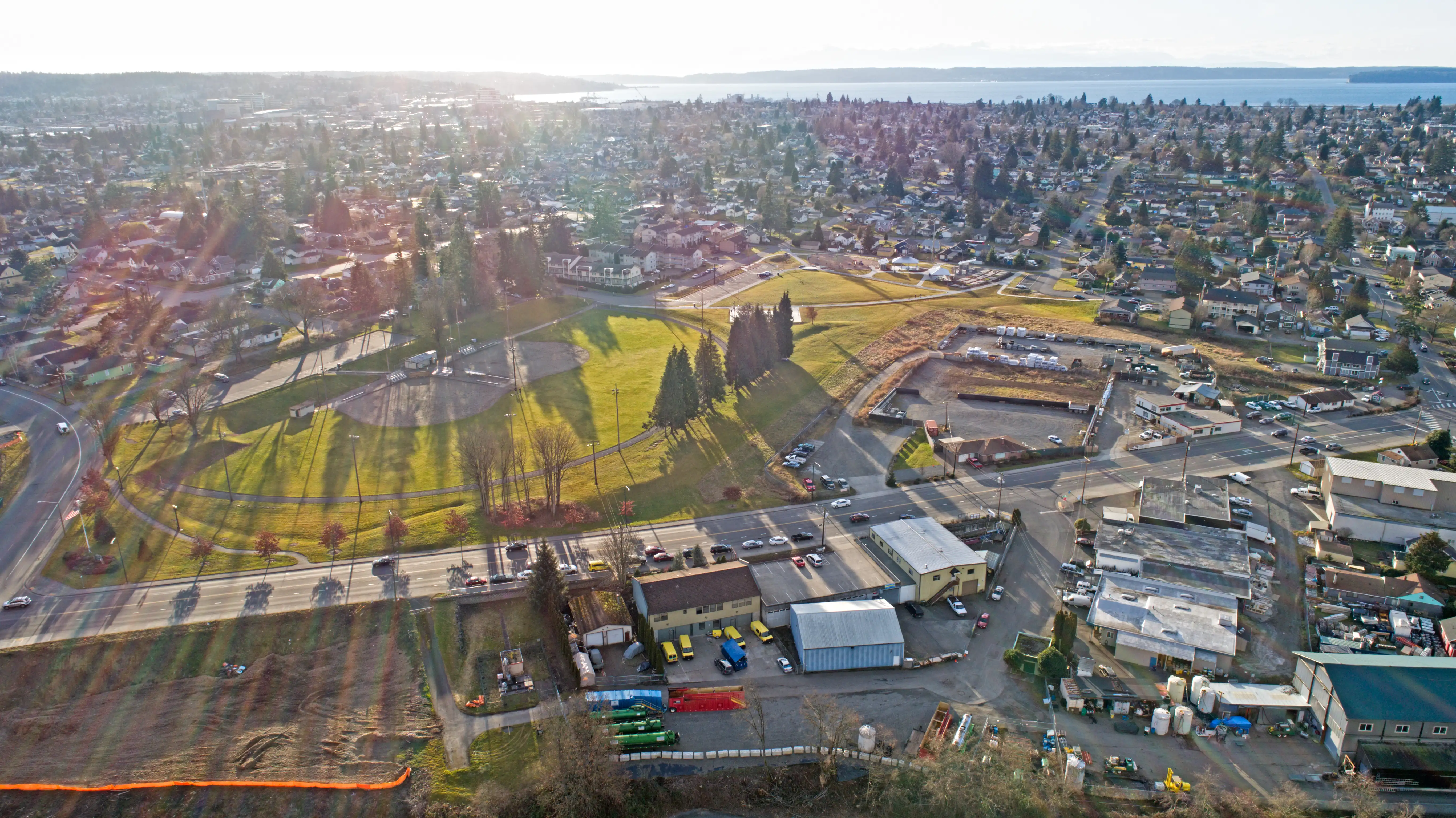
Local Expert Takeaway: Everett's retirement case rests on one number and one address: a typical home well under Seattle's range, and Providence Regional Medical Center in downtown Everett. If you buy near the waterfront or Port Gardner, you can walk to Fisherman's Harbor's restaurant row, reach Everett Station on foot for Sounder service south, and have a four-star trauma center less than 10 minutes away. That combination — real healthcare depth, genuine transit infrastructure, waterfront daily life, and a price point that doesn't require liquidating everything — is genuinely rare in this part of Puget Sound. The honest catch is that most of Everett's housing stock still requires a car, so your neighborhood choice is effectively your retirement lifestyle choice: get it right, and Everett earns its keep for decades.
Quick Takeaways & FAQs
✅ Providence Regional Medical Center Everett earned a four-star CMS quality rating in 2026 and is rated High Performing in heart attack and vascular surgery — meaningful healthcare depth for retirees who don't want to drive to Seattle for serious care.
⚠️ Washington's no-income-tax advantage is real, but Everett's combined sales tax can approach 10.6% on taxable purchases — retirees who spend heavily on goods and services will feel the offset in their monthly budget.
📍 Retirees who choose outer neighborhoods for lower price points often regret it by year two — the car-dependent layout becomes a real liability as driving years wind down, making a downtown condo or Port Gardner unit the smarter long-term call even at a higher initial cost.
Is Everett, WA a good place to retire?
Does Washington State tax Social Security or pension income?
How good is the hospital in Everett?
Are there 55+ or active-adult communities in Everett, WA?
What is the property tax rate for seniors in Everett?
Moving to Washington?
Tell us what you need help with and we'll connect you with local resources.
