
What Is Living in Monroe, Washington Like?
If you're choosing between Monroe and somewhere closer to Seattle — Woodinville, Bothell, maybe even Snohomish — the decision usually comes down to this: how much commute are you willing to trade for how much house, and how much do you actually want to feel like you live somewhere rather than somewhere adjacent to somewhere else? Monroe sits at the eastern edge of the Snohomish County suburbs, where US-2, SR-522, and SR-203 all converge before the Cascades take over. It's not on the way to anywhere people pass through casually. Coming here is a choice — and the people who've made it tend to stay.
The city's economy anchors around a handful of consistent pillars. The Monroe Correctional Complex is one of Snohomish County's larger public-sector employers. The Monroe School District — serving roughly 19,927 residents across 6.1 square miles — is both a major employer and a defining institution for families moving in. The Evergreen State Fairgrounds, a 193-acre county-owned property, draws hundreds of thousands of visitors annually and supports a commercial base well beyond what a city this size would normally sustain. Frontier Building Supply, Fred Meyer, and the Speedway's year-round event calendar round out the local job picture. The median household income sits at $110,461, and the median age of 35.7 reflects a city that skews decidedly toward working families with kids rather than recent graduates or empty nesters.
Home prices in Monroe run noticeably below Woodinville and Bothell, while sitting in the same general range as Lake Stevens and Sultan. The Zillow Home Value Index placed the city-wide typical home value at $665,934 in May 2026 — meaningful savings compared to the Eastside cities that share the same commute corridors. Day-to-day life here involves a lot of driving; Al Borlin Park along the Skykomish River gives families a genuine outdoor anchor, and the downtown Main Street corridor has filled in enough in recent years to feel like a real town center rather than a strip-mall satellite. The fairgrounds aren't just a fair — the Gary D. Weikel Events Center hosts horse shows, swap meets, and trade shows year-round, which means the parking lots off 179th Ave SE are never truly empty for long.
Whether you're seriously considering a move or just starting to map out the Snohomish County options, the sections below break down Monroe's neighborhoods, current housing market, daily commute reality, local employers, and what a typical weekend here actually looks like.

Monroe at a Glance
Looking to buy in Monroe? Estimate your payment.
Enter your numbers to see an estimated monthly mortgage payment.
Estimate only. Excludes HOA fees and mortgage insurance. The interest rate above is a starting point, not a quoted rate — replace it with your own to see real numbers. Insurance is a flat placeholder, not a Monroe quote.
Why Are People Moving to Monroe?
The honest answer is price pressure. Buyers priced out of Woodinville, Bothell, and even the SR-9 corridor between Kenmore and Lake Stevens keep landing in Monroe because it sits at a genuine highway junction — SR-522 southwest to the Eastside, US-2 northwest to Everett — that makes two separate employment basins reachable without committing to one direction.
The Highway Convergence Nobody Talks About
Three state highways meet in Monroe, which sounds unremarkable until you realize what it means in practice. A tech worker heading to Redmond and a manufacturing employee heading to Everett can both live on the same street in Monroe and neither faces a dramatically worse commute than the other. That dual-basin access is rare in Snohomish County, and it quietly drives a lot of purchase decisions.
Monroe also captures a second wave of buyers: recreation-corridor seekers who want the Cascades genuinely close. Stevens Pass is about 45 minutes east on US-2. Wallace Falls is closer than that. The Skykomish River runs through town. Buyers who want to ski in winter and kayak in summer without a two-hour drive find that Monroe is the last place with real suburban services before the mountains take over.
Who Actually Moves Here
| Buyer Type | What Draws Them | Best For |
|---|---|---|
| Eastside tech commuters | SR-522 access to Woodinville/I-405; prices well below Bothell | Commuter Value |
| Everett/Boeing corridor workers | US-2 and SR-203 access north; no I-5 required | Commuter |
| Families with school-age children | Monroe School District, space, Al Borlin Park | Families School |
| Outdoor lifestyle buyers | Stevens Pass, Wallace Falls, Skykomish River access | Nature Views |
| First-time buyers | Entry-level options at prices below SR-9 corridor alternatives | First-Time Value |
| Public sector / corrections employees | Monroe Correctional Complex, Monroe School District jobs | Commuter Quiet |
The city is not a fit for everyone. Remote workers who moved here assuming they'd never need the highway sometimes rediscover just how far east Monroe sits once their employer recalls them to an Eastside office.
What Longtime Residents Will Tell You
People who've been here a decade often cite the same surprise: Monroe has its own identity in a way that bedroom communities 15 miles closer to Seattle don't. The Evergreen State Fair, which has run every August–Labor Day since 1949 and draws hundreds of thousands of visitors as the largest single annual event in Snohomish County, gives the city a civic rhythm that feels distinctly local. The fairgrounds are a genuine community gathering point eleven months out of twelve, not just a fair site.
The honest downside: services lag behind the population. There's no hospital in city limits. The restaurant and retail scene, while improving along Main Street and Highway 2, still sends residents toward Everett or Monroe's own Fred Meyer for anything specialized. Those who move here for the price and the access sometimes leave within five years because the trade-off — more house, longer errand radius — eventually wears on them.
What Daily Life Feels Like in Monroe
Monroe is a driving city. Not in the sprawling, anonymous way of some exurbs, but in the specific way of a small Pacific Northwest town that grew faster than its walkable infrastructure could keep up with. Downtown Main Street has become genuinely worth a visit — Lewis & Main on Main Street brings farm-to-table cooking to a block that a few years ago offered mostly drive-throughs — but reaching the grocery store, the pharmacy, and most services still requires getting in the car.
The Downtown That's Actually Coming Along
Historic downtown Monroe, centered on Main Street, has enough now to feel like a real anchor. Lewis & Main draws a dinner crowd that drives in from Duvall and Snohomish. Dreadnought Brewing on 146th Street SE and Route 2 Taproom on US Highway 2 give craft-beer regulars two legitimate local options. Las Tres Marias and HWY 2 Fusion Diner round out a casual dining scene that's more varied than the city's size would suggest — partly because the recreation traffic on US-2 supports businesses that locals alone couldn't sustain year-round.
The Evergreen State Fairgrounds, just off 179th Avenue SE, are the closest thing Monroe has to a civic center. The 36,000-square-foot Gary D. Weikel Events Center hosts horse shows and swap meets and trade shows on weekends when there's no marquee event. During the 12-day fair itself — late August through Labor Day — the city absorbs a population surge that can double or triple traffic on the main corridors. Newcomers often don't understand the scale of it until they're caught in fair-week gridlock for the first time.
Where Families Actually Land
Al Borlin Park along the Skykomish River is where parents with young kids spend Saturday mornings. The sports fields are well-used, the river access is genuine, and parking is free. Families with older kids lean heavily on Monroe School District facilities — the district's athletic programs draw real community investment, with Monroe High School competing in WIAA at the 3A level.
The seasonal rhythm here is distinct. Summer is outdoor-recreation season, with river traffic on the Skykomish and a constant flow of hikers and climbers heading up US-2 toward the mountains. Late August tips into fair season, which Monroe takes seriously in a way that surprises transplants from larger cities. Fall and winter quiet down considerably — which longtime residents appreciate and people from denser markets sometimes find isolating in month three.
What You Give Up
No light rail, no commuter rail, no Trader Joe's. The nearest major hospital is not in Monroe. If walkable urban access, a dense coffee-shop street, or close proximity to a major medical center matters to your daily routine, Monroe will require adjustment. The city rewards people who made the trade consciously — and tends to wear on those who made it assuming things would fill in faster than they have.
The Monroe Housing Market Right Now
The Zillow Home Value Index placed Monroe's typical home value at $665,934 in May 2026 — a figure that reflects a city where most of what sells is single-family residential on lots large enough to matter. That number sits noticeably below comparable-commute cities on the Eastside, which is precisely why buyers keep arriving from the SR-522 and US-2 corridors.
Inventory in Monroe runs tight relative to demand. When a well-maintained four-bedroom in the Fryelands neighborhood or along the Chain Lake Road corridor hits the market, it rarely lingers. Multiple-offer situations are common enough that buyers treating Monroe as a fallback — the place they'll look if Snohomish or Duvall doesn't pan out — sometimes lose several rounds before they recalibrate their expectations. For a fuller breakdown of cost of living alongside the home-price picture, the Monroe cost-of-living page covers taxes, utilities, and how household budgets stretch here.
The effective property tax rate in Monroe runs approximately 0.79%, which is on the lower end for Snohomish County. Washington has no state income tax, which factors into how buyers from out of state calculate their true monthly cost. Some areas carry higher price points than others — newer construction neighborhoods differ meaningfully from the older downtown-adjacent stock — but the Monroe neighborhoods page is where those distinctions are mapped out in detail.
The market moves fastest in late winter and early spring, when Eastside buyers who've been outbid repeatedly elsewhere start seriously expanding their geographic radius. Sellers in Monroe have consistently benefited from that pattern over the past several years.
Monroe Neighborhoods
Monroe has several distinct areas — each with its own character and appeal. Here’s a breakdown to help you narrow down where to focus your home search.
🏡 Downtown Monroe
The historic Main Street core is where Monroe's urban identity is most concentrated — Lewis & Main anchors a dining strip that's walkable by Monroe standards, and the mix of older craftsman-style homes and commercial buildings gives the area genuine character. Best suited for buyers who want to walk to dinner and feel connected to the city's civic life.
🏠 North Monroe
North Monroe offers a quieter residential feel with good access to US-2 for commuters heading toward Everett or the SR-522 corridor; housing stock here tends toward established single-family homes on larger lots. Families with school-age children find this area convenient for school runs and everyday errands.
🌳 Monroe Junction
Monroe Junction sits near the key highway convergence, making it one of the most commuter-convenient locations in the city — Route 2 Taproom on Highway 2 is practically a neighborhood fixture. The trade-off is that commercial corridor noise and traffic are constant companions.
🏘 Fryelands
Fryelands is Monroe's largest planned residential area, with a mix of newer construction, sidewalks, and neighborhood parks that appeal to families looking for a more suburban feel within city limits. Dreadnought Brewing on 146th Street SE gives the neighborhood its own local gathering spot.
🏔 Chain Lake
The Chain Lake area on Monroe's eastern edge offers larger lots and a more rural character, appealing to buyers who want space and proximity to outdoor recreation without a long drive to the highway. Homes here tend to feel more private than the denser Fryelands blocks.
🌆 Ma Ma Creek
Ma Ma Creek is a quieter residential pocket that suits buyers seeking privacy and a genuine sense of distance from the commercial corridors; the area's wooded character and creek-side setting attract outdoor-oriented households willing to accept a longer drive to services.
Pros & Cons of Living in Monroe
The Pros
- Small-town
- historic downtown feel with a walkable Main Street
- Surrounded by rivers
- farmland
- and Cascade foothills for outdoor recreation
- More affordable than King County suburbs while still within the Seattle metro
The Cons
- Long commute to Seattle-area job centers
- Limited public transit
- so a car is essential
- Property crime rate runs above the national average
Getting Around & Commuting in Monroe
Three highways converge here, and that fact shapes almost everything about how Monroe works as a place to live. US-2 runs east toward Stevens Pass and west toward Everett. SR-522 heads southwest to Woodinville and hooks into I-405, putting Bellevue and Redmond within reach. SR-203 connects south to Duvall and the Snoqualmie Valley. You can reach two distinct employment basins — the Eastside tech corridor and the Everett/US-2 manufacturing and services corridor — without committing to either I-5 or I-405 as your daily spine.
The Drive Reality
Seattle typically runs about 50 minutes from Monroe under normal conditions. The operative word is normal. SR-522 through Bothell and Kenmore can stack badly during peak hours, and there's no alternate route that meaningfully shortcuts it. Eastside destinations — Redmond, Kirkland, Woodinville — are generally 35 to 45 minutes, which is where Monroe makes the most sense as a commuter base.
US-2 westbound into Everett is a different experience. Traffic rarely stacks the same way as the SR-522 corridor, and for buyers whose jobs sit north along the Boeing/Everett manufacturing belt, Monroe is genuinely well-positioned.
Transit Options
| Route | Operator | Destination | Notes |
|---|---|---|---|
| 270 / 271 | Community Transit | Everett via Snohomish | Regular weekday service |
| 424 | Community Transit | Seattle via Kirkland & Woodinville | Express; connects to Link light rail |
| Duvall–Monroe Shuttle | Snoqualmie Valley Transportation | Duvall | Restarted April 15, 2025; weekday mornings from 6:30 a.m. |
Community Transit's express route 424 is the most useful transit option for Seattle-bound commuters — it connects to Link light rail further west, which means a car-free Seattle commute is possible, just long. Most Monroe residents drive, and most have made peace with that.
What Locals Know About Timing
The SR-522/US-2 interchange in Monroe itself is not the problem — it's what happens once you get past Kenmore and into the Bothell corridor. Buyers who test-drive the commute on a Saturday and declare it manageable are routinely surprised by what Tuesday at 7:45 a.m. actually looks like. If you're commuting to Eastside tech campuses, building 15 extra minutes into your morning is standard practice among Monroe residents who've done this more than a few months.
Fair season — the 12 days from late August through Labor Day — creates a localized traffic pattern around the Evergreen State Fairgrounds that catches newcomers off guard. Main Street and the 179th Avenue SE approach to the fairgrounds can back up significantly on fair evenings. It's a small inconvenience for most of the year, a genuine planning consideration for those two weeks.
Schools in Monroe
Families relocating to Monroe have public, private, and higher-education options nearby. Here’s a quick overview.
🎓 School District
Monroe School District serves K–12 students across Monroe and the surrounding area. Rated B- (source: Niche.com).
🏆 Graduation Rate
The 4-year high-school graduation rate here is approximately 89.1%.
📚 Higher Education
Washington’s public universities — the University of Washington, Washington State University, and Western Washington University — offer four-year degrees statewide, with a network of 34 community and technical colleges (SBCTC) providing two-year and workforce programs.
🌐 Online Learning
University of Washington Continuum College and Washington State University Online offer fully accredited online degrees for remote learners across the state.
Safety in Monroe
A quick look at how Monroe compares on the numbers that matter most when weighing a neighborhood or a move.
🛡 Violent Crime
Approximately 2 per 1,000 residents.
🔒 Property Crime
Approximately 17 per 1,000 residents.
Compared to the FBI’s most recent national data (2024), Monroe’s violent crime is below the national average (about 3.6 per 1,000), and property crime is about the same as the national average (about 17.6 per 1,000).
Against Washington as a whole, Monroe’s violent crime is roughly two-thirds of the state average, and property crime is roughly two-thirds of the state average (Bureau of Justice Statistics, Crime Known to Law Enforcement, 2024 (tables 2 and 3)).
Crime rates can vary a lot within a single city, so the citywide numbers above are only a starting point. Some neighborhoods in Monroe run well below these averages, while others run higher — the kind of block-by-block detail that matters most when you’re actually choosing where to live. The full guide below breaks it down neighborhood by neighborhood.
Working in Monroe
Monroe’s largest employers span several industries — here are some of the anchors of the local job market.
💼 Monroe Correctional Complex
State corrections
🎓 Monroe School District
Education
🛒 Fred Meyer
Retail
💼 Evergreen State Fair/Speedway
Tourism & events
💼 Frontier Building Supply
Building materials
Parks & Recreation in Monroe
Some of the outdoor spaces that shape everyday life in Monroe.
🌱 Al Borlin Park
Monroe residents don’t have to go far for green space — spots like Al Borlin Park are part of everyday life here, whether that’s a morning walk, a weekend hike, or just somewhere to unwind outside. The full guide below covers more of what Monroe has to offer for parks and outdoor recreation.
Retiring in Monroe
Monroe draws retirees for its balance of amenities, outdoor access, and cost. Here’s what to weigh.
🌤 Climate
Monroe sits at 72 feet elevation in the Snohomish County foothills, which means slightly more rain than the Seattle core and occasional snow in winter — US-2 over Stevens Pass can close in heavy weather, affecting travel east. Summers are mild and dry, with Skykomish River recreation drawing residents outdoors from June through September.
🍴 Lifestyle
The dining scene along Main Street and Highway 2 has matured enough to support a real rotation of local spots. The Evergreen State Fairgrounds host year-round events in the Gary D. Weikel Events Center that give the calendar consistent anchors beyond the fair itself. Al Borlin Park along the Skykomish is the outdoor centerpiece for daily walks and weekend recreation.
🏚 55+ Communities
Monroe has limited purpose-built 55+ or active-adult community options within city limits; most senior housing options are smaller-scale assisted-living facilities. Retirees who want a larger active-adult community typically look toward Snohomish or the broader Everett corridor. The Monroe retiring page has the fuller picture on local healthcare and senior living options.
✈ Getting Around
Monroe is a car-dependent city; most daily errands require driving. Community Transit express route 424 connects to Seattle via Kirkland and Woodinville for those who prefer not to drive. Paine Field in Everett is the nearest regional airport, roughly 30 minutes northwest, with Seattle-Tacoma International about an hour southwest depending on traffic.
🏛 Washington Taxes for Retirees — What to Know
- No state income tax — Washington does not tax personal income, so Social Security, pensions, and 401(k)/IRA withdrawals are all untaxed at the state level. There is no state return to file and no retirement exclusion to claim — the rate is simply zero.
- Military and public pensions — Because there is no income tax, military retirement pay and public-employee pensions are untaxed at the state level along with everything else.
- Sales tax is the tradeoff — The state sales tax is 6.5%, and local add-ons bring the combined rate in Monroe to 9.4% (Washington State Department of Revenue, Q3 2026 local sales & use tax rate table, July 2026). Groceries and prescription drugs are exempt.
- Property taxes, with senior relief — The effective property tax rate is roughly 0.9%. Homeowners 61+ (or unable to work due to disability, or a qualifying disabled veteran) who own and occupy their home may qualify for a reduction. Income limits are set against each county’s median household income, so the threshold differs by county — check with your county assessor. A separate deferral program is available for those who don’t qualify for the exemption.
- Capital gains tax — but not on retirement income — Washington taxes 7% on long-term capital gains above a $278,000 standard deduction for 2025, rising to 9.9% on gains above $1,000,000. Retirement accounts and real estate sales are both exempt. It therefore does not reach ordinary retirement income or the sale of a home.
- Estate tax — the one to plan for — Unlike most no-income-tax states, Washington has its own estate tax. For deaths on or after July 1, 2026, the exemption is $3 million with graduated rates topping out at 20%. Retirement accounts count toward the taxable estate, so long-time homeowners with sizable balances can cross the line without expecting to.
- No inheritance tax — Washington has no inheritance tax, and no gift tax.
- WA Cares payroll premium — Working Washingtonians pay 0.58% of gross wages into the WA Cares Fund, the state long-term care program, with no income cap. It applies to W-2 wages, so retirees who have stopped working do not pay it — but anyone relocating while still employed will see it. The private-insurance opt-out closed at the end of 2022 and is not available to new applicants; the remaining exemptions are narrow (living outside Washington, military spouses, certain visa holders, and veterans with a 70%+ service-connected rating).
- The Oregon border effect — Oregon has no sales tax, so Washington residents near the river — Vancouver, Camas, Washougal, Longview — often cross over for large purchases. Washington use tax technically applies to goods brought back for use in-state, though it is rarely enforced on ordinary personal purchases.
Tax laws change frequently and individual situations vary. This is general information, not tax advice — always consult a qualified Washington tax professional or CPA for personalized retirement tax planning.
Weekends & Local Favorites in Monroe
Monroe punches above its weight on weekends, partly because the city sits at the gateway to the Sky Valley and every hiker, skier, and river-goer heading up US-2 passes through town. That pass-through traffic has supported businesses — a taproom, a brewpub, a farm-to-table restaurant on Main Street — that a city of 20,000 in a less-trafficked location probably couldn't sustain on locals alone.
On the Water and in the Hills
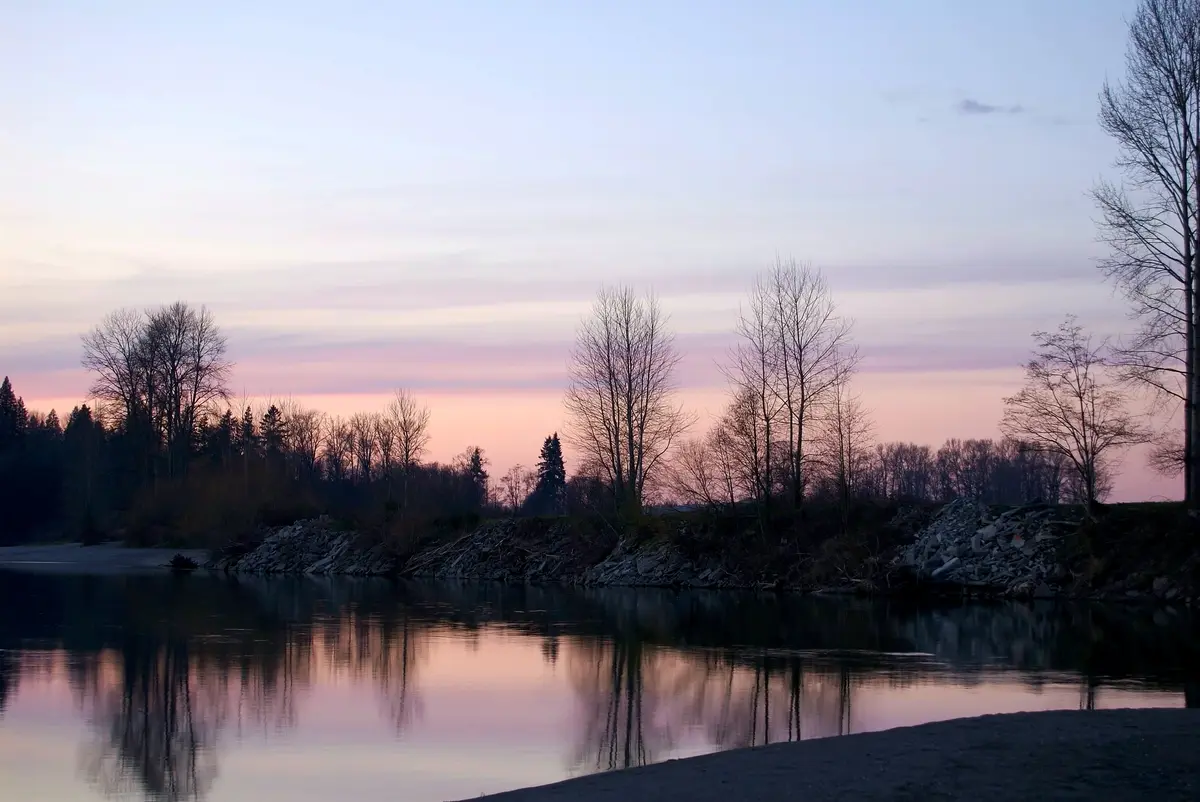
The Skykomish River is Monroe's most underrated amenity. Al Borlin Park gives direct river access with good parking, and summer weekends bring out kayakers, swimmers, and families who've figured out that the gravel bars along the Skykomish are some of the best free recreation in Snohomish County. For anything more vertical, Wallace Falls State Park is roughly 20 minutes east — a legitimate Pacific Northwest waterfall hike that doesn't require a three-hour drive to feel rewarding.
Stevens Pass, about 45 minutes up US-2, is the practical ski destination for Monroe residents. The drive on winter weekends can stretch when the rest of the metro has the same idea, but living 45 minutes from a ski area rather than 90 minutes is a real lifestyle distinction that draws buyers who factor outdoor recreation into their housing search.
The Local Food and Drink Circuit
Lewis & Main on Main Street anchors the dinner scene — farm-to-table American cooking in a downtown space that feels more Snohomish-town than suburban strip. Dreadnought Brewing on 146th Street SE is the neighborhood brewpub with the regulars to prove it. Route 2 Taproom on Highway 2 catches the recreation traffic heading east and the after-work crowd heading home. For something more casual, Las Tres Marias and HWY 2 Fusion Diner give the week-night rotation some variety without requiring a drive to Everett.
The Fairgrounds Year-Round
The Evergreen State Fairgrounds are Monroe's civic anchor in a way that's easy to underestimate until you've lived here through a full calendar year. The 12-day fair from late August through Labor Day is the obvious highlight — it's been running annually since 1949 and remains the largest single annual event in Snohomish County. But the 36,000-square-foot Gary D. Weikel Events Center means something is happening on that 193-acre site almost every month: horse shows, swap meets, trade shows, exhibition events.
Evergreen Speedway, also on the fairgrounds, is the only NASCAR-sanctioned oval track in Washington State. The 7,000-seat covered grandstand hosts Monster Truck shows, Figure-8 races, and Demo Derbies on weekends throughout the year. It draws a specific crowd that's deeply loyal — the kind of regular Saturday night event that makes Monroe feel like a town with its own culture rather than a commuter annex.
Top Things Locals Say About Monroe
The best intel about a city comes from the people who actually live there. Here’s what Monroe residents say when newcomers ask the questions everyone’s thinking.
“I knew the commute would be longer, but I didn't realize how different the vibe would be. By month four I stopped thinking of myself as someone who lives near Seattle and started thinking of myself as someone who lives in Monroe — and honestly, that was a good thing.”
— Recent Monroe home buyer
“What's the most surprising thing about living in Monroe?”
How much the fair actually takes over the city for two weeks in late August. It's not just traffic — the whole town has a different energy. Newcomers from bigger cities either love it immediately or completely underestimate the parking situation on 179th Avenue SE until their first fair Tuesday evening.
“What do locals love most about Monroe?”
The access. From most streets in Monroe you are genuinely 45 minutes from a ski area, 20 minutes from a real mountain waterfall hike, and close enough to the Skykomish that you can kayak after work in summer. The combination of highway access and proximity to the Cascades is hard to find at this price point anywhere else in the metro.
“What should newcomers to Monroe know?”
Test the commute on a Tuesday morning, not a Saturday afternoon. The SR-522 corridor through Bothell is a different road at 7:30 a.m. than it is at noon. Also: stock up on specialty groceries when you're already near Everett, because running back out for one item gets old fast.
“Can you live in Monroe without a car?”
Technically possible but practically very difficult. Community Transit routes 270, 271, and the express 424 run to Everett and Seattle, and the Duvall–Monroe Shuttle restarted service in April 2025. But most of Monroe's day-to-day errands — grocery runs, school pickup, weekend recreation — require a car. This is a driving city, and almost everyone who lives here has accepted that as part of the deal.
Cities Near Monroe
Other communities near Monroe worth a look — each with its own character and price point.
| City | Distance | Best For | Vibe | Median Rent | Median Buy |
|---|---|---|---|---|---|
| Snohomish | 8 mi | Historic character, walkable downtown | Established, antique-town charm | $2,100 | $700,000 |
| Sultan | 9 mi | Lower prices, mountain-adjacent living | Rural, small-town, quiet | $1,900 | $520,000 |
| Duvall | 12 mi | Families, newer construction | Tight-knit, growing, pastoral | $2,200 | $850,000 |
More Helpful Guides for Monroe
Going deeper on Monroe? Our blog series covers everything from first-time buying to retiring here — explore the guides below.
Local Expert Takeaway: Monroe's real value isn't just the price — it's the highway position. Sitting where US-2, SR-522, and SR-203 converge means you can commute to Redmond or Everett, ski Stevens Pass in winter, and walk to dinner at Lewis & Main on Main Street, all from the same house. The catch is that you're making a deliberate choice to live at the edge of the Cascades, not close to everything — and the buyers who thrive here are the ones who made that trade with open eyes.
Quick Takeaways & FAQs
✅ Monroe's position at the US-2/SR-522/SR-203 convergence gives commuters rare dual access to both the Eastside tech corridor and the Everett manufacturing corridor from a single address.
⚠️ Service infrastructure lags behind the population — there's no hospital in city limits, no Trader Joe's, and the restaurant and retail scene, while improving, still requires driving to Everett for anything specialized.
📍 The Evergreen State Fair has run every late August through Labor Day since 1949 and is the largest single annual event in Snohomish County — fair-week traffic on Main Street and 179th Avenue SE is a real planning factor for new residents.
Is Monroe, WA a good place to live for Seattle commuters?
What is the typical home price in Monroe, WA?
What are the major employers in Monroe, WA?
What is the Monroe School District like?
What is there to do in Monroe, WA on weekends?
Helpful Links for Moving to Monroe
Moving to Washington?
Tell us what you need help with and we'll connect you with local resources.
