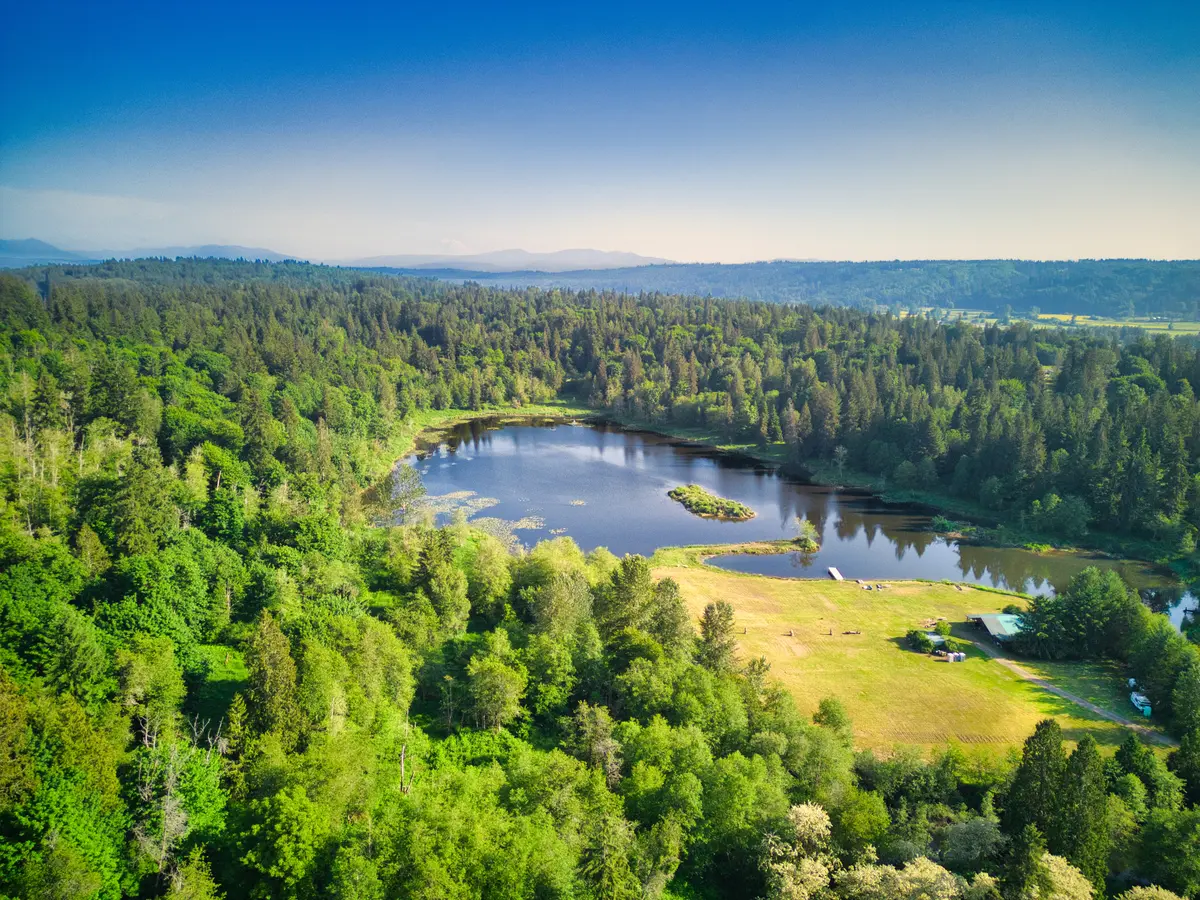
What Is Living in Duvall, Washington Like?
Maybe your company is relocating you to the Microsoft campus in Redmond and someone in your onboarding Slack channel mentioned Duvall. Maybe you've been priced out of Kirkland or Redmond itself and you're asking how far east you have to go to find a yard, a Main Street worth walking, and a house that doesn't require a bidding war of mythological proportions. Duvall sits on SR 203 in the Snoqualmie River Valley — incorporated in 1913, just 2.47 square miles, and carrying a motto that doubles as a warning label: Small Town. Real Life. The city is roughly halfway between Monroe and Carnation, about 35 minutes from the Redmond tech corridor on a clear morning, and genuinely unlike anything else at this price point in King County.
The economic engine here is the commuter workforce, and that shapes everything about the city's rhythm. Microsoft and Amazon employees make up a significant portion of residents, drawn by the valley's relative affordability compared to the Eastside and the SR 203 route's predictability before peak congestion hits. The Riverview School District holds a B+ rating, according to Niche, and is a meaningful draw for parents with school-age children. The Riverview School District and City of Duvall themselves are the two largest locally-based employers; the biggest paychecks in town are typically cashed in Redmond or Seattle. The median household income of $197,361 tells you who has already made the calculation and decided this trade-off works.
Housing in Duvall runs noticeably below what you'd pay in Kirkland or Sammamish for comparable square footage, though the Zillow Home Value Index placed the typical home value at $968,503 as of February 2026 — this is not a bargain market in absolute terms, just a more reasonable one relative to its neighbors. Day-to-day life here is shaped by the Snoqualmie Valley Trail — the longest regional trail in King County at 31 miles, beginning right in Duvall — and a Main Street corridor that has genuine independent businesses rather than just a string of chains. Crime rates are among the lower figures you'll find in the broader Seattle metro, and the valley itself offers the kind of pastoral backdrop that residents from denser Eastside cities often describe as the reason they stayed.
Whether you're actively making an offer or just mapping out your options, the sections below break down Duvall's commute reality, housing market, daily life, weekend draws, and what this specific town is really like to live in — not just to visit on a Sunday drive.
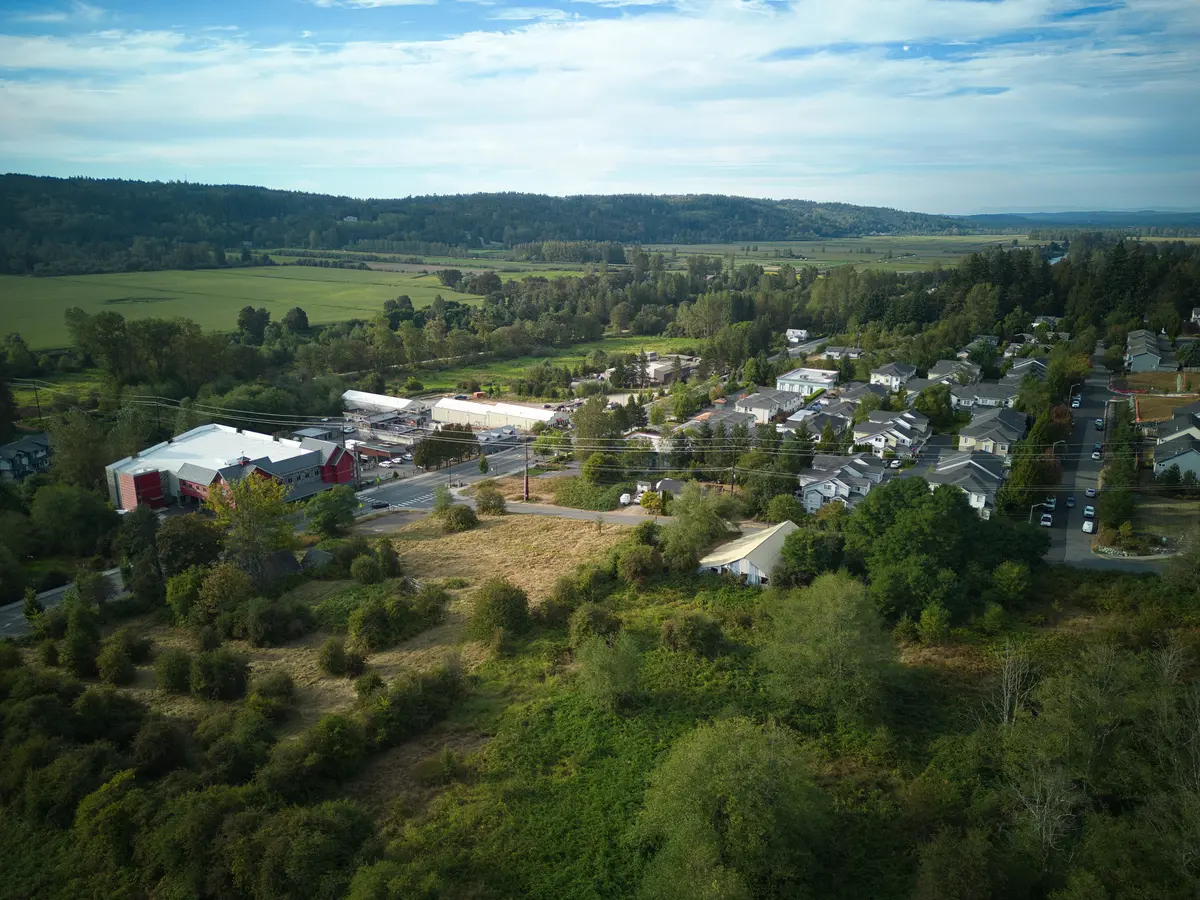
Duvall at a Glance
Looking to buy in Duvall? Estimate your payment.
Enter your numbers to see an estimated monthly mortgage payment.
Estimate only. Excludes HOA fees and mortgage insurance. The interest rate above is a starting point, not a quoted rate — replace it with your own to see real numbers. Insurance is a flat placeholder, not a Duvall quote.
Why Are People Moving to Duvall?
The Calculation That Brings People Here
Almost everyone who moves to Duvall has run the same math: Eastside prices, Eastside commute, but a house with actual land. The Snoqualmie River Valley offers one of the few remaining pockets in King County where a tech-sector income can get you a detached home with a real yard without adding an hour to your drive. That's the pull, and it works — the city has grown roughly 14% since the 2020 Census, a rate that shows the calculation resonating.
What surprises people once they arrive is how genuinely small-town the experience is. This is not a master-planned suburb with a Town Center™ designed to look like a community. Duvall's Main Street NE has the kind of mild imperfection — a hardware store next to a café next to a brewery — that takes decades to develop, not a single developer's vision.
Who Actually Lives Here
The typical Duvall household earns $197,361 annually, which narrows the field considerably. You're mostly looking at dual-income tech households, longtime valley residents, and a growing cohort of remote workers who discovered they could live anywhere and chose somewhere with a river view and a trail out their back gate.
Families with school-age children are the dominant buyer type, drawn by the Riverview School District and a community scale where kids can still ride bikes to school. Single buyers and young couples without a commute anchor tend to look at denser markets with more walkable nightlife — Duvall requires a genuine preference for the small-town trade-off, not just tolerance of it.
What People Underestimate Before Moving Here
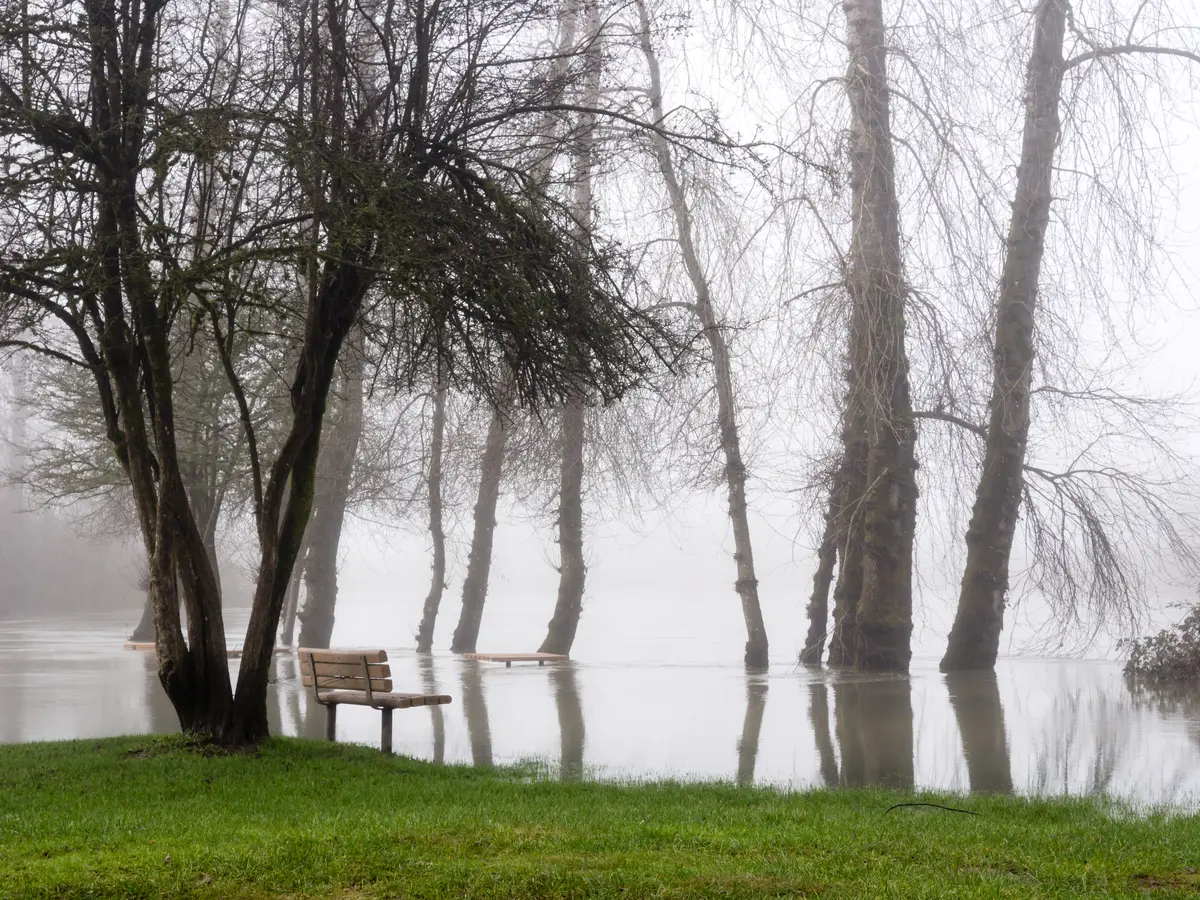
The thing most newcomers don't anticipate: the valley floods. The Snoqualmie River runs through this landscape, and in a heavy rain year, SR 203 between Duvall and Carnation can close temporarily, briefly cutting off one of the only direct routes south. It doesn't happen every winter, but it happens often enough that longtime residents build it into how they think about storm season. Knowing which alternate routes add time — and having groceries on hand — is genuinely part of living here, not a hypothetical edge case.
| Buyer Type | Why Duvall Works | What to Know First |
|---|---|---|
| Families | Riverview School District, low crime, yard space, trail access | Most errands require a car; plan grocery runs into Redmond or Monroe |
| Tech Commuters | ~35 min to Redmond; Microsoft Connector shuttle stops in Duvall | SR 203 congestion builds after 7 a.m.; DART Route 224 runs every ~3 hrs on weekdays |
| Outdoor-Focused Buyers | Snoqualmie Valley Trail (31 mi) starts here; river access, dog park | Valley fog in winter is persistent; summers are genuinely excellent |
| Remote Workers | Quiet streets, strong community identity, genuine small-town feel | No Trader Joe's — nearest is in Redmond; limited local dining variety |
| Eastside Refugees | Below Kirkland/Sammamish pricing for comparable lot size | Still approaching $1M median; entry-level inventory is thin |
| Valley Lifestyle Seekers | Snoqualmie River setting, farmland views, historic Main Street | SR 203 flooding risk in heavy rain years; no freeway bypass |
The common thread among people who thrive here is genuine buy-in to the small-town premise — not just tolerance of fewer restaurants, but an active preference for the version of life Duvall offers.
What Daily Life Feels Like in Duvall
A Main Street That Actually Functions
The center of daily life in Duvall runs along Main Street NE, where you can have a morning coffee at Rustic Cabin Coffee, pick up bread at Grateful Bread, and walk to Thai Duvall for lunch — all within a few blocks. That's not a long list, and it's not meant to be. C.C. Espresso & Ice Creamery has been a valley institution long enough to appear on the Snoqualmie Valley Heritage Trail map. What's missing from that block matters too: no Trader Joe's, no Target, no Whole Foods. The nearest big-box grocery run goes to Monroe or Redmond.
Valley House Brewing Co. at 16111 Main St NE is where Friday nights tend to gather — a taproom with food that draws both longtime residents and the newer tech-commuter crowd in a way that feels less curated than most comparable spots. The Duvall Grill and Tap Room rounds out the options for a sit-down meal without driving out of town.
The Rhythm of the Week
Weekday mornings here run noticeably earlier than you'd expect for a town this size. The SR 203 and Cherry Valley Road departure wave starts before 7 a.m. for anyone heading to Redmond or Seattle. By 9 a.m., Main Street is genuinely quiet, and the Snoqualmie Valley Trail access points near McCormick Park and Taylor's Landing have dog walkers and cyclists.
The seasonal shift is real and worth knowing before you move: summer in the Snoqualmie Valley is legitimately spectacular — clear skies, river swimming, trail traffic, evening light that lingers past 9 p.m. Winter is the honest version of living in a river valley in western Washington: persistent low fog, muddy trails, and weeks where the sun feels theoretical. People who moved here from sunnier climates and didn't fully account for that fog layer are among those who end up leaving after two or three years.
Community Identity
Duvall takes its small-town identity seriously in a way that shows up in specifics: the Centennial Public Art "Passage Through Time" sculptures along the main corridor, the Depot Park and its preserved Historic Railroad Depot, and the John and Kate Dougherty Farmstead on NE Cherry Valley Road — listed on the National Register of Historic Places since 2005, preserving an 1888 homestead that predates the town's incorporation by 25 years. These aren't decorative heritage gestures; they're the physical anchors of a community that has actively resisted the generic suburbanization that absorbed many of its valley neighbors.
Where families actually gather on weekends is Depot Park for events, the trail for weekend rides, and the Main Street corridor for the kind of slow Saturday morning that requires nowhere specific to be. That's both the best and most accurate description of what this town offers socially — if it resonates, Duvall fits well.
The Duvall Housing Market Right Now
Where Prices Stand
The Zillow Home Value Index placed the typical Duvall home value at $968,503 as of February 2026 — approaching the million-dollar threshold that once felt like a ceiling for a town this far from the city core. That figure was down 1.7% over the prior year, a meaningful contrast to the sharp appreciation of 2021–2022, but the market has not softened into buyer territory.
In mid-2025, roughly 29% of homes sold above asking price and 42% sold at asking — meaning fewer than one in three buyers got any discount off list. The median price per square foot ran $447, which is the number to track if you're comparing lot sizes or home configurations across the valley. For the full context on what those figures mean for your budget, the cost-of-living breakdown goes deeper.
What the Market Actually Feels Like
This is a seller's market operating at a more measured pace than the frenzied 2021–2022 peak. Well-priced homes in the Old Town corridor and the Big Rock and Cherry Valley areas move quickly — days on market, not weeks — while properties with specific drawbacks (steep driveways, dated interiors, or proximity to SR 203 traffic) sit longer and leave room for negotiation.
Inventory in Duvall has historically been thin relative to buyer demand, which is partly a function of the city's size: at 2.47 square miles, there's a hard ceiling on how many homes exist. New construction has added some supply in areas like Legacy Ridge, but it enters the market at prices that reflect current land costs rather than providing an entry-level alternative. Some parts of town command noticeably more than others, but that detail belongs on the neighborhoods page, where the geographic differences are mapped out properly.
Infrastructure Signals Worth Watching
Active city projects — including a 2.2-million-gallon Big Rock Road Reservoir upgrade and a new Maintenance Operations Center planned adjacent to Big Rock Ball Park — signal a city investing in capacity for continued growth rather than coasting on existing infrastructure. That's relevant context if you're thinking about Duvall as a long-term hold rather than a near-term flip.
Duvall Neighborhoods
Duvall has several distinct areas — each with its own character and appeal. Here’s a breakdown to help you narrow down where to focus your home search.
🏡 Old Town/Downtown Duvall
The walkable core of Duvall, centered on Main Street NE, where independent cafés, Valley House Brewing Co., and the Historic Railroad Depot at Depot Park define the streetscape. Best for buyers who want to walk to the Saturday farmer's market and feel connected to the community's historic identity.
🏠 Big Rock
A residential area on the east side of SR 203 anchored by Big Rock Ball Park, with a mix of established homes and newer development on larger lots. Active city infrastructure investment here — including the Big Rock Road Reservoir upgrade — signals continued build-out in this corridor.
🌳 Cherry Valley
Following NE Cherry Valley Road northeast from downtown, this area blends rural residential character with valley farmland views and the Dougherty Farmstead as a historic anchor. The Microsoft Connector shuttle stop on Cherry Valley Road makes it particularly practical for Microsoft employees who want acreage without sacrificing the car-free commute option.
🏘 West Duvall
Residential neighborhoods on the SR 203 corridor's western edge, offering slightly more immediate highway access for commuters heading toward Redmond and the Eastside. The character here is quieter and more residential than the Main Street core, with conventional suburban lot sizes.
🏔 McCormick Park area
A neighborhood built around one of Duvall's key Snoqualmie Valley Trail access points, where the riverside setting and direct trail access are the primary draws. Families who want a trailhead essentially in their backyard consistently gravitate toward this part of town.
🌆 Taylor's Landing
Duvall's southernmost neighborhood cluster, adjacent to one of the valley trail's key trailheads and near the Snoqualmie River, offering a quieter residential feel with outdoor access baked directly into the location. Commuters heading south toward Carnation and I-90 will find the SR 203 on-ramp pattern most natural from here.
Pros & Cons of Living in Duvall
The Pros
- Small-town
- walkable historic downtown with a strong sense of community
- Riverside setting on the Snoqualmie River with abundant parks and trails
- Highly rated public schools in the Riverview district
- Relatively lower crime rate than much of the region
The Cons
- Home prices are well above the national and Washington state median
- Limited local job base means most residents commute to Seattle/Eastside for work
- Rents are high due to limited rental housing stock
Getting Around & Commuting in Duvall
The Honest Commute Reality
On paper, Duvall is 35 minutes from the Microsoft campus in Redmond. In practice, that number holds reliably on SR 203 before about 7:15 a.m. After that, the route through Redmond-Fall City Road and into the Eastside corridor begins to stack up, and 50-minute mornings are not unusual during peak congestion weeks. The SR 203 / NE Novelty Hill Road interchange is the consistent pressure point — understanding it before you buy is not optional.
The good news for Microsoft employees specifically: the Microsoft Connector corporate shuttle has a stop at Holy Innocents Catholic Church on Cherry Valley Road in Duvall. For full-time employees who can work around shuttle timing, this eliminates the daily driving math entirely and is one of the more underappreciated features of the Duvall commute picture.
Public Transit Options
King County Metro DART Route 224 runs weekday service between Duvall and Redmond Transit Center — approximately 37 minutes — with transfers available to Sound Transit Route 545 for downtown Seattle connections. The catch is frequency: Route 224 runs roughly every three hours on weekdays, which makes it practical for workers with flexible schedules or fixed remote-work days, but unreliable as a primary commute tool for anyone on a strict 9-to-5 pattern.
Duvall is a drive-first community by design. The 2.47-square-mile footprint means most daily errands within town are technically walkable from the Main Street core, but grocery shopping, medical appointments, and most services require leaving town. Residents who attempt car-free living here find the transit gaps — and the distance to the nearest major retail — genuinely limiting rather than mildly inconvenient.
Commute Destinations at a Glance
| Destination | Typical Drive Time | Transit Option | Notes |
|---|---|---|---|
| Microsoft Redmond Campus | ~35 min (off-peak) | DART 224 + Microsoft Connector | Connector stop at Cherry Valley Rd; drive adds 10–15 min at peak |
| Downtown Seattle | ~50–65 min (off-peak) | DART 224 → ST 545 | Two-transfer transit trip; drive varies sharply by departure time |
| Bellevue CBD | ~40–50 min (off-peak) | Limited — verify Route 232 status | Route 232 Duvall–Bellevue was suspended as of early 2024; verify before relying on it |
| Woodinville | ~20–25 min | No direct service | SR 203 north; useful for errands and wine-country weekend trips |
| Monroe | ~15–20 min | No direct service | Snohomish County anchor for big-box retail and additional dining |
| Snoqualmie/North Bend | ~25–35 min via SR 203 south | No direct service | Ski area access and I-90 corridor connection |
The single clearest dividing line among Duvall residents isn't neighborhood preference — it's whether their employer's location makes the SR 203 commute sustainable. Buyers whose work is anchored in Redmond or Kirkland typically find it manageable; those commuting into Seattle daily and expecting the drive to feel routine often recalibrate that assessment within the first winter.
Schools in Duvall
Families relocating to Duvall have public, private, and higher-education options nearby. Here’s a quick overview.
🎓 School District
Riverview School District serves K–12 students across Duvall and the surrounding area. Rated B+ (source: Niche.com).
🏆 Graduation Rate
The 4-year high-school graduation rate here is approximately 92.3%.
📚 Higher Education
Washington’s public universities — the University of Washington, Washington State University, and Western Washington University — offer four-year degrees statewide, with a network of 34 community and technical colleges (SBCTC) providing two-year and workforce programs.
🌐 Online Learning
University of Washington Continuum College and Washington State University Online offer fully accredited online degrees for remote learners across the state.
Safety in Duvall
A quick look at how Duvall compares on the numbers that matter most when weighing a neighborhood or a move.
🛡 Violent Crime
Approximately 1 per 1,000 residents.
🔒 Property Crime
Approximately 5.58 per 1,000 residents.
Compared to the FBI’s most recent national data (2024), Duvall’s violent crime is below the national average (about 3.6 per 1,000), and property crime is below the national average (about 17.6 per 1,000).
Against Washington as a whole, Duvall’s violent crime is roughly a third of the state average, and property crime is roughly a quarter of the state average (Bureau of Justice Statistics, Crime Known to Law Enforcement, 2024 (tables 2 and 3)).
Crime rates can vary a lot within a single city, so the citywide numbers above are only a starting point. Some neighborhoods in Duvall run well below these averages, while others run higher — the kind of block-by-block detail that matters most when you’re actually choosing where to live. The full guide below breaks it down neighborhood by neighborhood.
Working in Duvall
Duvall’s largest employers span several industries — here are some of the anchors of the local job market.
🎓 Riverview School District
Education
🏛 City of Duvall
Local government
💻 Microsoft
Technology, nearby Redmond
💻 Amazon
Technology/e-commerce, nearby Seattle
💼 Boeing
Aerospace, nearby Everett
Parks & Recreation in Duvall
Some of the outdoor spaces that shape everyday life in Duvall.
🌱 Depot Park and Historic Railroad Depot
🌱 Snoqualmie Valley Trail/Riverwalk
Duvall residents don’t have to go far for green space — spots like Depot Park and Historic Railroad Depot and Snoqualmie Valley Trail/Riverwalk are part of everyday life here, whether that’s a morning walk, a weekend hike, or just somewhere to unwind outside. The full guide below covers more of what Duvall has to offer for parks and outdoor recreation.
Retiring in Duvall
Duvall draws retirees for its balance of amenities, outdoor access, and cost. Here’s what to weigh.
🌤 Climate
Duvall sits in the Snoqualmie River Valley at 404 feet, which means mild, rainy winters with persistent low fog and genuinely warm, dry summers. Snow is rare and rarely sticks. The valley's microclimate runs cooler and cloudier than Seattle from November through March — something to factor in if sun exposure matters to your quality of life in retirement.
🍴 Lifestyle
Daily life centers on the Snoqualmie Valley Trail, Depot Park, and a walkable Main Street with independent cafés, a bakery, and a brewery taproom. The pace is genuinely small-town — this isn't a city with a performing arts center or a broad restaurant scene, but for retirees who prioritize outdoor access, river proximity, and a stable community, Duvall delivers those specifically. For more on dining, parks, and amenities, see the parks and recreation page.
🏚 55+ Communities
Duvall is a small city at 2.47 square miles, and dedicated 55+ or active-adult community options within the city limits are limited. Most retirees who land here do so in standard single-family homes in the valley, often drawn by lot size and the trail access rather than age-restricted amenities. Nearby Monroe and Woodinville offer broader senior-housing inventory for those who want a purpose-built community closer to services.
✈ Getting Around
A car is essential for retirees in Duvall — grocery stores, medical offices, and most services require driving to Redmond, Monroe, or Woodinville. The King County Metro DART Route 224 provides weekday-only service to Redmond Transit Center roughly every three hours, which is a backup rather than a primary option. The nearest major airport is Seattle-Tacoma International, approximately 50–60 minutes southwest depending on traffic and departure time.
🏛 Washington Taxes for Retirees — What to Know
- No state income tax — Washington does not tax personal income, so Social Security, pensions, and 401(k)/IRA withdrawals are all untaxed at the state level. There is no state return to file and no retirement exclusion to claim — the rate is simply zero.
- Military and public pensions — Because there is no income tax, military retirement pay and public-employee pensions are untaxed at the state level along with everything else.
- Sales tax is the tradeoff — The state sales tax is 6.5%, and local add-ons bring the combined rate in Duvall to 9.2% (Washington State Department of Revenue, Q3 2026 local sales & use tax rate table, July 2026). Groceries and prescription drugs are exempt.
- Property taxes, with senior relief — The effective property tax rate is roughly 0.9%. Homeowners 61+ (or unable to work due to disability, or a qualifying disabled veteran) who own and occupy their home may qualify for a reduction. Income limits are set against each county’s median household income, so the threshold differs by county — check with your county assessor. A separate deferral program is available for those who don’t qualify for the exemption.
- Capital gains tax — but not on retirement income — Washington taxes 7% on long-term capital gains above a $278,000 standard deduction for 2025, rising to 9.9% on gains above $1,000,000. Retirement accounts and real estate sales are both exempt. It therefore does not reach ordinary retirement income or the sale of a home.
- Estate tax — the one to plan for — Unlike most no-income-tax states, Washington has its own estate tax. For deaths on or after July 1, 2026, the exemption is $3 million with graduated rates topping out at 20%. Retirement accounts count toward the taxable estate, so long-time homeowners with sizable balances can cross the line without expecting to.
- No inheritance tax — Washington has no inheritance tax, and no gift tax.
- WA Cares payroll premium — Working Washingtonians pay 0.58% of gross wages into the WA Cares Fund, the state long-term care program, with no income cap. It applies to W-2 wages, so retirees who have stopped working do not pay it — but anyone relocating while still employed will see it. The private-insurance opt-out closed at the end of 2022 and is not available to new applicants; the remaining exemptions are narrow (living outside Washington, military spouses, certain visa holders, and veterans with a 70%+ service-connected rating).
- The Oregon border effect — Oregon has no sales tax, so Washington residents near the river — Vancouver, Camas, Washougal, Longview — often cross over for large purchases. Washington use tax technically applies to goods brought back for use in-state, though it is rarely enforced on ordinary personal purchases.
Tax laws change frequently and individual situations vary. This is general information, not tax advice — always consult a qualified Washington tax professional or CPA for personalized retirement tax planning.
Weekends & Local Favorites in Duvall
The Trail That Defines the Weekend
The Snoqualmie Valley Trail is the backbone of outdoor life here. At 31 miles — the longest regional trail in King County — it begins in Duvall and runs south through Carnation, Snoqualmie, and North Bend to Rattlesnake Lake, following the former Chicago, Milwaukee, St. Paul & Pacific Railroad corridor. Accessing it from Duvall is genuinely easy: multiple trailheads at Duvall Village, the Park & Ride, McCormick Park, and Taylor's Landing mean you're rarely more than a short walk from the on-ramp.
For cyclists, the flat grade of a former rail line makes this trail unusually approachable — families with kids who wouldn't attempt a mountain trail ride it comfortably. On summer weekends, the section between Duvall and Carnation is a reliable parade of bikes, strollers, and leashed dogs. The City also manages a Dog Park and a riverfront beach and boat launch, which become the informal gathering spots on warm weekend afternoons.
Main Street on a Saturday
A slow Saturday morning on Main Street NE has a specific rhythm. Coffee from Rustic Cabin Coffee or C.C. Espresso & Ice Creamery, a loaf from Grateful Bread, and then whatever the day calls for — the Depot Park and its Historic Railroad Depot are a short walk, and the Centennial Public Art "Passage Through Time" sculptures give the corridor a sense of permanence that newer developments can't replicate. Valley House Brewing Co. draws the afternoon crowd, and Thai Duvall fills reliably for dinner. That's a complete weekend day without leaving the valley.
Day Trips and Seasonal Draws
Woodinville is 20 minutes north on SR 203 — a relevant fact if wine tasting or a broader restaurant selection matters to you on weekends. Snoqualmie Falls, the casino, and the I-90 ski corridor via Snoqualmie Pass are all reachable in under an hour. The valley's summer farmers markets and the broader Snoqualmie Valley agricultural landscape — including the Dougherty Farmstead on NE Cherry Valley Road — give the area a genuinely rural weekend texture that residents describe as the clearest argument for why they didn't just buy in Redmond.
Fall is when people who moved here from out of state tend to fully convert: the valley fog rolls in, the foliage changes along the river corridor, and the trail empties enough that the whole system feels like a private amenity. If the outdoors calendar is the primary reason you're looking at Duvall, the shoulder seasons will confirm the decision. If it isn't, build that honest self-assessment into your search before you commit to the commute.
Top Things Locals Say About Duvall
The best intel about a city comes from the people who actually live there. Here’s what Duvall residents say when newcomers ask the questions everyone’s thinking.
“I knew the commute would add time, but I didn't expect how much the SR 203 departure window would change our whole morning schedule. We're out the door by 6:45 now — and honestly, the trade-off is worth it for what we get on the other end when we come home.”
— Recent Duvall home buyer
“What's the most surprising thing about living in Duvall?”
The valley fog in winter is something nobody warns you about. You can have clear skies in Redmond and pull off SR 203 into a wall of low cloud that sits in the valley for days. It's not unpleasant if you're expecting it, but newcomers from sunnier places sometimes find the stretch from November through February genuinely hard. Summer, though — when the light holds until 9:30 p.m. and the trail is dry — is the version of Duvall that makes you forget you ever complained.
“What do locals love most about Duvall?”
The Snoqualmie Valley Trail is the honest answer — the ability to ride or walk 31 miles toward North Bend on a flat, paved surface starting from a trailhead you can walk to from downtown. Combined with the Main Street feel and the fact that the city hasn't been absorbed into generic Eastside suburbia, there's a sense of place here that's increasingly rare at any price point in King County.
“What should newcomers to Duvall know?”
Leave earlier than you think you need to. The SR 203 and NE Novelty Hill Road window narrows fast after 7 a.m., and people who moved here expecting a relaxed departure time recalibrate that within the first month. Also: stock up on groceries when you're already out near Redmond or Monroe. Making a separate trip into town just for a grocery run adds unnecessary friction to the week.
“Can you live in Duvall without a car?”
DART Route 224 runs to Redmond on weekdays, but the frequency — roughly every three hours — makes it useful for a specific type of schedule, not a general replacement for a car. Microsoft employees with a shuttle pass have the best shot at minimizing driving for the commute leg, but everything else — groceries, medical, big-box errands — requires a vehicle. The town itself is walkable in a pleasant weekend sense; it's not walkable in a car-free-life sense.
Cities Near Duvall
Other communities near Duvall worth a look — each with its own character and price point.
| City | Distance | Best For | Vibe | Median Rent | Median Buy |
|---|---|---|---|---|---|
| Carnation | 5 mi | Quiet rural living, value buyers | Agricultural, unhurried, river-adjacent | $2,400 | $750,000 |
| Woodinville | 10 mi | Wine country access, more amenities | Semi-rural, winery-dense, family-oriented | $2,600 | $950,000 |
| Monroe | 12 mi | Budget-conscious buyers, Snohomish County | Working-class roots, retail hub, less polished | $2,100 | $620,000 |
More Helpful Guides for Duvall
Going deeper on Duvall? Our blog series covers everything from first-time buying to retiring here — explore the guides below.
Local Expert Takeaway: Duvall works best for households that have made a genuine peace with the trade — a real Main Street, the Snoqualmie Valley Trail out your door, and a community that takes its small-town identity seriously, in exchange for a SR 203 commute that demands early departures, groceries sourced from Redmond or Monroe, and winters defined by valley fog rather than sunshine. The Microsoft Connector shuttle stop on Cherry Valley Road is the sleeper detail that makes the commute math work for one specific employer's workforce. If that's you, and you value Saturday mornings at Grateful Bread and a trail ride to Carnation over a Kirkland address, the calculation closes cleanly.
Quick Takeaways & FAQs
✅ The Microsoft Connector shuttle has a dedicated stop on Cherry Valley Road in Duvall — one of the few Seattle-area small towns where a car-free tech commute is genuinely feasible.
⚠️ SR 203 flooding in heavy rain years can temporarily close the route between Duvall and Carnation, briefly limiting your options south — a real seasonal consideration, not a hypothetical.
📍 The Snoqualmie Valley Trail's 31-mile run to Rattlesnake Lake begins right in Duvall, with four separate trailheads inside city limits — more trail access per square mile than almost anywhere in King County.
Is Duvall a good place to live if I work at Microsoft in Redmond?
What is the typical home price in Duvall, WA right now?
What are the best things to do in Duvall on weekends?
How are the schools in Duvall, WA?
Can you live in Duvall without a car?
Helpful Links for Moving to Duvall
Moving to Washington?
Tell us what you need help with and we'll connect you with local resources.
