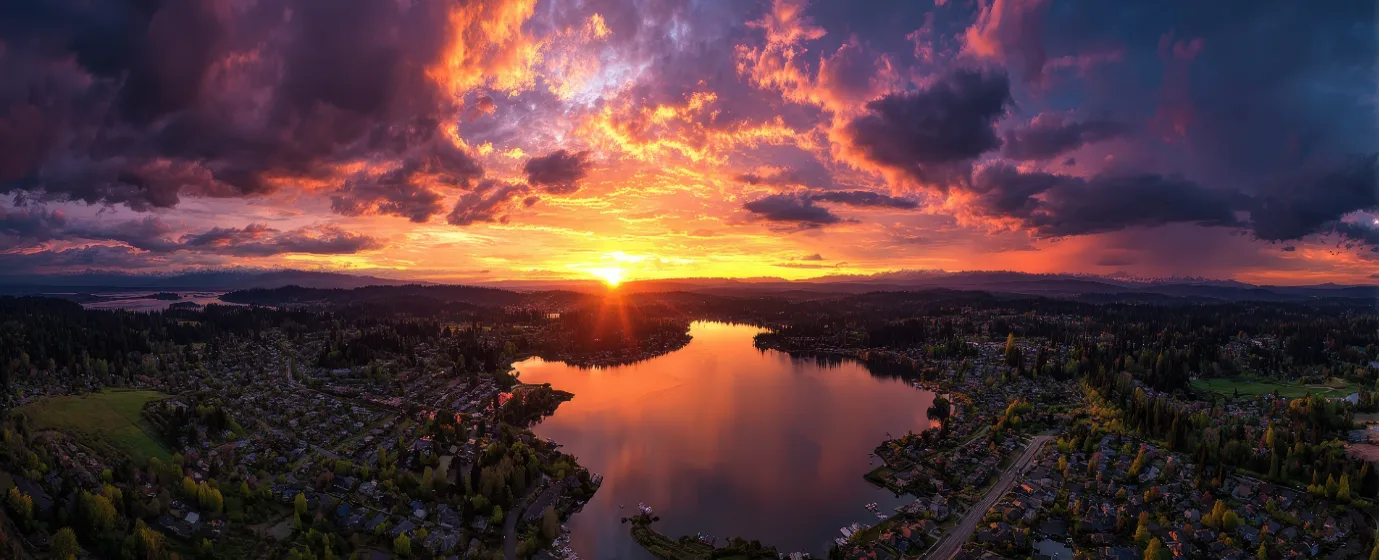
What Is Living in Lake Stevens, Washington Like?
Maybe you've been priced out of closer-in Seattle suburbs and someone pointed you east on US-2 toward Snohomish County. Maybe Boeing's Everett campus is pulling you north and you want more square footage than Everett proper offers. Either way, Lake Stevens has a way of surprising first-time visitors: you expect a sleepy exurb and instead find a functioning small city wrapped around a real lake, with a downtown undergoing genuine investment, a school district that just passed a major construction bond, and neighborhoods filling with young households who made a deliberate choice — not a backup plan. The city sits roughly 6 miles east of Everett along Highway 9 and US-2, and it has grown by about 9% since the 2020 Census, now home to approximately 40,253 people.
The economic backbone here is a mix of public-sector stability and private-sector weight. The Lake Stevens School District is among the largest local employers, which matters both for job seekers and for the quality of education families find when they arrive. Boeing's Everett facility — the largest building by volume on earth — is a 15-to-20-minute drive west and employs thousands of Snohomish County residents, many of whom have landed in Lake Stevens for the value and the space. Amazon's Puget Sound footprint draws tech workers who are willing to commute or work hybrid, and a major regional health system anchors healthcare employment across the county. The Lake Stevens School District holds an A- rating, according to Niche, and a voter-approved bond in February 2025 is funding new elementary capacity and a Secondary Innovative Learning Center expected to serve around 280 students.
Home prices here are noticeably below what you'd pay in Kirkland or Bothell, though the gap has narrowed as more buyers discovered the area. The Zillow Home Value Index put the city-wide median at $707,767 as of May 2026 — see the full cost-of-living breakdown for rent ranges and tax details. Day-to-day life centers on the lake itself: Lundeen Park and Sunset Beach Park are where families spend summer afternoons, the Centennial Trail gives cyclists and walkers a 30-mile paved corridor through the county, and the Tuesday Farmers Market at North Cove Park runs June through late August each year. Washington's lack of a state income tax stretches the median household income of $122,336 further than that figure implies on paper.
Whether you're seriously considering a move or just building the spreadsheet, the sections below break down Lake Stevens's neighborhoods, housing market, commute realities, schools, local favorites, and what daily life here is actually like once you're settled in.
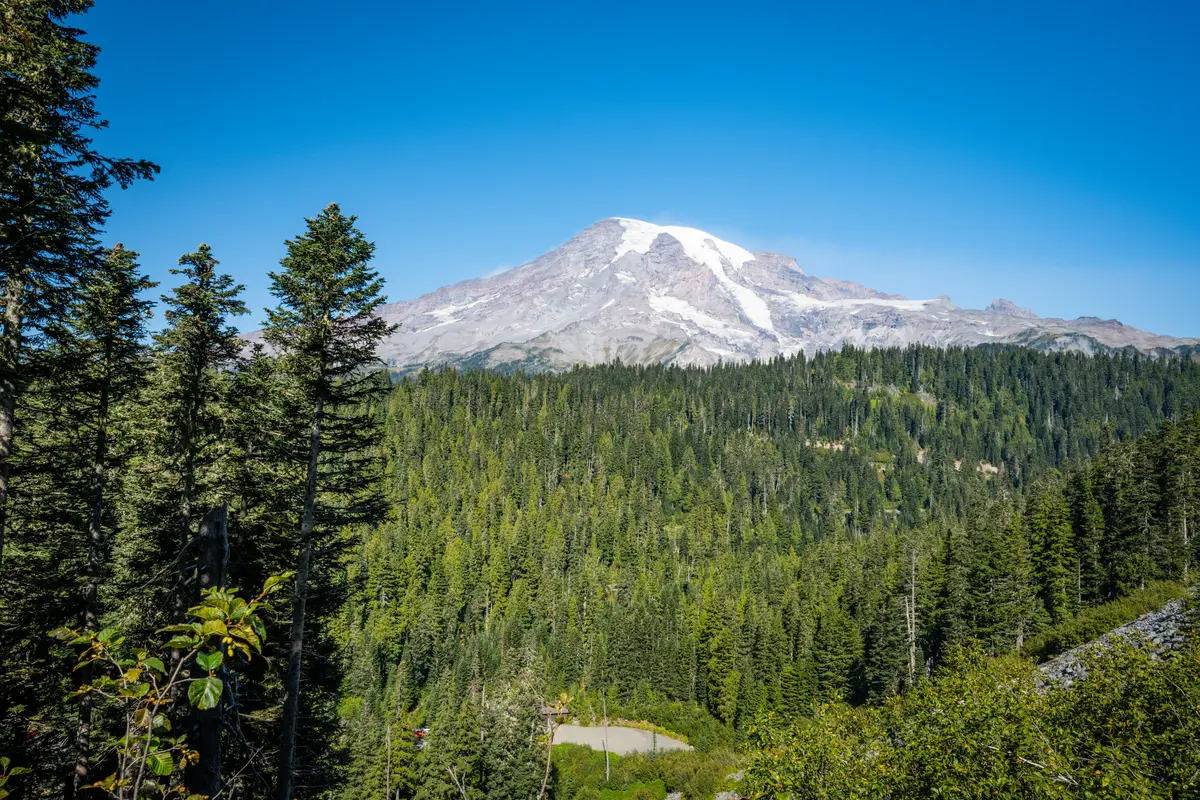
Lake Stevens at a Glance
Looking to buy in Lake Stevens? Estimate your payment.
Enter your numbers to see an estimated monthly mortgage payment.
Estimate only. Excludes HOA fees and mortgage insurance. The interest rate above is a starting point, not a quoted rate — replace it with your own to see real numbers. Insurance is a flat placeholder, not a Lake Stevens quote.
Why Are People Moving to Lake Stevens?
The short answer is value and quality of life — but those words flatten a more specific story. People moving here are largely making a calculated trade: they're giving up proximity to Seattle in exchange for a real backyard, a school district worth trusting, and a community that feels intentional rather than accidental.
The Growth Story Is Real
Lake Stevens has added nearly 4,600 residents since the 2020 Census. That pace of growth isn't random — it reflects families and working households actively choosing this city over closer-in alternatives where the same money buys a townhouse with a shared wall.
The city's 2026 capital agenda includes the Mill Spur Yard groundbreaking and a 19-item public works initiative list. In 2025 alone, the city secured $2.2 million in grants and completed Main Street redevelopment. This is a place that is actively building toward something, not coasting.
Who Actually Moves Here
| Buyer / Renter Type | Why Lake Stevens Works | Best Fit |
|---|---|---|
| Boeing & aerospace workers | 15–20 min drive to Everett plant; more house per dollar | Commuter |
| Hybrid tech workers | Route 903 connects to Lynnwood Link light rail; flexible schedule masks peak-hour I-5 | Transit Tech |
| Families with school-age children | District holds an A- rating, according to Niche; 93.6% graduation rate; new construction underway | Families School |
| First-time buyers priced out of Bothell or Kirkland | City-wide median well below the 520 corridor | First-Time Value |
| Outdoor-focused households | Centennial Trail access, Lundeen Park, the lake itself | Nature |
| Remote workers wanting space | Larger lots than Eastside suburbs; quieter than Marysville's Highway 9 corridor | Quiet Privacy |
The households that struggle here are generally the ones who underestimated how car-dependent daily life is and how much peak-hour traffic on US-2 and Highway 9 can compress that promised 45-minute Seattle commute.
A Safety Picture That's Improving
SafeWise ranked Lake Stevens the 10th safest city in Washington for 2025, with property crime declining roughly 35% over the prior two years. For many families moving from denser metro areas, that trajectory — not just the number — is what builds confidence. See the full safety data breakdown for context.
What Daily Life Feels Like in Lake Stevens
Living here has a rhythm that's hard to describe from a spreadsheet. Mornings at North Cove Park look like a outdoor gear catalog: joggers on the trail, kayaks on the water, dogs off-leash near the shoreline. By 7:30 a.m. on a weekday, the same park is quiet and the highway on-ramps are not.
The Lake Is Not a Metaphor
Lake Stevens — the actual body of water — genuinely shapes how residents spend free time. Sunset Beach Park and Lundeen Park give public waterfront access that most comparable-priced cities in western Washington simply don't offer. In July and August, the lake is legitimately crowded, and parking near North Cove fills before noon on weekends.
That summer intensity surprises most newcomers. Nobody warns you that the same waterfront that feels serene in October becomes a regional draw in summer — not just for Lake Stevens residents but for day-trippers from Everett and Marysville. Plan accordingly.
The Farmers Market Anchors Summer
Every Tuesday from June through late August, North Cove Park hosts the city's Farmers Market from 3 to 7 p.m. It's the de facto community gathering point for the warmer months — the kind of weekly ritual that makes a city feel like a real town. The 2026 season runs June 2 through August 25.
Downtown Is a Work in Progress — In a Good Way
Main Street redevelopment wrapped up in 2025, and the difference is visible. The downtown core is still modest in scale, but the Mill Spur Yard groundbreaking in 2026 is adding another layer of investment. If you're moving from a place with a fully built-out walkable downtown, temper expectations; if you're excited by a city actively shaping its own center, this is the right moment to arrive.
Dwellers Drinkery on Vernon Road is the kind of anchor a neighborhood needs — a taproom-restaurant-sports bar that draws regulars and gives people a reason to stay local rather than drive to Marysville or Everett for the evening.
What Longtime Residents Know
Six months in, most newcomers arrive at the same discovery: the community is younger and more engaged than it looked from the outside. School board meetings are well-attended. The 2025 bond vote — approving new school construction — passed, which tells you something about how invested residents are in the city's trajectory.
The Centennial Trail, accessible directly from town, becomes a genuine lifestyle amenity once you know it's there. Cyclists commute on it, families walk it on weekends, and equestrians use the unpaved sections that extend into rural Snohomish County. It's one of the better-kept secrets in the county for people who moved here expecting to drive everywhere.
The Lake Stevens Housing Market Right Now
The city-wide Zillow Home Value Index stood at $707,767 as of May 2026 — down 2.1% from the prior year, which means buyers have slightly more breathing room than they did in 2023 and 2024. Homes were going to pending in approximately 11 days during that same period, which signals a market that hasn't gone soft so much as it has stabilized after a sharp run-up.
That 11-day pace still demands seriousness. This is not a market where you take a leisurely second showing the following weekend. Prepared buyers who know their criteria tend to move decisively; buyers who are still comparing Lake Stevens to Marysville or Monroe often find themselves watching listings expire in their saved search. For a deeper look at what drives those numbers, see the cost-of-living page.
What the Median Actually Buys
At the city-wide median, buyers are typically looking at a 3-to-4-bedroom single-family home built in the 2000s or newer, often with a garage and a real yard — the kind of floor plan that would push well past this price in Bothell or Mill Creek. Some areas of the city carry higher price points than others, and newer construction on the edges of town trends above the median, but this page stays city-wide by design; the best neighborhoods guide breaks down the geographic and price differences in detail.
A Market Built for Growing Families
The housing stock skews toward detached single-family homes, which is part of why the city disproportionately attracts households with kids rather than empty nesters or solo buyers. Condos and townhouses exist but are a smaller share of what's available. If attached housing is your target, inventory will be thinner and competition sharper on the relatively few units that come up.
Washington's effective property tax rate in Lake Stevens runs approximately 0.79% — low by national standards, and one of the reasons the ongoing cost of owning here is more manageable than the purchase price alone suggests.
Lake Stevens Neighborhoods
Lake Stevens has several distinct areas — each with its own character and appeal. Here’s a breakdown to help you narrow down where to focus your home search.
🏡 Downtown Lake Stevens
The closest thing the city has to a walkable core — sitting near North Cove Park and the lake's north shore, with the redeveloped Main Street adding energy that wasn't there five years ago. It suits buyers who want to walk to the Farmers Market on Tuesday evenings and feel connected to the city's changing center.
🏠 North Lake Stevens
Bordering Marysville to the northwest, this area offers more spacious lots and tends to attract households who want elbow room without crossing the county line. The trade-off is that it's the farthest point from the lake's southern parks and requires the most driving for most errands.
🌳 West Lake Stevens
Positioned between downtown and the Highway 9 corridor, West Lake Stevens draws commuters who want fast access to Everett without living directly on a commercial strip. Housing stock here tends to mix established neighborhoods with newer infill construction.
🏘 South Lake Stevens
The southern edge of the city near the Snohomish border draws families who prioritize school district access and a quieter residential feel without being far from Highway 9's retail corridor. Lundeen Park and the lake are a short drive north.
🏔 Soper Hill
One of the more elevated residential areas in the city, Soper Hill is known for newer construction and views across the valley toward the Cascade Range. It attracts buyers who want a premium feel within city limits and are comfortable with the winding roads that define the neighborhood's topography.
🌆 Lake Cassidy
On the city's eastern edge near the smaller Lake Cassidy, this area has a rural-adjacent feel that attracts buyers who want more privacy and larger parcels while still technically remaining within Lake Stevens city limits. It's the quietest of the recognized neighborhoods and suits households that genuinely want to feel away from the city's growth.
Pros & Cons of Living in Lake Stevens
The Pros
- Lakefront recreation with swimming
- boating
- and paddleboarding right in town
- highly-rated Lake Stevens School District (A- on Niche)
- more attainable home prices than Seattle or the Eastside
- growing downtown with new shopping and dining at Frontier Village
The Cons
- Car-dependent with a long
- traffic-dependent commute to Seattle (roughly 45 minutes to over an hour at peak)
- home values and rents have risen sharply
- straining affordability
- limited nightlife and urban amenities compared to bigger Puget Sound cities
Getting Around & Commuting in Lake Stevens
This is the section that decides whether Lake Stevens works for your life or doesn't. The city is car-dependent for most daily needs, and the commute to Seattle is real — not insurmountable, but real. Understanding exactly how it works before you buy is the single most important due-diligence step for anyone considering this city.
The Drive Numbers
Lake Stevens to Seattle covers roughly 36 miles. Under light traffic — think 10 a.m. on a Tuesday — you can make it in around 45 minutes. Peak-hour commutes on I-5 southbound add unpredictably to that: 70 to 90 minutes is common during morning rush, and the US-2 trestle bottleneck into Everett adds time before you even reach the freeway. If you're commuting five days a week to a downtown Seattle office, budget your life accordingly.
The Everett commute is a different calculation. Boeing's main Everett facility, Providence, and other major county employers are 15 to 20 minutes west on a normal morning — manageable enough that many residents describe it as a non-issue once they've adjusted their departure time by 10 minutes.
Transit Options Are Growing
Community Transit operates four routes out of the Lake Stevens Transit Center. The most significant for Seattle-bound commuters is Express Route 903, which connects to Link light rail at Lynnwood City Center Station during peak morning hours. That gives hybrid workers a genuine car-free option on office days, though the combined trip still takes longer than driving under light conditions.
In early 2025, Community Transit launched the Zip Shuttle — an on-demand shared-ride service operating within Lake Stevens from 5 a.m. to 10 p.m., bookable by app or phone. For residents 18 and under, the service is free. It doesn't replace a car for grocery runs to Marysville or big-box errands on Highway 9, but it meaningfully changes how teenagers and car-free adults navigate the city itself.
The Practical Reality
Most households in Lake Stevens operate with two cars. The city's layout — spread across several distinct residential areas with the lake at the center — means even short trips often require driving. Families who moved here expecting walkable streets on the order of Edmonds or downtown Snohomish often recalibrate in the first few months.
What locals figure out quickly: leaving for Seattle before 6:30 a.m. or after 9:00 a.m. dramatically changes the commute experience. The people who are least frustrated by the drive are the ones who shifted their schedule rather than fought the clock.
| Destination | Distance | Light Traffic | Peak Hour (est.) | Transit Option |
|---|---|---|---|---|
| Everett (downtown) | ~7 mi | 15–20 min | 25–35 min | Community Transit routes |
| Boeing Everett | ~10 mi | 15–20 min | 25–40 min | Limited |
| Lynnwood City Center Station | ~18 mi | 25–30 min | 40–55 min | Route 903 express |
| Seattle (downtown) | ~36 mi | ~45 min | 70–90 min | Route 903 + Link rail |
| Bellevue / Redmond | ~45 mi | 50–60 min | 80–100 min | No direct transit |
| Marysville (city center) | ~8 mi | 12–18 min | 20–30 min | Local routes |
Schools in Lake Stevens
Families relocating to Lake Stevens have public, private, and higher-education options nearby. Here’s a quick overview.
🎓 School District
Lake Stevens School District serves K–12 students across Lake Stevens and the surrounding area. Rated A- (source: Niche.com).
🏆 Graduation Rate
The 4-year high-school graduation rate here is approximately 93.6%.
📚 Higher Education
Washington’s public universities — the University of Washington, Washington State University, and Western Washington University — offer four-year degrees statewide, with a network of 34 community and technical colleges (SBCTC) providing two-year and workforce programs.
🌐 Online Learning
University of Washington Continuum College and Washington State University Online offer fully accredited online degrees for remote learners across the state.
Safety in Lake Stevens
A quick look at how Lake Stevens compares on the numbers that matter most when weighing a neighborhood or a move.
🛡 Violent Crime
Approximately 1 per 1,000 residents.
🔒 Property Crime
Approximately 6 per 1,000 residents.
Compared to the FBI’s most recent national data (2024), Lake Stevens’s violent crime is below the national average (about 3.6 per 1,000), and property crime is below the national average (about 17.6 per 1,000).
Against Washington as a whole, Lake Stevens’s violent crime is roughly a third of the state average, and property crime is roughly a quarter of the state average (Bureau of Justice Statistics, Crime Known to Law Enforcement, 2024 (tables 2 and 3)).
Crime rates can vary a lot within a single city, so the citywide numbers above are only a starting point. Some neighborhoods in Lake Stevens run well below these averages, while others run higher — the kind of block-by-block detail that matters most when you’re actually choosing where to live. The full guide below breaks it down neighborhood by neighborhood.
Working in Lake Stevens
Lake Stevens’s largest employers span several industries — here are some of the anchors of the local job market.
🎓 Lake Stevens School District
Education
🏭 The Boeing Company
Aerospace manufacturing, Everett
🏥 Providence Regional Medical Center Everett
Healthcare
💻 Amazon
Technology/e-commerce, Puget Sound region
Parks & Recreation in Lake Stevens
Some of the outdoor spaces that shape everyday life in Lake Stevens.
🌱 North Cove Park
🌱 Lundeen Park
🌱 Wyatt Park
🌱 Centennial Trail
🌱 Lake Stevens Historical Museum
🌱 Sunset Beach Park
Lake Stevens residents don’t have to go far for green space — spots like North Cove Park and Lundeen Park are part of everyday life here, whether that’s a morning walk, a weekend hike, or just somewhere to unwind outside. The full guide below covers more of what Lake Stevens has to offer for parks and outdoor recreation.
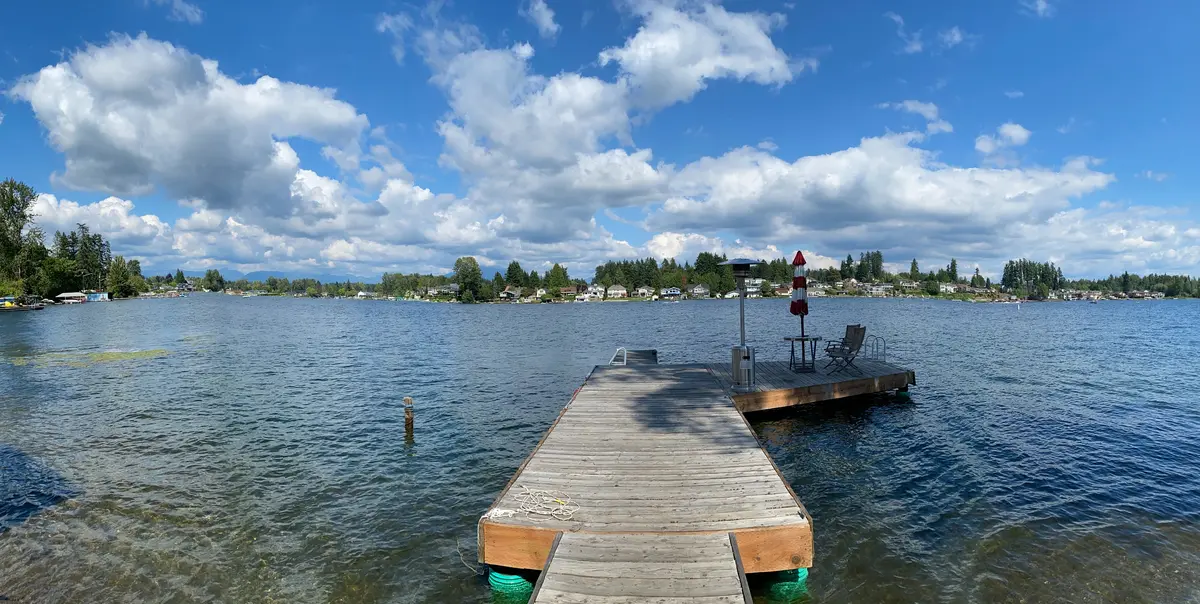
Retiring in Lake Stevens
Lake Stevens draws retirees for its balance of amenities, outdoor access, and cost. Here’s what to weigh.
🌤 Climate
Lake Stevens sits in the western Cascades' rain shadow edge — wetter than Eastern Washington but drier than Seattle proper, with mild summers that rarely push past the low 80s. Winters are gray and wet from November through March, with occasional snow that can make the hilly residential streets slippery. Spring arrives gradually but meaningfully by April, and the lake is genuinely swimmable by late June.
🍴 Lifestyle
Retirees here tend to organize life around the lake and trail system — morning walks on the Centennial Trail, afternoons at Lundeen or Sunset Beach Park in summer. The Tuesday Farmers Market at North Cove Park is a consistent social anchor through the warmer months. For more dining and cultural variety, Everett is 15–20 minutes west and offers symphony, waterfront dining, and a larger commercial corridor.
🏚 55+ Communities
Lake Stevens itself is primarily a single-family home market and does not have a large concentration of active-adult or 55+ communities within city limits. The surrounding Snohomish County area — particularly closer to Everett and Marysville — has more dedicated senior-living and active-adult options. Buyers in this stage of life often weigh Lake Stevens against Marysville and Snohomish for a broader range of housing types.
✈ Getting Around
A personal vehicle is essential for most daily errands in Lake Stevens. The Lake Stevens Transit Center connects to Community Transit routes, including the on-demand Zip Shuttle within the city and Route 903 express to Lynnwood City Center for light rail access. Paine Field in Everett handles regional flights, while Seattle-Tacoma International Airport is approximately 60–70 minutes south depending on traffic.
🏛 Washington Taxes for Retirees — What to Know
- No state income tax — Washington does not tax personal income, so Social Security, pensions, and 401(k)/IRA withdrawals are all untaxed at the state level. There is no state return to file and no retirement exclusion to claim — the rate is simply zero.
- Military and public pensions — Because there is no income tax, military retirement pay and public-employee pensions are untaxed at the state level along with everything else.
- Sales tax is the tradeoff — The state sales tax is 6.5%, and local add-ons bring the combined rate in Lake Stevens to 9.3% (Washington State Department of Revenue, Q3 2026 local sales & use tax rate table, July 2026). Groceries and prescription drugs are exempt.
- Property taxes, with senior relief — The effective property tax rate is roughly 0.9%. Homeowners 61+ (or unable to work due to disability, or a qualifying disabled veteran) who own and occupy their home may qualify for a reduction. Income limits are set against each county’s median household income, so the threshold differs by county — check with your county assessor. A separate deferral program is available for those who don’t qualify for the exemption.
- Capital gains tax — but not on retirement income — Washington taxes 7% on long-term capital gains above a $278,000 standard deduction for 2025, rising to 9.9% on gains above $1,000,000. Retirement accounts and real estate sales are both exempt. It therefore does not reach ordinary retirement income or the sale of a home.
- Estate tax — the one to plan for — Unlike most no-income-tax states, Washington has its own estate tax. For deaths on or after July 1, 2026, the exemption is $3 million with graduated rates topping out at 20%. Retirement accounts count toward the taxable estate, so long-time homeowners with sizable balances can cross the line without expecting to.
- No inheritance tax — Washington has no inheritance tax, and no gift tax.
- WA Cares payroll premium — Working Washingtonians pay 0.58% of gross wages into the WA Cares Fund, the state long-term care program, with no income cap. It applies to W-2 wages, so retirees who have stopped working do not pay it — but anyone relocating while still employed will see it. The private-insurance opt-out closed at the end of 2022 and is not available to new applicants; the remaining exemptions are narrow (living outside Washington, military spouses, certain visa holders, and veterans with a 70%+ service-connected rating).
- The Oregon border effect — Oregon has no sales tax, so Washington residents near the river — Vancouver, Camas, Washougal, Longview — often cross over for large purchases. Washington use tax technically applies to goods brought back for use in-state, though it is rarely enforced on ordinary personal purchases.
Tax laws change frequently and individual situations vary. This is general information, not tax advice — always consult a qualified Washington tax professional or CPA for personalized retirement tax planning.
Weekends & Local Favorites in Lake Stevens
The weekend social life in Lake Stevens is less about a downtown dining scene and more about the outdoors, the water, and a growing set of local anchors that give residents reasons to stay close to home rather than drive to Everett for entertainment.
The Water, Every Weekend
From Memorial Day through Labor Day, the lake is the city's living room. Lundeen Park has a swim beach and a boat launch that fills by mid-morning on summer Saturdays. Sunset Beach Park, tucked on the south side of the lake, draws a quieter crowd — families with younger kids, kayakers, people who figured out that Lundeen's parking lot is a lost cause by 11 a.m. in August.
Newcomers consistently underestimate summer weekend traffic near both parks. If you're not there before 10, plan to walk from a residential street a few blocks away.
Trails That Go Somewhere
The Centennial Trail passes directly through the city on its 30-mile run through Snohomish County, built on the former Burlington-Northern railroad corridor. It's paved, flat, and well-maintained — useful for everything from a casual Saturday bike ride with kids to a serious training route for cyclists. The trail connects Lake Stevens to Snohomish to the south and extends toward Arlington to the north, meaning a weekend ride can become a genuine day trip without loading bikes onto a car.
Wyatt Park offers a quieter local alternative for walking and playground time, popular with families in the eastern residential neighborhoods who want something closer than the waterfront parks on a weekday afternoon.
Gathering Spots
Dwellers Drinkery on Vernon Road has become the kind of local anchor that makes a neighborhood feel like one — a taproom and sports bar that draws regulars on game nights and serves food, which in a city without a dense restaurant row matters more than it would elsewhere. The Tuesday Farmers Market at North Cove Park is genuinely well-attended; locals treat it as a weekly social event, not just a produce stop.
For larger shopping and dining variety, most residents head to Everett's Evergreen Way corridor or to Marysville — both under 20 minutes. The trade-off of living in a smaller city is real: if you want the restaurant density of Bellevue or the indie food scene of Fremont, you're driving for it.
Cultural Anchors
The Lake Stevens Historical Museum is small but genuinely local — the kind of institution that tells you something real about the community's identity and how long families have been rooted here. It's not a weekend draw in the way a major museum is, but it signals that the city has a sense of its own story.
WIAA high school sports — football at the local high school stadium, basketball in the new facilities coming online with the school bond — are a genuine community gathering point. Friday night games pull crowds that give the city the kind of shared weekly rhythm that's hard to manufacture.
Top Things Locals Say About Lake Stevens
The best intel about a city comes from the people who actually live there. Here’s what Lake Stevens residents say when newcomers ask the questions everyone’s thinking.
“I knew the commute would be longer — I planned for that. What I didn't expect was how much time I'd actually spend in Lake Stevens itself. The Centennial Trail is right there, the lake is five minutes from my front door, and we end up at the Tuesday market most weeks in the summer. We drive to Seattle less than I thought we would.”
— Recent Lake Stevens home buyer
“What's the most surprising thing about living in Lake Stevens?”
How much the lake actually shapes your social life. You think it's just a nice backdrop when you're buying the house, and then you realize your whole summer is organized around it — Lundeen Park on Saturday mornings, Sunset Beach when Lundeen gets crowded, the Tuesday market at North Cove in the evening. It's not a selling point on a listing sheet; it becomes part of your routine.
“What do locals love most about Lake Stevens?”
The Centennial Trail access and the sense that the city is actually building toward something. Main Street got a real renovation in 2025, the school bond passed, the Mill Spur Yard project is underway. People who've been here five or more years talk about visible change in a way that feels earned, not promotional. And the school district genuinely delivers — that matters when you have kids in the system.
“What should newcomers to Lake Stevens know?”
Leave for Seattle earlier than you think you need to. The US-2 trestle into Everett and I-5 southbound are unpredictable after 7 a.m., and the people who are most frustrated with the commute are usually the ones who kept trying to leave at 7:15. Also: summer parking near the lake parks fills by mid-morning on weekends. First-timers to Lundeen Park in August often end up walking six blocks because they arrived at 11.
“Can you live in Lake Stevens without a car?”
Technically yes, but practically it's very difficult for most households. The Community Transit Zip Shuttle helps for getting around within the city, and Route 903 connects to light rail for Seattle-bound trips. But grocery runs, big-box errands on Highway 9, and most of the commercial strip near Marysville require a car. Households that go car-free here tend to work from home full-time or have a very specific, structured routine built around transit schedules.
Cities Near Lake Stevens
Other communities near Lake Stevens worth a look — each with its own character and price point.
| City | Distance | Best For | Vibe | Median Rent | Median Buy |
|---|---|---|---|---|---|
| Everett | 8 mi | Urban amenities, renters, Boeing workers | Larger city feel, waterfront, commercial | $1,849 | $618,414 |
| Marysville | 8 mi | New construction, value-focused families | Suburban, fast-growing, highway-oriented | $1,750 | $575,897 |
| Snohomish | 6 mi | Historic downtown lovers, quieter lifestyle | Small-town, antique-row, established | $2,100 | $891,251 |
More Helpful Guides for Lake Stevens
Going deeper on Lake Stevens? Our blog series covers everything from first-time buying to retiring here — explore the guides below.
Local Expert Takeaway: Lake Stevens rewards buyers who do their homework on the commute before they fall in love with the backyard. The city-wide median of $707,767 (May 2026 Zillow Home Value Index) buys a real single-family home on a real lot — something the same money rarely gets on the Eastside. But the I-5 and US-2 peak-hour reality is non-negotiable: households that leave for Seattle before 6:30 a.m. or ride Community Transit Route 903 to Lynnwood City Center Station make it work. The lake, the Centennial Trail, and a school district with a 93.6% graduation rate make the trade worth it for a specific kind of buyer. If that profile fits you, this city is one of the more genuinely livable options left in Snohomish County at this price point.
Quick Takeaways & FAQs
✅ Lake Stevens School District posted a 93.6% on-time graduation rate in 2025 and voters approved a new school construction bond the same year — making it one of the more investment-forward districts in Snohomish County.
⚠️ The commute to Seattle is the city's defining trade-off: 45 minutes under light traffic is real, but peak-hour I-5 and the US-2 trestle into Everett can stretch that to 90 minutes on bad mornings.
📍 The Tuesday Farmers Market at North Cove Park (June–late August, 3–7 p.m.) is the community's de facto summer gathering point — arrive early, because the lakeside parking fills faster than newcomers expect.
How far is Lake Stevens from Seattle?
Is Lake Stevens a good place to raise a family?
What is the median home price in Lake Stevens, WA?
What are the best neighborhoods in Lake Stevens?
Does Lake Stevens have public transit?
Helpful Links for Moving to Lake Stevens
Moving to Washington?
Tell us what you need help with and we'll connect you with local resources.
