
You've done the math on state income tax and it already looks like a raise. But moving to Lake Stevens from California is less a spreadsheet decision than a lifestyle reset — and the two aren't always the same thing. Lake Stevens sits approximately 36 miles north of Seattle in Snohomish County, bracketed by the Cascades to the east and Puget Sound to the west. It is not a suburb that stumbled into existence: the city grew from roughly 28,000 residents in 2010 to over 40,000 by 2022, a 45% increase that makes it the fourth-largest city in Snohomish County. The pace of that growth is visible in every direction — new subdivisions pushing into the tree line, a $4 million road-improvement project along the 20th Street SE Corridor, and roughly 18 new housing communities in pre-construction or coming-soon status as of late 2025.
Most of that growth is being driven by people leaving more expensive Puget Sound markets — and increasingly, by Californians who have priced themselves out of the Bay Area or Southern California and are arriving with substantial equity and high expectations. The Lake Stevens School District holds an A- rating, according to Niche, and it is a consistent reason families shortlist this area over other Snohomish County options at similar price points. Boeing's Everett campus is roughly a 20-minute drive, and Amazon's regional presence means remote and hybrid tech workers have landed here in real numbers. The median household income of $122,336 reflects that incoming demographic: dual-income professional couples, families with school-age children, and remote workers who realized they could do their jobs from anywhere and chose a place with a lake at its center.
The cost picture is the headline reason Californians show up, but it requires more nuance than a single comparison. The Zillow Home Value Index for Lake Stevens was $707,767 as of May 2026 — well below what the same square footage would cost in most Bay Area zip codes, and noticeably below comparable Seattle-area suburbs. Washington's zero state income tax on earned wages is real money back in your pocket every April. Health insurance premiums tend to run noticeably below California rates, though you'll drive farther for specialist care than you might have near a major metropolitan medical center. The sales tax in Lake Stevens is 9.3% combined — higher than California's 7.25% base rate, though many California localities stack district taxes that close the gap considerably. For a full look at utilities, groceries, and monthly cost-of-living detail, see the Lake Stevens cost-of-living page.
Whether you're relocating for Boeing, going fully remote, or simply following the math, the sections below break down the California-to-Lake-Stevens comparison on home prices, taxes, lifestyle, and the honest trade-offs that don't show up on any relocation spreadsheet.
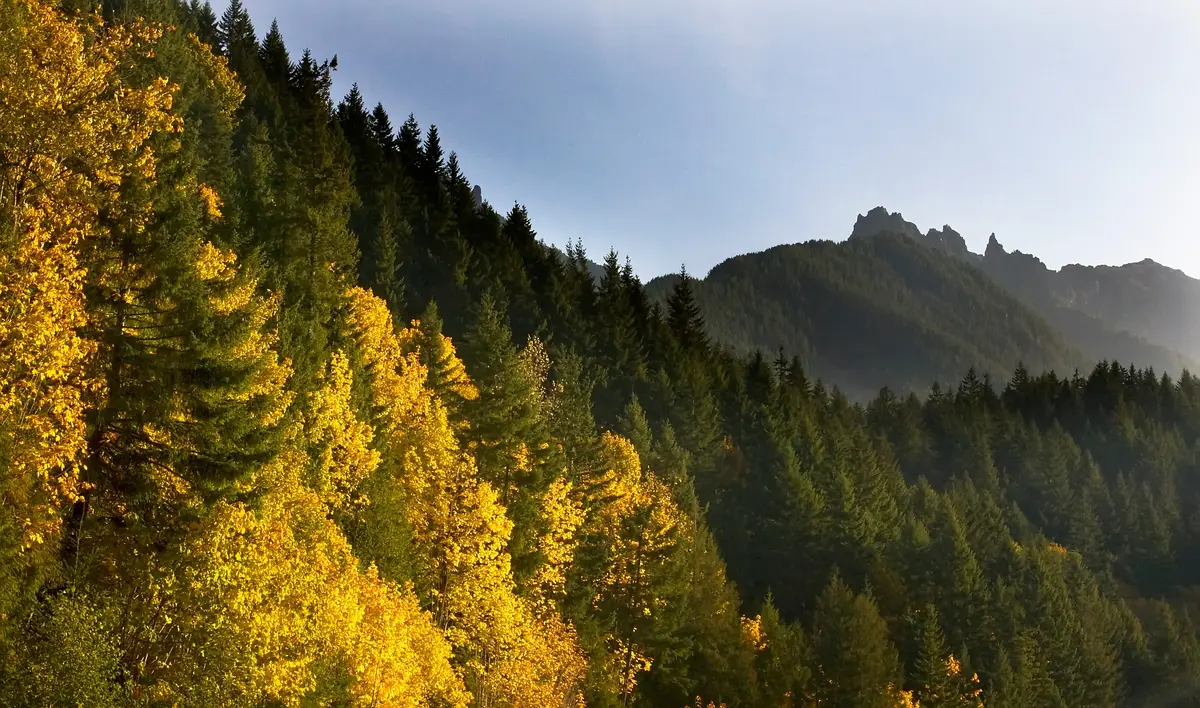
The Home Price Reality: What Your California Equity Buys Here
Californians arriving with Bay Area or Southern California equity often experience something close to sticker shock — in reverse. The Zillow Home Value Index for Lake Stevens was $707,767 as of May 2026. That is the city-wide median, and it buys a detached single-family home with a yard, a garage, and almost certainly mountain or tree views, in a market where most residential construction over the past two decades has been exactly that format.
Compare that mentally to what $707,767 represents in the markets most Lake Stevens transplants left behind. In San Francisco, Los Angeles, or the South Bay, that figure typically doesn't clear a two-bedroom condo. In San Diego or the Inland Empire, it covers a modest home in a competitive mid-tier neighborhood. The same dollar amount in Lake Stevens gets you into the mainstream market — not the entry-level floor.
What the Equity Transfer Looks Like in Practice
Many Californians selling a long-held home arrive with $400,000 to $700,000 or more in net proceeds after paying off their existing mortgage. In Lake Stevens, that kind of equity frequently means buying with a very large down payment — sometimes outright — which changes the monthly payment math significantly and removes the need to compete as aggressively in multiple-offer situations.
That said, California equity doesn't eliminate the need to understand local market conditions. Lake Stevens has been a competitive market for several years running, and homes in good condition near North Cove Park, Lundeen Park, or the lakefront areas move quickly. Remote workers and Boeing-area buyers are your competition, not just other Californians. For a closer look at which parts of the city attract which buyer types, the Lake Stevens neighborhoods page breaks down the geographic lay of the land.
New Construction Is a Real Option
Unlike many California markets where new construction is rare inside established city limits, Lake Stevens has active builder inventory. Approximately 18 communities were in pre-construction or coming-soon status as of late 2025. For Californians accustomed to fighting over 1960s tract homes with dated kitchens, the ability to buy new construction — with warranties, modern energy efficiency, and no deferred maintenance — at or near the city-wide median is a meaningful change.
The catch: new construction communities are often on the outer edges of the city, farther from the lake and the older neighborhood character around Downtown Lake Stevens. You are trading character for freshness, and that is a trade-off worth naming honestly before you tour model homes.
The Tax Shift: Where You Win, Where You Don't
The income tax savings are not theoretical. Washington levies no personal state income tax on earned wages — none. California's top marginal rate reaches 13.3%, the highest of any U.S. state. The practical difference for a household earning $100,000 per year is approximately $5,762 saved annually; at $150,000 income, the projected savings reach roughly $10,991 per year. For a dual-income tech or healthcare household earning $200,000 combined, you are looking at a five-figure annual difference that compounds over time.
| Tax Category | California | Lake Stevens, WA | Net Impact for Newcomers |
|---|---|---|---|
| State income tax (earned wages) | Up to 13.3% | 0% | Major annual savings |
| Effective property tax rate | ~0.76% (statewide avg) | 0.79% | Roughly comparable |
| Prop 13 / assessment cap | 2% annual cap (Prop 13) | No equivalent cap | See note below |
| Combined sales tax | 7.25% base (locals vary) | 9.3% (Q3 2026, WA DOR) | Higher in WA |
| Capital gains tax (LT) | Taxed as ordinary income | 7% on long-term capital gains above a $278,000 standard deduction for 2025, rising to 9.9% on gains above $1,000,000 | Minimal for most buyers |
| Primary home sale gains | Excluded up to federal limits | Excluded entirely from WA CGT | No change for home sellers |
The Proposition 13 Catch Nobody Mentions at the Dinner Table
If you've owned your California home for a decade or more, you've been living under Proposition 13's 2% annual cap on assessed-value increases. Your property tax bill has stayed artificially low relative to your home's actual market value. Washington has no equivalent cap.
When you buy in Lake Stevens, your property is assessed at full market value from day one, and that assessment can increase with the market in subsequent years. At Lake Stevens's effective rate of 0.79% — close to California's statewide average of 0.76% — the rate itself is not the problem. The problem is the base: you're paying 0.79% of what you actually paid, not of what you would have paid in 1998. For Californians with long-tenured Prop 13-protected homes, this is the single most underestimated cost difference in the move.
Sales Tax: Higher, but Not as Dramatic as It Looks
The 9.3% combined sales tax in Lake Stevens (state 6.5% plus local 2.8%, per the Washington Department of Revenue Q3 2026 rate table) is noticeably above California's 7.25% statewide base. In practice, many California counties stack district taxes that push local combined rates to 9% or higher — so the gap for buyers coming from Los Angeles County or the Bay Area is often smaller than the headline numbers suggest. For your specific Lake Stevens address, the Washington Department of Revenue offers an address-level lookup at dor.wa.gov/TaxRateLookup.
The income tax savings dwarf the sales tax difference for almost any household. Unless your spending patterns are unusually consumption-heavy, the net tax picture in Washington is strongly favorable compared to California.
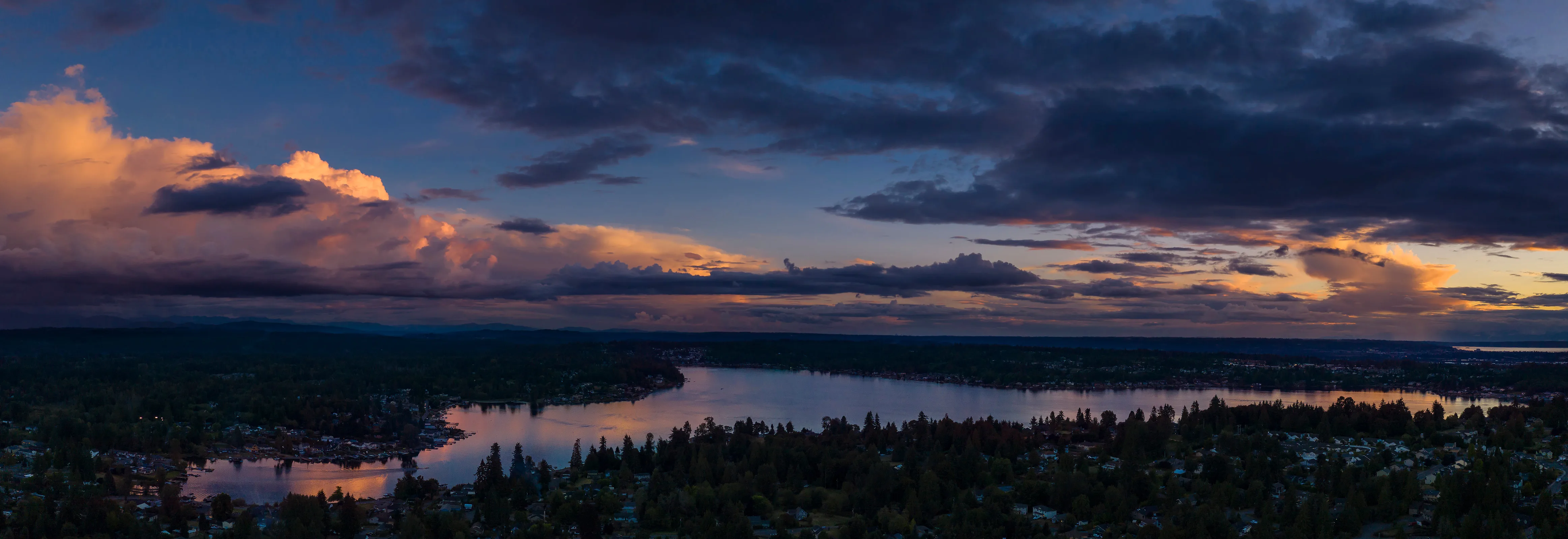
What Daily Life Actually Feels Like After the Move
Six months in, almost every California transplant says a version of the same thing: the green surprised them. Not in the brochure sense — in the visceral, perpetual sense of living inside a Pacific Northwest forest rather than driving past one. Lake Stevens itself sits at the center of the city's daily social geography: North Cove Park and Lundeen Park are where parents with school-age children spend weekend mornings, and Sunset Beach Park draws the after-work crowd in the long summer evenings.
The Centennial Trail, a multi-use path running through Snohomish County, connects Lake Stevens to the broader trail network in a way that doesn't require loading a car first. That kind of on-foot access to outdoor infrastructure is something most Californians have to actively plan for — here it's built into the address.
The Grocery and Retail Gap Is Real
Here is what nobody mentions in the relocation forums: there is no Trader Joe's in Lake Stevens. The nearest is in Everett. If you built your California routine around specialty grocery stores, natural food co-ops, or the density of a walkable urban retail strip, Lake Stevens will require an adjustment. The city's retail base is growing — the 20th Street SE Corridor has more than 30 acres identified for retail development — but in mid-2026, it remains a car-dependent shopping environment for anything beyond daily basics.
That said, the retail mix is expanding faster than it was five years ago, and Everett is a genuine city with a full range of grocery options roughly 20 minutes away. Think of it less as deprivation and more as a recalibration: you stop doing small daily errands and start batching them weekly.
The Social Learning Curve
Californians frequently underestimate the social pace of the Pacific Northwest. People here are friendly but slow to warm — a phenomenon locals call the "Seattle Freeze," and it extends to the suburbs. Dwellers Drinkery on Vernon Road opened in late 2025 and has become one of the early gathering anchors for the newer residential communities; the kind of place where regulars start recognizing faces. Finding your footing socially takes longer here than it did in a California city where newcomers are the default norm.
The weather requires honest preparation. Winters are gray and wet rather than cold and dramatic — not snowbound, but relentlessly overcast from October through March. Californians who thought they were ready for Pacific Northwest weather and then hit their first February here sometimes start browsing Zillow for sunnier climates by March. The ones who stay invest in good rain gear, commit to outdoor activity regardless of conditions, and eventually come to appreciate the way summer here — long days, temperatures in the 70s, the lake warm enough to swim — feels genuinely earned.
Looking to buy in Lake Stevens? Estimate your payment.
Enter your numbers to see an estimated monthly mortgage payment.
Estimate only. Excludes HOA fees and mortgage insurance. The interest rate above is a starting point, not a quoted rate — replace it with your own to see real numbers. Insurance is a flat placeholder, not a Lake Stevens quote.
Commute and Career: Boeing, Amazon, and the Seattle Question
The commute calculation is the variable most Californians get wrong when they first model the move. Lake Stevens sits roughly 36 miles north of Seattle, and the standard drive to central Seattle runs around 45 minutes in off-peak traffic. In California, 45 minutes might feel like nothing. In the Seattle metro, that same 45 minutes is freeway-dependent in ways that can stretch significantly during peak hours on I-5 or US-2.
The commute to Boeing's Everett campus is a different story: Lake Stevens is close enough that many Boeing employees live here specifically for that reason, and the drive to Everett's main aerospace facilities runs closer to 20 minutes most days. For more detail on commute patterns and the specific chokepoints that affect Lake Stevens residents, the living in Lake Stevens hub page covers that ground directly.
Remote and Hybrid Work Changed the Calculus
A significant share of Lake Stevens's recent California arrivals are not commuting to an office at all, or are doing so two or three days a week. Amazon's regional presence, the broader Puget Sound tech corridor, and the normalization of hybrid work have made Lake Stevens viable for employees whose offices are in Seattle, Bellevue, or Kirkland but who only need to make the trip twice a week. That changes what a 45-minute commute costs you in real terms.
For Californians coming from Bay Area tech campuses with shuttle buses and on-site everything, the shift to driving in is real. The compensation is that Lake Stevens's housing costs mean you are not spending 50% of a tech salary on rent to live walkably close to a campus — the commute is the price of the square footage, and for most households, it's a trade they make willingly.
The Schools Factor in the Career Decision
Families with school-age children frequently list the district's strong standing as a deciding factor when choosing Lake Stevens over other Snohomish County options at similar price points. It is worth understanding, though, that school boundaries in a fast-growing district can shift as new communities come online. For the full picture on specific schools, boundary updates, and what the rating actually reflects, the Lake Stevens schools page is the right starting point.
The Honest Trade-offs Californians Should Name Before They Sign
Every honest relocation guide has a version of this section, and the ones worth reading don't bury it at the end. Here is what Lake Stevens does not do well for Californians with specific expectations.
| What You're Leaving | What You're Getting | The Honest Read |
|---|---|---|
| California state income tax | $0 in state income tax on wages | Clear win |
| Bay Area / SoCal home prices | $707,767 city-wide median (May 2026 Zillow Home Value Index) | Major advantage |
| Dense urban dining and nightlife | Growing local scene, still limited | Gap is real; Everett and Seattle fill some of it |
| Year-round sun | Gray winters, spectacular summers | Requires genuine adjustment |
| Prop 13 property tax protection | Full-market-value assessment, no cap | Meaningful cost for long-tenured CA owners |
| Walkable urban retail | Car-dependent, improving slowly | Batching errands becomes a habit |
| Specialist-dense metro healthcare | Routine care accessible; advanced care requires more travel | Premiums lower; proximity to specialists is the honest trade-off |
Why Some Californians Leave Within Three Years
It happens, and it's worth saying plainly. The people who move back tend to fall into two categories: those who underestimated the gray-winter toll on their mental state, and those who discovered that their social life in California was more irreplaceable than they expected. Lake Stevens is not a city that surrounds you with a ready-made peer group — you build that deliberately, over time, through the school district, the trail community, the newer gathering spots on Vernon Road, the lake-adjacent parks in summer.
The people who stay past year three almost universally say that the pace slowed them down in a way they didn't realize they needed. They are outside more. They own more space. They are not spending their salary on the cost of proximity to a coastline they rarely visited. That is a real thing — but it is not automatic, and it doesn't happen just because the tax math works out.
What You Should Do Before You Make an Offer
Spend a February weekend here, not a July one. Everyone looks good in the Cascade summer. The question is whether the gray, wet, low-light November-to-March stretch is something you can genuinely inhabit or just theoretically accept. Drive the commute to wherever your office is on a Tuesday morning, not a Saturday. Walk the neighborhood you're considering after dark. If those things still feel right, the rest of the math is almost certainly in your favor.
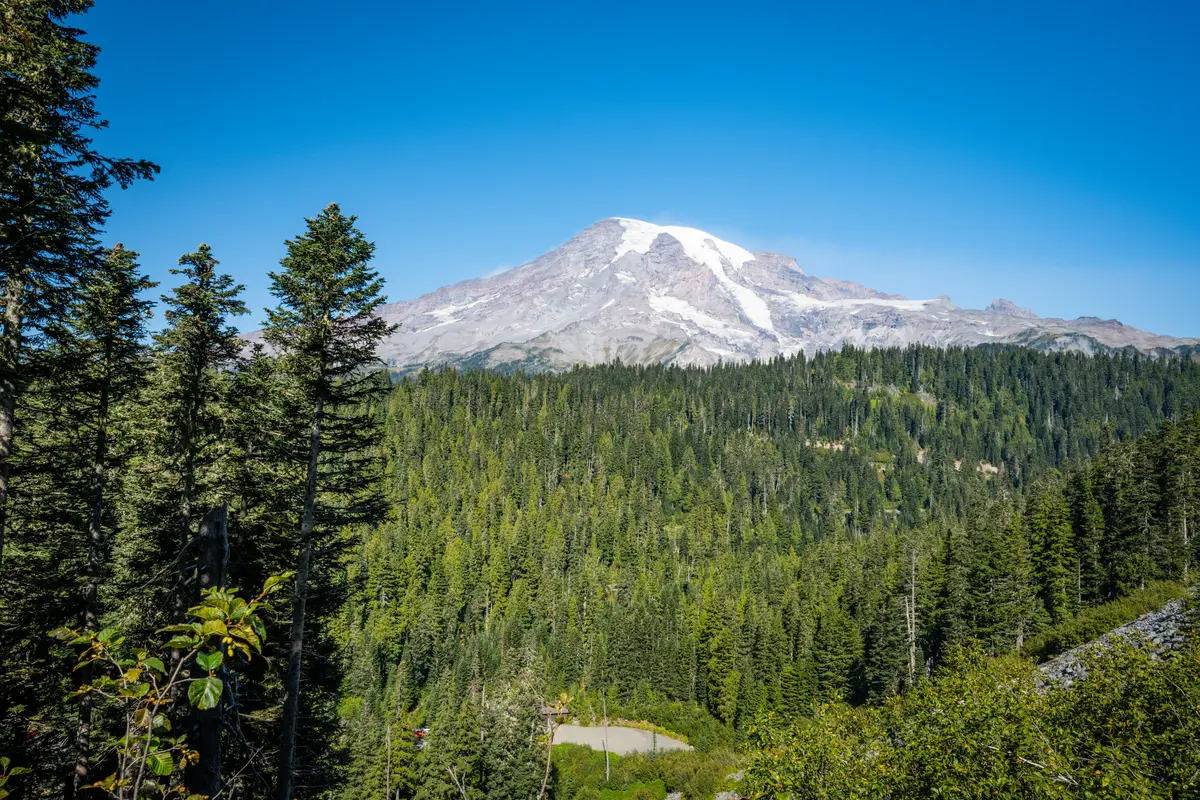
Local Expert Takeaway: Californians who move to Lake Stevens and stay tend to be the ones who treated the tax savings as a cushion rather than a destination in itself. The income tax difference is real — potentially $10,000 or more per year for a household earning $150,000 — but the daily texture of life here is quieter, greener, and more self-directed than most West Coast cities. The lake at Lundeen Park and the Centennial Trail become your weekend infrastructure. Dwellers Drinkery on Vernon Road is where you end up on a Friday when you don't want to drive to Everett. The Boeing and Amazon ecosystems keep the economy grounded. If you can accept gray winters and a car-dependent retail environment in exchange for space, lower taxes, and a school district your kids will thrive in, Lake Stevens usually wins the argument.
Quick Takeaways & FAQs
✅ Washington's zero state income tax on earned wages saves a household earning $150,000 approximately $10,991 per year compared to California — one of the clearest financial wins in the move.
⚠️ California's Proposition 13 kept your property tax artificially low; Washington has no equivalent assessment cap, so model your Lake Stevens tax bill at full purchase-price value from day one.
📍 Sales tax in Lake Stevens is 9.3% combined per the Washington Department of Revenue Q3 2026 rate table — higher than California's 7.25% base, though many California localities already exceed 9% when district taxes are added.
Is Lake Stevens cheaper than California to live in overall?
Does Washington state really have no income tax?
What happens to my property tax when I buy in Lake Stevens instead of staying in California?
How does the commute from Lake Stevens to Seattle actually work?
What do Californians most underestimate about moving to Lake Stevens?
Moving to Washington?
Tell us what you need help with and we'll connect you with local resources.
