What Is Living in Arlington, Washington Like?
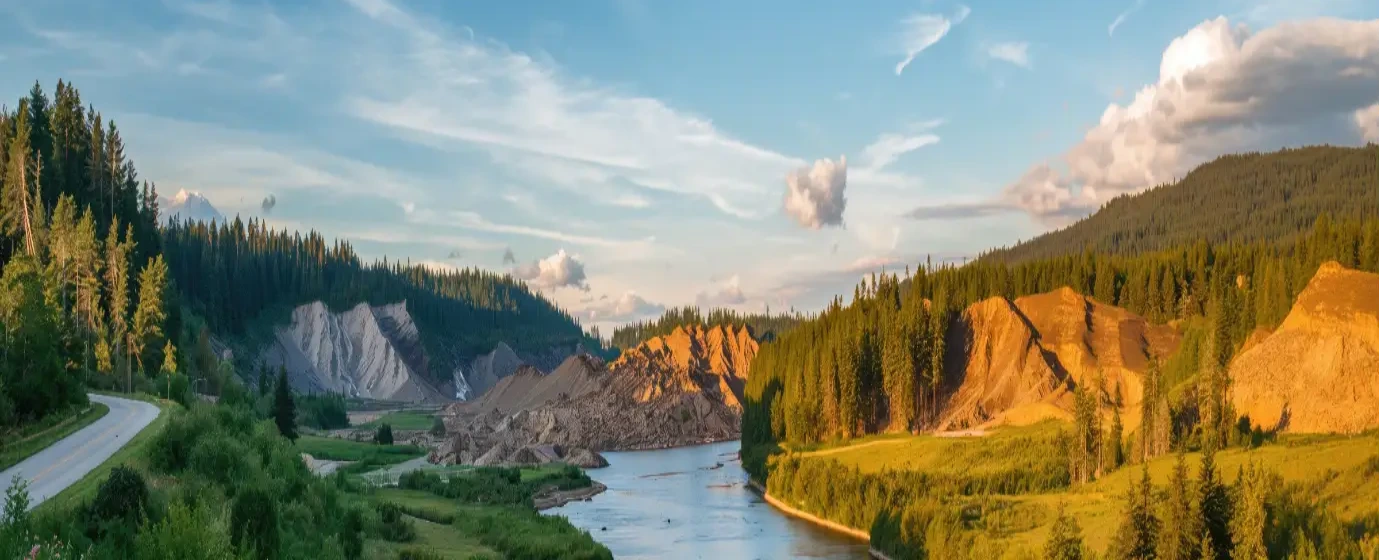
Maybe you've been priced out of south Snohomish County and someone mentioned Arlington. Maybe Boeing keeps you tied to the aerospace corridor but you can't stomach another Everett rent increase. Whatever brought you here, Arlington tends to surprise people — not because it's polished or particularly well-known, but because it quietly delivers the Pacific Northwest package that other I-5 corridor towns charge much more for: Cascade Range views from residential streets, a genuine small-city downtown, and a Stillaguamish River running right through it. The city sits at the intersection of SR-530 and Interstate 5, about 40 miles north of Seattle, which means real mountain access and a commute that's workable rather than punishing — most days.
The economic engine here is aerospace. Boeing's massive Everett facility anchors the regional employment picture, and Zenix Aerospace adds a second aerospace manufacturing presence closer to home. The Arlington School District, which serves around 5,000 students and has built out Career and Technical Education programs in aviation technology and agriculture, is rated B by Niche and ranks in the top 100 school districts statewide — a real draw for families with school-age children. Angel of the Winds Casino Resort is both a landmark and a meaningful local employer in the hospitality sector. The city has grown more than 12% since the 2020 Census, at roughly 2% annually — fast enough to feel it in traffic and permit lines, slow enough that it still feels like a community.
The Zillow Home Value Index for Arlington sits at $598,417 as of mid-2026 — noticeably below Everett and well below the Seattle metro median, which is the single biggest reason people keep discovering this place. A median household income of $86,581 and an effective property tax rate of approximately 0.79% make the math more workable than in many comparable North Puget Sound communities. The trade-off is car dependence: Arlington is not a city where you leave the car at home, and the transit options, while improving, remain limited for now. What you get instead is the Centennial Trail out your back door, SR-530 leading east toward the North Cascades, and a downtown that's genuinely trying — with over 35 public art installations, a seasonal farmers' market, and the annual Arlington SkyFest filling Legion Memorial Park.
Whether you're comparing Arlington to Marysville, weighing a long Boeing commute against affordable acreage, or just trying to understand how this corner of Snohomish County actually functions day to day, the sections below break down Arlington's neighborhoods, cost of living, schools, local favorites, employers, commute patterns, and what life here is really like once you're in it.
Arlington at a Glance
Looking to buy in Arlington? Estimate your payment.
Enter your numbers to see an estimated monthly mortgage payment.
Estimate only. Excludes HOA fees and mortgage insurance. The interest rate above is a starting point, not a quoted rate — replace it with your own to see real numbers. Insurance is a flat placeholder, not a Arlington quote.
Why Are People Moving to Arlington?
The simplest answer is price relative to access. You can still buy a home in Arlington for well under the Seattle-metro median, keep a Boeing or Amazon commute under an hour on good days, and have the Cascades in your windshield by the weekend. That combination is genuinely hard to find in Snohomish County anymore.
The Aerospace Connection
Boeing's Everett delivery center is roughly 20 minutes south on I-5 — close enough that a significant share of Arlington's workforce punches in there. Zenix Aerospace, based locally, adds manufacturing employment without the commute. This aerospace gravity has shaped the school district too: Arlington Public Schools expanded its Career and Technical Education offerings in aviation technology specifically because the jobs are right next door.
Who Moves Here and Why
| Buyer Type | Why Arlington Works | Best For |
|---|---|---|
| Boeing / aerospace workers | ~20-minute drive to Everett; lower home prices than Mukilteo or Everett proper | Commuter |
| Families with school-age children | B-rated district with aviation CTE; Running Start at Everett Community College tuition-free | Families School |
| Outdoor-focused buyers | Centennial Trail access, SR-530 to North Cascades, Stillaguamish River recreation | Nature |
| Value-driven buyers priced out south | Home values noticeably below Bothell, Mill Creek, and Everett | Value First-Time |
| Remote workers seeking space | More land per dollar; quieter pace; fiber availability in newer subdivisions | Privacy Quiet |
| Hospitality / gaming sector workers | Angel of the Winds Casino Resort employs locally; no long commute required | Commuter |
What surprises people after six months is how complete the city actually feels for its size. Downtown Arlington has a diner on Olympic Avenue, a local brewery, independent restaurants, and public art on nearly every block — not a ghost town waiting for a developer to save it.
The Honest Downsides
People do move out of Arlington, and the most consistent reason is the I-5 commute going south on a bad weather day or during a Seahawks Friday exodus. The other is service gaps: if you want a Trader Joe's, a large hospital campus, or a regional mall within ten minutes, you'll drive to Everett or Marysville for it. Arlington is genuinely a small city, and buyers who underestimate that tend to leave within a few years.
What Daily Life Feels Like in Arlington
Arlington operates on a rhythm that's part small-town Pacific Northwest, part bedroom-community practicality. Most weekday mornings begin with a car — there's no getting around that — and a run down I-5 or SR-9 toward work. But the evenings and weekends here are distinctly different from the suburban monotony you'd find closer to Seattle.
Downtown vs. Smokey Point
The city has two distinct commercial identities, and understanding both helps you choose where to live. Downtown Arlington — centered on Olympic Avenue — is where the character lives: The Stilly Diner for breakfast, Moose Creek Barbeque for smoke-and-slow-cook weekday lunches, 210 Brewing CO for a post-work pint. Over 35 public art installations line the streets, and the Centennial Trail's interactive Sound Garden sits within walking distance.
Smokey Point is a different animal entirely. Running along the I-5 corridor on the city's south end, it's the commercial spine — big-box retail, chain restaurants, gas stations, and the practical errands that make life work. Residents use it constantly but rarely describe it as the reason they moved here.
The Outdoor Reality
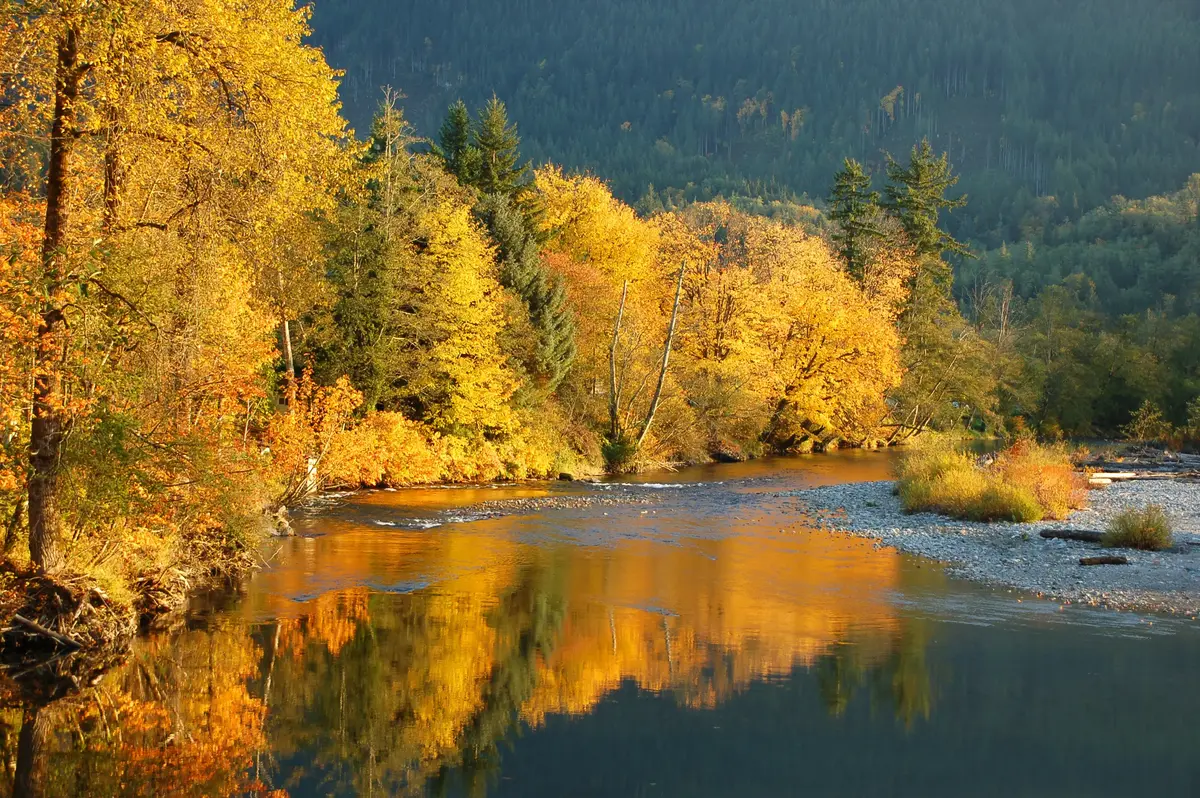
The Centennial Trail runs 30 miles through the city and connects to downtown via a spur near 204th Street — it's genuinely integrated into daily life, not just a weekend amenity. Country Charm Park, Twin Rivers Park, and Haller Park cluster along the Stillaguamish River corridor, and the city's Riverfront Master Plan is actively expanding trail connections between them. SR-530 heading east toward Darrington is your door to the Mountain Loop Highway and the North Cascades — a 90-plus-mile scenic byway that most I-5 corridor cities would envy having as their backyard.
Community Rhythm
Arlington SkyFest at the Municipal Airport draws regional crowds each summer — it's one of those events that fills Legion Memorial Park and reminds you the city has a personality beyond its commute statistics. The seasonal farmers' market on Olympic Avenue is where longtime residents and newcomers actually cross paths, which matters in a city that's been absorbing newcomers at 2% annually.
For a full breakdown of Arlington's parks, trails, and outdoor amenities, the parks page has the detail. The schools page covers district ratings, individual campuses, and the Running Start opportunity at Everett Community College.
The Arlington Housing Market Right Now
The Zillow Home Value Index for Arlington stands at $598,417 as of mid-2026 — down approximately 4.3% from the prior year, which has quietly improved affordability for buyers who were watching from the sidelines during 2022 and 2023. That figure puts Arlington meaningfully below comparable Snohomish County cities to the south, making it one of the more accessible entry points remaining in the north Puget Sound corridor.
Inventory has been the persistent constraint. Homes that are priced accurately and show well still generate real competition, particularly in the school-district-preferred neighborhoods. Overpriced listings are sitting longer than they did two years ago, which creates negotiating room for buyers who know the difference.
What the Market Looks Like in Practice
Single-family homes dominate the ownership market. Newer construction has concentrated in the Smokey Point and Gleneagle areas, while older inventory — including some mid-century stock — anchors Old Town and West Arlington. Some parts of the city come in noticeably above the city-wide figure; others offer entry points well below it, depending on lot size, condition, and proximity to downtown. For the neighborhood-by-neighborhood breakdown, the best neighborhoods page covers character, housing feel, and geographic trade-offs in detail.
Rental options are tighter than the ownership market suggests. Apartment stock is limited compared to cities farther south, and many renters in Arlington end up in single-family rentals rather than purpose-built multifamily buildings. For current rent ranges and a broader cost-of-living comparison, see the cost-of-living page.
One Thing Worth Knowing Now
The planned Community Transit SWIFT Bus Rapid Transit Gold Line along Smokey Point Boulevard — targeted for 2027 — is already influencing how developers think about that corridor. Buyers who understand that the land use around Smokey Point Boulevard may look different in five years are asking different questions than buyers who are only looking at today's comp sheet.
Arlington Neighborhoods
Arlington has several distinct areas — each with its own character and appeal. Here’s a breakdown to help you narrow down where to focus your home search.
🏡 Old Town
Old Town is Arlington's historic core, centered on Olympic Avenue and the blocks surrounding the original downtown grid — it suits buyers who want walkable access to The Stilly Diner, the farmers' market, and the Centennial Trail without getting in a car. Housing here leans toward older single-family homes and established lots, with more character than square footage.
🏠 West Arlington
West Arlington sits on the quieter side of the freeway, with a more residential and semi-rural feel than the commercial corridors to the east — a good fit for buyers who want breathing room and don't mind a short drive for errands. SR-9 access makes the commute south toward Snohomish and Lake Stevens manageable.
🌳 Smokey Point
Smokey Point is Arlington's fastest-growing and most commercially active corridor, running along the I-5 interchange with big-box retail, chain restaurants, and newer subdivision housing within short driving distance — practical for commuters and families who want convenience over character. The planned 2027 SWIFT BRT Gold Line along Smokey Point Boulevard makes this corridor worth watching from a long-term value perspective.
🏘 Gleneagle
Gleneagle is one of Arlington's more established planned residential areas, with a mix of 1990s and 2000s construction that tends to attract families with school-age children for its neighborhood feel and reasonable proximity to both I-5 and the school district's campuses. The streets here are quieter than Smokey Point but more built-out than the rural-edge areas to the north.
🏔 Lakewood
Lakewood sits in the southeastern portion of Arlington's urban area, drawing buyers who want a quieter residential setting with lake and water-feature access nearby — it's a neighborhood that feels distinctly removed from the commercial bustle of Smokey Point while still keeping a workable I-5 commute. Lot sizes tend to be more generous than the newer subdivisions closer to the freeway.
🌆 Edgecomb
Edgecomb occupies a semi-rural edge of the city where residential streets give way to larger parcels and a more open landscape — the right fit for buyers who want acreage, privacy, and proximity to the Stillaguamish River corridor without leaving Arlington's city limits. It's a longer drive to Smokey Point retail, and that trade-off defines who stays here happily versus who leaves.
Pros & Cons of Living in Arlington
The Pros
- Small-town charm with a walkable historic downtown along Olympic Avenue
- Growing aerospace and manufacturing job base nearby in Everett
- Easy access to the Centennial Trail
- Stillaguamish River
- and Cascade foothills for outdoor recreation
- More affordable home prices than King County suburbs closer to Seattle
The Cons
- Property crime runs higher than the state and national averages
- Limited sunshine with a long
- wet winter season
- Commuting into Seattle proper adds significant time beyond the shorter Everett commute
Getting Around & Commuting in Arlington
Arlington is a car-dependent city — the city's own 2024 commuter survey said so explicitly. Residents cited limited transit routes and inconvenient schedules as primary reasons they drive everywhere. That honesty matters when you're choosing where to live: if you need to rely on public transit now, Arlington requires realistic planning.
The I-5 Commute Reality
| Destination | Typical Drive (off-peak) | Notes |
|---|---|---|
| Everett (Boeing, downtown) | ~20 minutes | Via I-5 south; adds 10–20 min during peak hours |
| Lynnwood (retail, transit connections) | ~35–40 minutes | I-5 south; regional transit hub with connections south |
| Seattle (downtown) | ~55–70 minutes | Highly variable; SR-99 as backup |
| Mount Vernon / Bellingham | ~30 / ~60 minutes | I-5 north; generally lighter traffic |
| Darrington / North Cascades | ~45 minutes | SR-530 east; no significant congestion |
| Snohomish (city) | ~25 minutes | SR-9 south |
The critical chokepoint is the I-5 interchange at Smokey Point — SR-530 feeding onto the freeway during southbound morning rush is where Arlington commuters lose the most time. If your shift starts at 6 a.m. or later than 9 a.m., the math is friendlier.
Transit Options (Current and Coming)
Community Transit, Sound Transit, and Snow Goose Transit all serve Arlington, but the coverage is thin enough that most residents treat transit as a backup rather than a primary mode. The situation is set to change: the Community Transit SWIFT BRT Gold Line is planned for 2027 along the Smokey Point Boulevard corridor, which would add frequent, reliable bus rapid transit service connecting Arlington south toward Everett and the broader transit network. If you're buying near Smokey Point Boulevard with a five-year horizon, that project is worth understanding before you make an offer.
Airport Access
Arlington Municipal Airport sits inside city limits and serves general aviation — useful if you're a pilot or have charter travel needs, but not a factor in commercial travel planning. Seattle-Tacoma International Airport is the commercial hub, roughly 65–75 miles south depending on your starting point in the city.
The SR-9 Alternative
Longtime locals know SR-9 as the pressure-release valve when I-5 goes wrong. It runs north-south through the city and connects to Lake Stevens, Snohomish, and Bothell — a slower route but one that keeps moving when the freeway doesn't. If you're evaluating homes in West Arlington or on the city's south end, proximity to SR-9 access points is worth noting on your checklist.
Schools in Arlington
Families relocating to Arlington have public, private, and higher-education options nearby. Here’s a quick overview.
🎓 School District
Arlington Public Schools serves K–12 students across Arlington and the surrounding area. Rated B (source: Niche.com).
🏆 Graduation Rate
The 4-year high-school graduation rate here is approximately 88.6%.
📚 Higher Education
Washington’s public universities — the University of Washington, Washington State University, and Western Washington University — offer four-year degrees statewide, with a network of 34 community and technical colleges (SBCTC) providing two-year and workforce programs.
🌐 Online Learning
University of Washington Continuum College and Washington State University Online offer fully accredited online degrees for remote learners across the state.
Safety in Arlington
A quick look at how Arlington compares on the numbers that matter most when weighing a neighborhood or a move.
🛡 Violent Crime
Approximately 3.4 per 1,000 residents.
🔒 Property Crime
Approximately 22.2 per 1,000 residents.
Compared to the FBI’s most recent national data (2024), Arlington’s violent crime is below the national average (about 3.6 per 1,000), and property crime is above the national average (about 17.6 per 1,000).
Against Washington as a whole, Arlington’s violent crime is about the same as the state average, and property crime is somewhat below the state average (Bureau of Justice Statistics, Crime Known to Law Enforcement, 2024 (tables 2 and 3)).
Crime rates can vary a lot within a single city, so the citywide numbers above are only a starting point. Some neighborhoods in Arlington run well below these averages, while others run higher — the kind of block-by-block detail that matters most when you’re actually choosing where to live. The full guide below breaks it down neighborhood by neighborhood.
Working in Arlington
Arlington’s largest employers span several industries — here are some of the anchors of the local job market.
🏭 Boeing
Aerospace manufacturing, Everett
🏥 Providence Regional Medical Center
Healthcare
🎓 Arlington School District
Education
🏥 Angel of the Winds Casino Resort
Hospitality/gaming
🏭 Zenix Aerospace
Aerospace manufacturing
Parks & Recreation in Arlington
Some of the outdoor spaces that shape everyday life in Arlington.
🌱 Legion Memorial Park
🌱 Centennial Trail
🌱 Stillaguamish River
Arlington residents don’t have to go far for green space — spots like Legion Memorial Park and Centennial Trail are part of everyday life here, whether that’s a morning walk, a weekend hike, or just somewhere to unwind outside. The full guide below covers more of what Arlington has to offer for parks and outdoor recreation.
Retiring in Arlington
Arlington draws retirees for its balance of amenities, outdoor access, and cost. Here’s what to weigh.
🌤 Climate
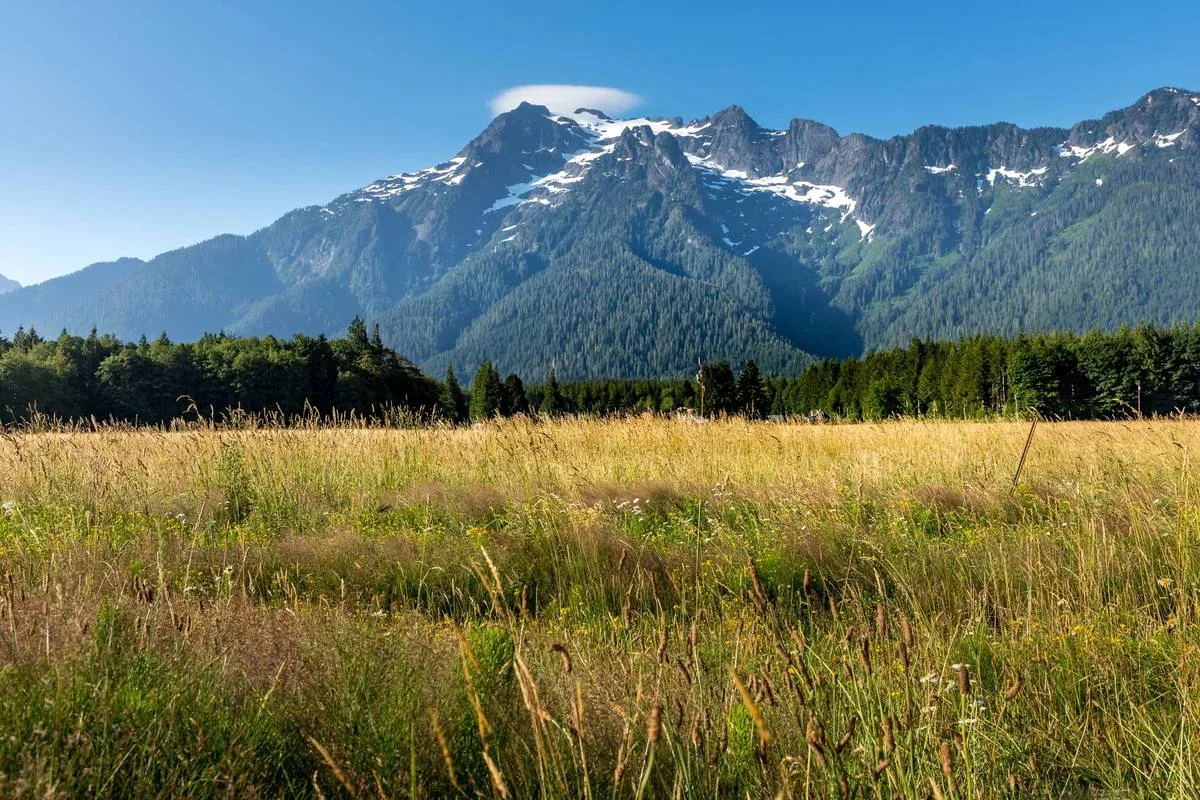
Arlington sits in the Stillaguamish Valley in northern Snohomish County, which means classic western Washington weather: mild, wet winters from November through March, and genuinely beautiful summers from late June through September. Gray skies are the persistent reality for retirees who don't have a morning commute to distract them — it's worth visiting in February before committing. Snowfall is rare but not unheard of, and when it arrives, the hills around West Arlington and Arlington Heights can make driving genuinely tricky.
🍴 Lifestyle
Retirement in Arlington means the Centennial Trail on weekday mornings when it's quiet, the farmers' market on Olympic Avenue through the warmer months, and SR-530 east whenever the mountains call. The downtown dining scene — anchored by places like The Stilly Diner and Moose Creek Barbeque — is modest but consistent. For specialized dining, theater, or cultural events at scale, Everett is 20 minutes south and provides a meaningful step up in options.
🏚 55+ Communities
Arlington's senior housing options are more limited than in larger Snohomish County cities like Marysville or Everett, but the area has seen investment in active-adult living as the city's population has grown. Independent living and assisted-care options exist within the city and in nearby Smokey Point. For full healthcare facility detail and senior community specifics, the Arlington retiring page covers those in depth.
✈ Getting Around
A car is essential in Arlington — this is not a city where errands happen on foot or by bus in any practical sense. Most daily destinations require a short drive, and the Smokey Point commercial corridor handles the bulk of grocery, pharmacy, and retail needs. Seattle-Tacoma International Airport is roughly 65 to 75 miles south, making longer travel a half-day commitment. The Arlington Municipal Airport serves general aviation locally.
🏛 Washington Taxes for Retirees — What to Know
- No state income tax — Washington does not tax personal income, so Social Security, pensions, and 401(k)/IRA withdrawals are all untaxed at the state level. There is no state return to file and no retirement exclusion to claim — the rate is simply zero.
- Military and public pensions — Because there is no income tax, military retirement pay and public-employee pensions are untaxed at the state level along with everything else.
- Sales tax is the tradeoff — The state sales tax is 6.5%, and local add-ons bring the combined rate in Arlington to 9.3% (Washington State Department of Revenue, Q3 2026 local sales & use tax rate table, July 2026). Groceries and prescription drugs are exempt.
- Property taxes, with senior relief — The effective property tax rate is roughly 0.9%. Homeowners 61+ (or unable to work due to disability, or a qualifying disabled veteran) who own and occupy their home may qualify for a reduction. Income limits are set against each county’s median household income, so the threshold differs by county — check with your county assessor. A separate deferral program is available for those who don’t qualify for the exemption.
- Capital gains tax — but not on retirement income — Washington taxes 7% on long-term capital gains above a $278,000 standard deduction for 2025, rising to 9.9% on gains above $1,000,000. Retirement accounts and real estate sales are both exempt. It therefore does not reach ordinary retirement income or the sale of a home.
- Estate tax — the one to plan for — Unlike most no-income-tax states, Washington has its own estate tax. For deaths on or after July 1, 2026, the exemption is $3 million with graduated rates topping out at 20%. Retirement accounts count toward the taxable estate, so long-time homeowners with sizable balances can cross the line without expecting to.
- No inheritance tax — Washington has no inheritance tax, and no gift tax.
- WA Cares payroll premium — Working Washingtonians pay 0.58% of gross wages into the WA Cares Fund, the state long-term care program, with no income cap. It applies to W-2 wages, so retirees who have stopped working do not pay it — but anyone relocating while still employed will see it. The private-insurance opt-out closed at the end of 2022 and is not available to new applicants; the remaining exemptions are narrow (living outside Washington, military spouses, certain visa holders, and veterans with a 70%+ service-connected rating).
- The Oregon border effect — Oregon has no sales tax, so Washington residents near the river — Vancouver, Camas, Washougal, Longview — often cross over for large purchases. Washington use tax technically applies to goods brought back for use in-state, though it is rarely enforced on ordinary personal purchases.
Tax laws change frequently and individual situations vary. This is general information, not tax advice — always consult a qualified Washington tax professional or CPA for personalized retirement tax planning.
Weekends & Local Favorites in Arlington
The first thing newcomers notice about an Arlington weekend is the quiet speed at which the city empties toward the mountains. SR-530 east is genuinely one of the most accessible Cascade Range corridors in western Washington — Darrington is 45 minutes, the Mountain Loop Highway trailheads are within reach before 9 a.m. — and the people who moved here specifically for that access use it constantly.
Downtown Arlington's Eating and Drinking Scene
The scale is small but the options are real. The Stilly Diner on Olympic Avenue handles the classic weekend breakfast crowd — think booths, strong coffee, and plates that arrive fast. Moose Creek Barbeque is the go-to for slow-smoked lunch, and Nutty's Junkyard Grill brings a themed burger-and-grill energy that's become a local fixture. For evenings, 210 Brewing CO operates as the neighborhood taproom — the kind of place where you'll recognize faces within your first few visits. Bourbon Creek Bar and Grill rounds out the dinner and late-evening picture.
The downtown restaurant scene is genuinely walkable for anyone living near Olympic Avenue, but don't expect the breadth of Everett or Bellingham — this is a small city, and the options reflect that honestly.
Public Art, Events, and Community Rhythm
Over 35 public works of art are woven into downtown Arlington's sidewalks, walls, and intersections — murals, sculptures, and photo backdrops that make a walk down Olympic Avenue feel curated rather than accidental. The Centennial Trail's interactive Sound Garden, accessible via the 204th Street spur, adds another layer of public-space investment that residents actually use.
Arlington SkyFest at the Municipal Airport is the marquee annual event — an air show that draws regional visitors and fills Legion Memorial Park with families on a scale that surprises newcomers who thought they were moving to a quiet backwater. The seasonal farmers' market is smaller but consistent, running on the downtown streets during the warmer months.
River and Trail Life
The Stillaguamish River isn't just scenery — it's the organizing feature of the parks system, with Country Charm Park, Twin Rivers Park, and Haller Park all positioned along its banks. The Riverfront Master Plan is actively building better connections between these spots and the Centennial Trail. Active 2025–2026 projects include five new outdoor pickleball courts and construction of Smokey Point Community Park, which will add recreational infrastructure to the city's fastest-growing residential corridor.
For a full map of Arlington's parks, trails, and river access points, see the parks and recreation page.
What Locals Do on a Gray January Saturday
This is the friction moment nobody mentions in the listing description: western Washington gray from November through March is relentless, and Arlington sits far enough north that the low-angle winter light is genuinely limiting. The locals who thrive here have a relationship with the Centennial Trail in rain gear, a Sunday morning routine at The Stilly Diner, and a general philosophy that the mountains are worth the gray. The ones who struggle are the ones who moved expecting the summer to be the rule rather than the exception.
Top Things Locals Say About Arlington
The best intel about a city comes from the people who actually live there. Here’s what Arlington residents say when newcomers ask the questions everyone’s thinking.
“I knew the commute was going to be real, but I didn't expect how quickly I'd stop noticing it — the Smokey Point on-ramp backs up, sure, but I'm in Everett in 25 minutes on a normal day and back home by the river by 5:30. What I didn't expect was how much I'd actually use the mountains. SR-530 became part of my weekend routine within the first month.”
— Recent Arlington home buyer
“What's the most surprising thing about living in Arlington?”
Most newcomers expect a sleepy I-5 bedroom community and are caught off guard by how much is actually here — downtown has public art on every block, a genuine diner culture, and a brewery scene that draws people from Marysville. The bigger surprise is how fast the mountains become part of your routine. SR-530 east is one of the most underrated Cascade Range corridors in the state, and once you live here, you use it constantly.
“What do locals love most about Arlington?”
The space-to-price ratio is hard to argue with compared to anywhere south of here. But what longtime residents talk about most is the feel of a city that's growing without losing its identity — the SkyFest at the Municipal Airport still feels like a community event rather than a corporate production, the farmers' market on Olympic Avenue actually draws regulars, and the Centennial Trail is walkable from most of the established neighborhoods.
“What should newcomers to Arlington know?”
Get comfortable with the Smokey Point interchange before you commit to a neighborhood near it — the SR-530 westbound merge onto I-5 south can add 15 minutes to your commute on busy mornings. Also, plan your big-box errands around Smokey Point Boulevard before you head home rather than backtracking later; the commercial strip is useful but not exactly in a convenient spot relative to most of the residential neighborhoods. And bring rain gear for the Centennial Trail — locals use it year-round.
“Can you live in Arlington without a car?”
Realistically, no — not with any comfort. The city's own commute survey confirmed that residents rely heavily on personal vehicles because transit routes are limited and schedules don't align well with typical work hours. Community Transit, Sound Transit, and Snow Goose Transit all serve Arlington, but coverage is thin compared to cities south of here. The situation should improve when the SWIFT BRT Gold Line arrives along Smokey Point Boulevard in 2027, but for now, plan around a car.
Cities Near Arlington
Other communities near Arlington worth a look — each with its own character and price point.
| City | Distance | Best For | Vibe | Median Rent | Median Buy |
|---|---|---|---|---|---|
| Marysville | 8 mi | Families, new construction, suburban amenities | Larger, busier, more commercial | $1,900 | $520,000 |
| Everett | 15 mi | Boeing workers, urban amenities, transit access | Urban, port city, more services | $1,900 | $550,000 |
| Snohomish | 13 mi | Historic charm, antique culture, quiet living | Small-town, walkable downtown, pastoral | $2,000 | $650,000 |
More Helpful Guides for Arlington
Going deeper on Arlington? Our blog series covers everything from first-time buying to retiring here — explore the guides below.
Local Expert Takeaway: Arlington's value proposition is specific: you're buying Cascade Range access, a genuine small-city downtown, and a 20-minute Boeing commute at a price point that's noticeably below the Snohomish County cities to the south. The catch is real car dependence — plan every errand, every commute, and every school run around a vehicle until the SWIFT BRT Gold Line arrives in 2027. If you can live with that, and you want the Stilly Diner on a Saturday morning and the Mountain Loop Highway on a Sunday afternoon, this city delivers in ways that don't show up on a spreadsheet.
Quick Takeaways & FAQs
✅ Arlington sits roughly 20 minutes from Boeing's Everett facility, making it one of the most affordable places in Snohomish County for aerospace workers who don't want a brutal commute.
⚠️ The city is genuinely car-dependent — the city's own 2024 survey confirmed it — and transit coverage remains thin until the planned 2027 SWIFT BRT Gold Line arrives along Smokey Point Boulevard.
📍 SR-530 east from downtown Arlington is a direct on-ramp to the Mountain Loop Highway and North Cascades recreation, putting serious Cascade Range access within 45 minutes of most Arlington neighborhoods.
Is Arlington, WA a good place to live for Boeing employees?
How are the schools in Arlington, WA?
What is the cost of living like in Arlington, WA compared to Everett?
Can you commute from Arlington to Seattle?
Is Arlington, WA safe?
Helpful Links for Moving to Arlington
Moving to Washington?
Tell us what you need help with and we'll connect you with local resources.
