
What Is Living in Lakewood, Washington Like?
Most people who look at Lakewood on a map see a suburb between Tacoma and JBLM and assume they already know what it is. They're usually wrong. Lakewood sits along I-5 in Pierce County — 15 minutes south of downtown Tacoma, directly adjacent to the western edge of Joint Base Lewis-McChord — and its day-to-day reality is shaped almost entirely by those two forces. The base doesn't just provide jobs; it defines the culture, the turnover rate in neighborhoods, and the specific kind of community that forms around people who relocate frequently and know how to put down roots fast.
Joint Base Lewis-McChord is the economic foundation here, directly and indirectly. Civilian contractors, defense logistics firms, and the full ecosystem of employers that follows a major military installation have all planted themselves in Lakewood. A major regional health system and a behavioral health organization rank among the city's largest non-military employers. Clover Park Technical College, headquartered in Lakewood, trains the workforce that feeds those sectors. The Woodbrook Business Park, just off I-5, has expanded to 1.8 million square feet of industrial warehouse space with more in the permitting process — a sign that private employers are betting on this city's trajectory, not just its current state.
On price, Lakewood lands noticeably below Tacoma's most sought-after neighborhoods and well below anything in King County, giving buyers real square footage for their money. The city's investment in itself is visible too: $32.9 million in road improvement projects were underway in 2025, with the majority funded by outside grants. Fort Steilacoom Park's 340 acres anchor the recreational side of life, and American Lake and Gravelly Lake give the city a Pacific Northwest waterfront quality that surprises people who expected a purely suburban landscape. The Sounder commuter rail runs from Lakewood Station to Seattle's King Street Station, making this a genuine option even for people working north of Tacoma.
Whether you're being relocated by the military, priced out of closer-in markets, or simply drawn by the combination of space and access, this guide covers what Lakewood's neighborhoods actually feel like, what the housing market is doing right now, how commuting works in practice, where locals spend their weekends, and who this city genuinely suits.
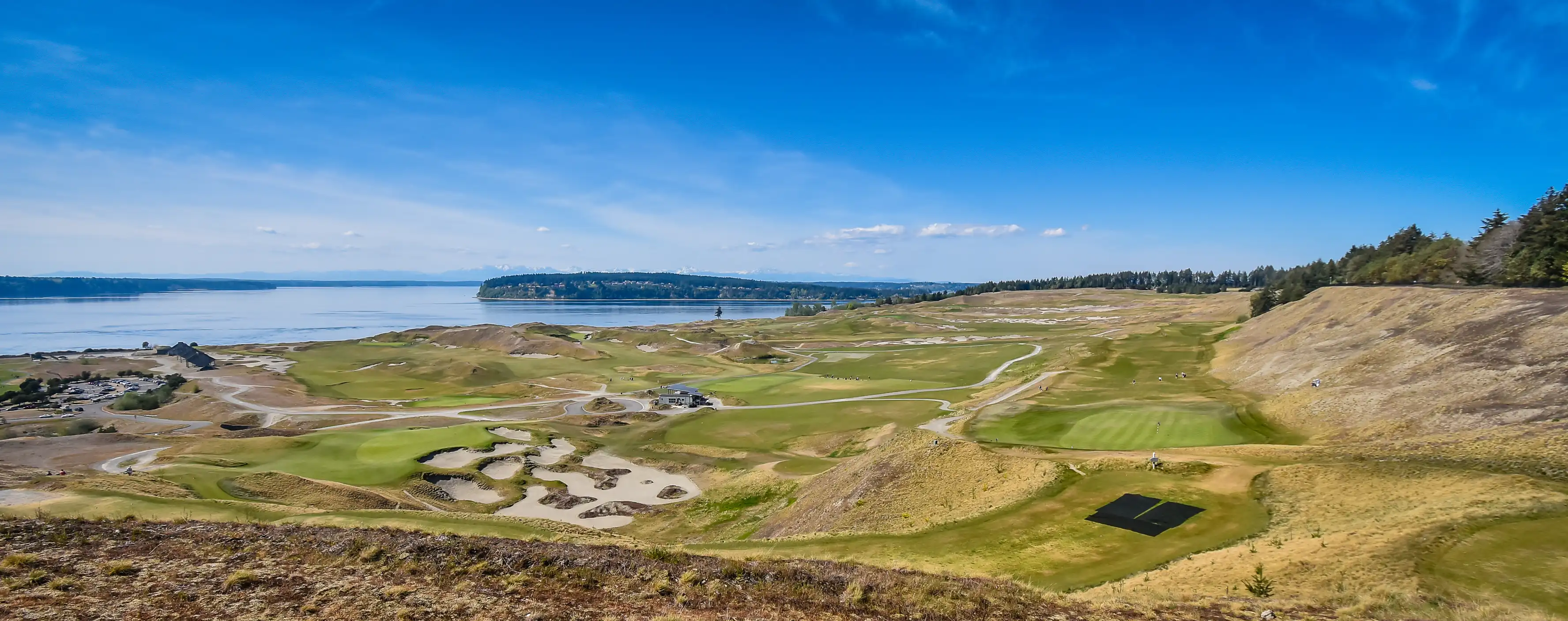
Lakewood at a Glance
Looking to buy in Lakewood? Estimate your payment.
Enter your numbers to see an estimated monthly mortgage payment.
Estimate only. Excludes HOA fees and mortgage insurance. The interest rate above is a starting point, not a quoted rate — replace it with your own to see real numbers. Insurance is a flat placeholder, not a Lakewood quote.
Why Are People Moving to Lakewood?
The honest answer is that Lakewood draws people from two very different directions at once. Military families moving to JBLM need to be close to the base — and Lakewood sits on its doorstep. Everyone else is usually running a calculation: South Sound access, lower prices than Tacoma's west side, and a city that has been quietly improving its public safety record in a way that's starting to register.
The JBLM Effect
Joint Base Lewis-McChord is a 90,283-acre installation that functions as its own economic region. When service members rotate out of active duty, many stay in Pierce County — and that produces a trained, experienced civilian labor pool that regional employers actively recruit. Defense contractors and logistics firms have followed, making Lakewood's employment base more diversified than a quick look at the city suggests.
The result is a community that refreshes itself constantly. Neighbors move in, build tight connections quickly, then sometimes rotate elsewhere. Newcomers rarely feel like outsiders here because everyone was once the new arrival.
A City That's Investing in Itself
The $750 million Western State Hospital campus rebuild — a state-funded forensic hospital and administration complex going up on the long-established grounds in Lakewood — is one of the most concrete signals of long-term public investment in this city. Construction projects of that scale don't happen in places governments have written off.
Lakewood also carries no local Business and Occupation tax and no traffic impact fees, which is unusual in the South Sound region and has helped attract employers to the Woodbrook Business Park corridor near I-5. The absence of those fees isn't a small thing for businesses comparing Lakewood to neighboring cities.
The Safety Story Has Changed
In 2025, the Lakewood Police Department recorded zero homicides for the first time in the city's history. That headline accompanied a 26.5% overall decline in total crimes year-over-year, with motor vehicle thefts specifically falling 53.8%. The department attributes the shift to Flock camera technology, expanded drone patrols, and restructured officer scheduling — not a single factor, but a sustained operational change.
People who crossed Lakewood off their list three or four years ago because of crime data may be working with an outdated picture. For safety context and current figures, see the full breakdown on the Lakewood safety page.
Who Moves Here
| Buyer Type | Why Lakewood Works | Best For |
|---|---|---|
| Military families | Direct JBLM access, community of frequent movers, rental and purchase inventory sized for quick decisions | Families Commuter |
| Defense & healthcare workers | Employer concentration without Tacoma or Seattle pricing | Commuter Value |
| First-time buyers priced out of Tacoma | Noticeably lower entry point with Tacoma access in 15 minutes | First-Time Value |
| Outdoor-oriented households | American Lake, Gravelly Lake, Fort Steilacoom Park, Lakewold Gardens all within city limits | Nature Families |
| Seattle commuters willing to train it | Sounder S Line terminus at Lakewood Station, ~75 minutes to King Street | Transit Commuter |
| Retirees & downsizers | Single-level housing stock, proximity to regional health systems, quieter lake-adjacent neighborhoods | Quiet Views |
The city doesn't have a single defining demographic — that mix is both its strength and the reason no two Lakewood neighborhoods feel exactly alike.
What Daily Life Feels Like in Lakewood
Living in Lakewood has a rhythm that doesn't announce itself. It's not Tacoma's walkable urban core, and it's not the deep suburban quiet of somewhere like DuPont. It occupies a middle ground — established residential streets, a handful of commercial corridors, and more green space than people expect for a city of 63,000.
The Geographic Reality
I-5 is the city's spine, and understanding which side of it you're on matters. The areas closer to the freeway lean more commercial and industrial — the Woodbrook Business Park corridor, the Lakewood Towne Center retail hub, and the transit connections at Lakewood Station are all in that zone. Neighborhoods like Oakbrook and American Lake Gardens sit closer to the water, with a noticeably quieter feel and housing that dates to the mid-century suburban build-out of the South Sound.
Gravelly Lake Drive is the kind of road that makes people stop and recalibrate their expectations. The lakefront estates along it — including Lakewold Gardens, a 4-acre formal garden open to visitors — sit within city limits, a reminder that Lakewood has corners that look nothing like a Pierce County suburb.
What Locals Know
The farmers market runs at Fort Steilacoom Park in season, which puts one of the city's best community gathering points inside a 340-acre park that also has Waughop Lake, an off-leash dog area, and fields that host SummerFest and Fiesta de la Familia annually. Regulars will tell you that summer mornings at Fort Steilacoom Park are where you actually meet your neighbors.
The surprise most people mention after six months: how much of daily errands happen without touching I-5 at all. Lakewood Towne Center handles most retail needs, Pierce Transit connects local corridors, and Tacoma's restaurant and entertainment options are close enough that residents don't feel cut off — but the daily footprint is smaller and less frantic than they anticipated.
What You Give Up
Walkability is limited outside the Towne Center area. Most of Lakewood is designed around car ownership, and anyone expecting to run daily errands on foot will find the experience uneven depending on which neighborhood they land in. The transit network is functional rather than frequent — Pierce Transit covers the city well by suburban standards, but it won't replace a car for most residents.
The school district picture — Clover Park School District serves the city — is worth researching carefully before choosing a specific address. Boundary lines and individual school performance vary more than the district-wide averages suggest. The Lakewood schools page breaks down what those differences look like in practice.
The Lakewood Housing Market Right Now
The Zillow Home Value Index for Lakewood stood at $526,659 as of June 2026 — essentially flat over the prior year, down a fraction of a percent. That stability is notable in a regional market that has seen sharper swings in both directions over the past few years.
What stands out more than the price is the pace. Homes in Lakewood have been going to pending in around 10 days, which tells you that buyers are moving quickly when something reasonably priced comes to market. This is not a slow-accumulation market where you can think it over for a week and come back. Inventory moves.
What the Price Reflects
The city-wide median reflects a genuinely broad range of housing stock — mid-century ranch homes near the lakes, more recent construction in areas like Springbrook and Custer, and a significant inventory of homes that have been updated but not necessarily remodeled. Entry-level options exist below the median, particularly in Tillicum and some of the areas closest to the base, while lake-adjacent properties along Gravelly Lake and American Lake pull the upper end considerably higher.
Some areas of the city command meaningfully more than the city-wide figure; others come in well below it. For neighborhood-level character and what drives those differences, the best neighborhoods in Lakewood page goes deeper.
Market Conditions Worth Knowing
The 10-day average time to pending means well-priced homes rarely linger. Multiple-offer situations happen regularly in the sub-$500,000 range, where buyer demand is highest. The effective property tax rate runs approximately 0.94% — close to the Washington state average, and a meaningful consideration given that Washington has no state income tax.
For a full cost-of-living picture including taxes, utilities, and how Lakewood compares to neighboring cities on affordability, the Lakewood cost of living page has the complete breakdown.
Lakewood Neighborhoods
Lakewood has several distinct areas — each with its own character and appeal. Here’s a breakdown to help you narrow down where to focus your home search.
🏡 Tillicum
Tillicum sits closest to JBLM's main corridors and has a strongly military-flavored community — neighbors who understand relocation, quick-to-form social networks, and housing stock priced toward accessibility. It's practical, unpretentious, and genuinely welcoming to people arriving without a local network.
🏠 Oakbrook
Oakbrook is Lakewood's quieter, more established neighborhood on the lake side of the city, with mid-century homes on larger lots and a residential character that contrasts sharply with the I-5 commercial corridor. Families with school-age children who want a slower pace without sacrificing South Sound access tend to land here.
🌳 Springbrook
Springbrook offers some of Lakewood's more recently built residential stock, drawing buyers who want updated construction without traveling far from the city's core amenities. The neighborhood sits in a middle band of the city that balances freeway access with a quieter street-level feel.
🏘 Custer
Custer runs along one of Lakewood's main commercial spines — Custer Road West — giving it more walkable access to restaurants and daily services than most of the city, including Bloom Thai Cuisine. The housing mix skews toward established single-family homes on tree-lined streets with solid access to both I-5 and the Towne Center.
🏔 American Lake Gardens
American Lake Gardens earns its name — the neighborhood wraps around the eastern edge of American Lake and delivers the kind of Pacific Northwest lakefront character that people move to the South Sound specifically to find. Homes here range from modest post-war cottages to more substantial lake-view properties.
🌆 Woodbrook
Woodbrook straddles the residential and industrial sides of Lakewood's eastern corridor, with the Woodbrook Business Park nearby and I-5 access that makes it a practical choice for commuters and people working in the warehouse and logistics sectors. The residential portions are quieter than their proximity to the freeway suggests.
Pros & Cons of Living in Lakewood
The Pros
- More affordable homes than many South Sound cities
- extensive lakes and parks (American Lake, Gravelly Lake, Fort Steilacoom Park)
- strong military/healthcare job base right in the city
- easy I-5 access toward Tacoma and Seattle
The Cons
- Crime rates run notably above state and national averages
- school district test scores and ratings lag state averages
- heavy dependence on military/JBLM economy
Getting Around & Commuting in Lakewood
Lakewood's commute story depends almost entirely on where you're going. For people working at JBLM or within the city itself, the commute is genuinely easy. For people commuting to Tacoma, it's short. For people headed to Seattle — this is where Lakewood's transit infrastructure becomes one of the most relevant facts about the city.
The Sounder Advantage
Lakewood Station is the southern terminus of Sound Transit's Sounder S Line. Seven round-trip trains run every weekday between Lakewood and Seattle's King Street Station, covering the distance in roughly 75 minutes. The station includes a 620-stall parking garage and bus transfer bays — designed to be used, not just to exist on a map.
That train changes the math on who can realistically live in Lakewood while working in Seattle. The parking garage means you're not scrambling for street parking, and the bus connections at the station serve local Pierce Transit routes. Pierce Transit is itself headquartered in Lakewood at 3701 96th St SW, which means the city has direct operational influence over its own bus network in a way most suburbs don't.
Driving the Corridors
Tacoma is roughly 15 minutes by car under normal conditions via I-5 — fast enough that Lakewood residents regularly use Tacoma's dining, entertainment, and services without considering it a trip. SR 512 connects east toward Puyallup and beyond.
The catch is I-5 itself. Northbound toward Tacoma and beyond during morning peak hours slows significantly, and anyone commuting to the Joint Base corridors needs to understand that base access roads — particularly in the morning — add time that doesn't show up on a map. Building a buffer into departure times is standard practice among longtime residents.
Commute at a Glance
| Destination | Mode | Typical Travel Time | Notes |
|---|---|---|---|
| Tacoma downtown | Car (I-5) | ~15 min | Longer during peak hours northbound |
| JBLM main gates | Car | 5–15 min depending on gate | Base access lines add time at peak |
| Seattle | Sounder train | ~75 min | 7 round trips weekdays; 620-stall garage at station |
| Seattle | Car (I-5) | 45–90 min | Highly variable; I-5 congestion unpredictable north of Tacoma |
| Puyallup / East Pierce | Car (SR 512) | ~20 min | Lighter traffic than I-5 corridor |
| SeaTac Airport | Car | ~35–45 min | Variable; no direct Sounder connection to airport |
| Local Lakewood | Pierce Transit bus | Varies by route | Functional for local errands; HQ at 3701 96th St SW |
The Sounder is the underrated asset. People who discover it after months of driving to Seattle often say it's the single thing that made the commute tolerable long-term.
$32.9 Million in Road Work
The city had $32.9 million in road improvement projects planned for 2025, with $21 million covered by outside grant funding. That's a meaningful infrastructure commitment for a city of this size, and it signals that the driving experience within Lakewood is actively being improved — though active construction zones are a reality to plan around in the short term.
Schools in Lakewood
Families relocating to Lakewood have public, private, and higher-education options nearby. Here’s a quick overview.
🎓 School District
Clover Park School District serves K–12 students across Lakewood and the surrounding area. Rated C+ (source: Niche.com).
🏆 Graduation Rate
The 4-year high-school graduation rate here is approximately 93.7%.
📚 Higher Education
Washington’s public universities — the University of Washington, Washington State University, and Western Washington University — offer four-year degrees statewide, with a network of 34 community and technical colleges (SBCTC) providing two-year and workforce programs.
🌐 Online Learning
University of Washington Continuum College and Washington State University Online offer fully accredited online degrees for remote learners across the state.
Safety in Lakewood
A quick look at how Lakewood compares on the numbers that matter most when weighing a neighborhood or a move.
🛡 Violent Crime
Approximately 6.4 per 1,000 residents.
🔒 Property Crime
Approximately 35.7 per 1,000 residents.
Compared to the FBI’s most recent national data (2024), Lakewood’s violent crime is above the national average (about 3.6 per 1,000), and property crime is above the national average (about 17.6 per 1,000).
Against Washington as a whole, Lakewood’s violent crime is about double the state average, and property crime is somewhat above the state average (Bureau of Justice Statistics, Crime Known to Law Enforcement, 2024 (tables 2 and 3)).
Crime rates can vary a lot within a single city, so the citywide numbers above are only a starting point. Some neighborhoods in Lakewood run well below these averages, while others run higher — the kind of block-by-block detail that matters most when you’re actually choosing where to live. The full guide below breaks it down neighborhood by neighborhood.
Working in Lakewood
Lakewood’s largest employers span several industries — here are some of the anchors of the local job market.
🏛 Joint Base Lewis-McChord
Military/defense
🏥 MultiCare Health System
Healthcare
🏥 CHI Franciscan/Virginia Mason Franciscan Health
Healthcare
🎓 Clover Park Technical College
Education
🏥 Greater Lakes Mental Health
Behavioral health
Parks & Recreation in Lakewood
Some of the outdoor spaces that shape everyday life in Lakewood.
🌱 Fort Steilacoom Park
🌱 American Lake
🌱 Gravelly Lake
🌱 Wards Lake
Lakewood residents don’t have to go far for green space — spots like Fort Steilacoom Park and American Lake are part of everyday life here, whether that’s a morning walk, a weekend hike, or just somewhere to unwind outside. The full guide below covers more of what Lakewood has to offer for parks and outdoor recreation.

Retiring in Lakewood
Lakewood draws retirees for its balance of amenities, outdoor access, and cost. Here’s what to weigh.
🌤 Climate
Lakewood's western Washington climate means mild temperatures year-round — rarely below freezing in winter, rarely above the mid-80s in summer. The trade-off is a long overcast season from November through March that requires genuine adjustment. Summer, when it arrives, is genuinely beautiful, with low humidity and long evenings that make outdoor life feel effortless.
🍴 Lifestyle
Lakewold Gardens on Gravelly Lake offers formal garden visits in a setting unlike anything else in Pierce County. Fort Steilacoom Park's 340 acres provide walking trails, a lake, and a regular farmers market. For dining and cultural events, Tacoma's waterfront museums, theater, and restaurant scene are about 15 minutes away — close enough to use regularly without living in the middle of it.
🏚 55+ Communities
Lakewood has active-adult and senior-living options spread across the city, with single-level housing stock in lake-adjacent neighborhoods that suits buyers looking for quieter surroundings. The proximity to major regional health systems makes medical access practical without requiring a Tacoma or Seattle address.
✈ Getting Around
Most retirees in Lakewood rely on a car for daily life, though Pierce Transit provides bus coverage across the city. SeaTac Airport is roughly 35 to 45 minutes north via I-5 — manageable for occasional travel. The Sounder commuter train at Lakewood Station is a practical option for trips into Seattle without dealing with freeway driving.
🏛 Washington Taxes for Retirees — What to Know
- No state income tax — Washington does not tax personal income, so Social Security, pensions, and 401(k)/IRA withdrawals are all untaxed at the state level. There is no state return to file and no retirement exclusion to claim — the rate is simply zero.
- Military and public pensions — Because there is no income tax, military retirement pay and public-employee pensions are untaxed at the state level along with everything else.
- Sales tax is the tradeoff — The state sales tax is 6.5%, and local add-ons bring the combined rate in Lakewood to 10.3% (Washington State Department of Revenue, Q3 2026 local sales & use tax rate table, July 2026). Groceries and prescription drugs are exempt.
- Property taxes, with senior relief — The effective property tax rate is roughly 0.9%. Homeowners 61+ (or unable to work due to disability, or a qualifying disabled veteran) who own and occupy their home may qualify for a reduction. Income limits are set against each county’s median household income, so the threshold differs by county — check with your county assessor. A separate deferral program is available for those who don’t qualify for the exemption.
- Capital gains tax — but not on retirement income — Washington taxes 7% on long-term capital gains above a $278,000 standard deduction for 2025, rising to 9.9% on gains above $1,000,000. Retirement accounts and real estate sales are both exempt. It therefore does not reach ordinary retirement income or the sale of a home.
- Estate tax — the one to plan for — Unlike most no-income-tax states, Washington has its own estate tax. For deaths on or after July 1, 2026, the exemption is $3 million with graduated rates topping out at 20%. Retirement accounts count toward the taxable estate, so long-time homeowners with sizable balances can cross the line without expecting to.
- No inheritance tax — Washington has no inheritance tax, and no gift tax.
- WA Cares payroll premium — Working Washingtonians pay 0.58% of gross wages into the WA Cares Fund, the state long-term care program, with no income cap. It applies to W-2 wages, so retirees who have stopped working do not pay it — but anyone relocating while still employed will see it. The private-insurance opt-out closed at the end of 2022 and is not available to new applicants; the remaining exemptions are narrow (living outside Washington, military spouses, certain visa holders, and veterans with a 70%+ service-connected rating).
- The Oregon border effect — Oregon has no sales tax, so Washington residents near the river — Vancouver, Camas, Washougal, Longview — often cross over for large purchases. Washington use tax technically applies to goods brought back for use in-state, though it is rarely enforced on ordinary personal purchases.
Tax laws change frequently and individual situations vary. This is general information, not tax advice — always consult a qualified Washington tax professional or CPA for personalized retirement tax planning.
Weekends & Local Favorites in Lakewood
Lakewood doesn't have a single downtown strip that organizes weekend life. What it has instead is a collection of distinct destinations — some natural, some civic, some quietly excellent — that locals piece together into a routine that works for them.
Fort Steilacoom Park
The 340-acre park is the city's clearest anchor for outdoor and community life. Waughop Lake sits at the center, ringed by trails that fill with walkers and runners year-round. The off-leash dog area has its own regular crowd — a reliable spot for meeting neighbors. The park hosts the Lakewood Farmers Market and SummerFest in warmer months, and Fiesta de la Familia brings a distinct cultural celebration that draws broadly from across the South Sound.
On a summer weekend morning, Fort Steilacoom Park functions as something close to a town square. It's where the social life of the city actually concentrates.
The Lakes
American Lake and Gravelly Lake are not afterthoughts — they're genuine recreational assets that shape where people want to live and how they spend warm-weather weekends. Kayaking, fishing, and lakeside walks are part of the regular weekend rotation for residents in the lake-adjacent neighborhoods. Gravelly Lake Drive, lined with mature trees and some of the city's oldest homes, is worth a drive in any season.
Lakewold Gardens, the 4-acre formal English-style garden on Gravelly Lake's shore, draws visitors well beyond Lakewood. It's the kind of place that longtime residents take out-of-town guests specifically to show that this city has something unexpected.
Food and Local Dining
The dining scene is more eclectic than a single neighborhood allows. Bloom Thai Cuisine on Custer Rd W is a local go-to for Thai cooking — straightforward, consistent, and the kind of place regulars return to weekly. The city's independent restaurant range skews toward family-owned spots across multiple cuisines, reflecting the diverse population that JBLM proximity produces.
Lakewood Towne Center handles the chain retail and restaurant side of things for residents who want convenience. For a more urban dining experience, Tacoma is 15 minutes away — close enough that it functions as an extension of Lakewood's own options rather than a separate trip.
Seasonal Quirks Worth Knowing
Gray season is real and long. From roughly November through March, Lakewood gets the full western Washington overcast treatment — days without sun are the norm, not the exception. People who move here from sunnier climates without understanding this tend to struggle in months two and three of their first winter. Locals compensate with indoor community rhythms, early adoption of rain gear, and a genuine appreciation for the weeks in June when the sky finally opens up.
The flip side: summer in Lakewood is legitimately beautiful. The lakes, the park, and the proximity to Mount Rainier's foothills make the South Sound summer — when it arrives — worth the wait. For parks and outdoor recreation in detail, see the Lakewood parks and recreation page.
Top Things Locals Say About Lakewood
The best intel about a city comes from the people who actually live there. Here’s what Lakewood residents say when newcomers ask the questions everyone’s thinking.
“I knew the commute to Seattle by train existed, but I didn't really believe it until I used it. Once I figured out the parking garage at Lakewood Station and built the train into my routine, I stopped thinking of myself as living far from anything. And then summer hit and I had a lake five minutes from my house — that part I genuinely did not expect.”
— Recent Lakewood home buyer
“What's the most surprising thing about living in Lakewood?”
How much green space there is inside city limits. Fort Steilacoom Park is enormous — 340 acres — and most people who didn't grow up here don't realize American Lake and Gravelly Lake are actually within the city. The Gravelly Lake Drive corridor with Lakewold Gardens looks nothing like what people picture when they think of a Pierce County suburb.
“What do locals love most about Lakewood?”
The JBLM community creates something genuinely unusual: a place where newcomers are welcomed fast because everyone understands what it means to be new somewhere. The farmers market and SummerFest at Fort Steilacoom Park give the city a community rhythm that's hard to find in suburbs this size. And Tacoma being 15 minutes away means you never feel cut off from a real city.
“What should newcomers to Lakewood know?”
Plan around I-5 during morning peak — northbound toward Tacoma slows reliably, and base access roads have their own separate congestion pattern in the early hours. Lakewood Towne Center handles most daily errands, but for anything more specific you'll want to know which direction to drive. And prepare for the gray season: western Washington overcast starts in November and doesn't consistently lift until June. Everyone adjusts eventually, but months two and three of the first winter catch newcomers off guard.
“Can you live in Lakewood without a car?”
Technically yes, but it's genuinely difficult outside of the Lakewood Towne Center area. Pierce Transit covers the city reasonably well by suburban standards, and Lakewood Station connects you to Tacoma and Seattle by rail. But most neighborhoods are built around car ownership, and daily errands — groceries, appointments, school runs — require either a car or a willingness to work around bus schedules that aren't frequent by urban transit standards.
Cities Near Lakewood
Other communities near Lakewood worth a look — each with its own character and price point.
| City | Distance | Best For | Vibe | Median Rent | Median Buy |
|---|---|---|---|---|---|
| Tacoma | 8 mi | Urban amenities & cultural draw | Walkable, arts-forward, established | $1,650 | $474,615 |
| University Place | 6 mi | Families & quieter suburban feel | Residential, waterfront views, tight-knit | $1,900 | $631,617 |
| Puyallup | 15 mi | New construction & eastside access | Growing, family-oriented, SR-512 connected | $1,800 | $545,622 |
More Helpful Guides for Lakewood
Going deeper on Lakewood? Our blog series covers everything from first-time buying to retiring here — explore the guides below.
Local Expert Takeaway: Lakewood is a city that rewards people who do their homework on specific neighborhoods rather than buying into a generic zip code. The areas near American Lake and Gravelly Lake feel worlds apart from the corridors closer to I-5, and the Sounder commuter rail at Lakewood Station genuinely changes the math for anyone with a Seattle employer. The 2025 crime reduction numbers are real and significant — zero homicides for the first time in city history — but that story is recent enough that many buyers are still working with an older impression of the city. Fort Steilacoom Park, the farmers market, and the summer festival calendar are where community actually happens here; the people who plug into those early tend to settle in faster and stay longer.
Quick Takeaways & FAQs
✅ Lakewood Station puts Seattle about 75 minutes away by Sounder commuter rail, with seven daily round trips and a 620-stall parking garage — a genuine transit asset that most South Pierce County cities don't have.
⚠️ Property crime rates remain elevated relative to many Pierce County suburbs, and while 2025 marked a historic improvement, buyers should research specific neighborhoods and current trends before assuming city-wide figures apply uniformly.
📍 JBLM's presence creates a community where newcomers integrate quickly — military-adjacent neighborhoods have an informal infrastructure of people who know exactly what it's like to move somewhere new and make it work fast.
Is Lakewood WA a good place to live?
How close is Lakewood to JBLM?
Can I commute from Lakewood to Seattle?
What is the typical home price in Lakewood WA?
Which Lakewood neighborhoods are best for families?
Helpful Links for Moving to Lakewood
Moving to Washington?
Tell us what you need help with and we'll connect you with local resources.
