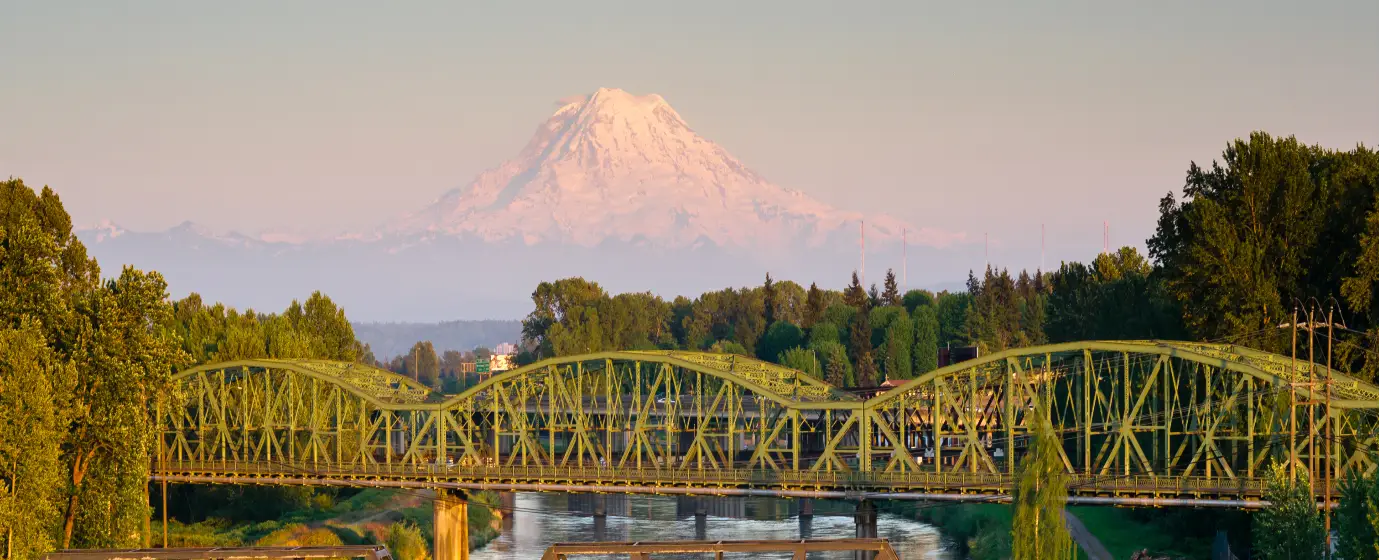
What Is Living in Puyallup, Washington Like?
Maybe you've been priced out of closer-in Seattle suburbs and someone mentioned Puyallup. Maybe you drove through on SR-512 during the Washington State Fair in September and saw the fairgrounds packed with a million visitors and thought, what actually is this place? Here's the real answer: Puyallup (pronounced pew-AL-up) is a Pierce County city of roughly 44,000 people sitting at the convergence of SR-512, SR-167, and the Puyallup River valley, about 35 miles south of Seattle. It is served by the Sounder S Line commuter rail with a park-and-ride expanded to 1,044 stalls in 2023 — and that single infrastructure fact shapes how a surprisingly large number of Seattle-bound commuters think about buying here. The commute is real. The value relative to the rest of the metro is real too.
The city's economic backbone is more layered than most newcomers expect. A major regional health system anchors healthcare employment. The Puyallup School District holds a B+ rating, according to Niche, and serves the whole valley as one of the area's largest employers. Boeing's fabrication division maintains a significant presence in the regional economy, and Pierce College extends educational and workforce pipelines into the community. The Washington State Fairgrounds at 110 9th Ave SW is not just a September spectacle: the Event Center hosts more than 125 events annually, making hospitality and events a genuine year-round economic thread. The median household income sits at $97,826, and the median resident age of 36.5 points squarely at a city built around working-age families with kids in school.
Prices here run noticeably below the closer-in Eastside and South King County markets, with a Zillow Home Value Index of $573,027 as of July 2026 — a figure that has stabilized after the pandemic run-up rather than continuing to climb. Day-to-day life centers on the Puyallup River valley and a historic downtown anchored by Pioneer Park, the Meeker Mansion, and the Karshner Museum — amenities that give the city a tangible identity beyond its role as a commuter hub. The outdoor public sculpture walk along downtown streets is the kind of detail that surprises people who wrote the place off as pure suburbia. Trails along the Puyallup River and access to the Cascade Range foothills round out the outdoors picture; for a full breakdown, see the parks and recreation page.
Whether you're considering a move or still in the spreadsheet phase, the sections below break down Puyallup's job market and who the city suits, what daily life feels like on the ground, the current housing market, the commute reality, and where locals actually spend their weekends.
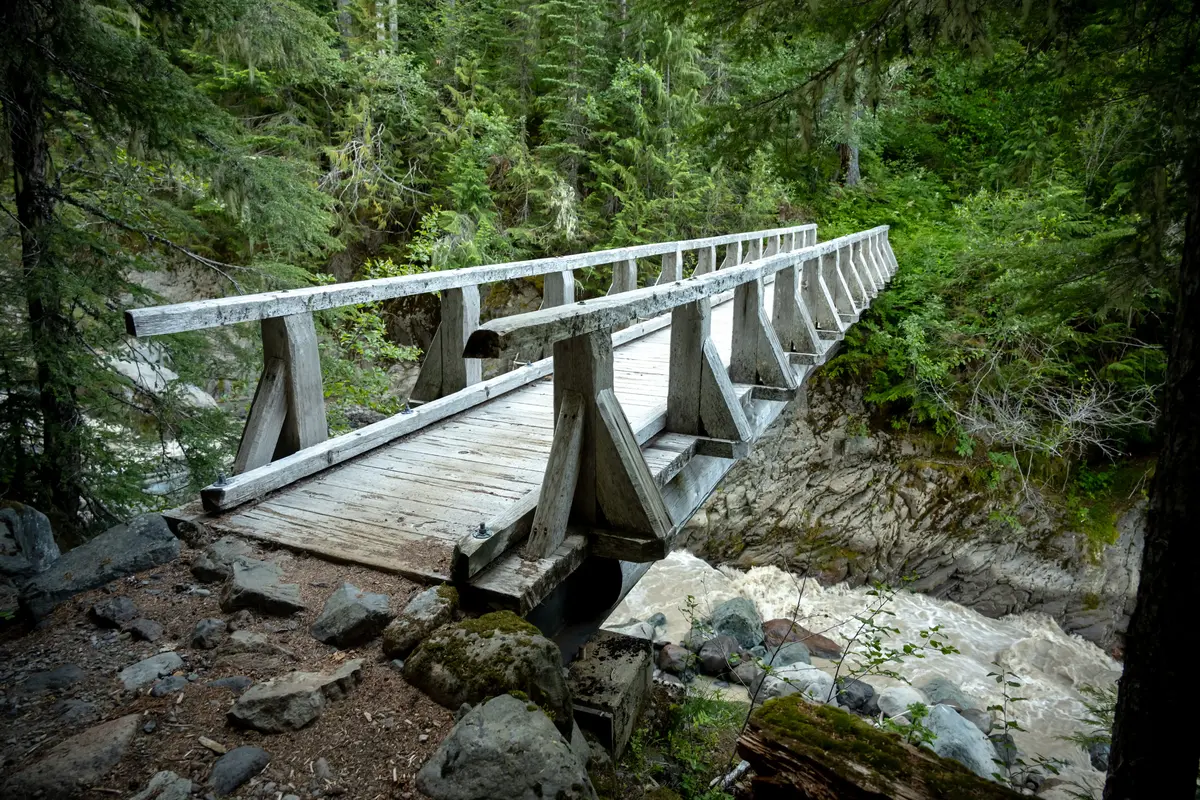
Puyallup at a Glance
Looking to buy in Puyallup? Estimate your payment.
Enter your numbers to see an estimated monthly mortgage payment.
Estimate only. Excludes HOA fees and mortgage insurance. The interest rate above is a starting point, not a quoted rate — replace it with your own to see real numbers. Insurance is a flat placeholder, not a Puyallup quote.
Why Are People Moving to Puyallup?
The short version: people who can't justify Bellevue or Renton prices — but still need a path to Seattle — find that Puyallup pencils out in a way that fewer Pierce County cities do. The Sounder train from 131 W Main Ave to King Street Station in roughly 50 minutes changes the calculus entirely. That's not a bus or a carpool — it's a seat, a table, and time you can actually use.
The Employers That Drive It
A major regional health system is one of the city's largest private employers, drawing healthcare workers who want to live where they work. The Puyallup School District employs hundreds across its schools, and Boeing's fabrication presence in the broader corridor keeps aerospace and manufacturing workers rooted in Pierce County. Pierce College's campus expands that picture further for higher education staff.
The Washington State Fair is easy to underestimate as an economic engine. The 160-acre fairgrounds have operated continuously since 1900, and the Event Center's 125-plus annual events mean hospitality, logistics, and operations roles exist year-round — not just in September. For people whose careers touch events, food service, or venue management, Puyallup offers something no other city in the county does at this scale.
Who Actually Moves Here
| Buyer Profile | What Draws Them | Best Fit |
|---|---|---|
| Seattle commuters priced out of King County | Sounder rail access, lower price point | Commuter |
| Families with school-age children | Strong school district, space, parks | Families School |
| Healthcare & education workers | Live-where-you-work convenience, stable employment base | Commuter Value |
| First-time buyers from the broader metro | Entry-level price points below South King County comps | First-Time |
| Boeing & aerospace corridor workers | SR-167/SR-512 access, Pierce County pricing | Commuter Value |
| Nature-seekers wanting a base near the mountains | Puyallup River trails, quick access to the Cascade Range foothills | Nature Views |
What unites most of these groups is a version of the same calculation: more square footage, a real yard, and a school district they can trust — at a price that doesn't require a two-income household earning well above six figures.
What Surprises People After Six Months
The September Fair isn't just a local event — it's a city-wide logistical reality. Traffic on 9th Ave SW and Meridian Ave E during the fair's 20-day run is a genuine disruption. Longtime residents know to plan grocery runs and school pickups around it. Newcomers who move in over the summer often don't find out until their commute home on opening weekend.
What Daily Life Feels Like in Puyallup
Puyallup has two distinct personalities that only become obvious once you live here. The historic downtown along E Main Ave and Pioneer Park feels like a small Pacific Northwest city with genuine bones — the Meeker Mansion (built 1886), a walkable outdoor sculpture gallery, and independent character that didn't get bulldozed for strip malls. Drive five minutes south toward South Hill and you're in a different kind of Puyallup entirely: newer construction, big-box retail, and the commercial core that has become the city's fastest-growing zone over the last three decades.
Downtown and the Valley Floor
Pioneer Park sits at the center of the older city's daily rhythm. On weekday mornings, it draws a mix of retirees on benches, parents with strollers, and downtown workers cutting through on foot. The Karshner Museum — a natural history and cultural museum that's been a local institution for generations — draws steady school groups and curious newcomers who stumble across it while walking the sculpture trail.
Powerhouse Restaurant & Brewery on E Main Ave has been a downtown anchor since 1995. It's the kind of neighborhood brewpub where you'll overhear city council debates at the bar on a Tuesday and find a private event in the back room on Saturday. Farm 12 operates nearby as a coffee shop, restaurant, and event venue with a social enterprise mission — the kind of place that shows up in the lives of people who want to feel connected to where they live, not just housed there.
South Hill and the Everyday Infrastructure
South Hill handles most of the practical logistics of Puyallup life: grocery stores, urgent care, big-box retail, and the commercial density that makes it easy to run every errand in a single loop. For families with school-age children, this is often where daily life actually happens — school drop-off, practice pickup, the Tuesday night dinner that isn't cooked at home.
The Puyallup River corridor threads through the valley and offers the kind of flat, accessible trail access that residents in hillier neighborhoods to the south don't get. It's where you'll find the Friday evening walk, the weekend morning run, and the seasonal salmon watchers who show up every fall without fail. For a complete picture of trails, parks, and outdoor access, the parks and recreation page goes deeper.
The Seasonal Reality Nobody Mentions
The Washington State Fairgrounds hosting 125-plus events a year means something changes in Puyallup depending on what weekend it is. A major car show, a home and garden expo, or a concert series can alter traffic patterns on the west side of the city with almost no notice to people who haven't checked the Event Center calendar. Locals keep the fairgrounds schedule bookmarked the way other cities' residents track road construction.
The Puyallup Housing Market Right Now
The Zillow Home Value Index for Puyallup stood at $573,027 in July 2026 — roughly flat year-over-year after the sharp post-pandemic run-up, which means the frenzied bidding-war era has passed but prices haven't corrected meaningfully. For buyers who sat out the 2021–2022 peak, the current market is measurably calmer without having given back much ground.
What the Numbers Actually Mean
The reported median sale price from closed June 2026 transactions came in around $580,000 — a different measure from the index figure above, reflecting actual closed deals rather than estimated values across all homes. The sale-to-list ratio of 99.6% tells you homes are still selling close to ask. A median 21 days on market means well-priced listings don't sit, but you're not competing sight-unseen the same week a home hits the market the way buyers were in 2022.
Inventory has loosened to roughly 2.9 months of supply — around 545 active listings as of July 2026. That's healthier than the near-zero supply years and gives buyers enough room to do inspections, think overnight, and make deliberate decisions. Some parts of the city price noticeably higher than others, reflecting newer construction versus established valley homes; the best neighborhoods page breaks that down by area.
Market Pace in Plain Terms
Homes priced accurately for their condition and location are still moving in under a month. Overpriced listings — especially those chasing the 2022 peak in neighborhoods where inventory has caught up — are sitting longer and sometimes taking price cuts. The market rewards buyers who have done their homework on specific neighborhoods and penalizes those who assume all of Puyallup prices the same.
Rental options exist across the city, with the full city-wide rent picture covered on the cost of living page. The effective property tax rate runs approximately 1.01%, which is a meaningful input for buyers comparing total monthly costs across Pierce County cities.
Puyallup Neighborhoods
Puyallup has several distinct areas — each with its own character and appeal. Here’s a breakdown to help you narrow down where to focus your home search.
🏡 South Hill
Puyallup's fastest-growing area, with a dense commercial corridor along Meridian Ave E and steady new construction that draws families who prioritize space and school access over proximity to downtown. It functions more like an independent suburban hub than a traditional neighborhood, which is exactly what many buyers moving here are looking for.
🏠 Downtown Puyallup
The city's historic core along E Main Ave, anchored by Pioneer Park and the Meeker Mansion, with walkable access to the Sounder station, the outdoor sculpture gallery, and independent dining and retail — the part of Puyallup that surprises people who only ever drove through on SR-512.
🌳 Sunrise
An established residential area east of downtown with a mix of mid-century homes and newer infill, suited to buyers who want proximity to downtown amenities without the price premium of the most central blocks.
🏘 North Puyallup/Puyallup Valley
The valley floor north of downtown, where older single-family homes sit closer to the Puyallup River and agricultural roots are still visible in the landscape — a quieter entry point for buyers who want established character and valley access without driving to South Hill for everything.
🏔 Crystal Ridge
A hillside residential area with views toward the valley and the Cascade Range on clear days, drawing buyers who prioritize a quieter setting and are willing to trade flat on-foot access for the elevated vantage point.
🌆 Northwest Puyallup
Closest to the fairgrounds and SR-512 interchange, Northwest Puyallup offers convenient highway access and some of the city's more established mid-century housing stock, suited to buyers who prioritize commute access over downtown walkability.
Pros & Cons of Living in Puyallup
The Pros
- Historic
- walkable downtown with a genuine small-town identity
- Home to the massive Washington State Fair and a beloved weekly farmers market
- Sounder commuter rail offers a traffic-free alternative for Tacoma/Seattle commuters
- More affordable than King County while still within the Puget Sound job market
The Cons
- Property crime runs well above national averages in parts of the city
- Significant flood risk in low-lying valley areas near the Puyallup River
- Traffic on SR-512/SR-167 and I-5 can make peak-hour commutes to Seattle lengthy
Getting Around & Commuting in Puyallup
Puyallup's commute story is genuinely better than its location on a map suggests — but only if you use the infrastructure that makes it work. The city sits at the intersection of SR-512 (east-west) and SR-167 (north-south), which puts it within reach of Tacoma in roughly 25 minutes under normal conditions and within tolerable distance of the Sea-Tac corridor. The problem is that SR-512 and the I-5/SR-512 interchange are real chokepoints during peak hours, and Meridian Ave E — the commercial spine of South Hill — becomes a slow crawl on weekday afternoons.
The Sounder Rail Advantage
The downtown Puyallup Station at 131 W Main Ave is the city's most underutilized competitive advantage. Sound Transit's Sounder S Line runs directly to Seattle's King Street Station in approximately 50 minutes — a ride that requires zero lane changes and leaves the traffic problem entirely behind. The park-and-ride expanded to 1,044 stalls in 2023 with a new parking structure, which matters because stall availability was a real friction point for years.
Sound Transit Express Route 578 adds a bus option to Seattle via Auburn and Federal Way for riders who aren't near the rail station. Pierce Transit's local network covers intra-city trips, and the on-demand Puyallup Runner service fills gaps in areas where fixed-route coverage is thin. For Tacoma-bound commuters, driving is still the realistic choice — the rail schedule is optimized for Seattle.
Driving Realities by Direction
| Destination | Typical Commute | Primary Route | Pain Point |
|---|---|---|---|
| Downtown Tacoma | ~25 min | SR-512 W to I-5 S | I-5/SR-512 interchange at peak |
| Seattle (driving) | 45–70 min depending on hour | SR-167 N to I-405 or I-5 | SR-167 bottleneck at Auburn |
| Seattle (Sounder) | ~50 min, no driving | Sounder S Line from 131 W Main Ave | Limited peak-hour departures |
| Sea-Tac Airport | ~30 min | SR-167 N to SR-99 or I-5 | SR-167 northbound PM peak |
| Federal Way | ~20 min | SR-167 N | Light, off-peak |
| Bonney Lake / Sumner | ~10–15 min | SR-410 E | Minimal |
The practical insight most Sounder riders figure out by month two: parking fills fastest on Mondays and Fridays. Tuesday through Thursday arrivals by 7:30 a.m. rarely have trouble finding a stall.
Living Car-Free or Car-Light
Living without a car in Puyallup is possible if you're based near downtown and your daily destinations align with Pierce Transit routes — but it requires intention. South Hill is effectively car-dependent. Downtown Puyallup has genuine on-foot access to a meaningful range of services within a 10-minute walk of the Sounder station, which makes the car-light lifestyle workable for the right buyer in the right location.
Schools in Puyallup
Families relocating to Puyallup have public, private, and higher-education options nearby. Here’s a quick overview.
🎓 School District
Puyallup School District serves K–12 students across Puyallup and the surrounding area. Rated B+ (source: Niche.com).
🏆 Graduation Rate
The 4-year high-school graduation rate here is approximately 87.5%.
📚 Higher Education
Washington’s public universities — the University of Washington, Washington State University, and Western Washington University — offer four-year degrees statewide, with a network of 34 community and technical colleges (SBCTC) providing two-year and workforce programs.
🌐 Online Learning
University of Washington Continuum College and Washington State University Online offer fully accredited online degrees for remote learners across the state.
Safety in Puyallup
A quick look at how Puyallup compares on the numbers that matter most when weighing a neighborhood or a move.
🛡 Violent Crime
Approximately 4 per 1,000 residents.
🔒 Property Crime
Approximately 38 per 1,000 residents.
Compared to the FBI’s most recent national data (2024), Puyallup’s violent crime is above the national average (about 3.6 per 1,000), and property crime is above the national average (about 17.6 per 1,000).
Against Washington as a whole, Puyallup’s violent crime is somewhat above the state average, and property crime is about one and a half times the state average (Bureau of Justice Statistics, Crime Known to Law Enforcement, 2024 (tables 2 and 3)).
Crime rates can vary a lot within a single city, so the citywide numbers above are only a starting point. Some neighborhoods in Puyallup run well below these averages, while others run higher — the kind of block-by-block detail that matters most when you’re actually choosing where to live. The full guide below breaks it down neighborhood by neighborhood.
Working in Puyallup
Puyallup’s largest employers span several industries — here are some of the anchors of the local job market.
🏥 MultiCare Good Samaritan Hospital
Healthcare
🎓 Puyallup School District
Education
🏥 Washington State Fair/Fairgrounds
Events/hospitality
💼 Boeing fabrication division
Aerospace
🎓 Pierce College
Education
Parks & Recreation in Puyallup
Some of the outdoor spaces that shape everyday life in Puyallup.
🌱 Pioneer Park
🌱 Puyallup River
Puyallup residents don’t have to go far for green space — spots like Pioneer Park and Puyallup River are part of everyday life here, whether that’s a morning walk, a weekend hike, or just somewhere to unwind outside. The full guide below covers more of what Puyallup has to offer for parks and outdoor recreation.
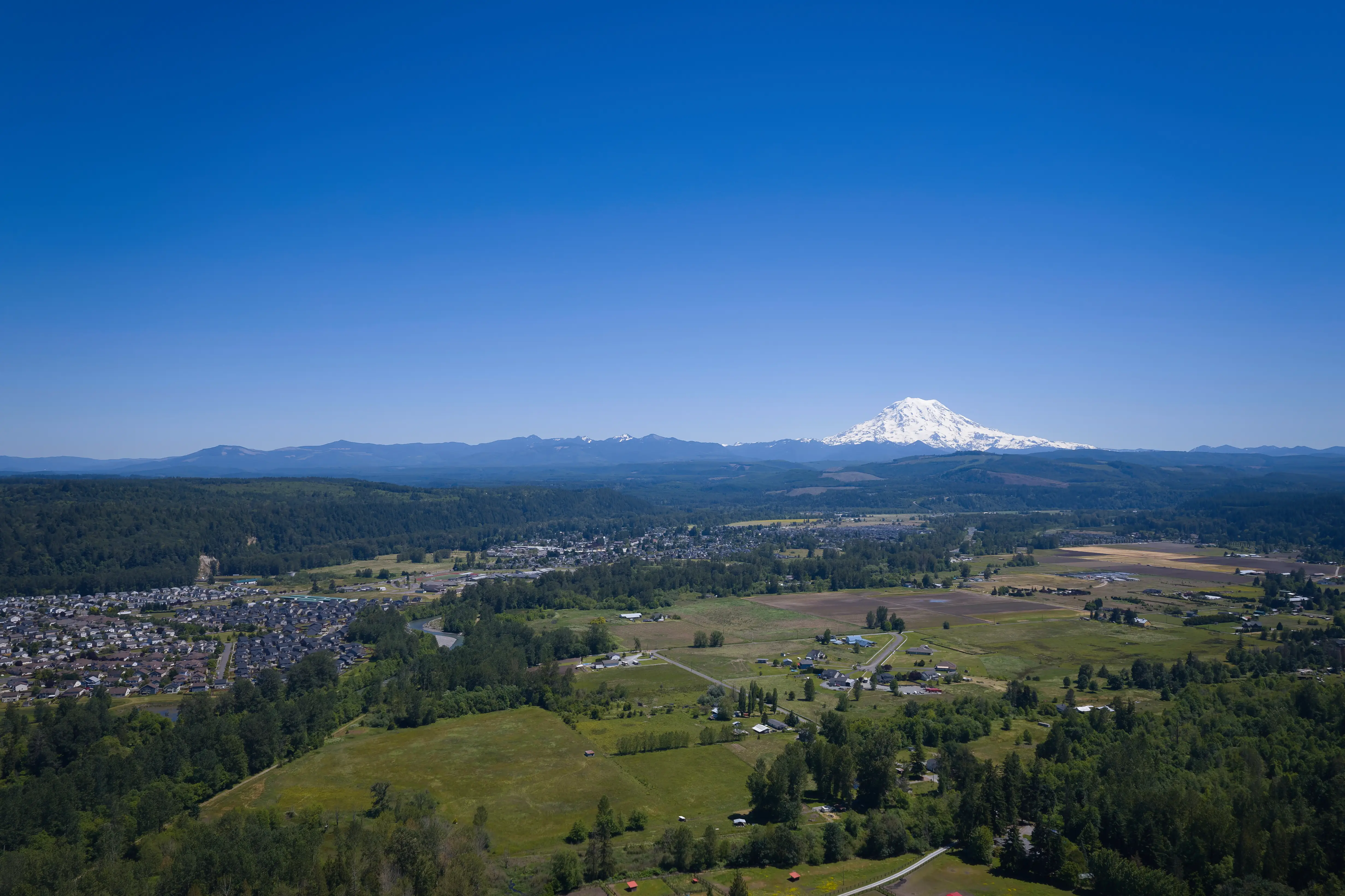
Retiring in Puyallup
Puyallup draws retirees for its balance of amenities, outdoor access, and cost. Here’s what to weigh.
🌤 Climate
Puyallup sits in the partial rain shadow of the Olympic range — but only partially. Winters are mild and grey with frequent overcast and rain from October through March, with temperatures rarely dropping below freezing at valley elevation. Summers run warm and dry from July through September, with clear views toward the Cascade Range on the best days.
🍴 Lifestyle
The Meeker Mansion, Karshner Museum, and Pioneer Park anchor a walkable downtown cultural scene that rewards retirees who want to stay engaged without commuting anywhere. The fairgrounds host year-round events including concerts and expos, and the Puyallup River trail system provides accessible outdoor recreation close to home.
🏚 55+ Communities
Puyallup and the broader South Hill corridor have active-adult and senior-living options ranging from independent living communities to assisted care, with several established developments in the valley and additional options in neighboring Sumner and Bonney Lake. The concentration of healthcare employment in the city means medical access is a meaningful local advantage.
✈ Getting Around
Most daily errands in Puyallup require a car, though downtown residents can manage on foot for a meaningful range of needs. The Sounder commuter rail station provides easy access to Seattle and Tacoma without driving. Seattle-Tacoma International Airport is approximately 30 minutes north via SR-167.
🏛 Washington Taxes for Retirees — What to Know
- No state income tax — Washington does not tax personal income, so Social Security, pensions, and 401(k)/IRA withdrawals are all untaxed at the state level. There is no state return to file and no retirement exclusion to claim — the rate is simply zero.
- Military and public pensions — Because there is no income tax, military retirement pay and public-employee pensions are untaxed at the state level along with everything else.
- Sales tax is the tradeoff — The state sales tax is 6.5%, and local add-ons bring the combined rate in Puyallup to 10.3% (Washington State Department of Revenue, Q3 2026 local sales & use tax rate table, July 2026). Groceries and prescription drugs are exempt.
- Property taxes, with senior relief — The effective property tax rate is roughly 0.9%. Homeowners 61+ (or unable to work due to disability, or a qualifying disabled veteran) who own and occupy their home may qualify for a reduction. Income limits are set against each county’s median household income, so the threshold differs by county — check with your county assessor. A separate deferral program is available for those who don’t qualify for the exemption.
- Capital gains tax — but not on retirement income — Washington taxes 7% on long-term capital gains above a $278,000 standard deduction for 2025, rising to 9.9% on gains above $1,000,000. Retirement accounts and real estate sales are both exempt. It therefore does not reach ordinary retirement income or the sale of a home.
- Estate tax — the one to plan for — Unlike most no-income-tax states, Washington has its own estate tax. For deaths on or after July 1, 2026, the exemption is $3 million with graduated rates topping out at 20%. Retirement accounts count toward the taxable estate, so long-time homeowners with sizable balances can cross the line without expecting to.
- No inheritance tax — Washington has no inheritance tax, and no gift tax.
- WA Cares payroll premium — Working Washingtonians pay 0.58% of gross wages into the WA Cares Fund, the state long-term care program, with no income cap. It applies to W-2 wages, so retirees who have stopped working do not pay it — but anyone relocating while still employed will see it. The private-insurance opt-out closed at the end of 2022 and is not available to new applicants; the remaining exemptions are narrow (living outside Washington, military spouses, certain visa holders, and veterans with a 70%+ service-connected rating).
- The Oregon border effect — Oregon has no sales tax, so Washington residents near the river — Vancouver, Camas, Washougal, Longview — often cross over for large purchases. Washington use tax technically applies to goods brought back for use in-state, though it is rarely enforced on ordinary personal purchases.
Tax laws change frequently and individual situations vary. This is general information, not tax advice — always consult a qualified Washington tax professional or CPA for personalized retirement tax planning.
Weekends & Local Favorites in Puyallup
Puyallup weekends are shaped by the Puyallup River, the fairgrounds calendar, and the particular Pacific Northwest mix of small-city downtown life and quick access to the outdoors. Once you know what's here, it's hard to argue the weekend options are thin. Once you don't, it can feel like a city where you always have to drive somewhere else to do anything interesting — which is a common complaint from newcomers in the first six months.
Downtown as the Weekend Anchor
Pioneer Park is the most honest measure of downtown Puyallup's vitality. On a Saturday morning in June, it has farmers market energy — people, dogs, kids on the grass, the smell of coffee from the surrounding blocks. The Meeker Mansion hosts tours and events that draw history-minded visitors from across Pierce County, not just locals. The outdoor sculpture walk along downtown streets is genuinely worth an hour on foot, and it's the kind of thing residents discover by accident and then recommend to everyone they know who's considering a move here.
Powerhouse Restaurant & Brewery on E Main Ave is the Friday-night default for a significant portion of downtown Puyallup's regulars — a place that has been continuous in this community since 1995 and earns its loyalty through consistency rather than novelty. Farm 12 draws a different crowd: people who want their coffee and lunch in a space that feels purposeful, and who don't mind that the vibe leans cooperative rather than commercial.
The Fair as a Local Experience
Living in Puyallup means having a relationship with the Washington State Fair whether you want one or not. The September run draws over 900,000 visitors to 110 9th Ave SW — an event that ranks among the ten largest fairs in the United States and has run without interruption since 1900. Longtime locals either lean into it (local restaurant reservations, hosting out-of-town family, volunteering) or develop a firm September routine that routes entirely around the fairgrounds. The Spring Fair in April is smaller but beloved, and the Event Center's year-round programming means something is always on the calendar.
Getting Outside on Weekends
The Puyallup River trail system is the low-effort outdoor option that most residents default to on a Tuesday evening or a Sunday morning when they don't want to drive anywhere. It's flat, accessible, and connects neighborhoods in a way that makes the city feel more cohesive than it does from a car. The Cascade Range foothills are genuinely close — the kind of drive where you can leave after breakfast, spend real time on a trail, and be back by mid-afternoon without feeling rushed. The full breakdown of parks, trails, and outdoor options lives on the parks and recreation page.
What catches people off guard about Puyallup weekends is how much of the social life is neighborhood-rooted rather than destination-driven. The conversations at Pioneer Park, the regulars at the downtown brewpub, the families who walk the river trail every Saturday — these are the rhythms that build over time, and they're the thing most people who choose to stay here say they didn't fully expect when they moved in.
Top Things Locals Say About Puyallup
The best intel about a city comes from the people who actually live there. Here’s what Puyallup residents say when newcomers ask the questions everyone’s thinking.
“I knew the Sounder existed, but I didn't realize it would actually change how I felt about living here. By month three, I'd stopped thinking of myself as someone who commutes to Seattle from the suburbs — I just get on a train and read for 50 minutes. The Fair in September was the other thing nobody warned me about. I thought it would be fun. It is fun. It's also three weeks where I take a completely different route home.”
— Recent Puyallup home buyer
“What's the most surprising thing about living in Puyallup?”
The downtown is the surprise. Most people drive through on SR-512 and assume the whole city is South Hill strip malls. Then they walk Pioneer Park on a Saturday morning or find the sculpture trail along E Main Ave and realize there's a completely different Puyallup that predates all of that by 100 years. The Meeker Mansion has been sitting there since 1886 — it's just that nobody told you to look for it.
“What do locals love most about Puyallup?”
The Puyallup River trail is the honest answer. It's not dramatic — it's a flat, accessible path along the valley floor — but it's where a lot of the city's social fabric gets built. You see the same people on it every weekend, you stop and talk, and after a few months you realize you actually know your neighbors in a way that's harder to replicate in a purely car-dependent suburb. That, and the Sounder train. People who use it regularly become its strongest advocates.
“What should newcomers to Puyallup know?”
Check the Washington State Fair Event Center calendar before you make any plans involving the west side of the city — not just in September, but year-round. A big trade show or concert can back up traffic on 9th Ave SW and Meridian Ave E on a Friday night when you'd never expect it. Also: Meridian Ave E in South Hill during the afternoon school rush is its own kind of traffic problem that has nothing to do with the fairgrounds. Give yourself an extra 10 minutes if you're crossing it between 3 and 5 p.m.
“Can you live in Puyallup without a car?”
Near downtown, yes — with intention. Within about a 10-minute walk of the Sounder station at 131 W Main Ave, you can reach groceries, restaurants, Pioneer Park, and the rail line to Seattle without getting in a car. Pierce Transit and the Puyallup Runner fill in some gaps. In South Hill, it's effectively not realistic — the commercial core is built around driving, distances between destinations are significant, and bus frequency doesn't support a car-free daily routine for most people.
Cities Near Puyallup
Other communities near Puyallup worth a look — each with its own character and price point.
| City | Distance | Best For | Vibe | Median Rent | Median Buy |
|---|---|---|---|---|---|
| Sumner | 4 mi | Commuters, small-town feel | Quiet, historic, slower pace | $1,900 | $590,000 |
| Tacoma | 10 mi | Urban amenities, renters, arts | Gritty, diverse, city energy | $1,750 | $450,000 |
| Bonney Lake | 9 mi | Families, newer construction | Suburban, lakeside, growing | $1,850 | $560,000 |
More Helpful Guides for Puyallup
Going deeper on Puyallup? Our blog series covers everything from first-time buying to retiring here — explore the guides below.
Local Expert Takeaway: The Sounder train from 131 W Main Ave is Puyallup's real differentiator — a 50-minute ride to King Street Station that lets buyers trade commute stress for a genuine home with a yard, at a price point that tracked at $573,027 city-wide as of July 2026. The catch is that without that train in your life, Puyallup is a car-dependent Pierce County suburb where SR-512 and Meridian Ave E will be fixtures of your afternoon. Pick your neighborhood with that distinction in mind: downtown proximity to the Sounder station is worth paying attention to if Seattle is your destination, and South Hill makes more sense if Tacoma or local employment is the actual commute.
Quick Takeaways & FAQs
✅ The Sounder S Line from downtown Puyallup reaches Seattle's King Street Station in roughly 50 minutes, with a 1,044-stall park-and-ride expanded in 2023 — making this one of the best-connected commuter rail stops in Pierce County.
⚠️ The Washington State Fair's 20-day September run draws over 900,000 visitors to the west side of the city, and traffic disruption on 9th Ave SW and Meridian Ave E is real — newcomers moving in over the summer are often blindsided by it.
📍 Puyallup's historic downtown along E Main Ave — with Pioneer Park, the Meeker Mansion, the Karshner Museum, and a walkable sculpture gallery — exists in a different world from South Hill's commercial corridor, and which one defines your daily life depends entirely on where you buy.
Is Puyallup a good place to live for Seattle commuters?
What is the average home price in Puyallup, WA?
How are the schools in Puyallup?
What is it actually like living near the Washington State Fair?
Is Puyallup safe?
Helpful Links for Moving to Puyallup
Moving to Washington?
Tell us what you need help with and we'll connect you with local resources.
