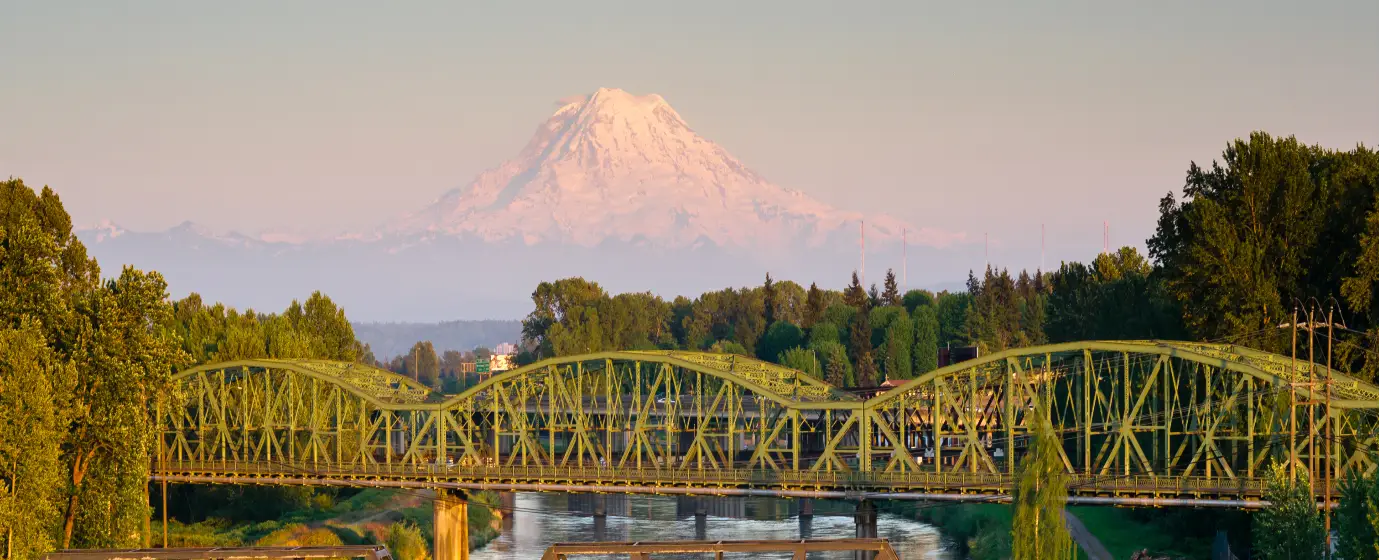
People moving to Puyallup from denser parts of the Seattle metro often expect a standard suburb: a few neighborhood playgrounds, maybe a rec center. What they actually find is a 22-mile asphalt trail heading into the Cascade foothills, a downtown park with free Thursday concerts all summer, and a river trail framed by cottonwoods that turns gold every October. For a city of 42,000, the depth of the outdoor infrastructure is legitimately surprising.
Puyallup manages 19 parks across the city as of 2025, and the park system is actively expanding — the Pierce Conservation District planted over 2,500 trees here in 2024 alone, adding approximately 8 acres of urban canopy. The city earned its Tree City USA recertification in 2025. What that translates to on the ground is more shade along park paths, more buffers between neighborhoods and arterials, and a greener street experience than you'd typically find in a comparably sized Pierce County city.
The seasonal rhythm here is real and specific. Summer fills Pioneer Park with farmers' market crowds on Saturday mornings and concert-goers on Thursday evenings. Fall is when locals quietly take to the Riverwalk Trail, when the cottonwoods along the Puyallup River go yellow and the crowds thin out. And September belongs to the Washington State Fair — one of the largest state fairs in the country — which transforms the fairgrounds and the surrounding blocks into something between a regional event and a civic identity.
This guide covers Puyallup's signature parks, the trail network that connects them to the broader Pierce County outdoors, the Puyallup River and its recreational role, and the seasonal programming that makes the park system feel like more than just maintained grass.
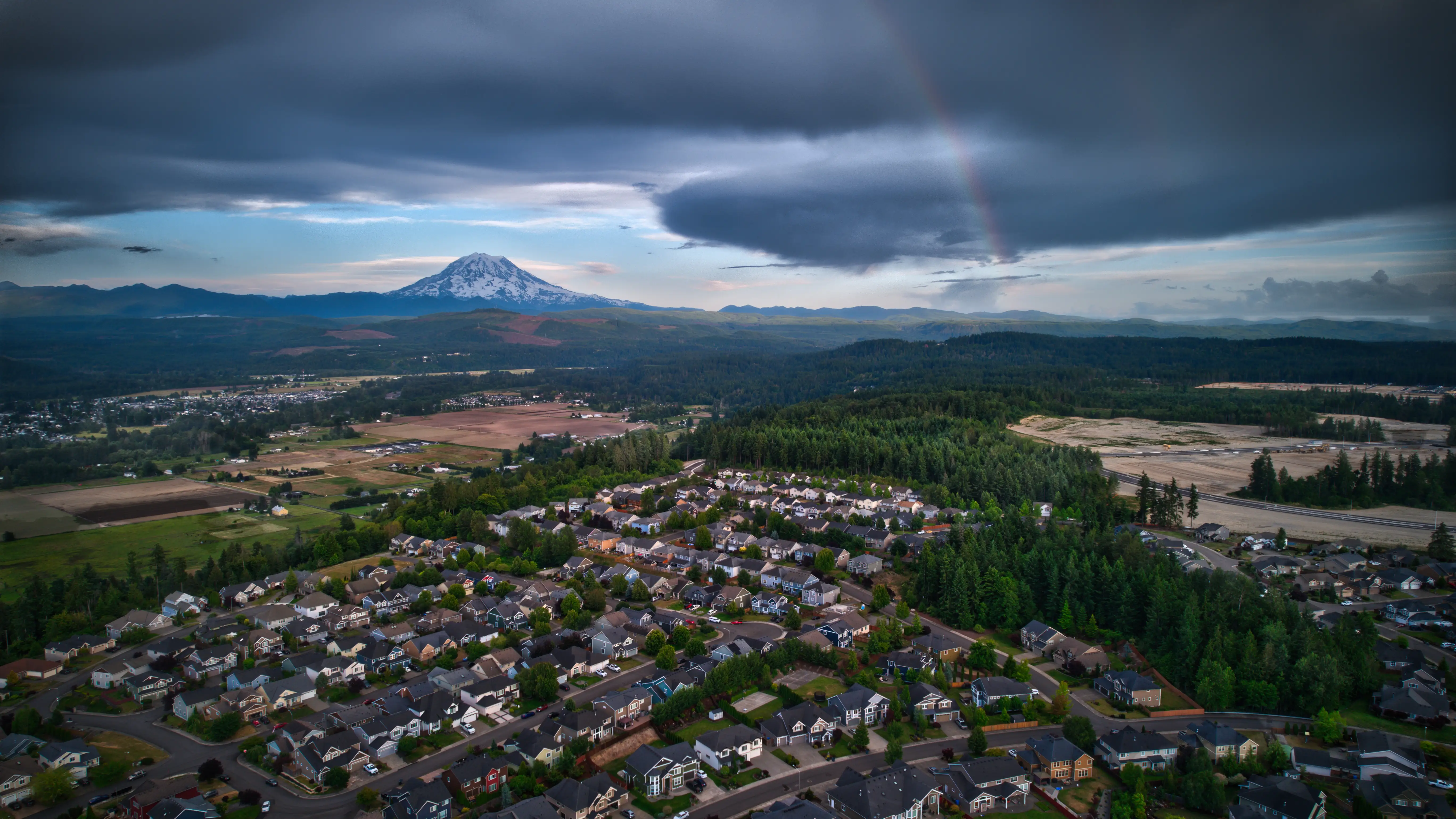
Pioneer Park: Puyallup's Downtown Living Room
Most cities this size have a downtown park that functions as an afterthought — a strip of grass between parking lots. Pioneer Park in downtown Puyallup works differently. It anchors the city's civic and social life in a way that's genuinely hard to overstate.
The park's amenities are layered and intentional. A large playground draws families year-round. A splash pad runs through summer and is consistently one of the most popular free destinations for parents with young children across Pierce County. The rose garden and Veterans Memorial give the space gravity beyond picnic tables. Wide, paved pathways are wheelchair-accessible throughout.
What makes Pioneer Park the community hub it is, though, is the programming. Free Thursday evening concerts run through the summer months, drawing families from across the city to a space that feels — briefly, genuinely — like a town square. Saturday mornings from spring through fall, the Puyallup Farmers' Market fills the park with local produce, prepared foods, and the kind of foot traffic that makes downtown feel alive. The city's 2025 Parks and Recreation Strategic Plan added free fitness classes to the mix — Tai Chi, Zumba, and yoga — making the park a legitimate daily-use destination, not just a weekend one.
The honest caveat: Pioneer Park is downtown-sized, not sprawling. If you're looking for off-leash dog runs, athletic fields, or wide-open meadows, this isn't it. It punches above its acreage on programming and activation, but it's a greenspace in a commercial core — not a wilderness escape.
Best for: Families with young kids, farmers' market regulars, anyone who wants walkable, programmed community space in the city center.
Bradley Lake and the City's Neighborhood Parks
Bradley Lake Park is the park Pioneer Park isn't — quieter, less programmed, built around water. The paved loop trail circling the lake is flat, stroller-friendly, and wheelchair-accessible, making it a go-to for parents with young children and older residents who want a genuine lakeside walk without driving out of town.
The city is actively extending this experience. As of the 2025 Parks and Recreation Strategic Plan, trail design for a connector from Bradley Lake to Wildwood Park Drive was 30% complete — a link that, when finished, will meaningfully expand the walkable greenspace network on the city's residential east side.
Beyond Bradley Lake, the 19-park system spreads across Puyallup's neighborhoods in ways that matter for daily life. The parks vary significantly in character — some are active athletic complexes with ball fields and courts; others are neighborhood pocket parks that function more as green buffers than destinations.
| Park / Feature | Character | Signature Amenity | Accessibility |
|---|---|---|---|
| Pioneer Park | Urban / programmed | Splash pad, concerts, farmers' market | Fully paved, ADA throughout |
| Bradley Lake Park | Lakeside / quiet | Paved loop around lake | Stroller- and wheelchair-friendly |
| Puyallup Fish Hatchery | Educational / outdoor | Free self-guided walking tours (est. 1940s) | Walking paths, open daily |
| Washington State Fairgrounds | Events / seasonal | Washington State Fair (September) | Large venue, ample parking |
| Riverwalk Trail corridor | Linear / natural | 5-mile cottonwood-lined river path | Paved, inline-skate rated |
| Foothills Trail trailhead | Long-distance / multi-use | 22-mile trail to Buckley | 12-ft asphalt, soft equestrian shoulder |
The Puyallup Fish Hatchery deserves specific mention — it's one of those Puyallup assets that locals know and visitors almost never find. Dating to the 1940s, it's open daily for self-guided walks and functions as a free, low-key outdoor education experience that parents of school-age children tend to discover and return to repeatedly.
One friction point worth knowing: summer day camps and youth sports leagues through Puyallup Parks and Recreation fill fast — often with waiting lists, per the city's own 2025 strategic plan data. If you're moving here with kids and counting on summer programming, register early. For more on youth sports leagues and school-tied activities, see the Puyallup schools page.
The Trail Network: Riverwalk, Foothills, and Where They Connect
Puyallup sits at the meeting point of two trails that give it genuinely unusual recreational reach for a city its size. Most residents don't realize how far they can go on foot, bike, or skates without touching a road.
The Puyallup Riverwalk Trail
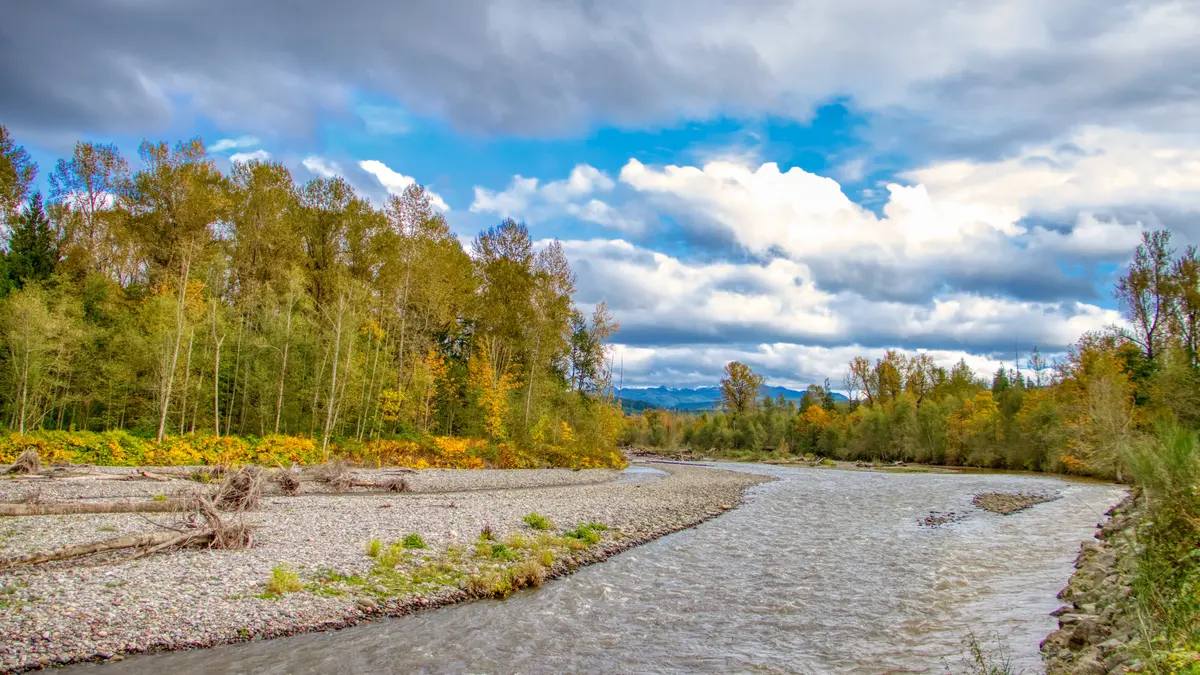
The Riverwalk is approximately 5 miles of paved trail running along the Puyallup River through the city's northern reaches. The corridor is lined with cottonwoods — an underrated detail that makes this one of the best fall walks in the region. When the leaves turn in October, this stretch goes fully golden and draws walkers who wouldn't typically think of themselves as trail people.
The surface is smooth enough for inline skating and trail running, not just walking. The river is present but not intrusive — you're beside it, shaded by the cottonwood canopy, rather than fighting through vegetation to see it.
The Foothills Trail
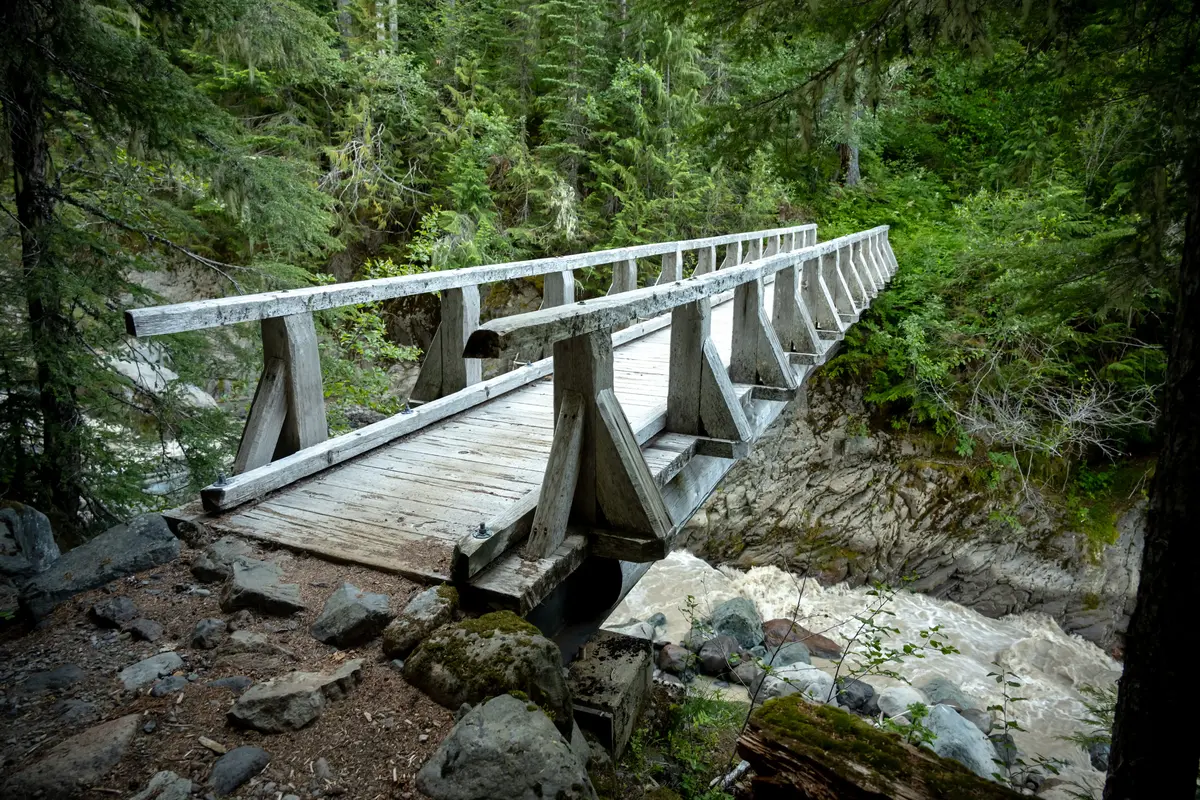
The Foothills National Recreation Trail begins at 13810 80th Street E in Puyallup and runs 22 miles southeast through the Puyallup River valley toward Orting, South Prairie, and Buckley. It's a 12-foot-wide non-motorized asphalt trail built on a former rail corridor — wide enough that cyclists and pedestrians don't crowd each other, with a soft shoulder on one side for equestrians.
The trail's full 24-mile reach was restored in September 2024 after a bridge over Spiketon Ditch was demolished in June 2024 due to structural failure. A new bridge opened that fall, reestablishing the complete connection from Puyallup to Enumclaw. If you heard the trail was partially closed in 2024, it's fully open again.
Where They Connect
The Riverwalk connects at its eastern end to the Foothills Trail near 80th Street. That junction turns two separate trails into a single continuous network — you can start a ride in downtown Puyallup and follow the trail corridor southeast into farm country without a car shuttle or a road detour. For cyclists especially, this is one of the genuinely compelling arguments for choosing Puyallup over neighboring cities with less trail infrastructure.
What you give up: neither trail has significant elevation gain. If you're looking for mountain biking or technical singletrack, you're driving east toward the Cascade Range. What this network does well is flat, accessible, long-distance recreation that works for all ages and fitness levels — which is exactly what most residents actually use most of the time.
Looking to buy in Puyallup? Estimate your payment.
Enter your numbers to see an estimated monthly mortgage payment.
Estimate only. Excludes HOA fees and mortgage insurance. The interest rate above is a starting point, not a quoted rate — replace it with your own to see real numbers. Insurance is a flat placeholder, not a Puyallup quote.
Seasonal Recreation and the Washington State Fair
Puyallup's recreational calendar has a rhythm that new residents take about one full year to fully understand. The city doesn't have a single big summer festival — it has a layered season, and then September arrives and rewrites everything.
Spring and Summer
The Puyallup Farmers' Market runs Saturdays at Pioneer Park from spring through fall. It's not a tourist market — the crowd is mostly local, the vendors are regional, and it functions as the weekly social hub for a large portion of the city's population. Pair that with the Thursday evening concerts and the splash pad crowds, and Pioneer Park from June through August operates at a genuinely different intensity than the rest of the year.
The trail network earns its highest use in summer, but the Riverwalk in particular draws more walkers in October than August — locals who've been here more than one full cycle tend to figure this out around month fourteen. The summer visitors who discover the Riverwalk in July are gone by the time the cottonwoods peak.
The Washington State Fair
The Washington State Fair runs for 17 days in September at the Washington State Fairgrounds — a campus-scale venue that anchors the city's identity in a way that's hard to explain to people who haven't experienced it. This is one of the largest state fairs in the country by attendance, drawing visitors from across the Pacific Northwest. For residents living within a mile or two of the fairgrounds, September means changed traffic patterns, packed parking, and the low-grade hum of a city temporarily three times its normal size.
The honest experience of living near the fair: it's genuinely fun for the first few years, especially for families. The scale is impressive, the local food vendors are a real draw, and the agricultural and equestrian events give it a character that's specific to Washington's farming history. After several years, many long-term residents build their September schedules around it — either leaning in or quietly driving a different direction until mid-September. Neither response is wrong; it's just the reality of living adjacent to a major regional event.
The fairgrounds operate year-round as an events venue beyond the fair itself — concerts, trade shows, and seasonal markets fill the calendar outside of September, which means the site is active even when the fair isn't running.
Year-Round Outdoor Access
The Puyallup Fish Hatchery is one of those places that rewards repeat visits across seasons. The self-guided walk is free, open daily, and genuinely educational for kids — the hatchery has been operating since the 1940s and the scale of the salmon production infrastructure is impressive up close. It doesn't appear on most tourist itineraries, which keeps it accessible when Pioneer Park is at capacity.
For residents who moved here from cities with fewer tree-covered paths and accessible lakeside walks, the combination of the Riverwalk, Bradley Lake, and the Foothills Trail tends to exceed expectations. The catch is that none of it involves mountains, beaches, or dramatic elevation — Puyallup's outdoor life is river valleys and flat rail trails, which is its own kind of good, even if it's not what people picture when they imagine Pacific Northwest recreation.
Local Expert Takeaway: Puyallup's trail network is the thing most people discover after they move here, not before. The Riverwalk Trail runs five paved miles along the Puyallup River through cottonwood corridors, connects at 80th Street to the 22-mile Foothills Trail heading toward Orting, and together gives you more continuous flat-trail mileage than most Pierce County cities can offer. Pioneer Park is the social anchor — Thursday concerts, Saturday farmers' market, splash pad, rose garden — all free and within walking distance of the historic downtown. The catch nobody tells you: summer day camps fill fast with waiting lists, September belongs entirely to the Washington State Fair (plan around the traffic if you live near the fairgrounds), and the best time to walk the Riverwalk is October, when the cottonwoods turn gold and most of the summer crowd has moved on.
Quick Takeaways & FAQs
✅ The Foothills Trail starts right in Puyallup at 80th Street E and runs 22 miles southeast through the Puyallup River valley to Buckley — one of the longest paved non-motorized trails in Pierce County, accessible from the city's own trail network.
⚠️ September's Washington State Fair is a genuine regional event that draws massive crowds — residents within a mile or two of the fairgrounds should expect significant traffic and parking changes for 17 days every year.
📍 The Puyallup Fish Hatchery, operating since the 1940s, is free, open daily for self-guided walks, and almost entirely undiscovered by newcomers — one of the better low-key outdoor education stops in Pierce County.
Is the Foothills Trail open all the way from Puyallup to Enumclaw?
What is there to do at Pioneer Park in Puyallup?
Does Puyallup have good trails for cycling and running?
What is the Washington State Fair and how does it affect living in Puyallup?
Is Bradley Lake Park in Puyallup suitable for strollers and wheelchairs?
Moving to Washington?
Tell us what you need help with and we'll connect you with local resources.
