What Is Living in Auburn, Washington Like?
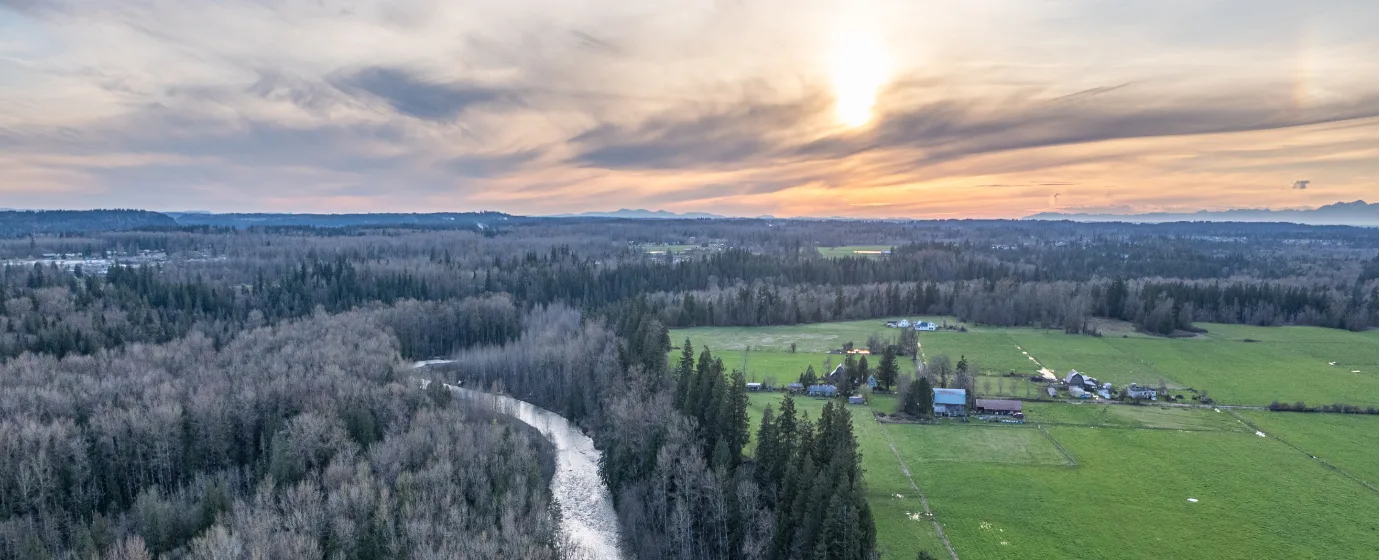
Maybe you've been priced out of Seattle or Bellevue and someone mentioned Auburn. Maybe Boeing brought you to the region and you're drawing circles on a map. Whatever landed you here, Auburn tends to surprise people — not because it's undiscovered, but because it operates on its own logic. It sits at the intersection of SR-167 and SR-18, roughly 35 minutes south of Seattle on a good day, straddling the King-Pierce county line in the flat valley bottom of the White River. The valley location shapes everything: the morning fog that lingers through November, the industrial heritage along the BNSF corridor, and the way the drive up toward Lea Hill or Lakeland Hills feels like leaving one city and entering another.
Auburn's economy is anchored by a genuinely diverse employer base. The Boeing Company's manufacturing presence has defined the area for generations. The Muckleshoot Casino Resort is one of the largest employers in the entire region, drawing hospitality workers from across the south county. A major regional health system anchors healthcare employment locally. Green River College, with its 12,000-plus students, keeps the city younger than you'd expect for a city of 85,676: the median age is just 36. The Auburn School District employs hundreds more and educates a student body that reflects one of the more genuinely diverse communities in King County.
Housing here is noticeably more accessible than Seattle or the Eastside, with a typical home value of $577,641 (Zillow Home Value Index, June 2026) — a meaningful step below comparable suburbs to the north. That price point, combined with a median household income of $97,884, makes the math work for working families in a way it simply doesn't in Renton or Federal Way anymore. Day-to-day life pulls people outdoors along the Interurban Trail, to White River for summer events, or out to the Outlet Collection Seattle for errands that would otherwise require a freeway slog. It's a city that rewards knowing where to go.
Whether you're weighing a first purchase, a company relocation, or a move away from a pricier market, the sections below break down Auburn's neighborhoods, housing market, commute reality, major employers, and what weekends and daily life actually look like here.
Auburn at a Glance
Looking to buy in Auburn? Estimate your payment.
Enter your numbers to see an estimated monthly mortgage payment.
Estimate only. Excludes HOA fees and mortgage insurance. The interest rate above is a starting point, not a quoted rate — replace it with your own to see real numbers. Insurance is a flat placeholder, not a Auburn quote.
Why Are People Moving to Auburn?
The simplest answer is price relative to access — but that undersells what Auburn actually offers. People move here because they can buy a real house, hold onto a Seattle-area paycheck, and still get to work in under an hour on the Sounder commuter rail.
The Employer Picture
The Boeing Company remains a defining force in Auburn's economy, with manufacturing employment that has shaped the city for decades. What's changed is how much broader the base has become. The Muckleshoot Casino Resort is a major regional employer that doesn't get enough credit in relocation conversations. A major regional health system anchors the healthcare side of the economy, Green River College drives education employment, and the Auburn School District itself is a top-ten employer in the city.
That diversity matters. When one sector slows, Auburn doesn't hollow out the way single-employer towns do. The mix of manufacturing, tribal gaming, healthcare, and education creates a labor market that draws workers from across the south county corridor — which is exactly why housing demand here is structural, not speculative.
Who's Actually Buying Here
| Buyer Type | What Draws Them | Best Fit In Auburn |
|---|---|---|
| First-Time | Entry-level pricing below the Seattle metro average, Sounder rail access | Lea Hill, Downtown Auburn |
| Families | Newer construction, parks, school proximity | Lakeland Hills, North Auburn |
| Commuters | Sounder rail to Seattle, SR-167 to Renton corridor | Downtown Auburn, South Auburn |
| Value Seekers | Meaningful savings vs. Kent or Federal Way, growing amenity base | East Auburn, West Hill |
| Outdoor-Oriented | Interurban Trail, White River access, proximity to mountains | Lea Hill, Lakeland Hills |
| Boeing/Aerospace Workers | Short drive to manufacturing campuses, housing within budget | South Auburn, East Auburn |
Auburn also draws a genuinely diverse population — over a dozen ethnic communities are represented in meaningful numbers, which shows up in the Main Street restaurant scene and the schools.
The Honest Catch
Auburn is not a city you move to for walkable urban energy. The downtown Main Street corridor is improving — a new Downtown Subarea Plan was adopted in 2024 and design standards are being updated in 2026 — but the pace of change is gradual. If you're coming from a dense urban neighborhood expecting that same energy, adjust the expectation before you make an offer.
What Daily Life Feels Like in Auburn
Six months after moving here, the thing newcomers consistently didn't anticipate is the valley fog. From October through February, the White River Valley fills with a low marine layer that can linger until noon — while the hilltop neighborhoods in Lakeland Hills or Lea Hill sometimes sit above it in full sun. It's not a dealbreaker, but it's real, and it's the kind of seasonal quirk that doesn't show up in listing photos taken in July.
The Geography of Everyday Life
Auburn's neighborhoods divide roughly into valley floor (Downtown, South, East) and hilltop (Lea Hill, Lakeland Hills, West Hill). Valley-floor living puts you close to the transit center, Main Street, and the Interurban Trail. Hilltop living trades that walkable access for newer construction, better views on clear days, and a quieter residential character. The divide is psychological as much as physical — longtime residents from Lea Hill often say they rarely come down to Main Street unless there's a specific reason.
Main Street is the city's gathering spine. Oddfellas Pub & Eatery on W Main St has been a consistent anchor for evening crowds; Cafe Sol. on 49th St NE — a Ukrainian-inspired café — is the kind of find that makes people glad they looked past the chains. The White River Valley Museum, tucked near the historic downtown, is genuinely good — small-city museums of this quality are rarer than they should be.
Weekend Rhythms
Emerald Downs Racetrack brings a specific energy to summer Saturdays — live thoroughbred racing from April through September, with a crowd that mixes longtime regulars with families doing it for the first time. White River Amphitheatre draws national touring acts to a setting that, honestly, punches above its weight for a suburb this size. The Outlet Collection Seattle handles the big-box and outlet shopping needs that would otherwise require a trip north.
What Auburn lacks is a dense, walkable neighborhood commercial district outside of Main Street. Errands happen by car. The nearest Trader Joe's is in Federal Way or Renton. That's not unusual for south county cities, but it's worth knowing before you romanticize the commute-free weekend.
Community Feel
Auburn runs diverse and working-class in a way that feels earned rather than curated. The racial and ethnic mix across the city — a genuine mosaic of white, Asian, Latino, Black, Pacific Islander, and Native American communities — shows up in the school hallways, the Main Street food scene, and the visible presence of the area's tribal community throughout the valley. Newcomers from more homogeneous suburbs sometimes find this the most pleasant surprise of all.
The Auburn Housing Market Right Now
Auburn's typical home value sits at $577,641 (Zillow Home Value Index, June 2026) — down modestly from the prior year's peak, which has created a quieter buying window than the city saw in 2021–2022. Redfin's citywide median sale price tracked at $600,000 in November 2025, a close-enough corroboration that both figures are pointing at the same real market.
Homes that are priced and presented well are still moving quickly — typically going to pending in around 7 days city-wide. That pace reflects genuine demand from Boeing workers, south county commuters, and buyers priced out of markets to the north, not a speculative run-up.
What the Market Looks Like on the Ground
Some parts of Auburn price noticeably below the city median, and others run well above it — the gap between the most affordable and most sought-after areas is wider than in many comparable cities. For the full neighborhood-level breakdown, see the Auburn neighborhoods guide.
New construction is genuinely expanding the supply. Auburn issued permits for 60 new single-family homes in 2025, with more than 300 new single-family lots projected for 2026 — concentrated on Lea Hill, West Hill, and in Lakeland Hills. That pipeline matters: it means buyers willing to consider newer areas have options that simply didn't exist two years ago, and it's putting some price pressure on older resale stock in the valley.
What's Driving Demand
The Sounder rail connection at the downtown Auburn Transit Center is probably the single biggest demand driver for buyers who work in Seattle or Tacoma. Owning a home near a commuter rail station at this price point is increasingly rare in the Seattle metro. That access premium is real and shows up in how quickly well-located properties move.
For a full picture of costs beyond the purchase price — property taxes, rent benchmarks, and cost-of-living comparisons — see the Auburn cost of living page.
Auburn Neighborhoods
Auburn has several distinct areas — each with its own character and appeal. Here’s a breakdown to help you narrow down where to focus your home search.
🏡 Downtown Auburn
The historic Main Street corridor is Auburn's civic and commercial spine — close to the Sounder transit center, the White River Valley Museum, and a growing set of independent restaurants and pubs. It suits commuters and buyers who want walkable access to transit over larger lot sizes.
🏠 North Auburn
North Auburn is a mix of established single-family homes and newer infill, sitting between the valley floor and the greenbelt to the north. It draws families looking for a quieter residential feel with reasonable proximity to SR-167 for commuting.
🌳 South Auburn
South Auburn runs more industrial and working-class along the valley floor, with housing that tends toward older stock and more varied lot sizes. It suits buyers prioritizing price and highway access over polished neighborhood character.
🏘 East Auburn
East Auburn climbs slightly out of the valley toward the foothills, with a quieter suburban character and newer single-family construction mixed with established homes. It's close to SR-164 and the White River Amphitheatre corridor.
🏔 Lea Hill
Lea Hill sits on the plateau above the valley near Green River College, with newer single-family homes, strong school proximity, and a distinctly different feel from the valley floor — including better winter sun above the fog line. It draws parents with school-age children looking for newer construction at accessible price points.
🌆 Lakeland Hills
Lakeland Hills is Auburn's master-planned community straddling the King-Pierce county line, with parks, walking trails, and newer construction that consistently prices above the city median. It's the neighborhood most often cited by families who want suburban amenities and a cohesive neighborhood feel.
Pros & Cons of Living in Auburn
The Pros
- Significantly more affordable housing than Seattle or Bellevue while staying inside the King County job market
- Sounder commuter rail and I-5/SR-167 access shorten trips into Seattle and Tacoma
- diverse dining
- casino/entertainment options
- and extensive park and trail network
- strong industrial and logistics job base anchored by Boeing and a major distribution corridor
The Cons
- Crime rates for both violent and property crime run notably above national and state averages
- school district test scores lag the Washington state average
- long
- gray
- wet winters with relatively few sunny days
Getting Around & Commuting in Auburn
Auburn's commute story is better than its reputation, but only if you use the right tool for the right trip. The city has one of the better multi-modal setups in the south county — and one of the more punishing highway situations when things go wrong.
Sounder Rail: The Real Asset
The downtown Auburn Transit Center is a Sounder commuter rail stop on the S Line, with direct service to Seattle's King Street Station and to Tacoma. The station has 633 parking spaces — which fills up fast on weekday mornings. If you're commuting to downtown Seattle, the Sounder is genuinely faster and less stressful than driving SR-167 in the morning peak.
King County Metro buses and Sound Transit Express routes connect at the same transit center, adding reach to Renton, Federal Way, and beyond. Pierce Transit also serves Auburn, giving south-side residents options that don't require driving to the station at all.
The RapidRide I Line: Coming in 2027
Construction on the RapidRide I Line began in fall 2025. When it opens — projected for 2027 — this 17-mile bus rapid transit route will connect Auburn Station directly to Kent and Renton transit centers, running with higher frequency and dedicated lanes than current bus service. For workers along the SR-167 corridor who don't commute to Seattle, this will be a meaningful upgrade.
Driving the Highways
SR-167 is Auburn's main artery north — it connects toward Renton and gives access to the Eastside employment corridor. SR-18 runs east-west, linking Auburn to Federal Way and I-5 on the west and toward the Cascade Range on the east. SR-164 heads southeast toward Enumclaw. For Boeing workers, the drive to manufacturing campuses in the Auburn-Renton corridor on SR-167 is typically under 20 minutes.
The honest reality: SR-167 southbound in the evening peak, particularly at the Auburn-Kent merge, is where the commute math can break down. Budget an extra 20–30 minutes on Fridays or after a major event night. The valley geography concentrates traffic in ways that don't show up in average commute-time statistics.
Getting Around Locally
Within Auburn, a car is effectively required for most errands. The city adopted a multimodal transportation plan in 2024 and is investing in walkable and bikeable connections between neighborhoods and the transit center — the White River Pedestrian Bridge opened in late 2024 and the R Street Trail is under construction — but the network is still developing. The Interurban Trail is the most useful existing corridor for non-car movement, running north-south through the valley floor.
| Destination | Best Option | Typical Time | Notes |
|---|---|---|---|
| Downtown Seattle | Sounder rail | ~55 min | Runs weekday peaks; 633-space lot fills early |
| Seattle (off-peak) | Drive SR-167 → I-5 | ~35 min | Can double in AM/PM peak |
| Renton / Boeing Field | Drive SR-167 N | ~20 min | Heavy PM peak at Auburn-Kent merge |
| Tacoma | Sounder rail or SR-167 S → I-5 | ~30–40 min | Rail avoids I-5 traffic near the port corridor |
| Seattle-Tacoma Airport | Drive SR-18 → I-5 | ~25–35 min | Fastest by car; no direct rail link |
| Federal Way (Link light rail) | Drive or bus west | ~15 min | Federal Way Link station opened December 2025 |
| Kent / Renton (2027+) | RapidRide I Line | TBD | Under construction; opens projected 2027 |
Schools in Auburn
Families relocating to Auburn have public, private, and higher-education options nearby. Here’s a quick overview.
🎓 School District
Auburn School District No. 408 serves K–12 students across Auburn and the surrounding area. Rated B (source: Niche.com).
🏆 Graduation Rate
The 4-year high-school graduation rate here is approximately 81.5%.
📚 Higher Education
Washington’s public universities — the University of Washington, Washington State University, and Western Washington University — offer four-year degrees statewide, with a network of 34 community and technical colleges (SBCTC) providing two-year and workforce programs.
🌐 Online Learning
University of Washington Continuum College and Washington State University Online offer fully accredited online degrees for remote learners across the state.
Safety in Auburn
A quick look at how Auburn compares on the numbers that matter most when weighing a neighborhood or a move.
🛡 Violent Crime
Approximately 5 per 1,000 residents.
🔒 Property Crime
Approximately 51.4 per 1,000 residents.
Compared to the FBI’s most recent national data (2024), Auburn’s violent crime is above the national average (about 3.6 per 1,000), and property crime is above the national average (about 17.6 per 1,000).
Against Washington as a whole, Auburn’s violent crime is about one and a half times the state average, and property crime is about double the state average (Bureau of Justice Statistics, Crime Known to Law Enforcement, 2024 (tables 2 and 3)).
Crime rates can vary a lot within a single city, so the citywide numbers above are only a starting point. Some neighborhoods in Auburn run well below these averages, while others run higher — the kind of block-by-block detail that matters most when you’re actually choosing where to live. The full guide below breaks it down neighborhood by neighborhood.
Working in Auburn
Auburn’s largest employers span several industries — here are some of the anchors of the local job market.
🏭 The Boeing Company
Aerospace manufacturing
🏥 Muckleshoot Indian Tribe/Muckleshoot Casino Resort
Gaming/hospitality
🏥 MultiCare Auburn Medical Center
Healthcare
🎓 Auburn School District
Education
🎓 Green River College
Higher education
Parks & Recreation in Auburn
Some of the outdoor spaces that shape everyday life in Auburn.
🌱 White River Amphitheatre
🌱 White River Valley Museum
Auburn residents don’t have to go far for green space — spots like White River Amphitheatre and White River Valley Museum are part of everyday life here, whether that’s a morning walk, a weekend hike, or just somewhere to unwind outside. The full guide below covers more of what Auburn has to offer for parks and outdoor recreation.
Retiring in Auburn
Auburn draws retirees for its balance of amenities, outdoor access, and cost. Here’s what to weigh.
🌤 Climate
Auburn sits in the White River Valley and gets the full Western Washington marine climate — mild, wet winters and warm, dry summers. Expect grey skies and drizzle from November through March. Summers, typically June through September, bring genuine warmth and long days with low humidity. The valley fog in late fall is a seasonal reality that hilltop locations avoid more than valley-floor ones.
🍴 Lifestyle
Retirees in Auburn have Emerald Downs for live racing through the summer, the White River Valley Museum for local history and cultural programming, and a Main Street dining scene that's growing steadily. The Interurban Trail offers flat, paved walking within the valley. The Outlet Collection Seattle handles most major retail needs without a long drive north.
🏚 55+ Communities
Auburn has established active-adult and senior living options across the city, with newer communities concentrated in the Lakeland Hills area and established options closer to the valley floor near a major regional medical center. The combination of accessible housing costs, proximity to medical facilities, and good highway access to Tacoma and Seattle makes it a practical choice for retirees relocating from pricier parts of the metro.
✈ Getting Around
A car remains the most practical daily tool in Auburn, though the Sounder rail and bus connections at the Auburn Transit Center give retirees an alternative for trips to Seattle or Tacoma. Seattle-Tacoma International Airport is typically 25–35 minutes by car via SR-18 and I-5. The flat valley floor is manageable for walking and cycling; the hilltop neighborhoods are less so.
🏛 Washington Taxes for Retirees — What to Know
- No state income tax — Washington does not tax personal income, so Social Security, pensions, and 401(k)/IRA withdrawals are all untaxed at the state level. There is no state return to file and no retirement exclusion to claim — the rate is simply zero.
- Military and public pensions — Because there is no income tax, military retirement pay and public-employee pensions are untaxed at the state level along with everything else.
- Sales tax is the tradeoff — The state sales tax is 6.5%, and local add-ons bring the combined rate in Auburn to 10.5% (Washington State Department of Revenue, Q3 2026 local sales & use tax rate table, July 2026). Groceries and prescription drugs are exempt.
- Property taxes, with senior relief — The effective property tax rate is roughly 0.9%. Homeowners 61+ (or unable to work due to disability, or a qualifying disabled veteran) who own and occupy their home may qualify for a reduction. Income limits are set against each county’s median household income, so the threshold differs by county — check with your county assessor. A separate deferral program is available for those who don’t qualify for the exemption.
- Capital gains tax — but not on retirement income — Washington taxes 7% on long-term capital gains above a $278,000 standard deduction for 2025, rising to 9.9% on gains above $1,000,000. Retirement accounts and real estate sales are both exempt. It therefore does not reach ordinary retirement income or the sale of a home.
- Estate tax — the one to plan for — Unlike most no-income-tax states, Washington has its own estate tax. For deaths on or after July 1, 2026, the exemption is $3 million with graduated rates topping out at 20%. Retirement accounts count toward the taxable estate, so long-time homeowners with sizable balances can cross the line without expecting to.
- No inheritance tax — Washington has no inheritance tax, and no gift tax.
- WA Cares payroll premium — Working Washingtonians pay 0.58% of gross wages into the WA Cares Fund, the state long-term care program, with no income cap. It applies to W-2 wages, so retirees who have stopped working do not pay it — but anyone relocating while still employed will see it. The private-insurance opt-out closed at the end of 2022 and is not available to new applicants; the remaining exemptions are narrow (living outside Washington, military spouses, certain visa holders, and veterans with a 70%+ service-connected rating).
- The Oregon border effect — Oregon has no sales tax, so Washington residents near the river — Vancouver, Camas, Washougal, Longview — often cross over for large purchases. Washington use tax technically applies to goods brought back for use in-state, though it is rarely enforced on ordinary personal purchases.
Tax laws change frequently and individual situations vary. This is general information, not tax advice — always consult a qualified Washington tax professional or CPA for personalized retirement tax planning.
Weekends & Local Favorites in Auburn
Auburn's weekend identity is built around three anchors that most cities this size don't have simultaneously: a horse racing track, a major amphitheater, and a tribal gaming resort. None of them are the kind of thing you drive past without noticing.
Emerald Downs
Live thoroughbred racing runs from April through September at Emerald Downs Racetrack, the only horse racing venue in Washington State. Weekend afternoons here are a genuine community ritual — families, retirees, and racing regulars share the grandstand in a way that's genuinely un-curated. General admission is affordable, the infield is open to kids, and the views of the valley and foothills on a clear day are a bonus nobody advertises.
White River Amphitheatre
White River Amphitheatre sits just east of Auburn and regularly hosts major touring acts — the kind of concerts that would otherwise require a trip to Seattle. Parking and traffic management on concert nights can back up SR-164 significantly; locals who live on the East Auburn side learn quickly to either leave very early or wait it out. That's the trade-off for having a 20,000-capacity venue essentially in your backyard.
Main Street and Downtown
The Main Street corridor is uneven but improving. Oddfellas Pub & Eatery on W Main St draws a consistent crowd for pub fare and local pints. The White River Valley Museum is worth an afternoon — its permanent collection on the valley's agricultural and Japanese-American history is more substantive than you'd expect. The City's own Economic Development office highlights the dining variety on Main Street, including Thai, seafood, and coffee spots that reflect the city's multicultural makeup.
Cafe Sol. on 49th St NE — the Ukrainian-inspired café — is the kind of neighborhood discovery that rewards straying off Main Street. It's the spot that locals mention when visitors ask where they actually go.
Outdoors and Trails
The Interurban Trail runs through the valley floor and is the most-used recreational corridor in the city — cyclists, walkers, and joggers share a paved path that connects Auburn to Kent and beyond. The White River Pedestrian Bridge, completed in late 2024, added a significant new connection across the river. For longer adventures, the drive east on SR-18 toward the Cascade Range — or south toward Enumclaw and the foothills — puts serious hiking and skiing within 60–90 minutes. Auburn is close enough to the mountains that a Saturday morning start gets you to the trailhead before the crowds from Seattle arrive.
The Muckleshoot Casino Resort is a year-round destination for dining and entertainment beyond gaming — restaurants, live music, and events that draw people from across the south county. It's woven into Auburn's social fabric in a way that's distinctive to this city specifically.
Top Things Locals Say About Auburn
The best intel about a city comes from the people who actually live there. Here’s what Auburn residents say when newcomers ask the questions everyone’s thinking.
“I knew the commute on paper — 35 minutes, Sounder rail, seemed straightforward. What I didn't expect was how different the hilltop neighborhoods feel from the valley. We looked at a place near Main Street first, then drove up to Lea Hill, and it honestly felt like two different cities. We ended up on the hill and we don't regret it, but I wish someone had made us do that drive before we narrowed the search.”
— Recent Auburn home buyer
“What's the most surprising thing about living in Auburn?”
The valley fog catches almost everyone off guard. From October through February, the White River Valley can stay completely socked in until midday while Lea Hill or Lakeland Hills is sitting in full sun above the clouds. It sounds minor until you've lived through a few Novembers. The other surprise is how much the Muckleshoot Casino Resort is woven into daily life here — it's not just a gaming destination, it's where a lot of south county social and entertainment life actually happens.
“What do locals love most about Auburn?”
Emerald Downs on a Saturday afternoon in June — there's nothing else quite like it in the metro. The Interurban Trail for morning runs without fighting pedestrian traffic. And honestly, the food variety on Main Street for a city this size: Thai, seafood, Ukrainian café, pub food, all within a few blocks. People who grew up here are proud that the city is genuinely diverse in a way that shows up in the actual lived experience, not just in a brochure.
“What should newcomers to Auburn know?”
Get to the Sounder station parking lot early — 633 spaces sounds like a lot until you show up at 7:45 AM. SR-167 southbound on Friday afternoons near the Auburn-Kent merge is a known chokepoint; if you can flex your departure by 30 minutes you'll save a lot of frustration. And don't sleep on the Main Street corridor — it's changing faster than outsiders realize, and the 2024 Downtown Subarea Plan means there's real investment behind the changes, not just wishful thinking.
“Can you live in Auburn without a car?”
If your job is in downtown Seattle and you live within a reasonable walk of the Auburn Transit Center, it's doable. The Sounder covers the main commute, and buses connect enough of the city to handle basics. But for grocery runs, kids' activities, or anything in the hilltop neighborhoods like Lea Hill or Lakeland Hills, you will need a car. The city is actively building out its trail and bike network, but in 2026 Auburn is still fundamentally a car-first city for daily life beyond the downtown core.
Cities Near Auburn
Other communities near Auburn worth a look — each with its own character and price point.
| City | Distance | Best For | Vibe | Median Rent | Median Buy |
|---|---|---|---|---|---|
| Kent | 6 mi | Commuters and established families | Dense, diverse, urban-adjacent | $1,900 | $560,000 |
| Federal Way | 9 mi | Value buyers near new Link rail | Suburban, commercial, transit-growing | $1,750 | $480,000 |
| Sumner | 7 mi | Small-town feel, newer builds | Quiet, historic downtown, pastoral | $1,800 | $570,000 |
More Helpful Guides for Auburn
Going deeper on Auburn? Our blog series covers everything from first-time buying to retiring here — explore the guides below.
Local Expert Takeaway: Auburn rewards buyers who do their homework on location within the city. The Sounder rail connection at the downtown Transit Center is a genuine asset — it's one of the few places in the metro where a working family can own a home near commuter rail at a price below the regional median. But the valley-floor neighborhoods and the hilltop neighborhoods operate very differently in terms of traffic, fog, and neighborhood character. Spend a Tuesday morning in November on Lea Hill and a Saturday afternoon on Main Street before you decide where to make an offer.
Quick Takeaways & FAQs
✅ Auburn's Sounder commuter rail station connects downtown Auburn to Seattle's King Street Station on weekday peak runs — one of the most useful transit assets in the south county for car-free commuters.
⚠️ SR-167 southbound during the evening peak — especially at the Auburn-Kent merge on Fridays — can add 20–30 minutes to an otherwise manageable commute; budget accordingly.
📍 The valley fog between October and February is a real seasonal quirk: hilltop neighborhoods like Lakeland Hills and Lea Hill often sit above it in sunlight while the valley floor stays socked in until noon.
Is Auburn WA a good place to live?
How far is Auburn WA from Seattle?
What is the cost of living like in Auburn WA?
What are the best neighborhoods in Auburn WA?
Does Auburn WA have public transit to Seattle?
Helpful Links for Moving to Auburn
Moving to Washington?
Tell us what you need help with and we'll connect you with local resources.
