What Is Living in Renton, Washington Like?
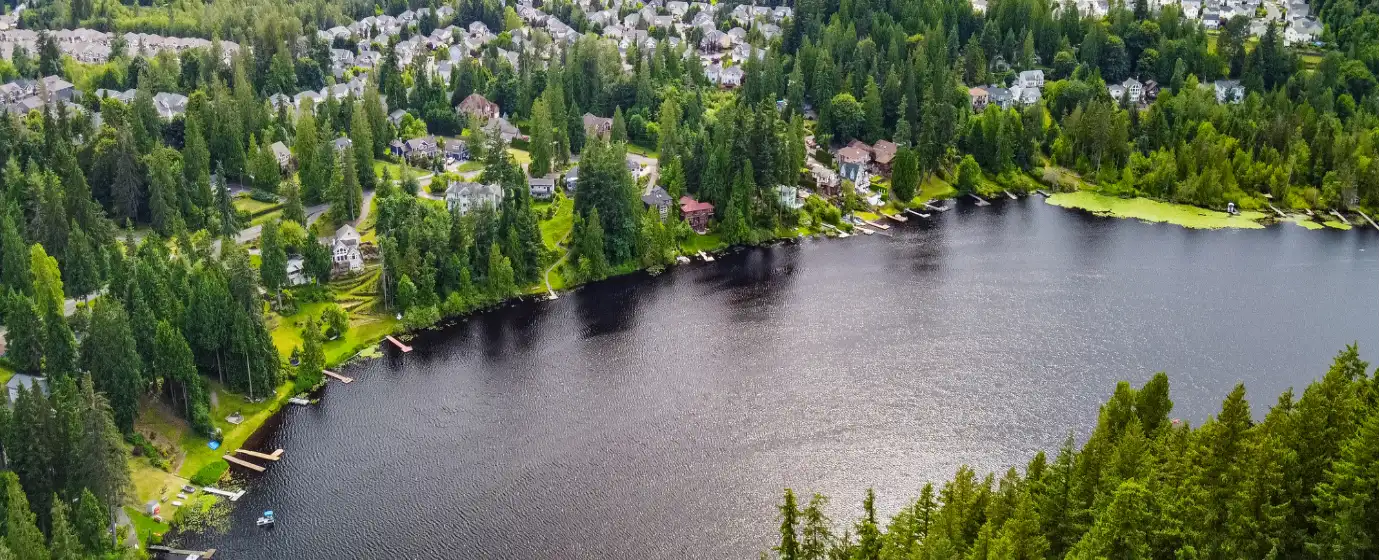
Maybe you've been priced out of Bellevue and someone said Renton is where aerospace engineers and Eastside tech workers actually live. Maybe Boeing's Renton campus is pulling you here and you're wondering whether the city lives up to the job. What catches people off guard is the range: Renton is simultaneously an industrial corridor with a working waterfront, a laid-back lakeside community with 5,400 feet of Lake Washington shoreline, and a fast-growing downtown that just broke ground on a major transit hub. It sits at the confluence of I-405 and SR-167, with Seattle roughly 25 minutes north — close enough to matter, far enough that prices land noticeably below anything you'd find closer to the city core.
The economic backbone here is real and diversified. Boeing's commercial airplane manufacturing has anchored Renton's identity for generations and remains its largest employer. A major regional health system provides a second pillar of stable employment. Then there's Wizards of the Coast — the Renton-based game publisher behind Magic: The Gathering — which draws a younger creative workforce that mixes with the aerospace crowd in ways that make the city harder to stereotype than you'd expect. Renton School District holds a B rating, according to Niche, and a new Seattle Children's Hospital campus and Alaska Airlines training facility are expected to add an estimated 10,000–12,000 new jobs tied to the incoming Stride bus rapid transit line.
For cost of living, Renton sits in the middle of King County's spectrum — substantially below Bellevue and Seattle, and noticeably above Kent to the south. The Zillow Home Value Index registered $720,080 at mid-2026, down modestly from the prior year, which in a county where comparable commutes routinely cost far more reads as genuine value rather than a compromise. Day-to-day life means Cedar River Trail runs through the center of the city, Gene Coulon Memorial Beach Park gives you a legitimate Lake Washington beach without a ferry or a bridge, and The Landing shopping district on the north end handles most retail needs without leaving city limits. King County Metro serves the city today; a new Renton Transit Center at Rainier Avenue South and South Grady Way is under construction and expected to open in 2028 as a cornerstone stop on the Stride S1 bus rapid transit line.
Whether you're weighing a Boeing relocation, escaping Eastside prices, or simply trying to figure out which neighborhoods actually suit your household, the sections below break down Renton's job market and who the city suits best, what daily life looks like on the ground, the housing market right now, commuting realities, and where locals actually spend their weekends.
Renton at a Glance
Looking to buy in Renton? Estimate your payment.
Enter your numbers to see an estimated monthly mortgage payment.
Estimate only. Excludes HOA fees and mortgage insurance. The interest rate above is a starting point, not a quoted rate — replace it with your own to see real numbers. Insurance is a flat placeholder, not a Renton quote.
Why Are People Moving to Renton?
The Employer Mix Is Unusually Stable
Most cities this size depend on one industry. Renton hedges across three. Boeing's commercial airplane manufacturing has been part of the city's economy for generations, and the Renton plant — where the 737 MAX rolls out — remains the largest single employment anchor in the city. A major regional health system employs thousands more across clinical and administrative roles. And Wizards of the Coast, headquartered here since the 1990s, draws game designers and creative professionals who aren't shopping for the same neighborhoods as machinists or nurses.
That diversity matters to buyers, not just workers. When aerospace hiring slows, healthcare tends to hold. When tech contracts, manufacturing often doesn't follow. Renton's buyer pool — aerospace employees, Eastside tech commuters, healthcare professionals, and first-time buyers priced out of Bellevue and Seattle — stabilizes demand in ways that single-industry cities don't enjoy.
The next employment wave is already in motion. A new Seattle Children's Hospital campus and an Alaska Airlines training facility are expected to be major job generators, anchored in part by the incoming Stride S1 bus rapid transit corridor. Renton's mayor has publicly framed the new transit center as the city's primary economic opportunity — and the $100 million parking structure the Sound Transit board funded in May 2026 signals how seriously the region is investing here.
Who Actually Moves Here
| Buyer Type | What Draws Them | Best Fit |
|---|---|---|
| Boeing / aerospace workers | On-site or short drive to the Renton plant; stable employment base | Commuter |
| Eastside tech commuters | Noticeably lower prices than Bellevue with I-405 access to Redmond and Kirkland | Value Commuter |
| Healthcare professionals | Works near a major regional health system; housing at a practical price point | Value |
| First-time buyers | Entry point into King County ownership; established neighborhoods with intact infrastructure | First-Time |
| Families with school-age children | Strong school district; access to parks and Lake Washington | Families School |
| Retirees / downsizers | Walkable lakefront, established amenities, lower cost than Seattle-proper retirement | Quiet Views |
The mix is genuinely cross-sectional. On any given morning at Plum Delicious Family Restaurant on NE Sunset Blvd, you'll find people in Boeing badges next to families running errands next to remote workers — which tells you something useful about the city's social texture.
What People Don't Expect After Six Months
Newcomers from out of state often underestimate how sharply Renton's character changes by elevation. The hillside neighborhoods above downtown — Kennydale on the north slope above the lake, Talbot Hill to the south — feel quieter and more residential than the valley floor along Rainier Avenue South, where industrial uses and commercial density dominate. Buying in the valley without visiting the hillside neighborhoods first, or vice versa, is one of the most common missteps relocating buyers make here. See the full breakdown at the neighborhoods guide.
What Daily Life Feels Like in Renton
The Lakefront Changes Everything
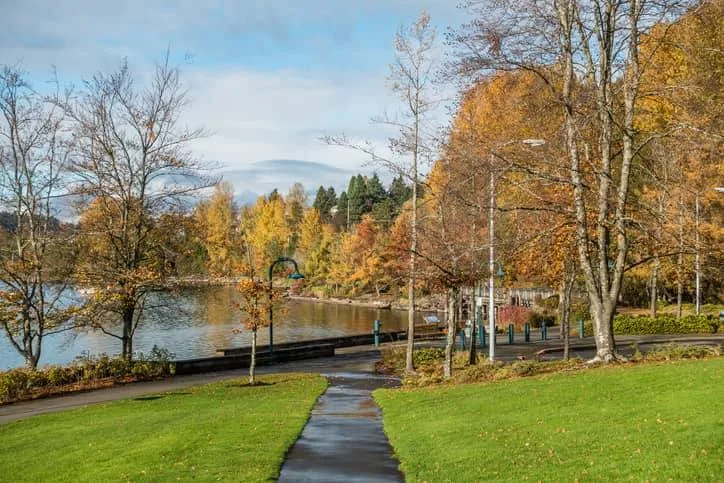
Gene Coulon Memorial Beach Park is the fact about Renton that surprises people most after they move here. It's a genuine 57-acre Lake Washington beach park — 5,400 feet of shoreline, a 900-foot pier, an eight-lane boat launch, lifeguarded swimming from mid-June through Labor Day, tennis courts, sand volleyball, and more than a mile and a half of paved lakeside trail. Most mid-size cities south of Seattle don't have anything like it.
Summer weekends at Coulon draw families, paddlers, and the kind of casual community gathering that doesn't require organizing. The Fourth of July festival and the summer concert series happen right on the waterfront. In winter, a free holiday lights display turns the park into something locals plan around. It's not a hidden amenity — it's central to why people stay once they've moved here.
Downtown Is Mid-Transition, Not Mid-Decline
Downtown Renton along South 3rd Street and the blocks around Logan Avenue is visibly in motion. Legacy Square Phase 2 — a new public plaza funded by a $1.5 million state grant — opened as a viewing space for 2026 FIFA World Cup matches and will serve as a permanent event venue going forward. The Landing on the north end of the city brings big-box retail, restaurants, and a movie theater within city limits.
The honest read: downtown still has the slightly uneven feel of a place catching up to its own momentum. The bones are good and the investment is real, but the restaurant and nightlife scene is thinner than what Bellevue or a Seattle neighborhood entertainment district offers. Shaah & Sheeko Cafe on 116th Ave SE — a Somali-inspired café that opened in 2026 — represents the kind of independent food business that signals a neighborhood gaining traction, not one that's already arrived.
The Seasonal Rhythm Newcomers Miss
Western Washington's gray season runs roughly November through April, and Renton sits in the valley in a way that can feel heavier than hillside neighborhoods. If you're moving from phoenix or dallas, that first winter will feel longer than the calendar says it is. The flip side: when May breaks, the city transforms fast — Coulon fills up, the Cedar River Trail becomes a genuine daily amenity, and the quality-of-life calculus shifts noticeably in Renton's favor.
For schools, parks, and safety details, the relevant guides go deeper: Renton School District, parks and trails, and safety statistics.
The Renton Housing Market Right Now
Where Prices Stand
The Zillow Home Value Index for Renton registered $720,080 at mid-2026, down 5.4% from the prior year — a modest correction in a market that had run hard in the early 2020s. That figure sits noticeably below Bellevue and well above Kent, which positions Renton as the practical middle ground for King County buyers who need a real commuter location without paying Eastside prices. For a detailed look at how that price point compares across the county, see the cost of living page.
Some parts of the city — particularly the hillside neighborhoods with lake views — trade considerably above the citywide figure. Others, especially older stock on the valley floor, land below it. The range is wide enough that your budget and your neighborhood preference are genuinely linked decisions here.
Market Pace
Despite the year-over-year price dip, homes are not sitting. Zillow's mid-2026 data shows typical time to pending at around 6 days — a pace that reflects how compressed supply remains relative to demand from aerospace workers, healthcare professionals, and Eastside commuters who've run the numbers on Bellevue. In Q1 2026, single-family homes averaged 18–24 days on market across the city, with well-priced listings in sought-after areas often drawing offers in the first two weeks.
That pace matters for your planning, though the strategic implications belong on the first-time homebuyer page — this is just the market reality on the ground.
What's Changing the Supply Equation
Renton's City Council rezoned 75 parcels across nine sites near major transit stops in February 2026, creating a new Residential Multi-Family 2 designation that allows 20–40 dwelling units per net acre. This is state-mandated density policy playing out in real time, and it means the pipeline of attached housing near future transit stops will grow meaningfully over the next several years. For buyers considering long-term resale dynamics, proximity to the future Renton Transit Center at Rainier Avenue South and South Grady Way is the location factor worth watching.
Renton Neighborhoods
Renton has several distinct areas — each with its own character and appeal. Here’s a breakdown to help you narrow down where to focus your home search.
🏡 Highlands
The Highlands is Renton's largest family-buyer market, mixing postwar ranch homes with newer subdivisions along NE Sunset Boulevard — a corridor with enough retail and dining to handle daily errands without leaving the neighborhood. It's where the city's mainstream ownership market lives: established streets, school-convenient locations, and the broadest range of price points in Renton.
🏠 Kennydale
Kennydale occupies the sloping hillside above Lake Washington's southeast shore, where some streets deliver genuine lake views and quick on-ramp access to I-405 north toward Bellevue. It's Renton's premium micro-market, with comps that run well above the citywide median — the neighborhood where Eastside tech commuters who want to stay in Renton rather than pay Bellevue prices tend to land.
🌳 Talbot Hill
Talbot Hill sits south of downtown on a ridge that separates the Cedar River valley from the Benson corridor, offering established residential streets and a quieter pace than the valley floor below. Talbot Hill Park anchors the neighborhood's outdoor life, and the elevation keeps it removed enough from Rainier Avenue's commercial density to feel genuinely residential.
🏘 Benson Hill
Annexed into Renton in 2008, Benson Hill along Benson Drive Southeast carries a more suburban character than older parts of the city, with larger lots, newer construction, and a diverse population that reflects the broader demographic shift reshaping South King County. It suits buyers who want breathing room and don't need to walk to downtown.
🏔 Fairwood
Fairwood is the city's southeastern corner — a planned suburban community of curving streets, mature trees, and single-family homes on larger lots than most of Renton proper. It draws families with school-age children who want a quiet, established neighborhood feel and don't mind that most daily needs require a short drive.
🌆 West Hill
West Hill occupies the plateau between Renton and Tukwila, elevated above the valley floor and bordering SR-900 — a location that makes it one of the more affordable entry points into Renton ownership. The tradeoff is a more car-dependent daily life and a longer walk to the lakefront amenities that define the city's identity.
Pros & Cons of Living in Renton
The Pros
- Lakefront parks and waterfront dining along Lake Washington
- More affordable single-family homes than Seattle or Bellevue
- Strong aerospace and healthcare employment base with Boeing and Valley Medical Center
- Easy freeway access to Seattle
- Bellevue
- and the Eastside via I-405/SR-167
The Cons
- Property crime rates run notably higher than national and state averages
- Long
- gray
- rainy winters with relatively few sunny days
- Significant flood risk in parts of the city near the Cedar River and Lake Washington
Getting Around & Commuting in Renton
The Geographic Reality
Renton sits at the junction of I-405 and SR-167 — two of the most heavily used corridors in the region. That position is the city's biggest commuting advantage and its most consistent frustration. The 405 gives you Bellevue in 15–20 minutes off-peak and access to Redmond, Kirkland, and the Eastside tech corridor. SR-167 runs north to I-5 and south toward Auburn and Tacoma. Seattle is roughly 25 minutes north via I-405 to I-5 or Rainier Avenue — off-peak. At peak hours, especially the stretch between the I-405/SR-169 interchange and Tukwila, that 25 minutes can become 45.
The valley floor along Rainier Avenue South is the daily pinch point for drivers moving between neighborhoods and the highway. Locals who've figured this out route through city streets earlier in the morning or later in the evening rather than sitting in the Rainier corridor at 5:15 pm.
Transit Today and What's Coming
King County Metro's RapidRide F line runs the Renton-to-Burien corridor, and routes 101, 105, 106, and 107 connect downtown Renton to Seattle. The transit picture improves substantially in 2028: Sound Transit broke ground in February 2026 on a new Renton Transit Center at the corner of Rainier Avenue South and South Grady Way, funded in part by a $100 million parking structure approved by the Sound Transit board in May 2026. That center will anchor the Stride S1 bus rapid transit line — double-decker battery-electric buses running every 10–15 minutes, 17+ hours a day, between Bellevue and Burien.
The Stride S1 is the transit development that changes Renton's long-term commuter math. Once operational, it creates a car-optional connection to Bellevue's Eastside job core that doesn't currently exist.
Living Without a Car — Honest Assessment
Right now, most of Renton requires a car for daily life. Downtown and the blocks immediately around The Landing are walkable for errands, and the Cedar River Trail handles car-free recreation. But the hillside neighborhoods — Kennydale, Fairwood, Talbot Hill — are firmly car-dependent, and even flat areas involve distances that make walking to transit stops inconvenient. If you're evaluating a car-free lifestyle in Renton, the 2028 transit center opening is the realistic target date to reassess.
| Destination | Off-Peak Drive | Peak-Hour Reality | Transit Option |
|---|---|---|---|
| Seattle (downtown) | ~25 min via I-405/I-5 | 40–55 min via Rainier corridor | Metro 101/106 ~45–60 min |
| Bellevue (downtown) | ~15 min via I-405 N | 25–35 min | Stride S1 in 2028 |
| Seattle–Tacoma Airport | ~20 min via I-405/I-5 S | 30–45 min | Metro 560 / Link connection |
| Redmond / Eastside tech corridor | ~20 min via I-405 N | 30–45 min | Metro 240 partial coverage |
| Kent / Auburn | ~15 min via SR-167 S | 20–30 min | Metro 160/RapidRide F |
| Tukwila | ~10 min via I-405 | 15–25 min | Metro 106/240 |
Schools in Renton
Families relocating to Renton have public, private, and higher-education options nearby. Here’s a quick overview.
🎓 School District
Renton School District serves K–12 students across Renton and the surrounding area. Rated B (source: Niche.com).
🏆 Graduation Rate
The 4-year high-school graduation rate here is approximately 81.8%.
📚 Higher Education
Washington’s public universities — the University of Washington, Washington State University, and Western Washington University — offer four-year degrees statewide, with a network of 34 community and technical colleges (SBCTC) providing two-year and workforce programs.
🌐 Online Learning
University of Washington Continuum College and Washington State University Online offer fully accredited online degrees for remote learners across the state.
Safety in Renton
A quick look at how Renton compares on the numbers that matter most when weighing a neighborhood or a move.
🛡 Violent Crime
Approximately 3 per 1,000 residents.
🔒 Property Crime
Approximately 33 per 1,000 residents.
Compared to the FBI’s most recent national data (2024), Renton’s violent crime is below the national average (about 3.6 per 1,000), and property crime is above the national average (about 17.6 per 1,000).
Against Washington as a whole, Renton’s violent crime is about the same as the state average, and property crime is somewhat above the state average (Bureau of Justice Statistics, Crime Known to Law Enforcement, 2024 (tables 2 and 3)).
Crime rates can vary a lot within a single city, so the citywide numbers above are only a starting point. Some neighborhoods in Renton run well below these averages, while others run higher — the kind of block-by-block detail that matters most when you’re actually choosing where to live. The full guide below breaks it down neighborhood by neighborhood.
Working in Renton
Renton’s largest employers span several industries — here are some of the anchors of the local job market.
🏭 Boeing
Aerospace manufacturing
🏥 Valley Medical Center
Healthcare
💼 Wizards of the Coast
Game publishing
🛒 IKEA Distribution Center
Retail/logistics
🎓 Renton School District
Education
Parks & Recreation in Renton
Some of the outdoor spaces that shape everyday life in Renton.
🌱 Gene Coulon Memorial Beach Park
🌱 Cedar River Trail Park
Renton residents don’t have to go far for green space — spots like Gene Coulon Memorial Beach Park and Cedar River Trail Park are part of everyday life here, whether that’s a morning walk, a weekend hike, or just somewhere to unwind outside. The full guide below covers more of what Renton has to offer for parks and outdoor recreation.
Retiring in Renton
Renton draws retirees for its balance of amenities, outdoor access, and cost. Here’s what to weigh.
🌤 Climate
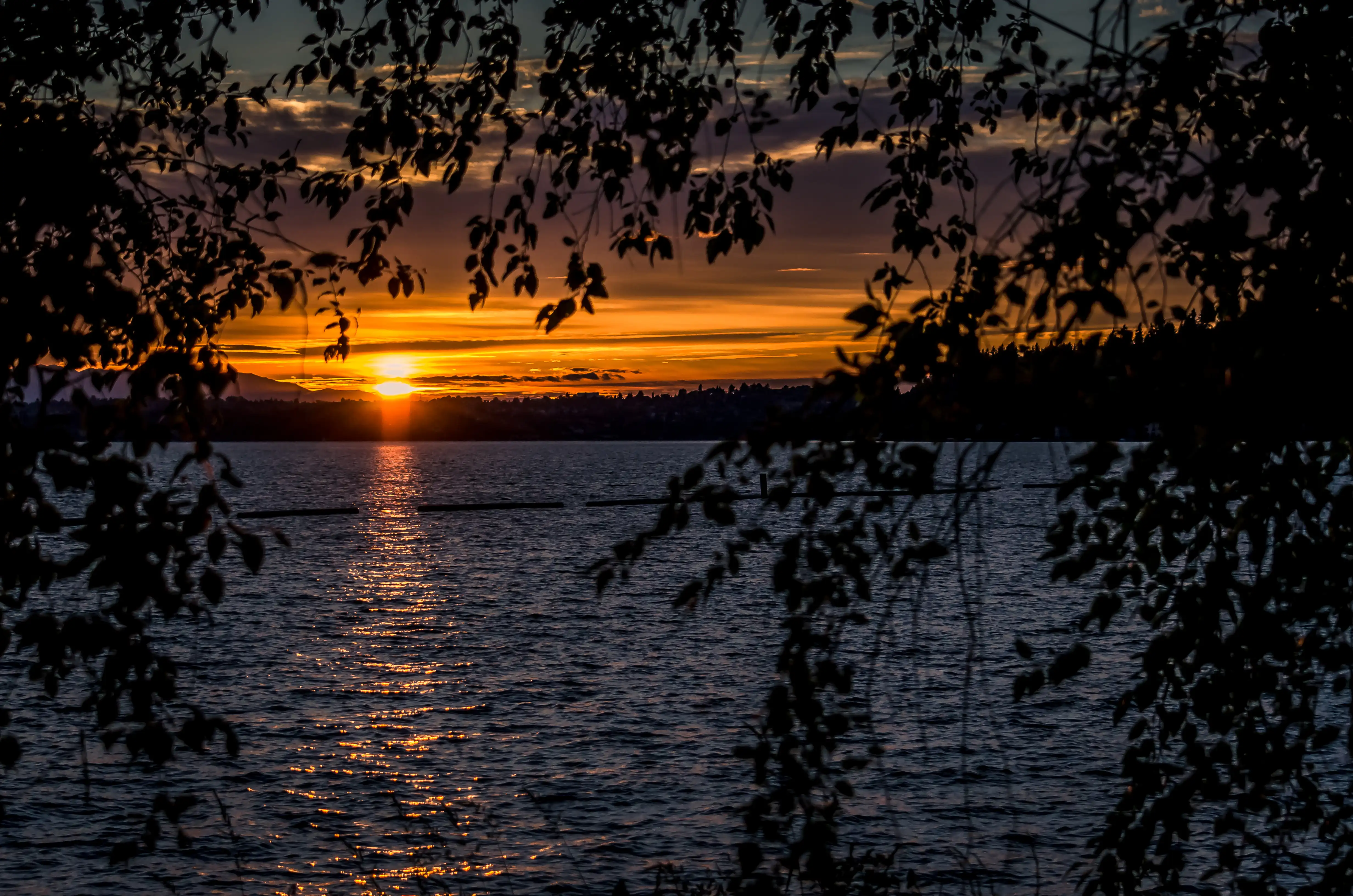
Renton sits in the Cedar River valley, which means it captures more of the Pacific Northwest's marine gray season than hilltop communities do — overcast and wet from roughly November through April. Summers are genuine, dry, and mild, with Lake Washington providing a natural draw from June through September. Snow is rare enough that a light dusting shuts down the valley, but winter ice on the hillside streets is worth factoring if you're considering Kennydale.
🍴 Lifestyle
Gene Coulon Memorial Beach Park, the Cedar River Trail, and the Renton IKEA Performing Arts Center give retirees a practical daily quality-of-life infrastructure without requiring a car to Seattle. The Landing handles routine retail and dining. Downtown Renton's Legacy Square, built as a permanent event venue, adds a civic gathering point that the city didn't have five years ago.
🏚 55+ Communities
Renton's established neighborhoods — particularly Fairwood and portions of Benson Hill — include patio home developments and age-friendly housing stock with single-level layouts and lower-maintenance exteriors. Purpose-built active-adult communities operate in the broader South King County area, and the city's flat valley floor makes it accessible for residents who prefer to avoid steep hillside streets. The retiring guide covers senior-living options in greater detail.
✈ Getting Around
Seattle-Tacoma International Airport is roughly 20 minutes from central Renton via I-405 south to I-5 — one of the closer airport connections of any South King County city. King County Metro serves downtown Renton today; the 2028 Stride S1 transit center will add frequent bus rapid transit to Bellevue and Burien. Most errands within the city are practical by car; the valley floor and The Landing area are the most walkable zones for day-to-day independence.
🏛 Washington Taxes for Retirees — What to Know
- No state income tax — Washington does not tax personal income, so Social Security, pensions, and 401(k)/IRA withdrawals are all untaxed at the state level. There is no state return to file and no retirement exclusion to claim — the rate is simply zero.
- Military and public pensions — Because there is no income tax, military retirement pay and public-employee pensions are untaxed at the state level along with everything else.
- Sales tax is the tradeoff — The state sales tax is 6.5%, and local add-ons bring the combined rate in Renton to 10.5% (Washington State Department of Revenue, Q3 2026 local sales & use tax rate table, July 2026). Groceries and prescription drugs are exempt.
- Property taxes, with senior relief — The effective property tax rate is roughly 0.9%. Homeowners 61+ (or unable to work due to disability, or a qualifying disabled veteran) who own and occupy their home may qualify for a reduction. Income limits are set against each county’s median household income, so the threshold differs by county — check with your county assessor. A separate deferral program is available for those who don’t qualify for the exemption.
- Capital gains tax — but not on retirement income — Washington taxes 7% on long-term capital gains above a $278,000 standard deduction for 2025, rising to 9.9% on gains above $1,000,000. Retirement accounts and real estate sales are both exempt. It therefore does not reach ordinary retirement income or the sale of a home.
- Estate tax — the one to plan for — Unlike most no-income-tax states, Washington has its own estate tax. For deaths on or after July 1, 2026, the exemption is $3 million with graduated rates topping out at 20%. Retirement accounts count toward the taxable estate, so long-time homeowners with sizable balances can cross the line without expecting to.
- No inheritance tax — Washington has no inheritance tax, and no gift tax.
- WA Cares payroll premium — Working Washingtonians pay 0.58% of gross wages into the WA Cares Fund, the state long-term care program, with no income cap. It applies to W-2 wages, so retirees who have stopped working do not pay it — but anyone relocating while still employed will see it. The private-insurance opt-out closed at the end of 2022 and is not available to new applicants; the remaining exemptions are narrow (living outside Washington, military spouses, certain visa holders, and veterans with a 70%+ service-connected rating).
- The Oregon border effect — Oregon has no sales tax, so Washington residents near the river — Vancouver, Camas, Washougal, Longview — often cross over for large purchases. Washington use tax technically applies to goods brought back for use in-state, though it is rarely enforced on ordinary personal purchases.
Tax laws change frequently and individual situations vary. This is general information, not tax advice — always consult a qualified Washington tax professional or CPA for personalized retirement tax planning.
Weekends & Local Favorites in Renton
Where the Community Actually Gathers
Gene Coulon Memorial Beach Park is where Renton shows up on weekends from May through September. The 900-foot pier is the gathering point — people fish off the end, walk the water walk at dusk, and stake out picnic spots near the boat launch. The annual Fourth of July festival draws the whole city to the shoreline. It's the kind of park that makes people who moved here reluctantly eventually admit they made the right call.
The Cedar River Trail Park is the weekday equivalent — a paved multi-use path that follows the Cedar River through the center of the city, accessible from multiple trailheads and used by cyclists, joggers, and dog walkers in roughly equal measure. It connects to longer trail systems heading east toward Maple Valley, which gives it an outsized range for a city trail.
Food, Culture, and What the City Is Building
The dining scene is more international than its size suggests, which reflects Renton's genuinely diverse population. Shaah & Sheeko Cafe on 116th Ave SE is worth knowing about — a Somali-inspired café that opened in 2026 as part of the Cascade Village development, the kind of independent spot that builds neighborhood identity. The NE Sunset Blvd corridor in the Highlands carries a mix of family diners, Asian restaurants, and neighborhood staples that locals run on weekly rotation.
The Renton IKEA Performing Arts Center hosts concerts, theater, and community events that keep cultural programming from requiring a drive to Seattle. Legacy Square in downtown — the new public plaza near South 3rd Street and Logan Avenue — was built with permanent events in mind, not just the 2026 World Cup. These aren't aspirational amenities that exist on a rendering; they're open now.
Getting Out of the City
Renton's position at the edge of the Cascade foothills means serious outdoor access is closer than the address implies. SR-169 east from the city takes you into the Maple Valley corridor and toward the Tiger Mountain trail network. Lake Washington's southeastern shore is literally in the city. On a clear winter day, the view east from the Kennydale hillside toward the Cascade Range reminds you that the Pacific Northwest's version of a mid-size city still comes with mountains as a backdrop.
For the full parks and trails picture, the parks and recreation guide goes deeper on specific trailheads, seasonal conditions, and what's accessible from each neighborhood.
Top Things Locals Say About Renton
The best intel about a city comes from the people who actually live there. Here’s what Renton residents say when newcomers ask the questions everyone’s thinking.
“I knew Renton was close to everything on the map, but I didn't realize how different it feels to live on the Kennydale hillside versus the valley floor until we'd been here a few months. The lake view in the morning and the quick shot to I-405 — nobody told us that combination existed at this price point.”
— Recent Renton home buyer
“What's the most surprising thing about living in Renton?”
Gene Coulon Beach Park genuinely surprises people who moved here without spending time on the lakefront first. You don't expect a 57-acre Lake Washington park with lifeguards, a boat launch, and a pier to be sitting inside city limits. Most people assume that kind of waterfront access means paying prices like Bellevue or Kirkland. In Renton, it's a ten-minute drive from most neighborhoods.
“What do locals love most about Renton?”
The Cedar River Trail through the center of the city is the amenity locals lean on daily in a way visitors don't notice. It's paved, accessible from multiple entry points, and connects east toward Maple Valley — so it functions as a real commuter and recreation trail, not just a weekend path. Coulon gets the press, but the Cedar River is what people actually use on a Tuesday morning.
“What should newcomers to Renton know?”
Rainier Avenue South through the valley is Renton's reliable traffic choke during the evening commute — especially the stretch between downtown and the Tukwila border. Locals who live on the hillside neighborhoods learn to take surface streets earlier or wait it out. The other thing: Renton's west side along the lake feels very different from the southeast end near Benson Hill. Give yourself time to drive both before you commit to a neighborhood.
“Can you live in Renton without a car?”
Right now, mostly no. Downtown and the blocks around The Landing are walkable for daily errands, and the Cedar River Trail handles car-free recreation well. But the hillside neighborhoods — Kennydale, Fairwood, Talbot Hill — require a car for practical daily life. The honest answer is that Renton becomes meaningfully more transit-accessible when the Stride S1 transit center opens at Rainier and Grady in 2028. Until then, budget for a vehicle.
Cities Near Renton
Other communities near Renton worth a look — each with its own character and price point.
| City | Distance | Best For | Vibe | Median Rent | Median Buy |
|---|---|---|---|---|---|
| Tukwila | 6 mi | Budget buyers, airport proximity | Commercial, transit-connected, practical | $1,750 | $578,092 |
| Kent | 8 mi | Families wanting more space for less | Suburban, spacious, working-class roots | $1,850 | $611,760 |
| Bellevue | 10 mi | Eastside tech workers, luxury buyers | Polished, walkable core, premium priced | $2,600 | $1,296,767 |
More Helpful Guides for Renton
Going deeper on Renton? Our blog series covers everything from first-time buying to retiring here — explore the guides below.
Local Expert Takeaway: Renton is a genuinely underrated King County location that most Eastside buyers don't seriously consider until Bellevue prices force the conversation. The Zillow Home Value Index at $720,080 (mid-2026) is real money — but relative to what that gets you in Bellevue or anywhere with comparable I-405 access, it's one of the better value propositions left in the metro. The catch: you need to understand which Renton you're buying into. The valley floor along Rainier Avenue South is a different daily experience than the hillside neighborhoods above it. Gene Coulon Beach Park on Lake Washington's southeast shore, the Cedar River Trail through the city center, and the incoming Stride S1 transit center at Rainier and Grady — together, those three things explain why people who didn't plan to stay long end up putting down roots.
Quick Takeaways & FAQs
✅ Boeing, Wizards of the Coast, and a major regional health system create an unusually diversified local job market that holds demand steady across economic cycles.
⚠️ The valley floor along Rainier Avenue South sees real traffic congestion at peak hours — understanding the I-405/SR-169 interchange before you buy matters more than most relocating buyers realize.
📍 Sound Transit broke ground in February 2026 on a new Renton Transit Center at Rainier Avenue South and South Grady Way, expected to open in 2028 as the anchor stop for the Stride S1 bus rapid transit line to Bellevue and Burien.
Is Renton a good place to live for Boeing employees?
How does Renton compare to Kent for families?
What is the Renton housing market doing in 2026?
What transit options exist for commuting from Renton to Seattle?
Which Renton neighborhoods are most popular with buyers?
Helpful Links for Moving to Renton
Moving to Washington?
Tell us what you need help with and we'll connect you with local resources.
