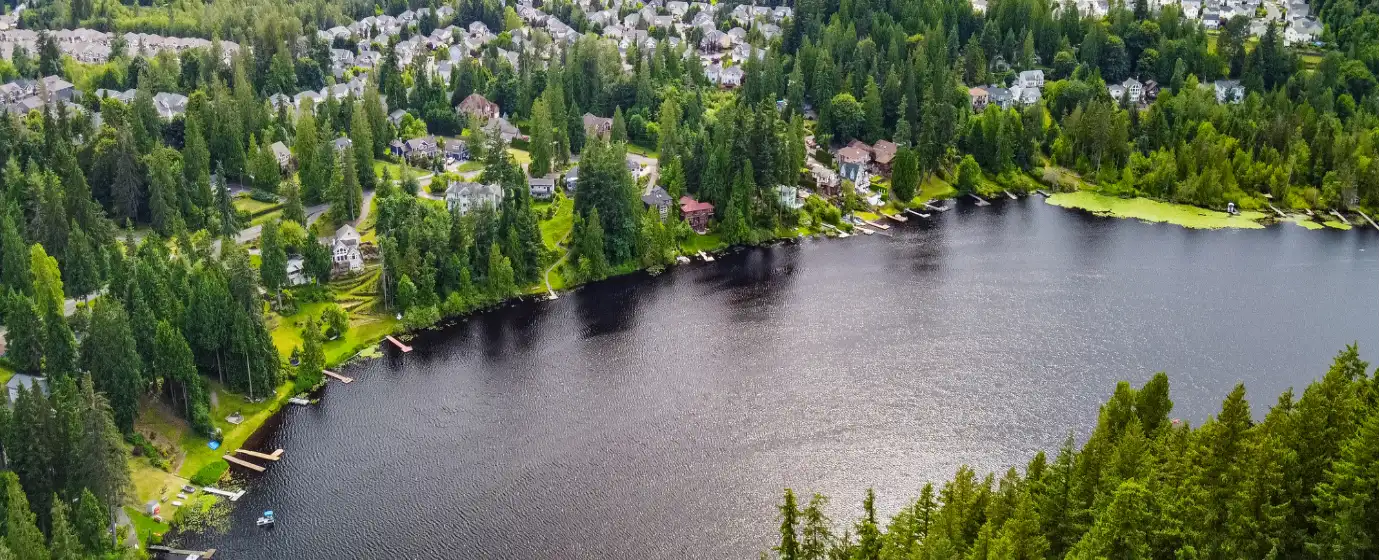
If you're choosing between staying in California and moving to Renton, the decision usually comes down to one thing: how much of your paycheck you want to keep. Renton sits 11 miles southeast of downtown Seattle along the Cedar River where it meets the south end of Lake Washington — an inner-ring suburb with a roughly 25-minute commute to downtown Seattle and direct access to I-405 and SR-167. It is not a bedroom community in the way that phrase usually implies. Boeing has operated here for generations, Wizards of the Coast publishes out of here, and the IKEA Distribution Center and Valley Medical Center round out an employer base that gives the city real economic footing.
What draws Californians specifically is a combination of proximity to Seattle's tech economy, home prices that — while firmly above the national median — are noticeably below what the Bay Area or Los Angeles have demanded for years, and a state income tax rate of exactly zero. The Renton School District holds a B rating, according to Niche, and the Cedar River Trail connects the city to genuine outdoor access, while Gene Coulon Memorial Beach Park on Lake Washington gives the city a summer gathering point that California transplants consistently say they didn't expect to love as much as they do.
The cost picture is real but not without its wrinkles. Washington's sales tax rate is higher than most California metros, property tax assessments aren't capped the way Proposition 13 caps them in California, and the rain from October through April is not metaphorical — it is persistent and gray in a way that catches people off guard even when they think they've prepared for it. Renton's overall cost of living runs substantially below San Francisco, less dramatically below Los Angeles, and the trade-offs are different depending on where in California you're coming from. For details on the full cost of living in Renton, the dedicated page covers utilities, groceries, and transportation in full.
Whether you have a job offer at Boeing, a remote tech role, or you've simply been priced out of the state you grew up in, this guide breaks down the specific financial and lifestyle shifts Californians should expect: the tax math, the housing market reality, what sales tax actually costs at the register, how to properly sever California's reach over your income, and what daily life in Renton is genuinely like once you arrive.
The Income Tax Math: What Zero Percent Actually Means for You
Washington state collects no individual income tax on wages or salaries. For a Californian earning $100,000 a year, one estimate puts that savings at approximately $5,762 annually — money that simply does not leave your paycheck once you establish Washington residency.
California's brackets are progressive and steep. The top marginal rate reaches 13.3% once you include the 1% Mental Health Services Tax surcharge — the highest state income tax rate in the country. Even at middle incomes, California's tax bite is significant: a household earning $150,000 in California is paying a rate that Washington applies to no one.
There is one nuance worth knowing before you file your first Washington return. Washington enacted ESSB 6346 in March 2026, which adds a 9.9% income tax on household income exceeding $1 million annually, effective January 1, 2028. That law faces a potential November 2026 ballot challenge, so its status may shift. For the vast majority of earners, Washington remains entirely income-tax-free.
The Capital Gains Difference
California taxes all capital gains as ordinary income, meaning a long-term gain gets hit at whatever your top rate is — potentially 13.3%. Washington takes a different approach: 7% on long-term capital gains above a $278,000 standard deduction for 2025, rising to 9.9% on gains above $1,000,000. Primary home sales are excluded from that calculation entirely, as are IRA and 401(k) withdrawals and most small-business sales.
If you're selling a California property and rolling proceeds into a Renton purchase, that exemption matters. The gain on a primary residence sale does not trigger Washington's capital gains tax — but you need to have established Washington residency before the sale to have fully left California's reach.
The Sales Tax and Property Tax Reality Check
The income tax savings come with an honest offset. Renton's combined sales tax rate hit 10.5% in January 2026 — 6.5% state plus 4.0% local — which is meaningfully higher than the 8–9% combined rate typical across most California metros.
At the register, that gap is noticeable on big-ticket purchases: furniture, electronics, appliances, a car. On a $30,000 vehicle purchase, the difference between a 9% and a 10.5% rate is $450. For most families, the annual income-tax savings dwarf that figure, but it's a real number and not something to wave off.
Two categories are exempt from Washington's sales tax: groceries and prescription drugs. That matters more than it sounds. Your monthly grocery bill — which in a family of four can easily run $800 or more per month — accumulates zero sales tax. California exempts unprepared food too, so this isn't a new benefit, but it does mean the 10.5% headline rate doesn't hit your most frequent everyday purchases.
Property Tax: No Prop 13 Here
California's Proposition 13 caps assessed value increases at 2% per year as long as you own the home. Washington has no equivalent. Your property tax assessment resets to market value and can increase annually as the market moves.
Renton's effective property tax rate is 0.82%. On the $720,080 typical home value (Zillow Home Value Index, mid-2026), that works out to roughly $5,905 per year. In dollar terms, that is meaningfully lower than what many California markets charge despite Washington lacking Prop 13 protections — Bay Area homeowners who purchased in the last decade often face assessments far above what Prop 13 would suggest, because they bought in at market. If you're a recent California buyer rather than a long-term owner, the Prop 13 comparison may matter less than you think.
The risk is on the upside: if Renton's values continue rising, so does your annual tax bill, with no statutory cap to slow it. That's the genuine planning consideration, not the current rate.
| Tax Category | California | Renton, WA |
|---|---|---|
| State income tax (wages) | 1%–13.3% progressive | 0% (wages/salaries) |
| Top marginal income tax rate | 13.3% (incl. 1% MHST surcharge) | 0% for most earners |
| Capital gains tax | Ordinary income rate (up to 13.3%) | 7% on gains above $278,000 standard deduction (2025); 9.9% on gains above $1,000,000; primary home excluded |
| Combined sales tax (typical) | ~8–9% in most metros | 10.5% (2026) |
| Groceries / Rx drugs | Exempt from sales tax | Exempt from sales tax |
| Effective property tax rate | Varies; Prop 13 caps increases at 2%/yr | 0.82%; no assessment cap |

Home Prices: What Your California Budget Buys in Renton
Renton's typical home value sits at $720,080 (Zillow Home Value Index, mid-2026). That number lands differently depending on where in California you're coming from.
If you're relocating from the Bay Area — where a median San Francisco single-family home can push well past $1.4 million and comparable suburbs often exceed $1.2 million — Renton's figure represents a real reduction in purchase price. If you're coming from a Central Valley city, the gap narrows considerably and in some cases may not exist at all in your favor.
The purchase price is only part of the equation. Because Washington has no income tax, many California buyers find their net monthly financial position improves even when the mortgage payment is similar, because the elimination of state income tax recaptures cash that was previously invisible — withheld before it ever reached a bank account.
What to Expect in the Market
Renton is a real estate market, not a bargain bin. Entry-level single-family homes in reasonable condition start well below the city-wide median in some areas and above it in others. The neighborhoods guide breaks down where those divides fall across Highlands, Kennydale, Talbot Hill, Benson Hill, Fairwood, West Hill, North Renton, and Downtown Renton.
Multiple-offer situations remain common on well-priced properties under $750,000. Californians accustomed to waiving contingencies in Bay Area bidding wars will recognize the dynamic, though Renton's market is less extreme. The first-time homebuyer page covers the buying process and financing options if you want the step-by-step mechanics.
The Healthcare Cost Footnote
One cost comparison Californians consistently ask about: healthcare. Insurance premiums run noticeably below what most California metro residents pay, which adds to the overall financial benefit of the move. The honest trade-off is that specialist care sometimes requires a longer drive than you were used to — routine and primary care is well-covered locally, but advanced specialty appointments may pull you toward Seattle.
Looking to buy in Renton? Estimate your payment.
Enter your numbers to see an estimated monthly mortgage payment.
Estimate only. Excludes HOA fees and mortgage insurance. The interest rate above is a starting point, not a quoted rate — replace it with your own to see real numbers. Insurance is a flat placeholder, not a Renton quote.
Severing California's Tax Reach — The Steps That Actually Matter
California is aggressive about collecting tax from former residents. The Franchise Tax Board does not accept a U-Haul receipt as proof of departure. If you move to Renton but keep close California ties — a second home, frequent visits, a business entity registered there — California may assert that you never fully left.
The three practical steps that establish Washington residency and cut California's reach: get a Washington driver's license within 30 days of arriving, register to vote in Washington, and spend fewer than 45 days per year in California going forward. The 45-day rule is the one that catches people. Summer trips back to see family, a vacation property in Tahoe, a parent's illness that keeps you in-state longer than expected — these all count, and California auditors track them.
What Californians Often Underestimate
The first-year filing is where people get tripped up. In the year you move, you are a part-year resident of both states. California taxes all income you earned while you were still a California resident, and it taxes California-source income even after you leave. A W-2 job that you held entirely in California before your move date? California taxes that fully. Stock vesting that traces back to California employment? California may assert a portion. Consulting a tax professional familiar with multi-state residency transitions before your first Washington tax season is worth the cost.
Remote workers have a specific question to answer: does your employer still withhold California taxes? Some do, incorrectly, after a relocation. Washington has no income tax return to file — but you may need to file a California nonresident return showing $0 California-source income to formally close out your California tax relationship. It is not automatic.
One planning note for high earners: Washington's new 9.9% tax on household income exceeding $1 million annually is enacted for 2028 but subject to a November 2026 ballot challenge. If that describes your situation, watch this closely — it does not change the math for most earners, but it is not the scenario to discover mid-filing season.
Daily Life in Renton: What Californians Don't See Coming
Six months in, the thing most California transplants mention first is not the income tax savings and not the traffic on I-405. It's the dark. October through February in Renton means overcast skies, persistent drizzle, and sunset before 4:30 p.m. in December. Californians who have lived their whole adult lives with 300-plus days of sun a year often underestimate this, even when they know it intellectually.
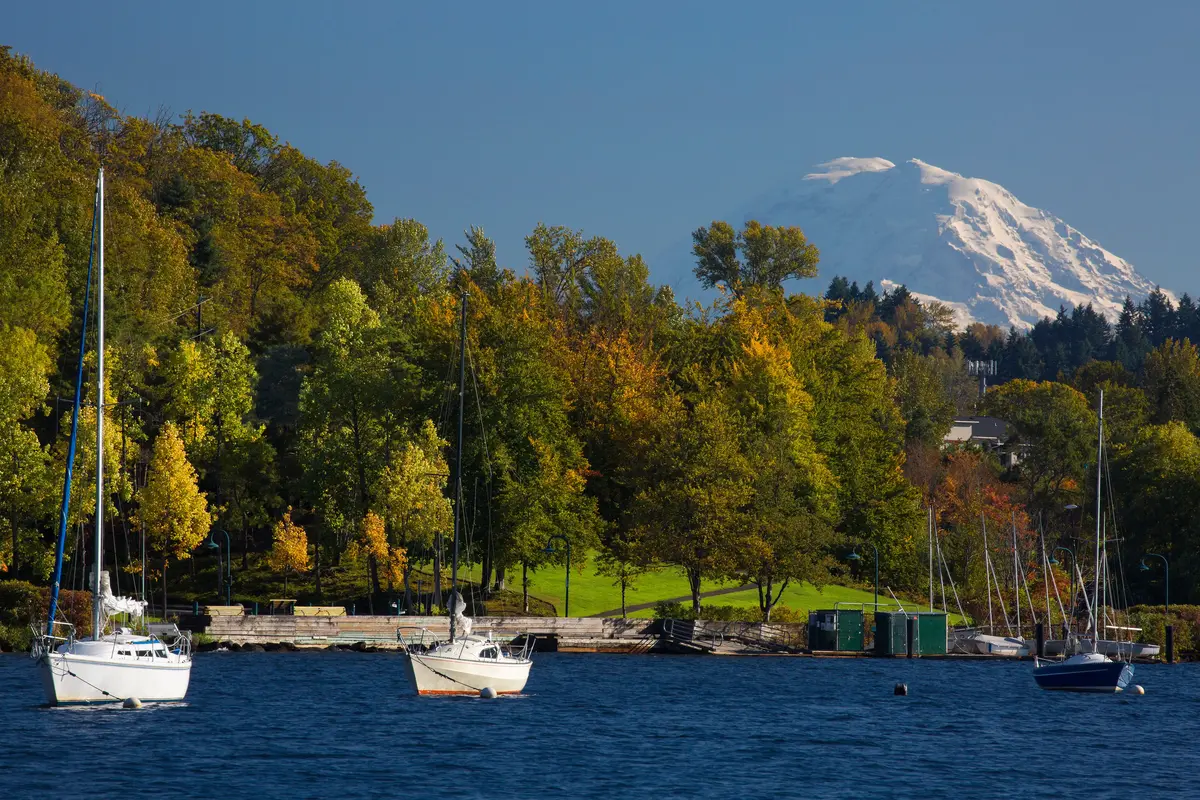
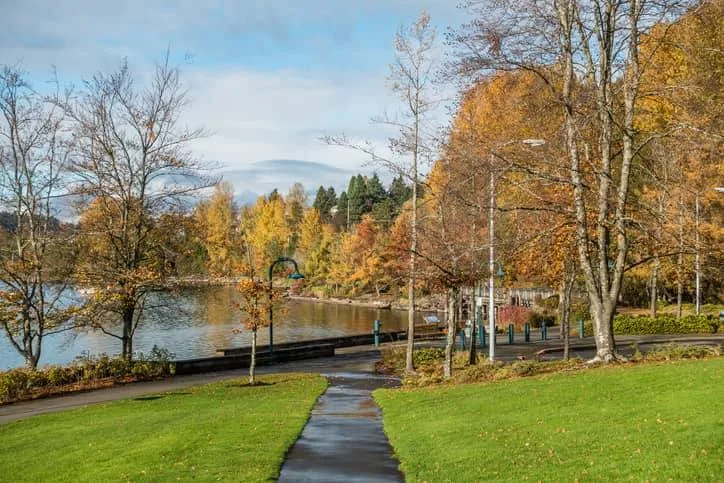
The flip side is the summer. June through September in Renton is genuinely exceptional — Gene Coulon Memorial Beach Park on Lake Washington fills up with families, paddleboarders, and people who look like they can't believe they get to live here. The Cedar River Trail gives runners and cyclists a paved path right through the city. That seasonal whipsaw — grinding gray winter into an almost implausibly beautiful Pacific Northwest summer — is the thing that converts people who were unsure.
What Locals Know About Getting Around
The commute to Seattle is real but manageable when it works. Renton's position along I-405 and its proximity to SR-167 make it an accessible hub, but those same corridors carry significant freight and commuter volume. For a deeper look at the traffic patterns and commute options, the living in Renton guide covers it with the specificity worth reading before you decide where in Renton to buy.
For day-to-day life, The Landing on the north end of the city provides the practical retail anchors — big-box stores, national chains, the kind of errands that used to require a longer drive. Downtown Renton along South 3rd Street is where you'll find the independent side of things, including Boon Boona Coffee on S 3rd St, a Renton-rooted coffee operation that California-transplant coffee drinkers tend to discover quickly. The Melrose Grill on Houser Way S has been a local fixture for well over a century — a straightforward steakhouse with the kind of institutional presence that almost no California city can match for sheer longevity.
Why Some Californians Leave Renton
The honest reason people leave, when they do, is usually one of two things: they miss California's climate badly enough that the tax math stops mattering to them, or they find that Renton's pace and density — real suburb, not urban neighborhood — doesn't scratch the itch they had after living in a walkable California city. For safety statistics or how the school district performs in detail, those pages cover the data. Renton is not the right move for everyone, and the people who struggle here usually knew on some level before they went to escrow.
Local Expert Takeaway: The income tax savings are real — roughly $5,762 per year at a $100,000 income level — but Renton's move makes the most financial sense for Californians who are genuinely relocating, not straddling two states. Get your Washington driver's license in the first 30 days, watch your California day-count carefully, and understand that the 10.5% sales tax is real even though it doesn't touch groceries or prescriptions. Grab a coffee at Boon Boona on S 3rd St when you're doing your neighborhood walkaround — it is a better orientation to what Renton's independent commercial strip actually feels like than any open house tour will give you.
Quick Takeaways & FAQs
✅ Washington's zero state income tax saves a $100,000-income earner approximately $5,762 per year compared to California — one of the most concrete financial wins of the move.
⚠️ Renton's 10.5% combined sales tax rate is noticeably higher than most California metros, and there is no Washington equivalent to California's Proposition 13 property tax assessment cap — your tax bill can rise with the market.
📍 California's Franchise Tax Board aggressively audits former residents: spend fewer than 45 days per year in California after moving, get a Washington driver's license within 30 days, and file a California nonresident return in your first part-year to formally close out your tax relationship.
Do I really pay zero state income tax in Renton, Washington?
How does Renton's sales tax compare to what I paid in California?
Is Renton's $720,080 typical home price significantly cheaper than what I'd pay in California?
How do I make sure California stops taxing me after I move to Renton?
What is Washington's capital gains tax, and does it affect my home sale in California?
Moving to Washington?
Tell us what you need help with and we'll connect you with local resources.
