
Maybe you've been priced out of Seattle and someone mentioned Renton. Maybe you're relocating for Boeing, or for a role at Wizards of the Coast, and you're trying to figure out whether the salary actually stretches here. The honest answer: Renton sits in a genuinely awkward middle zone — noticeably more affordable than Seattle and Bellevue, but still well above the national average in almost every category. The Zillow Home Value Index (ZHVI) puts the typical home at $720,080 as of mid-2026, and the overall cost of living runs roughly 22–43% above the U.S. norm depending on which index you use. That's not a cheap city. But it's a different conversation than writing a Seattle check.
What drives Renton's number is proximity. You're 25 minutes from downtown Seattle without traffic, sitting at the south end of Lake Washington in King County, served by I-405 and SR-167. Employers like Boeing's aerospace manufacturing operations and a regional distribution hub for IKEA all anchor the local workforce. The median household income in Renton is $100,432 — high enough that the city has genuine economic range, but not so high that everyone here is comfortable. About 46% of Renton's housing units are renter-occupied, which means this is a real mixed-tenure city, not a suburb of homeowners only.
Washington state's biggest cost-of-living advantage for Renton residents is the one that never shows up in a grocery bill: there is no state personal income tax. That's real money, especially for households earning near or above the median. The trade-off is a 10.5% combined sales tax rate on most purchases — one of the higher local rates in the state. Groceries are tax-exempt, which softens that hit, but retail, restaurants, and services are not. Utilities run cheaper than most metros because of the region's hydroelectric grid: Puget Sound Energy charges approximately 15 cents per kWh, roughly 25% below the national average.
Whether you're running the numbers on a first apartment, underwriting a purchase, or comparing Renton against Kent or Newcastle, the sections below break down housing, everyday costs, a side-by-side city comparison, and the full tax picture — so you can make the call with real figures rather than guesses.
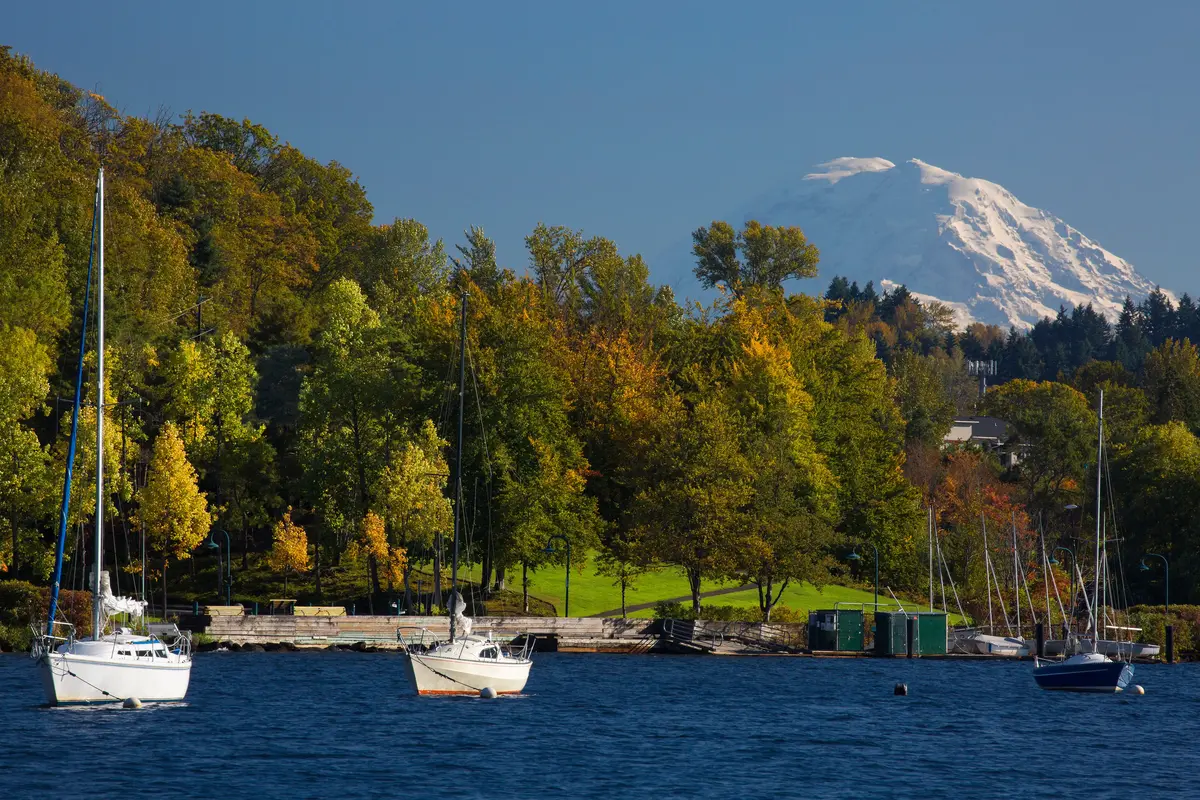
What It Really Costs to Live in Renton
Renton is affordable relative to its immediate neighbors — not relative to most of America. The Zillow Home Value Index (ZHVI) for Renton stood at $720,080 in mid-2026, placing it noticeably below Seattle and well below Bellevue, but still far above the national median. Renters see a similar pattern: average apartment rents run above the national norm, though the gap is less dramatic than it is for ownership.
The city's cost profile is shaped by two things: King County land prices, which compress affordability across the entire metro, and Renton's relative position as one of the more accessible cities within that county. Buyers who can't make a Seattle or Bellevue budget work often land here — which sustains demand and keeps prices elevated even as Renton sits in what the market calls the "value" tier of the Eastside.
On a day-to-day basis, the biggest budget variables are housing and the 10.5% sales tax on non-grocery purchases. Groceries cost about 16% above the national average on their own, so a household that cooks at home still pays a Pacific Northwest premium — just without the tax bite. The no-income-tax advantage is real and compounds over time, particularly for dual-income households earning near or above the $100,432 median household income.
Housing: Rent vs Buy in Renton
The Buying Side
The $720,080 Zillow Home Value Index figure is the city-wide benchmark — but the real range runs wider than that single number implies. For area-specific price detail, the Best Neighborhoods guide breaks those down; this page covers the city-wide picture only.
The effective property tax rate in King County — and for Renton specifically — is approximately 0.82%. That's moderate by Washington state standards and meaningfully lower than many West Coast metros. The engine's mortgage calculator below can run your specific scenario; this page won't quote monthly payment totals, because those shift with rate, down payment, and insurance in ways a static number can't capture honestly.
The Renting Side
Renton's rental market cooled noticeably through mid-2026. A two-bedroom apartment averages $2,282/month (RentCafe/Yardi Matrix, June 2026), down about 1.58% year-over-year. One-bedrooms average $1,904/month. That's still a significant monthly commitment, but it's meaningfully below Seattle rents for comparable units.
Renting makes sense here if you're new to the area and want to learn the city before committing, or if you're on a short-term assignment with Boeing or another employer. Buying makes sense if you have the down payment, plan to stay at least five to seven years, and want to capture the no-income-tax advantage while building equity in a market that has historically tracked King County appreciation curves.

Everyday Costs Beyond Housing in Renton
Utilities are one of Renton's quiet advantages. Puget Sound Energy's electricity rate of approximately 15 cents per kWh — driven by the region's hydroelectric grid — sits well below national norms. A typical household running 1,000 kWh of electricity, plus water and wastewater service, lands around $296/month in combined utility costs. Trash pickup through Republic Services is billed separately and adds to that total.
Groceries cost more here than in most U.S. cities — roughly 16% above the national average — but the Washington state tax exemption on food purchases means you're not paying the 10.5% sales tax on top of those elevated shelf prices. Eating out is a different story: a casual sit-down meal runs about $25 per person, a fast-food combo averages $12, and a mid-range dinner for two lands around $92.50. Internet service adds $65–$100/month depending on provider and speed tier.
| Category | Typical Monthly Cost | Notes |
|---|---|---|
| Housing (2BR rent) | $2,100–$2,400 | Based on RentCafe/Yardi Matrix June 2026 average of $2,282; owners: use the mortgage calculator above for a purchase estimate |
| Utilities | $296–$360 | Electricity, water, wastewater; trash billed separately by Republic Services |
| Groceries | $550–$750 | Approximately 16% above national average; no sales tax on most grocery items |
| Transportation & Gas | $200–$400 | Varies widely by commute length and transit use; King County Metro serves Renton |
| Phone & Internet | $130–$200 | Internet typically $65–$100/month; phone plan added on top |
| Dining Out & Entertainment | $200–$500 | 10.5% sales tax applies to restaurant meals; casual meal ~$25/person |
| Miscellaneous / Personal | $150–$300 | Clothing, household goods, personal care — all subject to 10.5% sales tax |
These are estimates for a renter household; your actual total shifts with lifestyle, family size, and how often you drive to Seattle versus staying local.
Looking to buy in Renton? Estimate your payment.
Enter your numbers to see an estimated monthly mortgage payment.
Estimate only. Excludes HOA fees and mortgage insurance. The interest rate above is a starting point, not a quoted rate — replace it with your own to see real numbers. Insurance is a flat placeholder, not a Renton quote.
Renton vs Nearby Cities: Cost Comparison
| City | Median Home Price | Typical 2BR Rent | Cost vs Renton |
|---|---|---|---|
| Renton | $720,080 | ~$2,282/mo | Baseline |
| Seattle | ~$870,000 | ~$2,800/mo | Noticeably higher |
| Bellevue | ~$1,300,000 | ~$3,100/mo | Substantially higher |
| Newcastle | ~$1,000,000 | Limited rental inventory | Higher — smaller, ownership-heavy city |
| Tukwila | ~$580,000 | ~$2,000/mo | Somewhat cheaper |
| Kent | ~$560,000 | ~$1,900/mo | Noticeably cheaper |
The gap between Renton and Kent or Tukwila is real but not dramatic for renters; for buyers, the difference in median price is meaningful, and it's worth understanding what you're trading when you move south on SR-167.
Newcastle sits in an interesting position — smaller, quieter, and ownership-heavy, with prices that clear Renton's median by a significant margin despite being just a few miles away along the ridge above Lake Washington.
Taxes & the Bottom Line for Renton
No Income Tax — But Sales Tax Runs High
Washington state levies no personal income tax. For a household earning at or above Renton's $100,432 median, this is a genuine structural advantage — money that would flow to the state in California, Oregon, or most of the Midwest stays in your pocket. It's one of the primary reasons Pacific Northwest cities attract remote workers and tech-adjacent employees who can work from anywhere.
The offset is Renton's 10.5% combined sales tax rate, which took effect January 1, 2026 (up from 10.3%), partly to fund a local law enforcement program per Washington State Department of Revenue. That's among the higher local rates in Washington. Groceries are exempt, which helps budget-conscious households, but most retail, dining, and services carry the full rate.
Property Tax
The effective property tax rate in Renton is approximately 0.82% — moderate for King County and well below rates common in Texas, Illinois, or New Jersey. On a home priced at the city-wide Zillow Home Value Index figure noted earlier in this guide, annual property taxes land in the neighborhood of $5,900. The mortgage calculator above can build this into a full monthly ownership estimate.
Who the Budget Works For
Renton tends to fit dual-income households with a combined income well above the city median, especially those who can use the no-income-tax advantage to offset the cost of ownership. Single-income buyers at or below $100,000 will find the math tight — not impossible, but requiring either a substantial down payment or a willingness to stretch on the monthly commitment.
Renters earning $75,000–$90,000 can live reasonably comfortably in a one-bedroom, with the two-bedroom threshold requiring more financial flexibility. The people who tend to find Renton a stretch are those relocating from lower-cost metros — Spokane, Boise, or the Midwest — without a significant raise or equity event to fund the transition. The city's costs are real, and the no-income-tax advantage, while meaningful, doesn't single-handedly bridge a large income gap.

Local Expert Takeaway: Renton's cost advantage over Seattle is real — roughly 20% lower on housing — but it's easy to underestimate the combined weight of the 10.5% sales tax, grocery prices running 16% above national norms, and King County land values that keep even entry-level ownership well above what most of the country pays. The no-income-tax benefit is the genuine offset, and for households earning near or above the $100,432 median, it compounds meaningfully over time. The people who make Renton work financially are usually those who came in knowing the full picture: they budgeted for elevated groceries, they ran the tax math, and they chose Renton deliberately over Kent for the Seattle access, or over Bellevue for the price relief. The ones who feel sticker shock at month three are usually the ones who anchored to the national average and didn't account for King County's structural floor.
Quick Takeaways & FAQs
✅ Washington's no personal income tax is a genuine financial advantage for Renton residents — particularly for dual-income households earning near or above the $100,432 city median.
⚠️ Renton's 10.5% combined sales tax rate (effective January 2026) is one of the higher local rates in Washington, and it applies to dining, retail, and services — not just big purchases.
📍 A two-bedroom apartment in Renton averaged $2,282/month in June 2026 (RentCafe/Yardi Matrix), making it a meaningful step below Seattle rents while still sitting well above the national average.
What is the typical home price in Renton, WA?
How much is rent in Renton?
Does Washington state have an income tax?
What is Renton's property tax rate?
Is Renton cheaper than Seattle?
Moving to Washington?
Tell us what you need help with and we'll connect you with local resources.
