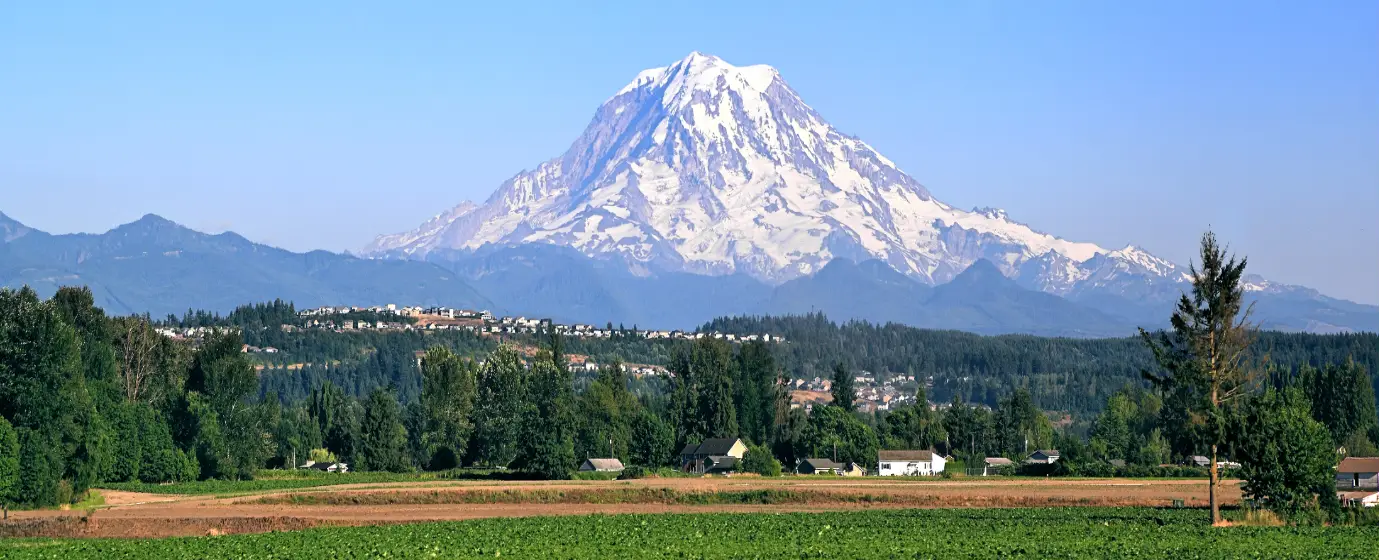
What Is Living in Maple Valley, Washington Like?
You've probably done the math already. Seattle prices are brutal, the Eastside is worse, and someone — a coworker, a realtor, a friend who made the leap two years ago — mentioned Maple Valley. The city sits in the southeastern corner of King County, about 25 miles from downtown Seattle, anchored by SR-169 (the Maple Valley Highway) running northwest toward Renton and I-405. What surprises most people isn't the scenery — though 108-acre Lake Wilderness Park and the Cedar River Trail corridor genuinely earn their reputation — it's how complete the community feels for a city of fewer than 30,000 people. This isn't a strip-mall suburb with nothing between the cul-de-sacs. It's a place where Tahoma School District pulls families from surrounding areas on purpose, and where that demand shapes nearly everything about the housing market.
The economic backbone here is a classic Pacific Northwest blend of tech commuters and local anchors. Amazon operates a logistics and delivery station in the area, Fred Meyer serves as a major retail employer, and the Tahoma School District — headquartered right here in Maple Valley — employs hundreds. Microsoft's Redmond campus sits within a manageable commute distance for Eastside tech workers who want space and a yard without paying Bellevue prices. The median household income of $152,885 tells you something important: this is not a transitional market. The people buying here are established, well-employed, and specifically choosing Maple Valley for the school district, the lot sizes, and the relative quiet. The poverty rate sits at just 4.77%, one of the lowest in King County.
On the cost side, Maple Valley reads as a relief compared to Kirkland or Issaquah — though calling it affordable in absolute terms requires some honesty. The Zillow Home Value Index put the typical home value at $759,950 in June 2026, and roughly 84% of households here are owner-occupied, which says everything about how this community thinks about itself. The rental market is thin almost by design. Day-to-day life revolves around the Four Corners commercial district, the farmers' market running Saturdays at the Maple Valley Legacy Site from May through October, and the kind of outdoor access — trails, a swimming beach, disc golf — that Seattle residents drive an hour to find. Grocery runs are easy, independent dining options are growing, and the Switcher's Landing mixed-use development under construction as of 2025 signals the city's deliberate push toward becoming more self-sustaining rather than purely a bedroom community.
Whether you're weighing a move from the Eastside, being priced out of Renton, or relocating to the Seattle metro for the first time, the sections below break down Maple Valley's neighborhoods, housing market, commute realities, schools, local favorites, and what daily life here actually looks like month to month.
Maple Valley at a Glance
Looking to buy in Maple Valley? Estimate your payment.
Enter your numbers to see an estimated monthly mortgage payment.
Estimate only. Excludes HOA fees and mortgage insurance. The interest rate above is a starting point, not a quoted rate — replace it with your own to see real numbers. Insurance is a flat placeholder, not a Maple Valley quote.
Why Are People Moving to Maple Valley?
The Tahoma School District Pull
The single most reliable driver of Maple Valley's housing demand is the Tahoma School District, which holds an A rating, according to Niche, and serves approximately 9,256 students across 10 schools. Parents with school-age children who've done any comparison shopping in King County quickly discover that Tahoma is one of the district-level options that reliably outperforms its peers — and unlike some high-performing districts, it's attached to a city where housing, while expensive, hasn't fully priced out non-tech workers. That combination is rare enough that families move here specifically to land in-boundary, and they compete hard for it.
The student-teacher ratio runs at roughly 18:1 district-wide, which is worth understanding before assuming Tahoma is a small-town boutique district. It's a real, sizable suburban system — well-resourced, with strong extracurricular programming under the Washington Interscholastic Activities Association (WIAA). For a deeper look at individual schools and boundary quirks, see the Maple Valley schools page.
Space, Ownership, and the Math That Brings People Here
Maple Valley's housing stock skews heavily toward single-family homes built from the 1990s onward — master-planned subdivisions with newer systems, open floor plans, and HOA-maintained streets. That's not an accident. The city incorporated in 1997 and grew up almost entirely in the era of the attached garage and the three-car driveway. For buyers coming from older, denser Seattle neighborhoods, the lot sizes alone can feel like a revelation.
About 84% of households here are owner-occupied. That figure isn't just a demographic curiosity — it means the community is dominated by people who've committed to staying, which shows up in neighborhood upkeep, school levy support, and the general social texture of the place. Renters are a distinct minority, and the rental inventory reflects that.
Who Actually Moves Here
| Buyer / Mover Type | What Draws Them | Best Fit |
|---|---|---|
| Tech commuters | Lower price per sq ft than Eastside cities; SR-169 to I-405 puts Bellevue and Redmond within reach | Commuter Tech |
| Families with school-age children | Tahoma School District's strong rating; community feel; parks and trails within city limits | Families School |
| Seattle renters becoming owners | Ownership is achievable here in a way it isn't in the city; strong owner-occupant community | First-Time Value |
| Eastside downsizers | More land per dollar; quieter streets; familiar Pacific Northwest character without Kirkland prices | Quiet Nature |
| Outdoor-oriented buyers | Cedar River Trail, Lake Wilderness Park, Green to Cedar River Trail corridor — all within city limits | Nature Views |
| Remote workers | Space for a home office, fast-growing local amenities, no daily commute requirement | Privacy Quiet |
The city's Switcher's Landing mixed-use development and the King County-owned Summit Place parcel being planned for job-creating uses suggest the employment base will grow locally over the next several years — gradually reducing the commute dependency that currently defines the city's economy.
What Daily Life Feels Like in Maple Valley
The Geographic Reality
SR-169 is Maple Valley's main street and its main limitation at the same time. Most of the city's commercial activity — the Four Corners district, the grocery anchors, the gas stations, the fast-casual dining — clusters near the SR-169 and SR-516 intersection. If you live near that corridor, daily errands are genuinely convenient. If you buy deeper into a subdivision off 240th or toward Cherokee Bay, you're driving to drive somewhere else first.
That's not unusual for a King County suburb of this size, but it's worth calibrating before you fall in love with a house on a quiet cul-de-sac. The tradeoff is real: more distance from the commercial core usually means more trees, more lot size, and more quiet.
What a Saturday Actually Looks Like
Between May and October, Saturday mornings at the Maple Valley Legacy Site mean the farmers' market — local produce, prepared food, flowers, the kind of crowd that makes a small city feel like a real town. The rest of the weekend usually involves Lake Wilderness Park in some form: the 108-acre park has a swimming beach, a disc golf course, and the adjacent arboretum for when you want something quieter. The arboretum also runs free summer concerts and a fall plant sale that draws visitors from across the south King County region.
The city has a handful of established bar-and-grill spots that function as genuine neighborhood anchors — the kind of place where post-soccer-game dinners happen on Friday evenings and regulars know the staff by name.
What Surprises People After Six Months
New residents consistently underestimate how much of their social life ends up organized around the school calendar. Tahoma's sports programs, the arboretum events, the Legacy Site activities — the community rhythm here is heavily family-structured in a way that energizes parents and can feel quieter than expected for adults without kids in the district. That's not a criticism, just an accurate read on who built this city and who keeps it running.
The other surprise is how quickly the landscape shifts once you leave the SR-169 corridor. Five minutes east of Four Corners and you're in genuine second-growth forest, with deer in the front yards and no streetlights. Maple Valley's edge is sharp in a way that Pacific Northwest suburbs often are — urban one block, rural the next.
The Maple Valley Housing Market Right Now
Where Prices Stand
The Zillow Home Value Index placed Maple Valley's typical home value at $759,950 as of June 2026. That figure reflects a market built almost entirely on single-family homes — Maple Valley's ownership rate of approximately 84% means condos and multifamily product are a small slice of what actually trades. Most of what sells here is a three- to five-bedroom house in a planned subdivision, with a two-car garage and an HOA.
Compared to Issaquah or Sammamish to the north, Maple Valley offers meaningfully more square footage per dollar. The gap with Bellevue or Kirkland is wider still. That relative value is the market's central argument, and it's why well-priced homes near the Tahoma school boundaries draw multiple offers even when the broader King County market softens.
What Drives Competition
School district demand is the persistent accelerant. Families who've identified Tahoma as their target tend to move with conviction — they've done the research, they know what they want, and they aren't browsing casually. That concentration of motivated, qualified buyers means the lower end of the market (relative to the city median) moves fastest, because it's accessible to the widest pool.
The inventory mix skews toward 1990s-and-later construction, which matters for buyers focused on systems age and deferred maintenance. Newer builds in HOA communities come with the predictability of recent mechanical systems and maintained common areas; the compromise is HOA dues and architectural consistency. Some areas vary significantly in price — the Maple Valley neighborhoods guide breaks down the character and feel of each area in detail.
The Ownership-Oriented Reality
At roughly 84% owner-occupied, Maple Valley is one of the more ownership-concentrated cities in King County. The rental market here is thin, which keeps rental inventory tight and makes owning the default assumption in most neighborhood conversations. Buyers moving from renter-heavy Seattle neighborhoods sometimes find the culture shift notable — HOA meetings are attended, neighbors know each other, and the social infrastructure is built around long-term residents rather than turnover. For a full picture of what homes cost relative to income and local tax rates, the cost of living page covers the numbers in detail.
Maple Valley Neighborhoods
Maple Valley has several distinct areas — each with its own character and appeal. Here’s a breakdown to help you narrow down where to focus your home search.
🏡 Wilderness
One of Maple Valley's more established residential pockets, Wilderness suits families who want proximity to Lake Wilderness Park without trading away quiet streets — the park's swimming beach and arboretum are a short walk or bike ride from most addresses here.
🏠 Wilderness Village
A planned community with HOA-maintained common areas and consistent single-family homes, Wilderness Village draws buyers who want predictable upkeep and neighborhood cohesion; it sits close enough to the Four Corners corridor to keep daily errands manageable.
🌳 Valley Green
Valley Green offers a mix of lot sizes and home vintages that gives it slightly more variety than the city's newer subdivisions — a good fit for buyers who want established landscaping and mature trees alongside the typical Maple Valley school-district access.
🏘 Cedar Downs
Cedar Downs sits closer to the Cedar River corridor and appeals to buyers prioritizing trail access and a quieter residential feel; the surrounding second-growth forest gives the area a more woodsy character than neighborhoods near the commercial core.
🏔 Cherokee Bay
Cherokee Bay is one of Maple Valley's more secluded residential areas, with homes set back from the main arterials and a neighborhood feel that skews toward privacy over convenience — better for buyers who've specifically chosen to trade a shorter errand run for more space and quiet.
🌆 Elk Run
Elk Run's single-family homes and proximity to the city's eastern edge give it a transitional character between Maple Valley's suburban core and the rural King County land beyond — suited to buyers who want a yard, Tahoma District schools, and the sense that the city doesn't press in on all sides.
Pros & Cons of Living in Maple Valley
The Pros
- Consistently ranked among Washington's safest cities with strong Tahoma schools
- abundant lakes
- trails
- and parks for outdoor recreation
- small-town community feel with a growing commercial core at Four Corners
- reasonably convenient highway access to Seattle
The Cons
- Home prices and rents run well above national and many regional averages
- very car-dependent with minimal public transit
- commute into Seattle/Bellevue can be long during peak traffic
Getting Around & Commuting in Maple Valley
The SR-169 Dependency
Every commute out of Maple Valley starts on SR-169, also called the Maple Valley Highway. There is no workaround — it's the only meaningful arterial heading northwest toward Renton, and it funnels the entire city's morning traffic into a single two-lane corridor before it widens near Renton. The roughly 20-minute drive to Renton and I-405 under light conditions becomes 35 to 50 minutes during peak morning hours. Anyone who lives here and commutes to Seattle, Bellevue, or Redmond has made peace with that number.
SR-516 provides a second axis west toward Covington and Kent, which matters for buyers whose workplaces sit along the 167 corridor. Kent Station and Auburn are reachable without touching I-405, which can be a genuine advantage depending on where you're headed.
Driving to Seattle
The Seattle drive — downtown to downtown — runs roughly 45 minutes in normal conditions, longer during the predictable morning crush. The route typically means SR-169 to Renton, then I-405 north to I-90 or SR-520. Buyers who've relocated from genuinely car-dependent metros sometimes find this manageable; people moving from Renton or Bellevue find the extra leg noticeable within the first few weeks.
Remote and hybrid work arrangements have meaningfully changed how residents experience this commute. Two or three days a week in the office is a different calculation than five — and Maple Valley's housing market has benefited from exactly that shift, drawing buyers who once would have needed to live closer in.
Transit Options
King County Metro Route 907 connects Maple Valley — specifically the SR-169 and SE 231st St stop — to the Renton Transit Center, where riders can transfer to routes reaching downtown Seattle. The full transit trip runs approximately 1 hour and 14 minutes. It works for riders who can structure their schedule around it; it doesn't work as a drop-in replacement for a car.
Maple Valley is not a walkable city by any standard measure, and transit coverage outside the SR-169 spine is sparse. If you're moving here car-free by necessity rather than by choice, that's the honest picture. Most households run two vehicles, and the city's layout assumes it.
Commute Benchmarks at a Glance
| Destination | Typical Drive (off-peak) | Peak Estimate | Primary Route |
|---|---|---|---|
| Renton / I-405 | ~20 min | 35–50 min | SR-169 NW |
| Downtown Seattle | ~45 min | 55–75 min | SR-169 → I-405 → I-90 or SR-520 |
| Bellevue / Eastside | ~35 min | 50–65 min | SR-169 → I-405 N |
| Redmond / Microsoft | ~45 min | 60–75 min | SR-169 → I-405 N → SR-520 |
| Kent / Auburn | ~20 min | 30–40 min | SR-516 W → SR-167 |
| SeaTac Airport | ~30 min | 40–55 min | SR-516 W → I-5 N |
The SR-169 chokepoint between Maple Valley and Renton is the one variable that shapes everything else on this table — peak-hour adds are not evenly distributed, and the northbound morning window (roughly 7:00–9:00 a.m.) is where the gap between off-peak and peak is widest.
Schools in Maple Valley
Families relocating to Maple Valley have public, private, and higher-education options nearby. Here’s a quick overview.
🎓 School District
Tahoma School District serves K–12 students across Maple Valley and the surrounding area. Rated A (source: Niche.com).
🏆 Graduation Rate
The 4-year high-school graduation rate here is approximately 93.4%.
📚 Higher Education
Washington’s public universities — the University of Washington, Washington State University, and Western Washington University — offer four-year degrees statewide, with a network of 34 community and technical colleges (SBCTC) providing two-year and workforce programs.
🌐 Online Learning
University of Washington Continuum College and Washington State University Online offer fully accredited online degrees for remote learners across the state.
Safety in Maple Valley
A quick look at how Maple Valley compares on the numbers that matter most when weighing a neighborhood or a move.
🛡 Violent Crime
Approximately 1 per 1,000 residents.
🔒 Property Crime
Approximately 14.7 per 1,000 residents.
Compared to the FBI’s most recent national data (2024), Maple Valley’s violent crime is below the national average (about 3.6 per 1,000), and property crime is below the national average (about 17.6 per 1,000).
Against Washington as a whole, Maple Valley’s violent crime is roughly a third of the state average, and property crime is roughly half the state average (Bureau of Justice Statistics, Crime Known to Law Enforcement, 2024 (tables 2 and 3)).
Crime rates can vary a lot within a single city, so the citywide numbers above are only a starting point. Some neighborhoods in Maple Valley run well below these averages, while others run higher — the kind of block-by-block detail that matters most when you’re actually choosing where to live. The full guide below breaks it down neighborhood by neighborhood.
Working in Maple Valley
Maple Valley’s largest employers span several industries — here are some of the anchors of the local job market.
💼 Amazon
Logistics/delivery station
🛒 Fred Meyer
Retail
🎓 Tahoma School District
Education
💼 Lakefield Veterinary Group
Veterinary services
💻 Microsoft
Tech, nearby Redmond commute hub
Parks & Recreation in Maple Valley
Some of the outdoor spaces that shape everyday life in Maple Valley.
🌱 Lake Wilderness Park
🌱 Lake Wilderness Arboretum
🌱 Gaffney's Lake Wilderness Lodge (National Register of Historic Places)
🌱 Lake Wilderness Golf Course
Maple Valley residents don’t have to go far for green space — spots like Lake Wilderness Park and Lake Wilderness Arboretum are part of everyday life here, whether that’s a morning walk, a weekend hike, or just somewhere to unwind outside. The full guide below covers more of what Maple Valley has to offer for parks and outdoor recreation.
Retiring in Maple Valley
Maple Valley draws retirees for its balance of amenities, outdoor access, and cost. Here’s what to weigh.
🌤 Climate
Maple Valley sits in the rain shadow of the Cascades just enough to see slightly drier summers than Seattle proper, but winters are still overcast and wet from October through April. Snow is infrequent but happens a few times most years, and the hilly terrain around SR-169 can make icy mornings genuinely tricky for drivers. Summer evenings in the arboretum are among the Pacific Northwest's best.
🍴 Lifestyle
The Lake Wilderness Arboretum hosts free concerts and community events through the summer, the farmers' market runs weekly from May through October, and local bar-and-grill spots provide reliable neighborhood gathering places. Daily errands center on the Four Corners commercial district, with more specialized dining and retail accessible in Renton about 20 minutes away.
🏚 55+ Communities
Maple Valley's housing stock skews toward single-family homes in planned subdivisions rather than dedicated active-adult communities, though the broader south King County area has senior-living options in Covington and Renton within a short drive. The city's low crime rate, community park access, and quiet residential streets make it a practical fit for active retirees who want space and outdoor access over urban density.
✈ Getting Around
A car is essential in Maple Valley — transit options are limited outside the SR-169 spine, and most destinations require driving. Seattle-Tacoma International Airport is approximately 30 minutes away via SR-516 west to I-5 north, which is a genuine convenience for retirees who travel. The relatively flat terrain of the Cedar River Trail makes it accessible for cycling and walking even for those who avoid hilly terrain.
🏛 Washington Taxes for Retirees — What to Know
- No state income tax — Washington does not tax personal income, so Social Security, pensions, and 401(k)/IRA withdrawals are all untaxed at the state level. There is no state return to file and no retirement exclusion to claim — the rate is simply zero.
- Military and public pensions — Because there is no income tax, military retirement pay and public-employee pensions are untaxed at the state level along with everything else.
- Sales tax is the tradeoff — The state sales tax is 6.5%, and local add-ons bring the combined rate in Maple Valley to 9.1% (Washington State Department of Revenue, Q3 2026 local sales & use tax rate table, July 2026). Groceries and prescription drugs are exempt.
- Property taxes, with senior relief — The effective property tax rate is roughly 0.9%. Homeowners 61+ (or unable to work due to disability, or a qualifying disabled veteran) who own and occupy their home may qualify for a reduction. Income limits are set against each county’s median household income, so the threshold differs by county — check with your county assessor. A separate deferral program is available for those who don’t qualify for the exemption.
- Capital gains tax — but not on retirement income — Washington taxes 7% on long-term capital gains above a $278,000 standard deduction for 2025, rising to 9.9% on gains above $1,000,000. Retirement accounts and real estate sales are both exempt. It therefore does not reach ordinary retirement income or the sale of a home.
- Estate tax — the one to plan for — Unlike most no-income-tax states, Washington has its own estate tax. For deaths on or after July 1, 2026, the exemption is $3 million with graduated rates topping out at 20%. Retirement accounts count toward the taxable estate, so long-time homeowners with sizable balances can cross the line without expecting to.
- No inheritance tax — Washington has no inheritance tax, and no gift tax.
- WA Cares payroll premium — Working Washingtonians pay 0.58% of gross wages into the WA Cares Fund, the state long-term care program, with no income cap. It applies to W-2 wages, so retirees who have stopped working do not pay it — but anyone relocating while still employed will see it. The private-insurance opt-out closed at the end of 2022 and is not available to new applicants; the remaining exemptions are narrow (living outside Washington, military spouses, certain visa holders, and veterans with a 70%+ service-connected rating).
- The Oregon border effect — Oregon has no sales tax, so Washington residents near the river — Vancouver, Camas, Washougal, Longview — often cross over for large purchases. Washington use tax technically applies to goods brought back for use in-state, though it is rarely enforced on ordinary personal purchases.
Tax laws change frequently and individual situations vary. This is general information, not tax advice — always consult a qualified Washington tax professional or CPA for personalized retirement tax planning.
Weekends & Local Favorites in Maple Valley
Lake Wilderness Park as the City's Living Room
Lake Wilderness Park is where Maple Valley gathers. The 108-acre park sits roughly in the geographic center of the city's social life — swimming beach in summer, disc golf year-round, event lawns that host community gatherings, and the adjacent arboretum for when you want something quieter. On a July Saturday, the beach fills up with families who could have driven to Lake Sammamish but didn't need to. That proximity matters in a city that takes its outdoor access seriously.
The Lake Wilderness Arboretum is easy to underestimate on first visit because it's free and unassuming at the entrance. Walk through it in late spring during Western Azalea bloom and the underestimation corrects itself fast. The arboretum's collection of Rhododendron occidentale — over 200 selections of the species — is among the largest in the world, which is not something most cities of 28,000 people can say. Summer programs include yoga on the lawn, Shakespeare in the Garden, and free evening concerts that draw a consistent crowd through August.
The Historic Lodge and Local Dining
Gaffney's Lake Wilderness Lodge sits on the National Register of Historic Places and anchors the park's north end. It's a venue for private events and community gatherings, and its presence gives the park a grounded, historical weight that newer suburban parks tend to lack. The Lodge and the arboretum together make Lake Wilderness Park feel more like a destination than a municipal amenity.
For a meal out, the city's most established bar-and-grill spots serve as genuine neighborhood anchors — American comfort food, full bars, and the kind of regulars who know the staff by name. These are the Friday-night defaults for a lot of Maple Valley households, and they earn that status without any manufactured local color.
Trails, Markets, and Staying Active
The Cedar River Trail runs multi-use through the city, with a railroad trestle access point that connects to the broader regional trail system. The Green to Cedar River Trail corridor adds additional mileage for cyclists and walkers who want to cover real distance without getting in a car. Combined with Lake Wilderness Park's 108 acres, the city's parks department manages over 300 total acres of public space — an unusually generous ratio for a city this size.
Between May and October, Saturday mornings at the Legacy Site mean the Maple Valley Farmers' Market — local produce, prepared foods, and the weekly social ritual that makes the off-season noticeably quieter by comparison. Newcomers from denser cities sometimes don't realize how much of Maple Valley's social infrastructure is seasonal until November arrives and the outdoor programming goes dormant. The arboretum's fall plant sale is the last major outdoor community event of the year, and it draws a genuinely enthusiastic crowd before the Pacific Northwest grey sets in for winter.
What's Missing (and Where People Go Instead)
Maple Valley doesn't have a walkable downtown strip with independent boutiques, a coffee shop on every corner, or a music venue. The Four Corners commercial district is functional rather than atmospheric — you'll find what you need there, but you won't stumble into it on a Saturday afternoon for the ambiance. Residents who want that kind of evening drive to Renton's Landing, take the highway to Issaquah, or head into Seattle. Most have made that tradeoff consciously and find it reasonable given what they're getting in return. For outdoor access and parks detail beyond what's here, the parks and recreation page goes deeper on trails, lake access, and seasonal programming.
Top Things Locals Say About Maple Valley
The best intel about a city comes from the people who actually live there. Here’s what Maple Valley residents say when newcomers ask the questions everyone’s thinking.
“I knew the commute would add time, but I didn't realize that the SR-169 backup is almost exactly twenty minutes worse on Monday mornings than it is the rest of the week — once I shifted my Monday start time by half an hour, the whole thing became manageable. What I didn't expect was how much the Lake Wilderness Arboretum would become part of our routine; we walk it almost every weekend and it never gets old.”
— Recent Maple Valley home buyer
“What's the most surprising thing about living in Maple Valley?”
How abruptly the city ends. You can be standing in a Four Corners parking lot and drive five minutes east and be in genuine forest with no streetlights and deer in the road. The transition from suburban to rural is sharper here than most people who've only visited expect. It catches newcomers off guard — in a good way, mostly, but it does mean the city's edges feel very different from its commercial center.
“What do locals love most about Maple Valley?”
The park. Lake Wilderness Park is genuinely what long-term residents cite most often — the arboretum in spring, the beach in summer, the disc golf course year-round. The farmers' market at the Legacy Site from May through October is a close second; it's where you start recognizing neighbors within your first few months. There's a community rhythm here that's tied to those seasonal anchors more than to bars or restaurants.
“What should newcomers to Maple Valley know?”
SR-169 northbound on Monday and Friday mornings is a different experience than any other time of the week — plan accordingly or leave before 6:30 a.m. Also: the social life here runs on the school calendar more than most people from Seattle anticipate. If you have kids in Tahoma, you'll be plugged in quickly. If you don't, it takes a bit more intentionality to find your people, but the arboretum events and the farmers' market are good starting points.
“Can you live in Maple Valley without a car?”
Practically speaking, no. King County Metro Route 907 connects to the Renton Transit Center, and from there you can reach Seattle, but the trip takes over an hour and requires planning around limited schedule windows. Within Maple Valley itself, the subdivisions are spread out, sidewalk coverage is inconsistent away from the commercial corridors, and most daily errands require a vehicle. This is a two-car household city in its current form, and the development happening at Switcher's Landing is years away from changing that meaningfully.
Cities Near Maple Valley
Other communities near Maple Valley worth a look — each with its own character and price point.
| City | Distance | Best For | Vibe | Median Rent | Median Buy |
|---|---|---|---|---|---|
| Covington | 4 mi | Families seeking more affordable entry points | Quiet, suburban, retail-convenient | $1,950 | $560,000 |
| Black Diamond | 6 mi | Buyers wanting rural character and new construction | Small-town feel, forested, growing | $2,050 | $724,583 |
| Renton | 14 mi | Commuters wanting faster Seattle access | Urban amenities, diverse, transit-connected | $2,100 | $708,670 |
More Helpful Guides for Maple Valley
Going deeper on Maple Valley? Our blog series covers everything from first-time buying to retiring here — explore the guides below.
Local Expert Takeaway: Maple Valley is a deliberate choice, not a default landing spot. The buyers who thrive here are the ones who've specifically targeted Tahoma School District, want a real yard, and have made peace with SR-169 as their daily on-ramp to the region. Lake Wilderness Park and the Cedar River Trail give you outdoor access most suburbs can't match, and the farmers' market at the Legacy Site is where you'll start recognizing faces within a season. The catch is the commute window — if you need to be at a Seattle or Eastside desk by 8:30 a.m. five days a week, build the SR-169 peak-hour reality into your decision, not your optimistic drive-time estimate.
Quick Takeaways & FAQs
✅ Tahoma School District holds an A rating, according to Niche, and is the primary reason competing buyers move here specifically rather than to surrounding King County cities.
⚠️ SR-169 is Maple Valley's only meaningful commute corridor — peak-hour drives to Renton can run 35–50 minutes, and there is no alternative route that avoids the bottleneck.
📍 Lake Wilderness Park's 108 acres include a swimming beach, disc golf, and the free 40-acre arboretum next door — one of the largest Western Azalea collections in the world is within walking distance of most of the city.
Is Maple Valley a good place to raise a family?
What is the commute from Maple Valley to Seattle like?
How much does a house in Maple Valley cost?
What are Maple Valley's best parks and outdoor activities?
Is Maple Valley safe?
Helpful Links for Moving to Maple Valley
Moving to Washington?
Tell us what you need help with and we'll connect you with local resources.
