What Is Living in Issaquah, Washington Like?
If you're choosing between Issaquah and somewhere closer to Seattle, the decision usually comes down to one trade-off: you can pay significantly less per square foot, send your kids to one of the top five school districts in Washington State, and wake up with Cougar Mountain literally in your backyard — but you will drive Interstate 90 every single day. For some households, that's an obvious yes. For others, it slowly wears. Understanding which type you are before you sign anything is the most useful thing this guide can do for you.
Issaquah sits at the eastern edge of the Seattle metro, about 17 miles from downtown Seattle, where I-90 begins climbing toward Snoqualmie Pass. The city's economic center of gravity is unusually specific: Costco Wholesale's retail headquarters has called Issaquah home for decades, and the Issaquah School District — rated A+ by Niche and ranked 5th among all 231 school districts in Washington State — is one of the largest employers in town. A major regional health system anchors healthcare services locally. The result is a city that attracts tech-corridor professionals, educators, and families with school-age children who want top-rated public schools without paying Bellevue prices.
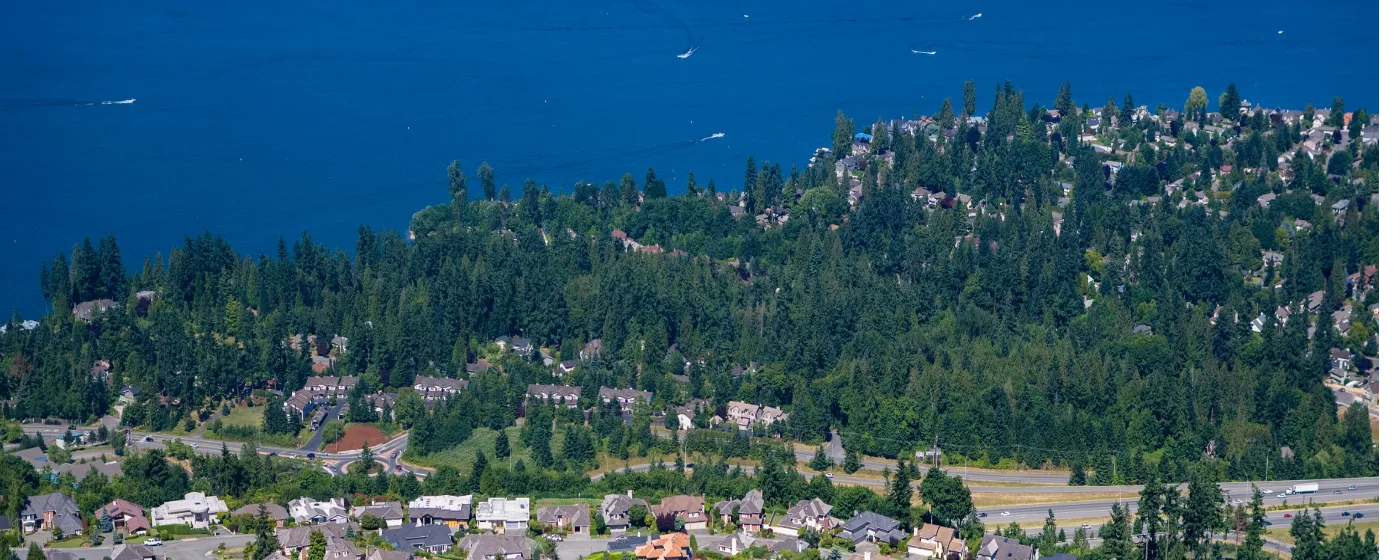
The median household income here is $154,669, which tells you something important about who your neighbors will be: largely dual-income professional households, many connected to the tech corridor that runs from Bellevue through Redmond. The city sits inside the Mountains to Sound Greenway, a 1.5-million-acre conservation corridor along I-90, which means Lake Sammamish State Park, Cougar Mountain Regional Wildland Park, and miles of trails are genuinely part of daily life — not a weekend destination requiring a two-hour drive. Prices are real, but noticeably below what equivalent square footage costs in Bellevue or Kirkland, and the effective property tax rate of approximately 0.88% is competitive for the region.
Whether you're being relocated here or you've been watching Eastside listings long enough to know Issaquah keeps coming up, the sections below cover Issaquah's commute and job landscape, daily life, the housing market as it stands in mid-2026, weekends and local character, and what the city's neighborhoods actually feel like to live in.
Issaquah at a Glance
Looking to buy in Issaquah? Estimate your payment.
Enter your numbers to see an estimated monthly mortgage payment.
Estimate only. Excludes HOA fees and mortgage insurance. The interest rate above is a starting point, not a quoted rate — replace it with your own to see real numbers. Insurance is a flat placeholder, not a Issaquah quote.
Why Are People Moving to Issaquah?
The short version: Issaquah is what happens when a small Pacific Northwest town gets absorbed into one of the country's strongest tech-economy metros and manages, somehow, to hold onto its trail access and salmon hatchery while doing it.
The School District Pull
For families with school-age children, the Issaquah School District No. 411 is frequently the deciding factor. Ranked #5 in Washington State among 231 districts, with an A+ rating from Niche, it draws buyers who have done their homework and found that Bellevue's equivalent school quality comes at a steep premium. The district's performance is the single most-cited reason people stretch their budgets to get into the city limits rather than settling in an adjacent unincorporated area.
The Employer Anchor
Costco Wholesale's retail headquarters sits here, and its presence shapes the city in ways beyond just employment — it contributes to a stable, non-cyclical economic base in a region otherwise heavily exposed to the tech sector's volatility. The Issaquah School District and the City of Issaquah itself are significant employers, which means a meaningful portion of the workforce doesn't commute at all.
Who Actually Moves Here
| Buyer Type | Primary Draw | Best Fit |
|---|---|---|
| Tech-corridor professionals | 30-min bus to Seattle, 20-min to Bellevue | Commuter |
| Families with school-age kids | Top-5 school district in WA | Families School |
| Outdoor-first households | Cougar Mountain, Lake Sammamish, I-90 trail access | Nature |
| Bellevue/Kirkland priced-out buyers | Lower price per sq ft on the Eastside | Value |
| Remote/hybrid workers | Space, quiet, and nature without sacrificing metro access | Quiet Nature |
| Costco and healthcare employees | Live where you work | Commuter Families |
The demographic profile — a median age of 37.5 and a workforce concentrated in tech and professional services — reflects how thoroughly Issaquah has been reshaped by the Eastside's economic expansion over the past two decades.
What Surprises People After Six Months
Newcomers who moved for the schools and the trails often say the same thing: they didn't expect to feel this disconnected from Seattle's cultural calendar. The 30-minute drive is accurate in off-peak conditions; a Tuesday evening show at a Seattle venue can easily turn into a 90-minute crawl home on I-90. Most longtime residents have made peace with this and built their social life locally — which, given what Issaquah has on its own, is more workable than it sounds.
What Daily Life Feels Like in Issaquah
Issaquah rewards people who want their daily routine to feel less like a metro grind and more like an ongoing negotiation between a real town and a mountain town. The city is small enough that you recognize faces at the Issaquah Salmon Hatchery on a Saturday morning, but large enough that you're not driving to Bellevue for every errand.
The Geographic Reality
Interstate 90 is not just a commute route — it is the city's spine. Everything north of I-90 (Issaquah Highlands, Newport, North Issaquah) feels distinctly different from the older neighborhoods south of it (Olde Town, Squak Mountain, Talus). The highway creates a psychological and practical divide that buyers often underestimate until they live here. Choosing the wrong side for your lifestyle is one of the more common relocation miscalculations on the Eastside.
Olde Town and the Gilman Corridor
Historic Front Street and NW Gilman Boulevard are where Issaquah's daily commercial life concentrates. Montalcino Ristorante Italiano on Front Street anchors the older downtown dining scene; Masa Mexican Kitchen & Cantina and The Well and Table, both on NW Gilman Blvd, represent the newer wave of independent restaurants that have opened as the city's population has grown. Gilman Village — a cluster of converted historic farm buildings turned boutique retail — gives the corridor a character that most Eastside suburbs simply don't have.
The Trail-Access Reality
The Mountains to Sound Greenway isn't marketing language — it means that a trailhead into Cougar Mountain Regional Wildland Park is genuinely reachable from many neighborhoods without a car, and Lake Sammamish State Park is a 10-minute drive for a weekday swim after work. For households where outdoor access is a daily habit rather than an occasional ambition, Issaquah is one of the few places in the metro where that's actually true, not aspirational.
The Seasonal Quirk Newcomers Don't Expect
Salmon season at the Issaquah Salmon Hatchery — typically October through November — turns a city utility into a genuine local event. Thousands of coho and chinook return to Issaquah Creek, and the hatchery fills with school groups and families every weekend. If you're moving here in the summer, put it on the calendar: it's the kind of thing that makes you feel like you live somewhere, not just somewhere near Seattle.
The Issaquah School District also shapes the rhythm of daily life well beyond school hours — sporting events at the WIAA level, community programs, and the general cadence of a city where a large share of households have school-age children all contribute to a community feel that many newcomers describe as the biggest unexpected upside of living here.
The Issaquah Housing Market Right Now
After the peak frenzy of 2022–2024, Issaquah's market has cooled into something closer to balance — which, at these price levels, still demands serious preparation.
Where Prices Stand
The Zillow Home Value Index for Issaquah stood at $1,018,909 as of June 2026, down approximately 8.7% year-over-year from the post-pandemic peak. That headline figure reflects some mix-shift in what sold, not broad depreciation: price per square foot held at approximately $588 in early 2026, off only 2.2% year-over-year. For a full breakdown of what that means across the market, see the Issaquah cost of living page.
Market Conditions Mid-2026
As of mid-2026, approximately 192 active listings, roughly 3.5 months of supply, and a median of 28 days on market describe a roughly balanced environment — a genuine shift from the multiple-offer conditions that defined 2023 and 2024. Buyers have more time and more options than they did 18 months ago.
That said, well-priced homes in strong school-boundary locations still move. The balance is real, but it is not a buyer's market in the traditional sense — particularly for single-family homes in the range where demand from families with school-age children remains consistent. The best neighborhoods page breaks down price ranges and character by area.
The Effective Tax Rate
Washington has no state income tax, and Issaquah's effective property tax rate runs approximately 0.88% — below the national average and competitive within King County. That figure matters when you're comparing the all-in cost of ownership against other Eastside markets.
Issaquah Neighborhoods
Issaquah has several distinct areas — each with its own character and appeal. Here’s a breakdown to help you narrow down where to focus your home search.
🏡 Issaquah Highlands
The city's largest master-planned neighborhood, with over 4,000 homes on 2,200 acres — more than half of which is preserved open space with 28 parks and 16 playgrounds. It has its own village center for daily errands and a community-owned fiber-optic network, making it feel more self-contained than most Eastside developments.
🏠 Talus
A master-planned community on the lower slopes of Squak Mountain, with a mix of townhomes and single-family homes that appeal to buyers who want trail access directly from their neighborhood. The setting feels more rural than the price might suggest, with forested views and immediate proximity to Cougar Mountain Regional Wildland Park.
🌳 Klahanie
A large, established planned community just east of the Issaquah city core, known for its HOA-maintained amenities including a swim club and extensive trail connections. It draws families who want the feel of a close-knit neighborhood with the infrastructure of a larger development.
🏘 Olde Town/Downtown Issaquah
The city's historic commercial and residential core, centered on Front Street and NW Gilman Blvd, where Gilman Village's converted farm buildings and independent restaurants give the area genuine character. It's the most walkable part of the city and the one neighborhood where daily errands on foot are a realistic option.
🏔 Providence Point
A gated 55+ active-adult community in the southeastern corner of Issaquah, designed for residents who want an amenity-rich, maintenance-assisted lifestyle close to Cougar Mountain trails and the city's dining corridor. It's one of the most established age-restricted communities on the entire Eastside.
🌆 North Issaquah
A collection of established residential neighborhoods north of I-90, closer to Lake Sammamish and with relatively quick access to the Sammamish Plateau. It tends to attract buyers who want single-family homes in a quieter setting without the HOA structure of the larger master-planned developments.
Pros & Cons of Living in Issaquah
The Pros
- Home to Costco's global HQ with strong local job base
- consistently top-ranked Issaquah School District with a 96%+ graduation rate
- extensive trail network on Cougar
- Squak
- and Tiger Mountains right in the city's backyard
- walkable historic downtown with Gilman Village shopping and dining
The Cons
- Among the priciest housing markets on the Eastside
- with typical home values near or above $1 million
- heavy I-90 corridor traffic during peak commute hours
- wet
- overcast winters typical of the Puget Sound region
Getting Around & Commuting in Issaquah
This is the section that earns its keep. Issaquah's commute story is genuinely good by Pacific Northwest suburban standards — and genuinely brutal on the wrong days.
The I-90 Reality
Interstate 90 is the only major arterial connecting Issaquah to the rest of the metro. There is no alternate route that meaningfully changes the calculus. When I-90 backs up westbound — and it does, reliably, every weekday between about 4:30 and 6:30 p.m. — Issaquah is effectively landlocked. Buyers who tour the city on a Saturday afternoon and decide the commute is fine have made one of the most common relocation mistakes in this market. The drive on a Tuesday at 5 p.m. is a different experience entirely.
Transit: Better Than Most Eastside Suburbs
Sound Transit Route 554 runs express service from the Issaquah Transit Center to downtown Seattle in approximately 30 minutes and to downtown Bellevue in approximately 20 minutes — both in off-peak conditions, with headways that make it a realistic daily option for nine-to-five commuters. The bus uses the I-90 express lanes, which often move faster than general traffic, giving transit riders a genuine time advantage over solo drivers during peak hours.
King County Metro's on-demand Metro Flex service launched in Issaquah in October 2023, providing app-dispatched rides within a defined local zone at a standard bus fare, integrated with the ORCA card. It is not a substitute for the Route 554 for Seattle commutes, but it meaningfully reduces the need for a car for local errands — the first genuinely useful on-demand transit option Issaquah has had.
Light Rail: What's Real and What Isn't
Sound Transit's 2 Line (East Link) does not serve Issaquah — the nearest station is South Bellevue, which Issaquah commuters can reach by bus to connect to the rail network. A future Issaquah-to-South Bellevue light rail extension has been studied, but it is not funded or under construction as of mid-2026. Plan your commute around current infrastructure, not future plans.
Who the Commute Works For
| Commute Profile | Realistic Time | Mode | Verdict |
|---|---|---|---|
| Issaquah → downtown Seattle (off-peak) | ~30 min | Sound Transit 554 or drive | Workable |
| Issaquah → downtown Seattle (PM peak, drive) | 45–75 min | Drive | Plan accordingly |
| Issaquah → Bellevue downtown | ~20 min bus / 15–25 min drive | Bus or drive | Strong |
| Issaquah → Costco HQ (in-city) | 5–10 min | Drive or bike | Excellent |
| Issaquah → Redmond tech campus | 25–40 min | Drive | Manageable |
| Issaquah → Seattle-Tacoma International Airport | 30–45 min | Drive | Reasonable |
Hybrid schedules — three days in office, two at home — are what make Issaquah's commute profile work for most households. Full five-day in-office schedules to Seattle are doable on the Route 554 but require discipline around departure times.
Getting Around Locally Without a Car
Within Issaquah itself, on-foot access varies sharply by neighborhood. Olde Town and the Gilman corridor are genuinely walkable — coffee, groceries, and dinner are on foot. Issaquah Highlands has its own village center. Most of the rest of the city requires a car for daily tasks. The Metro Flex service bridges some of that gap, but Issaquah is not a city where you move without a car and figure it out later.
Schools in Issaquah
Families relocating to Issaquah have public, private, and higher-education options nearby. Here’s a quick overview.
🎓 School District
Issaquah School District No. 411 serves K–12 students across Issaquah and the surrounding area. Rated A+ (source: Niche.com).
🏆 Graduation Rate
The 4-year high-school graduation rate here is approximately 96.3%.
📚 Higher Education
Washington’s public universities — the University of Washington, Washington State University, and Western Washington University — offer four-year degrees statewide, with a network of 34 community and technical colleges (SBCTC) providing two-year and workforce programs.
🌐 Online Learning
University of Washington Continuum College and Washington State University Online offer fully accredited online degrees for remote learners across the state.
Safety in Issaquah
A quick look at how Issaquah compares on the numbers that matter most when weighing a neighborhood or a move.
🛡 Violent Crime
Approximately 1 per 1,000 residents.
🔒 Property Crime
Approximately 33.3 per 1,000 residents.
Compared to the FBI’s most recent national data (2024), Issaquah’s violent crime is below the national average (about 3.6 per 1,000), and property crime is above the national average (about 17.6 per 1,000).
Against Washington as a whole, Issaquah’s violent crime is roughly a third of the state average, and property crime is somewhat above the state average (Bureau of Justice Statistics, Crime Known to Law Enforcement, 2024 (tables 2 and 3)).
Crime rates can vary a lot within a single city, so the citywide numbers above are only a starting point. Some neighborhoods in Issaquah run well below these averages, while others run higher — the kind of block-by-block detail that matters most when you’re actually choosing where to live. The full guide below breaks it down neighborhood by neighborhood.
Working in Issaquah
Issaquah’s largest employers span several industries — here are some of the anchors of the local job market.
🛒 Costco Wholesale
Retail headquarters
🏥 Providence Swedish Issaquah
Healthcare
🎓 Issaquah School District
Education
🏛 City of Issaquah
Government
Parks & Recreation in Issaquah
Some of the outdoor spaces that shape everyday life in Issaquah.
🌱 Cougar Mountain Regional Wildland Park
🌱 Lake Sammamish State Park
Issaquah residents don’t have to go far for green space — spots like Cougar Mountain Regional Wildland Park and Lake Sammamish State Park are part of everyday life here, whether that’s a morning walk, a weekend hike, or just somewhere to unwind outside. The full guide below covers more of what Issaquah has to offer for parks and outdoor recreation.
Retiring in Issaquah
Issaquah draws retirees for its balance of amenities, outdoor access, and cost. Here’s what to weigh.
🌤 Climate
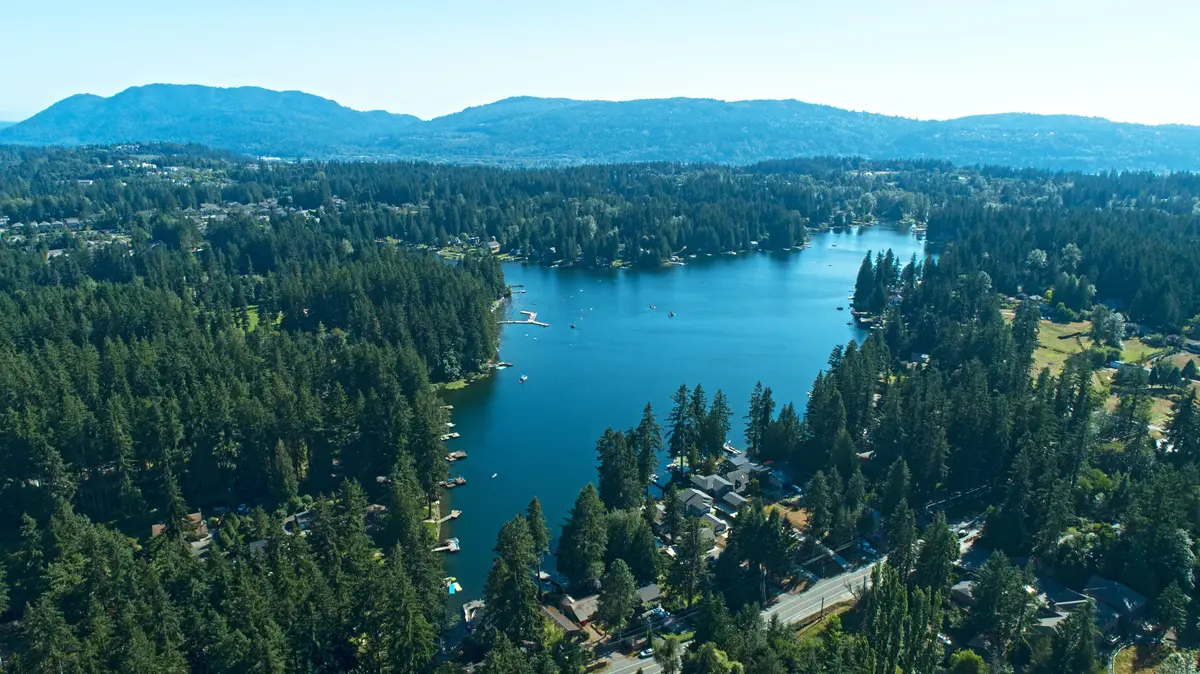
Issaquah sits in a valley flanked by Cougar, Squak, and Tiger Mountains, which means it receives slightly more rainfall than Seattle and occasional valley fog in winter. Summers are reliably mild and dry — July and August highs average in the low-to-mid 70s — making the season genuinely pleasant for outdoor activity. Snow accumulates a few times each winter, and I-90's mountain pass location means road conditions can change quickly between November and March.
🍴 Lifestyle
Issaquah's daily rhythm is built around trails, local dining, and a genuine small-town commercial core in Olde Town and Gilman Village. Boehm's Candy Kitchen, open since 1956, is the kind of local institution that retirees particularly appreciate. The Issaquah Salmon Hatchery, Cougar Mountain Regional Wildland Park, and Lake Sammamish State Park provide year-round outdoor activity that doesn't require driving hours out of the city.
🏚 55+ Communities
Providence Point, in the southeastern corner of the city, is one of the Eastside's best-known active-adult communities — a gated, amenity-rich neighborhood designed specifically for residents 55 and older, with walking paths, a community center, and proximity to both Cougar Mountain trails and the Gilman corridor. The broader Issaquah area also has independent senior living options, with healthcare services anchored by a major regional health system operating locally.
✈ Getting Around
Most retirees in Issaquah are car-dependent for daily life, though the Olde Town and Gilman corridor neighborhoods are genuinely walkable for errands. Sound Transit Route 554 provides express service to Seattle and Bellevue for those who prefer not to drive into the city. Seattle-Tacoma International Airport is approximately 30–45 minutes by car, depending on traffic.
🏛 Washington Taxes for Retirees — What to Know
- No state income tax — Washington does not tax personal income, so Social Security, pensions, and 401(k)/IRA withdrawals are all untaxed at the state level. There is no state return to file and no retirement exclusion to claim — the rate is simply zero.
- Military and public pensions — Because there is no income tax, military retirement pay and public-employee pensions are untaxed at the state level along with everything else.
- Sales tax is the tradeoff — The state sales tax is 6.5%, and local add-ons bring the combined rate in Issaquah to 10.5% (Washington State Department of Revenue, Q3 2026 local sales & use tax rate table, July 2026). Groceries and prescription drugs are exempt.
- Property taxes, with senior relief — The effective property tax rate is roughly 0.9%. Homeowners 61+ (or unable to work due to disability, or a qualifying disabled veteran) who own and occupy their home may qualify for a reduction. Income limits are set against each county’s median household income, so the threshold differs by county — check with your county assessor. A separate deferral program is available for those who don’t qualify for the exemption.
- Capital gains tax — but not on retirement income — Washington taxes 7% on long-term capital gains above a $278,000 standard deduction for 2025, rising to 9.9% on gains above $1,000,000. Retirement accounts and real estate sales are both exempt. It therefore does not reach ordinary retirement income or the sale of a home.
- Estate tax — the one to plan for — Unlike most no-income-tax states, Washington has its own estate tax. For deaths on or after July 1, 2026, the exemption is $3 million with graduated rates topping out at 20%. Retirement accounts count toward the taxable estate, so long-time homeowners with sizable balances can cross the line without expecting to.
- No inheritance tax — Washington has no inheritance tax, and no gift tax.
- WA Cares payroll premium — Working Washingtonians pay 0.58% of gross wages into the WA Cares Fund, the state long-term care program, with no income cap. It applies to W-2 wages, so retirees who have stopped working do not pay it — but anyone relocating while still employed will see it. The private-insurance opt-out closed at the end of 2022 and is not available to new applicants; the remaining exemptions are narrow (living outside Washington, military spouses, certain visa holders, and veterans with a 70%+ service-connected rating).
- The Oregon border effect — Oregon has no sales tax, so Washington residents near the river — Vancouver, Camas, Washougal, Longview — often cross over for large purchases. Washington use tax technically applies to goods brought back for use in-state, though it is rarely enforced on ordinary personal purchases.
Tax laws change frequently and individual situations vary. This is general information, not tax advice — always consult a qualified Washington tax professional or CPA for personalized retirement tax planning.
Weekends & Local Favorites in Issaquah
The question most prospective buyers from Seattle ask is whether Issaquah will feel culturally thin after a few months. The honest answer: it depends on what you're optimizing for.
The Outdoor Baseline
Cougar Mountain Regional Wildland Park puts nearly 3,000 acres of forested trails inside city limits — trails that are genuinely uncrowded on a Tuesday morning in a way that Tiger Mountain or the Rattlesnake Ledge trailhead never are. Lake Sammamish State Park, at the north end of the city, gives you a sandy swimming beach and a boat launch that fills up on summer weekends but is relaxed in the shoulder seasons. The I-90 trail corridor connects Issaquah to a network that stretches east toward Snoqualmie Pass for cyclists who want distance.
Downtown and Gilman Village
Gilman Village — a collection of historic buildings converted into independent boutiques, a bookshop, and specialty retailers — is the kind of place that earns genuine affection from residents over time. It's not a mall and it's not a strip center. Historic Front Street, with Montalcino Ristorante Italiano and a handful of other established spots, is where longtime residents default for a weeknight dinner without the drive to Bellevue. Masa Mexican Kitchen & Cantina and The Well and Table on NW Gilman Blvd represent a newer dining wave that's broadened the local options considerably.
The Salmon Hatchery as a Community Anchor
The Issaquah Salmon Hatchery is a genuine civic landmark, not a novelty. Families bring their kids on Saturday mornings during the October–November salmon run not because it's on a tourist list but because it has been a local tradition for generations. Boehm's Candy Kitchen, a Swiss chocolate maker that has operated in Issaquah since 1956, is the kind of place that appears in every longtime resident's list of things they'd miss if they left.
What You'll Drive to Bellevue For
Issaquah doesn't have a major performing arts venue, a significant museum, or the density of dining and nightlife that Bellevue's downtown has assembled over the past decade. Longtime residents are matter-of-fact about this: Bellevue is 20 minutes away, and that's where they go for a concert, a nicer restaurant, or a Trader Joe's run. The city has made a deliberate choice to stay smaller than its population might otherwise suggest, and that compromise is worth naming before you move in expecting a self-contained cultural calendar.
Where Locals Actually Gather
The weekend rhythm tends to concentrate around the Salmon Hatchery and Issaquah Creek trail in the fall, Lake Sammamish's beach in the summer, and the Gilman Village area for farmers market season. Issaquah Highlands has its own community events calendar — the neighborhood's 28 parks and community infrastructure make it more self-contained than most master-planned developments. For parents with school-age children, WIAA sporting events at Issaquah and Liberty high schools are genuinely well-attended community moments, the kind that don't exist in the same way in denser urban settings.
Top Things Locals Say About Issaquah
The best intel about a city comes from the people who actually live there. Here’s what Issaquah residents say when newcomers ask the questions everyone’s thinking.
“I expected to miss Seattle more than I do. What I didn't expect was that by month four, I'd stopped going there on weekends voluntarily — Cougar Mountain, the Gilman Village farmers market, the salmon run in October. It turns out Issaquah has more going on than it looks from the outside.”
— Recent Issaquah home buyer
“What's the most surprising thing about living in Issaquah?”
How different the north and south sides of I-90 feel as lived environments. Issaquah Highlands, north of the freeway, is its own world — master-planned, newer, with its own village center and community fiber network. Olde Town and the neighborhoods around Squak Mountain, south of I-90, feel much more like a traditional Pacific Northwest town. People who buy on the wrong side for their lifestyle notice it within the first few months.
“What do locals love most about Issaquah?”
The combination of real trail access and a real downtown in the same city. Cougar Mountain is not a metaphor — you can park at the end of a residential street and be on a forested trail in under five minutes. And then you can have dinner on Front Street or NW Gilman Blvd the same evening. For the Pacific Northwest metro, that combination is rarer than it sounds.
“What should newcomers to Issaquah know?”
Drive I-90 westbound on a Tuesday at 5:15 p.m. before you commit. The Route 554 Sound Transit bus is genuinely faster than driving during peak hours and runs reliably from the Issaquah Transit Center — learning that rhythm early saves a lot of frustration. Also: the Issaquah Salmon Hatchery draws crowds in October, Lake Sammamish beach fills up on July and August weekends before 10 a.m., and Gilman Village has free parking that most newcomers walk right past looking for a garage.
“Can you live in Issaquah without a car?”
For most residents, no. Olde Town and the Gilman Blvd corridor are walkable for daily errands, and Metro Flex's on-demand service covers local trips within a defined zone. But Issaquah Highlands, Klahanie, and most single-family neighborhoods require a car for groceries and most daily tasks. The Route 554 is a strong commute option to Seattle and Bellevue, but within the city itself, car-free daily life is realistic only for residents in a handful of walkable pockets.
Cities Near Issaquah
Other communities near Issaquah worth a look — each with its own character and price point.
| City | Distance | Best For | Vibe | Median Rent | Median Buy |
|---|---|---|---|---|---|
| Sammamish | 6 mi | Families, newer construction, top schools | Planned, quiet, suburban | $2,700 | $1,600,000 |
| Bellevue | 10 mi | Professionals, urban amenities, walkability | Upscale, dense, dynamic | $2,600 | $1,500,000 |
| North Bend | 15 mi | Outdoor enthusiasts, rural character | Small-town, mountain-adjacent | $2,200 | $750,000 |
More Helpful Guides for Issaquah
Going deeper on Issaquah? Our blog series covers everything from first-time buying to retiring here — explore the guides below.
Local Expert Takeaway: Issaquah earns its price point in three specific ways: a top-five school district that's the real deal, trail access that starts at your front door rather than a 45-minute drive, and a commute to Bellevue that actually works on the Route 554. The catch is I-90 westbound at 5 p.m. — if your Seattle commute is five days a week and you're not willing to build your schedule around it, look harder at Bellevue or Renton. But for hybrid workers and families with school-age kids who want Cougar Mountain and Gilman Village in the same zip code, Issaquah is one of the better-value decisions on the Eastside right now.
Quick Takeaways & FAQs
✅ Issaquah School District No. 411 ranks #5 in Washington State among 231 districts and earns an A+ rating — one of the strongest public school systems in the entire Seattle metro.
⚠️ I-90 is the only route in or out, and westbound PM peak traffic can stretch a 30-minute drive to 75 minutes — the commute works best for hybrid schedules or transit riders on the Route 554.
📍 The Issaquah Salmon Hatchery on Issaquah Creek hosts a genuine October–November community tradition as coho and chinook return — it's one of those local rituals that makes new residents feel like they actually live somewhere.
Is Issaquah a good place to raise a family?
How long is the commute from Issaquah to Seattle?
What is the typical home price in Issaquah right now?
What is Issaquah known for?
Is Issaquah safe?
Helpful Links for Moving to Issaquah
Moving to Washington?
Tell us what you need help with and we'll connect you with local resources.
