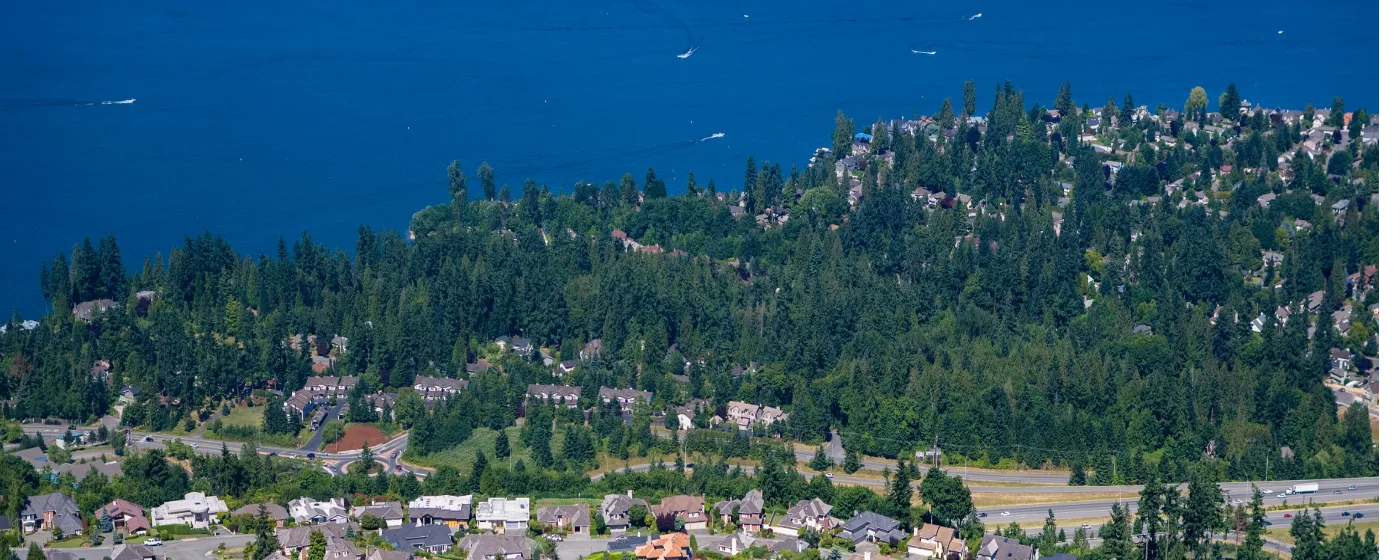
Maybe you've been renting in Bellevue and watching prices climb, or you've been priced out of Sammamish and someone mentioned Issaquah as the next reasonable step. Here's what stops most first-timers cold: the Zillow Home Value Index for Issaquah stood at $1,018,909 as of June 2026, which means your first home purchase here crosses the million-dollar threshold at the median. That number lands differently when it's attached to a real address on a real street off I-90, but it's the honest starting point for any conversation about buying here.
The market in early 2026 offered more breathing room than the peak years. The Zillow Home Value Index was down 8.7% year-over-year by June, and homes were selling at 98% of their original list price in April 2026 — slightly below asking, not above it. About 192 active listings represented 3.5 months of supply as of May 2026, and the median days-on-market sat at 28. That's a genuine shift from the years when anything presentable was gone in a weekend with multiple competing offers.
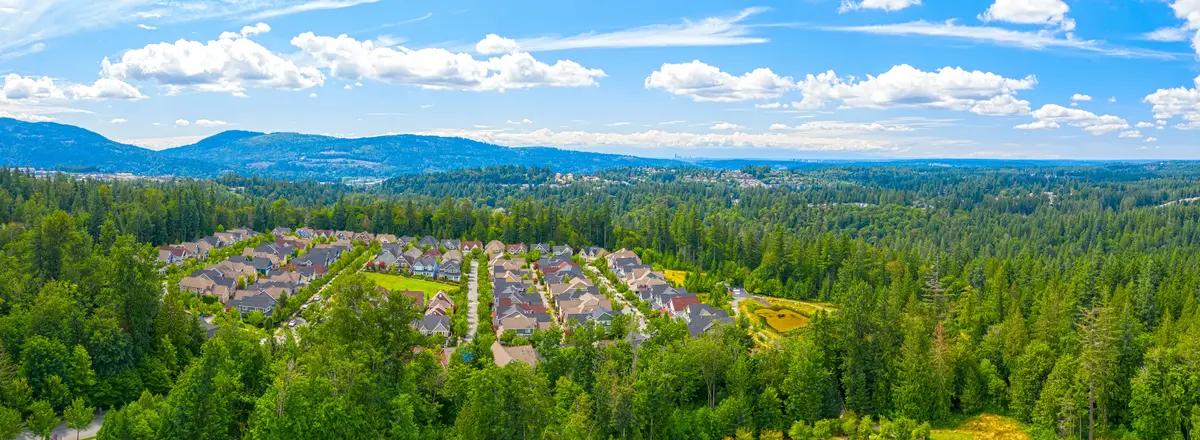
The day-to-day reality of Issaquah is built around the I-90 corridor and the foothills that press against the city from the south and west. Seattle is roughly 30 minutes by car when traffic cooperates. The neighborhoods range from the planned, master-developed Issaquah Highlands above the city to the older, quieter streets of Olde Town and the more forested parcels near Squak Mountain — and that range matters for first-time buyers because so does the price spread between them. Many families prioritize the Issaquah area's school options when choosing this market over comparable options to the east, though the full picture on schools belongs on the Issaquah schools page.
Whether you're coming in with $60,000 saved or $200,000, the sections below walk through what your budget actually buys in this market, the step-by-step purchase process as it works in Issaquah specifically, a plain-numbers budget table, and the mistakes that cost first-timers the most. See the full Issaquah cost-of-living breakdown for a broader view of what life here costs beyond the mortgage.
The Issaquah First-Time Buyer Reality
A million-dollar median is not a soft ceiling — it's the midpoint, which means roughly half of what sells here trades below it and half above. For first-time buyers, the practical entry point sits noticeably lower than that figure, concentrated in older condos and townhomes in Olde Town Issaquah and select resale inventory near Squak Mountain. Buyers flexible on neighborhood consistently find prices well below what comparable square footage commands in Issaquah Highlands, while staying within the same broader community and keeping roughly the same Seattle commute.
Competition sharpens fast for anything priced in the high-$700s to low-$800s, because that's where first-timers, investors, and downsizers all converge. Entry-level detached homes in that range move faster than the overall 28-day median suggests. If your budget is closer to $700,000 or below, the realistic options narrow to attached housing — condos and townhomes — rather than single-family detached. That's not a dealbreaker, but it's the honest picture before you start touring.
The mid-2026 market is more balanced than it has been in years, and that balance is real. Buyers who have done their homework can actually think before signing — a meaningful change from the frenzied pace that defined this market not long ago. The constraint now isn't competition; it's cash, and the sections below address that directly.
The Homebuying Process in Issaquah, Step by Step
Step 1: Get Pre-Approved Before You Do Anything Else
Pre-approval in Issaquah is not a formality — listing agents here will decline to show properties to buyers who don't have one, and sellers will not consider an offer without a strong letter attached. This is not the same as a pre-qualification (a quick estimate based on what you tell a lender). A real pre-approval requires recent pay stubs, W-2s for two years, tax returns, asset and debt statements, and a government-issued ID. The lender runs a credit check and verifies everything before issuing the letter.
Your pre-approval letter is typically valid for 60 to 90 days and states the maximum loan amount the lender will offer. If your search stretches past that window — common when inventory is limited — you'll need to refresh it. Start this process before you fall in love with a specific address.
Step 2: Define Your Neighborhoods Before Touring
Issaquah's neighborhoods are not interchangeable in price, character, or commute pattern. Issaquah Highlands sits well above the city floor with newer construction and higher HOA fees. Olde Town and the areas near Squak Mountain offer older homes at lower price points. Klahanie adds a complication worth understanding before you tour there: two different administrative boundaries run through that area, and one address can carry different implications than the house next door depending on the exact parcel. Verify key details for any specific address before making an offer — not after.
Step 3: Make a Competitive Offer
With homes selling at roughly 98% of list price in early 2026, the era of automatic escalation clauses and appraisal-gap guarantees has cooled. That said, a well-priced home in a sought-after neighborhood still draws multiple offers quickly. Your agent should pull recent sold comps within the past 60 days — not list prices, sold prices — before advising on offer strategy. An earnest money deposit of 1–3% of the purchase price is standard in King County; going below that signals weak commitment to the seller.
Step 4: Don't Skip the Inspection
Washington's wet climate makes certain defects expensive and common. Roof condition, attic moisture, drainage grading, and crawl space integrity are the four areas where inspectors find the most surprises in Puget Sound–area homes. Even in a competitive offer situation, waiving the inspection in the current Issaquah market is a risk most first-timers cannot afford — both financially and practically, given that first homes tend to stretch budgets already. A standard inspection runs $400–$600 and is one of the few places in this process where skimping costs far more than it saves.
Step 5: Appraisal, Underwriting, and Closing
After mutual acceptance, your lender orders an appraisal. If the home appraises below the purchase price, you'll face a gap that must be bridged by renegotiating the price, paying the difference in cash, or — in rare cases — walking away. Underwriting then verifies every document submitted at pre-approval; do not change jobs, open new credit accounts, or make large cash deposits during this period. Closing in Washington typically takes 30–45 days from mutual acceptance. You'll sign final documents at a title company and receive keys once recording is confirmed by King County.
How Much Home Can You Afford in Issaquah
The table below uses approximate ranges to illustrate what different purchase prices require at closing. Closing costs in Washington typically run 2–5% of the purchase price, covering lender fees, the appraisal, inspections, title insurance, excise taxes, and recording fees. Estimates below use the midpoint of that range (approximately 3%) as a planning figure. The interactive calculator below this section will let you model specific monthly payment scenarios.
| Scenario | Purchase Price | Down Payment | Est. Closing Costs (~3%) | Cash Needed at Table |
|---|---|---|---|---|
| FHA 3.5% Entry condo/townhome | $750,000 | $26,250 (3.5%) | ~$22,500 | ~$48,750 |
| Conventional 3% Entry condo/townhome | $750,000 | $22,500 (3%) | ~$22,500 | ~$45,000 |
| FHA 3.5% Lower-priced detached | $850,000 | $29,750 (3.5%) | ~$25,500 | ~$55,250 |
| Conventional 5% Lower-priced detached | $850,000 | $42,500 (5%) | ~$25,500 | ~$68,000 |
| Conventional 10% Near median | $1,000,000 | $100,000 (10%) | ~$30,000 | ~$130,000 |
| Conventional 20% Near median | $1,000,000 | $200,000 (20%) | ~$30,000 | ~$230,000 |
These are planning estimates, not lender commitments. Your actual closing costs will depend on lender choice, loan structure, the specific property, and negotiated seller concessions.
King County is a federally designated high-cost area, which means loan limits are meaningfully higher here than in most of the country. A lender familiar with high-cost-area financing in King County will walk you through exactly where your specific purchase price and down payment land within available loan structures — and what that means for your rate and underwriting timeline. Putting less than 20% down on a conventional loan means paying private mortgage insurance until you reach sufficient equity, so factor that into your monthly budget modeling.
Looking to buy in Issaquah? Estimate your payment.
Enter your numbers to see an estimated monthly mortgage payment.
Estimate only. Excludes HOA fees and mortgage insurance. The interest rate above is a starting point, not a quoted rate — replace it with your own to see real numbers. Insurance is a flat placeholder, not a Issaquah quote.
Common First-Time Buyer Mistakes in Issaquah
Touring Without a Pre-Approval Letter
This one costs buyers real opportunities. In Issaquah, listing agents have begun screening buyer inquiries for pre-approval before scheduling showings — not as a formality, but because the seller expects it. If you find a home you love on a Thursday and your pre-approval isn't in place until Monday, that home will likely be under contract by the weekend. Start the pre-approval process at least 30 days before you plan to tour, not the day you see an address you like.
Missing the Boundary Quirk in Klahanie
Buyers drawn to Klahanie's pricing and access often assume that all addresses in the area share the same administrative boundaries. In reality, different boundary lines run through that area, and one address can carry different implications than the house next door depending on the exact parcel. Verify the specific details for any parcel address before you make an offer. Your agent can help pull this information, but many first-timers don't think to ask until after they're already emotionally committed to a home.
Underbudgeting the Cash You Need at Closing
The down payment is the number most buyers focus on, but Washington's closing costs add a meaningful second line item. On an $850,000 purchase, 3% in closing costs is another $25,500 on top of your down payment — and that's before earnest money, moving costs, or any repairs discovered during inspection. First-timers who've saved exactly enough for the down payment often hit a wall when the settlement statement arrives. Budget for 2–5% in closing costs as a separate line from your down payment from day one.
Waiving the Home Inspection to Compete
The shift to a more balanced market — with homes selling at 98% of list price rather than 10% over — has made inspection contingencies more negotiable than they were two years ago. But waiving the inspection entirely, particularly on older construction near Olde Town or on homes that have sat on the market longer than average, is a risk first-timers are least equipped to absorb. Washington's rainfall is not forgiving to deferred roof maintenance or improper grading, and moisture intrusion in a crawl space can cost tens of thousands to remediate. Negotiate timing and terms of the inspection; don't eliminate it.

Local Expert Takeaway: Issaquah's mid-2026 market is the most accessible it's been in several years for first-time buyers — homes are sitting on the market for nearly a month on average, and sellers are accepting slightly below list price. The real constraint isn't competition right now; it's cash. Between the down payment and closing costs, even an $800,000 purchase demands $60,000–$90,000 out of pocket depending on your loan structure. Buyers who focus their search on Squak Mountain and Olde Town Issaquah — rather than defaulting to Issaquah Highlands — consistently find comparable I-90 access and a meaningfully lower starting price.
Quick Takeaways & FAQs
✅ King County's high-cost-area loan limits mean most Issaquah buyers near the median price can access conventional financing without specialized loan products — a significant advantage at this price level.
⚠️ The biggest surprise for first-timers: closing costs in Washington run 2–5% of the purchase price on top of the down payment, which adds $20,000–$50,000 in cash requirements that many buyers don't plan for.
📍 Klahanie addresses can carry different boundary implications depending on the exact parcel — always verify the specifics for any address before making an offer, not after.
What credit score do I need to buy a home in Issaquah?
How long does it take to buy a home in Issaquah from start to finish?
Can I buy a home in Issaquah with less than 20% down?
Is Issaquah a buyer's market or seller's market right now?
What neighborhoods in Issaquah are most affordable for first-time buyers?
Moving to Washington?
Tell us what you need help with and we'll connect you with local resources.
