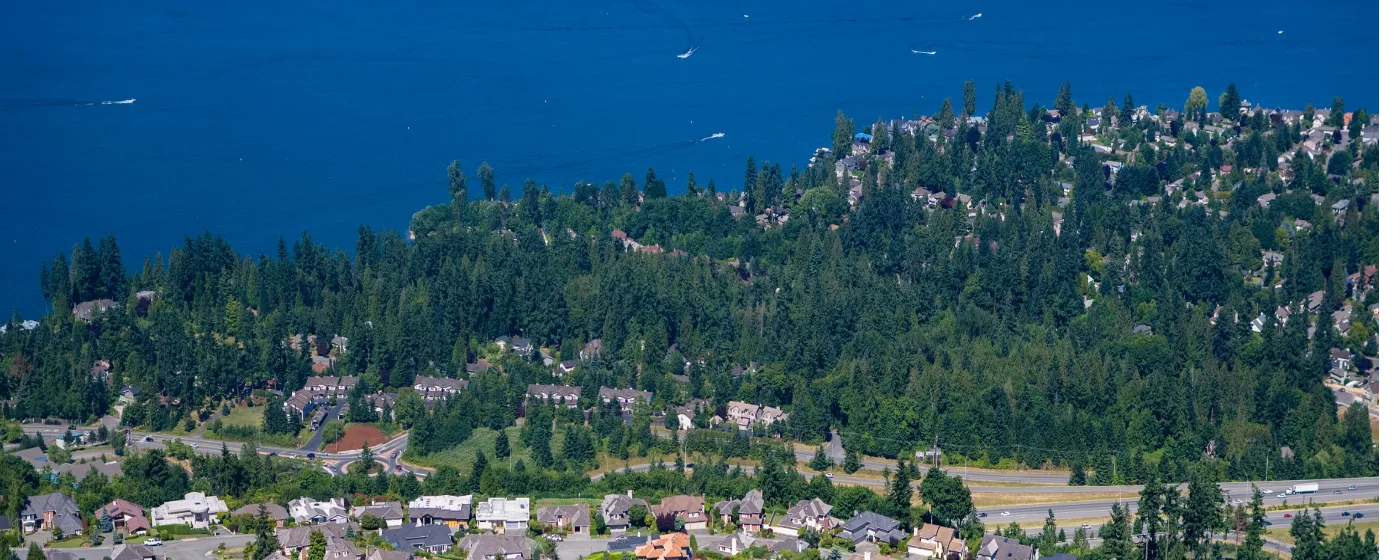
If you've spent your career in the Seattle metro and want to stay close to family, world-class medical care, and real mountains without actually moving to the city, Issaquah makes a compelling case. It sits at the eastern edge of King County where I-90 meets the Cascades — close enough to Bellevue that a specialist appointment is a 20-minute drive, far enough from downtown Seattle that the daily stress of urban density largely stays away. The trade-off that shapes every retirement decision here is straightforward: the Pacific Northwest lifestyle you want is genuinely available, but the price of entry is one of the highest of any suburb in the state.
The city's backbone — Costco Wholesale's headquarters, Providence Swedish Issaquah Campus, and a municipal government that consistently funds parks and senior services — means the infrastructure retirees rely on is stable and well-resourced. Providence Point, one of the largest gated 55-plus communities in Washington, sits within city limits and has been drawing retirees here since the 1980s. University House Issaquah, operated by Era Living with a formal University of Washington Retirement Association partnership, draws a distinctly academic crowd. These aren't generic senior living options; they're institutions with real identities that shape what retirement actually looks like here day to day.
On the cost side, the Zillow Home Value Index put Issaquah's typical home value at $1,018,909 in June 2026 — meaningfully higher than most nearby markets, though noticeably below what you'd spend in Bellevue or on the Eastside's premium corridors. Washington's complete absence of a state income tax is the financial counterweight that makes those home prices more tolerable for retirees drawing from Social Security, pensions, and retirement accounts: you keep every dollar of that income at the state level. The sales tax at roughly 9.2% is the honest offset, so spending patterns matter more here than income levels when you're building a retirement budget. For a fuller breakdown, see the cost of living in Issaquah page.
Whether you're downsizing from a larger Eastside home, relocating from out of state, or weighing Issaquah against Snoqualmie or North Bend for a quieter foothill life, the sections below cover what healthcare access really looks like, what the retiree tax picture means in practice, how walkable and socially connected retirement here can be, what your downsizing options are, and how Issaquah stacks up against the most relevant nearby alternatives.
Why Retirees Are Choosing Issaquah
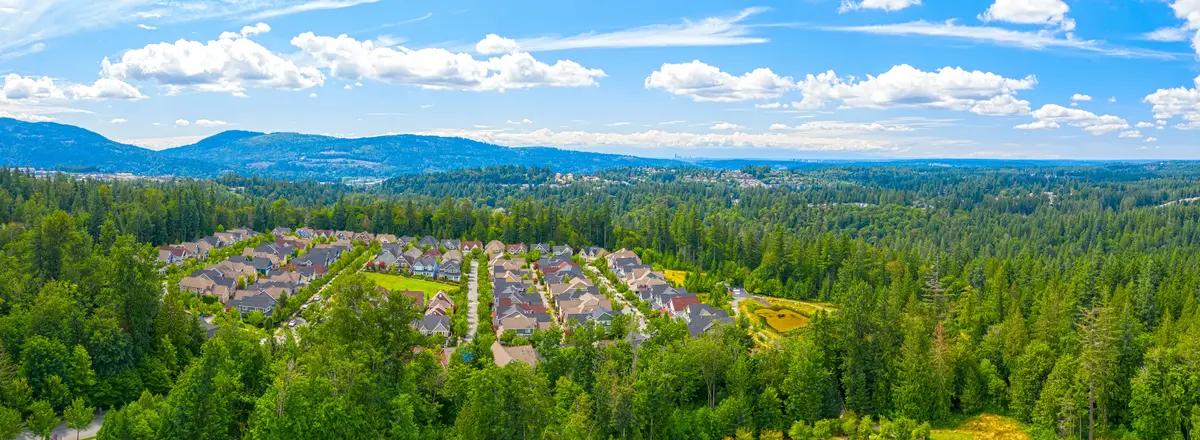
Issaquah keeps attracting retirees who have options — people who could move to Scottsdale or Palm Springs but choose to stay in the Pacific Northwest because the lifestyle here genuinely fits them. The outdoors aren't decorative. Cougar Mountain Regional Wildland Park, Lake Sammamish State Park, and the trail network around Squak Mountain are places residents use year-round, not just on good-weather weekends. If staying physically active outdoors is a non-negotiable part of your retirement, few suburbs in Western Washington deliver as directly as Issaquah does.
The retirees Issaquah fits best are those who are either coming in with substantial equity — from a larger Eastside home, a California property, or decades of appreciation — or who have a retirement income stream that doesn't wince at a home price anchored near $1,018,909 (Zillow Home Value Index, June 2026). Fixed-income retirees watching every dollar will find the cost of living demanding. The property tax rate of approximately 0.88% is manageable by Pacific Northwest standards, but the base it's applied to is not small.
Retirees who should look more carefully at alternatives are those who need dense, walkable urban conveniences without a car, or who want a lower cost of living without sacrificing access to good healthcare. North Bend and Snoqualmie offer meaningfully lower entry prices and similar outdoor access, though they trade some healthcare proximity and social infrastructure. Issaquah's honest sweet spot: retirees who are financially comfortable, value proximity to Bellevue's medical and cultural amenities, want an established senior community rather than pioneering one, and genuinely plan to spend time outside.
Healthcare & Medical Access in Issaquah
The Hospital on the Hill
Providence Swedish Issaquah Campus sits at 751 NE Blakely Dr in the Issaquah Highlands — close enough that residents of Providence Point and University House Issaquah can see it from higher elevations. It's one of five Providence Swedish hospital campuses serving the greater Seattle area, backed by a network of 142 primary and specialty care locations throughout the Puget Sound region. For routine admissions, imaging, surgical procedures, and urgent care, retirees here genuinely don't need to drive into Seattle.
U.S. News & World Report named Swedish Issaquah a 2025 High Performing Hospital for Maternity Care — not directly relevant to most retirees, but a useful signal of how seriously the system invests in this campus. The broader Swedish network's specialty depth is what matters more for aging adults: cardiology, oncology, orthopedics, and neurology are all accessible either at the Issaquah campus or within a 20-minute drive to Swedish's First Hill or Cherry Hill campuses in Seattle.
The Honest Distance-to-Advanced-Care Reality
For truly specialized procedures — complex cardiac surgery, tertiary cancer care, organ transplant — the Issaquah campus is a starting point, not the final destination. Swedish First Hill, UW Medical Center in Seattle, and Virginia Mason Medical Center all sit roughly 25 to 35 minutes west via I-90, which is a reasonable distance under normal traffic conditions. During peak commute hours on a rainy winter afternoon, that same drive can stretch to 50 minutes or more.
Retirees managing chronic conditions that require frequent specialist visits should factor this drive into their planning. The Issaquah campus handles a wide range of needs well, but if your medical situation requires quarterly or monthly trips to a Seattle specialist, that I-90 commute becomes a real variable in your quality of life — not a dealbreaker, but something to account for honestly.
Assisted Living and Memory Care
When the time comes for more structured support, Issaquah has real options. University House Issaquah, operated by Era Living, provides continuing care with its University of Washington Retirement Association partnership intact, meaning lifelong learning stays available even as care needs change. Adult family homes — smaller residential settings of six to eight residents — are available throughout the city and can offer a more personal alternative to larger facilities.

The Retiree Budget in Issaquah
Washington's Retirement Tax Advantage — The Real Story
Washington levies no personal income tax, which means retirees here pay zero state tax on Social Security benefits, pension distributions, IRA withdrawals, and 401(k) distributions. That's not a technicality or a partial exemption — it's a complete exclusion of retirement income from state-level taxation. For retirees who spent careers in high-income-tax states like California, Oregon, or New York, the difference is immediate and substantial.
Washington does have a 7% capital-gains tax, but it applies only to long-term gains above an annual standard deduction of $278,000 (2025 figure, indexed for inflation), and it explicitly exempts both retirement account transactions and real estate sales. Most retirees will never encounter it. High-net-worth retirees realizing very large non-real-estate, non-retirement-account gains in a single year should model carefully, but for the typical retiree drawing from a mix of Social Security and retirement accounts, the state tax picture is as favorable as it looks.
The Sales Tax Trade-Off
Washington's combined state and local sales tax averages around 9.2% — the honest price of the income-tax-free structure. This makes spending patterns the key variable in retirement budgeting here, not income levels. Retirees who spend heavily on services, dining, and discretionary retail will feel the sales tax more acutely than those living on a tighter, needs-focused budget.
Property Tax and Daily Costs
Issaquah's effective property tax rate is approximately 0.88%. On a home at the city's median value, that produces a meaningful annual obligation — manageable by Pacific Northwest standards, but not trivial. Washington offers a senior property tax exemption program for qualifying low-to-moderate-income homeowners over 61, which can partially offset the bill; eligibility is income-tested, so higher-income retirees typically won't qualify. Daily cost of living — groceries, gas, utilities — runs noticeably above the national average, consistent with the broader Seattle metro. Retirees on a fixed income should budget accordingly rather than assume suburban living here is meaningfully cheaper than city living.
Looking to buy in Issaquah? Estimate your payment.
Enter your numbers to see an estimated monthly mortgage payment.
Estimate only. Excludes HOA fees and mortgage insurance. The interest rate above is a starting point, not a quoted rate — replace it with your own to see real numbers. Insurance is a flat placeholder, not a Issaquah quote.
Walkability, Community & Staying Active in Issaquah
The Walkability Reality
Issaquah is not a walkable city in the urban sense — most errands require a car, and the terrain is hilly enough that even motivated walkers will find some routes challenging. The historic downtown area along Front Street offers the most genuine on-foot access: a handful of independent shops, restaurants, and services within a few blocks of each other. The Issaquah Highlands neighborhood has its own village center with more options, though it requires more vertical effort to navigate on foot.
Where Issaquah genuinely shines for active retirees is trail access rather than urban walkability. The East Lake Sammamish Trail is a 44-mile paved, non-motorized corridor connecting to over 500 miles of regional trails across four counties — flat enough along the lakeshore to be genuinely accessible on foot or by bike for most fitness levels. AllTrails lists 125 trails in the Issaquah area, including 30 rated easy, giving retirees a real spectrum from gentle lakeside walks to more demanding ridge routes.
The Issaquah Senior Center
The Issaquah Senior Center at 75 NE Creek Way — free to any adult 55 and older — is the social anchor for retirees who aren't in a formal community. Fitness classes, art classes, field trips, tech assistance, hobby groups, and discussion forums run regularly. First-time visitors register on arrival; most programs are low-cost or free. What surprises many newcomers after a few months is how quickly the center's regulars form genuine social connections — it's not a drop-in-once kind of place.
Clubs, Volunteering, and Community Brewing
Beyond the Senior Center, Issaquah has an active volunteer culture tied to its salmon hatchery, trail maintenance organizations, and city committees. The Issaquah Salmon Hatchery on Sunset Way draws both visitors and volunteers who want structured outdoor involvement. For a more casual social anchor, a brewery and taproom with a beer garden in Issaquah is the kind of place where regulars accumulate over time. Even the leisure options here tend to attract engaged, community-minded people rather than passing-through crowds.
Right-Sizing: Downsizing in Issaquah
The Inventory Challenge
Single-level homes and step-free living spaces are harder to find in Issaquah than in flatter suburban markets. Most of the city's housing stock was built on hillside lots that favor multi-level layouts, and true ranch-style homes are relatively scarce. Retirees who need single-floor living — whether for mobility reasons now or as a future-proofing measure — should be prepared for a narrower search and potentially higher prices per square foot for the privilege.
The most practical downsizing path for many Issaquah retirees is the condo market, particularly in the Issaquah Highlands and near the Gilman Village area. Condos remove yard maintenance, typically offer elevator access in newer buildings, and exist at a range of sizes from one-bedroom downsizing options to larger units that comfortably accommodate retirees who entertain. Prices remain firmly in Issaquah's overall range, so the cost reduction versus a single-family home is often in ongoing carrying costs rather than purchase price.
Providence Point — The 55+ Anchor
Providence Point is the defining 55-plus community in Issaquah, and arguably in the broader eastern King County market. Spanning 161 acres with 1,008 condominiums across seven distinct villages built between 1984 and 2004, it's large enough to feel like its own small town. Amenities include an indoor pool, tennis and pickleball courts, a putting green, a fitness center, an arts and crafts studio, a demonstration kitchen, pea patch gardens, four clubhouses, and 24/7 on-site safety staff. The community's private shuttle service to nearby shopping centers and medical appointments is more than a convenience — for residents who eventually give up driving, it's a meaningful extension of independence.
Providence Point resales represent a significant portion of Issaquah's 55-plus inventory. Units vary considerably in size, vintage, and condition across the seven villages, which means pricing spans a wide range within the community. Prospective buyers should plan to tour multiple villages and understand that a 1984-era unit and a 2004-era unit can feel like different products entirely.
University House Issaquah
University House Issaquah, operated by Era Living, offers 184 residences across 44 floor plans and maintains a formal partnership with the University of Washington Retirement Association (UWRA). Residents gain access to UW programs, lifelong-learning lectures, and wellness programming developed with the UW School of Nursing. It attracts a notably intellectually engaged resident population — retirees who want structured learning opportunities alongside community living rather than just amenities. For that specific profile, there's nothing quite like it in the surrounding market.
If You Need More Care
When care needs exceed what independent or active-adult communities provide, Issaquah has assisted-living facilities and adult family homes within the city. Both represent Seattle metro pricing — expect costs to run noticeably above national averages. Adult family homes, which offer a smaller and often more personal setting of six to eight residents, can be a meaningful cost-saver without sacrificing quality of care.
Issaquah vs Nearby Retirement Destinations
| City | Cost vs Issaquah | Primary Hospital | Walkability | Senior Living Depth | Overall Retirement Fit |
|---|---|---|---|---|---|
| Issaquah | Anchor | Providence Swedish Issaquah (on-site) | Car-dependent; excellent trail access | Strong — Providence Point, University House | Nature Quiet High cost, strong infrastructure |
| Sammamish | About the same | Providence Swedish Issaquah (~10 min) | Car-dependent; newer suburban grid | Moderate — fewer dedicated senior communities | Families Strong schools area; less senior-focused |
| Bellevue | Pricier | Overlake Medical Center (flagship) | Better urban core walkability | Strong — broader spectrum of options | Luxury Walkable More urban amenities, higher cost |
| Renton | Noticeably cheaper | Valley Medical Center (on-site) | Moderate; flat areas near downtown | Moderate — growing inventory | Value Good hospital access, lower entry price |
| North Bend | Noticeably cheaper | ~25 min to Providence Swedish Issaquah | Very car-dependent; rural feel | Limited — mostly independent living | Nature Privacy Best for outdoors-first retirees |
| Snoqualmie | Noticeably cheaper | ~20 min to Providence Swedish Issaquah | Car-dependent; planned town center | Limited — newer community, fewer options | Quiet Growing town; less senior infrastructure |
Renton offers the clearest cost advantage among these options without requiring retirees to give up hospital proximity — Valley Medical Center gives it a genuine on-site healthcare anchor, and the price difference from Issaquah is meaningful. Bellevue beats Issaquah on urban walkability and specialist depth, but at a price premium that narrows the field to retirees with substantial resources.
North Bend and Snoqualmie appeal to retirees who genuinely want a smaller-town, deeper-nature experience and are comfortable with a 20-to-25-minute drive for healthcare. The catch is that senior living infrastructure in both towns is limited — you're largely on your own for building a social community rather than joining an established one. Issaquah's real advantage over every option on this list is the combination of a major hospital campus within city limits, two established and well-resourced senior communities, a free senior center, and a trail network most cities can only approximate. That package is hard to replicate at a lower price point in western Washington — but Renton comes the closest for budget-conscious retirees willing to accept a more urban character.
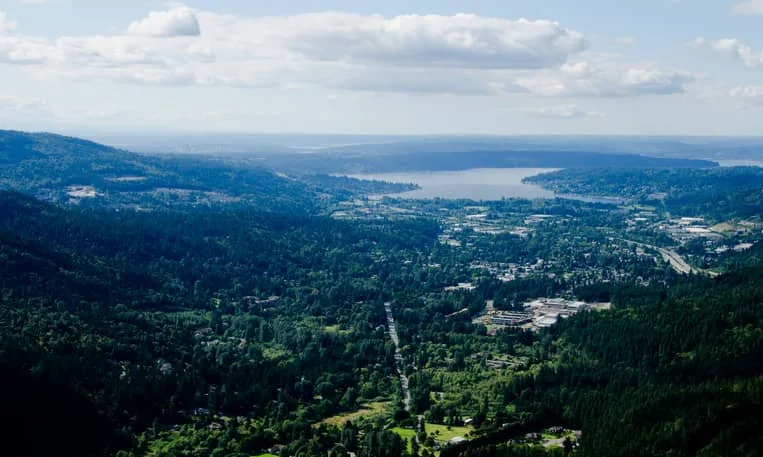
Local Expert Takeaway: Issaquah retirement comes down to one honest question: do you have the financial cushion to absorb a high home price and ongoing costs in exchange for Providence Swedish on your doorstep, Providence Point or University House within city limits, 125 trails starting minutes from your door, and a free Senior Center on NE Creek Way? If yes, the infrastructure here is as complete as anything the Seattle suburbs offer. If the budget is tight, Renton gives you a real hospital, lower entry prices, and a shorter drive to Bellevue than most people expect — worth a hard look before you commit to Issaquah's price point.
Quick Takeaways & FAQs
✅ Washington levies zero state income tax on Social Security, pensions, IRA withdrawals, and 401(k) distributions — a genuine financial advantage for retirees at every income level.
⚠️ The typical home value of $1,018,909 (Zillow Home Value Index, June 2026) means Issaquah demands substantial equity or retirement income; fixed-income retirees on a tight budget will find the cost of living consistently challenging.
📍 Providence Point — 161 acres, 1,008 condos, seven villages, and a private shuttle to medical appointments — is one of the most established 55-plus communities in all of western Washington, right inside city limits.
Is Washington State a good state for retirees from a tax perspective?
What hospital is closest to Issaquah for retirees?
What 55+ or active-adult communities are in Issaquah?
How much does assisted living in Issaquah cost?
Is Issaquah walkable enough for retirees who want to get around without a car?
Moving to Washington?
Tell us what you need help with and we'll connect you with local resources.
