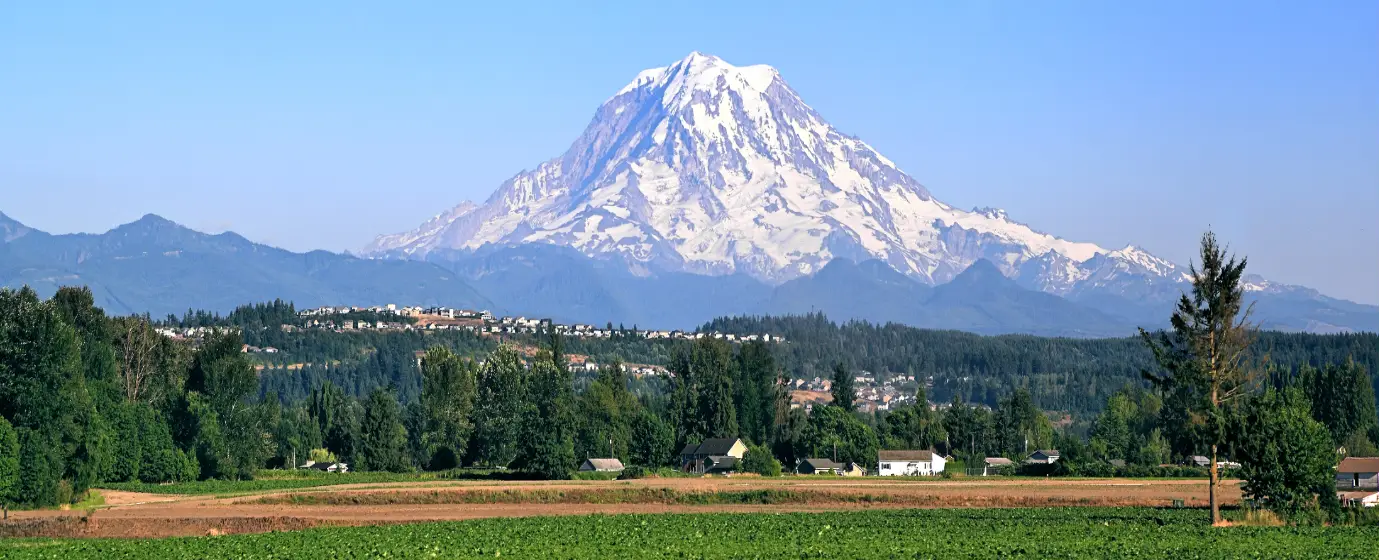
You've done the math on Seattle and walked away. Renton feels close but still steep. Someone mentioned Maple Valley — the prices sound reasonable until you realize "reasonable" is relative in southeast King County. The honest answer is that Maple Valley sits noticeably above the U.S. average on almost every cost metric, but it sits meaningfully below many of the closer-in Seattle suburbs that attract the same buyer. SR 169 is the artery that connects residents to Kent, Renton, and eventually I-405 — and that commute geography explains a lot about who chooses to live here and what they're willing to pay for the quiet end of the highway.
The city's median household income of $152,885 signals the kind of buyer who has already settled here: dual-income households with professional-sector jobs, many of them commuting north toward Redmond and Seattle's tech corridor, others working closer to home at the Amazon logistics station, Fred Meyer, or in local government and services. Families with school-age children make up a significant share of the buyer pool, and the suburban character of the city carries real weight in household decisions — it's one of the primary reasons buyers absorb the higher price point rather than opting for a cheaper address farther south or east.
Overall, Maple Valley's cost of living runs approximately 27% above the U.S. national average, with housing as the dominant driver — running roughly 34% above the national benchmark. Groceries and transportation both track above national norms as well, though Washington's no-income-tax structure partially offsets the sticker shock for higher earners arriving from California or Oregon. Utilities land as the one genuine bright spot: Washington's hydropower grid keeps electricity rates meaningfully below national averages.
Whether you're deciding between Maple Valley and a closer-in suburb, trying to figure out what your monthly budget actually looks like here, or comparing the tax picture to where you're moving from, the sections below break down Maple Valley's housing costs, everyday expenses, nearby-city comparisons, and the full tax picture — with real numbers, not estimates padded with optimism.
What It Really Costs to Live in Maple Valley
The headline figure is $759,950 — that's the Zillow Home Value Index median for Maple Valley as of June 2026, and it puts the city squarely in premium suburb territory for southeast King County. It's not Bellevue money, but it's not Covington money either. Buyers who get sticker shock here typically expected something closer to the prices in Black Diamond or the outer edges of Kent — and Maple Valley does command a premium over both.
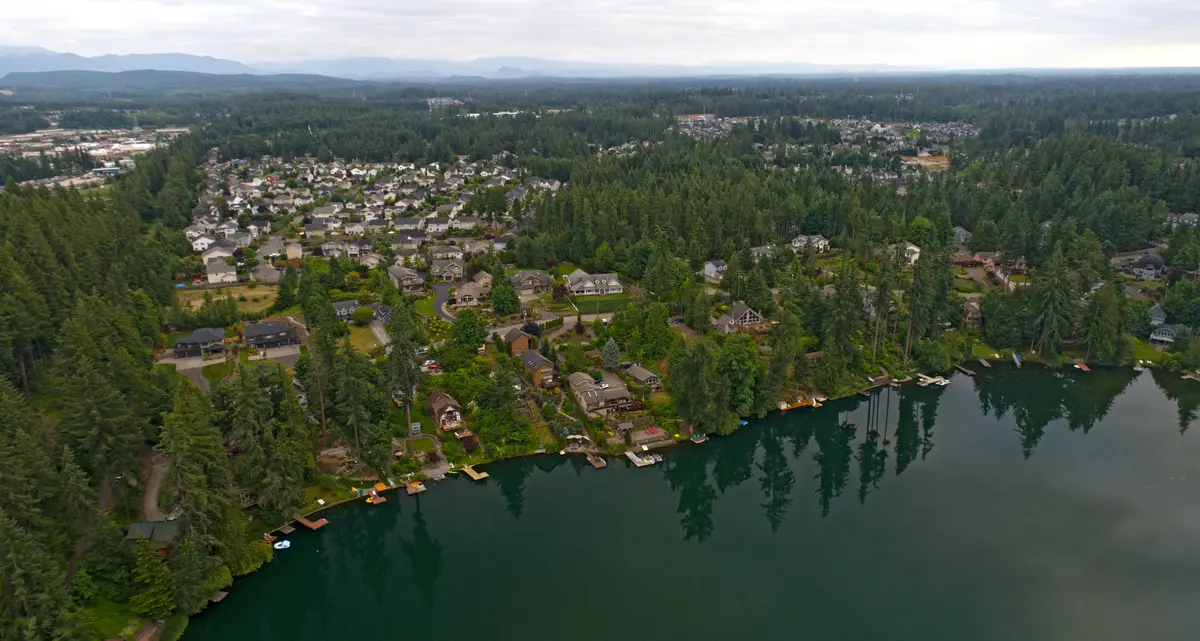
What drives that number is a combination of factors that experienced Seattle-area buyers will recognize immediately: the relative scarcity of developable land hemmed in by greenbelt and state forest, a suburban lifestyle that feels more insulated from urban density than almost anything at a comparable commute distance to Seattle, and the community character that draws a consistent pool of buyers willing to pay for it. You're paying for the buffer as much as the house itself.
Against the broader Seattle metro, Maple Valley sits noticeably below the median in cities like Bellevue, Issaquah, or Kirkland, but close to or above the same range as Renton's newer suburban pockets. Compared to the U.S. national average, housing here costs roughly 34% more — a gap that dominates the overall cost picture regardless of how favorable the tax or utility lines look.
Housing: Rent vs Buy in Maple Valley
Entry-level purchases in Maple Valley — older construction, smaller footprints, sometimes with deferred maintenance — start in the upper $500,000s to low $600,000s, though those homes move quickly and rarely sit. The Zillow Home Value Index median of $759,950 (June 2026) reflects what most buyers actually end up spending, and newer construction with modern finishes pushes well past $900,000. If your budget is anchored below $550,000, you're likely looking at condominiums or townhomes rather than detached single-family homes.
The effective property tax rate here is approximately 1.14% — in line with the broader King County range and not unusual for the Seattle metro. On the typical home, that produces a meaningful annual obligation worth factoring into affordability. The mortgage calculator below this section will let you model the full principal, interest, and tax picture at whatever down payment and rate you're working with — use it rather than back-of-napkin math, because the difference between 10% and 20% down at current rates moves the monthly number significantly.
Renting in Maple Valley is a relatively thin market. The city skews strongly toward ownership — detached single-family homes dominate the housing stock — and the rental supply reflects that. Two-bedroom apartments and townhomes typically lease in the $2,100–$2,600 range depending on age and amenities, which is cheaper than Renton or Bellevue but still above many comparable outer-suburb options farther south. For households that aren't ready to commit to the purchase price or want 12–18 months to learn the area before buying, renting makes practical sense. For anyone planning a 5-plus-year stay with stable income, the buy side math tends to win here — assuming you can cover the down payment without depleting reserves.
One closing-cost item that surprises buyers: Maple Valley imposes its own real estate excise tax (REET) of 0.50% on each property sale, layered on top of the state REET. On a median-priced transaction, that adds roughly $3,800 to what you'll bring to the closing table — worth building into your cash-to-close estimate from the start.
Everyday Costs Beyond Housing in Maple Valley
Washington's hydropower grid is the one cost line where Maple Valley actually beats the national average. Residential electricity runs approximately 17 cents per kilowatt-hour as of July 2026 — about 16% below the U.S. national average, a real benefit in a climate that demands heating for a solid chunk of the year. Total utility bills (electricity, gas, water, trash) typically land in the $180–$280 range monthly for a standard household, with the higher end reflecting winter heating loads.
Groceries run noticeably above national norms — roughly 8% higher, with a family of four spending approximately $1,404 per month on food according to 2025 cost-of-living data. The Four Corners area Fred Meyer handles most residents' weekly shopping, and it's a full-service store, but specialty items and organic groceries require either a longer drive toward Renton or a premium at smaller local options. Transportation costs index 27% above the U.S. average, reflecting the car-dependent layout, Pacific Northwest fuel prices, and above-average auto insurance rates across King County. There is no practical car-free option for most residents — King County Metro's Route 907 connects to Renton Transit Center, but reaching downtown Seattle by transit takes roughly an hour and fifteen minutes with a transfer, making the roughly 45-minute drive the realistic daily choice for most commuters.
| Category | Typical Monthly Cost | Notes |
|---|---|---|
| Housing (2BR rent) | $2,100–$2,600 | Renters' baseline; owners: use the mortgage calculator above for your estimate |
| Utilities | $180–$280 | Electricity, gas, water, trash; electricity rates ~17¢/kWh benefit from WA hydro grid |
| Groceries | $400–$1,400+ | ~$432/mo for singles; ~$1,404/mo for a family of four (2025 estimate, ~8% above U.S. avg) |
| Transportation & Gas | $350–$600 | Car-dependent city; budget covers fuel, insurance, and maintenance; transit is limited |
| Phone & Internet | $120–$200 | Competitive broadband options in the Four Corners corridor; cable and fiber both available |
| Dining Out & Entertainment | $200–$500 | Independent restaurants and casual dining along SE Kent Kangley Road and Maple Valley Black Diamond Road; no major entertainment district in city limits |
| Miscellaneous / Personal | $150–$300 | Clothing, household goods, subscriptions; no major mall in city limits — Renton Landing is the closest large retail hub |
These figures are realistic estimates for a mid-range Maple Valley household and will vary based on lifestyle and family size. The sales tax rate of 9.1% (effective July 1, 2026) applies to most retail purchases and adds up noticeably on big-ticket items.
Looking to buy in Maple Valley? Estimate your payment.
Enter your numbers to see an estimated monthly mortgage payment.
Estimate only. Excludes HOA fees and mortgage insurance. The interest rate above is a starting point, not a quoted rate — replace it with your own to see real numbers. Insurance is a flat placeholder, not a Maple Valley quote.
Maple Valley vs Nearby Cities: Cost Comparison
| City | Median Home Price | Typical 2BR Rent | Cost vs Maple Valley |
|---|---|---|---|
| Maple Valley | $759,950 (Zillow Home Value Index, June 2026) | $2,100–$2,600 | — Baseline — |
| Renton | ~$640,000–$680,000 | $2,000–$2,500 | Noticeably cheaper on purchase price; rents comparable |
| Kent | ~$580,000–$630,000 | $1,800–$2,200 | Meaningfully cheaper across the board |
| Covington | ~$620,000–$660,000 | $1,900–$2,300 | Somewhat cheaper; very similar suburban character |
| Black Diamond | ~$580,000–$650,000 | $1,800–$2,100 | Cheaper on purchase; much thinner rental market |
| Ravensdale | ~$750,000–$850,000+ | Very limited supply | About the same to slightly higher; more rural, fewer services |
* Zillow Home Value Index (ZHVI) used for the Maple Valley baseline figure; nearby-city ranges are estimates based on comparable sales data and should be verified against current listings.
The pattern is consistent: Maple Valley commands a premium over its immediate southeastern neighbors — Covington, Black Diamond, and Ravensdale — primarily because of community reputation and access to more retail and services along the SR 169 corridor. Renton and Kent are cheaper, but both carry more urban density and longer, more congested commutes for residents who work in the southern suburbs.
Taxes & the Bottom Line for Maple Valley
Washington's No-Income-Tax Advantage
Washington levies no personal state income tax — a structural benefit that meaningfully changes the math for households earning at or above Maple Valley's median of $152,885. A dual-income household relocating from California or Oregon can redirect several thousand dollars annually that previously went to state income tax. It's a real advantage, not a talking point.
Sales Tax: Higher Than You Might Expect
The catch is on the consumption side. Maple Valley's combined sales tax rate reached 9.1% effective July 1, 2026 — a 6.5% state base plus 2.6% in local levies, after the city council approved a 0.1-percentage-point increase for local law enforcement funding. On everyday purchases that rate is barely noticeable; on a car, appliances, or furniture, it adds up fast. Budget for it on any large purchase you make shortly after moving in.
Property Tax Rate and the Real Estate Excise Tax
The effective property tax rate of approximately 1.14% is not aggressive by Seattle-metro standards, but at the price points Maple Valley commands, the annual obligation is real. Washington also imposes a graduated state real estate excise tax on the sale itself — and as noted above, Maple Valley adds its own 0.50% city REET on top, which buyers should build into their closing-cost reserve rather than discovering at the table.
Who This Budget Actually Works For
Maple Valley's cost structure suits households with combined incomes in the range of the city median or above, particularly those who value suburban space and community character enough to absorb the premium over Kent or Covington. The no-income-tax structure rewards higher earners disproportionately, which is part of why the city skews toward dual-income professional households.
Buyers stretching to reach the price point described earlier in this guide — first-time buyers going in solo, or households with significant existing debt — often find the math tighter than expected after utilities, groceries, and the car-dependent transportation budget stack on top of housing. The city tends to disappoint buyers who underestimate the transportation line item: Maple Valley is not a city you can navigate cheaply without a reliable, insured vehicle, and commuting to Seattle by car five days a week carries real fuel and wear costs that don't show up in a housing-only calculation.

Local Expert Takeaway: Maple Valley's cost of living is genuinely high — about 27% above the U.S. average — but it's the right kind of expensive for a specific buyer: someone with strong household income, a preference for suburban space, and the willingness to drive rather than ride transit. The no-income-tax advantage is real, electricity is cheaper than you'd expect thanks to hydropower, and the 9.1% sales tax only bites on big purchases. What catches people off guard is the transportation budget: there's no practical way to commute to Seattle without a car, and SR 169 at rush hour has a cost that doesn't show up on any spreadsheet. Budget conservatively on transportation, use the mortgage calculator to stress-test housing before you fall in love with a listing, and compare the Covington and Black Diamond price points before you decide how much the Maple Valley address itself is worth to you.
Quick Takeaways & FAQs
✅ Washington's no personal state income tax is a genuine financial benefit for Maple Valley's high-earning households, effectively lowering the total tax burden compared to neighboring Oregon or California.
⚠️ There is no practical car-free commute to Seattle — two bus transfers and roughly 75 minutes each way make driving the default, and transportation costs index 27% above the U.S. average as a result.
📍 Maple Valley's combined sales tax rate hit 9.1% on July 1, 2026, after the city council approved a 0.1-point increase for local law enforcement — worth knowing before any large post-move purchase.
What is the median home price in Maple Valley, WA?
Is Maple Valley, WA expensive compared to nearby cities like Renton or Kent?
Does Washington State have an income tax that affects Maple Valley residents?
What are typical utility costs in Maple Valley?
What is the property tax rate in Maple Valley, WA?
Moving to Washington?
Tell us what you need help with and we'll connect you with local resources.
