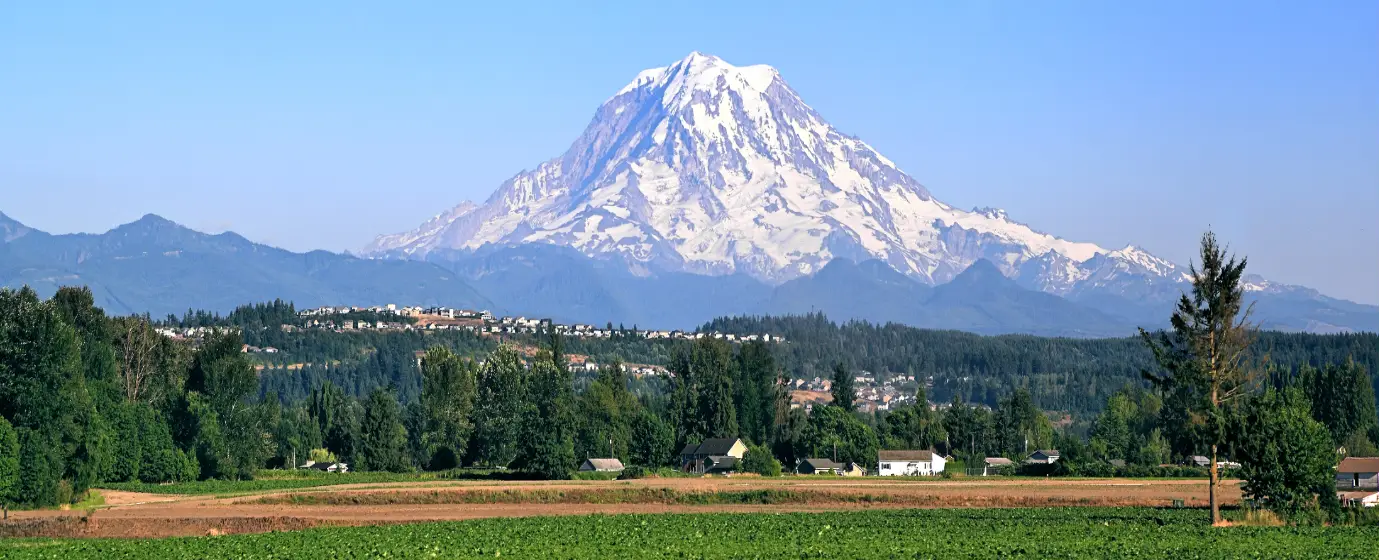
Most Californians who move to Maple Valley say the same thing about month two: they checked their pay stub and couldn't believe how much was left over. No state income tax will do that. But Maple Valley isn't simply a tax refuge — it's a specific kind of Pacific Northwest suburb, sitting about 45 minutes southeast of Seattle along SR-169, caught between the Cascade foothills and the southern reaches of King County. The lifestyle here is quieter and greener than anything in the Bay Area or greater Los Angeles, and the commute culture is built around a two-lane state highway rather than a freeway, which shapes daily life in ways that take some adjustment.
The city of roughly 28,500 people draws a disproportionately credentialed professional class — approximately 75% of adults hold post-secondary education credentials, and the median household income sits at $152,885. Families with school-age children are the dominant buyer type, largely because Tahoma School District earns an overall 'A' grade from Niche (2026) and ranks in the top 5% of Washington public school districts. Major employers include an Amazon logistics and delivery station, Fred Meyer, and Lakefield Veterinary Group locally, while a significant share of residents make the commute north to Redmond and Seattle-area tech campuses — Microsoft among them. If you're used to California's sprawling job corridors, Maple Valley's economy will feel more concentrated and commuter-dependent.
On cost, Washington's broad cost-of-living index registers around 110.7 versus California's 142.2 (national average = 100), and the gap shows up in groceries, utilities, and services. The city's full cost-of-living breakdown details where that gap is widest. Maple Valley's typical home value is $759,950 (Zillow Home Value Index, June 2026) — still a real number for most buyers, but a figure that reads very differently depending on where in California you're coming from. Lake Wilderness Park anchors the city's outdoor life, and the Four Corners commercial district handles most day-to-day errands, with independent spots like Crockett's Public House and Burger Buds filling in the local dining scene.
Whether you're relocating for a job, leaving California's tax environment behind, or following family north, the sections below break down Maple Valley's California-to-Washington price and tax comparison, what the climate switch actually feels like, how the schools and community compare, what you'll gain and what you'll give up, and the honest friction moments that California transplants most often bring up after six months here.
The Tax Shift: What Leaving California Actually Puts Back in Your Pocket
Washington has no state income tax on wages or salaries. Full stop. California's top marginal rate reaches 13.3% — including the 1% Mental Health Services Tax on income above $1 million — making it the highest state income tax in the country. For a household earning $152,885, the difference isn't theoretical; it's thousands of dollars that stay in your checking account every year.
That advantage is real and immediate. But there are two tax dynamics that Californians often miss when they're doing the math.
The Capital Gains Nuance
Washington does levy a capital gains excise tax on long-term gains above $278,000 (2025 threshold, indexed annually) — at 7%, rising to 9.9% on gains above $1 million. Gains from directly held real estate and qualified small-business stock are excluded. California, by contrast, taxes capital gains as ordinary income at the same progressive rates as wages, up to 13.3%. If you're selling a business or a large investment portfolio as part of your move, talk to a Washington-licensed tax professional before you close on a California asset — the exclusion details matter.
Property Tax: The Direction Nobody Expects
This is where California transplants get a genuine surprise — and not a pleasant one. Maple Valley's effective property tax rate is 1.14%, assessed annually at current market value. California's effective rate averages approximately 0.76% statewide, and Proposition 13 caps assessed-value increases at 2% per year. If you've owned a California home for 15 years, your effective rate on current market value is probably well below that 0.76% average — meaning your annual property tax bill in Maple Valley could be meaningfully higher than what you've been paying, even on a home priced noticeably lower than your California one.
Sales Tax: Roughly a Wash
Maple Valley has a combined state and local sales tax rate of 9.1%, which applies to most goods. California's statewide base is 7.25%, but local add-ons push major California cities considerably higher — Los Angeles sits at 10.25%. If you're coming from a high-tax California city, the sales tax here will feel familiar or slightly better. If you're coming from a lower-tax California jurisdiction, it may run a touch higher.
| Tax Category | California | Maple Valley / WA | Who Benefits |
|---|---|---|---|
| State income tax (wages) | Up to 13.3% | 0% | Washington, clearly |
| Capital gains tax | Up to 13.3% (ordinary income rates) | 7% above $278K / 9.9% above $1M (excl. real estate) | Washington for most; mixed for high earners |
| Effective property tax rate | ~0.76% avg (Prop 13 often lower) | 1.14% (annual market value) | California (especially long-term owners) |
| Sales tax (city rate) | 7.25% base; up to 10.25%+ locally | 9.1% combined (Q3 2026) | Roughly equal; CA high-tax cities pay more |
| State estate / inheritance tax | None | None | Equal |
| Overall tax posture (W-2 earner) | High burden, Prop 13 cushions property | Lower overall; property tax is the catch | Washington wins on income; property is the trade-off |
The net picture for most W-2 earners who've been in California less than a decade: Washington comes out ahead, often significantly. Long-term California homeowners with a Prop 13-locked bill need to run the actual numbers before assuming the move is a windfall.
Home Prices: What Your California Equity Actually Buys Here
Maple Valley's typical home value is $759,950 (Zillow Home Value Index, June 2026). That number lands differently depending on your zip code of origin.
If you're coming from the Bay Area or coastal Southern California, you're looking at a market that is noticeably less expensive than what you left — your California equity may cover a substantial down payment, or in some cases the entire purchase. If you're moving from a Central Valley city or an inland California market, the price gap shrinks considerably and could even flip.
What $759,950 Gets You Here
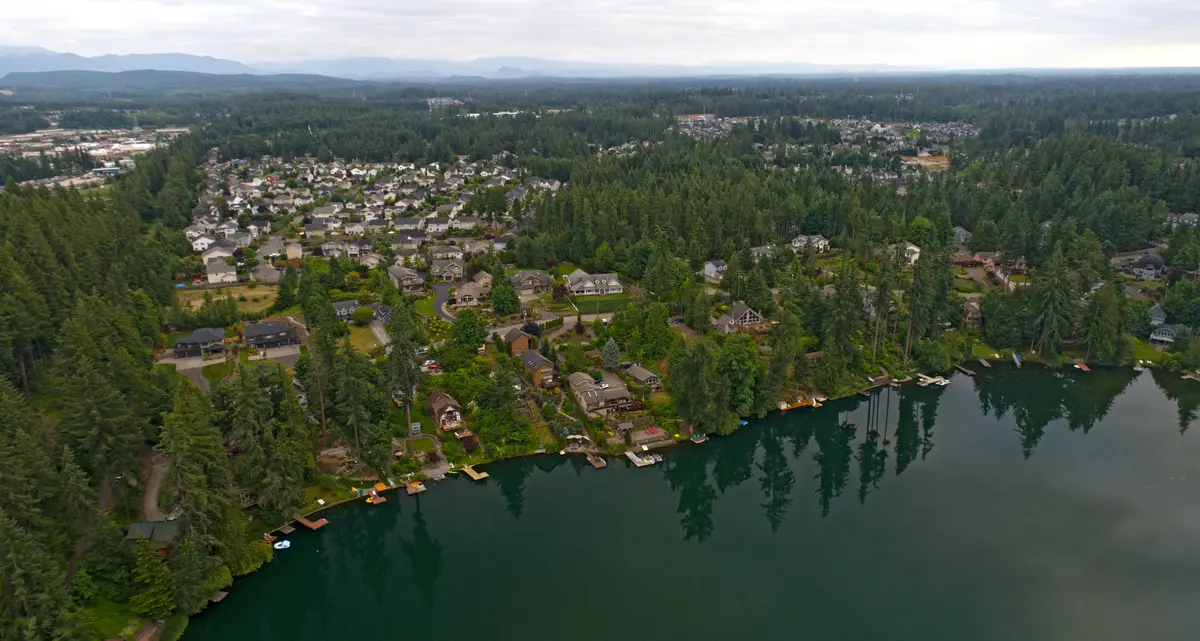
At that price point in Maple Valley, you're typically looking at a single-family home with three to four bedrooms, a two-car garage, and a lot large enough to feel genuinely private — the kind of suburban footprint that would cost a multiple of that figure in Marin County or the Westside of Los Angeles. The neighborhoods around Lake Sawyer and Wilderness Village tend to offer the widest range of finished product for that price.
Buyers coming from California's coastal markets sometimes try to talk themselves into skipping inspection contingencies to compete — don't. Maple Valley's older housing stock along SR-169's older subdivisions can carry moisture, roof, and foundation issues that a California-conditioned eye won't catch on a walk-through. The Pacific Northwest rain is a variable that matters in pre-purchase due diligence more than most California buyers expect.
The Equity Playbook
California sellers arriving with significant equity have a genuine strategic advantage in this market. A larger down payment reduces your exposure to rate volatility and keeps your monthly carrying cost reasonable on a sub-$800,000 purchase. The buying process page covers Washington-specific loan programs and down payment considerations in detail.
One thing that catches California transplants off guard: Washington does not have a state mortgage interest deduction to layer on top of the federal one, but the income tax savings in most cases more than offset that. The math works out — just differently than you're used to running it.
The Climate Switch: What Nobody from California Is Fully Prepared For
Maple Valley summers are genuinely beautiful — average highs in the mid-70s°F, lows around 51°F, and the kind of long Pacific Northwest evenings that feel almost Scandinavian. July and August here will make you wonder why you waited so long to move.
October through March is the honest part of the conversation. Winter temperatures range from lows around 32°F to highs near 43°F, and the rain is not a dramatic downpour — it's a persistent gray drizzle that settles in for weeks at a time. Californians who've only seen Pacific Northwest weather in summer are routinely blindsided by their first November.
What Locals Know
The gray doesn't just affect mood — it affects how you use the city. Lake Wilderness Park and the trails connecting to the Cascade foothills are genuinely spectacular when they're accessible, but between November and February, you'll need rain gear and a different mental model for what outdoor recreation means. The parks and recreation page covers the trail network in detail, including which routes stay navigable year-round.
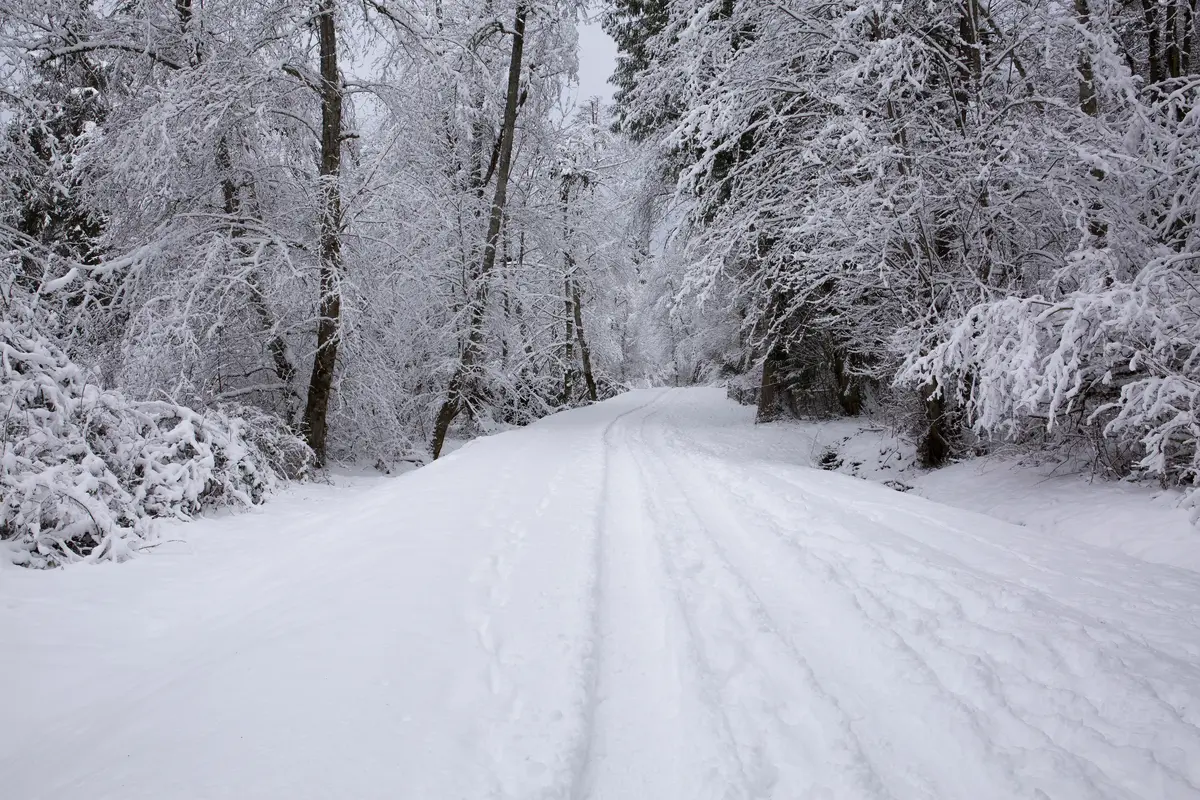
Snow is occasional rather than seasonal — Maple Valley sits low enough that most winter precipitation is rain, but the proximity to the Cascades means one or two significant snow events per year are realistic. SR-169 turns treacherous in ice, and California drivers on all-season tires make up a disproportionate share of the fender-benders after the first frost. All-weather or dedicated winter tires are not optional here the way they were in San Diego or the Bay Area.
The Seasonal Surprise
The thing that catches most California transplants after six months isn't the cold — it's the darkness. By December, Maple Valley sees fewer than nine hours of daylight. People who've spent their lives in Southern California, where even winter days feel bright, describe the adjustment as the single hardest part of the move. A light therapy lamp is not a quirky Pacific Northwest affectation; it's a practical tool that a meaningful percentage of your new neighbors use from October through February.
The upside is that Maple Valley residents develop a strong indoor social culture that California's year-round outdoor lifestyle doesn't really require. The brewery scene along the SR-169 corridor, the community events at Lake Wilderness Arboretum, and the gathering energy at spots like Crockett's Public House are all more essential to local life than they'd be somewhere with 300 sunny days a year.
Looking to buy in Maple Valley? Estimate your payment.
Enter your numbers to see an estimated monthly mortgage payment.
Estimate only. Excludes HOA fees and mortgage insurance. The interest rate above is a starting point, not a quoted rate — replace it with your own to see real numbers. Insurance is a flat placeholder, not a Maple Valley quote.
Schools, Safety, and What California Families Actually Gain
Families with school-age children moving from California often find Tahoma School District to be one of the most straightforward wins of the entire relocation. The district earned an overall 'A' grade from Niche in its 2026 rankings and places in the top 5% of Washington public school districts for academic performance. Math proficiency runs at 64% district-wide versus 41% statewide — a gap that shows up in classroom experience, not just on a ranking page.
Tahoma Senior High School ranks #46 among the best public high schools in Washington and #38 in the Seattle area per Niche's 2026 data. For context, many California parents moving from districts in Los Angeles Unified or similar large urban systems will find the transition to a high-performing, relatively small district (around 9,234 students across 10 schools) a significant upgrade in terms of class size, teacher continuity, and parent engagement. The full schools page covers boundary details, individual school grades, and enrollment logistics.
Safety: A Meaningful Difference
Maple Valley's safety profile is one of the city's clearest advantages for families coming from California's larger metros. The city's violent crime rate runs at approximately 1 per 1,000 residents — a figure that compares favorably against the broader King County average and sits well below most California metro benchmarks. More on the city's safety data and methodology is on its own page.
Healthcare Costs: A Genuine Win, With a Catch
Health insurance premiums in Washington generally run noticeably below what most Californians are paying, and routine care costs tend to follow. The honest downside: Maple Valley is a smaller community, and for specialist or advanced care, you will drive farther than you did in a major California metro — typically to the Renton or greater Seattle corridor.
What You Give Up Culturally
California's cultural density — the diversity of restaurants, the arts institutions, the sheer volume of options — does not transfer intact to a city of 28,500 people. Maple Valley is a genuinely community-oriented place, but it is not a cosmopolitan one. Alaska N Dumplings and the handful of independent restaurants in the Four Corners area reflect a local food scene that's real and worth exploring, but if your baseline is a 15-minute drive to any cuisine in the world, plan to recalibrate. Seattle fills that gap, but at the cost of a 45-minute commute each way.
The Honest Trade-Offs: What You Gain, What You Give Up, and Who This Move Actually Suits
Moving from California to Maple Valley is not a downgrade dressed up as a lifestyle choice — it's a genuine reorientation, and it suits specific kinds of people better than others. The households that thrive here tend to share a few common traits: they prioritize school quality and neighborhood safety over urban density, they're comfortable with a meaningful commute to Seattle's job core, and they're willing to trade California's outdoor sunshine for the Pacific Northwest's green and rain.
What You Gain
- Zero state income tax on wages — the single largest financial lever for most W-2 earners, immediate and significant.
- A top-5% school district with genuine academic performance data behind the ranking.
- Lower housing costs relative to coastal California — your equity goes considerably further here than in the Bay Area or coastal Southern California.
- Safety — Maple Valley is among the safer communities in the King County region, with crime rates that will feel like a meaningful improvement for anyone coming from a major California metro.
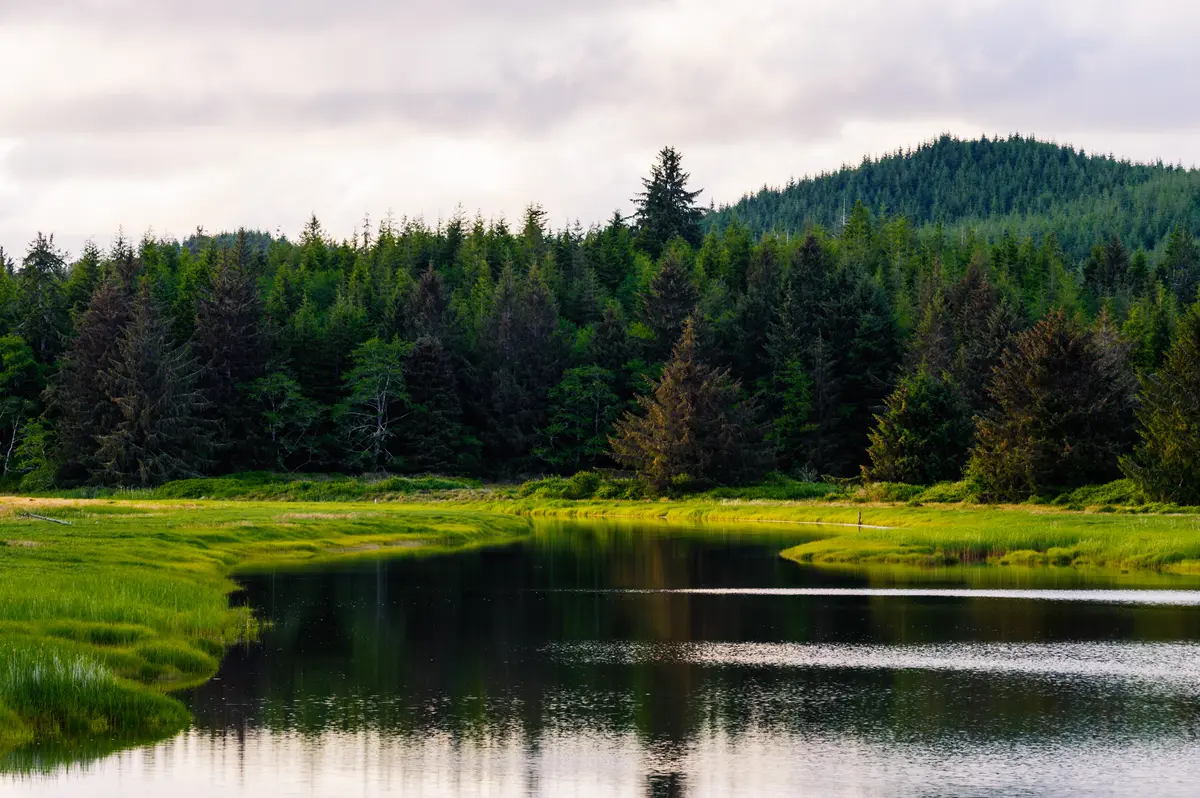
- Green infrastructure — Lake Wilderness Park, the Arboretum, and the Cascade foothills trail network offer outdoor access that's qualitatively different from California's more crowded parks.
What You Give Up
- Proposition 13's property tax cushion — Washington assesses at current market value annually, and 1.14% on $759,950 is a real number that will likely exceed what long-term California homeowners have been paying.
- Year-round sunshine — this is not a small thing. The seasonal darkness affects quality of life in ways that are hard to fully anticipate until you've lived through a Maple Valley December.
- Urban density and cultural variety — Four Corners and the local restaurant scene are genuinely good for a city this size, but they're not a substitute for what California's major metros offer.
- Single-highway dependency — almost everything in and out of Maple Valley runs through SR-169. When it backs up, there is no meaningful alternate route.
Who This Move Actually Suits
| Buyer Type | Fit for Maple Valley | Key Reason |
|---|---|---|
| Families | Strong | Tahoma District A-grade, safe streets, space for kids |
| Tech commuters | Strong | 45 min to Seattle/Redmond corridor; Amazon and Microsoft access |
| California equity buyers | Strong | Bay Area / coastal CA equity buys real space here |
| Outdoor enthusiasts | Moderate | Trails and lakes are excellent; rain tolerance required |
| Urban lifestyle seekers | Weak | Car-dependent; Seattle density is 45 minutes away |
| Remote workers (non-commuters) | Strong | Quiet community, good schools, lower cost base than CA |
The buyers who move OUT of Maple Valley within three years are almost always in one of two camps: they underestimated how much the winter darkness would affect them, or they needed urban density that a 45-minute commute couldn't reliably deliver. Both are predictable and avoidable if you spend a January weekend here before you sign anything.
For more on who Maple Valley suits and the full community profile, the living in Maple Valley overview covers the daily-life picture in depth.
Local Expert Takeaway: The California-to-Maple Valley move makes the most financial sense if you're a W-2 earner with California equity who needs a top school district and can tolerate a 45-minute commute on SR-169. The income tax savings are real and immediate. The property tax increase is also real — run those numbers before you assume it's a clean win. Spend a weekend in November or January, not July, before you commit: the Pacific Northwest gray is the variable that ends more California relocations than any financial calculation does.
Quick Takeaways & FAQs
✅ Washington's zero state income tax on wages is the single largest financial gain for most California households relocating to Maple Valley — immediate, permanent, and significant.
⚠️ Maple Valley's effective property tax rate of 1.14%, assessed at current market value annually, will likely exceed what long-term California Proposition 13 homeowners are used to paying — even on a lower-priced home.
📍 Spend a weekend in Maple Valley in November or January before you finalize a move — the Pacific Northwest seasonal darkness is the adjustment that surprises California transplants most after six months, and it's not something a summer visit prepares you for.
Do I really pay zero state income tax if I move from California to Maple Valley?
Is Maple Valley's home price actually lower than where I'm coming from in California?
How does the property tax in Maple Valley compare to what I paid in California?
What is the school district like in Maple Valley compared to California public schools?
What do most California transplants wish they'd known before moving to Maple Valley?
Moving to Washington?
Tell us what you need help with and we'll connect you with local resources.
