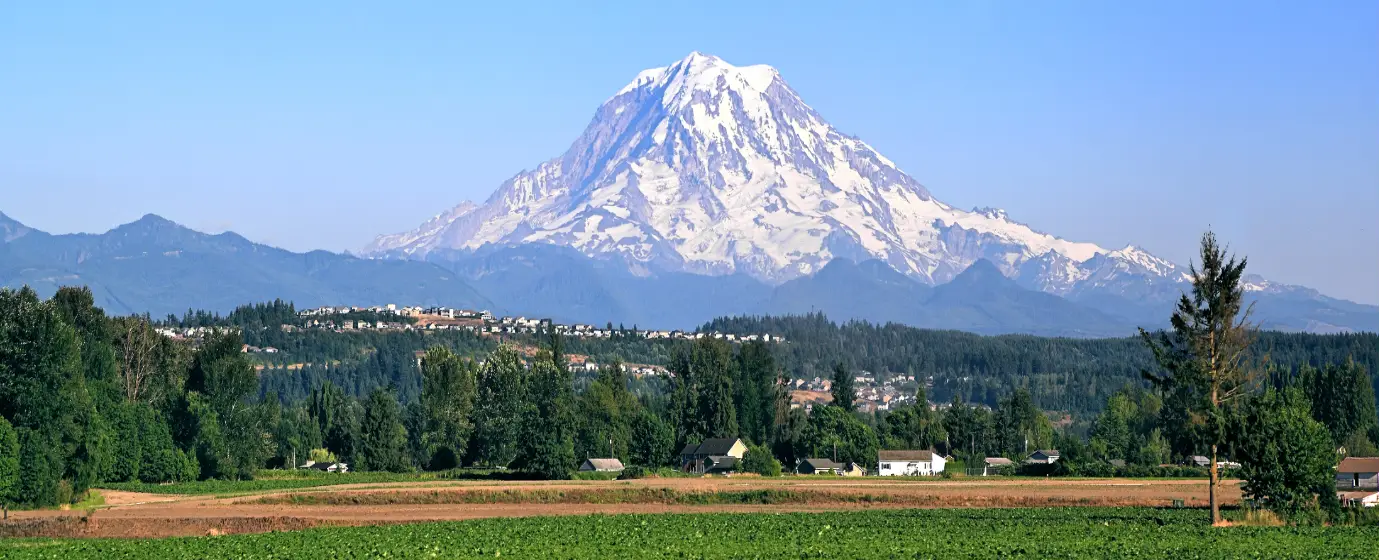
Most people who move to Maple Valley from somewhere larger say the same thing after six months: they forgot to lock the car and nothing happened. That's not complacency — it's a reflection of what the numbers actually show. Maple Valley sits about 45 minutes southeast of Seattle in King County, tucked between Black Diamond, Covington, and Renton along State Route 169. The city's geography — mostly residential subdivisions set back from forested corridors, with commercial activity concentrated around the Four Corners area — shapes daily life in ways that matter for safety: low foot-traffic density, limited late-night activity, and neighborhoods where people recognize each other.
The question "is Maple Valley safe?" is one the data answers fairly cleanly. With a violent crime rate of 1 per 1,000 residents and a property crime rate of 14.7 per 1,000 (both based on 2024 FBI data), the city sits well below Washington State averages and well below the national average. Washington State is not an easy baseline to beat — the state's property crime rate ranked 3rd worst in the nation in 2024 — which makes Maple Valley's position below that bar more meaningful than it might seem at first glance.
Policing here operates under a contract with the King County Sheriff's Office (KCSO) that has been in place since 1997, with a dedicated local presence: a Police Chief, two Sergeants, twelve Patrol Officers, one Traffic Officer, two Detectives, and one School Resource Officer. The KCSO's Southeast Precinct 3 — which is actually headquartered in Maple Valley — covers the city along with Covington and Newcastle, giving the department a locally rooted command structure rather than a distant one.
This guide breaks down Maple Valley's crime statistics against state and national benchmarks, explains what the most common crime types actually are, looks at what the long-term trend line shows, and gives you the neighborhood-level picture that aggregate numbers alone can't provide.
Maple Valley Crime Rates vs. State and National Averages
The headline figure is straightforward: Maple Valley's violent crime rate of 1 per 1,000 residents is roughly three times lower than Washington State's 2024 rate of approximately 3.3 per 1,000, and about 3.3 times lower than the national rate of 3.59 per 1,000. CrimeGrade.org gives the city an A- for violent crime and places it in the 80th percentile for safety nationally — meaning Maple Valley is safer than roughly 80% of U.S. cities by that measure.
Property crime tells a more nuanced story, but still a favorable one. The city's rate of 14.7 per 1,000 is meaningfully below Washington State's 2024 figure of approximately 24.7 per 1,000. That state baseline matters: Washington ranked 3rd worst in the nation for property crime in 2024, so clearing it by a significant margin is not a trivial achievement.
| Geography | Violent Crime (per 1,000) | Property Crime (per 1,000) |
|---|---|---|
| Maple Valley, WA | 1.0 | 14.7 |
| Washington State (2024) | ~3.3 | ~24.7 |
| United States (2024) | 3.59 | ~17.6 |
| Covington, WA (nearby) | Comparable suburban range | Comparable suburban range |
| Renton, WA (nearby) | Higher (urban context) | Higher (urban context) |
| Kent, WA (nearby) | Higher (urban context) | Higher (urban context) |
Maple Valley's total crime rate in 2024 was approximately 1,579.6 per 100,000 — noticeably below both the Washington State overall figure and the national average of 2,119.2 per 100,000. The comparison to nearby Kent and Renton is instructive: both are larger cities with more commercial density, and both carry meaningfully higher crime rates across the board.
One piece of national context worth knowing: 2024 was a strong year for crime reduction broadly. The U.S. violent crime rate fell to its lowest point since 1969, with both violent and property crime declining roughly 5–9% year-over-year. Maple Valley's already-low figures sit within that improving national environment, not against a backdrop of rising crime.
What Types of Crime Actually Happen in Maple Valley
The most reported crime types in Maple Valley — per 2024 FBI data — are larceny-theft, aggravated assault, and burglary. That profile is consistent with what you'd expect in a prosperous, low-density suburb: crimes of opportunity rather than violence, concentrated around commercial corridors and unlocked vehicles rather than residential interiors.
Larceny-theft is the dominant category. In practical terms, this means items stolen from vehicles, package theft from porches, and opportunistic retail theft around the Four Corners commercial area — not the kind of crime that typically makes residents feel personally at risk, but the kind that adds up statistically and that individual precautions can significantly reduce.
Aggravated assault appearing in the top three is worth understanding in context. With a total violent crime rate of 1 per 1,000, the absolute number of aggravated assaults in a city of roughly 28,500 people is small. The category can include incidents between people who know each other — domestic situations, altercations — rather than stranger-danger scenarios. It does not indicate a pattern of random street violence.
Burglary rounds out the top three. Homes left visibly empty, garages with windows, and properties with poor exterior lighting are the typical targets. This is relevant when you're evaluating specific streets and lot configurations — something worth considering when you're narrowing down neighborhoods.
The Practical Takeaway on Crime Type
The crime profile here is what security professionals call "preventable opportunistic crime" — meaning that basic countermeasures (locked cars, porch cameras, motion lighting, package lockers) measurably reduce your personal exposure. The city's low violent crime rate suggests that the risk most families actually worry about — being physically threatened — is genuinely low compared to state and national baselines.
Policing Structure: How Maple Valley Gets Covered
Maple Valley contracts its law enforcement through the King County Sheriff's Office — an arrangement that has been in place since 1997 and gives the city a dedicated, locally stationed force rather than a generic county patrol. The department's staffing reflects that dedicated structure: a Police Chief, two Sergeants, twelve Patrol Officers, one Traffic Officer, two Detectives, and one School Resource Officer assigned to local schools.
Importantly, KCSO's Southeast Precinct 3 is headquartered in Maple Valley itself. That means command staff are physically located in the community they serve, not driving in from a regional hub. The precinct also covers Covington and Newcastle under similar contract arrangements, which creates consistent patrol presence across the southeast King County corridor.
The community policing side of the operation is more active than many residents expect. The Maple Valley Police Department runs an annual Community Police Academy — a multi-week program that walks residents through department operations, crime analysis, and patrol priorities — as well as a children's bike safety rodeo. These aren't just public-relations gestures; the Community Police Academy in particular gives residents direct access to the data and reasoning behind where patrol resources get concentrated.
What the Staffing Ratio Actually Means
Twelve patrol officers for a city of roughly 28,500 people is a modest ratio by urban standards. Maple Valley is not a city with 24-hour commercial density or a downtown entertainment district that generates late-night calls for service — the staffing level matches the actual call volume. What the department lacks in sheer numbers it compensates for through the KCSO data-sharing infrastructure, which allows patrol concentration to be driven by crime-pattern analysis rather than reactive scheduling.
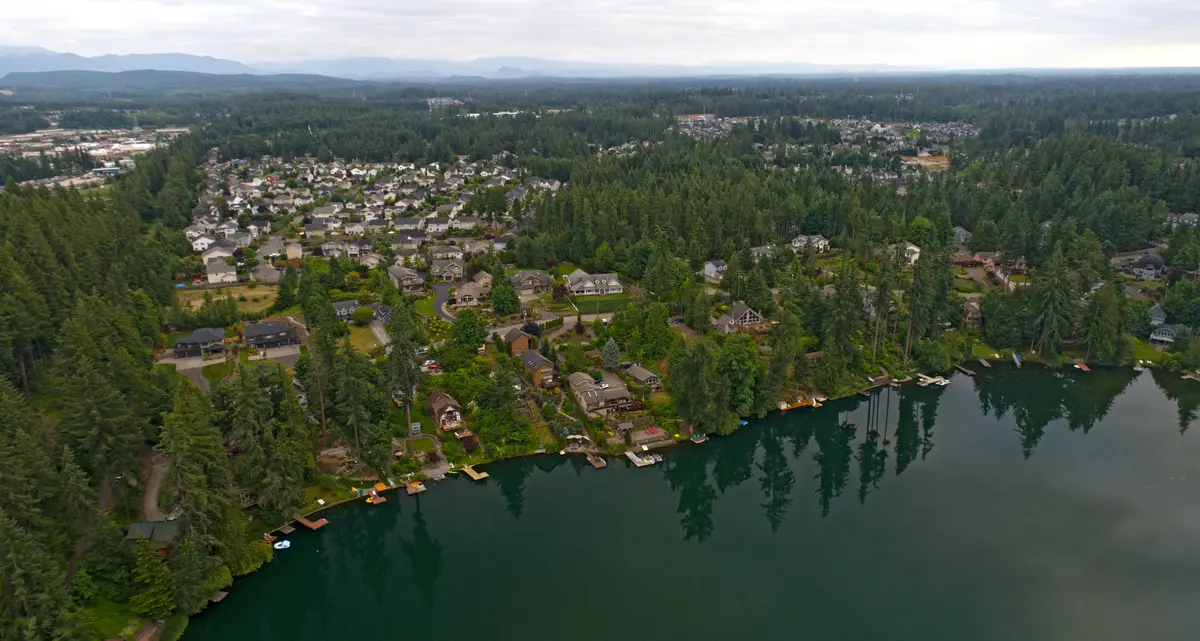
One thing to know before choosing an area: response times in the more outlying residential pockets — particularly streets that feed off Maple Valley–Black Diamond Road SE past the Lake Sawyer and Cherokee Bay areas — can be longer than in the denser neighborhoods around Four Corners. It's not alarming, but it's a real variable if immediate response matters to you.
Looking to buy in Maple Valley? Estimate your payment.
Enter your numbers to see an estimated monthly mortgage payment.
Estimate only. Excludes HOA fees and mortgage insurance. The interest rate above is a starting point, not a quoted rate — replace it with your own to see real numbers. Insurance is a flat placeholder, not a Maple Valley quote.
The Long-Term Trend: Is Maple Valley Getting Safer?
A 19-year trend analysis on CityRating.com using FBI Uniform Crime Report data shows an overall downward trajectory in both violent and property crime in Maple Valley, with 2025 projected to remain below 2019 pre-pandemic levels. That downward trend matters more than any single year's snapshot because it tells you whether the current figures reflect a structural reality or a temporary anomaly.
Washington State's own crime picture is more complicated. The Washington Association of Sheriffs and Police Chiefs noted in its 2024 report that while crime fell year-over-year statewide, rates remain elevated compared to 2019 baselines — meaning the state is still recovering from a pandemic-era spike. Maple Valley appears to have tracked below that spike more effectively than the state average, which is consistent with the suburban insulation that low commercial density provides.
What the Trend Means for Buyers Researching This Area
If you're looking at Maple Valley as a long-term destination, the trend line is genuinely reassuring. The city hasn't experienced the kind of commercial development that typically drives property crime upward — there's no major transit hub, no dense retail corridor generating late-night foot traffic, and no significant homeless encampment pressure near residential streets. Those structural factors tend to keep crime profiles stable over time.
The honest caveat: Maple Valley is growing. Population has increased steadily, and as the Four Corners area adds density and SR-169 sees more throughput traffic, the city's crime profile will likely evolve. A suburb that doubles in commercial square footage over a decade typically sees its property crime rate move with that density. The figures here reflect 2024 — a city still firmly in the low-density suburban category.
For now, the trend line points in the right direction. The question worth asking as you research specific streets is whether the growth pattern in any particular neighborhood is accelerating faster than infrastructure and patrol coverage can keep pace with.
Neighborhood-Level Safety Snapshot
Maple Valley doesn't publish granular crime data broken down by neighborhood — KCSO's publicly available figures operate at the city level — but the neighborhood character differences are real and worth understanding before you settle on an area. For a deeper look at how the neighborhoods compare on other dimensions, see the full neighborhood breakdown.
Wilderness and Wilderness Village
These two neighborhoods sit on the western side of the city, with larger lots and more established tree cover. The residential density is low, homes are set back from the street, and through-traffic is minimal. That configuration is naturally protective against opportunistic property crime — there's simply less foot traffic and fewer easy targets than around commercial nodes.
Best for: Families Quiet
Valley Green and Cedar Downs
These neighborhoods sit closer to the SR-169 corridor and have more varied lot sizes. Proximity to the main commercial spine means somewhat more ambient activity — and marginally more exposure to the larceny-from-vehicle pattern that dominates Maple Valley's crime profile. Locking your car here is simply good practice.
Best for: Commuters First-Time Buyers
Cherokee Bay and Lake Sawyer
Both areas sit toward the southern and southeastern edges of the city, adjacent to Lake Sawyer. The waterfront orientation creates a natural cul-de-sac feel on many streets — limited through-traffic, strong neighbor visibility, and low stranger-foot-traffic. Residents in these pockets tend to know each other's vehicles, which is an underrated organic deterrent.
Best for: Families Views Privacy
Elk Run and Maple Ridge Highlands
Elk Run sits in the northern part of the city with established single-family development. Maple Ridge Highlands, higher in elevation, offers good sightlines and low through-traffic — both factors that correlate with lower opportunistic property crime. Neither neighborhood sits near the commercial concentration where larceny incidents tend to cluster.
Best for: Families Quiet Nature
The Four Corners Area
Four Corners is Maple Valley's commercial hub — where a grocery anchor, a dining strip, and most of the city's retail are concentrated. By definition, this is where the larceny-theft profile is most active. Parking lots, particularly during evening hours, are where vehicle break-ins cluster. Living near Four Corners means convenience; it also means being marginally closer to the city's property crime concentration.
Best for: Walkable Commuters

Local Expert Takeaway: Maple Valley's safety numbers are genuinely strong — a violent crime rate of 1 per 1,000, well below both the state and national averages in a year when Washington ranked 3rd worst nationally for property crime. The practical risk profile here is almost entirely about opportunistic property crime: unlocked cars near the Four Corners area, porch packages, and occasional burglary targeting visibly empty homes. The long-term trend is downward. If you're comparing this city to Renton or Kent, the safety difference is meaningful and consistent across years of data — not a single good-year anomaly. Where the picture deserves scrutiny is in the city's growth trajectory: as Four Corners adds density and SR-169 carries more traffic, the crime profile will likely follow. Lock your car, run a porch camera, and the data suggests you'll find Maple Valley to be among the calmer places you could land in King County.
Quick Takeaways & FAQs
✅ Maple Valley's violent crime rate of 1 per 1,000 is roughly three times lower than the Washington State average and earns an A- grade from CrimeGrade.org, placing it in the 80th percentile for safety nationally.
⚠️ Property crime — mostly larceny-theft around the Four Corners commercial corridor — is the dominant risk category, and Washington State ranks 3rd worst nationally on that metric, making local context essential when reading the numbers.
📍 KCSO's Southeast Precinct 3 is physically headquartered in Maple Valley, meaning command staff are stationed here rather than dispatched from a regional hub — a structural detail that shapes response times and community familiarity.
What is Maple Valley's violent crime rate compared to the rest of Washington State?
What are the most common crimes in Maple Valley?
Who provides police coverage in Maple Valley?
Is crime in Maple Valley getting better or worse over time?
Are some Maple Valley neighborhoods safer than others?
Moving to Washington?
Tell us what you need help with and we'll connect you with local resources.
