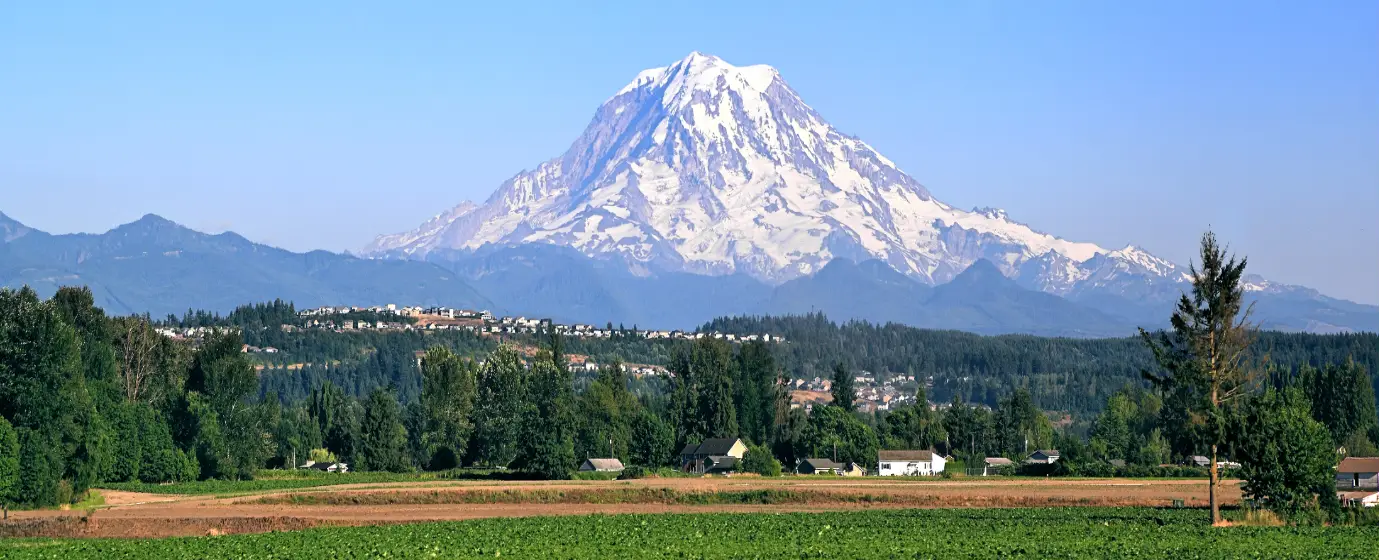
Maybe you've spent twenty years commuting into Seattle and you're ready to stop. Maybe your kids settled in the south King County suburbs and you want to be close without paying Bellevue prices. Either way, Maple Valley presents a genuinely interesting retirement proposition — and an honest one worth thinking through carefully. It sits at the southeastern edge of the Seattle metro, roughly 45 minutes from downtown along SR-169, surrounded by second-growth forest and a cluster of lakes that give the city a quieter, greener feel than most suburbs this close to a major city.
The city's appeal for retirees rests on a specific combination: Washington State's zero income tax on retirement income, a relatively tight-knit community of about 28,500 people, and a price point that — while not cheap — is meaningfully below Seattle's closest-in suburbs. The typical home value sits at $759,950 (Zillow Home Value Index, June 2026), which matters less as an entry price and more as a context for what your home equity could buy here if you're relocating from a pricier market. The community backbone isn't corporate campuses or tourism — it's families and the quieter rhythms of a city that genuinely rolls up the sidewalks early.
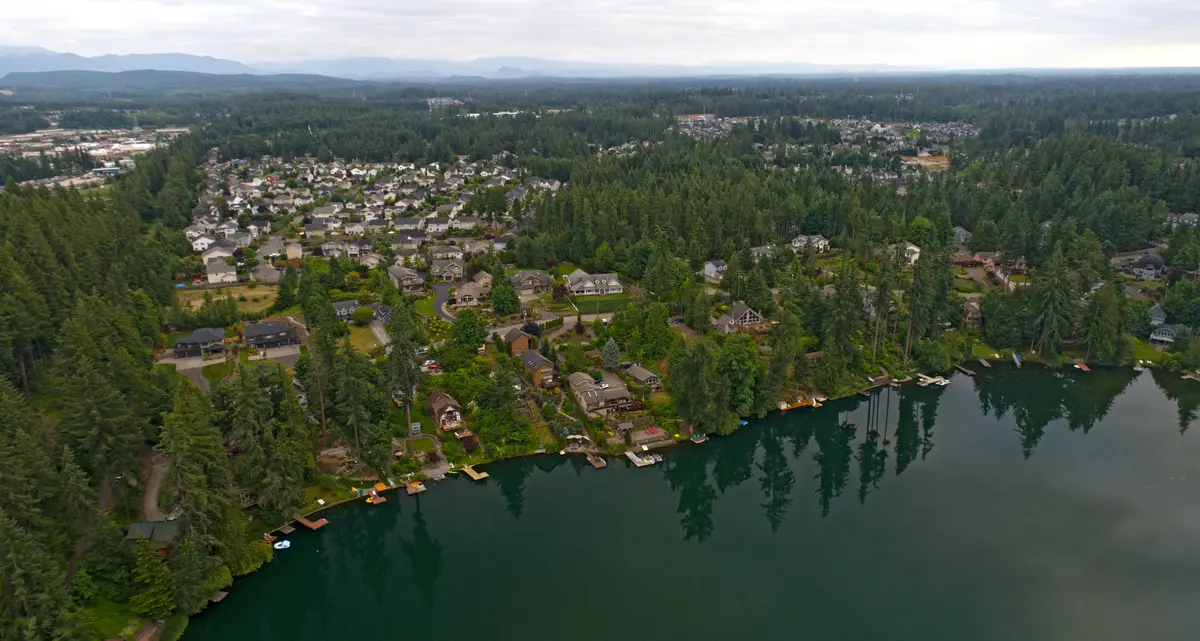
The honest friction: Maple Valley is car-dependent in a way that catches some retirees off guard. A Walk Score of 24 out of 100 means that reaching a pharmacy, a grocery store, or a medical appointment almost always requires getting behind the wheel. For active adults in their 60s who plan to drive indefinitely, this is a manageable reality. For retirees who anticipate eventually giving up car keys — or who already have — it's the central question this guide will keep returning to. The outdoor assets are real: Lake Wilderness Park, the arboretum trails, and the Lake Wilderness Golf Course are all within city limits, and the surrounding forests deliver genuine Pacific Northwest scenery year-round.
Whether you're weighing a move from out of state or just trying to decide between Maple Valley and a handful of nearby alternatives, the sections below cover healthcare access, the retiree tax picture, daily costs on a fixed income, walkability and community life, downsizing options, and an honest side-by-side with nearby retirement destinations.
Why Retirees Are Choosing Maple Valley
The retirees who land here most happily tend to share a few things: they drive confidently, they value being near but not in the city, and they want a house with a yard — not a condo above a coffee shop. Maple Valley rewards that profile generously. The pace is slower than Renton or Kent, the scenery is genuinely better, and the community feels more connected than a city of 28,000 has any right to be.
Proximity to family is often the deciding factor. South King County has absorbed a significant wave of younger families over the past decade, and grandparents who want to be twenty minutes away — not two hours — find Maple Valley's location ideal. The city also draws retirees relocating from California or other high-tax states who quickly discover that Washington's zero state income tax on Social Security, pensions, and retirement-account withdrawals fundamentally reshapes what a fixed income can support. The typical home value of $759,950 (Zillow Home Value Index, June 2026) means entry into this community isn't casual, but for buyers liquidating equity from a higher-cost market, it's often very achievable.
Who should look elsewhere? Retirees who rely on public transit, who want walkable errands, or who need Level I trauma care within a fifteen-minute drive will find real limitations here. Anyone planning to age into a car-free lifestyle should have a frank conversation with themselves before committing — the infrastructure simply isn't there yet. If urban amenities, frequent cultural events, or a dense walkable downtown are priorities, Renton and its more urban core may be the better fit. Maple Valley earns its retirement appeal honestly, but it isn't for everyone.
Healthcare & Medical Access in Maple Valley
What's Available Locally
Maple Valley has usable outpatient infrastructure for day-to-day health needs. The UW VMC Maple Valley Clinic serves the city's ZIP code directly with primary and preventive care, and Valley Medical Center Lake Sawyer provides additional outpatient services close to the Lake Sawyer area. For routine appointments — annual physicals, lab work, minor urgent care — you likely won't need to leave the area.
The Nearest Hospital
MultiCare Covington Medical Center, located in neighboring Covington just a few miles north, is the closest full-service acute-care hospital. For most emergency situations, this is your first stop, and proximity matters: it's a genuinely short drive rather than a county-away transfer. For higher-acuity or specialized care, Valley Medical Center in Renton — recognized for Outpatient Joint Replacement excellence — and Swedish's Issaquah Campus are both within the regional care network and reachable within 30 to 40 minutes under normal traffic conditions.
The Honest Distance-to-Advanced-Care Reality
Major academic medical centers — the University of Washington Medical Center and Seattle's specialty hospital network — are roughly 45 minutes away in light traffic, longer when I-405 or SR-169 are congested. For retirees managing a serious chronic condition or anticipating complex surgical needs, that commute is worth planning around. It's not a dealbreaker, but it's not the same as living ten minutes from a Level I trauma center.
King County's Volunteer Transportation Service (VTS) offers a meaningful safety net: free weekday rides to medical appointments for residents age 60 and older throughout King County, using volunteer drivers. If driving becomes difficult, this program covers the gap for medical visits specifically — though it doesn't replace general transportation for errands or social outings.
Specialist Access
Cardiology, oncology, and neurology at the specialist depth most retirees eventually need are primarily concentrated in Renton, Bellevue, and Seattle. The regional care network means referrals flow relatively smoothly, but expect to drive. Retirees with serious or complex medical histories may want to establish care relationships with specialist offices in Renton early — before a health event creates urgency.
The Retiree Budget in Maple Valley
The Washington Tax Advantage
Washington State levies no personal income tax. That means your Social Security check, pension distributions, IRA withdrawals, and 401(k) income all arrive in Maple Valley completely free of state tax. For retirees moving from California, Oregon, or other income-tax states, this is a structural shift in how far a fixed income reaches — not a small rounding error.
Two nuances worth knowing before you move: Washington taxes 7% on long-term capital gains above a $278,000 standard deduction for 2025, rising to 9.9% on gains above $1,000,000. It applies only to taxable brokerage accounts — not retirement-account withdrawals, and not real estate sales. If your retirement income includes significant brokerage gains each year, this is worth modeling with a tax professional. Separately, Washington's estate tax applies to estates above $3 million (2026), a lower threshold than the federal exemption. Retirees with substantial home equity, retirement savings, and assets in combination should factor this into estate planning.
Property Taxes
The effective property tax rate in Maple Valley runs approximately 1.14%. On a home at the city's typical value, that's a real annual line item — see the full cost-of-living breakdown for current figures. Washington's senior property-tax exemption program can reduce that burden meaningfully for qualifying homeowners age 61 and older with income below state thresholds — worth investigating at the King County Assessor's office early in your planning.
Daily Costs on a Fixed Income
The trade-off Washington extracts for its zero income tax is a combined average state and local sales tax of approximately 9.51% — among the highest in the nation. Every grocery run, hardware purchase, and restaurant meal carries that rate. Retirees who spend heavily on consumer goods feel this more than those whose budget leans toward mortgage, utilities, and healthcare. Factoring this into monthly cash-flow modeling is important; it surprises many newcomers who focused only on the income-tax headline.
Day-to-day dining in Maple Valley runs the range from casual pub meals at Crockett's Public House to a proper sit-down dinner at Sonora Steak, with most mid-range meals landing in a comfortable bracket for budget-conscious retirees. The Four Corners commercial district handles most routine errands — pharmacy, grocery, hardware — without requiring a trip to Renton or Kent.
Looking to buy in Maple Valley? Estimate your payment.
Enter your numbers to see an estimated monthly mortgage payment.
Estimate only. Excludes HOA fees and mortgage insurance. The interest rate above is a starting point, not a quoted rate — replace it with your own to see real numbers. Insurance is a flat placeholder, not a Maple Valley quote.
Walkability, Community & Staying Active in Maple Valley
The Walkability Reality
There's no softening this: Maple Valley earned a Walk Score of 24 out of 100. It is a car-dependent city, and nearly every daily errand — groceries, pharmacy, medical appointments, banking — requires driving. The terrain adds context: the city has rolling topography, and many residential areas sit on slopes that make casual walking for errands impractical even where sidewalks exist. Plan your retirement here assuming you will drive indefinitely or have access to someone who can drive you.
What walking IS good for here is recreation, not errands. The trail network at Lake Wilderness Park and the Lake Wilderness Arboretum gives walkers genuine, beautiful options that feel nothing like suburban sidewalk loops. The arboretum gardens, particularly in spring and fall, draw regular visitors from across south King County. The Lake Wilderness Golf Course adds another active option within city limits.
Senior Community Life
The Greater Maple Valley Community Center runs a Senior Adult Program for adults 50 and older that is more substantive than its name suggests. The roster includes advocacy services, blood pressure checks, foot care clinics, yoga, table games, and organized field trips — enough consistent programming to build a genuine social network around if you're intentional about it. For retirees who join in the first six months, this tends to become a weekly anchor point rather than an occasional drop-in.
King County VTS covers medical transportation needs for those 60-plus, but social transportation — getting to a movie, a dinner with friends, a community event — still depends on driving or personal arrangements. Newcomers who've lived in more transit-connected cities sometimes discover this limitation most sharply about eight months in, when the novelty of the Pacific Northwest scenery settles and the social logistics become more visible.
Where Locals Actually Gather
The Four Corners area functions as the community's informal gathering hub. Crockett's Public House draws a mix of ages on weekend evenings, and the area's independent restaurants — including Alaska N Dumplings for something different — give retirees a rotation of casual dining options that don't require a forty-minute drive. Lake Wilderness Park is where you'll find walkers, dog owners, and grandparents with grandchildren on weekend mornings, particularly once the weather cooperates in late spring through early fall.
Right-Sizing: Downsizing in Maple Valley
The Downsizing Landscape
Maple Valley's single-family housing stock skews toward newer construction with open floor plans — many homes built in the 2000s and 2010s were designed with main-floor primary suites, which matters significantly when stairs become a concern. If you're downsizing from a larger family home, you can often find a well-built rancher or single-level home without paying a premium specifically for that feature, though inventory tightens in the under-2,000-square-foot range.
The 55+ and active-adult community options within city limits are more developed than most buyers expect for a city this size. NewHomeSource currently lists seven active 55+ communities in Maple Valley, with new-construction pricing ranging from $496,900 to $1,149,000 — a range wide enough to serve buyers entering from a modest sale and those liquidating equity from a high-cost market alike. That lower end, around $496,900, represents attached or smaller-format homes; the upper range moves into larger, more premium builds.
Dedicated Senior Living Options
Bonaventure of Maple Valley, at 23801 228th Ave SE, offers the full continuum on a single campus: independent living, assisted living, and memory care, with restaurant-style dining and 24/7 staffing. For retirees who want to move once and age in place without relocating again as care needs evolve, this model is specifically designed for that scenario. The single-campus continuum removes the disruptive move that happens when a spouse or partner needs a different level of care.
Farrington Court serves the independent living end of the spectrum, operating as a 62+ community managed by Stellar Senior Living. The apartment-home format suits retirees who want the privacy and comfort of their own space without the maintenance obligations of homeownership. This is worth exploring early — inventory in smaller senior communities in suburban King County tends to move on limited notice.
What to Know Before You Search
The catch with downsizing in Maple Valley is the same catch that applies to buying here generally: inventory is limited relative to demand. Single-level detached homes in the 1,400–1,800 square foot range often receive multiple offers when priced correctly. If single-level living is a firm requirement rather than a preference, give yourself more runway than you think you need — six to twelve months of active searching is realistic in a constrained market. Patio homes and attached townhomes with main-floor primaries exist but are not abundant.
Maple Valley vs Nearby Retirement Destinations
| City | Cost vs Maple Valley | Primary Hospital | Walkability | Senior Living Depth | Overall Retirement Fit |
|---|---|---|---|---|---|
| Maple Valley | Anchor | MultiCare Covington Medical Center (nearby); Valley Medical Center (Renton) | Car-dependent (Walk Score 24) | Good — Bonaventure, Farrington Court, 7 active 55+ communities | Nature Quiet Strong for active, driving retirees |
| Covington | About the same | MultiCare Covington Medical Center — on-site | Car-dependent, similar terrain | Moderate — fewer dedicated senior communities | Value Good if hospital proximity is the priority |
| Black Diamond | Noticeably cheaper | Dependent on MultiCare Covington or Valley Medical (longer drive) | Very car-dependent; rural feel | Limited — small-town inventory only | Privacy Best for retirees who genuinely want rural quiet over services |
| Renton | Roughly similar, varies by area | Valley Medical Center — within the city | More walkable downtown core; some errands on foot | Strong — larger city, more options | Transit Walkable Better for retirees who want less car dependence |
| Kent | Modestly cheaper | Valley Medical Center (Renton); regional access | Somewhat more walkable than Maple Valley; mixed areas | Good — larger inventory of senior housing types | Value Practical but less scenic; suits budget-focused retirees |
| Issaquah | Noticeably pricier | Swedish Issaquah Campus — within the city | More walkable than Maple Valley; downtown pedestrian access | Strong — active-adult community presence near the downtown core | Views Luxury Premium option with better on-site hospital access |
Covington wins on one narrow criterion: if being ten minutes from MultiCare's acute-care hospital is your top priority, it delivers that at a similar price point. Black Diamond offers the lowest prices in the immediate area but at the cost of the thinnest services and the longest drives to everything — a trade-off that tends to appeal most to retirees in their early 60s who are fit, active, and not yet thinking about care logistics.
Renton is the most meaningful alternative for retirees who are honest with themselves about walkability and transit. Valley Medical Center sits within the city, the downtown core allows some on-foot errands, and the bus network connects to the broader King County system in ways Maple Valley simply cannot. The price difference between Renton and Maple Valley varies significantly by neighborhood but is rarely dramatic enough to be the deciding factor on its own.
Issaquah positions itself as the premium choice in this cluster — Swedish's campus within city limits, a more walkable downtown, and active-adult community options near the city center — but the price premium over Maple Valley is real. Kent is the value play: meaningfully cheaper in some pockets, practical in services, but lacking the scenic quality and community cohesion that draw retirees to Maple Valley specifically. For most active adults who drive, prefer a quieter setting, and want to stay close to family in the south King County corridor, Maple Valley remains a genuinely competitive choice.

Local Expert Takeaway: Maple Valley works best in retirement if you're honest about two things upfront: you'll be driving for the rest of your time here, and you're buying into a quiet, forested suburb — not a walkable retirement town. The tax picture is legitimately strong (zero state income tax on retirement income), MultiCare Covington Medical Center is close, and the Greater Maple Valley Community Center's Senior Adult Program gives you a real social foothold if you use it. Bonaventure of Maple Valley and Farrington Court mean you don't have to leave the city if care needs eventually change. Walk the trails at Lake Wilderness Arboretum on a clear morning in October and you'll understand the pull. But if the car keys are a concern now, look hard at Renton first.
Quick Takeaways & FAQs
✅ Washington's zero state income tax on Social Security, pensions, and all retirement-account withdrawals is a genuine and meaningful financial advantage for retirees relocating from income-tax states.
⚠️ Maple Valley's Walk Score of 24 means virtually every errand — pharmacy, groceries, medical appointments — requires a car, which becomes a serious planning constraint as driving ability changes with age.
📍 King County's Volunteer Transportation Service provides free weekday rides to medical appointments for residents 60 and older — a practical backup for retirees who need help getting to care without driving themselves.
Does Washington State tax Social Security or pension income for retirees in Maple Valley?
What is the closest hospital to Maple Valley for retirees?
Are there 55+ or active-adult communities in Maple Valley?
Can you get around Maple Valley without a car as a retiree?
What is the property tax rate in Maple Valley, and are there senior exemptions?
Moving to Washington?
Tell us what you need help with and we'll connect you with local resources.
