
What Is Living in Burien, Washington Like?
If you're choosing between Burien and West Seattle, the decision usually comes down to one thing: how much house do you want for your money, and how much of Seattle's edge are you willing to give up to get it? Burien sits about 12 miles south of downtown Seattle, tucked above the Puget Sound shoreline between Sea-Tac Airport and the quieter enclaves of Normandy Park. SR-509, SR-518, and easy I-5 access make it genuinely close to the city — the commute runs around 20 minutes outside of peak hours — but the feel here is unmistakably its own: lower-key, more racially and economically mixed than most of Seattle's closer suburbs, and built mostly on mid-century single-family stock that still offers something resembling square footage at a price that doesn't require a second income just to get in the door.
The economic spine of Burien runs through Highline Public Schools, which is one of the largest employers in the area and the district that serves the city's kids. Sea-Tac Airport and the Port of Seattle generate thousands of jobs within a short drive, pulling in a significant share of transportation, logistics, and aviation workers who want to live close to work without paying King County's steepest prices. Highline College, located just over the city line in Des Moines, adds an educational anchor that matters both for the workforce and for the community programs it feeds back into the city. Who moves here? A range: airport and airline employees, teachers, service-sector workers, and an increasing number of Seattle commuters who ran the numbers and realized they could buy in Burien for what a condo in a pricier Seattle neighborhood would cost them to rent.
The city's Zillow Home Value Index stood at $656,381 in mid-2026 — noticeably below West Seattle's median and well below Normandy Park's, which gives first-time buyers real traction here that they simply don't have a few miles north. Washington's lack of a state income tax helps across the board, and Burien's effective property tax rate sits at approximately 0.83%, which is modest relative to what King County's higher-priced cities carry. For daily life, more than 365 acres of parks and open space — anchored by the 178-acre Seahurst Park on the Sound — means weekends here don't require a drive to feel like you're outside. The farmers market runs year-round downtown, and the dining scene around Olde Burien and the Town Square core is far more diverse and interesting than the city's low profile might suggest.
Whether you're considering a move or just starting to research the area, the sections below break down Burien's commute reality, housing market, daily rhythms, local favorites, and the honest reasons people choose it — and occasionally leave it.
Burien at a Glance
Looking to buy in Burien? Estimate your payment.
Enter your numbers to see an estimated monthly mortgage payment.
Estimate only. Excludes HOA fees and mortgage insurance. The interest rate above is a starting point, not a quoted rate — replace it with your own to see real numbers. Insurance is a flat placeholder, not a Burien quote.
Why Are People Moving to Burien?
The case for Burien starts with a simple geographic fact: it sits closer to downtown Seattle than most people realize, and it costs significantly less than nearly every neighborhood between it and the city core. That gap draws a specific kind of buyer — one who's done the math and decided that the thirty extra seconds it takes to explain where Burien is at a dinner party is a reasonable trade for a back yard.
The Price-Out Migration
West Seattle's median has climbed well past $800,000. Normandy Park tips past a million. Burien is where buyers from both of those markets land when they stop compromising on space and start compromising on zip code prestige instead. The $500,000–$750,000 price tier sees the heaviest activity, and it's where most of the city's mid-century ranchers, craftsman bungalows, and updated split-levels trade hands.
About 67% of Burien's housing stock was built in 1969 or earlier, which means buyers get bones — larger lots, established trees, real neighborhoods with sidewalks and corner stores — rather than the tightly packed new construction you'd find further inland. That age also means renovation upside that newer suburbs can't offer.
Who the City Suits Best
| Buyer Type | Why Burien Works | Best For |
|---|---|---|
| Seattle commuters priced out of the city | ~20-min drive or RapidRide H Line to downtown; noticeably lower median than West Seattle | Commuter Value |
| Airport and Port of Seattle employees | Sea-Tac is literally adjacent; no highway slog in the wrong direction | Commuter |
| First-time buyers | Entry-level inventory exists in the $500Ks; mid-century stock with good bones | First-Time Value |
| Families with school-age children | Highline Public Schools, accessible parks, neighborhood feel without urban density | Families School |
| Renters building toward ownership | Diverse rental stock; multifamily, duplexes, and apartments in the same city as starter homes | Renter First-Time |
| Outdoor-oriented buyers | 178 acres of Seahurst Park, 2,000 feet of Puget Sound beach, 365+ acres of open space citywide | Nature Views |
| Buyers who want walkable urban amenities | Olde Burien and Town Square offer on-foot access to dining, a farmers market, and transit | Walkable Transit |
Burien tends to disappoint buyers who need Bellevue-level polish or want to be walking distance from Seattle's nightlife. It also tends to surprise buyers who expected a generic airport suburb and instead found a city with real cultural texture.
The Honest Downside
The proximity to Sea-Tac is a double-edged reality. Flight paths run directly over parts of the city — particularly areas north and east of the downtown core — and the noise is not subtle. Anyone considering a home north of SW 148th Street should spend time there on a busy travel day before making an offer.
Crime statistics here are higher than in Normandy Park or Shorewood's more insulated pockets, and property crime in particular runs above the regional average — something the Burien safety page covers in full. That context matters but shouldn't be overstated: the city's neighborhoods vary considerably, and many longtime residents consider their blocks genuinely safe.
What Daily Life Feels Like in Burien
Six months after moving here, nearly everyone says the same thing: Burien is more interesting than it looked from the outside. The dining scene alone catches newcomers off guard. The local Business Improvement District calls it one of the most diverse in the Puget Sound region, and that's not marketing spin — the independent restaurant mix around Olde Burien and the Town Square block reflects a genuinely multicultural city in a way that many higher-profile Seattle suburbs don't.
The Downtown Core
Burien Town Square anchors the downtown: City Hall, the King County Library branch, and a cluster of restaurants and cafés within easy walking distance of each other. It's functional and low-key rather than curated, which is either a feature or a bug depending on what you're used to. The farmers market runs year-round here, which is unusual even by Seattle-area standards.
Olde Burien, a few blocks south, is the neighborhood with the most local-hang energy — the kind of main-street district where you actually run into your neighbors. Elliott Bay Brewing's Burien outpost on SW 152nd Street fits comfortably into that rhythm: a neighborhood brewpub that draws regulars rather than tourists.
Seahurst Park and the Outdoor Baseline
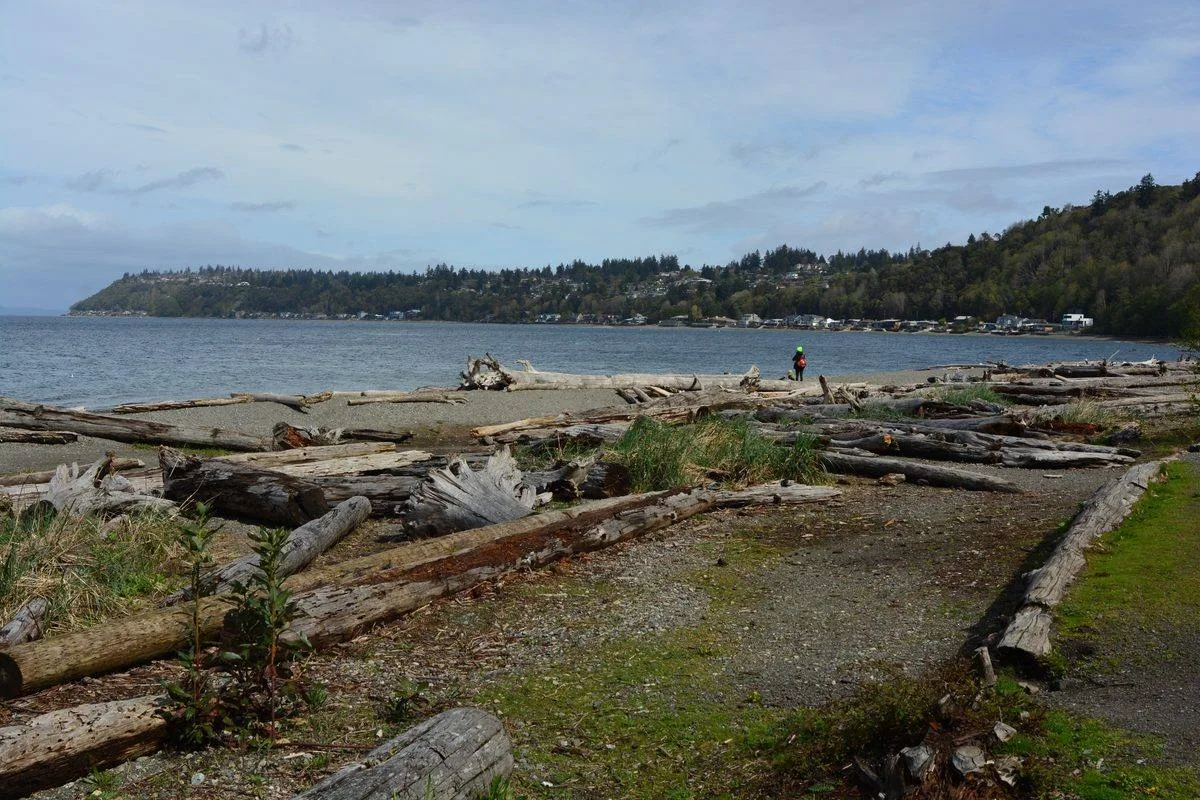
Seahurst (Ed Munro) Park is the city's defining outdoor asset. At 178 acres with roughly 2,000 feet of saltwater beach, forested trails, wetlands, and straight-on views of the Olympic Mountains across the Sound, it punches well above what most cities this size can offer. On a clear winter afternoon the light off the water is genuinely arresting.
The park is part of the Seattle Aquarium's Beach Naturalist Program, which means knowledgeable volunteer naturalists turn up on summer weekends to explain what's living in the tidepools. Parents with curious kids figure this out quickly and build it into their regular rotation. For a full breakdown of trails and recreation across the city's 365-plus acres of open space, the parks and recreation page has the details.
The Summer Rhythm
Thursdays in July and August, the Music in the Park series runs at Lake Burien School Memorial Park — free outdoor concerts that function as the city's most reliable weekly social gathering. Newcomers who stumble onto it in their first summer tend to describe it as the moment Burien stopped feeling like a place they moved to and started feeling like home.
The seasonal surprise no one warns you about: summer in Burien is genuinely excellent — warm, dry, with long evenings on the water — but the airport's flight volume spikes at the same time. If you work from home and your windows face north, July and August will teach you the value of a good white-noise machine.
Schools and Families
Highline Public Schools holds a C+ rating, according to Niche, and serves Burien with a student body that reflects the city's genuine economic diversity. The Burien schools page breaks down individual campuses, boundary quirks, and what the rating actually means on the ground. For a city at this price point, the school quality relative to cost of entry is a meaningful part of the equation for parents with school-age children.
The Burien Housing Market Right Now
Burien's Zillow Home Value Index came in at $656,381 as of mid-2026 — down 1.4% year-over-year, which takes some of the urgency pressure off but doesn't mean the market is soft. Homes here are typically going to pending in about 10 days, which is still fast enough that showing up without a clear sense of what you want tends to cost you.
The dominant housing type is the mid-century single-family home: ranchers, split-levels, and modest craftsman builds on established lots with mature trees. About two-thirds of the city's housing stock predates 1970, which gives the neighborhoods a settled, lived-in feel that newer suburbs can't replicate. Condos, multifamily units, duplexes, and apartments fill out the mix, giving the city more tenure diversity than a lot of comparably priced King County cities.
Some parts of the city carry noticeably different price profiles than others — the distinction matters if you're comparing a beach-view parcel near Seahurst to a well-kept rambler in Gregory Heights — but that full neighborhood breakdown lives on the Burien neighborhoods page. For overall cost context including taxes and what Washington's income tax structure means for your budget, the cost of living page covers the numbers in full.
The market's real story right now is who's buying. First-time buyers priced out of West Seattle and parents with school-age children looking for a yard make up the bulk of the activity in the $500,000–$750,000 range. The city's housing stock in that tier doesn't sit for long — especially anything updated, on a larger lot, or within walking distance of Town Square. When a well-presented home hits that range with good bones and an honest price, the 10-day pending timeline is the realistic expectation, not an outlier.
Burien Neighborhoods
Burien has several distinct areas — each with its own character and appeal. Here’s a breakdown to help you narrow down where to focus your home search.
🏡 Three Tree Point
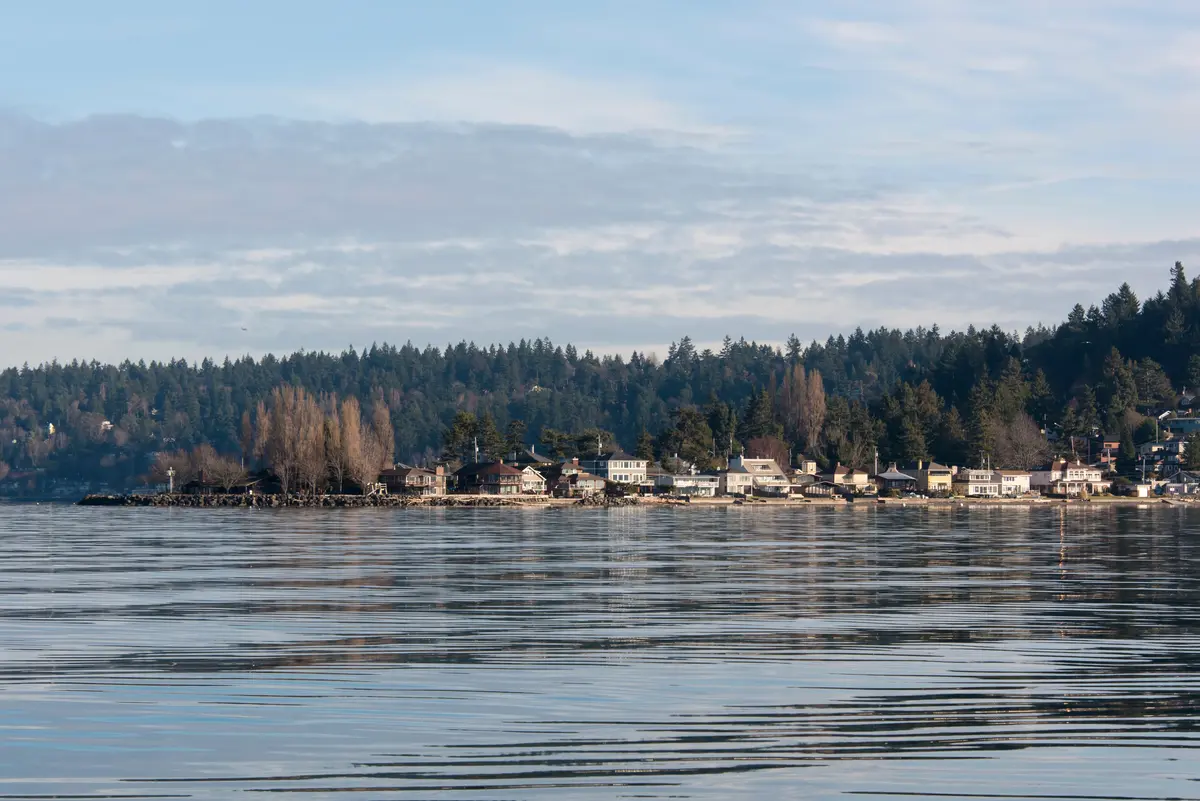
A narrow peninsula jutting into Puget Sound at Burien's southwestern edge, Three Tree Point draws buyers who want waterfront or water-view living in a genuinely quiet setting — the road dead-ends at the water, which keeps traffic to residents only. Housing ranges from modest mid-century cottages to substantial waterfront homes, all sharing the same Olympic Mountain sight lines.
🏠 Seahurst
Seahurst's residential streets back directly up to the 178-acre Seahurst Park, making it the neighborhood of choice for buyers who want to walk to the beach and forest trails without getting in a car. The housing stock is predominantly mid-century single-family, and the neighborhood has a quiet, tucked-away feel that belies how close it sits to SR-509 and the city center.
🌳 Gregory Heights
Gregory Heights is one of Burien's more established interior neighborhoods — a grid of well-kept mid-century ranchers and split-levels that attracts parents with school-age children and longtime residents who value stability over trendiness. It's less dramatic than the waterfront areas but delivers solid lot sizes and a genuine neighborhood feel within easy reach of downtown Burien.
🏘 Five Corners
Named for the intersection where five roads converge near Burien's eastern edge, Five Corners is one of the city's more affordable and accessible areas, with a mix of single-family homes, duplexes, and smaller multifamily buildings. Its position near SR-518 makes it practical for commuters heading east toward the airport or south toward Renton.
🏔 Lake Burien
Lake Burien sits at the city's geographic heart, anchored by the lake itself and the adjacent Lake Burien School Memorial Park — the venue for the city's popular summer Music in the Park concert series on Thursday evenings. The neighborhood around it tends toward established single-family homes and draws buyers who want proximity to the city's most community-oriented gathering space.
🌆 Olde Burien
Olde Burien is the city's most walkable residential district, centered on the historic main-street corridor that runs near SW 152nd Street and offers the densest cluster of independent restaurants, cafés, and local retail in the city. Buyers here trade yard size for on-foot access to daily amenities and the kind of neighborhood energy that's rare at Burien's price point.
Pros & Cons of Living in Burien
The Pros
- More affordable than Seattle with easy I-5/SR-509 access
- waterfront parks and Puget Sound views
- extremely close to Sea-Tac Airport
- diverse
- walkable downtown with strong local dining scene
The Cons
- Higher-than-average crime rates compared to national and state norms
- mixed school performance ratings across the district
- rainy
- gray winters typical of the Puget Sound climate
Getting Around & Commuting in Burien
Burien's commute story is better than most people expect and more complicated than the city's promotional materials admit. The bones are genuinely good — SR-509 and SR-518 both intersect the city, I-5 is minutes away, and the downtown Transit Center is one of the more functional suburban transit hubs in King County. What you do with those bones depends heavily on where you're going and when.
Driving to Seattle
The roughly 20-minute drive to downtown Seattle is real — at 9 a.m. on a Tuesday, it is not. SR-509 northbound into the city compresses badly during peak commute windows, and the Spokane Street viaduct and I-5 interchange can turn a 20-minute trip into 45. Most Burien-to-Seattle commuters learn early that leaving before 7:15 a.m. or after 9:00 a.m. is the variable that makes or breaks the experience.
The flip side: the reverse commute from Seattle to Burien in the morning is almost always clean. And anyone commuting south — to Renton, Kent, or Federal Way — has one of the better suburban commute corridors in the region, with SR-167 access via SR-518 that avoids downtown Seattle entirely.
Sea-Tac and Port Jobs
For employees of the Port of Seattle and Sea-Tac Airport, Burien is as close as you can live without actually being inside the airport perimeter. The airport is a three- to five-minute drive from most of the city. For airline crew, ground operations workers, and airport retail and hospitality staff, that proximity is the whole point of living here — and it shows in the community's demographic and economic mix.
Transit: The RapidRide H Line and What's Coming
King County Metro's RapidRide H Line runs from the Burien Transit Center to downtown Seattle and South Lake Union, with frequent service and dedicated bus lanes for portions of the route. It's a genuine option for car-free or car-light commuters heading north — the kind of transit that actually competes with driving rather than just existing as a backup plan.
A connection to Sound Transit light rail is currently available via a park-and-ride transfer at Tukwila International Boulevard station. That transfer adds time, but it's workable for Eastside-bound commuters or anyone connecting to the broader Link network.
The bigger transit change coming: the federally funded Stride S1 Bus Rapid Transit line is slated to open by 2028, connecting Burien to Bellevue via Tukwila and Renton. New transit centers in Tukwila and Renton received $69.8 million in federal funding for this line. For anyone commuting east to the Eastside tech corridor, that's a meaningful shift in what car-free cross-lake commuting looks like from Burien.
Driving Without a Car
Downtown Burien and the Olde Burien district are walkable on foot — the Town Square, library, farmers market, and a dense cluster of restaurants and cafés are all within a few blocks. Outside that core, Burien is a car city. Seahurst Park, the residential neighborhoods east of downtown, and most of the city's grocery options require wheels or a bus transfer. The city's 2025–2026 Capital Improvement Program funds sidewalk gap closures and nonmotorized connections to transit, which signals intent — but the work is ongoing, not done.
| Destination | Mode | Typical Time | Notes |
|---|---|---|---|
| Downtown Seattle | Drive (SR-509) | 20–45 min | Highly variable; off-peak is reliable |
| Downtown Seattle | RapidRide H Line | 35–50 min | Frequent service; avoids parking costs |
| Sea-Tac Airport | Drive | 3–7 min | Adjacent to the city; one of the region's shortest airport commutes |
| Bellevue / Eastside | Drive (SR-518 to I-405) | 25–45 min | Avoids Seattle core; SR-518 is the key connector |
| Bellevue / Eastside (future) | Stride S1 BRT (2028) | TBD | Federally funded; Tukwila and Renton transit centers under development |
| Renton / Kent | Drive (SR-518 to SR-167) | 15–25 min | South commute corridor; consistently cleaner than northbound |
| Tukwila Link Station | Bus transfer + Link | 20–30 min to station | Park-and-ride at Tukwila International Blvd |
The 2028 Stride S1 opening is the single biggest transit development on the horizon for Burien commuters — particularly anyone whose employer is on the Eastside and currently drives the SR-518/I-405 corridor every morning.
Schools in Burien
Families relocating to Burien have public, private, and higher-education options nearby. Here’s a quick overview.
🎓 School District
Highline Public Schools serves K–12 students across Burien and the surrounding area. Rated C+ (source: Niche.com).
🏆 Graduation Rate
The 4-year high-school graduation rate here is approximately 81.9%.
📚 Higher Education
Washington’s public universities — the University of Washington, Washington State University, and Western Washington University — offer four-year degrees statewide, with a network of 34 community and technical colleges (SBCTC) providing two-year and workforce programs.
🌐 Online Learning
University of Washington Continuum College and Washington State University Online offer fully accredited online degrees for remote learners across the state.
Safety in Burien
A quick look at how Burien compares on the numbers that matter most when weighing a neighborhood or a move.
🛡 Violent Crime
Approximately 4.25 per 1,000 residents.
🔒 Property Crime
Approximately 33.9 per 1,000 residents.
Compared to the FBI’s most recent national data (2024), Burien’s violent crime is above the national average (about 3.6 per 1,000), and property crime is above the national average (about 17.6 per 1,000).
Against Washington as a whole, Burien’s violent crime is somewhat above the state average, and property crime is somewhat above the state average (Bureau of Justice Statistics, Crime Known to Law Enforcement, 2024 (tables 2 and 3)).
Crime rates can vary a lot within a single city, so the citywide numbers above are only a starting point. Some neighborhoods in Burien run well below these averages, while others run higher — the kind of block-by-block detail that matters most when you’re actually choosing where to live. The full guide below breaks it down neighborhood by neighborhood.
Working in Burien
Burien’s largest employers span several industries — here are some of the anchors of the local job market.
🎓 Highline Public Schools
Education
🏥 Virginia Mason Franciscan Health/St. Anne Hospital
Healthcare
🏥 Kaiser Permanente
Healthcare
💼 Port of Seattle/Sea-Tac Airport
Aviation/transportation
🎓 Highline College
Education
Parks & Recreation in Burien
Some of the outdoor spaces that shape everyday life in Burien.
🌱 Seahurst (Ed Munro) Park
Burien residents don’t have to go far for green space — spots like Seahurst (Ed Munro) Park are part of everyday life here, whether that’s a morning walk, a weekend hike, or just somewhere to unwind outside. The full guide below covers more of what Burien has to offer for parks and outdoor recreation.
Retiring in Burien
Burien draws retirees for its balance of amenities, outdoor access, and cost. Here’s what to weigh.
🌤 Climate
Burien sits at 374 feet elevation on the east side of Puget Sound, which gives it a slightly milder and drier microclimate than Seattle proper — less fog, fewer gray days in fall. Summers are warm and dry with long evenings ideal for outdoor dining or beach time at Seahurst Park. Winters are cool and wet but rarely severe; snowfall is occasional and typically short-lived.
🍴 Lifestyle
The Olde Burien and Town Square districts offer walkable access to independent restaurants, cafés, and a year-round farmers market without the noise and pace of urban Seattle. The Music in the Park summer series, the Highline Heritage Museum, and the beach and trail system at Seahurst Park give retirees a varied calendar that doesn't require driving far. The dining scene's multicultural mix means food options well beyond the standard suburban rotation.
🏚 55+ Communities
Burien's housing stock includes senior living and assisted-living options within the city, and the broader Highline area has a range of independent and assisted communities given the presence of major health systems nearby. The city's mix of single-story mid-century ranchers also makes aging-in-place in a single-family home more practical here than in hillier parts of the Seattle metro.
✈ Getting Around
Driving is easy — SR-509, SR-518, and I-5 access make regional errands and medical appointments straightforward without navigating Seattle's urban core. The RapidRide H Line serves retirees who prefer transit for downtown trips. Sea-Tac Airport is three to seven minutes away by car, making it one of the most airport-convenient residential cities in the region for those who travel regularly.
🏛 Washington Taxes for Retirees — What to Know
- No state income tax — Washington does not tax personal income, so Social Security, pensions, and 401(k)/IRA withdrawals are all untaxed at the state level. There is no state return to file and no retirement exclusion to claim — the rate is simply zero.
- Military and public pensions — Because there is no income tax, military retirement pay and public-employee pensions are untaxed at the state level along with everything else.
- Sales tax is the tradeoff — The state sales tax is 6.5%, and local add-ons bring the combined rate in Burien to 10.4% (Washington State Department of Revenue, Q3 2026 local sales & use tax rate table, July 2026). Groceries and prescription drugs are exempt.
- Property taxes, with senior relief — The effective property tax rate is roughly 0.9%. Homeowners 61+ (or unable to work due to disability, or a qualifying disabled veteran) who own and occupy their home may qualify for a reduction. Income limits are set against each county’s median household income, so the threshold differs by county — check with your county assessor. A separate deferral program is available for those who don’t qualify for the exemption.
- Capital gains tax — but not on retirement income — Washington taxes 7% on long-term capital gains above a $278,000 standard deduction for 2025, rising to 9.9% on gains above $1,000,000. Retirement accounts and real estate sales are both exempt. It therefore does not reach ordinary retirement income or the sale of a home.
- Estate tax — the one to plan for — Unlike most no-income-tax states, Washington has its own estate tax. For deaths on or after July 1, 2026, the exemption is $3 million with graduated rates topping out at 20%. Retirement accounts count toward the taxable estate, so long-time homeowners with sizable balances can cross the line without expecting to.
- No inheritance tax — Washington has no inheritance tax, and no gift tax.
- WA Cares payroll premium — Working Washingtonians pay 0.58% of gross wages into the WA Cares Fund, the state long-term care program, with no income cap. It applies to W-2 wages, so retirees who have stopped working do not pay it — but anyone relocating while still employed will see it. The private-insurance opt-out closed at the end of 2022 and is not available to new applicants; the remaining exemptions are narrow (living outside Washington, military spouses, certain visa holders, and veterans with a 70%+ service-connected rating).
- The Oregon border effect — Oregon has no sales tax, so Washington residents near the river — Vancouver, Camas, Washougal, Longview — often cross over for large purchases. Washington use tax technically applies to goods brought back for use in-state, though it is rarely enforced on ordinary personal purchases.
Tax laws change frequently and individual situations vary. This is general information, not tax advice — always consult a qualified Washington tax professional or CPA for personalized retirement tax planning.
Weekends & Local Favorites in Burien
Burien rewards people who explore on foot. The downtown core around Town Square and the Olde Burien district have enough independent restaurants, cafés, and bars within a few walkable blocks that a Saturday afternoon can disappear without anyone getting in a car. The dining mix is genuinely multicultural — not in a chain-restaurant-diversity-platter way, but in the sense that the businesses reflect who actually lives in the city.
Where Locals Actually Gather
Elliott Bay Brewing's Burien location on SW 152nd Street is the closest thing the city has to a community living room — a neighborhood brewpub where regulars show up on weeknights and families take over the patio on weekend afternoons. It's the kind of place you end up at by default, which is usually a sign that it's doing something right.
The Thursday evening Music in the Park concerts at Lake Burien School Memorial Park are the city's summer social anchor. From July through August, the free outdoor series draws a cross-section of the city that few other events manage — longtime residents, newcomers, families, and older couples who've been coming for years. If you want to understand how Burien actually feels as a community, that's the hour to show up.
The Waterfront and the Mountains
Seahurst Park earns its reputation. The 2,000-foot saltwater beach on the Sound is the kind of amenity that most Seattle-area cities this size don't have — the Olympic Mountains across the water on a clear day are a genuine view, not a distant smudge. The forested trails behind the beach add the depth that makes it worth returning to rather than just visiting once.
The park's Seattle Aquarium Beach Naturalist Program runs on summer weekends, turning tidepool visits into something more than wandering. For families with curious kids who ask questions, it's a detail worth knowing before you show up expecting a standard beach day.
The Farmers Market Year-Round
Burien's farmers market operates year-round in the downtown core, which separates it from the seasonal markets that define most suburban communities in the region. In November and February, when most other outdoor markets have shut down, there's still a reason to walk to Town Square on a Saturday morning. That persistence matters for both daily food shopping and for keeping the downtown area activated outside of summer.
The Highline Heritage Museum
The Highline Heritage Museum on SW 152nd Street documents the area's history from its pre-incorporation days through the city's founding in 1993 — Burien is younger as a city than many of its residents. It's a small institution, but it's the kind of place that gives a city a sense of its own story, which is worth something in a suburb that's still working out what it wants to be when it grows up.
The South Gate Masonic Temple, one of the area's older architectural landmarks, anchors the built fabric of the downtown district and serves as a reminder that Burien's neighborhoods have more history than the city's 1993 incorporation date implies. Walking that district on a weekend morning — before the coffee shop lines form and the farmers market fills in — is the best way to understand why people who move here tend to stay.
Top Things Locals Say About Burien
The best intel about a city comes from the people who actually live there. Here’s what Burien residents say when newcomers ask the questions everyone’s thinking.
“I expected a generic airport suburb and got a city where I actually know my neighbors. The flight noise over my block took about a month to stop registering — now I only notice it when visitors point it out. What I didn't expect was how much I'd end up using the farmers market and Seahurst Park just as part of a regular week, not as a special trip.”
— Recent Burien home buyer
“What's the most surprising thing about living in Burien?”
How much the dining scene catches people off guard. The stretch of restaurants around Olde Burien and the Town Square area is genuinely diverse and independent — not the chain-heavy strip mall experience people assume from a city this size. Newcomers usually figure this out in their first few weeks and stop explaining to friends in Seattle why they moved here.
“What do locals love most about Burien?”
Seahurst Park, consistently. Having a saltwater beach with Olympic Mountain views and forested trails within a five-minute drive of a mid-century neighborhood is something people don't take for granted once they've lived here. The Thursday evening Music in the Park concerts at Lake Burien School Memorial Park in the summer are a close second — it's the weekly gathering that makes the city feel like a community rather than just a collection of houses.
“What should newcomers to Burien know?”
Leaving before 7:15 in the morning is the single biggest variable in whether your commute north works or doesn't — SR-509 northbound compresses fast after that. The RapidRide H Line is worth trying at least once a week if you're going to downtown Seattle — it's more reliable in the morning than driving, and you don't pay for parking. And spend time in any neighborhood you're considering on a weekday afternoon, especially north of SW 148th Street, before you fall in love with a house — the flight noise from Sea-Tac is the thing people most consistently say they underestimated.
“Can you live in Burien without a car?”
In the downtown core and Olde Burien district, yes — the farmers market, library, restaurants, and the Transit Center are all walkable from each other, and the RapidRide H Line makes Seattle genuinely accessible. Outside that walkable pocket, Burien is a car city. Seahurst Park, the residential neighborhoods east of downtown, and most grocery runs require either wheels or a bus transfer. The city is actively closing sidewalk gaps as part of its capital improvement program, but the work isn't finished yet.
Cities Near Burien
Other communities near Burien worth a look — each with its own character and price point.
| City | Distance | Best For | Vibe | Median Rent | Median Buy |
|---|---|---|---|---|---|
| SeaTac | 4 mi | airport workers & renters | dense, transit-connected, urban | $1,850 | $524,875 |
| Normandy Park | 3 mi | affluent buyers seeking privacy | quiet, wooded, waterfront | $1,795 | $982,535 |
| Des Moines | 6 mi | families wanting marina access | waterfront, small-town feel | $1,750 | $590,894 |
More Helpful Guides for Burien
Going deeper on Burien? Our blog series covers everything from first-time buying to retiring here — explore the guides below.
Local Expert Takeaway: Burien is the market that rewards buyers who stop waiting for West Seattle prices to come back down. At a Zillow Home Value Index of $656,381 in mid-2026, you can still buy a mid-century rancher on a real lot — with a back yard, a 20-minute commute corridor to downtown Seattle on SR-509, and walking distance to the Olde Burien dining district — for what a two-bedroom condo costs you further north. The RapidRide H Line makes the commute car-optional, the 2028 Stride S1 BRT will open the Eastside to car-free commuters, and Seahurst Park gives the city an outdoor anchor that most suburbs twice its size would envy. The trade-off is real: flight noise over the northern neighborhoods, property crime above the regional average in certain areas, and a school district that's solid but not exceptional. Know those facts going in, target the right neighborhood, and Burien delivers more than its profile suggests.
Quick Takeaways & FAQs
✅ Seahurst Park's 178-acre saltwater beach on Puget Sound — with Olympic Mountain views and Seattle Aquarium naturalist programming on summer weekends — is the kind of park most cities this size simply don't have.
⚠️ Flight paths from Sea-Tac run directly over parts of northern and eastern Burien; buyers who don't spend time in a neighborhood on a busy travel day before making an offer often regret it.
📍 The federally funded Stride S1 Bus Rapid Transit line connecting Burien to Bellevue via Tukwila and Renton is slated for a 2028 opening — a meaningful shift for anyone currently driving the SR-518/I-405 corridor to the Eastside.
Is Burien a good place to live?
How far is Burien from downtown Seattle?
What is the average home price in Burien, WA?
What school district covers Burien, WA?
Is Burien safe?
Helpful Links for Moving to Burien
Moving to Washington?
Tell us what you need help with and we'll connect you with local resources.
