
What Is Living in Des Moines, Washington Like?
Maybe someone told you Des Moines was just a SeaTac suburb with airplane noise. They were wrong — or at least incomplete. Des Moines sits on six miles of Puget Sound shoreline in King County, about 25 minutes south of downtown Seattle via I-5, and it has earned the nickname "The Waterland City" for a reason. The Des Moines Marina — the only public marina between Seattle and Tacoma — anchors a walkable waterfront district with restaurants, a boardwalk, fishing piers, and views of the Olympic Mountains that genuinely stop people mid-sentence. The city's geographic reality is that it faces west toward open water, and that orientation shapes everything from weekend plans to property values to how long residents actually want to stay.
The economic backbone here is public-sector and education-driven. Highline Public Schools and Highline College are among the largest employers, alongside the City of Des Moines government and a significant Federal Aviation Administration presence tied to the proximity of Seattle-Tacoma International Airport. That airport adjacency is the city's central tension: it brings jobs and accessibility, but it also means flight paths overhead that newcomers notice differently than longtime residents do. The city's population of roughly 32,800 skews younger than you might expect — median age 38 — and is genuinely diverse, with no single ethnic group commanding a majority. Families with school-age children who move here typically enroll in Highline Public Schools, which serves both the city and surrounding communities; the district's performance is something worth researching before committing, and the Des Moines schools page covers it in detail.
Home prices here run noticeably below what you'd pay in West Seattle, Burien's higher-end pockets, or anywhere closer to downtown — making Des Moines a real option for buyers who've been priced out of those markets but don't want to sacrifice the Puget Sound lifestyle. The waterfront, Saltwater State Park, and Des Moines Beach Park mean weekend life doesn't require a drive. The December 2025 opening of the Kent Des Moines Link light rail station added a transit option that genuinely changes the calculus for car-free or car-light commuters — something that didn't exist here even a year ago.
Whether you're considering a move or just researching the area, the sections below break down Des Moines's neighborhoods, housing market, daily commute realities, local employers, and what life actually looks and feels like once you're here.
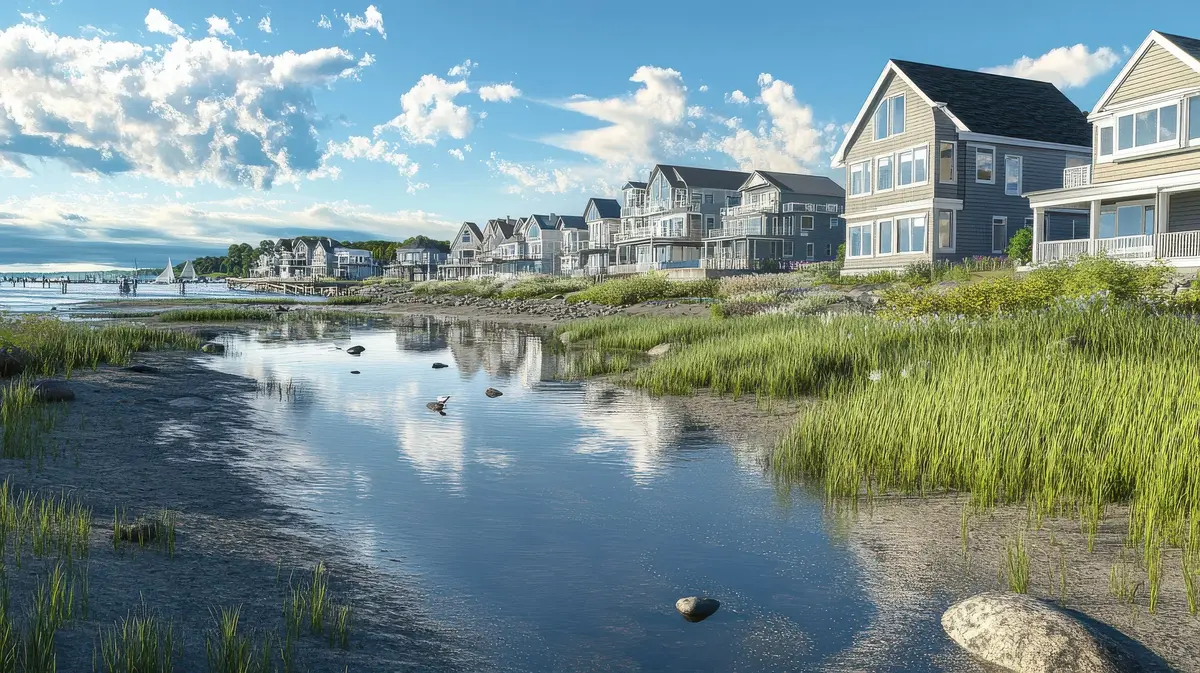
Des Moines at a Glance
Looking to buy in Des Moines? Estimate your payment.
Enter your numbers to see an estimated monthly mortgage payment.
Estimate only. Excludes HOA fees and mortgage insurance. The interest rate above is a starting point, not a quoted rate — replace it with your own to see real numbers. Insurance is a flat placeholder, not a Des Moines quote.
Why Are People Moving to Des Moines?
Most people who land on Des Moines as a relocation target arrive from one of two directions: they've been priced out of closer-in Seattle suburbs and are following the sound north from Federal Way, or they've discovered the waterfront almost by accident — on a drive, at the marina farmers market — and started doing the math.
The Waterfront Advantage Is Real
Des Moines is the only city between Seattle and Tacoma where you can walk from a residential street to a working 900-slip marina, board a fishing pier, and have a bowl of chowder at a waterfront restaurant on Marine View Dr S without getting back in your car. That's not a marketing line — it's a literal description of Saturday morning here. The Waterland Festival in July, the 4th of July fireworks over the Sound, and year-round community events at the marina make the waterfront feel like the city's living room rather than a backdrop.
Who Actually Moves Here
| Buyer Type | What Draws Them | Best For |
|---|---|---|
| Seattle commuters priced out of closer suburbs | Prices noticeably below West Seattle and Burien; new light rail access | Commuter Value |
| Outdoor and water-oriented households | Marina, Saltwater State Park, Redondo Beach boardwalk all within city limits | Nature Views |
| Families with school-age children | Stable community feel, parks, lower entry price than north King County | Families School |
| Remote workers and hybrid commuters | Waterfront lifestyle, transit fallback, home-office neighborhoods with quiet streets | Quiet Transit |
| First-time buyers moving from rentals | Entry points below the broader Seattle metro median | First-Time Value |
| Aviation and federal employees | FAA presence, proximity to SEA-TAC, government job stability | Commuter |
The city's diversity — no single ethnic group holds a majority — makes it easier for households relocating from more diverse metro areas to feel at home quickly.
The Honest Tradeoffs
Flight paths from Seattle-Tacoma International Airport are audible in much of the city, and that's not something you fully process until you've spent a weekend here. Some neighborhoods feel it more than others, but nowhere in Des Moines is completely removed from it. Buyers who live under the arrival corridors often say it fades into the background; buyers who weren't warned tend to notice it for months.
The school district is another point of honest conversation. Highline Public Schools serves Des Moines and carries a mid-tier district rating — parents who move here often supplement with extracurriculars, magnet options, or involvement in specific school communities. See the full picture on the Des Moines schools page before making assumptions.
What Daily Life Feels Like in Des Moines
Daily life in Des Moines is quieter and more water-adjacent than most Seattle-area cities its size. The rhythms here are set by the marina, the tides, and a Saturday farmers market that draws roughly 60 vendors near the waterfront — produce, artisan cheese, local meats — sponsored by the Des Moines Rotary Club and reliably busy from late spring through fall.
The Marina District Is the Social Core
Marine View Dr S is where Des Moines eats and gathers. The waterfront restaurant strip handles everything from sit-down dinners with Sound views to casual chowder and fish and chips that longtime residents take out-of-town guests to try. None of these places require a reservation on a Tuesday, but the marina fills up in July during the Waterland Festival and on 4th of July weekend, when fireworks over the Sound draw crowds from across the south end.
The Diversity of Everyday Life
With a median age of 38 and a population that's roughly 46% White, 18% Hispanic or Latino, 13% Black or African American, and 12% Asian, Des Moines has a cultural mix that shows up in its restaurants, its schools, and its neighborhoods. The city doesn't feel like one demographic's suburb — it feels like a genuine community that happened to be built next to the water.
What Surprises People After Six Months
Newcomers consistently say the same thing: they didn't realize how much time they'd spend at the waterfront. The marina, Des Moines Beach Park, and the Redondo boardwalk become weekly habits rather than occasional outings. The flip side — what nobody mentions before the move — is that grocery options and everyday retail are thinner than expected for a city of 32,000. You'll drive to Burien or Kent for a full shopping run more often than you'd like.
Highline College's MaST Center
Highline College operates its Marine and Science Technology Center — a joint facility with the Seattle Aquarium — near the Redondo waterfront. It's a public-access resource that gives Des Moines a genuinely unusual educational amenity: marine science programming within walking distance of the neighborhood it serves.
For a deeper look at parks, trails, and outdoor recreation along the shoreline, the parks and recreation page covers Saltwater State Park's underwater reef, the fishing piers, and the beach access points in detail.
The Des Moines Housing Market Right Now
The Zillow Home Value Index for Des Moines stands at $583,430 (mid-2026 Zillow Home Value Index), down about 2.4% year-over-year. Despite that modest dip, homes here are going to pending in around six days — a pace that signals real demand even in a slightly softened market.
Des Moines remains noticeably more accessible than closer-in Seattle suburbs, which is a meaningful draw for households who want Puget Sound proximity without paying a premium for it. Some parts of the city trade meaningfully above the city-wide figure while others provide more accessible entry points; the best neighborhoods page covers the geographic character of each area in detail.
What the Market Pace Means in Practice
Six days to pending is fast by any measure outside peak Seattle proper. Buyers touring on a Saturday who don't move by Monday often find the property gone. The inventory level is tight enough that well-priced homes in the marina district and the Woodmont and Redondo areas regularly attract multiple interested parties.
For the full picture on city-wide rents, property tax rates, and how Des Moines costs compare across categories of daily spending, see the cost of living page.
Des Moines Neighborhoods
Des Moines has several distinct areas — each with its own character and appeal. Here’s a breakdown to help you narrow down where to focus your home search.
🏡 Redondo
Redondo sits at the southern tip of Des Moines with its own boardwalk, fishing pier, and boat launch — a quieter alternative to the main marina district that draws residents who want waterfront access without the weekend festival crowds. Highline College's MaST Center operates nearby, giving the area an unusually educational character for a residential neighborhood.
🏠 Woodmont
Woodmont occupies a central slice of Des Moines between the waterfront and SR-99, with a mix of mid-century homes and newer construction that suits households looking for established street character without the full marina-district premium. It's a practical neighborhood — close to everything, without the Puget Sound views that push prices up in the western blocks.
🌳 Star Lake
Star Lake is one of Des Moines's eastern neighborhoods, positioned closer to the Kent border and the new Link light rail station — which makes it increasingly relevant for commuters who want a residential feel with improved transit access. The area has a quiet, established character with tree-lined streets and less of the airport flight noise that affects the western waterfront zones.
🏘 North Hill
North Hill sits above the waterfront on the elevated plateau that runs through the north end of the city, offering a quieter residential feel and easier access to Burien than the marina neighborhoods. The elevation means less direct water exposure but also some of the city's most stable, family-oriented street patterns.
🏔 The Lakes
The Lakes neighborhood takes its name from the small freshwater lakes tucked into this part of Des Moines, giving residents a rare combination of inland water access and proximity to the Puget Sound shoreline nearby. It attracts households who want a neighborhood feel with natural amenities that don't depend on the marina district.
🌆 Zenith
Zenith is a quieter enclave in the northern reaches of Des Moines, bordering Normandy Park, with a residential character that feels more removed from the city's commercial activity than other neighborhoods. It suits buyers prioritizing peace and proximity to Normandy Park's own elevated shoreline bluffs.
Pros & Cons of Living in Des Moines
The Pros
- Rare attainable Puget Sound waterfront and marina living for King County
- Easy access to Sea-Tac Airport and I-5
- Active beach parks
- fishing pier
- and boardwalk community
- Saturday waterfront farmers market and marina events
The Cons
- Highline School District has below-average state test proficiency scores
- Property crime rates run notably higher than national and state averages
- Fewer dining and retail options than larger neighboring suburbs
Getting Around & Commuting in Des Moines
The commute story in Des Moines changed materially on December 6, 2025, when Sound Transit opened the Kent Des Moines light rail station as part of a nearly 8-mile 1 Line extension south. For the first time, Des Moines residents have a rail link to downtown Seattle — something the city lacked for its entire history up to that point.
Light Rail: The New Calculation
From the Kent Des Moines station, the trip to downtown Seattle runs approximately 42 minutes by train — longer than driving on a good day, but completely immune to I-5 gridlock. The station connects to King County Metro's RapidRide A Line and Route 165, and has 500 parking spaces for park-and-ride users. Sound Transit projects the corridor will serve 20,000–23,000 daily riders as ridership matures.
Getting to the station from most Des Moines neighborhoods still requires a car or a bus connection — the station sits at the eastern edge of the city near the Kent border, not at the waterfront. That last-mile gap is real, and worth factoring into your daily routine before assuming the commute is fully car-free.
Driving to Seattle
By car, downtown Seattle sits roughly 25 minutes away in light traffic — a drive that's genuinely pleasant at 10 a.m. on a Sunday and genuinely unpleasant at 7:45 a.m. on a Monday. The I-5 corridor through SeaTac and Tukwila is one of the most consistently congested stretches in the region during peak hours. Southbound evening commutes out of Seattle can stretch the 25-minute baseline to 45 minutes or more on bad days.
Getting Around Locally
| Destination | Typical Drive | Notes |
|---|---|---|
| Downtown Seattle | ~25 min (off-peak) | Via I-5; plan 40–50 min in AM peak |
| Seattle-Tacoma International Airport | ~10 min | One of Des Moines's genuine logistical advantages |
| Burien | ~10 min | Main retail and grocery hub for many residents |
| Kent (downtown) | ~15 min | Major employment center, access to light rail station |
| Federal Way | ~15 min | South end commercial services, another Link station |
| Tacoma | ~30 min | Via I-5 south; relatively smooth outside peak hours |
The airport proximity is a legitimate lifestyle perk that Des Moines residents appreciate more than they expected. SEA-TAC is 10 minutes away — no shuttles, no long-term parking marathons, just a short drive and you're at departures.
What Long-Timers Know
The stretch of Pacific Highway S (SR-99) through Des Moines and SeaTac functions as a parallel surface arterial, but it's not a commute shortcut — it's stop-and-go through commercial corridors and is better treated as a local errand route than an I-5 alternative. Residents who figure this out early and build their routines around the highway rather than the surface road adjust faster.
Schools in Des Moines
Families relocating to Des Moines have public, private, and higher-education options nearby. Here’s a quick overview.
🎓 School District
Highline Public Schools serves K–12 students across Des Moines and the surrounding area. Rated C+ (source: Niche.com).
🏆 Graduation Rate
The 4-year high-school graduation rate here is approximately 81.9%.
📚 Higher Education
Washington’s public universities — the University of Washington, Washington State University, and Western Washington University — offer four-year degrees statewide, with a network of 34 community and technical colleges (SBCTC) providing two-year and workforce programs.
🌐 Online Learning
University of Washington Continuum College and Washington State University Online offer fully accredited online degrees for remote learners across the state.
Safety in Des Moines
A quick look at how Des Moines compares on the numbers that matter most when weighing a neighborhood or a move.
🛡 Violent Crime
Approximately 3.15 per 1,000 residents.
🔒 Property Crime
Approximately 35.7 per 1,000 residents.
Compared to the FBI’s most recent national data (2024), Des Moines’s violent crime is below the national average (about 3.6 per 1,000), and property crime is above the national average (about 17.6 per 1,000).
Against Washington as a whole, Des Moines’s violent crime is about the same as the state average, and property crime is somewhat above the state average (Bureau of Justice Statistics, Crime Known to Law Enforcement, 2024 (tables 2 and 3)).
Crime rates can vary a lot within a single city, so the citywide numbers above are only a starting point. Some neighborhoods in Des Moines run well below these averages, while others run higher — the kind of block-by-block detail that matters most when you’re actually choosing where to live. The full guide below breaks it down neighborhood by neighborhood.
Working in Des Moines
Des Moines’s largest employers span several industries — here are some of the anchors of the local job market.
🎓 Highline School District
Education
🎓 Highline College
Higher education
🏛 City of Des Moines
Government
🏛 Federal Aviation Administration
Aviation/government
Parks & Recreation in Des Moines
Some of the outdoor spaces that shape everyday life in Des Moines.
🌱 Des Moines Beach Park
🌱 Saltwater State Park
🌱 Redondo Beach Boardwalk
Des Moines residents don’t have to go far for green space — spots like Des Moines Beach Park and Saltwater State Park are part of everyday life here, whether that’s a morning walk, a weekend hike, or just somewhere to unwind outside. The full guide below covers more of what Des Moines has to offer for parks and outdoor recreation.
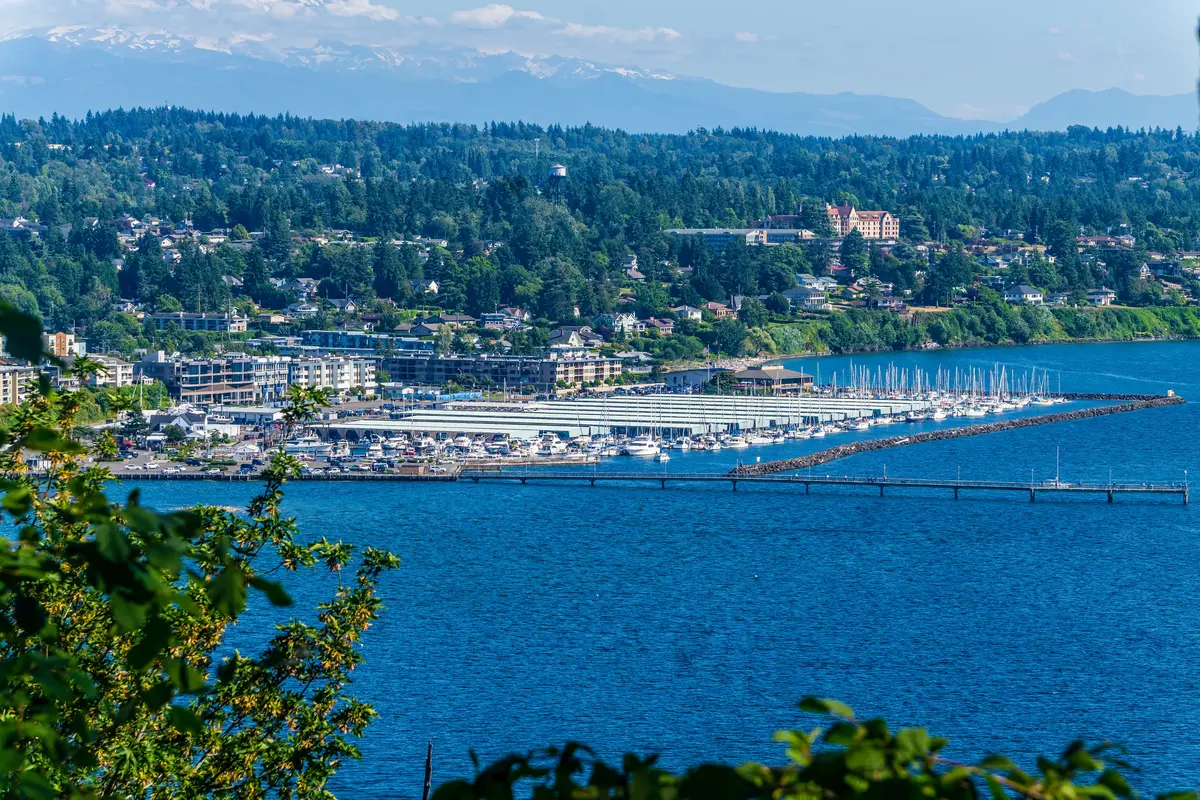
Retiring in Des Moines
Des Moines draws retirees for its balance of amenities, outdoor access, and cost. Here’s what to weigh.
🌤 Climate
Des Moines has the mild, marine-influenced climate of the central Puget Sound lowlands — cool, grey winters with temperatures rarely dipping below freezing, and dry, comfortable summers where temperatures stay mostly in the 70s. The waterfront position means more wind than inland neighborhoods but also more dramatic light on clear days, particularly when the Olympics catch the afternoon sun.
🍴 Lifestyle
The marina district gives retirees a genuinely walkable social core — waterfront dining along Marine View Dr S, a seasonal Saturday farmers market, community events at the marina year-round, and six miles of Puget Sound shoreline for daily walks. Highline College's MaST Center near Redondo offers public programming with a marine science focus.
🏚 55+ Communities
Des Moines and the immediately surrounding south King County area have active-adult and senior-living options ranging from independent living near the waterfront to assisted-care facilities in Burien and Federal Way a short drive away. The Des Moines retiring page covers the healthcare and senior housing landscape in full detail.
✈ Getting Around
Most errands and social trips require a car, though the marina district is genuinely walkable for residents who live nearby. Seattle-Tacoma International Airport is about 10 minutes away — a meaningful advantage for retirees who travel frequently. The Kent Des Moines light rail station, opened December 2025, offers a car-free Seattle connection for those willing to drive or bus to the station.
🏛 Washington Taxes for Retirees — What to Know
- No state income tax — Washington does not tax personal income, so Social Security, pensions, and 401(k)/IRA withdrawals are all untaxed at the state level. There is no state return to file and no retirement exclusion to claim — the rate is simply zero.
- Military and public pensions — Because there is no income tax, military retirement pay and public-employee pensions are untaxed at the state level along with everything else.
- Sales tax is the tradeoff — The state sales tax is 6.5%, and local add-ons bring the combined rate in Des Moines to 10.4% (Washington State Department of Revenue, Q3 2026 local sales & use tax rate table, July 2026). Groceries and prescription drugs are exempt.
- Property taxes, with senior relief — The effective property tax rate is roughly 0.9%. Homeowners 61+ (or unable to work due to disability, or a qualifying disabled veteran) who own and occupy their home may qualify for a reduction. Income limits are set against each county’s median household income, so the threshold differs by county — check with your county assessor. A separate deferral program is available for those who don’t qualify for the exemption.
- Capital gains tax — but not on retirement income — Washington taxes 7% on long-term capital gains above a $278,000 standard deduction for 2025, rising to 9.9% on gains above $1,000,000. Retirement accounts and real estate sales are both exempt. It therefore does not reach ordinary retirement income or the sale of a home.
- Estate tax — the one to plan for — Unlike most no-income-tax states, Washington has its own estate tax. For deaths on or after July 1, 2026, the exemption is $3 million with graduated rates topping out at 20%. Retirement accounts count toward the taxable estate, so long-time homeowners with sizable balances can cross the line without expecting to.
- No inheritance tax — Washington has no inheritance tax, and no gift tax.
- WA Cares payroll premium — Working Washingtonians pay 0.58% of gross wages into the WA Cares Fund, the state long-term care program, with no income cap. It applies to W-2 wages, so retirees who have stopped working do not pay it — but anyone relocating while still employed will see it. The private-insurance opt-out closed at the end of 2022 and is not available to new applicants; the remaining exemptions are narrow (living outside Washington, military spouses, certain visa holders, and veterans with a 70%+ service-connected rating).
- The Oregon border effect — Oregon has no sales tax, so Washington residents near the river — Vancouver, Camas, Washougal, Longview — often cross over for large purchases. Washington use tax technically applies to goods brought back for use in-state, though it is rarely enforced on ordinary personal purchases.
Tax laws change frequently and individual situations vary. This is general information, not tax advice — always consult a qualified Washington tax professional or CPA for personalized retirement tax planning.
Weekends & Local Favorites in Des Moines
The default Des Moines weekend starts at the water. That's not a cliché — it's logistics. When the marina, the boardwalk, a farmers market, a state park with an underwater reef, and a fishing pier are all within a 10-minute walk of each other, that's where people end up.
The Waterfront Loop
Des Moines Beach Park and the Historic Waterfront District are the morning anchor — a coffee from the marina area, a walk along the boardwalk, maybe a stop at the farmers market on Saturday if you time it right. The market runs seasonally, draws around 60 vendors, and has the kind of regulars who know each other's names by June. By afternoon, the marina fills with boaters and the restaurant strip along Marine View Dr S picks up.
Saltwater State Park
Saltwater State Park sits within city limits and has 1,445 feet of Puget Sound beachfront, a campground, wildlife viewing, and — the detail that surprises most newcomers — an artificial underwater reef that's become a legitimate scuba diving destination. On summer weekends the park fills by late morning; arriving before 9 a.m. is a habit worth developing.
Redondo Waterfront
The Redondo neighborhood to the south has its own boardwalk, boat launch, and fishing pier — a slightly lower-key version of the marina district that locals use when the main waterfront gets crowded. It's a good spot to know about once you live here.
Community Events Worth Knowing
The Waterland Festival in July is the city's signature community gathering — held at the marina, family-oriented, and busy enough that parking becomes an exercise in patience. The 4th of July fireworks over Puget Sound from the marina is one of the better vantage points in the south King County area, and it draws people from neighboring cities every year. Fishing tournaments run through the warmer months and are open to all skill levels.
Day Trips from Des Moines
The positioning between Seattle and Tacoma means both cities' cultural amenities are accessible without commitment. Tacoma's museums, Seattle's Pike Place Market and neighborhoods, the Olympic Peninsula via the Bremerton or Kingston ferries — none of it requires an overnight. For residents who grew up somewhere land-locked, the realization that a ferry to Bremerton is a reasonable Saturday afternoon outing takes about two months to fully sink in.
Top Things Locals Say About Des Moines
The best intel about a city comes from the people who actually live there. Here’s what Des Moines residents say when newcomers ask the questions everyone’s thinking.
“I knew the marina was there, but I didn't expect it to become part of my actual weekly routine. I've lived here eight months and I've walked the boardwalk more times than I walked anywhere near my old place in Renton — and I had a lake three blocks away.”
— Recent Des Moines home buyer
“What's the most surprising thing about living in Des Moines?”
How much the waterfront becomes part of your regular week, not just your weekends. People move here thinking the marina is a nice amenity and end up there every Saturday morning. The other surprise — nobody really prepares you for how thin the everyday retail is. You'll drive to Burien for groceries more than you expect.
“What do locals love most about Des Moines?”
The combination of a real waterfront — not a lake, not a creek, but Puget Sound with Olympic Mountain views — at a price point that still makes sense. The 4th of July fireworks from the marina are genuinely one of the best in the south end. And the airport being 10 minutes away sounds minor until you've lived somewhere that wasn't.
“What should newcomers to Des Moines know?”
Get to Saltwater State Park early on summer weekends — it fills up fast and parking is limited. Learn the difference between Marine View Dr S and Pacific Highway S early; SR-99 looks like a shortcut on a map but it's not. And if you're commuting north, give yourself the first month to figure out whether the I-5 timing or the new light rail station routine works better for your schedule.
“Can you live in Des Moines without a car?”
In the marina district, the waterfront, and parts of Woodmont, you can handle a lot on foot or by bike. The Kent Des Moines light rail station opened in December 2025 and adds a real Seattle commute option for people willing to bus or drive to the station. For everyday errands — groceries, hardware, big-box retail — a car is practically necessary. King County Metro routes serve the city but frequencies make car-free life genuinely inconvenient for most households.
Cities Near Des Moines
Other communities near Des Moines worth a look — each with its own character and price point.
| City | Distance | Best For | Vibe | Median Rent | Median Buy |
|---|---|---|---|---|---|
| Burien | 4 mi | Retail access, walkable downtown, families | Established, mixed-use, community-focused | $1,900 | $612,000 |
| SeaTac | 3 mi | Airport workers, affordability seekers | Dense, transit-rich, utilitarian | $1,800 | $555,000 |
| Kent | 8 mi | Industrial workers, value buyers, light rail access | Diverse, commercial, practical | $1,850 | $613,000 |
More Helpful Guides for Des Moines
Going deeper on Des Moines? Our blog series covers everything from first-time buying to retiring here — explore the guides below.
Local Expert Takeaway: Des Moines punches above its size on lifestyle — the marina, Saltwater State Park, and the Redondo boardwalk give residents more waterfront access than cities twice as large. The catch is that the airport flight paths are real, retail is thinner than newcomers expect, and the Kent Des Moines light rail station is transformative for commuters willing to build their routine around it. At a Zillow Home Value Index of $583,430 (mid-2026), this is one of the few places in King County where Puget Sound waterfront proximity and a manageable Seattle commute still fit in the same sentence at a price that doesn't require sacrificing everything else.
Quick Takeaways & FAQs
✅ Des Moines is the only city between Seattle and Tacoma with a public marina — 900 slips, Olympic Mountain views, and a walkable restaurant strip along Marine View Dr S.
⚠️ Flight paths from Seattle-Tacoma International Airport are audible in most of the city; it's worth spending a weekend here before committing, not just a Tuesday afternoon tour.
📍 The Kent Des Moines Link light rail station opened December 2025 — it's roughly a 42-minute train ride to downtown Seattle and changes the commute math significantly for east-side Des Moines neighborhoods.
Is Des Moines WA a good place to live?
How far is Des Moines WA from Seattle?
What is the housing market like in Des Moines WA?
Is there an airport noise problem in Des Moines WA?
Does Des Moines WA have light rail?
Helpful Links for Moving to Des Moines
Moving to Washington?
Tell us what you need help with and we'll connect you with local resources.
