
You've done the math on leaving California. Maybe you ran the numbers against a Bay Area or Los Angeles salary and realized your paycheck was mostly feeding a state that kept raising your cost of participation. Des Moines, Washington isn't the loudest name on the Seattle metro relocation circuit — it sits quietly on the east shore of Puget Sound in King County, sandwiched between Burien to the north and Federal Way to the south — but it keeps showing up on the spreadsheets of Californians who want waterfront access, a sub-30-minute Seattle commute, and a home they can actually own outright. The surprise isn't the price. It's how much you get for it.
The economic case centers on two things: the home price gap with California's coastal markets, and Washington's absence of a state income tax on wages. Des Moines's job base leans public-sector and education — Highline College, the Highline School District, the City of Des Moines, and the Federal Aviation Administration are the anchors — which means the city draws a stable, community-rooted resident base rather than a transient tech crowd. That also means it's not a frothy market. The full cost-of-living picture fills in the rest, but the headline is that a household earning $92,483 (the local median) goes meaningfully farther here than it did on the coast.
Day-to-day life orbits the water. The Des Moines Marina holds moorage for up to 840 vessels and doubles as a community gathering point, with the Waterfront Cafe on the pier for a quick bite after a morning walk. Des Moines Beach Park and Saltwater State Park give you year-round Pacific Northwest shoreline access without a ferry ticket. Groceries are exempt from Washington's sales tax, which softens the sting of the 10.4% combined rate on other purchases. And Seattle is roughly 25 minutes up I-5 under normal conditions — close enough for work, far enough that you don't feel the city breathing down your neck.
Whether you're relocating for work, escaping California's cost structure, or simply ready for gray skies and salt air, this guide breaks down the California-to-Des-Moines comparison on home prices, taxes, daily costs, lifestyle shifts, and the honest trade-offs you'll want to understand before you sign anything.

The Home Price Reality: California vs. Des Moines
The single most concrete reason Californians land on Des Moines is the home price. The typical home value in Des Moines is $583,430 (Zillow Home Value Index, mid-2026). That figure represents the kind of house — often a mid-century ranch or a newer townhome with a Puget Sound view — that would run two to three times as much in the Bay Area or coastal Southern California.
The comparison sharpens when you look at California's major metros. San Francisco and Los Angeles medians regularly push well past a million dollars. Even Sacramento, the traditional California escape valve, has settled into the $500,000–$600,000 range — meaning Des Moines is now comparable to one of California's most affordable metros, while sitting 25 minutes from a major tech and aerospace employment hub.
| Market | Typical Home Price (approx.) | State Income Tax | Effective Property Tax Rate |
|---|---|---|---|
| Des Moines, WA | $583,430 (ZHVI, mid-2026) | None (wages) | ~0.82% |
| San Francisco, CA | ~$1,300,000 | Up to 13.3% | ~1.1% |
| Los Angeles, CA | ~$880,000 | Up to 13.3% | ~1.1% |
| San Diego, CA | ~$870,000 | Up to 13.3% | ~1.1% |
| Orange County, CA | ~$950,000 | Up to 13.3% | ~1.1% |
| Sacramento, CA | ~$530,000 | Up to 13.3% | ~1.1% |
California home price figures are approximate and for comparison only; Des Moines figure is the authoritative ZHVI mid-2026 median.
* ZHVI = Zillow Home Value Index.
Des Moines's effective property tax rate of approximately 0.82% is also meaningfully below California's typical effective rate of around 1.1%, despite the perception that Washington is a high-tax state. On a $583,430 purchase, that rate difference translates to a lighter annual property tax bill than you'd carry on a comparably priced California home — and in California, you'd be buying considerably less.
What Californians should prepare for: entry-level inventory in Des Moines skews toward older construction from the 1960s–1980s, particularly in North Hill and South Des Moines. Turnkey updated homes and anything with direct water views push noticeably above the citywide figure. Work with a local agent who knows which areas are genuinely move-in ready versus which ones price low for a reason.
The Tax Shift: What You Actually Keep
For most Californians, the income tax change is the biggest financial event of the move — bigger, in many cases, than the home price difference itself. Washington has no state income tax on wages or salaries. California runs progressive brackets from 1% up to 12.3%, with an additional 1% Mental Health Services Tax on income above $1 million, putting the effective top marginal rate at 13.3%.
A household earning $150,000 in California might pay $12,000–$14,000 or more in state income tax annually, depending on deductions. In Washington, that bill is zero. That's not a minor line item — it's the equivalent of a significant mortgage reduction, a full year of savings, or the gap between affording Des Moines and staying stuck in California.
One Nuance Worth Knowing
Washington Governor Ferguson signed ESSB 6346 in March 2026, which will impose a 9.9% state income tax on household income above $1 million starting January 1, 2028. Income below $1 million remains untaxed at the state level, and that threshold won't affect the overwhelming majority of people reading this guide. If your household income is in seven-figure territory, factor this into your planning — for everyone else, the practical picture remains no state income tax on wages for the foreseeable future.
The Sales Tax Reality
Washington funds its state services through sales tax, property tax, and a business-and-occupation tax rather than income tax. The combined state and local sales tax rate in Des Moines is 10.4% as of Q3 2026 — higher than California's base rate, and higher than you may be used to. The important offset: groceries are fully exempt from Washington sales tax. Your weekly warehouse run or supermarket haul isn't taxed. Clothing, electronics, and most retail purchases are.
The net effect for a typical California household is still a substantial tax reduction. You're trading a large income tax bill for a higher sales tax rate, and unless you are an extraordinarily aggressive consumer of taxable goods, the math favors Washington by a wide margin. For a side-by-side on how utilities and other recurring costs stack up, see the Des Moines cost-of-living breakdown.

Daily Life Comparison: What Changes, What Doesn't
The biggest non-financial adjustment Californians describe after six months in Des Moines isn't the rain — it's the pace. This is a city of about 32,800 people on a stretch of Puget Sound shoreline. It is not a suburb pretending to be a city. The Des Moines Marina, the Beach Park, and Saltwater State Park are the community's living room, and on a dry weekend morning they actually function that way: people walk dogs, launch kayaks, fish off the pier, and grab coffee at the Waterfront Cafe near the marina entrance.
What You Gain
Space, water, and quiet. The kind of Saturday where you can walk to the sound and not share the trail with three thousand people. Seattle is close enough for dinners, concerts, and Mariners games — and far enough that you're not paying Seattle real estate prices to access it.
The Marina Steps project, a $10 million pedestrian hub breaking ground in December 2025, will eventually link downtown directly to the waterfront across a 36-foot elevation change. That infrastructure investment signals the city is actively trying to close the gap between its uphill residential core and its waterfront identity — something worth watching if you plan to be here for a decade.
What You Give Up
Density of options. If you are coming from the Bay Area or coastal Southern California, Des Moines's restaurant and nightlife inventory will feel thin. There is no Trader Joe's in city limits — you'll drive to Burien or Federal Way for that. Highline Public Schools holds a C+ rating, according to Niche, so families with school-age children should review boundary specifics and individual school performance carefully rather than assuming a uniform experience across the district.
Health insurance premiums generally run noticeably below California rates for comparable coverage, though you may drive farther for specialized treatment than you did in a major California metro. Routine care access is solid; for advanced or subspecialty work, Seattle's full medical infrastructure is the practical resource.
The gray-sky adjustment is real. October through April in Des Moines means low clouds, drizzle, and limited direct sun. Californians who love being outdoors will find they adapt — the Pacific Northwest outdoor culture specifically accommodates all-weather activity — but the people who struggle most are those who assumed they'd spend weekends the same way they did in San Diego.
Looking to buy in Des Moines? Estimate your payment.
Enter your numbers to see an estimated monthly mortgage payment.
Estimate only. Excludes HOA fees and mortgage insurance. The interest rate above is a starting point, not a quoted rate — replace it with your own to see real numbers. Insurance is a flat placeholder, not a Des Moines quote.
Who Moves Here from California — and Who Doesn't Stay
The California transplants who thrive in Des Moines tend to share a few things: they want to own a home, they're working somewhere in the Seattle-to-Kent corridor, and they genuinely want less noise in their lives. The waterfront orientation — boating, fishing, beach walks, the marina community — gives them a social structure that doesn't require a dense downtown.
The Profile That Works
Remote workers who left the Bay Area or Los Angeles when their company went distributed are a strong fit. So are dual-income households where one or both partners work in aviation (the FAA facility is a direct local anchor), education, or government — the city's employment base runs toward stability rather than volatility. People who were renting in California and are buying for the first time benefit from a price point that still allows for a reasonable down payment without liquidating retirement accounts; the first-time homebuyer guide covers the Washington-specific programs worth knowing about.
Who Tends to Move On
People who move here expecting a Pacific Northwest version of their California neighborhood often leave within two years. If you priced yourself out of Seattle proper and settled for Des Moines as a temporary compromise, you may find the compromise becomes a quiet resentment — the city doesn't have the cultural density to substitute for what you left, and the Seattle commute, easy on paper, becomes psychological friction on a rainy Tuesday when I-5 backs up past SeaTac.
Families who assumed the school district would be a lateral move from a California district with similar demographics sometimes encounter a different reality. The district serves a diverse, lower-income population across a wide range of performance outcomes — some schools significantly outperform the district average while others do not. Doing the boundary research before you choose a specific street matters here more than in many suburban districts. See the schools page for the specifics.
For a fuller breakdown of who the city suits by lifestyle and budget, the living in Des Moines overview covers buyer types and neighborhood character in more depth.
Making the Move: Practical Steps for California Buyers
Buying in Washington as a California transplant involves a few procedural differences worth knowing before you're in the middle of a transaction under time pressure.
Escrow and Title
Washington is an escrow state, which is familiar to most Californians. The mechanics of opening escrow, earnest money deposits, and title insurance work similarly to what you experienced in California. The timelines can be tighter in a competitive Seattle-area market — inspection windows that felt generous in California can feel aggressive here.
No State Income Tax Filing
Once you establish Washington residency, you stop filing a state income tax return entirely. You'll still file federal returns, and if you have California-source income (rental income from a California property you retained, for example), California will still want its cut of that specific income. Sever California residency cleanly and document the move date — California's state tax authority is notably aggressive about part-year residency claims, and a clean paper trail protects you.
The Offer Environment
Des Moines is not the most competitive sub-market in King County, but it is not a buyer's paradise either. Well-maintained homes in Woodmont and Redondo with updated kitchens and any kind of water proximity move quickly. Homes on North Hill or in South Des Moines that need work tend to sit longer, which gives you leverage — but also means you're buying a project. Know your renovation appetite before you start touring.
Washington does not have a statewide transfer tax structured the way California's is — the state real estate excise tax (REET) applies to sellers, not buyers, which is a small structural difference that shifts negotiation dynamics slightly. Your agent will walk you through the full picture, and the homebuying process page details Washington-specific steps for anyone going through this for the first time outside California.
Establishing Residency Quickly
Get your Washington driver's license and vehicle registration handled promptly — Washington requires registration within 30 days of establishing residency, and California will use continued vehicle registration there as evidence you haven't actually left. It's a small thing that becomes a large thing if you're ever in a residency audit.
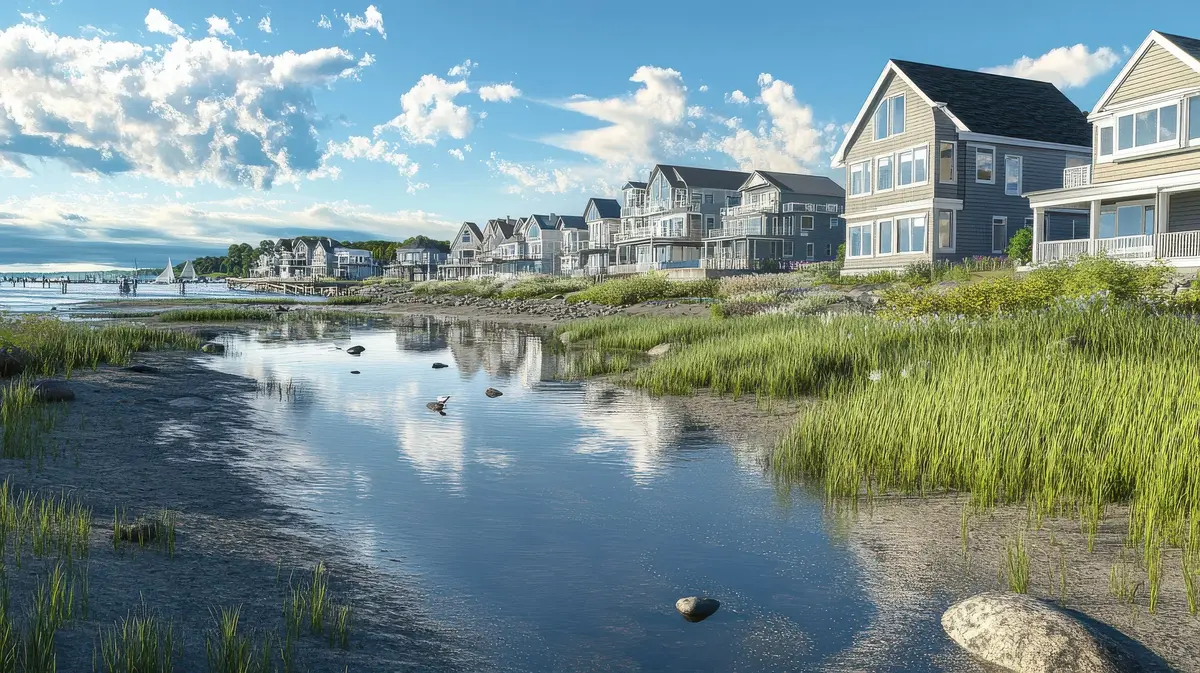
Local Expert Takeaway: The financial case for moving from California to Des Moines is straightforward: a $583,430 typical home, no state income tax on wages, and an effective property tax rate of approximately 0.82% add up to a materially lighter cost structure than almost anywhere on California's coast. The lifestyle adjustment is more nuanced. This is a Puget Sound waterfront community — Des Moines Marina, Beach Park, Saltwater State Park — not a scaled-down version of the California city you left. Californians who come here wanting water, space, and a stable community with a Seattle commute in their back pocket tend to stay. Those who come expecting the density and amenity of a California metro tend to look north toward the city within a year or two.
Quick Takeaways & FAQs
✅ Washington has no state income tax on wages — a household that paid $12,000–$14,000 per year to California keeps that money entirely, with no Washington state return to file.
⚠️ Highline Public Schools serves a diverse population with performance that varies considerably by school and boundary — do this research before choosing a specific street, not after.
📍 Groceries are fully exempt from Washington's 10.4% combined sales tax, which meaningfully offsets the sticker shock for household budgets coming from lower-sales-tax California counties.
Is moving from California to Des Moines, WA worth it financially?
Does Washington really have no state income tax?
How do the schools in Des Moines, WA compare to what I had in California?
What is the California-to-Washington residency change process, and does California let you go easily?
What surprises Californians most about Des Moines, WA after they move?
Moving to Washington?
Tell us what you need help with and we'll connect you with local resources.
