
Maybe you've been watching Puget Sound prices for years, waiting for a foothold that doesn't require liquidating everything. Des Moines, Washington sits on a bluff above the Sound — twelve miles south of Seattle-Tacoma International Airport, roughly halfway between Seattle and Tacoma — and it offers something genuinely rare in King County: a waterfront community, established senior infrastructure, and home prices that are noticeably below Seattle proper. The city is small enough that you'll recognize faces at Des Moines Beach Park within a few months, but connected enough — especially since the Kent–Des Moines light-rail station opened in December 2025 — that Seattle's medical corridors and cultural amenities are not a half-day commitment to access.
The retirement case for Des Moines rests on three pillars that don't cancel each other out. Washington levies no personal income tax, which means your Social Security, pension, and retirement-account withdrawals are entirely untouched at the state level. The city's senior living ecosystem — more than 42 communities ranging from adult family homes to full continuing-care campuses — is dense enough for a city three times its size. And the waterfront itself isn't decoration: Des Moines Marina, Redondo Beach Boardwalk, and Saltwater State Park give daily life a texture that many inland suburbs simply can't match. The trade-off, covered honestly below, is that Washington's sales tax and estate-tax structure cut the other direction, and driving dependence is real for most daily errands.
On a fixed income, the math here rewards attention. The Zillow Home Value Index pegged the typical home value at $583,430 in mid-2026 — well below Seattle but not inexpensive in absolute terms. The full cost-of-living breakdown covers daily spending in detail, but the short version is that groceries, dining, and services carry Washington's combined sales tax of approximately 9.51%, one of the highest in the nation. Property taxes run at an effective rate of approximately 0.82%, and qualifying seniors may be eligible for King County's income-based property-tax exemption program — worth checking with the King County Assessor before your first bill arrives.
Whether you're a few years from retirement or ready to sign a purchase agreement next month, this guide covers what actually matters for retirees weighing Des Moines: healthcare access, the retiree tax picture, walkability and community life, downsizing options, and an honest side-by-side with the nearby cities most often in the same conversation.

Why Retirees Are Choosing Des Moines
Des Moines earns genuine consideration for retirees who want Puget Sound access without paying Seattle prices — but it fits a specific profile. If you want to walk to a coffee shop, stroll the marina at low tide, and still be at a University of Washington Medicine specialist within thirty minutes, this city delivers. If you expect urban walkability for groceries and services without a car, the reality will disappoint you.
The city's sweet spot is the active-outdoor retiree who is comfortable driving for most errands but values proximity to water, trails, and a genuine sense of neighborhood scale. Des Moines has the senior living depth of a much larger city — Judson Park on Marine View Drive and the Wesley Des Moines campus have been part of the community for decades — which means you can age in place here without outgrowing what the city offers. That continuity of care, from independent living through skilled nursing, is something many comparably priced suburbs in the region can't claim.
Who should look elsewhere: if you're coming from a genuinely walkable urban neighborhood and don't want to own a car, Des Moines will feel isolating within a year. And if your retirement hinges on stretching every dollar, the Washington sales tax reality — hitting every restaurant meal and retail purchase — adds up faster than the income-tax savings for lower-income retirees. The Zillow Home Value Index shows a typical home at $583,430 (mid-2026), so entry into homeownership here still requires meaningful capital, even relative to the broader region.
Healthcare & Medical Access in Des Moines
The Closest Facilities
Highline Medical Center sits approximately 3.9 miles from Des Moines — close enough that an ambulance response is measured in minutes, not uncertainty. It handles emergency care, cardiac services, surgical procedures, and a range of specialty outpatient care, and for most day-to-day medical needs it functions as a genuine community hospital rather than a transfer hub.
For higher-acuity or subspecialty care, Valley Medical Center — a UW Medicine facility in Renton — is roughly 5 to 10 miles north depending on your starting point. UW Medicine's affiliation means access to academic-level specialists and a referral pipeline to UW Medical Center in Seattle for neurology, oncology, complex cardiac cases, and transplant services. That combination — a community hospital nearby and a UW Medicine affiliate within a reasonable drive — is a meaningful advantage over more rural retirement communities in the region.
Southern Options
St. Francis Hospital, a CommonSpirit Health facility in Federal Way, sits approximately 5 to 8 miles south and adds a third option for retirees who end up in that corridor for other reasons. Having three distinct hospital systems within a 10-mile radius gives Des Moines retirees genuine choice on insurance network compatibility — worth mapping against your Medicare Advantage or supplemental plan before you commit.
What to Know Before You Move
The honest distance reality: Des Moines is not a medical desert, but it is not a medical hub either. Highly specialized care — Level I trauma, pediatric oncology, advanced neurosurgery — requires a trip to Seattle proper, typically 25 to 35 minutes by car depending on traffic, or now reachable by the 1 Line light rail from the Kent–Des Moines station. For routine specialist visits and primary care, the local infrastructure is solid. For anything requiring a major medical center, plan the logistics before a health event forces the conversation.
With more than 42 senior living communities in and immediately around Des Moines — including continuing-care retirement communities, assisted living, memory care, and adult family homes — the city supports aging in place through multiple levels of need. That density of options, combined with the hospital proximity, makes Des Moines a genuinely viable long-term retirement location rather than just a starter destination.

The Retiree Budget in Des Moines
Washington's Tax Advantage — and Its Limits
Washington's zero personal income tax is real, and for retirees it is unusually clean: Social Security benefits, pension payments, IRA and Roth withdrawals, and 401(k) distributions are all entirely exempt from state taxation. There is no state income tax to file, no retirement-income calculation to run. If you're moving from California, Oregon, or any state that taxes retirement income at the state level, the annual savings can be substantial.
The capital-gains picture is more nuanced. Washington's 7% capital-gains tax applies only to long-term gains above approximately $278,000 (the 2025 threshold) on taxable brokerage accounts — and it explicitly exempts gains inside 401(k)s, IRAs, Roth accounts, defined-benefit plans, and real estate sales. Most retirees drawing on standard retirement accounts will owe nothing. If you hold a large taxable brokerage portfolio and plan significant annual harvesting, consult a Washington-licensed tax advisor before assuming you're fully clear.
The estate tax cuts in the other direction. Washington imposes an estate tax with a relatively low exemption — adjusted annually, but consistently below the federal threshold — that catches retirees with significant home equity and investment assets who wouldn't face estate tax in most other states. For many Des Moines retirees, the appreciated home value alone pushes the conversation worth having with an estate-planning attorney.
Property Taxes and Daily Costs
The effective property tax rate runs approximately 0.82% — moderate by King County standards, and well below what most California or Texas retirees have been paying. King County also offers an income-based senior property-tax exemption that can freeze assessed value for qualifying homeowners; check current income thresholds directly with the King County Assessor, as they adjust periodically.
On the spending side, Washington's combined average sales tax of approximately 9.51% is among the highest in the nation. Every grocery run, restaurant meal, and service appointment carries it. For retirees who spend more than they save — which is most retirees — this is the line item that erodes the income-tax advantage faster than the brochures suggest. The full cost-of-living breakdown covers daily spending in detail for context on what fixed-income life actually costs here.
Looking to buy in Des Moines? Estimate your payment.
Enter your numbers to see an estimated monthly mortgage payment.
Estimate only. Excludes HOA fees and mortgage insurance. The interest rate above is a starting point, not a quoted rate — replace it with your own to see real numbers. Insurance is a flat placeholder, not a Des Moines quote.
Walkability, Community & Staying Active in Des Moines
The Walkability Reality
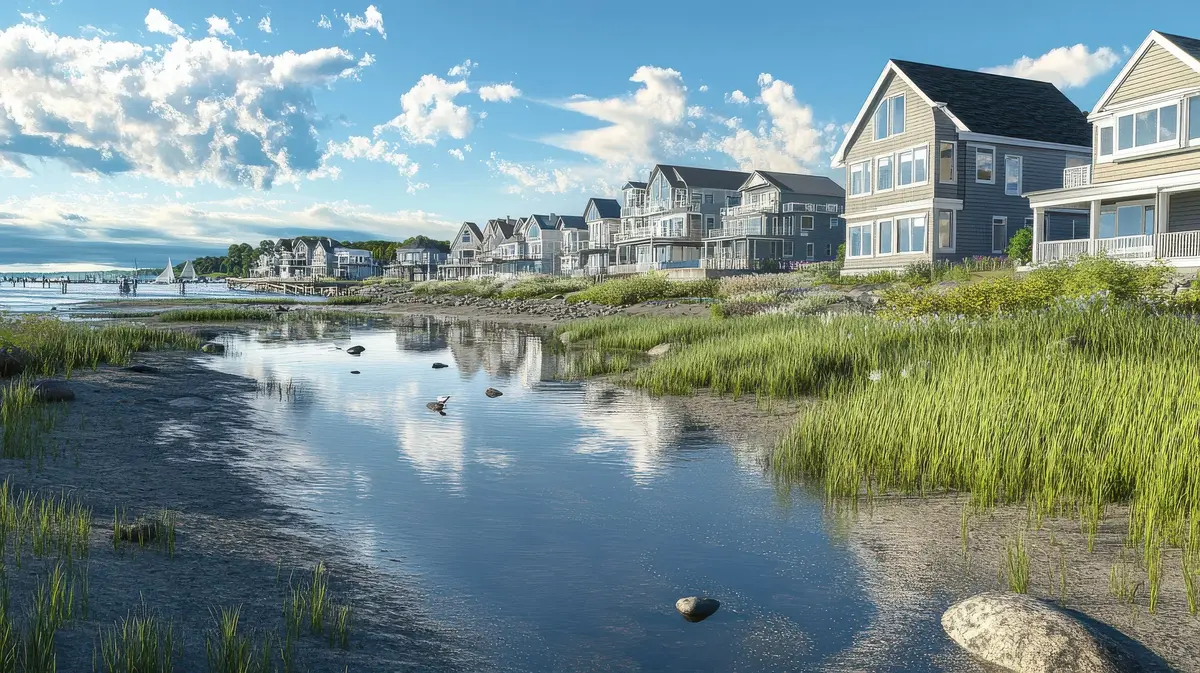
Des Moines is walkable in pockets, not as a whole. The marina district and the stretch along Marine View Drive offer flat, pleasant walking — the Des Moines Marina, Des Moines Beach Park, and the Redondo Beach Boardwalk are all genuinely on-foot accessible from nearby neighborhoods. If you live within a few blocks of the waterfront, a daily walk with water views is not a fantasy.
Inland, the terrain works against it. Much of Des Moines sits on a hillside descending toward the Sound, which means streets that feel manageable going down become a different proposition coming back up. Grocery stores, pharmacies, and most services require a car for the majority of residents. Be honest with yourself about that before choosing a specific address.
Transit After December 2025
The Kent–Des Moines light-rail station — technically located in western Kent but named for and directly serving the Des Moines area — opened on Sound Transit's 1 Line in December 2025. For retirees who want to reach Seattle without driving, this changes the equation meaningfully. The station connects to King County Metro's RapidRide A Line and Route 165, building a transit network that didn't exist here two years ago. It does not eliminate car dependence for local errands, but it does open Seattle's medical corridors, cultural venues, and airport to car-free access.
Community Life and Staying Active
Des Moines Creek Trail links inland neighborhoods down to the pier and waterfront — a multi-use path popular with walkers and cyclists that serves as a practical social artery, not just a fitness option. Saltwater State Park's North Rim and South Rim loop adds more structured trail walking within city limits.
The social infrastructure for retirees is strongest at the larger senior campuses. Wesley Des Moines, which has been here since 1944, and Judson Park on Marine View Drive both run programming — lectures, fitness classes, social events — that extend beyond residents into the broader community. For retirees not living on a senior campus, the marina itself functions as the informal gathering hub: early-morning walkers, weekend farmers-market crowds, and the kind of repeated-acquaintance culture that builds slowly into something that feels like community after six or twelve months.
Right-Sizing: Downsizing in Des Moines
What the Market Offers
Des Moines has more senior housing infrastructure per capita than most cities its size in the region, but that depth is concentrated in campus-style communities rather than scattered single-level patio homes. If you're looking for a standalone single-story home — the classic downsizing target — inventory is limited and competes with the general resale market. Condos near the marina and along Marine View Drive are the more realistic single-level option for buyers who want to own rather than rent or buy into a community fee structure.
The standout options for retirees are the two established life-plan campuses. Wesley Des Moines, a 42-acre campus that has been operating here since 1944, offers cottage homes, independent apartments, catered living, memory care, and skilled nursing — the full continuum on one property. Judson Park, at 23600 Marine View Drive S, is operated by HumanGood and was recognized by U.S. News & World Report as both a Best Independent Living and Best Assisted Living community in its 2026 Best Senior Living awards. Both campuses require a financial assessment before entry, and waitlists for preferred unit types are real — if either is on your list, start the inquiry process earlier than feels necessary.
The Broader Senior Living Ecosystem
Beyond those two anchors, Des Moines has at least 42 senior living communities at various care levels, including adult family homes that offer a more residential, small-group alternative to institutional settings. Adult family homes are a distinctly Pacific Northwest model — typically six residents, a licensed provider, and a home environment — and Des Moines has a meaningful concentration of them relative to its population size.
For retirees who want to buy a conventional home and age in place, single-level construction in the Redondo and Woodmont areas offers the most accessible terrain, though true one-story homes require patient searching. The honest inventory reality: demand for accessible, low-maintenance housing in Des Moines consistently outpaces supply, and that gap is likely to grow as the area's existing senior population ages. If right-sizing is your primary goal and you're flexible on timing, a slightly earlier move gives you more options than waiting until the decision is urgent.
Des Moines vs Nearby Retirement Destinations
| City | Cost vs Des Moines | Primary Hospital | Walkability | Senior Living Depth | Overall Retirement Fit |
|---|---|---|---|---|---|
| Des Moines, WA | — | Highline Medical Center (~3.9 mi); Valley Medical Center via UW Medicine (~5–10 mi) | Good near waterfront; car-dependent inland | Strong — 42+ communities, two major life-plan campuses | Views Nature Best for active retirees who want waterfront life with campus-care access |
| Burien | About the same | Highline Medical Center (shared resource) | Better retail walkability along 1st Ave S corridor | Moderate — fewer large campuses | Walkable Good for retirees who prioritize everyday on-foot errands over waterfront setting |
| Normandy Park | Noticeably pricier | Highline Medical Center (~5 mi) | Low — residential, hilly, almost no walkable retail | Limited — primarily residential, very few senior facilities | Privacy Quiet Best for retirees prioritizing quiet, high-end single-family living over services |
| Federal Way | Noticeably cheaper | St. Francis Hospital (CommonSpirit Health, in-city) | Moderate — suburban strips, car-oriented | Good — multiple assisted living and memory care options | Value Best for retirees on a tighter budget who want a hospital in-city and don't need walkability |
| Kent | Cheaper | Valley Medical Center (UW Medicine, in-city) | Moderate — downtown corridor walkable; suburbs car-dependent | Moderate — growing but less established than Des Moines | Value Transit Good for retirees who want UW Medicine access and lower home prices with light-rail connectivity |
| SeaTac | Cheaper | Highline Medical Center (~4–5 mi) | Limited — airport-adjacent, not pedestrian-friendly | Limited — fewer senior-specific communities | Rarely the first choice for retirement; airport noise and walkability gaps are significant drawbacks |
Federal Way makes the clearest financial case for budget-conscious retirees: lower home prices, St. Francis Hospital within city limits, and a deeper discount from King County costs overall. Kent earns attention specifically for retirees who want UW Medicine's specialist depth without Seattle prices, and the shared Kent–Des Moines light-rail station means both cities now access the same transit corridor.
Burien edges out Des Moines on day-to-day on-foot access — the 1st Avenue South commercial corridor is more walkable for errands than most of Des Moines — but lacks the waterfront setting and the established senior campus infrastructure that makes Des Moines genuinely distinctive. Normandy Park offers the most peaceful residential environment in this group, but at a premium price and with almost no local senior services, making it a reasonable choice only for retirees who are healthy, independent, and planning to stay that way for a long time.
For retirees who want the combination of waterfront access, a proven continuum of care on two established campuses, no state income tax, and a light-rail connection to Seattle that didn't exist until late 2025, Des Moines holds a specific and difficult-to-replicate position in the South King County retirement market.
Local Expert Takeaway: Des Moines is one of the few places in King County where a retiree can walk from a nationally recognized senior living campus — Judson Park on Marine View Drive — down to the marina for coffee, and still be at a UW Medicine facility within 30 minutes if something goes wrong. That triangle of lifestyle, care infrastructure, and medical access is genuinely hard to replicate at this price point in the region. The catch that most newcomers don't fully absorb until month three: the sales tax hits every single purchase, car trips are unavoidable for most errands, and the estate tax will matter if your home equity and investment accounts add up to more than you expect. Run the full numbers before assuming Washington's income-tax advantage translates into overall lower taxes.
Quick Takeaways & FAQs
✅ Washington's zero personal income tax means Social Security, pension, and retirement-account withdrawals are entirely exempt from state taxation — a clean, real advantage for retirees.
⚠️ Daily errands in most of Des Moines require a car, and Washington's combined sales tax of approximately 9.51% erodes the income-tax advantage faster than many retirees anticipate.
📍 Wesley Des Moines (operating since 1944) and Judson Park on Marine View Drive both offer full continuing-care continuum on established campuses — a depth of senior infrastructure unusual for a city of 32,000 people.
Is Des Moines, WA a good place to retire on Social Security and a pension?
What hospitals are closest to Des Moines, WA for retirees?
Are there 55+ or active-adult communities in Des Moines, WA?
Does Washington State tax retirement income, and how does that affect retirees in Des Moines?
How walkable is Des Moines, WA for older adults who don't want to drive constantly?
Moving to Washington?
Tell us what you need help with and we'll connect you with local resources.
